If You Lived Here, I’d Know Your Name: Heather Lende

“You have to read this!” said my book friend, “You’re from Alaska! It’s about a woman who lives in some small town and writes obituaries!”
I grinned politely and put the book in my bag. Some books sound more interesting than other books – I’ve always loved adventures and mysteries and murders – add a little drama to the day-to-day-ness of everyday life. A woman who writes obituaries? Hmmm, not so much.
But spending my afternoons tending to my sweet little 3-month-old granddaughter means I often sit, anchored by the soundly sleeping baby who I don’t want to disturb, even by twitching. I have one hand free – and you can only play so much iPhone Sudoku.
An Alaskan friend had also recommended this book, so early this week I picked it up and started reading.
Oh. my. goodness. Yes, Haines is a small town, but oh the drama of writing obituaries. Oh, the things you learn about your neighbors and the surprises you get learning about their earlier lives. I love the way Heather Lende weaves the writing of the town obituaries with the current ongoing dramas in her own life and in the lives of her friends and makes it work.
It’s not unlike where I grew up, although my hometown had a hospital. We also had moose and bear and elk in our back yards, and learned to treat wildlife with respect, and that the best option was to back away slowly. There are the same senseless deaths from auto accidents, fishing boat accidents and unexpected changes in weather. There is the same feeling of wonder, almost every day of your life, knowing how very lucky you are to live in the midst of such awe-inspiring beauty. It’s hard for me to imagine being an unbeliever living in Alaska.
It’s also a great book to read before going to bed. Some of the books I read are too exciting or too disturbing to read before bed; books that infiltrate your dreams with images and situations that give you a restless night. While Lende deals with death and sadness and drama, there is an underlying message of hope in the neighborliness of your neighbors, the security of living in a town where everybody knows everybody else, in the civility even of people who strongly disagree with one another. If You Lived Here, I’d Know Your Name gives you peaceful sleep. She ties it all together with an ending that rips your heart out; you will never forget this book once you read it. After reading, you will feel like you have lived in Haines, Alaska.
The paperback version is available from Amazon.com for $9.73. No, I no longer own stock in Amazon.com.
“How Have You Managed . . . ?”
“What do you mean?” I asked the elegant grinning lady who was asking me the question. Three former military wives, one Army, one Air Force and one Navy, and we had been talking about our world-wide lives and adventures.
“How are you doing? You haven’t been here long. Are you managing to settle in?” asked with enormous sympathy.
She caught me off guard.
Yes, I am happy. I’ve settled in. I have friends. I’m connected.
But her question caught me off guard, and all of a sudden I couldn’t answer.
“I’m doing OK” I managed to start. “But it’s like this church. I love this church, and at the same time, there are times I walk in and oh, how I miss our churches in the Middle East, where I would walk in and think ‘this is what heaven must look like’ especially at Christmas, with all the Indian families in their saris and finery, and the Africans in their brocades and elaborate head-dresses, and the people from all over the world. The music was simpler, and at the Christmas Eve service, we sang ‘Silent Night’ in every language in the church . . . I miss that.”
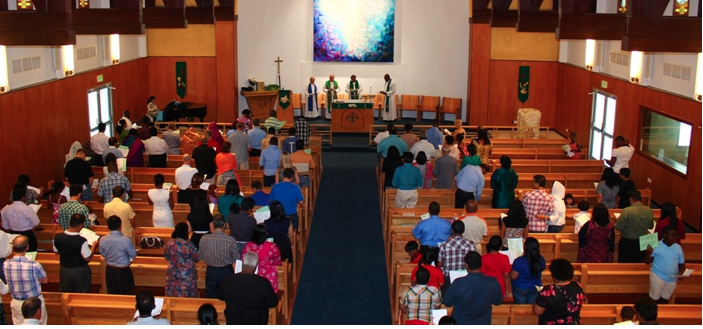
There are times the memories catch me unaware, and leave me breathless.
AdventueMan and I went grocery shopping today and when the cashier told me the total, AdventureMan almost gasped. I just laughed and told him that’s why I never took him grocery shopping with me in Kuwait – the sticker shock would have killed him.
Life here is definitely easier.
On the other hand, we have had to revise our ideas about Kuwait drivers. At first, we just thought there were a lot of Kuwaitis living in Pensacola; now we have realized that there are people who just drive as they please. Some of them are stoned out of their minds. I witnessed an accident last week where when I checked the driver of the car that was hit, she grinned at me loopily – and then disappeared. It was bizarre, and I wonder how many people are on the roads as impaired as she was. She went right through a stop sign as if it weren’t even there, and if the car had hit 6 inches more forward, she would have been dead. She didn’t have a scratch. And she was not at all concerned, just that loopy grin. “Elegantly wasted” said the driver of the car who hit her.
We both have a lot going on. With connection comes commitment and obligation. We try to coordinate our schedules at the beginning of the week so we can help one another out. The highlight is that each afternoon I am taking care of our new little granddaughter. AdventureMan/Baba often comes by and naps in the peaceful environment just to be with us. She is a sweet, laughing little baby, never very fussy. He offers me a day off, which occasionally I take, or he takes a time when I have a meeting or an appointment. We have both discovered how very much we like the ‘work’ of grandparenting. 🙂
We’re managing. 🙂
“Great is Your Faith!”
Jesus only commented positively on a person’s faith three times, and two of those times the supplicant was not Jewish, but other, in this case, a Canaanite woman. All she cared about was her daughter. He even says no, he won’t help her, he is there for the Jews. As she persists, as she argues with Jesus and makes her case, he relents, he feels enormous compassion for this woman in her plight, and as he heals her daughter, he makes this extraordinary statement calling attention to her belief. No legalistic requirements, he just heals.
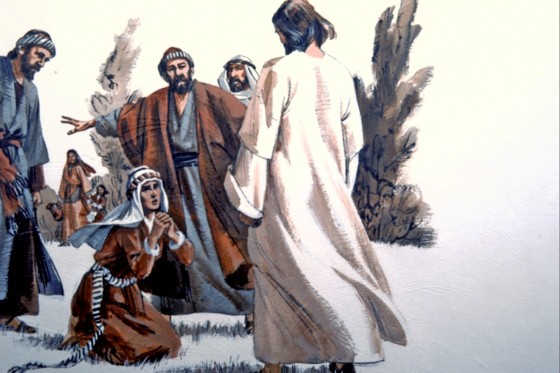
Matthew 15:21-28
21 Jesus left that place and went away to the district of Tyre and Sidon.22Just then a Canaanite woman from that region came out and started shouting, ‘Have mercy on me, Lord, Son of David; my daughter is tormented by a demon.’ 23But he did not answer her at all. And his disciples came and urged him, saying, ‘Send her away, for she keeps shouting after us.’ 24He answered, ‘I was sent only to the lost sheep of the house of Israel.’ 25But she came and knelt before him, saying, ‘Lord, help me.’ 26He answered, ‘It is not fair to take the children’s food and throw it to the dogs.’ 27She said, ‘Yes, Lord, yet even the dogs eat the crumbs that fall from their masters’ table.’ 28Then Jesus answered her, ‘Woman, great is your faith! Let it be done for you as you wish.’ And her daughter was healed instantly.
Wooo HOOO the New Q8 Books!
Brava! Brava, Fajer! What a great gift to the children and the community, to make Q8Books more accessible and family friendly. Woooo HOOOOO!
Reading and literacy are key to civilization. Brava!
From the Kuwait Times:
Kuwait’s community bookshop gets new life

Finding quality English books in Kuwait is a challenge as any book lover here knows. Local lawyer Fajer Ahmed, 26, recently took up the challenge when she acquired the small but well-loved bookshop, Q8 Books. She moved Q8 Books from downtown Kuwait City into a renovated space in Bayt Lothan, the non-profit arts and culture center located next to Marina Mall in Salmiya. Home to more than 15,000 titles of all genres including literature, general fiction, history, romance, thrillers and mysteries, westerns, classics, cook books, true crime, self help and motivation, family and lifestyle, business and philosophy and arts and crafts, Q8 Books has something to suit every reader’s taste.
By adding sofas, tables, chairs and beanbags, Q8 Books created a cozy, relaxed atmosphere along with free WiFi that invites customers to come and hang out. “We want to encourage reading, writing and communication in Kuwait, “Fajer explained. “As one example, we provide local writers with a place to display and sell their books free of charge, we also do all the administrative work for them.”
A community bookshop
Q8 Books also holds a free weekly story time for children, offers 50% store credit for trade ins, encourages book clubs and other responsible community groups free space to hold meetings and has an outreach project to support a library in Gambia. “We thank Bayt Lothan for giving Q8 Books a home,” Fajer said. “Without them none of this would have been possible.” Q8 Books’ erudite former owner, Jacob, started the bookshop almost a decade ago with only a handful of books. During his travels, he would browse used bookstores and markets to find quality titles that would be appreciated by the book-loving community in Kuwait. Jacob continues to help out at Q8 Books along with a group of dedicated volunteers and support from the Kuwait Writing Club.
Fajer also organizes regular events in order to build Q8 Books as a community space. On the first of November, Q8 Books hosted a Spooky Book night for kids, which included a story telling by local street artist Monstariam dressed in a bunny costume, a crafts and arts table, coloring and glitter, a costume contest and a chance for parents to browse and chat.
Kid and family friendly
“We really enjoyed Spooky Books night,” said Umm Sara, a mother of three children who attended the event all wearing ‘scary’ costumes. “The kids loved the story telling and we got several books. Much better than going to a mall and they got to draw and color and dress up.” The Kuwait Writing Club also took part, judging over 80 submissions for the writing competition. The winning submission will be published in Kuwait Times. “We also had a cover design competition for children to draw covers for the age appropriate horror story, Goosebumps, and every kid that took park received a free book of their choice,” Fajer explained.
Q8 Books will offer monthly events for children and parents with the goal of encouraging reading. “When kids come in playing games on electronic devices, we try to find books with the same characters and get them interested in reading,” Fajer noted. “Welovekuwait.com Children’s Bookshop has also donated coloring and reading books to give for free for every child that walks in.” Q8 Books encourages Kuwait’s community of readers to share their love of reading. They accept donations and offer store credit for traded in books. They also invite anyone to email ask@q8bookstore.com if they are interested in volunteering, donating or just want to talk to someone about suggestions for what to read.
Q8 Books is located in Bayt Lothan, next to Marina Mall. Store Hours: Weekdays 9am- 1pm and 5pm-9pm. Weekends 11am-9pm. Follow them on Instagram @q8bookstore
By Jamie Etheridge
“Mind Your Own Business”

You can be married for a long time and still be surprised. 🙂
I was thinking about other cultures, and then I thought about growing up in Alaska. Alaska is one of those kind of end-of-the-line places. Maybe it’s changed, but except for the native Americans, most people had come from somewhere else. Very few were second generation.
People at end-of-the-line places often have backstories they don’t want to talk about – bad divorces, or worse – bad marriage – no divorce, criminal records, or a million other situations they don’t want to talk about. From an early age, you learn not to ask. There were also a lot of laconic Scandinavians around; they talk about fishing and hunting but are seriously tongue-tied if asked a personal question. So again – you learn not to ask.
“Mind your own business,” I can remember my own mother saying, so I thought it was a rule. “Don’t be a Nosey-Parker.”
All my life I thought that was the rule. It was the way I was raised. Every now and then that curtain of pre-conceptions parts and a light gleams through. I was thinking about other cultures and it occurred to me to ask AdventureMan if he grew up with the same rule.
He just laughed. He looked at me in utter amazement, and laughed.
“I grew up in a town of 3,000,” he laughed, “and some of those were relatives, aunts, uncles, grandparents, cousins – everyone knew everything!”
“There’s no such thing as ‘mind your own business’ when your entire life is known by every single person in town!”
He hooted with laughter at the very thought.
“Everyone knew everything!” he repeated.
It’s expat world right here in my own house. This is a whole new way of thinking about things. I’ve always thought personal privacy was sort of universal, but not so.
One of the many times we lived in Germany, we lived in a small village where people told us everything. It was amazing, a whole different world, being on the inside, but not really being a part of it all. People seemed to feel we needed to be filled-in. One family didn’t speak to another family in the village, and it was awkward, because there were only like 300 people in the village, but many years ago someone’s grandmother had a terrible disagreement with the other family’s grandmother and no one in the families speak to one another now, even though no one can remember the reason.
I’ve escaped a lot of that being an expat, not sticking around longer than five years max, not long enough to develop a reputation you can’t shake. 🙂 But it makes me wonder if things are looser these days, if you can grow and change and be allowed to outlive your mistakes in small places where everything is everyone’s business . . .
Happy Islamic New Year
My good friend and commenter, Daggero, left this comment for us yesterday announcing the new Islamic year:
For your information yesterday we entered the Islamic year 1435 Hijri ( hijri = immigration ) which marks the year the prophet Muhammad peace be upon him, emigrated after 13 years of calling people to Islam from Mecca to Medina, ( where he is burried in his Mosque , Masjid an Nabawi, the second holliest mosque in Islam after the Mecca )
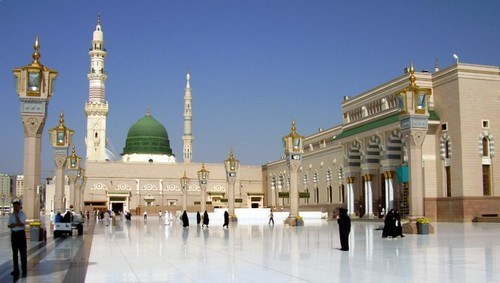
So total Islam time from begining to now is 1448 years, and on this auspicious occasion i wish you , AdventureMan and your family and the little ones a happy and a blessed New Islamic year.
We wish you the same, Daggero, and I smiled as I read that you discussed the topic we were discussing with your daughter on the drive to school in the morning. I remember those days so well, as young people begin to draw off into their own lives and the time we spend with them in cars can be so precious. Happy New Year to you and your family.
We had a friend from Libya whose family name meant “from Madina;” before we had ever lived in any Middle East country, he had told us a little about Madina, and what a beautiful city it is. The mosque is very beautiful. I think the tradition is that green was the prophet Mohammed’s favorite color?
Happy New Year, too, to all our Moslem friends.
“Another Word for Babies is Insects”
One of the great wonderful things that has happened with living in Pensacola is that I get to spend a lot of time with my two little grandchildren, one of whom is two months old and just loves to be held, and one of whom is three years old and loves to talk.
I adore them both, but the three year old is so much more interesting, as he can talk and express himself and I love the way a three year old thinks.
We talk a lot. The other day we were talking about breaking things like arms – he had just broken his arm in two places and got a 1 (needs improvement) on “uses playground equipment safely” LOL. I had just told him how my sister broke both of her arms, not at the same time, and how we had each broken a leg skiing.
“You know, Shisha, you’re a lot like a boy,” he said to me, and I knew it was a compliment but I couldn’t help laughing.
“Why do you say that?” I asked, and got some evasive answer – even a three year old has a sense of when a thought might be out of the ordinary.
This week, though, he really gave me a good laugh when he came running in and showed me his weekly sheet, with green happy faces (that is a very good thing) and a photo of himself as a baby.
“Another word for babies is ‘insects!'” he announced, and I couldn’t help it, I laughed.

“No! No! It’s ‘infants!'” I said, and made him watch my lips as I said it because it’s one of those words where we kind of cut off the t at the end, and he got it right. I laughed, knowing it must be “I” week at his school and how very cool is it that they are teaching three year olds such words as “infant” and “Insect” and so what if it takes a little while to get them all straight, just hearing them and seeing them applied is such a good thing.

Saudi Women Drive, No Problem
For your delight of the day, please go to YouTube and watch this hilarious Saudi video, No Woman, No Drive! Click on the blue type above 🙂

From The Guardian:
Dozens of Saudi Arabian women drive cars on day
of protest against ban
-
Staff and agencies
- theguardian.com, Saturday 26 October 2013 12.03 EDT
Activists say at least 60 joined call to allow female drivers – making it country’s biggest ever demonstration against the ban
More than 60 Saudi women got behind the wheels of their cars as part of a protest against a ban on women driving in the kingdom, activists have claimed.
A Saudi professor and campaigner, Aziza Youssef, said the activists have received 13 videos and another 50 phone messages from women showing or claiming they had driven, the Associated Press reported.
She said it had not been not possible to verify all of the messages. But, if the numbers are accurate, they would make Saturday’s demonstration the biggest the country has ever seen against the ban.
Despite warnings by police and ultraconservatives in Saudi Arabia, there have been no reports from those who claimed to have driven of being arrested or ticketed by police.
A video clip of a protest by May al-Sawyan, a 32-year-old economics researcher and mother of two, was uploaded on the YouTube channel of the October 26 driving for women group, along with several other videos of women purportedly driving in defiance of the ban in Riyadh, al-Ahsa and Jeddah. It was not possible to verify when they were filmed. Another video to feature on YouTube was the spoof No Woman, No Drive.
“I am very happy and proud that there was no reaction against me,” she told AP. “There were some cars that drove by. They were surprised, but it was just a glance. It is fine. They are not used to seeing women driving here.”
Sawyan said she had obtained a driver’s licence from abroad. She said she was prepared for the risk of detention if caught but added that she was far enough from a police car that she was not spotted.
“I just took a small loop. I didn’t drive for a long way, but it was fine. I went to the grocery store,” she said.
Her husband and family waited at home and called her when she arrived at the shop to check on her, she said. She drove with a local female television reporter in the car. They were both without male relatives in the vehicle.
“I know of several women who drove earlier today. We will post videos later,” one of the campaign organisers told Reuters.
The Associated Press reported that a security official said authorities did not arrest or fine any female drivers on Saturday.
Youssef said she and four other prominent women activists received phone calls this week from a top official with close links to Interior Minister Prince Mohammed bin Nayef, warning them not to drive on Saturday, the day the campaign set for women’s driving.
She also said that “two suspicious cars” have been following her everywhere all day. “I don’t know from which party they are from. They are not in a government car,” she said.
Activists said they have 16,600 signatures on an online petition calling for change. Efforts to publicise the issue have been described as the best-organised social campaign ever seen in Saudi Arabia, where Twitter has millions of users and is used to circulate information about the monarchy and official corruption.
Previous attempts to promote change fizzled out in arrests for public order offences and demoralisation. In 2011, the activist Manal al-Sharif made a YouTube video urging women to drive their own cars, and was imprisoned for more than a week. But the signs are far more positive now.
Three female members of the shura (advisory) council – among 30 appointed by the 90-year-old King Abdullah – recommended this month that the ban be rescinded, though no debate has yet taken place.
Latifa al-Shaalan, Haya al-Mani and Muna al-Mashit urged the council to “recognise the rights of women to drive a car in accordance with the principles of sharia and traffic laws”.
The three – praised by supporters for “stirring the stagnant water” – framed their argument with careful references to religious edicts banning women from being in the company of an unrelated male driver. Other ideas designed to reassure critics are appointing female traffic police and driving instructors. Cost is another big factor, with families having to employ chauffeurs, as is convenience.
Though no specific Saudi law bans women from driving, women are not issued licenses. They mostly rely on drivers or male relatives to move around.
Powerful clerics who hold far-reaching influence over the monarchy enforce the driving ban, warning that breaking it will spread “licentiousness.” A prominent cleric caused a stir when he said last month that medical studies show that driving a car harms a woman’s ovaries.
Where is Terekeka, South Sudan?

Today the church prays for the diocese of Terekeka, in the South Sudan. I have never heard of Terekeka – have you?
When I looked for it on Google Maps, it didn’t have any information. When I went to The South Sudan and then googled Terekeka, it came up with a reference, and I had to go to this website to find it – they had a map.
The organization who put up the map, Harvesters Reaching Nations, has two locations in the southernmost part of South Sudan, the newest nation on earth. They are building hospitals, and taking in orphans. If I hadn’t gone looking, I would never have heard of the good works they are doing, saving lives, changing lives.
This is what they say:
We currently serve more than 190 orphans in two locations in South Sudan – Yei and Terekeka. Our school in Yei provides a Christian education to more than 500 students. In addition to our school-age orphans, more than 400 children from surrounding villages attend our school.
The Harvesters campus in Yei consists of 90 acres of land donated by the South Sudan government. Since our beginning in 2001, we have built homes, dorms, classrooms and other facilities within a fenced-in campus. We use the land we own beyond the fencing for planting and growing corn, tomatoes and other vegetables for use in the orphanage.
Harvesters’ campus in Terekeka, South Sudan opened in 2010. At this campus, we currently provide care for 44 orphans, but will grow to 80 in the near future. We have built homes, dorms and a clinic within a five acre, fenced-in campus. Additional facilities, including a church and school classrooms, will be built in the near future as the needs and resources dictate.
To do this, they sold everything they owned, and moved to the South Sudan, and used the proceeds from selling everything to build the hospitals and schools. I bet they are the happiest they have ever been, and the most thoroughly engaged in life they have ever been.
Saudi Arabia Inching Toward Allowing Women to Drive
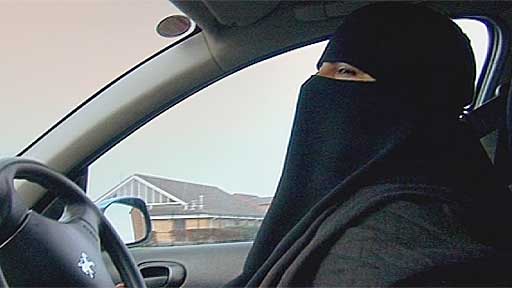
Saudi Arabia is the only country in the world where women are not allowed to drive. There is an irony – there is no law banning women from driving. They do not issue driver’s licenses to women, they arrest women seen driving, and they do not – officially – teach women to drive. Thank God for good fathers and brothers and husbands, who take their daughters, sisters and wives to isolated places and teach them, often for the good of the family in case of an emergency.
Saudi women drive in Europe, in the USA – they drive everywhere except in their own country. The government shows signs of wanting to allow women to drive (officially) but they seem hesitate to stir the wrath of the religious police who believe – based on nothing – that God forbids women to drive. Recently, the head of the Saudi religious police said there is nothing in Islam that forbids a woman to drive. What’s the hold-up guys?
This article is from AOL Auto News, where you can also see a video of a woman driving in Saudi Arabia with cars passing her and waving encouragement:
Saudi Arabian Women To Protest Driving Ban On Oct. 26
Saudi society is slowly inching toward more equality, but driving is still disallowed for women

When Farha was a young girl, about seven years old, her mother told her something that rocked her world: She said women could drive.
For Farha, a 24-year-old writer who has spent her entire life in Saudi Arabia, this was akin to a Western child learning the truth about Santa Claus. She’d only ever seen men behind the wheel in her country, where women are not permitted to drive. The revelation was slightly scandalous, a little bit funny, and totally paradigm-shifting.
It took another two years for Farha (who didn’t want to be identified with her last name due to the sensitivity of the issue in her home country) to decide she would, one day, learn how to drive a car. And, for good measure, she’d learn how to ride a bike. Two modes of transportation that have been banned to women and girls for most of Farha’s lifetime.
On Oct. 26, women in Saudi Arabia will engage in the third protest against the female driving ban by getting behind the wheel anyway. The protest won’t be widely attended, because the vast majority of women in Saudi Arabia don’t know how to drive. There are no driving schools in the Kingdom that cater to females, and state agencies will not issue a driver’s license to a woman.
“Since there is no justification for the Saudi government to prohibit adult women citizens who are capable of driving cars from doing so, we urge the state to provide appropriate means for women seeking insurance of permits and licenses to apply and obtain them,” a petition at the protestor’s web site reads. The web site has been blocked within Saudi Arabia, yet there are still a thousand or so names on the petition. The few women who are adept behind the wheel learned while living overseas, often in the U.S., Canada, or nearby Bahrain or Dubai.
In urban areas, women are chauffeured around by male relatives or paid drivers, or they pay for taxis. In rural areas, the driving ban generally isn’t enforced, and more women drive out of necessity. One woman who was recently videotaped disobeying the ban got support from her fellow (male) drivers, who passed by and gave her the thumbs up, a sign that society may be more willing to accept an eventual change.
Learning to drive
Farha tackled the task of learning to drive first by reading about the process. She edited a story on how to drive for her high school newspaper, and from that she felt she learned quite a bit. Then her father spent some time talking to her about how cars work, and the theoretical aspects of driving. He took her out for a few hours over the course of a few days, letting her drive around their neighborhood in the coastal city of Jeddah. But she never ventured onto the main roads.
She also learned the basics of riding a bicycle, but doesn’t consider herself adept at either skill. When the ban is lifted, she said she’ll sign up for classes at a real driving school.
“I always thought this ban would go away when I was 18,” she told AOL Autos. We connected with her through a publication where Farha wrote, under a pseudonym, about the driving ban. “And I’m still hoping it will be lifted when I am 26.”
“I always thought this ban would go away when I was 18,” Farha said. “And I’m still hoping it will be lifted when I am 26.”
Not driving makes life’s everyday movements difficult. Sidewalks aren’t available, so walking isn’t realistic. Farha’s father has mostly been responsible for driving her and her mother around, but five months ago he got into a car accident and broke his leg. He is currently unable to drive. Farha feels the burden of her father’s injury. If she could drive, she said, she could bring him to doctor’s appointments and help him get out of the house. Instead, the family is home-bound unless they pay someone to bring them places.
Farha has hired a part-time driver to take her to and from work. It costs about 2,000 to 3,000 Saudi riyals (or around $530 to $800) a month for a driver. That’s about the same amount that women make earning minimum wage in Saudi Arabia, prompting many women to just stay home.
“A lot of women don’t feel the incentive to work and hire a driver,” she said. “It doesn’t make any economic sense.”
Some women opt for the public bus system, but that makes women from conservative families feel nervous because it exposes them to strange men – the exact problem the country is trying to avoid by banning women drivers. Taxis run the same problem, putting females into cars with strange men. “It doesn’t make sense,” Farha said.
Farha is considering signing up for a karate class, but she’ll have to pay her driver for more hours or take a taxi to the classes. On top of the class fees, the price of getting to and from karate starts to seem like a silly amount of money, she said.
And she worries she’s spending too much money on herself. She could spend 30 riyals on a taxi each way, or she could donate that money to a family in need. Or spend that money sending school supplies to girls in other countries.
“It’s a difficult decision to make every time,” she said.
One unintended consequence of the rule strikes Farha as incredibly unsafe: Women often let their 13-year-old sons drive them around when they are out of other options. Farha’s observation was backed up by a U.S. intelligence research note made public by Wikileaks, which noted that these young drivers sometimes get into very serious accidents.
Weird, long history
Oddly enough, there isn’t any actual law in Saudi Arabia banning women from driving. In 1991, the late Grand Mufti of Saudi Arabia, Sheik Abdulaziz bin Baz issued a fatwa prohibiting women from driving. A fatwa is different from a government law, in that only followers of the religious leader who issues the fatwa are obliged to follow that law. But given the intertwined nature of Saudi Arabia’s government and its religious leaders, the fatwa took hold. The government agency in charge of issuing driver’s licenses will not issue one to a woman. Saudi Arabia’s court system relies heavily on fatwas from the Grand Mufti.
So, in essence, the religious order became a rule that everyone follows, even though it’s not enforced by the Saudi government. The government just makes it impossible for women to get drivers licenses, and if they catch women driving, they make them sign a pledge promising they won’t do it again.
Abdulaziz bin Baz said at the time that the ban would protect women, because allowing women to drive would put them out in society alone, leaving them to mix with men. If women were stranded by the side of the road due to a flat tire or car problem, they could end up being assaulted or raped by a man who came to help them, argue critics who still uphold the ban.
A reporter for the Christian Science Monitor recalled a 2012 conversation with a man in Saudi Arabia about what would happen if the ban was lifted. “What would happen if a woman got in a car accident, he asked? Then she would be forced to deal with the male driver of the other car, a stranger, with no oversight – a problematic situation in a country where male guardianship of women is deeply entrenched.”
Just last week, a Saudi cleric came under fire for claiming women were damaging their pelvises and causing birth defects by driving. Sheikh Saleh bin Saad al-Lohaidan argued women should put reason ahead of their hearts, because it “could have negative physiological impacts as functional and physiological medical studies show that it automatically affects the ovaries and pushes the pelvis upward.”
Saudi society is slowly inching toward more equality for women. Just this week, four women became attorneys. Earlier this year, women were allowed to work in retail establishments that sell underwear and bras, taking away the embarrassment for women who’d previously had to purchase these items from male salespeople.
Since around 2006, the Saudi government has been indicating it would consider lifting the driving ban if society deems it acceptable for women to drive. Diplomatic cables released by Wikileaks showed the U.S. government has been paying attention to this issue, and putting some pressure on the Saudis to change their ways.
Will of the people?
But it’s clear the Saudi government won’t make any controversial moves: “This has to do with the will of Saudi society,” said Saudi Justice Minister Muhammad Al-Issa in a TV interview in April, according to a translation by the non-profit group MEMRI. “If Saudi society, given its culture, wants women to drive, it’s fine. But if society has any reservation for whatever reason, that’s fine too.”
Farha said she’s holding out hope that the rules will change, as soon as possible. But the change will depend greatly on men’s attitudes.
“More men certainly support it now, but … they have their concerns,” she said. And “some are outright hostile to the idea.”
When she does get her license, Farha said she’d like to try driving a sports car. It doesn’t matter what kind, she just would like to try driving something fun. But she’d rather be able to walk or bike to work, even if she could drive.
“Cars feel suffocating inside,” she said. “But the whole idea is to lift this difficulty for women. I hope it happens soon.”
In sharing this story, and others, with our readers we hope you are inspired to Raise Your Hand for girls’ education, helping us spread the word on this crucial effort.
Recent Comments
ExpatAlien on What Country am I Living … intlxpatr on Yellowstone: Old Faithful to C… Michelle on Yellowstone: Old Faithful to C… Cathy on No Grown-Ups in Charge intlxpatr on Waiting for Snow Wikipedia Donate Button

Amazina


Early Voting in Florida


 Here There and Everywhere