New Study Shows Taking Folic Acid Cuts Autism Risk 40%
I heard this yesterday on NPR and found this article today on the Huffpost/AOL News. The critical factor is that a woman needs to be taking folic acid supplements BEFORE she gets pregnant:
With autism now affecting one in 88 children in the U.S., many parents are searching for any step they can take to help lower their child’s risk of developing the disorder. A new Norwegian study joins a small but growing body of research that suggests a simple, low-cost option already exists: Taking folic acid during the earliest stages of pregnancy could lower a child’s odds of developing autism by nearly 40 percent.
“This is a relatively inexpensive way that parents can take action to possibly prevent risk of tube birth defects and autism,” Alycia Halladay, senior director for environmental and clinical Sciences for the advocacy group Autism Speaks, told The Huffington Post. Halladay did not work on the new study, which was published online in the Journal of the American Medical Association on Tuesday.
Researchers analyzed a sample of more than 85,000 children born in Norway between 2002 and 2008 to study the effect of taking a folic acid supplement — typically between 200 and 400 micrograms per day — from one month before a woman got pregnant to two months after. Some .10 percent of children whose moms took folic acid supplements were diagnosed with autism, compared to .21 percent of those whose moms did not — which is equal to 39 percent lower odds.
The study does not establish a cause and effect relationship between the vitamin and subsequent autism, and its authors do not know why folic acid may have a protective effect. Study researcher Pal Suren of the Norwegian Institute of Public Health told HuffPost that folic acid is critical to the synthesis of DNA, which could play some role in the connection. Folic acid may also affect how certain genes are turned on and off in the body, he hypothesized, saying it was “not biologically implausible” that folic acid supplementation has certain epigenetic effects.
The new study also raises questions about how much folic acid may be needed to lower autism risk, as well as what form it must come in.
“We do not know how other dosages would have affected the risk of autism, or whether it matters if folic acid is taken as single tablets or as part of a prenatal multivitamin supplement,” Suren said.
The researchers took steps to ensure that the decreased risk was not just because women who took folic acid were also engaged in other healthy behaviors. To control for that, they looked at fish oil use (assuming women who took fish oil were also likely to be healthy in other ways) and found no link between lower autism risk.
Since the early 1990s, groups like the Centers for Disease Control and Prevention and the U.S. Public Health Service have recommended that all women of childbearing age take 400 micrograms of folic acid daily to help prevent neural tube defects — birth defects of the brain and spinal cord including spina bifida and anencephaly. Since folic acid was added to the grain supply in 1998, the U.S. has seen a 26 percent decrease in those neural tube disorders, according to figures compiled by the March of Dimes.
The possibility of a link between folic acid consumption and lower autism risk is far more preliminary. A 2011, California-based study in the journal Epidemiology found that mothers of children with autism were less likely to have taken a prenatal vitamin in the three months before pregnancy or in the first month after getting pregnant, suggesting that so-called “periconceptional” use of prenatal vitamins may reduce autism risk. In the U.S., prenatal vitamins typically include between 400 and 800 micrograms of folic acid.
But folic acid is by no means a magic pill, experts caution. The fact that rates of autism diagnosis have skyrocketed in the past several decades despite more and more women taking folic acid shows how complex the origins of autism are. The exact causes of the disorder, which is characterized by social and communication difficulties and repetitive behaviors, are still unknown.
“This is one way that risk may be reduced, but this isn’t the only way,” said Halladay. “It’s an inexpensive way to potentially reduce the risk of autism, but there are a number of risk factors — genetics and other environmental factors — that solidly contribute to risk.”
Something Gold For Chinese New Year: Happy China

“Happy New Year!” I called out to my Chinese friend in Aqua Aerobics.
“Happy New Year!” she shouted back, puffing just a little.
“Are you going out to celebrate?” I asked, with my find-a-good-Chinese-restaurant-agenda coming out.
“Yes, with a bunch of friends!” she responded.
“Where are you going?” I asked, genuinely curious as to where REAL Chinese people would eat real Chinese food in Pensacola.
“Happy China, over on Mobile Highway,” she told me.
I haven’t had really good Chinese food since leaving Kuwait, where we ate in a little dingy restaurant where a lot of Chinese people also ate. The food was not dumbed down, not at all.
“Will he fix you something special?” I wondered, and she replied that he would, several dishes, ordered ahead, for their large party.
So today, AdventureMan and I struck out to find the Happy China, and we did, to celebrate Chinese New Year, and it was good. I intended to order from the menu, but the buffet looked pretty good, so we decided it would be a way to get an overview. There were many many seafood items, and a noodle bar where you put together a noodle dish and then put it in warm broth to warm it all up. It was fun, the food was really good, and I look forward to going back and ordering off the menu.



On our way out, as we paid the very reasonable bill, I asked if they ever had any of the cats with the raised paws in white china with the colored paint. She said sometimes, but that they fly off the shelves.
“This year we have these ones, in gold, because it is the year of the Snake, you want something in gold,” she instructed me. I kinda liked the glitzy gold anyway, and they were $2.99, LOL, a small price for welcoming wealth into our household. The cat whose right paw is raised welcomes wealth, the left paw raised welcomes children, which are a different kind of wealth 🙂 and are also welcome in our household, our own son and other people’s children, not more for me, please!


The Orphanmaster by Jean Zimmerman
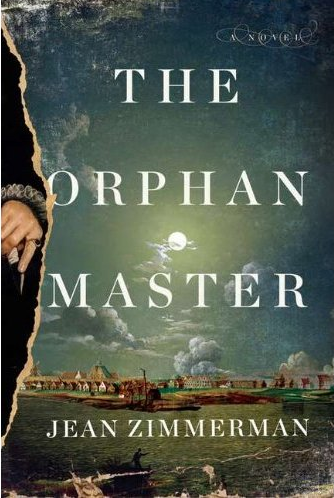
The Orphanmaster is another National Public Radio recommendation for people who like historical fiction, which I really do. I remember being a kid, and yawning my way through history, memorizing dates, it all seemed so irrelevant. Discovering historical fiction was like a light going on in a dark room for me – clever authors have found ways to illuminate events otherwise beyond my comprehension or worse – events I have a hard time making myself care about.
Suddenly, the times are right now and relevant when the right author handles it, and it isn’t always easy to get it right. I have a few very favorite authors – Philippa Gregory, Zoe Oldenberg, Sharon Kay Penman, Jean Plaidy, Edward Rutherford – authors who do a lot of research before they ever sit down to write a novel, and from whom you can learn a lot. They get the nature of the dialogue right, they get the customs, traditions and mind-sets right, and they get it right when a person is born ahead of his or her time in terms of the challenges they face.
I couldn’t put Orphanmaster down. It has to do with an era in American history which barely gets a paragraph in many history books, when the Dutch had a colony on what is now Manhattan Island, and trading posts up what is now the Hudson, into what is now New York. It was New Amsterdam, and many of the street names in modern day New York reflect their Dutch origins.
The Orphanmaster‘s main character is not the Orphanmaster. He is a supporting character to the main character to a girl orphaned at 15, daughter of a Dutch man and wife who were not rich, but who did all right. They had a business, they traded, Blandine learned many things before they died, leaving her an orphan. She was determined to be what would now be an “emancipated minor,” but until she turned 16, she was semi-legally under the responsibility of the Orphanmaster, who sort of kept hands off and sort of watched out for Blandine. She lives on her own and is a successful trader, in her early twenties. She is also a very clean housekeeper, and has plans to grow her trading business, and has a serious suitor she intends to marry.

Orphans start disappearing, and we discover a monster, a witiga, is on the loose. Blandine, and her new friend Drummond, are intrigued and disturbed by the disappearance of orphans, and the bloody, ritualistic mutilations of the orphans by the legendary Witiga.
It’s well written. You want to keep reading and keep reading because you want to know how it ends and how they are able to solve the problem.
It’s not one of the best books I’ve ever read for one reason – the author had the main characters talk as if they were modern people, using modern language, like ‘stuff.’ There was great openness between Blandine and her male friends. Blandine made all her own decisions, made her own arrangements and had full freedom, going where she wanted, doing what she wanted. The author explains it as part of the Dutch system, where some women had a lot of freedom, but I have a really hard time believing in a Dutch colony in the late 1600’s that any woman had the freedom Blandine had. There are parts of the novel where I am reading fast because I want to know what happens next and I get stopped up because Blandine says or does – or even THINKS – in a way that is very modern, and I just can’t buy it.
We are who we are. There are many smart women. Most women through the centuries have had to learn to maneuver in whatever societal constrictions they have been allowed. I suspect there were a lot of societal restrictions in New Amsterdam, and Blandine’s freedom to take off with only her male servant, to run off and live with a man not her husband (even though they are both escaping death sentences), to live an unescorted life . . . I just have a hard time buying it. I know how restricted women are even to day. Four hundred years ago, women were more restricted, and worse, we bought into it. We didn’t have a lot of choices.
So I like this book, and I think there is a lot of information that is true of the settlement of New Amsterdam, I loved the geography and the physical descriptions, I loved the maps included, I loved the descriptions of food and living conditions. I do not buy the heroine, not for one minute. I do not believe, in that historical context, she would have been possible.
Kuwait Quilt
There have been some good moments in the course of this nasty cold, good enough to finish my work on a quilt for a baby who is fast making his way into this world, a Kuwaiti baby :-). This is a quilt he can crawl on, snuggle under, take to school for nap time, and then take off to college to put on his wall:

We had some wonderful moments in Kuwait, many of which, for me, were spent in the fabric souks of Kuwait with other quilters from many nations, including Kuwait. Many of those fabrics are quilted into this piece, along with my everlasting gratitude to the friends we had there who made the experience so much the richer for us.
Karen Thompson Walker and The Age of Miracles

The Age of Miracles is a very odd name for this book, which starts off in a beautiful little coastal town in California, a very normal, modern town, and then everything changes. Suddenly, the earth’s rotation is slowing, incrementally, but resulting in longer and longer days and longer and longer nights. The difference is small at first, but grows.
Julia is in sixth grade, a painful time anyway in most lives where your body suddenly changes and all your relationships with all your friends change, and boys become a major factor. Imagine. All this AND the earth’s rotation is slowing.
No one knows what to expect. No one knows why or how the rotational slowing is happening, and no one has a clue how to fix it. Do you stay on a 24 hour clock, as the days grow to 30 hours? Forty hours? Can you even function in a forty hour day, or sleep a 40 hour night? How do you stay on a 24 hour clock and force yourself to sleep when the sun is shining brightly overhead? How do you have a school day entirely in the middle of the darkest part of the night? How does food continue to grow? What impact does this have on birds? Migrations? How does kicking a soccer ball feel when earth’s gravitational field starts to lessen?
The author does a brilliant job in a what-if situation, and manages to make it quite real. Don’t read this book if you are the suggestible type – it’s just one more thing you’ll start worrying about when you don’t need to. If you can read speculative fiction without letting it influence you, then by all means read this book, it is a good read.
The Death of Bees by Lisa O’Donnell
Death of Bees was another powerful recommendation by National Public Radio.

I believe in a greater power, in a God who sends things my way and that I am meant to be paying attention. Several books have been recommended to me lately which I didn’t choose, or might have avoided had I known how painfully they dealt with poor parenting and children in the depths of horrific poverty.
Here is what the lead into the book says:
Today Is Christmas Eve,
Today is my birthday,
Today I am fifteen,
Today I buried my parents
in the back yard.
Neither of them were beloved.
Oh my goodness! I am sucked in immediately. And immediately I am overcome by the grinding nature of poverty, the enormous amount of energy it takes just to be fed, to have a roof over your head, to function in the bureaucracy that seeks to ameliorate the burdens of poverty.
I am horrified by the lives of innocent children in the hands of people who should never have responsibility for anyone, even themselves, their decision making skills are so non-existent. There are parents who have no idea what self-sacrifice GOOD parenting requires, who raise children who are often trying to survive their own parents.
The Death of Bees has redemption. It has two sisters who love one another and are smarter than the average child. It has a neighbor who notices, not in a snoopy or intrusive way, but in a kind, helping and ultimately sacrificial way. It has moments of black humor, when the neighbor’s dog keeps digging at the parental graves in the backyard and bringing bones inside just at the worst moments.
Ultimately, it is a tale of survival, in spite of the parents, in spite of the system, in spite of betrayals by family and friends. There is a glimmer of hope that life may be different for these sisters, if they can survive their upbringing and overcome their childhood.
Now, go read the book 🙂
Payback is a Bummer
People all around Pensacola are dropping like flies; the weather fluctuates between hot and humid and cold and dry, with thunderstorms marking the boundaries, and there are colds and flu popping up everywhere. I’ve flown serenely through the season without much problem, just a little four day cold around Christmas, feeling thankful for my strong immune system. I may have been a little smug.
And then, WHAM, it hit. One minute I was in a meeting, and the next, as I headed home, I was sniffing and reaching for a tissue. It quickly got worse. It was one of those nights where you can’t sleep because you are drowning in your own mucus. I know, I know, too much information, too graphic. Trust me, the reality has been worse. I stayed in bed most of Friday, and Saturday, when I was feeling better, we discovered our water heater has sprung a leak. All that mopping up was probably good exercise; once we got all the water up we were OK. Yesterday, my sniffles had turned into aching, irritated sinuses, so I spent the day putting warmth on my face.
This morning, we have the plumbers coming in with a new water heater, I feel marginally better, and I know I will feel a LOT better once I can get a hot shower 🙂
There was a huge blessing in all this. Our calendars for January and February are full, winter is the active season in Pensacola. We have events, we have commitments, and we have house guests coming. In the entire period, I only had five dates with no obligations, and that was this weekend. It’s a strange thing to be thankful for, but I thank God to be sick during a time when I can stay home and take care of myself, and I don’t have to call anyone and renege on an obligation.
It’s also wonderful that if the water heater was going to go (and it is ten years old) it burst while we were here, and we were able to stop the flow and mop up the water before it caused a lot of damage. We had a water heater go out several homes ago, while we were out of town, and oh, what a mess we came back to, and it took forever to get all the carpeting dried out and replaced. It’s wonderful that we could take care of this BEFORE our house guests start arriving.

We’ve been exploring tankless heaters; our heater is smack in the center of the house, a terrible location, where, if it goes, it can cause a lot of damage. We’ll go ahead with a regular old-fashioned heater this time, but suddenly, we have some urgency to trying to install tankless – maybe in the next couple of years. We had tankless heaters in Germany, and in the Middle East; we are used to them and comfortable with the idea. I like the idea of not keeping water warm when we are not using it, and heating it only when we do. I also like the idea of not having gallons and gallons of water spilling into my kitchen, dining room, living room and family room when the tank goes 😦
I miss my energy . . . I no longer feel smug, no longer assured of my good health. I’d forgotten how wonderful it is to be normal, without sinus pain, without this thick-headed draggy feeling. I think I’m on the mend; the last three days I couldn’t even begin to think about writing a blog entry . . .
Indian Gang Rape Case Goes to Trial
From today’s Huffpost

India Gang Rape Trial Begins In New Delhi
By ASHOK SHARMA
NEW DELHI — The trial of five men charged with the gang rape and murder of a 23-year-old student on a New Delhi bus began in a closed courtroom Thursday with opening arguments by the prosecution lawyers in a special fast-track court set up just weeks ago to handle sexual assault cases.
The brutal attack last month set off protests across India and opened a national debate about the epidemic of violence against women. A government committee established in the wake of the attack has called for a complete overhaul of the way the criminal justice system deals with rape, sexual assaults and crimes against women in general.
The five men on trial – who face a maximum sentence of death by hanging if convicted – covered their faces with woolen caps as they walked into the courtroom Thursday surrounded by a phalanx of armed police. Two hours later, after proceedings were over, they were whisked away by the police.
Details of the day’s proceedings were not available. The courtroom was closed to the public and the media – a routine move in Indian rape cases – even though defense lawyers had argued that since the victim is dead, the proceedings should be opened. There was also a gag order on the lawyers to not reveal what happened inside the court.
Judge Yogesh Khanna turned down requests by journalists Thursday that they be briefed on the day’s proceedings and said the gag order would remain.
Since Friday is a public holiday in India, the next hearing in the case was set for Monday, when the defense will present its opening arguments.
A sixth suspect in the case has claimed he is a juvenile and is expected to be tried in a juvenile court.
On Thursday, a magistrate separately rejected a petition by Subramanian Swamy, a prominent politician, that no leniency be shown toward the accused who claims to be a juvenile because of the brutal nature of the crime, said Jagdish Shetty, an aide to Swamy.
Documents presented by prosecution last week to the Juvenile Justice Board indicated that the defendant was a juvenile at the time of the attack, which would make him ineligible for the death penalty.
Magistrate Geetanjali Goel is expected to rule on the suspect’s age on Jan.28.
The suspect, who is not being identified by The Associated Press because he says he is 17, would face three years in a reform facility if convicted as a juvenile.
After the fast-track court hearing, M.L. Sharma, a defense lawyer for Mukesh Singh, one of the accused, said he had withdrawn from the case. V.K. Anand, who represents Mukesh’s brother Ram Singh, will now defend both brothers. The two lawyers had been arguing over who was Mukesh Singh’s real lawyer.
Sharma said he left the case to save his client from being tortured to fire him. He has long maintained that the other defense lawyers were planted by the police to ensure guilty verdicts.
Dozens of police were outside the sprawling court complex in south New Delhi where the trial is taking place. Inside the court, about 30 policemen blocked access to the room where Khanna heard the prosecution’s case.
Outside the courtroom scores of journalists and curious onlookers crowded the hallway.
Prosecutor Dayan Krishnan warned defense lawyers that if they spoke to journalists he would slap contempt of court notices on them, said V.K. Anand, a defense lawyer.
Police say the victim and a male friend were attacked after boarding a bus Dec. 16 as they tried to return home after an evening showing of the movie “Life of Pi.” The six men, the only occupants of the private bus, allegedly beat the man with a metal bar and raped the woman with it, inflicting massive internal injuries to her, police said. The victims were dumped naked on the roadside, and the woman died two weeks later in a Singapore hospital.
Abhilasha Kumari, a New Delhi-based sociologist, said the attack could end up having a large impact on the country.
`’This case has brought the violence against women center stage and it has, out of sheer public pressure, forced the government to sensitize itself to crimes against women,” she said.
The trial began a day after a government panel recommended India strictly enforce sexual assault laws, commit to holding speedy rape trials and change the antiquated penal code to protect women.
The panel appointed to examine the criminal justice system’s handling of violence against women, received a staggering 80,000 suggestions from women’s groups and thousands of ordinary citizens.
Among the panel’s suggestions were a ban on a traumatic vaginal exam of rape victims and an end to political interference in sex crime cases. It has also suggested the appointment of more judges to help speed up India’s sluggish judicial process and clear millions of pending cases.
Law Minister Ashwani Kumar said the government would take the recommendations to the Cabinet and Parliament.
“Procedural inadequacies that lead to inordinate delays need to be addressed,” he told reporters.
Although I have marked this with “Women’s Issues,” it is only a women’s issue when violence is directed against women and women have a limited access to justice in the system. Rape is a crime of power, inflicting unwanted and uninvited invasion of the very most personal nature. It happens to men, too. Men are far less likely to come forward. They live with the shame; many commit suicide or turn to drugs and alcohol to escape the pain. One day, with women leading the way, men, too, will be able to come forward and claim justice against those who violate them.
Morocco Rape Victims Will No Longer Be Required to Marry Rapist
Morocco To Change Law That Allowed Rapists To Avoid Punishment By Marrying Their Victims
By SMAIL BELLAOUALI 01/23/13 09:46 AM ET EST
RABAT, Morocco — Nearly a year after Morocco was shocked by the suicide of a 16-year-old girl who was forced to marry her alleged rapist, the government has announced plans to change the penal code to outlaw the traditional practice.
Women’s rights activists on Tuesday welcomed Justice Minister Mustapha Ramid’s announcement, but said it was only a first step in reforming a penal code that doesn’t do enough to stop violence against women in this North African kingdom.
A paragraph in Article 475 of the penal code allows those convicted of “corruption” or “kidnapping” of a minor to go free if they marry their victim and the practice was encouraged by judges to spare family shame.
Last March, 16-year-old Amina al-Filali poisoned herself to get out of a seven-month-old abusive marriage to a 23-year-old she said had raped her. Her parents and a judge had pushed the marriage to protect the family honor. The incident sparked calls for the law to be changed.
The traditional practice can be found across the Middle East and in places like India and Afghanistan where the loss of a woman’s virginity out of wedlock is a huge stain on the honor of the family or tribe.
While the marriage age is officially 18, judges routinely approve much younger unions in this deeply traditional country of 32 million with high illiteracy and poverty.
“Changing this article is a good thing but it doesn’t meet all of our demands,” said Khadija Ryadi, president of the Moroccan Association for Human Rights. “The penal code has to be totally reformed because it contains many provisions that discriminate against women and doesn’t protect women against violence.”
She singled out in particular outmoded parts of the law that distinguish between “rape resulting in deflowering and just plain rape.” The new article proposed Monday, for instance, gives a 10-year penalty for consensual sex following the corruption of a minor but doubles the sentence if the sex results in “deflowering.”
Fouzia Assouli, president of the Democratic League for Women’s Rights, echoed Ryadi’s concerns, explaining that the code only penalizes violence against women from a moral standpoint “and not because it is just violence.”
“The law doesn’t recognize certain forms of violence against women, such as conjugal rape, while it still penalizes other normal behavior like sex outside of marriage between adults,” she added. Recent government statistics reported that 50 percent of attacks against women occur within conjugal relations.
The change to the penal code has been a long time in coming and follows nearly a year of the Islamist-dominated government balking at reforming the law.
The Justice Ministry at the time argued that al-Filali hadn’t been raped and the sex, which took place when she was 15, had been consensual. The prime minister later argued in front of parliament that the marriage provision in the article was, in any case, rarely used.
“In 550 cases of the corruption of minors between 2009 and 2010, only seven were married under Article 475 of the penal code, the rest were pursued by justice,” Prime Minister Abdelilah Benkirane said on Dec. 24.
While Morocco updated its family code in 2004, a comprehensive law combating violence against women has been languishing in Parliament for the past eight years.
Social Development Minister Bassima Hakkaoui, the sole female minister in Cabinet, said in September she would try to get the law out of Parliament and passed.
Changing Face of the Worlds Families

I had always assumed a two parent family provided the best support for a child. It never occurred to me there may be situations where the single-parent model could focus more resources on the child . . . It doesn’t matter what we believe; the face of families around the world is changing, and we will need to be dealing with the realities.
Marriage is a struggle. Raising children is a struggle. The more help, the better, I think!
The structure of families is changing worldwide, and based on a new report, some children are better off living with one parent than two.
According to the 2013 World Family Map report by non-profit research centre Child Trends, children living in two-parent families did better in school in higher-income countries, but children in lower-income regions did better with one parent.
“In some single parenting examples, resources were controlled by the mother of the household, ensuring these resources went to the well-being of children,” says Laura Lippman, senior program area director, education, and co-investigator of the World Family Map. “It suggests that some single-parent families may not benefit from a second parent who might be taking these resources away.”
Using 10 different data sources and partnering with universities around the world, Child Trends looked at the well-being of families in both low-income and high-income countries and the outcome on their children’s education. Based on the research, two-parent families are becoming less common, marriage rates are falling and a majority of children under 17 still live at home.
Significant Statistics From The Study
Two Parents vs. Single Parent:
DID YOU KNOW? Children in Asia and the Middle East under the age of 18 are more likely to live in two-parent families, compared to other regions in the world. Also, children are more likely to live with one or no parent in the Americas, Europe, Oceania, and Sub-Saharan Africa than other regions, according to the report.
Extended Family:
DID YOU KNOW? Living with extended family, which includes parents and other relatives outside the immediate family, is more common in Asia, the Middle East, South America, Sub-Saharan Africa and not any other part of the world.
Marriage:
DID YOU KNOW? Marriage rates are declining in many regions. Adults are most likely to be married in Africa, Asia and the Middle East.
Childbearing:
DID YOU KNOW? Childbearing rates are also declining, according to the report. The highest fertility rates are in Sub-Saharan Africa — a woman in Nigeria gives birth to an average of 5.5 children.
Living Together:
DID YOU KNOW? There have also been dramatic increases in cohabitation, divorce, and non-marital childbearing in the Americas, Europe, and Oceania over the last four decades, according to the report.
Population:
DID YOU KNOW? In the Americas and Oceania countries, women in these regions were having enough children for the population to replace itself from one generation to the next, or were slightly below these “replacement levels,” according to the report.
Non-Martial Childbearing:
DID YOU KNOW? In South America, over half of all children were born to unmarried mothers — Colombia had the highest rate at 85 per cent.
Poverty:
DID YOU KNOW? The report also looked extensively at rates of children and absolute poverty around the world. Absolute poverty was measured as the percentage of the population living below $1.25 a day. The report found Nigeria had the highest absolute poverty rate at 64 per cent.
Employment:
DID YOU KNOW? Between 45 and 97 per cent of parents polled were employed worldwide, and the highest employment rate was in Asia.
Family Life:
DID YOU KNOW? Between 31 per cent (in Russia) and 74 per cent (in Chile) of adults around the world are completely or very satisfied with their family life.
Household Work:
DID YOU KNOW? Approximately 55 per cent of couples in Russia and 88 per cent of couples in Philippines reported low levels of disagreement around household work.
Eating Together:
DID YOU KNOW? In Italy, 94 per cent of 15-year-old kids eat meals with their families regularly.
Family Structure:
DID YOU KNOW? In a majority of countries polled, respondents felt children were more likely to flourish in a home with a mother and a father. However, in Sweden, only 47 per cent of adults shared this belief compared to 99 per cent in Egypt, suggesting to World Family Map surveyors a more liberal attitude to changing family structures in certain countries.
Recent Comments
ExpatAlien on What Country am I Living … intlxpatr on Yellowstone: Old Faithful to C… Michelle on Yellowstone: Old Faithful to C… Cathy on No Grown-Ups in Charge intlxpatr on Waiting for Snow Wikipedia Donate Button

Amazina


Early Voting in Florida


 Here There and Everywhere