Thank You
At some hour, while I was sleeping, the blog hit 1M hits. Pretty cool, even though it is just a number.
AdventureMan said “how about if I take you out for dinner tonight to celebrate.”
(Thursday night is always date night. We always go out for dinner. He was being funny.)
But he reminded me that I used to thank my readers, and I haven’t done that for a long time.
Most of us who blog, and who continue blogging (it’s the continuing part that is hard work) blog because that’s the way God made us – he created us wanting to share the written word. For me, it’s sort of like thinking out loud, and many times I throw out ideas hoping to get other points of view to help me see things more fully, from more perspectives.
You, my readers, have given me unexpected points of view many, many times, and I thank you. Months after I write an article, you will read it and comment – and I read every comment. Thank you.
Coming soon, AdventureMan and I are starting a whole new adventure. I’m not so sure I am going to continue blogging. I won’t be living in an exotic country; I will be living a more normal American life, as a Grandmama. I know it will fascinate me, but I am not so sure you will find it all that interesting, LOL.
Again, thank you for your support and input these three years of blogging, and for finding me and my ideas and my fascination with current events much more interesting than I find myself. 😉
And, for those of you who always ask, yes, the Qattari Cat will be going with us, and yes, he is till with us (crying right now because AdventureMan has left for work and his heart is broken), I just haven’t taken a lot of photos lately because mostly he sleeps, and he looks pretty much the same.
We’re All Related
We’re all related. My niece, Little Diamond, brought this article to my attention today:
Most Britons descended from male farmers who left Iraq and Syria 10,000 years ago (and were seduced by the local hunter-gatherer women)
Most Britons are direct descendants of farmers who left modern day Iraq and Syria 10,000 years ago, a new study has shown.
After studying the DNA of more than 2,000 men, researchers say they have compelling evidence that four out of five white Europeans can trace their roots to the Near East.
The discovery is shedding light on one of the most important periods of human history – the time when our ancient ancestors abandoned hunting and began to domesticate animals.
You can read the entire fascinating article by clicking HERE
Some people set so much store on pedigree. I bet there are a lot of surprises in our DNA.
‘Glimmer of Hope’ in Doha Abduction Case
‘Glimmer of hope’ in custody battle
From the Qatar Gulf Times
British mother Rebecca Jones has described the decision by a Qatari judge to bring her son to court as a “glimmer of hope” in her ongoing battle to regain custody of Adam, saying that the judge’s decision that the boy’s attendance is necessary feels like her first victory in the case.
“I’m thrilled that Adam will be given the opportunity to tell the court how he wants to come home to his Mummy, Daddy and little sister, and that the court will have the chance to see how he is suffering,” she told Gulf Times yesterday.
Jones, who claimed that her son was kidnapped when she was “tricked” into visiting the country in October last year, is particularly worried about the mental and physical state of her son, saying that he had been ill in recent weeks because of the stress surrounding the current situation.
However, the most recent ruling in the case has given her some hope that she may be reunited with him on a permanent basis in the not too distant future.
Earlier this week a judge ruled that Jones’ appeal will be held on February 11, and that both Adam and his 77-year-old grandmother who was originally awarded custody of him, should attend the court hearing.
Jones is also fighting a court case to increase her visitation rights with her son, something that will be decided on February 3.
She is hoping to be awarded more time with Adam, as well as the ability to spend time with him outside of the house in which he is currently living.
“He seems to be ill because of stress and has been physically sick recently,” she claimed, adding “he is very upset and very nervous on each visit – the second I walk through the door he asks me when he can come home.”
Another major concern for Jones is the educational aspect of her son’s life as it will shortly be the fifth month that he has gone without attending school.
But for now, Jones is just looking forward to the court hearing in which her son will finally be given a voice. “I truly believe that the court will do the right thing,” she added.
Small Pleasures in the Souq al Waqif
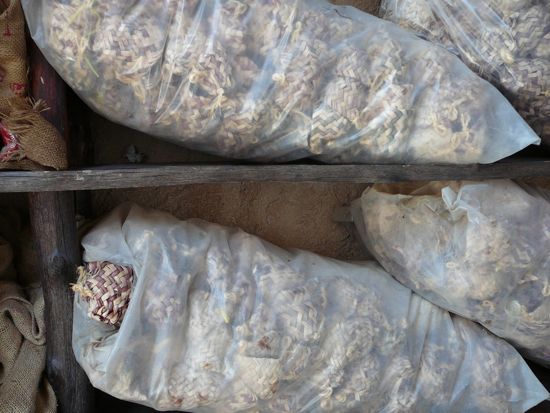
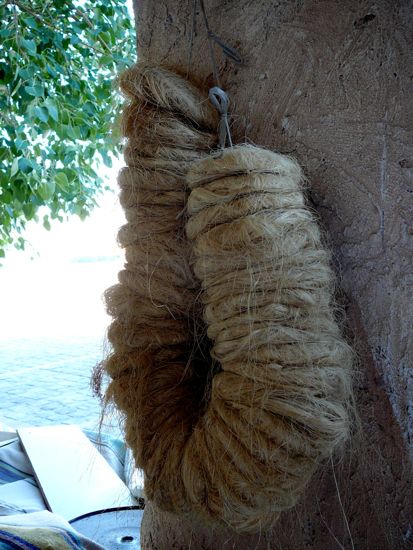
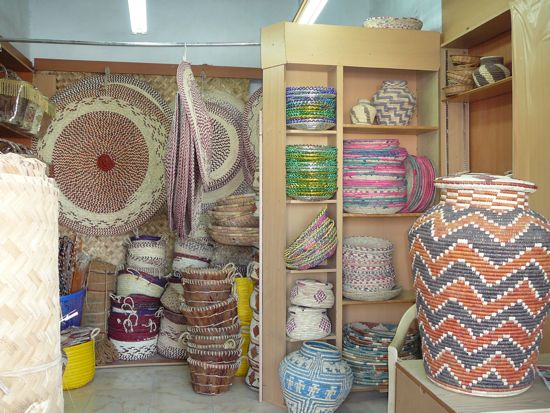
AdventureMan loves to take a quick trip to the souks, any excuse will do. He, like me, likes to wander, and to spy small details that delight our hearts. Here are some recent wanders:



Mac and Cheese Weather
I was visiting my sister, and our children were all very small. It was a cold day, a very very cold, snowy, icy day in Iowa and I told the kids I would make macaroni and cheese like my Mom used to make.
Their eyes got big and round and all day they went around saying “she’s making Macaroni and Cheese like Mom used to make!”
When I finally dished it out – there was utter silence as they stared at the macaroni and cheese – made from real macaroni and REAL CHEESE in a real, home made sauce!
They didn’t look delighted. They looked horrified, and like they didn’t want to embarrass me, but something was terribly wrong.
My sister started laughing.
“I think they all expected it to be orange,” she said, and I started laughing too – orange is also what my son grew up on, it was so quick and easy.
Mom’s Mac and Cheese was not a big hit.
But with the semi-chilly weather of January, I found this fabulous recipe for Macaroni and Cheese that sounds like it greatly ups the taste factor. I found it on allrecipes.com, one of my favorite recipe websites and it is called Kicked up Macaroni and Cheese:
Kicked Up Macaroni and Cheese
1 1/2 cups rotelle pasta
4 tablespoons butter, divided
1/4 cup all-purpose flour
3 cups whole milk
1 teaspoon dry mustard
3/4 teaspoon salt
1/2 teaspoon ground white pepper
3 teaspoons hot pepper sauce
1 cup shredded pepperjack cheese
1 1/2 cups shredded sharp Cheddar cheese
1/2 cup grated Parmesan cheese
1/3 cup dry bread crumbs
2 teaspoons chili powder
Directions
Preheat oven to 375 degrees F (190 degrees C).
Bring a large pot of lightly salted water to a boil. Add pasta and cook for 8 to 10 minutes or until al dente; drain.
In a large saucepan over medium heat, melt 2 tablespoons butter. Whisk in flour and cook, stirring, 1 minute. A little at a time, whisk in milk, mustard, salt, pepper and hot sauce. Bring to a gentle boil, stirring constantly. Boil 1 minute, then remove from heat and whisk in pepperjack, Cheddar and Parmesan until smooth. Stir in cooked pasta and pour into shallow 2 quart baking dish.
Melt remaining 2 tablespoons butter. Stir in bread crumbs and chili powder. Sprinkle over macaroni mixture.
Bake in preheated oven 30 minutes. Let stand 10 minutes before serving.
Gotta go now. My tummy started rumbling when I read the recipe!
Chinese Parents Abort Females; Men Can’t Find Mates
There is a part of me that thinks “What were you thinking??”
Of course, you know by now if you’ve been reading Here There and Everywhere that I don’t hate men, and also that I see RED when women are undervalued because they are women and not men. Equal rights, equal pay for equal work, equal citizenship – my battles to fight.
So what happens when poor people are told they can have only one child, and they all abort their female children – or they disappear shortly after birth – and only little boys who can grow up to take care of their parents are born?
Dearth of Women to Leave 24M Chinese Men Unwed
From AOL News Sphere where you can read this entire article by clicking on this blue type
Terence Neilan
Sphere
(Jan. 11) — More than 24 million Chinese men of marrying age could find themselves without a woman to wed by 2020, and a Chinese proclivity to abort female fetuses is a major contributing factor, a major study has found.
Gender imbalance among newborns is the most serious demographic problem facing the country’s population of 1.3 billion, the study by the government-backed Chinese Academy of Social Sciences says.
“Sex-specific abortions remained extremely commonplace,” the academy said, “especially in rural areas,” where the cultural preference for boys over girls is strongest.
100 Lashes Each for Illicit Relationships in Qatar
COURT ROUNDUP
100 lashes for illicit relations
By Nour Abuzant in today’s Gulf Times
Two Asians – a man and a woman – have been sentenced to 100 lashes each and subsequent deportation for maintaining illicit relations.
The father of the woman told the interrogators that he saw his 21-year-old daughter leaving the house in the morning of April 15, 2009 and boarding the car of her 26-year old lover.
The father also said he opposed their marriage and that he had planned his daughter’s marriage with another compatriot man.
The Doha court of first instance heard that the father found three mobile phones, belonging to her lover, in his daughter’s possession.
The accused Pakistani nationals confessed in the court that they were in love. The court said that the 100-lash penalty came in line with the Sharia rules, as both the accused were Muslims and unmarried.
That’s some angry father – turning in his own daughter to be jailed, humiliated in court and then subjected to the additional humiliation and pain of 100 lashes. Cannot imagine what that will do to her marriage prospects “with another compatriot man.”
Some people ask why I run these articles about expats. The truth, as I see it, is that any one of us who is not Qatari falls under these laws. We are ALL expats. The laws can be applied to any one of us at any time.
The Party House
We stumbled into the upstairs lounge, all four of us, sleep muzzy and disheveled, but then again, it was 3 in the morning.
“What is that?” asked Mr. Ambassador, who is no longer Ambassador anymore, but still gets to be called that. He was asking about a wailing, like that of an injured cat, only accompanied by music.
I blushed to the roots of my hair. Fortunately, it was dark. No one could see the depth of my humiliation
“It’s the party house.”
This was punctuated by shrieks of laughter from the new influx of ‘hostesses’ invited to entertain the male guests when they ceased their karaoke singing. Doors slamming, karaoke machine at it’s highest setting, the party is in full swing.
AdventureMan broke the ensuing horror-filled silence.
“We are SO sorry. It hardly ever happens. Most of the time they aren’t even there. You just happen to be here on the ONE night.”
With the beautiful weather, we have our windows open. We make up the beds in the rooms on the other side of the house, close all the windows, and turn on the air conditioning to muffle the alcohol-fueled revelry.
“Can’t you do anything? Can’t you complain?” my good friend, the ambassador’s wife, whispered to me.
“It’s their compound. We tried complaining. Nothing happens. I can’t tell you how embarrassed I am that this would happen while you are here, as our guests,” I replied.
She laughed – diplomatically – and brushed my embarrassment aside. She’s a good friend.
Community Police Graduate
Community policing is necessary when we neglect to police ourselves. . . if, for example, we find ourselves throwing a tissue out of our car window as we drive along, littering the pristine streets of Doha. If we bully someone because we want that parking spot he is driving into, if we disrupt the peace and quality of life of others by our behavior.
I notice, in this story from the Gulf Times, that women are a part of this program, and that they are wearing uniforms, and hijab, and that those uniforms are very modest and also that they are wearing pants. Please see the previous article.
I commend Qatar for this visionary program, helping the community police itself, and for including women from the very first class.
46 take part in community policing basic course
Graduates with officials at the convocation ceremony
The Police Training Institute (PTI) recently held a ceremony to mark the graduation of participants in the first batch of the Community Policing Basic Course, under the auspices of Minister of State for Interior Affairs HE Sheikh Abdullah bin Nasser bin Khalifa al-Thani.
Some 46 students from various security departments took part in the course, which lasted seven weeks, said a spokesperson.
The ceremony was attended by the chairman on the Central Municipal Council, HE Nasser al-Kaabi; director of the PTI, Brigadier Mohamed Hassan Youssef al-Saei as well as other ministry officials.
Brigadier al-Saei explained that the course has been conducted to “enhance the role and mechanisms of community policing,” as well as helping to create partnerships with various social institutions to help with national security.
The PTI director added that the graduates of this course will be able to translate the Ministry of Interior’s aims and strategies to encourage understanding between various communities and to help the police to be able to prevent crimes before they are committed.
Brigadier Rashid Shaheen al-Atheeque, chairman of the steering committee of community policing, said: “The graduation of the first course of community policing is one of the stages of qualifying the national cadres at the Ministry of Interior to work in the national project.”
“Qatar is currently witnessing progress in all aspects of development in economic and social fields – this increases the role of all sectors in the country to face all kinds of challenges brought with this development,” he said, adding: “These factors require the improvement of capabilities to keep pace with development.”
Brigadier al-Atheeq explained that the ministry had pursued the initiative of community policing to help reduce crime throughout all institutions, and said that they had pursued the objective with the co-operation of the Supreme Council for Family Affairs as well as other ministries and companies, working towards the National Vision 2030.
He explained that the concept will initially be employed in the North Security Department from April 2010, with plans to apply it across the board from 2011.
Representing the director of the Ummul Qura Independent School for Boys, teacher Areezah al-Yami described the noticeable benefits of introducing the community policing programme in the school over the past year.
“Cross-Dressing” in Qatar – Girls in Thobes? Gutras? Egals?
When I read “Cross Dressing ‘on the rise in Qatar’ in today’s Gulf Times, the article below was totally not what I expected.
What do you think this ‘abnormal behavior’ might be? Girls wearing white thobes, with gutras and egals? Or girls wearing jeans? Girls wearing pants? Maybe girls wearing t-shirts, or pantsuits?
This article would be hilarious were it not so sad. The ‘abnormal’ girls are to be secretively counseled. That sounds very very scary to me.
Cross dressing ‘on the rise in Qatar’
As much as 70% of girls who have taken to cross dressing remain adamant and refuse to give up their abnormal behaviour, says a report published in the local Arabic daily Arrayah.
Quoting the director of the Abdullah Abdul Ghani centre for Social Rehabilitation in Wakrah, Buthaina Abdullah Abdul Ghani, the report says that the phenomenon of cross dressing seems to be on the rise in Qatar and other countries in the Arab world and abroad.
However, in Qatar it is not an alarming situation but efforts to redeem this misguided lot should continue persistently, she said.
The problem has to be tackled carefully and secretively since many of these girls refuse to come out of their closely knit circle. The centre had announced a programme of counselling for these girls.
Highlighting the reasons for the spread of this phenomenon she mentioned lack of parental control, programmes on the satellite channel that seek to encourage wrong values in life and the illusion of being independent in life.
This problem was the subject of a debate in the monthly Lakom al-Qarar TV programme a few months ago. The deputy chairman of the Qatar Foundation for Education, Science and Community Development said in his concluding remarks that this problem is a serious menace to society.
Recent Comments
intlxpatr on Shampoo Ginger tigerbutterya0c5ff1d… on Shampoo Ginger intlxpatr on British Soldier Kidnapped, Esc… John on British Soldier Kidnapped, Esc… intlxpatr on British Soldier Kidnapped, Esc… Wikipedia Donate Button

Amazina


Early Voting in Florida


