Maggie O’Farrell and The Vanishing Act of Esme Lennox
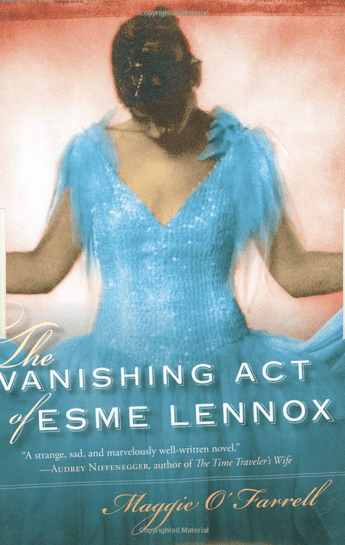
Maggie O’Farrel’s The Vanishing Act of Esme Lennox is also a book club pick, but oh, what a pick! I remember somewhere reading a review; I might never have picked this book up if I hadn’t needed to read it for the club. And oh, what I might have missed!
It’s like the scariest book ever written, scary in a Margaret Atwood kind of way, a reminder that women have not had rights for very long, and that those rights are still very fragile. When economies go bottoms-up, when unemployment begins rising, women are often the first to suffer, and women’s rights the first to go. In hard times, men will be preferred hirings, because they have families to support, laws to “protect” women are passed, especially laws which “protect” her finances, meaning gives the power of the money management to some man to do for her, or “protect” her person by requiring that some man accompany her to keep her from dangers. Protection = control. It keeps some smart, thinking women submissive to men who are in every way their inferior.
In Vanishing, Maggie O’Farrel writes of such a woman, Esme Lennox, who is a fey spirit, born in India, with the eyes of an artist. While her “good” sister Kitty obeys the rules, walks the straight and narrow path, Esme is messier. As she grows to adolescence, her eccentricity and her rebellion against the constricts of the life in turn-of-the-century Scotland chafe, she yearns for more room to breathe, intellectually, socially, as her family, her community and her society continues to pressure her to conform.
One of the key events in the book is the death of Esme’s baby brother, of typhoid fever. Abandoned, Esme sits holding her dead brother’s body for three days until her family returns (the baby-keeper also died and the other employees deserted while Esme’s family was away). Esme is devastated, but the focus is on her mother, who is wrought with guilt and isolates herself, and Esme, only a little girl, is forbidden to even say her beloved baby brother’s name. Part of what plays a huge role in this book is society, expectations, and all that is hidden and unspoken – as Esme becomes, a family secret, locked away for sixty years.
Their grandmother swept into the room ‘Kitty,’ there was an unaccustomed smile on her face, ‘stir yourself. You have a visitor.’
Kitty put down her needle. ‘Who?’
Their mother appeared behind the grandmother. ‘Kitty,’ she said ‘quickly put that away. He’s here, he’s downstairs . . . ‘
. . . .
Esme watched from the window-seat as her mother started fiddling with Kitty’s hari, tucking it behind her ears, then releasing it. . . . . Ishbel turned and, catching sight of Esme at the window, said ‘You, too. Quickly now.’
Esme took the stairs slowly. She had no desire to meet one of Kitty’s suitors. They all seemed the same to her – nervous men with over-combed hair, scrubbed hands and pressed shirts. They came and drank tea, and she and Kitty were expected to talk to them while their mother sat like an umpire in a chair across the room. The whole thing made Esme want to burst into honesty, to say, let’s forget this charade, do you want to marry her or not?
She dawdled on the landing, looking at a grim, grey-skied watercolour of the Fife coast. But her grandmother appeared in the hall below. ‘Esme!’ she hissed, and Esme clattered down the stairs.
In the drawing room, she plumped down in a chair with high arms in the corner. She wound her ankles round its polished legs and eyed the suitor. The same as ever. Perhaps a little more good-looking than some of the others. Blond hair, an arrogant forehead, fastidious cuffs. He was asking Ishbel something about the roses in a bowl on the table. Esme had to repress the urge to roll her eyes. Kitty was sitting bolt upright on the sofa, pouring tea into a cup, a blush creeping up her neck.
Esme began playing the game she often played with herself at times like this, looking over the room and working out how she might get round it without touching the floor. She could climb from the sofa to the low table and, from there, to the fender stool. Along that, and then –
She realized her mother was loooking at her, saying something.
‘What was that?” Esme said.
‘James was addressing you.’ her mother said, and the slight flare of her nostrils meant, Esme knew, that she’d better behave or there would be trouble later.
As with many inconvenient women, Esme ends up committed at a loony-bin, and sixty years later, is released into the custody of a grand-niece who never even knew Esme existed.
The thoughts, trials and escapades of three women, Esme, her sister Kitty, and Iris, the grand-niece, intertwine through out the book, and the picture is cloudy at first, blurry, shifting, fragmented The pattern becomes more and more clear as the three threads of thought are woven – ever more tightly – together.
I could not put this book down. Finding out how the picture came together became more important than checking my messages, my blog, or fixing dinner. It was compelling, and resulted in a quick and unforgettable read.
The Paper Moon by Andrea Camilleri
Ahhh! Another book about corruption, but this one is no where near so painful for me to read as The Appeal by John Grisham, because this one is set in Sicily, where we expect a certain level of corruption, and Italy, where the whole system operates by rules we can barely begin to comprehend, but it is ITALY, and fascinating, and funny, and another great page turner for these hot hot hot summer days.

Andrea Camilleri has a whole series of books about Inspector Montalbano, which I love almost as I love the Donna Leon series about the Venetian, Guido Brunetti. Brunetti has the edge because he is married and has a family, and it IS Venice – no competition there, Venice will always win, hands down. But Inspector Montalbano’s single status allows for a whole different flavor permeating his investigations, and he, like Guido Brunetti, shares the Italian reverence for really great food.
I didn’t want to fix dinner. I didn’t want to get out of bed. All I wanted to do was to read the whole book, and, when I finished, I wanted another one!
Inspector Montalbano is asked by a woman to find her missing brother, and he finds him almost immediately, dead, under bizarre circumstances. The brother has a very large amount of money unaccounted for, and unaccounted in terms of earnings, as well. He is a pharmaceutical representative, good at what he does – but he still has way too much money, and Inspector Montalbano finds he is rather fond of the prime suspect.
In the meantime, his office has also been tasked to find the reason several high level politicians have suddenly died, purportedly of a variety of causes, but in reality, all have died of drug overdoses. The problem is, that finding the culprit means exposing the reality of high level drug usage, and the inspector realizes the case has been dumped on his office because no one wants to take responsibility for what happens when the culprit is caught. It’s all very Italian, very Sicilian.
Between investigations, Inspector Montalbano eats some amazing meals. 🙂 He takes his glass of wine and walks in the sand out to the sea. We get to know the characters working out of his office better, and to appreciate their quirkiness. This is a great series, a lot of fun. I think I need to go to Sicily for a visit. I definitely need some Italian food and a glass of vino!
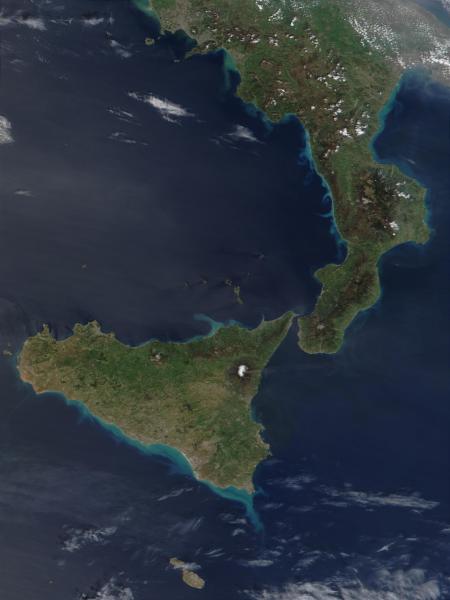
Photo courtesy of http://visibleearth.nasa.gov/)
From time to time a word or phrase would appear that required going to the back of the book where the word is not only translated, but the concept explained, something crucial when reading a novel from another culture. In this series, it is particularly valuable, as the background for the crimes and their investigations with political implications, and if you don’t understand the politics, you can miss the point of the novel.
I found this book at Amazon.com. for a mere $10.19 plus shipping.
The Appeal by John Grisham
One of the things I like about John Grisham is that he really likes the underdog. In his books, the person often the least likely to prevail does so, usually because he has a smart attorney, one who is paying attention and taking good care of the client. Warning – this book review contains a spoiler, so don’t go any further if you don’t want to know too much about the plot and resolution.

The Appeal is the exception. No one wins, not even the apparent winner, who sails off in the end with his empty, unsatisfying life. He schemes, he exploits, he lies, he buys elections, and he makes a fortune – and he isn’t satisfied. He is married to a woman who sounds more like a greyhound, all skin and bones and self-absorption.
The subject matter is a case where a chemical company has dumped toxic wastes into the ground in Mississippi, it has penetrated into the groundwater, and polluted the entire water system of a small fictional town. Two lawyers, married to one another, sacrifice everything and face bankruptcy to win a case for their client who has lost both husband and son to cancer caused by the toxic chemicals dumped. They win.
There is an appeal.
What this book is about isn’t just about groundwater contamination, or even about buying elections in Mississippi – it is an indictment of every state that elects judges. The core of the novel is about how big money, big corporations, pick candidates and fund them, legally and illegally, and insure that they win. They pack the courts with judges who are opposed to large settlements.
God bless John Grisham. With all his great legal thrillers, he has made a bundle and can take risks like writing a book like The Appeal, which should be an eye opener, and should be read by every caring citizen.
Judges should not be elected. When the judiciary are elected, they have to think about their next election, with every legal decision. It taints objectivity. It corrupts objectivity. It eliminates objectivity. Without an objective judiciary – why bother? They will always rule on the side whose interests are the most powerful and profitable.
Here are a couple quotes that tell you where the novel is going. My Kuwaiti friends are going to love this – I have taken so many shots at Kuwait corruption – so here it is, my friends, exposure of the institutionalized corruption in my country:
Barry laughed and crossed his legs. “We do campaigns. Have a look.” He picked up a remote and pushed the button, and a large white screen dropped from the ceiling and covered most of the wall, then the entire nation appeared. Most of the states were in green, the rest were in a soft yellow. “Thirty-one states are in the green. The yellow ones have the good sense to appoint their courts. We make our living in the green ones.”
“Judicial elections.”
“Yes. That’s all we do, and we do it very quietly. When our clients need help, we target a supreme court justice who is not particularly friendly, and we take him, or her, out of the picture.”
“Just like that.”
“Just like that.”
“Who are your clients?”
“I can’t give you the names, but they’re all on your side of the street. Big companies in energy, insurance, pharmaceuticals, chemicals, timber, all types of manufacturers, plus doctors, hospitals, nursing homes, banks. We raise tons of money and hire the people on the ground to run aggressive campaigns.”
* * * * * * * *
The Senator did not know who owned the jet, not had he ever met Mr. Trudeau, which in most cultures would seem odd since Rudd had taken so much money from the man. But in Washington, money arrives through a myriad of strange and nebulous conduits. Often those taking it have only a vague idea of where it’s coming from; often they have no clue. In most democracies, the transference of so much cash would be considered outright corruption, but in Washington the corruption has been legalized. Senator Rudd didn’t know and didn’t care that he was owned by other people. He had over $11 million in the bank, money he could eventually keep if not forced to waste it on some frivolous campaign. In return for such an investment, Rudd had a perfect voting record on all matters dealing with pharmaceuticals, chemicals, oil, energy, insurance, banks and on and on.
I like almost every book I read by John Grisham. He is a man with a conscience, and he is trying to raise our awareness of corruptive factors before our system goes entirely under. I couldn’t put this book down, and I can hardly wait to read the next one.
Alexander McCall Smith: Tea Time for the Traditionally Built
This brand new book in the No. 1 Ladies’ Detective Agency series could not have come at a better time for me. Sorting through, giving away, selling my car – it all takes a toll. It’s a little like dying, this moving. I know I will be “resurrected” in another life, but in the meanwhile, I have so much grief, and I just stuff it away and keep going. These books are my carrots; they are my reward at the end of the day.

I have a stack of books and I am going through them like a locomotive – just chugging along.
Mma Precious Ramotswe and her totally different world in Botswana sweep me away totally. I love the sweetness of the way she thinks, her love for her country, and her tolerance. In Tea Time for the Traditionally Built, several things are going on at once, not the least of which is that she, also, must part with her dearly loved little white van, which has gone as far as it can go, and can go no further. The engine cannot be revived, not even one more time, by her dear husband, mechanic J.L.B. Matekoni.
Just in time, just when they need a new customer, comes Mr. Molofololo, the owner and manager of the Kalahari Swoopers, who hires Mma Ramotswe to find the traitor who is causing the Swoopers to lose their games.
Last, but not least, Mma Makutsi’s fiancee (she is the Assistant Detective now, remember?) Phuti Radiphuti, is being assaulted by Makutsi’s old rival from the secretarial school, Violet Sephotho, who is looking for a rich husband, and would love to steal Grace’s fiancee away, for all the worst reasons. How can plain Grace, with her big glasses and her unfortunate complexion, compete with the glamorous and seductive Violet? Can Phuti resist her wiles?
When I reached the last ten pages of the book, none of these crises had been resolved, and I thought “Oh no! How can the book end with all these loose ends out there?” but in a deft drawing together, McCall vanquishes the devils, finds simple solutions, and leaves us with Mma Ramotswe and Mma Makutsi having tea together at the President Hotel.
This book is a great way to end the day with a smile on your face. 🙂 I bought this book for $21 in a bookstore, but Amazon has it for $14.37 plus shipping. I don’t buy a lot of hardcover books, but this one was worth every penny.
Eliot Pattison: Prayer of the Dragon
As you can see, I am into some serious reading. Not heavy reading, but books like carrots – I am the donkey, plodding way, packing my boxes, sorting, weeding, throwing out – it is time consuming, and it is pitiless work. I need the promise of a great excape at the end of my day to keep me going.
Prayer of the Dragon was a GREAT carrot. I like all of Eliot Pattison’s Inspector Shan Tao Yun series, set in Tibet. In his very first book, we meet Shan as he is still in the Tibetan prison camp, imprisoned for exposing corrupt officials in China. He learns a huge appreciation, in prison, for a different way of thinking, and his treasured companions become the Bhuddist monks with whom he is imprisoned. If you want to read this series, you can read any book as a stand-alone, but it helps to read them in order, starting with The Skull Mantra. The Chinese eventually free Shan; they find him useful – as long as he is not exposing corruption in the Chinese bureaucracy. He is free on parole; he lives with the sword over his head. At any time, if he crosses an important person, he can be sent back to the merciless gulag.

In The Prayer of the Dragon Inspector Shan finds himself involved in a series of murders on the mountainside, in a small mining village. The village headman has a great scam going, skimming the miners take, charging passage on the mountain trails, and keeping his village hidden from the Chinese bureaucracy.
Here is what I learned that surprised me. There appears to be a connection between the American Navaho nation and the native Tibetans. They share some body-prototype similarities, and they share many symbols and earliest legends. An first-nation Navaho and his niece are exploring similarities, and commonalities, when two members of their party are murdered while sleeping. The Navaho is charged, by the headman, with the death, because he survived although he is covered in blood. It doesn’t make sense, but it doesn’t have to. The headman needs a scapegoat, and he chooses the Navaho.
It is a fascinating read. Here is an excerpt from a conversation Inspector Shan has with the local director of Public Security:
“I know your type so well, Shan, ” Bing said. “God, how well I know you. I was responsible for ten barracks of prisoners, like you – pathetic, morose creatures with no vision, only bitterness about the past. They would sit in reeducation classes and copy out slogans from the little red books like robots, praising the Chairman, reading aloud apologies printed in other books, using someone else’s words. Never a one among them with the balls to stand up and say Fuck the Chairman, screw the Party secretaries, and screw the limo drivers who brought them to town.”
“I tried at first,” Shan replied in a weary voice. “They sent me to a special hospital for the criminally insane.”
“Unfortunately,” Bing said soberly, “you are the sanest person I have ever met.”
AdventureMan knows I love these books. “Do you want to go to Tibet?” he asks me, and I say “No, if I went I would want to hang around with Inspector Shan and his gang of monks, not do tourist things allowed by the Chinese.” These are great reads, Pattison is doing a great job of bringing the plight of the Tibetans to the conscience of his readers, depicting, in graphic, horrorific detail how the Chinese are systematically crushing and obliterating every shred of Tibetan culture, while claiming they are not. I think one of the very worst things they have done is taking over the Tibetan monastery system and corrupting it into something it was never meant to be, a cruel, ugly deformity.
I can hardly wait for the next book to come out. I am on the waiting list for The Lord of Death, yet another book about Chinese bureaucratic corruption and the adventures Inspector Shan has in Tibet confronting and evading all its manifestations.
Susan Wittig Albert: Nightshade
In her ongoing China Bayles mystery series, China and her husband investigate the death of China’s father, with some amazing outcomes.
These are not heavy reading. This series features a burned-out criminal defense lawyer, who, sick of the slime and the jockying for power and position, cashes in her retirement plans and buys a shop in the small fictional town of Pecan Springs, Texas, where she opens an herbal shop, Thyme and Seasons, which sells live potted herbs, but also herbal wreaths, herbal soaps, herbal bath bombs, herbal teas, herbal shampoos, etc – and shares space with a new age shop called The Crystal Cave, a tea shop called Thyme for Tea, a catering company called Party Thyme and a personal chef service called Thymely Gourmet. She and her girlfriends have a lot of fun.
And, somehow, even in this idyllic life, mysteries seek out China, and she is often involved in crime-solving outside of her normal business. This time, her brother – the brother she never knew she had, the brother her father had with his secretary while China was growing up, wondering where her father was all the time – is murdered, in what appears to be a hit-and-run accident, but is no accident at all. Her brother was trying to get China involved with finding out how and why their father died – another apparent accident, which was no accident. When China isn’t interested (she is still very angry with her dad for what she perceives as a betrayal of her and her mother), her brother hires China’s husband as a private detective to examine the evidence. Then – her brother is killed. China gets involved.
It’s great escape reading, but you often end up learning something, too. China is an idealist, fighting crime and corruption, and God knows, there is enough of that, all the world around, to keep a legion of fictional crime fighters busy.
“After I grew up and joined the Houston legal fraternity, I began to understand what was common knowledge in that gossip-driven oil company town: Robert Bayles and his partner Ted Stone had built their legal practice on dubious oil and energy deals, questionable land transactions, and political dirty work. Their clients included polluters, looters and influence peddlers. Both Ted Stone and my father were frequent guests of the Suite 8F crowd, the group of influential conservatives who met on the eighth floor of Houston’s Lamar Hotel and collectively decided who was going to run for what political office, at the state level and beyond. To ensure that their picks – LBJ had been one of them – made it to the winner’s circle, Suite 8F slipped wads of campaign cash into the necessary pockets. Their contributions decided which politicians moved into positions of power and influence.
Just as important, their money brought them preferential treatment when the bidding opened on lucrative government contracts for dams, ships and shipyards, oil pipelines, military bases at home and abroad, NASA’s Johnson Space Center in Houston. The Lamar Hotel was demolished in 1983 to make room for a skyscraper, but the political influence of 8F lingers like a foul odor, a dirty fog. It’s the subject of books, of doctoral dissertations, of documentaries. It’s common knowledge.”

Reading Albert is a great escape. Even knowing that sweet little Pecan Springs is a microcosm of the rest of the world, not untouched by human frailty, it is a sweet place with a culture all its own. China’s life, surrounded by her loving husband, her stepson, all their pets, their friends, the places they eat, it’s all comfortable, an herbal scented different world.
Dean Koontz: The Face
Dean Koontz writes a lot of books with children in them, usually children in very vulnerable positions, abandoned, neglected, or at the mercy of a cruel adult, or at best, a negligent adult. Adults do play positive roles in his books, but the positive adult is usually damaged in some way – maybe a history of alcoholism, a history of broken relationships – in short, a lot like most of us. Real people, who make mistakes along the way, and try to learn something from them.
I like Dean Koontz. It makes me sad to say that this is just another great escape. Young boy, lost in his famous father’s huge mansion, beautiful-model mother who spawned him and then walked away, like a cat leaves her kittens – it’s a sad, lonely life for a child.
There is the usual creepy, badly twisted bad guy.

There is a good guy in pain, mourning his dead wife, and a ghost who intervenes in human affairs. There are deus ex machina aplenty, and a couple page-turner moments where you don’t want to stop reading, not yet!
It was not a bad book, but if I weren’t so desperate for escape reading, I would not have wasted a minute on this book.
Jodi Picoult: Handle With Care
I just finished the latest Jodi Picoult novel, Handle with Care. I was uncomfortable with it at the beginning, as I often am with Jodi Picould novels. She’s like that guest who brings up topics no one else brings up, and sometimes you wish she would stop, but the conversation gets rolling and everyone has an opinion, and the party would be much duller if she weren’t there.
She’s also the friend you would go to if you had an embarrassing problem you couldn’t discuss with anyone else. We all need that kind of friend, an honest sounding board, not afraid to deal with the grit and grime of everyday life.
I know the reason her books make me uncomfortable is that sometimes I see things I don’t like about myself in her characters.

The subject of the book is a disease called osteogenesis imperfecta (OI), and Willow, the youngest daughter, has Type III, which means she was born with broken bones, her bones would break if you picked her up wrong, changed her diaper the wrong way, even if she rolled over. Her bones were brittle, and the slightest thing could cause a break. She is also very smart, and a delightful character.
Picoult takes us inside many heads – the mother, Charlotte, a former pastry chef (Picoult includes some of her very best recipes, YUMMMM), Sean, the fiercely loving father, Amelia, a troubled pre-teen who hides her bulemia and cutting, and Marin, the lawyer, searching for her own birth mother. When Charlotte files a wrongful birth suit against her best friend – and obstetrician – Piper, her life starts to fall apart. It’s hard to believe things could get worse than having a child whose bones break all the time, but things definitely get worse.
What I hated about Charlotte, who has learned to anticipate her damaged child’s needs, is seeing myself through her eyes. Frequently, she shows us our insensitivity to the disabled, how we patronize, how we are oblivious to the simplest needs. Charlotte is a little angry at the world, so protective that she bites back scathing words to outsiders – or doesn’t. People without disabilities – visible disabilities, we all have disabilities, don’t we, just some are visible and some are not? – can be so smug, so unaware of the hardships others face. I cringe when I read this book. I see myself, and I don’t like what I see.
I admire Jodi Picoult. I will read just about anything she has written, because of the courage she has to tackle the most sensitive subjects. This is not a comfortable book to read, but it is a worthwhile book to read.
The Thirteenth Tale – Setterfield
After reading some heavier stuff, I needed a break, and waiting on my “read me!” bookshelf has been this book, The Thirteenth Tale, another one of those I pick up at the last minute and stuff into the last remaining centimeter of space in my overstuffed suitcases. Nobody recommended it, it just looked like it might be good.
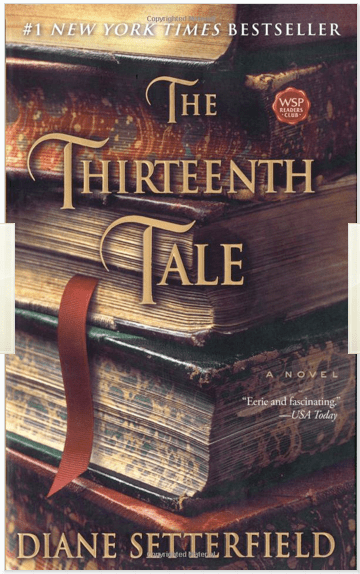
It was good, although now I can’t think of anything so gripping about it. Setterfield took the classic gothic novel – she mentions Jane Eyre frequently – and updates it, makes it modern and personal. It was a good, fun read, had me hurrying through my daily “must-do’s” so I could read more – I like a book like this now and then.
And – the main character, Margaret Lea, loves books. 🙂 She works in her family old-books business, leads a quiet, kind of sad life, haunted by the loss of her own twin early in life. When contacted by famous novelist Vida Winter to write her biography, she is intrigued, and accepts the job offer, which involves going to stay in Vida Winter’s house.
Part of what is fun reading this book is that we are dealing with an “unreliable narrator” with Vida Winter. Sometimes she is lying, sometimes she is lying by omission, and part of the mystery is that Margaret must try to verify what she has been told and try to figure out what has been left out. She has a great adventure in the process.
This is great escape reading. Good for a long plane trip, good for sitting by a sick relative in the hospital, good for using as a carrot (“if I get this done, and this, and this – then I get to go read ‘The Thirteenth Tale!’ “) You can buy it on Amazon.com for around $10 paperback.
Quote from The Thirteenth Tale by Diane Setterfield
“People disappear when they die. Their voice, their laughter, the warmth of their breath. Their flesh. Eventually their bones. All living memory of them ceases. This is both dreadful and natural. yet for some there is an exception to this annihilation. For in the books they write they continue to exist. We can rediscover them. Their humor, their tone of voice, their moods. Through the written word they can anger you or make you happy. They can comfort you. They can perplex you. They can alter you. All this, even though they are dead. Like flies in amber, like corpses frozen in ice, that which according to the laws of nature should pass away is, by the miracle of ink on paper, preserved. It is a kind of magic. “
Maybe that’s why we blog, hoping for a little immortality? Or maybe that’s why we delete entire blogs, entire entries, uncomfortable with the thought that this passing mood or passion will live to be an embarrassment?
Recent Comments
ExpatAlien on What Country am I Living … intlxpatr on Yellowstone: Old Faithful to C… Michelle on Yellowstone: Old Faithful to C… Cathy on No Grown-Ups in Charge intlxpatr on Waiting for Snow Wikipedia Donate Button

Amazina


Early Voting in Florida


 Here There and Everywhere