Target Hack Letter – I Believe it is Real
Yes, I shopped at Target during the worst time, the time when all customers using a credit card had their information taken by system hackers.
Yes. I used a credit card. I’ve been monitoring my account closely since, and am considering going ahead and changing out this card for another. It is annoying and inconvenient, but less inconvenient having my account compromised.
Today I received this letter from Target – the reason I think it is really from Target is because it doesn’t ask me to click anything and enter my important information:
|


Saudi Women Working in Shops
This weeks New Yorker, with a delightful cartoon of Pope Francis on the cover, making snow angels (Isn’t it great to see a powerful man having so much fun doing his job?)

. . . there is also a truly wonderful article, sympathetic and well written, about Saudi women being allowed to work in select shops. New Yorker only allows me to print an few lines from the article, but I loved how it captured the delight these women take in having a little bit of life outside the home to call their own. It also covers the dilemma of dealing with the religious police, the Muttawa, who are in a fit because now women will be in contact with MEN and who knows what might happen?
I had not read anything in the papers – our papers rarely cover smaller details of life in the Middle East. We were there when men were in every shop, selling underwear, selling abayas, and not a woman to be seen. This is a major change, done so so quietly, and women who need more space to breathe are finding a little bit of that space.
Not every woman wants to work outside the home, but many are bored and restless. When they talk about working, they talk about the friendships they form with other women, the pride they take in having a purpose to their daily life, and the increased respect with which they are treated by family members – all good things. The article is sensitively and sympathetically written.
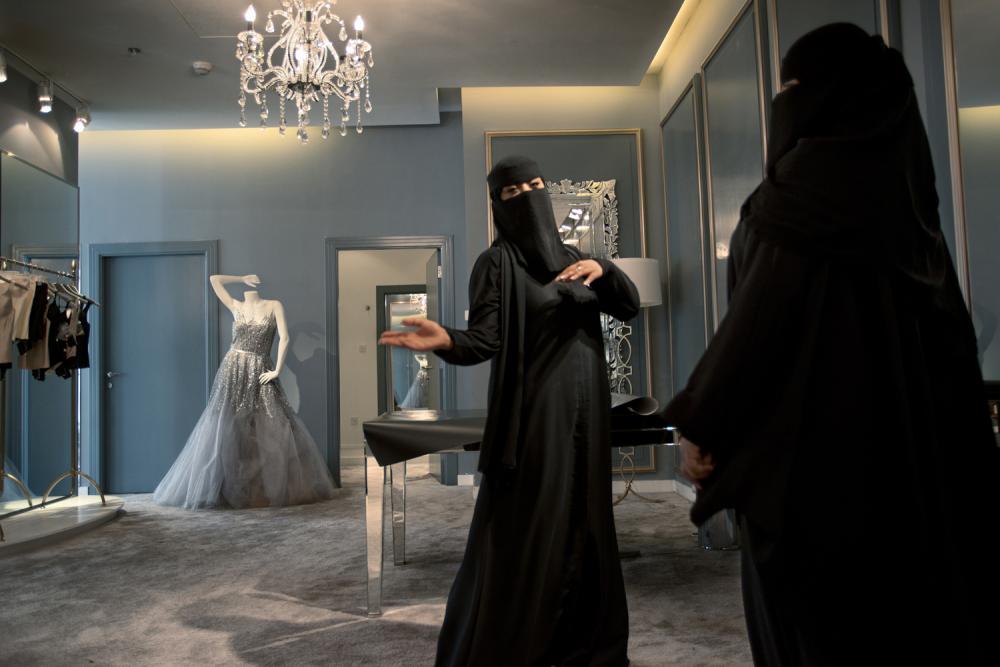
LETTER FROM RIYADH SHOPGIRLS: The art of selling lingerie.
BY KATHERINE ZOEPF
DECEMBER 23, 2013
A women’s revolution has begun in Saudi Arabia, although it may not be immediately evident. This fall, only a few dozen women got behind the wheel to demand the right to drive. Every female Saudi still has a male guardian—usually a father or husband—and few openly question the need for one. Adult women must have their guardians’ permission to study, to travel, and to marry, which effectively renders them legal minors. It took a decree from King Abdullah to put tens of thousands of them into the workforce. For the first time, they are interacting daily with men who are not family members, as cashiers in supermarkets and as salesclerks selling abayas and cosmetics and underwear.
One afternoon in late October, at the Sahara Mall, in central Riyadh, the Asr prayer was just ending. The lights were still dimmed in the mall’s marble corridor, but the Nayomi lingerie store had been unlocked. The rattle of steel and aluminum could be heard as security grilles were raised over nearby storefronts. Twenty-seven-year-old Nermin adjusted a box of perfume on a tiered display near the entrance, then turned to greet six saleswomen as they filed out of a storeroom, preparing to resume their shift. Nermin started working at Nayomi eighteen months ago, as a salesclerk herself. She was warm and engaging with customers, and was recently promoted to a position in which she oversees hiring and staff training for Nayomi stores across four Saudi provinces. All the employees wore long black abayas and niqabs, which revealed nothing but their eyes. They positioned themselves among the racks of bras, underpants, nightgowns, and foundation garments—black-cloaked figures moving against a backdrop of purples, reds, and innumerable shades of pink.
Nermin is one of the Nayomi chain’s longest-serving female employees. She was hired nearly a year after King Abdullah issued a decree, in June of 2011, that women were to replace all men working in lingerie shops. Early in 2012, on a visit to the Nayomi store in a mall near her house with her younger sister, Ruby, Nermin noticed a poster advertising positions for saleswomen. The sisters had never considered working, since there were virtually no jobs for women without a college degree or special skills. Nermin and Ruby mostly spent their days watching television, exercising, and surfing the Internet. In a blisteringly hot city with few parks, the mall was one of the only places to go for a walk. They filled out applications on the spot, and their family encouraged the idea. “I was surprised to find that I like to work,” Nermin said. Ruby, who got a job at the same store, is now the manager there. She wore its key on a yellow lanyard around her neck; pink-trimmed platform sneakers were visible beneath the hem of her abaya. After graduating from high school, she had spent four years feeling increasingly trapped at home, she said. “Nayomi gave me the chance to go on with life.” . . .
The Miracle of Giving (WestJet)
Thank you, friend Hayfa, for sending me this wonderful website. It kept me spellbound, made me laugh, and left me in tears of joy. You can see that the givers were enjoying it as much as the receivers.
Killing the Golden Goose in Pensacola
Every place we have ever lived in has it’s own politics, and the politics in Pensacola are opaque, and to me, bizarre. We have a very pretty mayor – great for photo ops – but WHAT IS HE THINKING???? He displays some of the very worst traits of the old-boy way of doing business. What are those traits? How about telling one of the top grossing restaurants in Pensacola that they now owe $5M because they haven’t been paying a percentage of their revenue to the City of Pensacola? How about voting a Dollar Store into an upper level residential neighborhood? Singlehandedly re-naming a small airport without a single international flight Pensacola “International” airport? How about allocating all the food services at our “International” airport to bland chains, rather than some of our really good local vendors?
Lots of behind the scenes machinations, not putting items on the agenda – countering the spirit of the Sunshine Laws and making the deals in public – giving those who will be impacted some input on the measures.
It’s killing the golden goose. When something is working – and the Fish House restaurant is a go-to place in Pensacola, a place you meet up with friends and a place you take your out-of-town visitors to show off the city – LEAVE IT ALONE! When good people like the Studers and Collier Merrill are investing in downtown Pensacola, and building downtown up as a destination, let them make a buck or two – they are breathing life into the city! Do not kill the golden goose!

“The Emperor Has No Clothes!”
In contrast to some of the places we have lived, Pensacola has an outspoken paper – Our favorite newspaper, Rick Outzen’s Independent News has several wonderful articles this week. It’s where you find out what is really going on in Pensacola. His paper will bravely call out when the emperor has no clothes. I have shamelessly copied and pasted from his website at the Independent News:
How Not To Do Business
 City vs. The Fish House
By Rick Outzen
The title of the Pensacola News Journal’s (PNJ) article on Tuesday, Nov. 26 could have easily been “Mayor Accuses Fish House of Cheating City Out of Millions.” It wasn’t, but that is how some interpreted the article about the default notice sent on behalf of Mayor Ashton Hayward to Collier Merrill, co-owner of the restaurant.
But PNJ readers didn’t know what Merrill knew—that the notice was a negotiation ploy by the city, unsupported factually or legally, according to his attorney. They also didn’t know that the notice itself was leaked, Merrill believed, to the media to hurt his business.
The notice demanded that Seville Harbour, Inc. (owned by Ray Russenberger) and Merrill Land LLC (owned by Burney, Collier and Will Merrill) pay as additional rent payments five percent of The Fish House and Atlas Oyster House’s gross sales since April 2000, plus interest—an amount that could total well over $5 million.
Seville Harbour, Inc. has the ground lease for Pitt Slip, the name given to the three parcels owned by the city that include the anchorage between the Port of Pensacola and Bartram Park. Merrill Land LLC bought in April 2000 the building on the property from Seville Harbour for $1.3 million and subleased the parcel upon which it was built.
The default notice stated that the two companies had 90 days to pay up or the city would terminate the master lease, which would shut down the two restaurants on Feb. 13, 2014.
The impact of the article on The Fish House was immediate. Merrill tried to prepare his staff for any questions from customers.
“I had a meeting with the managers the next morning at 9:30 after the written article came out,” he said. “As much as you can say everything is fine, a few were a little hesitant. They were getting calls from other restaurants; one guy was offered a job.”
Jean Pierre N’Dione, the general manager of the two restaurants, said that the holiday business has been slower than prior years. He’s also dealt with questions from customers.
“The day of the article, a couple came in and said they were here to get a meal before the restaurant closed,” said N’Dione. “They were thinking we were going to be shut down in a few days. It was difficult to say if they were jokingly saying that or if they really believed it.”
The restaurant’s party and catering businesses have also been hurt by the city’s threat.
“We’ve definitely lost business,” said Merrill. “Over Thanksgiving weekend, there were brides in town booking their parties for next October. They didn’t want to take the chance that we might not be in business next year. People are now hesitant to book their Christmas parties with us.”
Why would the mayor’s office resort to such strong-arm tactics? Many would expect a default notice to be sent by Mayor Hayward only after his negotiations with Seville Harbour and Merrill Land had hit an impasse, especially when the notice is a public record that could hurt two landmark restaurants.
However, there had been no negotiations with the city, though Russenberger’s attorney asked for the leases to be combined in 2009. The leases were properly renewed in July 2011, and the mayor had never sent them any written proposals for the properties.
Merrill told the IN that he had only two meetings with the Hayward administration on the lease—one in 2011 with City Attorney Jim Messer and then Chief of Staff John Asmar, the other this past September with City Administrator Colleen Castille. Neither time did the city officials bring up anything about the restaurants owing millions in back rent. Never did the city ask for five percent of his restaurants’ sales.
“We have been waiting for the city to get back to us,” said Merrill. “We had no idea this was an issue or the mayor’s position on the leases.”
Pensacola Landmark
For many, The Fish House is an iconic Pensacola landmark.
The restaurant has hosted presidents, governors, senators, congressmen and other celebrities. During the 2008 presidential election, John McCain, Rudy Giuliani and Fred Thompson held campaign fundraisers there. This past election cycle, GOP presidential hopeful Mitt Romney, with McCain, actor Jon Voight and Mayor Hayward, held a rally on The Fish House deck, pictures of which appeared in the Washington Post and New York Times.
Chef and co-owner Jim Shirley has served his famous Grits a Ya Ya for dignitaries in Washington, D.C. and New York City. Pensacola native, former congressman and author Joe Scarborough has hosted his MSNBC show “Morning Joe” several times from the restaurant.
Three reality shows have been filmed there. The Travel Channel aired an episode of “Bizarre Foods” that featured The Fish House’s grouper throats. “American Pickers” also filmed an episode from The Fish House, which featured the Merrill brothers trading some of their memorabilia for a model of the USS Atlanta. This past August, Chef Emeril Lagasse showcased The Fish House as part of his show “Emeril’s Florida” on the Food Network.
The Fish House and Atlas Oyster House have made Pitt Slip a destination for many visiting our area, serving an estimated 500,000 customers a year. They also are part of what was one of the city’s first public-private development projects.
In the 1980s, the Pensacola City Council wanted a marina built on Pitt Slip, the inlet across from the town’s historic district and outside the gates of the Port of Pensacola. Three parcels were combined—the water area for the docks (Parcel 1), the area along Barracks Street that the city leased from the state (Parcel 1A) and the lot south of the marina (Parcel III).
The intent was to lease to a developer the parcels for 30 years with a renewal option for an additional 30 years. When the original lease was executed in 1985, the city learned that its lease for Parcel 1A with the state only had 27 years remaining. The city had to amend the original lease to adjust its end date. The state required that it be renewed for five successive five-year periods.
The history of the development was filled with ownership changes and business failures. The project never was as successful as the council had hoped until Russenberger and the Merrills got involved.
In January 1998, Chef Jim Shirley rented the space formerly used by the closed Beef & Ale House in the Seville Harbour building on Parcel 1A. He opened the Fish House with Brian Spencer and Dr. Roger Orth as his investors. By the spring, Merrill brothers stepped in as investors in The Fish House, forming Great Southern Restaurant Group of Pensacola, Inc. that put about $2 million into the restaurant, according to Merrill. Spencer and Orth focused on Jackson’s, a restaurant they were opening on Palafox.
“At the time, my brothers and I had invested in several businesses downtown,” said Merrill. “We bought the Bass building on the corner of Palafox and Gregory and were the landlord to Jim Shirley and the Screaming Coyote. We bought Seville Tower on the corner of Palafox and Government streets, which is where my grandfather had his offices in the 1940s.”
He said, “We wanted to move downtown. At the time, our offices were near the mall at Madison Park. Though not a lot was going on downtown, we loved it and saw the potential.”
In 2000, Merrill learned Russenberger was looking to sell the Seville Harbour building. Merrill Land LLC, the brothers’ real estate development company, bought it for $1.3 million and agreed to sublease the ground lease for parcel 1A upon which it was built at the same terms of the master lease. The purchase and sublease were both recorded with the clerk of courts.
Great Southern Restaurant Group went from renting from Seville Harbour, Inc. to renting from Merrill Land LLC.
“Merrill Land got a loan to buy the building, on which it is still making payments,” said Merrill. “It’s like any business. It rents out spaces. We charge rent and hope that those collections are enough to cover our mortgage, lease payment to Russenberger for the ground lease, utilities, repairs and maintenance. At the end of the day, we hope to make a profit like any landlord does.”
Merrill admitted he has been surprised by how much he has come to like the restaurant business. He enjoys the positive feedback he receives from customers and is proud of the role The Fish House plays in the community.
“Maria Goldberg, our marketing director, and I get together once a week,” said Merrill. “We go over all the requests for donations from charities, and there’s always a stack of them. We try to help every one of them, from the high school booster clubs to the NICU at Sacred Heart.”
The Fish House caters events for charities, hosts parties and donates appetizers and the services of its chefs for other fundraising events. He said, “We’ve tried to be good citizens by giving back to the community, trying to get downtown going and helping to promote Pensacola.”
Legal Battle
The default notification from the city asserted that it was entitled to five percent of the gross sales of the restaurants because Merrill Land had been partially assigned the master lease when it bought the Seville Harbour building. The city claimed Great Southern Restaurant Group was a subsidiary or business combination of Merrill Land and therefore should have paid rent based on its gross sales.
Attorney Bruce Partington responded on Nov. 27 on behalf of Seville Harbour and Merrill Land LLC.
First, he made it clear that the leases had been properly renewed. According to Partington, the renewals required nothing more than delivery of a written notice. The letter exercising the renewals was sent July 21, 2011 by Leo Cyr on the behalf of Seville Harbour.
Seville Harbour never partially assigned its lease to Merrill Land.
“Seville Harbour retains multiple rights and duties with respect to the property sub-leased to Merrill Land,” said Partington. “The fundamental concept of an assignment is that the assignor’s entire interest is transferred to the assignee which did not occur here.”
He pointed out that the city had refused in 2000 to approve any assignment to Merrill Land, which is why the transaction was done as a sublease. He asserted that the city’s new position of the relationship between the two companies being an assignment was “irreconcilable and fundamentally inconsistent” with its position 13 years ago.
He pointed out the two restaurants are not owned by Merrill Land. The owner, Great Southern Restaurant Group, “is not, and has never been, a ‘subsidiary or business combination’ of Merrill Land.”
“Merrill Land has no ownership or other interest in Great Southern Restaurant Group, nor does Merrill Land receive any portion of the revenues from the operation of the restaurants on the property.”
Partington believed that the city’s position is without merit and based on “two dubious propositions which are unsupported factually or legally.”
He expressed Merrill’s concerns about how the daily newspaper got wind of the letter one day after the certified letter was received.
“It is extremely troubling that Seville Harbour’s multiple attempts over several years to meet with representatives of the city to discuss the lease were ignored,” wrote Partington, “and then, after years without a response, receive a notice of default, which was then leaked by the city to the media for dramatic effect.”
He put the city on notice that it was responsible for any damage that the leak may have caused Great Southern Restaurant Group.
The Leak
Merrill admitted that when he first received the letter from Daniel he was not that concerned. He was surprised the attorney brought up gross sales, but believed that the restaurants were on solid legal ground.
He said, “I wasn’t really worried about it. I don’t even think I told my brothers about it because I knew it was baseless.”
He sent the letter to Stephen Moorhead, Russenberger’s attorney, to review. Then on the afternoon of Thursday, Nov. 21, Merrill received a call from the PNJ saying that they had heard about a letter sent to him saying The Fish House owed the city millions of dollars. The reporter would not tell him how they got that information, but he admitted they had not yet seen the letter.
Merrill called City Administrator Colleen Castille, who denied any responsibility for the leak. “Colleen, I don’t think you understand the severity of this. This is going to be a front-page story and I’m going to lose business immediately.”
A meeting was set up for the following morning between the daily newspaper, Castille and Merrill. He hoped that the City Administrator, whom he had given the details of the leases in September, would say the letter was wrong. That did not happen.
According to Merrill, she said the letter was a negotiating tool.
“I said that’s fine if you want to sit down at the negotiation table. We’ve been wanting to do it for years,” Merrill recalls what he told Castille at the meeting.
“But to say something that bad about my business is just wrong. I told the City Administrator that to send out a totally baseless letter with inaccurate facts to hurt my business is almost criminal.”
The IN asked the city for an interview with Castille for this article. The city’s communications director, Tamara Fountain, replied the following week, “Colleen has decided not to do any further interviews.”
The city did not offer for anyone else to explain the mayor’s decision to send the default notice or talk about the negotiations and did not give the paper permission to talk to its attorney Nix Daniel.
Who does Merrill think leaked the letter?
“Obviously it had to come from the city. It was either someone with the city or they gave the information to someone who then leaked it to the News Journal,” he said. “The last thing I wanted was this inaccurate letter to come out, because it’s hard to get that genie back in the bottle. I knew people were going to think The Fish House owes the city millions and the city was going to shut us down.”
Merrill said that the city knows the letter is totally inaccurate. “We’ve paid every bit of rent we owe. We’ve shared our financial information. I’m shocked that the mayor’s office would use this tactic. We sat down with Colleen, explained all the details of the leases and we thought it was all good—until we got the default notice.”
He said for the city to send out a default notice demanding millions of dollars without any discussion is unconscionable. “We properly and legally renewed our leases in July 2011. We got a letter from the city attorney that our attorney responded to almost immediately. We received nothing in writing until two years later and it’s a baseless default notification about something that the city has never mentioned to us was even an issue.”
Merrill asked, “What kind of message does this to send to businesses looking to invest in Pensacola and possibly partner with the city?”
Editor’s notes: •Collier Merrill owns a five percent interest in the Independent News. Ray Russenberger owns 2.5 percent of the paper. Neither has, or has ever had, any control over the paper’s editorial coverage.
•At the time of print, the mayor and his attorneys had scheduled a meeting for Monday Dec. 9 to discuss Pitt Slip with Ray Russenberger, Collier Merrill and their attorneys.
———————————————
Don’t Forget The Airport
Mayor Hayward has been in a dispute with The Fish House over the food services contract at the Pensacola International Airport.
Hayward recommended to the city council at its Sept. 26 regular meeting the 10-year concession contract should be awarded to OHM Concessions—which included Chick-fil-A, Einstein Bros. Bagels, Surf City Squeeze and Corona Beach House. Collier Merrill’s The Fish House had joined forces with Bagelheads, Varona’s, and Pensacola Bay Brewery to offer a more local option that had placed second to OHM during the selection process.
The issue was tabled at the meeting when Merrill, the other local business owners, their employees and citizens spoke out in favor of their proposal. Since then, Mayor Hayward has pulled the item off the council’s agenda twice.
Those familiar with council politics say the mayor simply doesn’t have the votes to win approval for OHM. Did the mayor’s office leak the default notice to the daily newspaper to tarnish the image of Merrill and The Fish House to gain the one or two votes needed to bring Chick-fil-A to the airport?
“I certainly hope not,” said Merrill, “because I would hate to see them use those tactics (the notification of default and subsequent leak to the media) to win on a completely separate issue and to punish my 250 employees and my family.”
The next week in his “Upwords” newsletter Hayward criticized Merrill and the others who spoke out at the council meeting claiming they “ambushed” the council.
“It is a terrible idea to disregard our objective business processes in response to a few influential people politically strong-arming our elected officials,” said the mayor.
Merrill was dumbfounded by the mayor’s comments.
“I spoke before the city council because City Administrator Colleen Castille said that was what I should do,” he said. “She said she was going to let the Airport Director, Greg Donovan, stand on his own. We could make our argument and then we let the council make the decision.”
After the newsletter, he met with Castille and City Attorney Jim Messer and asked for explanation of the mayor’s comments.
“I asked Colleen, didn’t I do what you told me do?” he told the IN. “Basically she told me that she didn’t think we would be that organized.”
On Tuesday, Oct. 15 at his first “Mornings with the Mayor” session, Hayward bristled when asked about his “ambush” comment.
“That’s what I called it,” said Hayward, “It was an ambush.”
The IN asked how so, especially since Merrill had been instructed by the City Administrator to make his case at the council meeting.
“They did, but in my opinion I said it was an ambush,” said the mayor.
Mayor Hayward said of the upcoming council vote on the issue, “We will see what happens. They might win. If they do, we will move on. We’re going to support them and we’re going to say let’s make Pensacola a better place. I’m a big boy. Sometimes you win ’em; sometimes you lose ’em.”
When the council agenda for its Oct. 24 meeting was released, the food services contract was on it. The following Sunday, Hayward supporter Bob Kerrigan wrote a viewpoint in favor of OHM getting the contract. Ads appeared in the daily newspaper supporting the mayor’s proposal. A website was set up for Hayward supporters to send emails to council members.
Then at the council’s agenda review meeting, City Administrator Castille, on the mayor’s behalf, unexpectedly pulled it off the agenda. The mayor appeared no longer willing to lose on the issue.
The airport food services recommendation was not on any of the council’s agenda. On Dec. 2, Merrill received an email from the city that stated the issue would not come up in December either.
“Please be advised that the Airport Director will not be bringing the Food and Beverage concession lease agreement to the Pensacola City Council during its December, 2013 meeting,” wrote Airport Administration & Contracts Manager Michael Laven. “Both the Director and the Mayor will be out of the country on business. We believe that the scheduling of this concession will take place in January or February of 2014.”
Stay tuned.
American Shedding Reliance on Cars
. . . in bigger cities where good public transportation is available, at least. But across the board, Americans are driving less. When I was a young woman living in Seattle, I took the bus to work. It was fast, reliable and I got to read going to and fro. A generation later, my son would park his car at the park and ride lot and take the bus into downtown. When you have GOOD public transportation, it makes a lot of sense. Found this article on AOL Auto News:
Commuters are shedding their reliance on cars.
They’re not driving to work in their own vehicles as often as they once did. They’re not carpooling with other workers as often. They’re increasingly using public transportation or simply working from home.
Those are the conclusions of a study released this week by U.S. PIRG, which reviewed data from the Federal Highway Administration, Federal Transit Administration and U.S. Census figures.
It says the proportion of workers commuting in private vehicles, either alone or in a car pool, declined in 99 of the 100 largest urban areas in America between since 2000.
Newark, New Jersey saw the greatest percentage of workers put down their keys, with a 4.8 percent drop, followed by Washington D.C., down 4.7 percent and Austin, Texas, down 4.5 percent.
In recent years, there have been numerous indications that Americans overall are shifting away from driving. The number of per capita vehicle miles traveled reached its peak in 2004. This study claims to be the first to specifically look at the decline in American cities.
“Many existing transportation plans continue to reflect outdated assumptions that the number of miles driven will continue to rise steadily over time,” wrote Phineas Baxandall, senior analyst at U.S. PIRG and the study’s author. “Officials at all levels should revisit transportation plans to ensure they reflect recent declines in driving and new understandings of the future demand for travel.”
The U.S. PIRG study details changes that on a market-by-market basis. Among its other findings:
– The proportion of residents working form home has increased in every one of the 100 largest urban areas since 2000
– The proportion of households without cars increased in 84 of the 100 largest markets between 2006 and 2011
– The proportion of households with two cars or more decreased in 86 of the 100 largest markets between 2006 and 2011
One of the more notable trends appears to be the death of carpooling as a commuting option. Between 2000 and 2011, carpooling declined 17.8 percent, according to the U.S. PIRG study. Only 9.7 percent of workers now report they share rides to work.
The results are not entirely surprising: The number of Americans who work from home increased 45 percent between 1997 and 2010, according to an earlier study conducted by the U.S. Census Bureau.
Curiously, the decline in driving hasn’t dampened demand for cars. Automakers expect to sell approximately 16.4 million vehicles this year, according to the latest projections released earlier this week. It’s the best year for auto sales since 2007, when more than 17 million cars were sold.
Pete Bigelow is an associate editor at AOL Autos. He can be reached via email at peter.bigelow@teamaol.com and followed on Twitter @PeterCBigelow.
“Death Knell for OPEC?”
From AOL News – although this is not really news, announcements have been out there for a while.
Massive Oil Discovery Is Deathblow For Saudis
It’s the biggest find in 50 years and the media is completely ignoring it…
It is 6 times larger than the Bakken, 17 times the size of the Marcellus formation, and 80 times larger than the Eagle Ford shale.
All told the recent discovery outside a sleepy Australian town contains more black gold than in all of Iran, Iraq, Canada, or Venezuela.
The current estimates of 233 billion barrels are just 30 billion barrels shy of the estimated reserves in all of Saudi Arabia.
Now, one renowned international energy expert predicts the proven reserves will be much bigger.
“The find may land at 300 or 400 billion barrels, making it one of the greatest unconventional oil discoveries any of us will see in our lifetimes,” says Dr. Kent Moors and advisor to six of the top 10 oil producers and active consultant to 20 world governments.
“It represents a bona-fide redrawing of the global energy map as we know it,” Moors says, “and the mainstream media is completely ignoring it.”
Editor’s Note: Experts value this find at over $20 trillion. To see the one stock that will deliver a record payday, go here.
Where the Hell is Coober Pedy?
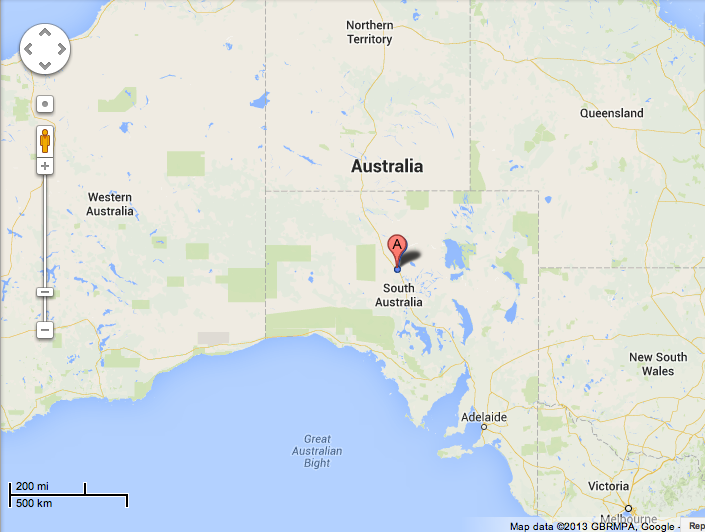
To the people who call this place home, the oncoming oil boom means nothing will ever be the same ($20 trillion worth of oil can do that to a town).
The boom is centered around a place called Coober Pedy, an inhospitable speck on the map in Southern Australia.
The big draw is the riches found in the region’s vast geological structure, the Arckaringa basin.
Encompassing an area in excess of 30,000 square miles, what’s buried within the basin is enough black gold to completely change the global oil landscape-not to mention the lives of early investors.
Analysts believe this is equivalent to investing in Saudi Arabia in the early 1950’s.
And according to this inner circle briefing by Dr. Moors, one little company controls the whole thing.
Editor’s Note: This is the biggest find in 50 years and it will create unheard of fortunes for investors who act now. Watch this unbelievable video to learn more.

The Death Knell for OPEC
This massive find has been likened to the Bakken and Eagle Ford shale oil projects in the U.S., which have created legitimate boom times in Texas and North Dakota.
Even at the lowest estimate, Coober Pedy is set to make Australia a net oil exporter; at the higher estimate, Australia would become one of the world’s biggest oil exporters.
“What we’re seeing up there is a very, very big deposit,” says South Australia’s mining minister, Tom Koutsantonis, “This is a key part to securing Australia’s energy security now and into the future.”
If You Lived Here, I’d Know Your Name: Heather Lende

“You have to read this!” said my book friend, “You’re from Alaska! It’s about a woman who lives in some small town and writes obituaries!”
I grinned politely and put the book in my bag. Some books sound more interesting than other books – I’ve always loved adventures and mysteries and murders – add a little drama to the day-to-day-ness of everyday life. A woman who writes obituaries? Hmmm, not so much.
But spending my afternoons tending to my sweet little 3-month-old granddaughter means I often sit, anchored by the soundly sleeping baby who I don’t want to disturb, even by twitching. I have one hand free – and you can only play so much iPhone Sudoku.
An Alaskan friend had also recommended this book, so early this week I picked it up and started reading.
Oh. my. goodness. Yes, Haines is a small town, but oh the drama of writing obituaries. Oh, the things you learn about your neighbors and the surprises you get learning about their earlier lives. I love the way Heather Lende weaves the writing of the town obituaries with the current ongoing dramas in her own life and in the lives of her friends and makes it work.
It’s not unlike where I grew up, although my hometown had a hospital. We also had moose and bear and elk in our back yards, and learned to treat wildlife with respect, and that the best option was to back away slowly. There are the same senseless deaths from auto accidents, fishing boat accidents and unexpected changes in weather. There is the same feeling of wonder, almost every day of your life, knowing how very lucky you are to live in the midst of such awe-inspiring beauty. It’s hard for me to imagine being an unbeliever living in Alaska.
It’s also a great book to read before going to bed. Some of the books I read are too exciting or too disturbing to read before bed; books that infiltrate your dreams with images and situations that give you a restless night. While Lende deals with death and sadness and drama, there is an underlying message of hope in the neighborliness of your neighbors, the security of living in a town where everybody knows everybody else, in the civility even of people who strongly disagree with one another. If You Lived Here, I’d Know Your Name gives you peaceful sleep. She ties it all together with an ending that rips your heart out; you will never forget this book once you read it. After reading, you will feel like you have lived in Haines, Alaska.
The paperback version is available from Amazon.com for $9.73. No, I no longer own stock in Amazon.com.
Where is Terekeka, South Sudan?

Today the church prays for the diocese of Terekeka, in the South Sudan. I have never heard of Terekeka – have you?
When I looked for it on Google Maps, it didn’t have any information. When I went to The South Sudan and then googled Terekeka, it came up with a reference, and I had to go to this website to find it – they had a map.
The organization who put up the map, Harvesters Reaching Nations, has two locations in the southernmost part of South Sudan, the newest nation on earth. They are building hospitals, and taking in orphans. If I hadn’t gone looking, I would never have heard of the good works they are doing, saving lives, changing lives.
This is what they say:
We currently serve more than 190 orphans in two locations in South Sudan – Yei and Terekeka. Our school in Yei provides a Christian education to more than 500 students. In addition to our school-age orphans, more than 400 children from surrounding villages attend our school.
The Harvesters campus in Yei consists of 90 acres of land donated by the South Sudan government. Since our beginning in 2001, we have built homes, dorms, classrooms and other facilities within a fenced-in campus. We use the land we own beyond the fencing for planting and growing corn, tomatoes and other vegetables for use in the orphanage.
Harvesters’ campus in Terekeka, South Sudan opened in 2010. At this campus, we currently provide care for 44 orphans, but will grow to 80 in the near future. We have built homes, dorms and a clinic within a five acre, fenced-in campus. Additional facilities, including a church and school classrooms, will be built in the near future as the needs and resources dictate.
To do this, they sold everything they owned, and moved to the South Sudan, and used the proceeds from selling everything to build the hospitals and schools. I bet they are the happiest they have ever been, and the most thoroughly engaged in life they have ever been.
Airline Fees We Love To Hate
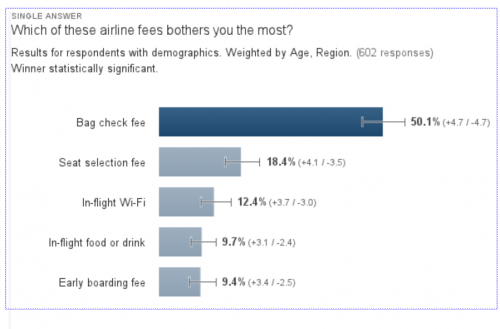
Frequent Flyer.com reveals a new survey identifying the fees airline travelers hate the most:
It goes without saying that of the many gripes travelers currently have about flying, the so-called ancillary fees charged by the airlines for, well, everything they can disaggregate from the core service would rank near the top of the most-despised list.
But of the multitude of such fees, which irk travelers the most?
A new survey conducted by Skift shines some light into that dark corner of the travel experience.
According to a poll of 1,000 adults, the most and least reviled airline fees are as follows:
Bag check fees (50.1%)
Seat selection fees (18.4%)
Inflight WiFi fees (12.4%)
Inflight food or beverage fees (9.7%)
Early boarding fees (9.4%)
Although there was general unanimity across age and other groups, there were a few interesting demographic disconnects:
Wealthier travelers were less bothered by bag fees but more bothered by seat-selection fees.
Less wealthy travelers were notably less bothered by inflight meal/drink fees.
Younger flyers were more bothered by inflight WiFi fees.
Travelers 65 years and older were most bothered by inflight meal/drink fees.
Saudi Arabia Inching Toward Allowing Women to Drive
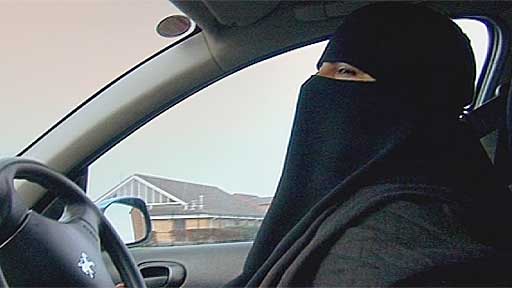
Saudi Arabia is the only country in the world where women are not allowed to drive. There is an irony – there is no law banning women from driving. They do not issue driver’s licenses to women, they arrest women seen driving, and they do not – officially – teach women to drive. Thank God for good fathers and brothers and husbands, who take their daughters, sisters and wives to isolated places and teach them, often for the good of the family in case of an emergency.
Saudi women drive in Europe, in the USA – they drive everywhere except in their own country. The government shows signs of wanting to allow women to drive (officially) but they seem hesitate to stir the wrath of the religious police who believe – based on nothing – that God forbids women to drive. Recently, the head of the Saudi religious police said there is nothing in Islam that forbids a woman to drive. What’s the hold-up guys?
This article is from AOL Auto News, where you can also see a video of a woman driving in Saudi Arabia with cars passing her and waving encouragement:
Saudi Arabian Women To Protest Driving Ban On Oct. 26
Saudi society is slowly inching toward more equality, but driving is still disallowed for women

When Farha was a young girl, about seven years old, her mother told her something that rocked her world: She said women could drive.
For Farha, a 24-year-old writer who has spent her entire life in Saudi Arabia, this was akin to a Western child learning the truth about Santa Claus. She’d only ever seen men behind the wheel in her country, where women are not permitted to drive. The revelation was slightly scandalous, a little bit funny, and totally paradigm-shifting.
It took another two years for Farha (who didn’t want to be identified with her last name due to the sensitivity of the issue in her home country) to decide she would, one day, learn how to drive a car. And, for good measure, she’d learn how to ride a bike. Two modes of transportation that have been banned to women and girls for most of Farha’s lifetime.
On Oct. 26, women in Saudi Arabia will engage in the third protest against the female driving ban by getting behind the wheel anyway. The protest won’t be widely attended, because the vast majority of women in Saudi Arabia don’t know how to drive. There are no driving schools in the Kingdom that cater to females, and state agencies will not issue a driver’s license to a woman.
“Since there is no justification for the Saudi government to prohibit adult women citizens who are capable of driving cars from doing so, we urge the state to provide appropriate means for women seeking insurance of permits and licenses to apply and obtain them,” a petition at the protestor’s web site reads. The web site has been blocked within Saudi Arabia, yet there are still a thousand or so names on the petition. The few women who are adept behind the wheel learned while living overseas, often in the U.S., Canada, or nearby Bahrain or Dubai.
In urban areas, women are chauffeured around by male relatives or paid drivers, or they pay for taxis. In rural areas, the driving ban generally isn’t enforced, and more women drive out of necessity. One woman who was recently videotaped disobeying the ban got support from her fellow (male) drivers, who passed by and gave her the thumbs up, a sign that society may be more willing to accept an eventual change.
Learning to drive
Farha tackled the task of learning to drive first by reading about the process. She edited a story on how to drive for her high school newspaper, and from that she felt she learned quite a bit. Then her father spent some time talking to her about how cars work, and the theoretical aspects of driving. He took her out for a few hours over the course of a few days, letting her drive around their neighborhood in the coastal city of Jeddah. But she never ventured onto the main roads.
She also learned the basics of riding a bicycle, but doesn’t consider herself adept at either skill. When the ban is lifted, she said she’ll sign up for classes at a real driving school.
“I always thought this ban would go away when I was 18,” she told AOL Autos. We connected with her through a publication where Farha wrote, under a pseudonym, about the driving ban. “And I’m still hoping it will be lifted when I am 26.”
“I always thought this ban would go away when I was 18,” Farha said. “And I’m still hoping it will be lifted when I am 26.”
Not driving makes life’s everyday movements difficult. Sidewalks aren’t available, so walking isn’t realistic. Farha’s father has mostly been responsible for driving her and her mother around, but five months ago he got into a car accident and broke his leg. He is currently unable to drive. Farha feels the burden of her father’s injury. If she could drive, she said, she could bring him to doctor’s appointments and help him get out of the house. Instead, the family is home-bound unless they pay someone to bring them places.
Farha has hired a part-time driver to take her to and from work. It costs about 2,000 to 3,000 Saudi riyals (or around $530 to $800) a month for a driver. That’s about the same amount that women make earning minimum wage in Saudi Arabia, prompting many women to just stay home.
“A lot of women don’t feel the incentive to work and hire a driver,” she said. “It doesn’t make any economic sense.”
Some women opt for the public bus system, but that makes women from conservative families feel nervous because it exposes them to strange men – the exact problem the country is trying to avoid by banning women drivers. Taxis run the same problem, putting females into cars with strange men. “It doesn’t make sense,” Farha said.
Farha is considering signing up for a karate class, but she’ll have to pay her driver for more hours or take a taxi to the classes. On top of the class fees, the price of getting to and from karate starts to seem like a silly amount of money, she said.
And she worries she’s spending too much money on herself. She could spend 30 riyals on a taxi each way, or she could donate that money to a family in need. Or spend that money sending school supplies to girls in other countries.
“It’s a difficult decision to make every time,” she said.
One unintended consequence of the rule strikes Farha as incredibly unsafe: Women often let their 13-year-old sons drive them around when they are out of other options. Farha’s observation was backed up by a U.S. intelligence research note made public by Wikileaks, which noted that these young drivers sometimes get into very serious accidents.
Weird, long history
Oddly enough, there isn’t any actual law in Saudi Arabia banning women from driving. In 1991, the late Grand Mufti of Saudi Arabia, Sheik Abdulaziz bin Baz issued a fatwa prohibiting women from driving. A fatwa is different from a government law, in that only followers of the religious leader who issues the fatwa are obliged to follow that law. But given the intertwined nature of Saudi Arabia’s government and its religious leaders, the fatwa took hold. The government agency in charge of issuing driver’s licenses will not issue one to a woman. Saudi Arabia’s court system relies heavily on fatwas from the Grand Mufti.
So, in essence, the religious order became a rule that everyone follows, even though it’s not enforced by the Saudi government. The government just makes it impossible for women to get drivers licenses, and if they catch women driving, they make them sign a pledge promising they won’t do it again.
Abdulaziz bin Baz said at the time that the ban would protect women, because allowing women to drive would put them out in society alone, leaving them to mix with men. If women were stranded by the side of the road due to a flat tire or car problem, they could end up being assaulted or raped by a man who came to help them, argue critics who still uphold the ban.
A reporter for the Christian Science Monitor recalled a 2012 conversation with a man in Saudi Arabia about what would happen if the ban was lifted. “What would happen if a woman got in a car accident, he asked? Then she would be forced to deal with the male driver of the other car, a stranger, with no oversight – a problematic situation in a country where male guardianship of women is deeply entrenched.”
Just last week, a Saudi cleric came under fire for claiming women were damaging their pelvises and causing birth defects by driving. Sheikh Saleh bin Saad al-Lohaidan argued women should put reason ahead of their hearts, because it “could have negative physiological impacts as functional and physiological medical studies show that it automatically affects the ovaries and pushes the pelvis upward.”
Saudi society is slowly inching toward more equality for women. Just this week, four women became attorneys. Earlier this year, women were allowed to work in retail establishments that sell underwear and bras, taking away the embarrassment for women who’d previously had to purchase these items from male salespeople.
Since around 2006, the Saudi government has been indicating it would consider lifting the driving ban if society deems it acceptable for women to drive. Diplomatic cables released by Wikileaks showed the U.S. government has been paying attention to this issue, and putting some pressure on the Saudis to change their ways.
Will of the people?
But it’s clear the Saudi government won’t make any controversial moves: “This has to do with the will of Saudi society,” said Saudi Justice Minister Muhammad Al-Issa in a TV interview in April, according to a translation by the non-profit group MEMRI. “If Saudi society, given its culture, wants women to drive, it’s fine. But if society has any reservation for whatever reason, that’s fine too.”
Farha said she’s holding out hope that the rules will change, as soon as possible. But the change will depend greatly on men’s attitudes.
“More men certainly support it now, but … they have their concerns,” she said. And “some are outright hostile to the idea.”
When she does get her license, Farha said she’d like to try driving a sports car. It doesn’t matter what kind, she just would like to try driving something fun. But she’d rather be able to walk or bike to work, even if she could drive.
“Cars feel suffocating inside,” she said. “But the whole idea is to lift this difficulty for women. I hope it happens soon.”
In sharing this story, and others, with our readers we hope you are inspired to Raise Your Hand for girls’ education, helping us spread the word on this crucial effort.
Recent Comments
ExpatAlien on What Country am I Living … intlxpatr on Yellowstone: Old Faithful to C… Michelle on Yellowstone: Old Faithful to C… Cathy on No Grown-Ups in Charge intlxpatr on Waiting for Snow Wikipedia Donate Button

Amazina


Early Voting in Florida


 Here There and Everywhere