The Duncan House Diner in Homer
We awake to a gorgeous day, a day with not a cloud in the sky, horizon to
horizon beautiful weather. That is thrill #1. AdventureMan goes outside while I
finish getting dressed, and comes swiftly back in for his camera – there is a
huge eagle perched on the turret of our building! We spend about half an hour
while he does what eagles do – soaks in a little sunlight, looks for a sparkle
in the water that might signal some breakfast – he knows we are here, and he
doesn’t care. How cool is that?
We can’t find Two Sisters Bakery (and discover later we stopped just feet short
of where it was hidden behind some shrubbery,) but we head up Main Street and
find Duncan Diner, with a parking lot full of pickup trucks and a very hip ’70’s
feel. I rarely eat pancakes, but I ordered something called the 1-1-2, which is
one egg, one pancake, and 2 strips of bacon.



“Blueberries?” the very hip waiter asked. I must have looked puzzled, and he
asked again “Blueberry pancakes or plain?” and I said “Oh! Blueberries!”
That pancake was so good. I couldn’t eat it all, but it must have had a full cup
of blueberries in it. I only used a little bit of butter; the pancake was so
good just plain.

As we ate, we formed a plan. We had intended to just walk around Homer, but
Homer is bigger than it looked on the map, more spread out. There are sights to
be seen! Homer is nearly at the tip of the Peninsula, on Kachemak Bay; whether you go east or west, you end up in Anchorage.
We call Hertz, they have a car available, and then we call Kostas taxi (907-399-8008) who come and takes us to the airport where we pick up a car. I mention Kostas specifically because every single local we asked mentioned them by name as the most reliable, and we found that to be true for us, too.
The SeaTac Food Court
“Terminal T? Is that new? I don’t remember arriving at Terminal T before!”
Not even two weeks have passed, and we are going through SeaTac again, this time en route to Alaska. As we enter “Terminal T” we discover terminal T is like saying “Shrimp scampi” you are saying the same thing. T is the Terminal, it used to be the only terminal. It’s what used to be the original airport before all the South Terminals and North Terminals and others I don’t even know. Oh yeh, A, B, and C.
But the Main Terminal is a delight. Seattle loves public art, as do I, and arriving in Seattle at the main terminal, you find schools of little brass fish swirling under your footsteps, if you think to look. These little touches delight me.
We are flying out of Seattle to Alaska, and Alaska Airlines flies out of terminals C or N, and as it turns out, our flight flies out of N, or the North Concourse. On our way there, we are wondering if we will find something healthy to pick up for our dinner, when we come to the Food Court.
We’ve eaten here before, breakfast. They have an Anthony’s-in-the-Airport, and my best friend recommended their breakfast egg dishes. I hate oatmeal, but discovered that the oatmeal at Anthony’s is delicious! It must not be good for me; how can oatmeal that is good for me taste so good?
And, as it turns out, Anthony’s has a take-out section! Woo Hooo!


Well, hmmmm, not quite. They don’t have the Ceasar Salad with a piece of grilled salmon or halibut on the top, but isn’t salmon and chips almost as healthy? Although in intend to wait to eat on the plane, the odor of delicious deep fried salmon calls to me, along with a cup of freshly brewed mocha, and I go ahead and eat my dinner in the Seattle airport.
I love it that there are so many options. Anthony’s has a great restaurant, right in the old main terminal, with floor to ceiling glass, it is a glorious situation. There are other eating establishments where you can order and then sit in the same area at tables and chairs – Ivars, some Mexican, some others which are good, it’s just I love the take out from Anthony’s. Normally airport food can be a total drag, unless you go through Memphis and have some BBQ – or Seattle. Seattle does airport food right.
ReVisit Mr. and Mrs. T’s in Edmonds, WA
You wouldn’t think such a good restaurant would be in a strip mall, but it’s a good thing we got there early. Within half an hour of our sitting and ordering, the place was packed. It’s a large place, but people just kept coming in. Friday night, and truly great Chinese food is also comfort food in Seattle. The clientele was probably 75% Chinese descent and 25% the rest of us.
“Let’s try something new,” I suggested. We eat at this restaurant almost every time I am in town. I miss GOOD Chinese food. “I read that we can forestall dementia by forging new neural connectors in our brains, and you do that by making yourself do something new. Let’s all try a dish we’ve never had before.”
My friends ordered. Actually, they laughed, they eat there more often than I do, and have tried almost everything on the menu. They said unless it were jellyfish or something of that ilk, it would be hard to find something they hadn’t tried, but they would find some things less ordered, but good.
This is what they came up with:
Fish Shanghai Style

Spicy Ginger Beef

Clams and Black Bean Sauce (this was my favorite!)
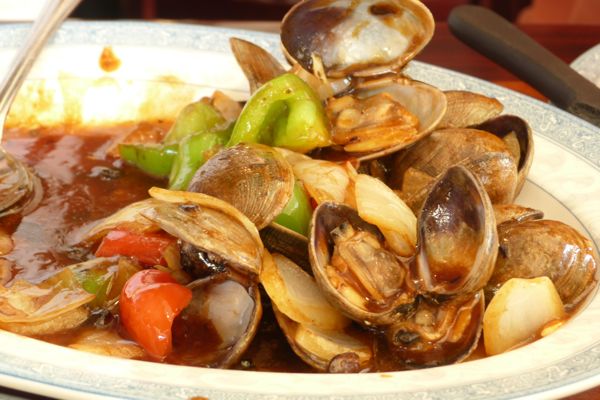
Delicious! Every bite! Or maybe that it is seasoned with a friendship that goes back thirty years or so 🙂
Favorite Meal at Ivar’s
Ivar’s is a Seattle icon, with several different restaurants at different locations. The original Ivar’s Acres of Clams is still in downtown Seattle, on the waterfront. Another great favorite is in Mukilteo, right next to the Mukilteo Ferry, where they have both a beautiful restaurant and an outdoor quick-stop, so while waiting for the next ferry over to Whidbey Island, you can snack on fish and chips – or clams and chips, scallops and chips, salmon and chips, halibut and chips . . . you catch the drift. All hot and freshly made, there is no more wonderful fast food – to me – in the world.
During a break in my busy day, I had a crab-on-crab meal, Dungeness crab, it has it’s own sweet, intense flavor:

What you are looking at is a Dungeness Crab Cocktail on the left, and a Dungeness Crab Ceasar Salad on the right. Oh, yummmmm!
Worse Than Crack Cocaine? Growing up Poor
From AOL Daily Finance Poverty damages children more than being born to a crack addicted mother. Poverty keeps children from attaining their full potention, and hurts us all as a society as a huge waste of potential resource:

In the 1980s, the crack baby epidemic was hard to ignore. Television show after television show, article after article proclaimed that children born to addicts of the increasingly prevalent “crack” cocaine were all-but-guaranteed to have birth defects, including extremely low IQs and severe emotional problems. This “lost generation,” commentators emphasized, would be incapable of forming relationships or reaching full emotional maturity. They would be, in the words of Washington Post columnist Charles Krauthammer, condemned to “a life of certain suffering, of probable deviance, of permanent inferiority.”
A little over 20 years later, Krauthammer’s predictions have proven almost embarrassingly inaccurate. Last week, the findings of a 24-year-long study of crack babies revealed that parental use of the drug had little or no direct effect on the children. In the process of investigating the babies, however, researchers discovered another environmental problem that did, in fact, lead to problems with depression, anxiety, cognitive functioning, and a host of other issues: poverty.
In 1989, Dr. Hallam Hurt, chair of the neonatology department at Philadelphia’s Albert Einstein Medical Center, began tracking 224 near-term or full-term children who were born to crack addicts. In the ensuing years, her longitudinal study followed the children, finding that, overall, their IQs were about the same as a control group of children of non-addicted mothers. Further, the children in Hurt’s study had comparable outcomes when it came to educational and emotional development.
That having been said, Hurt’s study found that children raised in poverty — regardless of whether or not their mothers were addicted to crack — tended to have lower IQs and lower school readiness than those who weren’t raised in poverty. A big part of the problem, she argues, is environmental: Of the children in her study, “81 percent of the children had seen someone arrested; 74 percent had heard gunshots; 35 percent had seen someone get shot; and 19 percent had seen a dead body outside.” The children themselves acknowledged the effect of these events: “Those children who reported a high exposure to violence were likelier to show signs of depression and anxiety and to have lower self-esteem.”
In other words, while prenatal crack abuse may not have a major effect on children, the societal conditions in crack-ravaged communities most certainly do. As Hurt emphasized, “Given what we learned, we are invested in better understanding the effects of poverty. How can early effects be detected? Which developing systems are affected? And most important, how can findings inform interventions for our children?” Or, to put it another way, now that we understand that poverty is more dangerous for children than crack, what can we do to protect our children from its effects?
In Florida, the worst schools are those serving the poor. Many fell a full grade point in the Florida evaluations and would have fallen further if there were not a law – I am not kidding – that says they can only fall one grade point in a year. We are failing in the two most important areas that can help children pull themselves out of poverty – good health care, and good education.
World’s Most Expensive Cities for Expats
By Mark Johanson
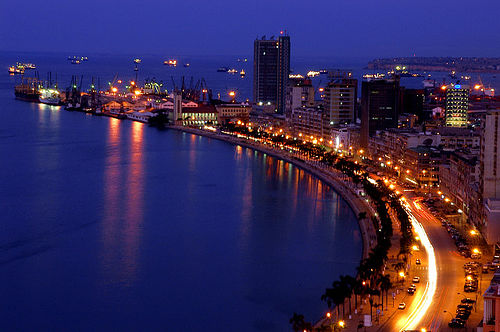
Where is the world’s most-expensive city for expatriates? It’s not notoriously pricey Tokyo. It’s not wallet-shrinking Sydney, Moscow or Oslo. And it’s definitely not surprisingly cheap New York City. Rather, it’s an African seaport you’ve probably never heard of: Luanda, Angola.
This finding from U.S. consulting firm Mercer underscores its annual survey’s purpose: to assess the cost of living around the world so that multinational companies and governments can determine appropriate compensation allowances for their expatriate employees. After all, more than half of oil-rich Luanda’s 5 million residents live below the poverty line.
“Despite being one of Africa’s major oil producers, Angola is a relatively poor country, yet expensive for expatriates since imported goods can be costly,” Barb Marder, senior partner and Mercer’s global mobility practice leader, said. “In addition, finding secure living accommodations that meet the standards of expatriates can be challenging and quite costly.”
Mercer noted in the survey that the difference in cost of various everyday items could be dramatic from country to country. The average cup of coffee, for example, costs about $1.54 in Managua, Nicaragua, while it costs $8.29 in Moscow. A fast-food hamburger meal in Kolkata, India, costs $3.62, compared to $13.49 in Caracas, Venezuela. A ticket to the cinema, meanwhile, can run between $5.91 in Johannesburg and up to $20.10 in London.
Cost of accommodation was another major factor Mercer looked at, and a one-month unfurnished luxury rental in Hong Kong topped the world at about $7,092 — more than 20 times as much as in Karachi, Pakistan. Yet, it was Moscow that crept in just below Luanda as the second-most expensive city for expats, followed by Tokyo, Chad’s capital city of N’djamena, and Singapore.
“Recent world events, including economic and political upheavals, which resulted in currency fluctuations, cost inflation for goods and services, and volatility in accommodation prices have impacted these cities making them expensive,” Marder explained.
Mercer assessed a total of 214 cities across five continents for its 2013 survey, analyzing data from March 2012 to March 2013. Cities were then ranked by the price of housing, transport, food, entertainment and clothing, and ordered on the joint cost of 200 items compared to the benchmark, New York City.
“Given the increasing numbers of business travelers, global ‘commuters’ and longer-term expatriates, companies are keeping a close eye on the cost of living for international assignees in different cities around the world,” Marder said, explaining the purpose of the study. “Organizations need to evaluate the impact of currency fluctuations, inflation, and political instability when sending employees on overseas assignments while ensuring they can facilitate the moves they need to drive the business results by offering fair and competitive compensation packages.”
Nathalie Constantin-Métral, principal at Mercer with responsibility for compiling the survey ranking, said that, overall, cost of living went up across parts of Europe, while it went down in much of Asia. Japan dropped significantly from last year due to a weakening of the yen against the U.S. dollar.
In the Americas, meanwhile, South American cities were the most expensive for expatriates, while Canadian cities moved down in rankings due to a slight decrease of the Canadian dollar against the U.S. dollar. New York remained the most-expensive urban center in the U.S.
“Overall, U.S. cities either remained stable in the ranking or have slightly decreased due to the movement of the U.S. dollar against the majority of currencies worldwide,” Constantin-Métral said. “Yet several cities, including New York, moved up in the ranking due to a rise in the rental accommodation market.”
Dubai’s Weight Loss Challenge: 1 Gram Gold Per Kilo Lost

Need some motivation to cut that flab? If you live in Dubai, you can win gold to do just that. A new campaign “You are Worth … Your Weight in Gold” is aimed at promoting a healthy lifestyle and achieving optimal body weight. The contest is open for public.
The winner will be the one who loses maximum weight during the program period of 30 days from its inception on Friday this week. The top three winners will get a gold coin equivalent to AED 20,000. Other participants will get a gram of gold for each kilo reduced from their body weight. However, the minimum weight to lose for the eligibility is two kilograms.
Addressing a press conference on Tuesday, Dubai Municipality officials said the winners will get two grams of gold if they could reduce at least two kilograms within one month.
Hussain Nasser Lootah, director-general of Dubai Municipality, said the initiative comes after the grand success of ‘Yallah Walk’ campaign launched in 2011.
“It is also aimed at introducing walking tracks in different parks in the city of Dubai. Walking is an easy and economic way to stay fit and healthy. The municipality has provided residents with safe and accessible walking tracks in urban and rural areas,’ Lootah said.
“Currently Dubai has a total of 91 places where one can practice sport activities. These include residential parks, public parks, jogging track and beaches. In addition to this, every year the civic body opens new parks in more areas and adds sports equipments and tools for the public to promote a healthy community, he said.
“Ramadan is the most appropriate season to launch such initiatives as it reminds us about many health benefits of reducing weight and encourages us to take strong steps to change our bad lifestyles,’ he added.
The weight of each participant will be measured during registration and at the end of program. Participants can register at the event sites any day during the period. Participants must have excess weight to reduce and stay away from unhealthy methods to lose weight.
The final weight will be measured after the Eid holidays on Aug. 16.
Ahmed bin Sulayem, executive chairman of Dubai Multi Commodities Center (DMCC), said the DMCC is proud to support this health awareness drive to encourage society to change their daily routines in return for a healthier lifestyle.
‘We would highly encourage everyone from all walks of life to take part in this great initiative and hope DMCC’s contribution of AED 100,000 worth of gold coins will help motivate individuals reach the final target of improving and sustaining a healthy lifestyle and consequently a better quality of life,’ he said.
“I am sure Dubai can be the role model and astonish the world by its innovative ideas and initiatives,” said Anil Dhanak, general manager of Dubai Gold & Jewelry Group.”
Once-A-Year Burger at Red Robin’s
AdventureMan and I are not vegetarian; we eat a lot of fish and we try not to eat a lot of beef, pork or lamb. Lamb isn’t so much of a problem here in Pensacola – you don’t even see it on the menu that often. But pork – and beef – are everywhere.
Once a year I have a burger. Really. AdventureMan will order a burger more often, and I might take one bite here and there, but once a year, usually around the 4th of July, I will have my onec-a-year burger.
(Do you have any idea how many calories one burger has in a resturant? It’s all the extras, the bacons, the sauces, the fried onions, it can be two days worth of calories in ONE burger. It can seriously clog your veins in as little as two hours after you eat one. )
Because I only have one, it has to be a really really good one. I got hooked on Red Robin burgers back in university; then, Red Robin was really a college beer joint that served really good burgers. I ordered the A-1 Peppercorn Burger, but when it came, it came on some kind of a roll 😦 not the real hamburger bun.

It was everything I had hoped for – and more. The meat was cooked perfectly, not overdone; juicy and not greasy. The bacon (yes, yes, I did. It’s just once a year) was crisp. The sauce was peppery, just the way I like it. And yes, I ate the onion rings, too.
Now I’m good for another year 🙂
Kuwait has Highest BMI in the World
The countries which contain the heaviest and lightest citizens can be revealed today.
This extraordinary graphic shows the average body mass index values for adults around the globe – with some surprising results.
With its wealthy society and love of fast food outlets, many would place the U.S. at the top of the list.

But it is pipped to first place in the body mass index chart by Kuwait. The Arab state has an average body mass index of 27.5 for men and 31.4 for women.
This beats America in second place which averages 26.5 for men and 29 for women.
From UPI:
Mexico is world fattest nation, United States No. 2
UNITED NATIONS, July 10 (UPI) — Officials at the U.N. Food and Agricultural Organization say Mexico with a 32.8 percent adult obesity rate is the most overweight of the industrialized nations.
Previously, the United States with an adult obesity rate of 31.8 percent was the world’s fattest nation. Last year, the percentage of U.S. adults overweight went down slightly.
A report by the FAO said Mexico’s widely available inexpensive junk food and penetration of U.S. fast-food chains combined with a more sedentary lifestyle all contributed to Mexico’s bulging waistline.
About 70 percent of Mexican adults are overweight, while childhood obesity tripled in a decade and about a third of teenagers are overweight as well, the Global Post said.
Weight-related diabetes claims 1-of-6 one of Mexican adults — or 70,000 people a year — suffering from the disease each year, the report said.
Ramadan Fasting and Diabetics
Technically, those who are ill are not required to fast, but my diabetic friends have said they can fast if they do it cautiously. I found this fascinating report on diabetics and fasting, particularly Ramadan fasting. You can reference the website Islam.ru.
Source:By: Fereidoun Azizi, MD, and Behnam Siahkolah, MD,/ Intl. Journal of Ramadan Fasting Research* / islamicity.com/October 31/2002 , res
Several of the world’s great religions recommend a period of fasting or abstinence from certain foods. Of these, the Islamic fast during the Muslim month of Ramadan is strictly observed every year. Islam specifically outlines one full month of intermittent fasting. The experience of fasting is intended to teach Muslims self-discipline and self-restraint and remind them of the plight of the impoverished. Muslims observing the fast are required to abstain not only from eating and drinking, but also from consuming oral medications and intravenous nutritional fluids.
The month of Ramadan contains 28 days to 30 days. The dates of observance differ each year because Ramadan is set to a lunar calendar. Fasting extends each day from dawn until sunset, a period which varies by geographical location and season. In summer months and northern latitudes, the fast can last up to 18 hours or more. Islam recommends that fasting Muslims eat a meal before dawn, called “sahur.” Individuals are exempt from Ramadan fasting if they are suffering from an illness that could be adversely affected by fasting. They are allowed to restrain from fasting for one day to all 30 days, depending on the condition of their illness. People diagnosed with diabetes fall into this category and are exempt from the fasting requirement, but they are often loathe to accept this concession. Physicians working in Muslims countries and communities commonly face the difficult task of advising diabetic patients whether it is safe to fast, as well as recommending the dietary and drug regimens diabetics should follow if they decide to fast. The lack of adequate literature on this subject makes it difficult to answer these questions. To judge correctly whether to grant medical permission to fast to a diabetic patient, it is essential physicians have an appreciation of the effect of Ramadan fasting on the pathophysiology of diabetes mellitus. In this article, we first review principles of carbohydrate metabolism and alterations of certain biochemical variables in diabetics observing Ramadan fasting. We then overview current medical recommendations that allow certain diabetic patients to fast and outline terms for diabetic patients, particularly IDDM patients, who should not fast but insist on fasting.
THE PHYSIOLOGICAL STATE OF DIABETICS DURING RAMADAN
Carbohydrate metabolism during Ramadan fasting in healthy persons
The effect of experimental short-term fasting on carbohydrate metabolism has been extensively studied (1,2). It has been uniformly found that a slight decrease in serum glucose to 3.3 mmol to 3.9 mmol (60 mg/dl to 70 mg/dl) occurs in normal adults a few hours after fasting has begun. However, the reduction in serum glucose ceases due to increased gluconeogenesis in the liver. That occurs because of a decrease in insulin concentration and a rise in glucagon and sympathetic activity (3). In children aged one years to nine years, fasting for a 24-hour period has caused a decrease in the blood glucose to half of the baseline figure for normal children of that age group. In 22% of these children, blood glucose has fallen below 40 mg/dl (4). Few studies have shown the effect of Ramadan fasting on serum glucose (5-9). One study has shown a slight decrease in serum glucose in the first days of Ramadan, followed by normalization by the twentieth day and a slight rise by the twenty-ninth day of Ramadan (6). The lowest serum glucose level in this study was 63 mg/dl. Others have shown a mild increase (7) or variation in serum glucose concentration (8,9), but all of them fell within physiological limits (6). From the foregoing studies, one may assume that the stores of glycogen, along with some degree of gluconeogenesis, maintain normal limits of serum glucose when a fast follows a large pre-dawn meal. However, slight changes in serum glucose may occur in individuals depending upon food habits and individual differences in metabolism and energy regulation.
Body weight during Ramadan fasting
(a) In normal subjects:
Weight losses of 1.7 kg. (10), 1.8 kg. (11), 2.0 kg. (12) and 3.8 kg (13) have been reported in normal weight individuals after they have fasted for the month of Ramadan. In one study that was over-represented by females, no change in body weight was seen (14). It has also been reported that overweight persons lose more weight than normal or underweight subjects (12).
(b) In diabetics:
A review of literature shows controversy about weight changes in diabetics during Ramadan.(6,15-24). In one group of studies, patients had an increase in their weight (17,21). In another group, there were no change (15,19,22,23) or a decrease (6,16,18,20,24) in body weight. While no food or drink is consumed between dawn and sunset during the month of Ramadan, there is no restriction on the amount or type of food consumed at night (23,25). Furthermore, most diabetics reduce their daily activities (15,23) during this period in fear of hypoglycemia. These factors may result in not only a lack of weight loss, but also a weight gain in such patients(26). (See later discussion about nutrition and physical activity.)
Blood glucose variations during Ramadan fasting in diabetics
Most patients show no significant change in their glucose control (3,23,24,27). In some patients, serum glucose concentration may fall or rise (28-30). This variation may be due to the amount or type of food consumption, regularity of taking medications, engorging after the fast is broken, or decreased physical activities. In most cases, no episode of acute complications (hypoglycemic or hyperglycemic types) occurs in patients under medical management(9,15,16,22), And only a few cases of biochemical hypoglycemia without clinical hazards have been reported (17,19,25).
Other parameters of diabetes control during Ramadan fasting
In general, HbAIC values show no change or even improvement during Ramadan (15-18,20,22,23,25,27,28,32). Only two studies have reported slight increases in glycated hemoglobin levels (19,31). However, one report has emphasized the same increase in non-fasting patients as fasting patients (31), and the other has shown a return to initial levels immediately after the month of Ramadan (19).
The amount of fructosamine (17,22,24,30,32), insulin, C-peptide (23,30) also has been reported to have no significant change before and during Ramadan fasting.
Energy intake and serum lipid variables during Ramadan fasting in diabetics
The amount of Energy (calorie) intake have been reported in some of the literature, indicating a decrease in energy intake (24,28).
Most patients with non-insulin dependent diabetes mellitus (NIDDM, diabetes type II) and insulin dependent diabetes mellitus (IDDM, diabetes type I) show no change or a slight decrease in concentrations of total cholesterol and triglyceride (15-19,27,28,32). Increase in total cholesterol levels during Ramadan seldom occurs (23). As in healthy persons (33-36), few studies have reported increases in high-density-lipoprotein (HDL) cholesterol in diabetics during Ramadan (18,19,27). One report indicates an increase in low-density-lipoprotein (LDL) cholesterol and a decrease in HDL-cholesterol (28). Until there is a standardization of diabetes Ramadan research in three fundamental factors — the Three D Triangle of drug regimens, diet control and daily activity — the benefits or hazards of Ramadan fasting on diabetics serum lipids is unclear.
Other biological parameters during Ramadan fasting in diabetics
Serum creatinine, uric acid, blood urea nitrogen, protein, albumin, alanine amino-transferase, aspartate amino-transferase values do not show significant changes during the fasting period(15,17,32). Slight non-significant increases in some biological parameters may be due to dehydration and metabolic adaptation and have no clinical presentation.
FASTING GUIDELINES TO DIABETICS
During the last two decades, a better understanding of pathophysiological changes during Ramadan fasting in diabetic patients has provided a few guidelines on how to advise diabetics who want to fast. Physicians working with Muslim diabetics should employ certain criteria to advise their patients regarding the safety of Ramadan fasting.
The following criteria should be helpful in making such a decision (20,37):
Forbid fasting in:
- All brittle type I diabetic patients;
- Poorly controlled type I or type II diabetic patients;
- Diabetic patients known to be incompliant in terms of following advice on diet drug regimens and daily activity;
- Diabetic patients with serious complications such as unstable angina or uncontrolled hypertension;
- Patients with a history of diabetic ketoacidosis;
- Pregnant diabetic patients;
- Diabetic patients will inter-current infections;
- Elderly patients with any degree of alertness problems;
- Two or more episodes of hypoglycemia and/or hyperglycemia during Ramadan.
Allow fasting in:
- Patients who do not have the aforementioned criteria;
- Patient who accept medical advisement.
Encourage fasting in:
-
All overweight NIDDM patients (except for pregnant or nursing mothers) whose diabetes is stable with weight levels 20% above the ideal weight or body mass index (body weight, kg/height, meters squared) greater than 28.
EDUCATION OF THE DIABETICS BEFORE RAMADAN
NIDDM patients and IDDM patients who insist on fasting should be given a few recommendations about fasting (16). They should be forbidden from skipping meals, taking medication irregularly or gorging after the fast is broken (26).
The principles of pre-Ramadan considerations are (37):
- assessment of physical well being;
- assessment of metabolic control;
- adjustment of the diet protocol for Ramadan fasting;
- adjustment of the drug regimen e.g. change long-acting hypoglycemic drugs to short-acting drugs to prevent hypoglycemia);
- encouragement of continued proper physical activity;
- recognition of warning symptoms of dehydration, hypoglycemia and other possible complications.
RECOMMENDATIONS DURING RAMADAN FASTING
I. Nutrition and Ramadan fasting:
Dietary indiscretion during the non-fasting period with excessive gorging, or compensatory eating, of carbohydrate and fatty foods contributes to the tendency towards hyperglycemia and weight gain (21,23). It has been emphasized that Ramadan fasting benefits appear only in patients who maintain their appropriate diets (24,38,39). Thus, in order to optimize control, diabetics must be reminded to abstain from the high-calorie and highly-refined foods prepared during this month (38).
II. Physical activity and Ramadan fasting:
Several studies indicate that light to moderate regular exercise during Ramadan fasting is harmless for NIDDM patients (15). It has been shown that fasting does not interfere with tolerance to exercise (40). It should be impressed upon diabetic patients that it is necessary to continue their usual physical activity especially during non-fasting periods (41)
III. Drug regimens for IDDM patients:
Some experienced physicians conclude Ramadan fasting is safe for IDDM patients with proper self-monitoring and close professional supervision (16). It is fundamental to adjust the insulin regimen for good IDDM control during Ramadan fasting. Two insulin therapy methods have been studied successfully:
-
Three-dose insulin regimen: two doses before meals (sunset and Dawn) of short-acting insulin and one dose in the late evening of intermediate-acting insulin (16).
-
Two-dose insulin regimen: Evening insulin combined with short-acting and medium-acting insulin equivalent to the previous morning dosage, and a pre-dawn insulin consisting only of a regular dosage of 0.1-0.2 unit/kg (25).
Home blood glucose monitoring should be performed just before the sunset meal and three hours afterwards. It should also be performed before the pre-dawn meal to adjust the insulin dose and prevent any hypoglycemia and post-prandial hyperglycemia following over-eating.
IV. Drug regimens for NIDDM patients:
Available reports indicate that there are no major problems encountered with NIDDM overweight patients who observe fasting in Ramadan (3). With proper changes in the dosage of hypoglycemic agents there will be low risk for hypoglycemia and hyperglycemia.
The authors of the largest series of patients treated with glibenclamide during Ramadan recommended that diabetics switch the morning dose (together with any mid-day dose) of this drug with the dosage taken at sunset (31).
V. Other health tips for reduction of complications:
-
Implementation of the 3D Triangle of Ramadan — drug regimen adjustment, diet control and daily activity — as the three pillars for more successful fasting during Ramadan.
-
Diabetic home management that consists of:
– Monitoring home blood glucose especially for IDDM patients, as described above;
– Checking urine for acetone (IDDM patients);
– Measuring daily weights and informing physicians of weight reduction (dehydration, low food intake, polyuria) or weight increase (excessive calorie intake) above two kilograms;
Recording daily diet intake (prevention of excessive and very low energy consumption).
-
Education about warning symptoms of dehydration, hypoglycemia and hyperglycemia.
-
Education about breaking fast as soon as any complication or new harmful condition occurs.
-
Immediate medical help for diabetics who need medical help quickly, rather than waiting for medial assistance the next day.
-
Further attention on fasting during the summer season and geographical areas with long fasting hours.
VI. IDDM children and Ramadan fasting:
We do not encourage fasting for IDDM children. However, a few studies demonstrate that fasting is safe among diabetic adolescents. Of these studies, one study concludes that Ramadan fasting is feasible in older children and children who have had diabetes for a long time, and it concludes fasting does not alter short-term metabolic control. Nevertheless, fasting should only be encouraged in children with good glycemic control and regular blood glucose monitoring at home (25).
POST-RAMADAN SUPERVISION OF FASTING DIABETICS
After the month of Ramadan ends, the patients therapeutic regimen should be changed back to its previous schedule. Patients should also be required to get an overall education about the impact of fasting on their physiology (37).
THE RESEARCH METHODOLOGY ON DIABETICS DURING RAMADAN
From a methodological point of view, few research papers on Ramadan fasting are relevant because of the absence of control periods before Ramadan and afterwards, the absence of measurements during each week of Ramadan, a lack of attention to dietary habits, food composition, food value, caloric control, weight changes and the importance of the schedule during circadian periods.
It is recommended that all these factors should be taken into consideration and that all intervening and confounding variables should be under control. It is clear that more work should be done on Ramadan fasting to evaluate physiological and pathological changes with proper research methods (42).
Fasting during the entire month of Ramadan is reserved usually for healthy Muslims. However, many diabetic patients are allowed to fast periodically during Ramadan. The magnitude of periodic total fasting effect on blood glucose and hepatic glucagon depends on the number of fasting days (43), and this should be considered in all Ramadan fasting research activities.
CONCLUSION
The bulk of literature indicates that fasting in Ramadan is safe for the majority of diabetics patients with proper education and diabetic management. Most NIDDM patients can fast safely during Ramadan. Occasional IDDM patients who insist on fasting during Ramadan can also fast if they are carefully managed. Strict attention to diet control, daily activity and drug regimen adjustment is essential for successful Ramadan fasting.
To shed more light on pathophysiological changes in Ramadan fasting, in particular in Muslims diabetics, it is recommended that a multicentric international controlled clinical trial be employed to assess the effect of differences in gender, races, physical activities, food habits, sleep patterns and other important variables on physiologic and pathologic conditions during Ramadan fasting.
Recent Comments
Kitchen on Isiais: Winding Down intlxpatr on Shampoo Ginger tigerbutterya0c5ff1d… on Shampoo Ginger intlxpatr on British Soldier Kidnapped, Esc… John on British Soldier Kidnapped, Esc… Wikipedia Donate Button

Amazina


Early Voting in Florida


