Brrrrr! That Can’t be Right!
When I travel, I check with Weather Underground so I will know what to pack. While I barely had time to unpack and do mammoth piles of laundry to repack for the next trip, I did have time to check the weather. Lovely weather, highs in the high 50’s and 60’s, going up to 80 on Mother’s Day this coming Sunday.
So when we landed, and the pilot said “Welcome to Seattle, it is 47° out, my only possible response was “That can’t be right.” But as soon as I stepped out of the plane, I knew it was. I was wearing a little sleeveless silk and linen weave, with a lightweight cotton jacket over it. Not enough!
Arriving in Seattle mid-day is perfectl; traffic going north is calm and – for Seattle – light. I’m in an SUV; when I got to the rental pick up it’s all he had – that, or a Tundra or Yukon, which are just WAAYY too big for me. The car is a Captiva, not a large SUV, but one drive from the airport to Edmonds and I am down about an eighth of a tank, a far cry from my modest little Rav4. On our tip across the US, that sweet little car averaged 30.3 miles per gallon. In Seattle, where the gas prices are substantially higher, I am driving a gas hog. Aargh.
I am staying with my best friend from college. I’ve stayed in this house before, but it has been entirely renovated since then, and it is like staying in a boutique hotel – entirely lovely.
Here is the view just before dark from her house:

My friend has always been an inspirational gardener, and plants these gorgeous big pots:

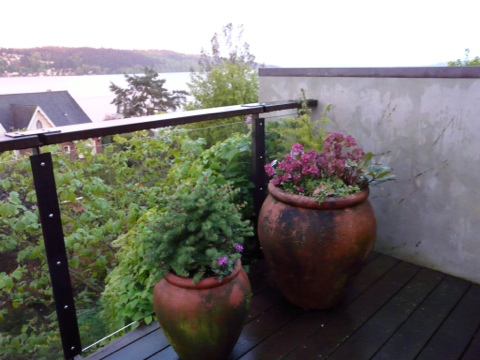
When I arrive, she is struggling with a connectivity problem, which gives me some time to gather myself from my early rising to my long flights. Every time, I still thank God it is only two timezones and half a day, as opposed to two long flights and about 24 hours travel time from Kuwait and Qatar.
We run out to buy a new wireless modem, and look for a spot for dinner. This is what I love about my old friend, she’s always up for something new. I spot a restaurant I read a review for a long time ago, and she is game to try it.
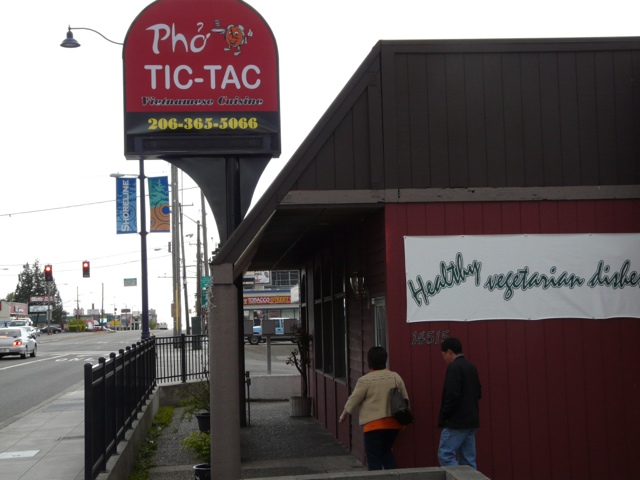
The prices were unbelievable. This is Seattle. How can you have a simple and serenely lovely interior, full of quietly and happily dining customers, and still charge these low prices? For dinner? I had the Tic Tac combo rice vermicelli dish, and my friend had a different combo. It was delicious! They are on Aurora / Highway 99, and have a steady stream of customers, families, couples, singles, take-out – there are a lot of people love this restaurant, including us. Sorry there are no photos of the meal, but old friends always have so much to talk about, and it never even crossed my mind. Sorry!
This is my lovely ‘hotel’ room, where I quickly fell into bed and was soon fast asleep 🙂

Fredericksburg, TX; an Unexpected Pleasure
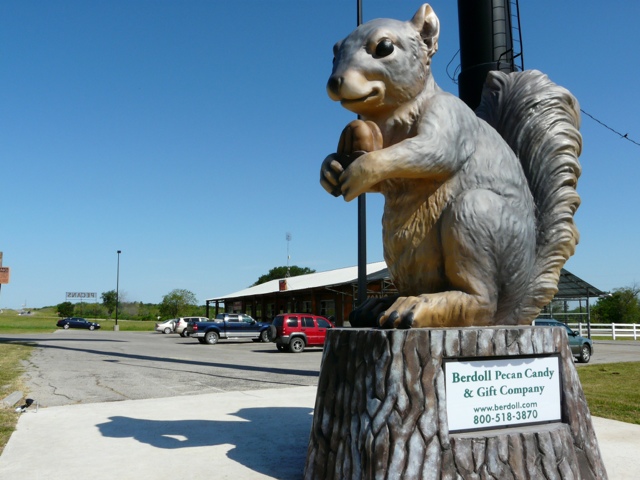
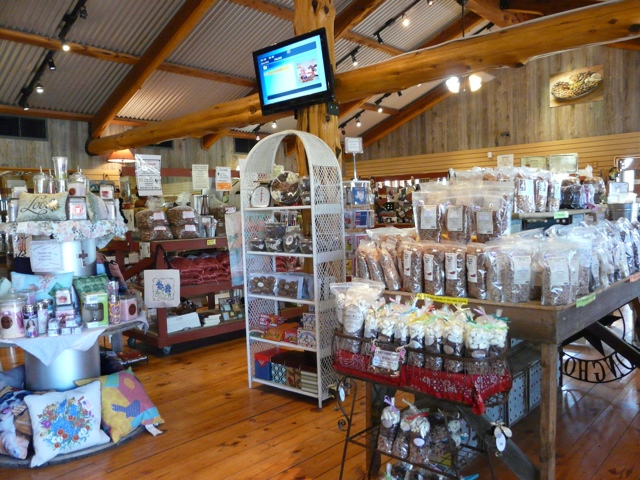
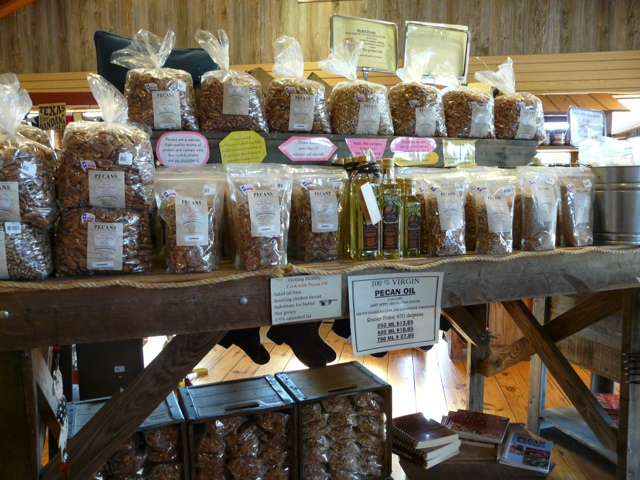
We are headed west, and our friends suggest we take a route which will take us through Fredericksburg, TX. From the time we get on the road, we are surprised – good fast roads, even the backroads, wildflowers along the highway, and, soon, a wonderful store where we found Mayhew Jelly:

Continuing on, we arrive in Fredericksburg just about noon, after driving past countless tempting wineries and farms, all with great old German names. We find a place to park and look for a place to eat, finding the Lindenbaum and oh – they have Zigeunerschnitzle, schnitzel Gypsy style, which we love. Actually, when we lived in Germany, we sort of stopped eating schnitzle because it is meat and then deep friend meat, with fattening sauces, but it’s been years, and we couldn’t resist.


Oh! It was so good!
We decided we need to stay the night in Fredericksburg; there is the Nimitz Museum which is calling my husband’s name, and there are little shops calling mine. As we are eating lunch, we find a place in a Fredericksburg Magazine, The Austin Street Retreat, but to book there, you have to go to a place called the Gastehaus where they have a bunch of B & B’s and you get the reservation through them and then go to the place, which is a really good thing because some of them are a little hard to find.

We book Annie’s cottage – and when we get there, we are delighted. It is very French, a cottage all to ourselves, quiet, private, a great retreat:



And then AdventureMan heads off is his direction, and I in mine, both of us finishing up about the same time and heading back to the cottage to rest and plan our next day’s travels.
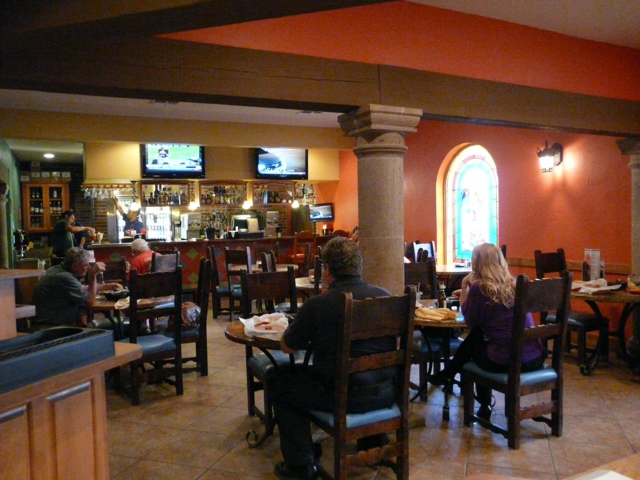
Dinner was at Mamacita’s, a very popular place with both local people and tourists, and reminded me of Chevy’s Fresh Mex – they made their own chips, and our server was very polished and attentive; we really liked the way Jason took care of us:



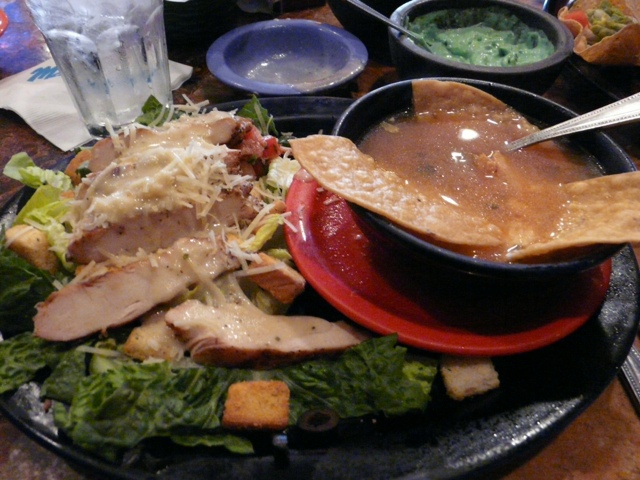


This is the schnitzle from Lindenbaum, but I can’t figure out how to get it in the right place.

Hell Bent for Texas and the Country Kitchen
(This is my first blog entry done from an iPad, and I still have a lot to learn about how to make the same technologies work that seemed so easy on my computer. Bear with me!)
We could have taken more time, but we decided to make it all in one day – Pensacola to Bryan/College Station, Texas, to see old Texas friends. We made it out the door at exactly seven a.m. – a miracle, and chat chat chatted our way across the remaining few miles of Florida, flew across Alabama, zipped across Mississippi. About when we figured we were half way, and were hungry for lunch, we found ourselves back in familiar territory – the Atchafalaya Basin, Bayou Teche and serious Cajun country. And – we also needed gas, so drifting into the gas station on fumes, we breathed a sigh of relief and focused on our next project – what to eat, where to eat.

An answered prayer – The Country Kitchen. As we drove into the parking lot, AdventureMan lowered his window and said “Can you smell that??” The smell of smoking meat pulled us happily inside, where we ordered BBQ chicken. I did something I never do – my phone rang and I had to make a quick decision on a side, and I went with cornbread dressing. What a blessing of fate, while it is something I probably should not eat much of, it was SO delicious, hot, spicy and sweet. It was hard to resist. I also had the sweet peas – they were out of green beans. AdventureMan had very much the same, except with rice.

SO Good.
If you find yourself outside of Lafayette, LA, find this gem. The cooking is all real food, probably not the healthiest, probably they use fat in just about everything, but it is oh, so delicious.

Now Google tells us that the quickest way to get to Bryan, TX is to get off the Interstate at Beaumont, TX, just after crossing the state line. This road is hilarious – two lanes, with speed limits of 70 on several stretches, churches along the way with names like Cowboy Church and Lonesome Dove Chapel, and a stand set up selling Mayhaw jelly.
It was a very very long drive, and, at long last, we arrived at our friends’ beautiful, serene house, spent the evening laughing and catching up, with never a silent moment, we all just had so much to say. Finally, exhausted, we fell into bed, only to rise ready for more chat the next morning. Aren’t old friends the BEST? No matter how much time has passed, you can pick right up, share your hearts and you can talk about everything.
It was a joyful breakfast, again full of tears and laughter, and then, the painful parting. We have this wonderful memory though – just as we were about to leave, we asked about those Mayhaws. what were they, and then we asked about a song AdventureMan can almost remember, “Way Down Yonder in the Paw Paw Patch,” which our friend knew and sang, and as we left we were all laughing once again.
Hardest Day of the Year
Today is beautiful, after endless days of clouds and rain, clear, sunny, not quite so hot, yes, the pollen is flying about, but all in all, not such a bad day.
And yet, the hardest day of the year, the church year.
Our Gospel reading for today, from The Lectionary:
John 13:36-38
36 Simon Peter said to him, ‘Lord, where are you going?’ Jesus answered, ‘Where I am going, you cannot follow me now; but you will follow afterwards.’ 37Peter said to him, ‘Lord, why can I not follow you now? I will lay down my life for you.’ 38Jesus answered, ‘Will you lay down your life for me? Very truly, I tell you, before the cock crows, you will have denied me three times.
In my walk as a Christian, I am struck at how often his disciples, those who walked with Jesus, lived with Jesus, believed in Jesus and served Jesus with all their hearts – how often they misunderstood Jesus. He often had to correct their idea of what he was trying to tell them about life, about the kingdom of heaven. Peter, one of his earliest disciples, one who loves Jesus utterly, is about to deny his Lord and Master three times.
On Good Friday, we are all Peter.
The Winner!
You’d think, now that we are ‘retired’ that we would have a lot of time, but we have plugged in to our community, and we are busy and scheduled! Before I left for Seattle, I was preparing for, and then helping with the Pensacola Quilt Show, held only every two years.
It was a lot of fun. Pensacola has amazing quilters, people who hand-piece and hand quilt, people who are amazingly skilled at machine quilting, and I am honored to know some of them, and delighted when I get a chance to work alongside them.
Whether or not I had won a ribbon, I would be honored just hanging my quilts in the same room with these talented women. Nevertheless, I did win an honorable mention in the theme quilt catagory, which was Snail’s Trail. I am only telling you this because I want to show you the ribbon, which is whimisical, clever and delightful:

I smile every time I look at it.
In addition, I won one of the offerings at the Chinese Auction. I have seen these auctions run different ways, but in this one, you get 25 chances for $5, and I put all my chances in the jar for these fabrics, I wanted them so badly. I took a class from the lady who made them, and I love the work she does. Winning this is like winning a pot of gold for a quilter 🙂
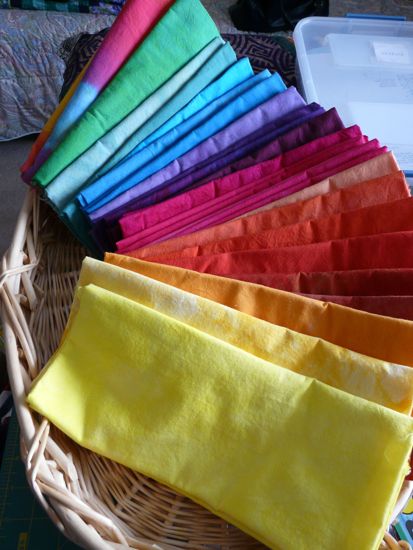
When I look at these fabrics, I am ready to start quilting again!
“You Brought the Sunshine!”
When I arrived in Seattle, my best friend from University said “You brought the sunshine!”

(This week’s weather in Seattle)
Now, when I fly back to Seattle, it takes a mere half day, not a day and a half. When I leave early enough, I can arrive mid-day, and beat the rush hour traffic. You’d think after driving in Kuwait and Qatar that I would find Seattle traffic tame, but Germany, with it’s wide-laned autobahn, and Pensacola, with it’s laid back version of going-home traffic have spoiled me.
Seattle is beautiful, although my trip is one of those more stressful ones, with things to be done to manage changing circumstances. My Mom may – or may not – have had a stroke. What is verifiable is that she has been very very sick, too sick to live on her own any longer, sick enough to need hospitalization, and professional monitoring from now on. The sisters have handled mountains of work and desperate calls for assistance, and now it is my turn to do what I can.
I stayed in Mom’s condo, but it was a little soulless, all her favorite pieces of furniture moved to her new place, her plants languishing, the stuff and detritus of life waiting to be cleared out.
Thank God for my best friend, and for the sunshine.

The sun just beginning to color the mountains as it rises off in the east.
The sisters had a full day of business, money, finances, and Mom’s recovery plan. We get a little goofy after a while; it’s a family culture. Our way of handling the worst, worst of times is laughter, and there were several times we were almost breathless from laughing. Yeh, I guess some would find it inappropriate, but for us, for our family, I think it is how we survive.
My second day there, we had a joyful family wedding. It was one of the sweetest events I have attended in a long time, and I loved the way the bride and the groom looked at each other, that they enjoyed their own wedding, smiling, laughing, dancing. Their signature was over everything; the colors (Purples!) and the food and the music and the ceremony, it was all perfectly thought through and delightful.

Sun setting in the west over the Olympic mountains
The rest of the trip was just hard work. And now, back in Pensacola, I have flights booked already for my next trip back. All part of life’s circle, I guess.
Through all this, we have met with kind, helpful people, who have made all the sorting out easier. Thanks be to God.
Bullying and Community
I found this on AOL/Huffpost Parenting: it contains a line – I italicized it – that I need to think about. In America, we tend to think of the individual over the community. For the most part, we don’t encourage our children to continue with an activity they don’t like ‘for the good of the group,’ we tend to take them out of the activity. I’ve lived in cultures where obligations to the group are much stronger, and I’ve always felt confined and constricted by the burden of those expectations, but it does make for a more peaceful situation when we consider the needs of others and the needs of the group.
Preventing Bullying Begins With Us
Richard Weissbourd and Stephanie M. Jones
On Feb. 29, Lady Gaga will launch a foundation dedicated to creating caring communities and stopping bullying. Hosted by the Harvard Graduate School of Education and Harvard’s Berkman Center, Lady Gaga will be joined by Oprah and other celebrities. A powerful new film, “Bully,” will be widely released at the end of March, and many Americans in recent years have been galvanized by a blizzard of tragic bullying stories.
Yet too often in the past a problem plaguing children like bullying has received huge waves of public attention that simply never translates into any positive changes in kids’ lives. What will it take to capitalize on this attention? How can we curb this problem once and for all?
We can start by recognizing where the main solution lies. There is a tendency to simply blame bullying on “bad” kids or peer groups or destructive media. But bullying often has deep roots in parents’ attitudes and behavior, and stopping bullying begins with us.
How can parents prevent bullying? Parents in recent years have been flooded with articles and books that guide them in shielding, or “bully-proofing,” their own child. But just protecting our own kids won’t stop bullying, and this guidance reinforces the damaging tendency of many parents to just focus on their own children. The best way to prevent bullying — and many other forms of cruelty and harassment — is to encourage and enable children to care for and take responsibility for each other. Research indicates that bullying is greatly reduced in particular when children who witness bullying stand up for the victim. Bullying brings home to parents our fundamental moral responsibilities. How can we help our children widen their circle of concern and stand up for other children? How can we help our children build more just and caring communities?
Bullying, unlike more typically developmental teasing and hurtful remarks, is commonly defined as prolonged or frequent cruelty to others, often characterized by imbalances of power. This kind of cruelty can produce intense and often lasting feelings of shame in children, a sense that they are defective in some core way. About 30 percent of children are bullied each year on school property alone. Adults’ understandable reflex is to curb this kind of bullying by punishing perpetrators. Yet this strategy alone usually fails to stop bullying, and sometimes it backfires.
On the other hand, bystanders — especially a friend of the bully — tend to be far more effective. A bystander is present in 85 percent of bullying situations, and bystanders who intervene appear to prevail over half the time. Yet in the vast majority of cases bystanders elect not to intervene.
What can we do as parents to help our children stand up for others? Research suggests that parents bolster their children’s ability to act independently and to withstand disapproval when they respect their children’s capacity as independent thinkers from early ages and give them input into family decisions. All the things parents do to build in their children a sturdy sense of self make it easier for children to hold their ground against a powerful peer. As parents we strengthen the self, for example, when we praise appropriately, know and appreciate who our children are and maintain their trust and respect. Nurturing empathy in children from early ages certainly matters as well. That means in part helping children appreciate people who may not be on their radar, whether a bus driver, a custodian or a new child in class. It means helping children consider the perspectives of those they’re in conflict with as well as people who are different from them in customs or background or other characteristics.
While it’s vital that we convey high moral expectations and underscore the importance of sticking up for others, we also must listen carefully to our children and understand the complexity of their social worlds and ethical decisions. We as parents will be more real and valuable to children if we pay careful attention to their perceptions and experiences of bullying and discuss when and how to stand up for someone else. We need to talk to them about the complexities of balancing our needs with others and what consequences are worth and not worth bearing. We need to help them figure out how to challenge someone else constructively.
But perhaps most important, stemming bullying will require us to seriously examine our parenting priorities. As a good deal of research now indicates, we live in an era when many parents are intensely focused on their children’s self-esteem, happiness and achievements, not on how well they care for others. And in all sorts of subtle ways we can prioritize happiness over taking responsibility for others. Too many of us, for example, don’t push our children to fulfill obligations that might distress them. We let our children write off friends they find annoying, or fail to reach out to a friendless child on the playground, or quit a team or chorus without asking them to consider what it means for the group. How many of us simply tell our children that their classrooms, schools and neighborhoods are communities to which they have obligations?
Just as worrisome, many of us as parents are failing to model for our children a sense of responsibility for others. Over and over we have heard from teachers that many parents are occupied with their own child and care little about other children in the classroom. “It’s a dog fight,” one recently retired teacher says, driven out of the profession in part by his fatiguing battles with parents. “Parents are out of control. They’re always seeking an advantage for their own kid… they lobby for a gifted class or they want their kid to get extra attention… and they don’t care how they might be hurting other kids.” Some parents say they want kids with behavior problems immediately removed from the classroom because they believe their own child’s learning is compromised. But that message certainly doesn’t convey responsibility for others and the community. At least for some period of time, we as parents ought to encourage teachers to work with that child and ask our own child how she/he might support the struggling child.
It is, of course, a great deal easier and tidier for us as parents to simply wrap our attention around our own child or to periodically remind our child to respect others. But such bland reminders will never get us where we need to go. Our children’s moral development is deeply interwoven with our own. If we want our children to be fair, courageous and humane, we have to take a close, hard look at whether those values are priorities in our parenting, and whether we are living those values day to day.
Just a Little Less Alien

It’s great having friends who all returned to the USA after our years of living in Qatar (and Kuwait) so we can share our experiences, our frustrations, our challenges. It’s been two years for me since AdventureMan and I made the big decision to retire, and in Pensacola, not Edmonds, WA.
Pensacola is a pretty cool place to be retired. One of the best things, after living in Kuwait especially, is the traffic. People might complain, but the traffic here is laughable. It’s very calm. Traffic might be waiting two lights at a stoplight, but hey – people wait, don’t just drive right through. No one has ever pushed me into a round about, or anywhere else, unlike Qatar, when I got in some young man’s way, and he pushed me out of his way (!)
When you go to the symphony, or to church, or to aqua aerobics, in the worst traffic it might take ten minutes. There are restaurants everywhere, many of them pretty good. The worst restaurants are usually better, cleaner, faster than most of the restaurants in Kuwait and Qatar. The only cuisine we have not been able to find here is Ethiopian, and we can drive to Atlanta or New Orleans and get that.
It’s been two years . . . there is something in me that starts getting a little restless, starts looking at my household goods with an eye to getting rid of, giving away, cutting down on weight. At the very least I might have to paint something, or change the furniture around . . .
My friends are suffering many of the same challenges, the challenge of being an expat back in the USA. What was formerly comfortable is not such a good fit anymore; we have changed, and we are trying to cobble together lives that can accomodate the changes.
I had a minor triumph; I realized that after two years, I am starting to have people I can go sit with when I walk into a crowded venue. It may sound like a small thing, but the fear of having to sit alone in a crowd where everyone is visiting and sharing is a little daunting. Who wants to look pathetic?
But my expat friends and I laugh; in expat world two years makes you an old-timer. When new people come in, you are expected to show them around, show them where (and how) to shop for things, where to get things fixed, altered, where to go to pay your bills and how to pay them. Two years makes you and old hand, often with one foot out the door, getting ready for the next posting or contract.
Three of my friends went back to their home locations, only AdventureMan and I settled in a new place. While I am making some progress, two years in, I still wonder who my friends will be? Will I ever feel at home in Pensacola?
Winter Beach in Pensacola
We had great weather during the Doha reunion, great in that it was warm every day, and it only rained a little now and then. We had lots of sunshine, and they even got to experience a little bit of Pensacola sultriness.
The big thrill, for me, was the winter beach. I love good wave action, and a little drama in the sky. The Pensacola beach, with its gorgeous white sands, gave it to us in full:

Recent Comments
ExpatAlien on What Country am I Living … intlxpatr on Yellowstone: Old Faithful to C… Michelle on Yellowstone: Old Faithful to C… Cathy on No Grown-Ups in Charge intlxpatr on Waiting for Snow Wikipedia Donate Button

Amazina


Early Voting in Florida


 Here There and Everywhere