Jennifer Egan: A Visit From the Goon Squad

Amazon.com kept telling me I needed to read this book, so finally, I ordered it and waited a couple months before I was ready. I just finished a major project AND I caught a miserable cold, so what better time?
I loved this book. It had a lot going against it; you know irrational factors like how you feel when you have a cold and your sinuses are all stuffed up and your chest is tight? A Visit From the Goon Squad took me out of my misery. While it appears random, it is tightly plotted, and I loved seeing how different strands intertwined. I also loved the effects of the goon squad (no, I am not going to tell you anything specific) and I loved how technology drove differences in how different generations thought and acted.
The last act takes place in a future where (this makes total sense) there is a high value placed on “pure”, no tattoos, no swearing – it is truly hilarious, the lengths to which we will go to NOT be our parents. Babies have their own hand-helds, which is already happening. My eyes have been opened, watching our own 18 month old grandson working an iPad and iPhone. It’s amazing to me the aps that are created to entertain, divert and teach our little ones.
This is not a straight line book, so there are times I had to go back and read a section again to remind myself where I met this character before, and how he tied into the plot earlier. It is a fascinating creation, this book, and I would love to sit down for coffee with this author, and her outside-the-box kind of thinking.
Neighbors Key to Survival
“Americans don’t know their neighbors” my dinner guest said, in response to my asking him what surprises him most in his visit to this country. “In my country, we all know our neighbors. It’s important to know your neighbors.”
I agreed, and quoted him this article supporting his view that I heard on National Public Radio, one of those ideas I hear so often on NPR because they cover news other news sources ignore.
Below is just a portion of the story, which you can read in whole by clicking on this blue type. Even better, if you want, you can listed to the story yourself by clicking on the “Listen to the Story: All things Considered” button on this same page.

When Hurricane Katrina struck in 2005, one victim was political scientist Daniel Aldrich. He had just moved to New Orleans. Late one August night, there was a knock on the door.
“It was a neighbor who knew that we had no idea of the realities of the Gulf Coast life,” said Aldrich, who is now a political scientist at Purdue University in Indiana. He “knocked on our door very late at night, around midnight on Saturday night, and said, ‘Look, you’ve got small kids — you should really leave.’ ”
The knock on the door was to prove prophetic. It changed the course of Aldrich’s research and, in turn, is changing the way many experts now think about disaster preparedness.
Officials in New Orleans that Saturday night had not yet ordered an evacuation, but Aldrich trusted the neighbor who knocked on his door. He bundled his family into a car and drove to Houston.
“Without that information we never would’ve left,” Aldrich said. I think we would’ve been trapped.”
In fact, by the time people were told to leave, it was too late and thousands of people got stuck.
Because of his own experience in Katrina, Aldrich started thinking about how neighbors help one another during disasters. He decided to visit disaster sites around the world, looking for data.
Aldrich’s findings show that ambulances and firetrucks and government aid are not the principal ways most people survive during — and recover after — a disaster. His data suggest that while official help is useful — in clearing the water and getting the power back on in a place such as New Orleans after Katrina, for example — government interventions cannot bring neighborhoods back, and most emergency responders take far too long to get to the scene of a disaster to save many lives. Rather, it is the personal ties among members of a community that determine survival during a disaster, and recovery in its aftermath.
When Aldrich visited villages in India hit by the giant 2004 tsunami, he found that villagers who fared best after the disaster weren’t those with the most money, or the most power. They were people who knew lots of other people — the most socially connected individuals. In other words, if you want to predict who will do well after a disaster, you look for faces that keep showing up at all the weddings and funerals.
“Those individuals who had been more involved in local festivals, funerals and weddings, those were individuals who were tied into the community, they knew who to go to, they knew how to find someone who could help them get aid,” Aldrich says.
My visiting guest was from Lebanon, where neighbors have relied on one another for years as civil unrest rocks the country.
“I am guessing we move more often than your family and friends,” I ventured. “You are right, it is harder to establish long-lasting neighborly relations here where people come and go more often.”
Actually, we have settled in a fairly established neighborhood, where many people around us have lived for years and years, some all their lives. But we have only been here a year, and it takes time to build strong neighborly relations. But we are aware that connecting with our neighbors and staying connected is important in a part of the country vulnerable to life-threatening hurricanes and other natural emergencies.
You can listen to the entire report in 6 minutes and 3 seconds here.
“Is Your House Always This Clean?”
We had guests this week, visitors from overseas, and it was so much fun. One woman was full of questions. This was her first time out of her own country, and you know how it is when you are in a foreign culture, people think differently. Some of her questions bordered on impolite, according to our culture, but we could tell she was asking because she really was interested, and we didn’t let her questions bother us.
“No!” I laughed, “We cleaned because we had guests coming! My husband vacuumed and I washed all the floors!”
My daughter-in-law jumped in.
“Yes!” she laughed. “Yes, their house is always this clean!”
We all laughed.
“It’s just my husband and me,” I added, “it’s not that hard to keep it picked up and neat. We make extra effort when guests are coming.”
“Why do you do this?” she asked. “Why do you invite strangers into your home and give us dinner?”
“People have been so kind to us, in so many countries, in so many ways,” I began, “No matter how hard we try, we will never be able to repay all the kindness we have received. But we do our best.”
We were in my kitchen, which is not large, and I am trying to get dinner on the table. It is a simple, family dinner, a little chaotic, but with lots of dishes so the guests can find something they might like to eat.
“Do you clean yourself? You have no cook?” she asked.
“We clean. Both of us. We could hire help, but it is very expensive here,” I said, pulling the chicken out of the oven. “And we do our own cooking. My husband makes bread! He is very good at it.”
During the evening she continued asking questions, and now, several days later, we find ourselves thinking about the questions, and thinking . . . THIS is why we do it! We love these guests who come in with a different way of looking at things and their questions, which stimulate us to think in new ways, too, as we try to explain why we do things the way we do them.
I remember in Doha, the Philipina maids would ask me “how old are you?” because they couldn’t guess by looking at me. We never ask a woman how old they are once they are past maybe eighteen or twenty years old. We never ask how much money a husband – or wife – makes. It is culturally taboo, it just isn’t done. We never ask what kind of birth control someone is using. I am aware of these things because I have been asked, and it made me think about it.
But now I wonder what questions I have asked in foreign lands which shocked people, or made them uncomfortable?
Eid Mubarak!
The great fast of Ramadan has ended, and AdventureMan and I wish our Muslim friends Eid Mubarak!

Major Pettigrew’s Last Stand
 Major Pettigrew’s Last Stand by Helen Simonson
My rating: 5 of 5 stars
I loved this book. It follows all the themes I love – how convention blinds us, how our cultural assumptions make us unconsciously snobbish and leads us to hideous behavior, it is very cultural and also very cross-cultural. Major Pettrigrew is widowed, and his grief has made him old. At the beginning of the book, his life seems very dull and grey. It lightens as his friendship sparks with Mrs. Ali, a widow who runs a small convenience market in his small English village. They both love reading (of course I love that part!) and they talk books, and sparks of warmth kindle.
This book is also very uncomfortable for me, as Roger has a grown son who bullies his father. The book isn’t just cross-cultural, it’s cross-generational, and I see glimpses of myself in the boorish behavior of his son toward his father.
There are some amusing scenes, some wickedly insightful village-interaction scenes, some painfully introspective moments, and some truly grand moments when everything becomes clear and a person acts. For me, there was an added bonus in that as I read Mrs. Ali’s words, I could hear them so clearly, and she spoke in the voice of a dear friend. I could picture her, because I could see the sweet smiling face of a dear friend. It was like having a great visit.
<a href=
Changes in the Air
“It’s still hot,” I said as we were coming out of the movie, “but can you feel a change in the air? Even though it’s hot, the air is changing, the light is changing – you can feel hints that Fall is coming . . . ”
We had just been to see “The Help,” and if you haven’t seen it yet, you need to make plans to see it soon. It is a really good movie, which will make you laugh, and cry, and remember that it wasn’t so long ago in our country when it took place. (You can read my review of the unforgettable book here.)
The movie is a serious movie, and at the same time, I loved the attention to detail – the hair, the fashions, the manners – all very 50’s, even though it is the 1960’s in Jackson, Mississippi.
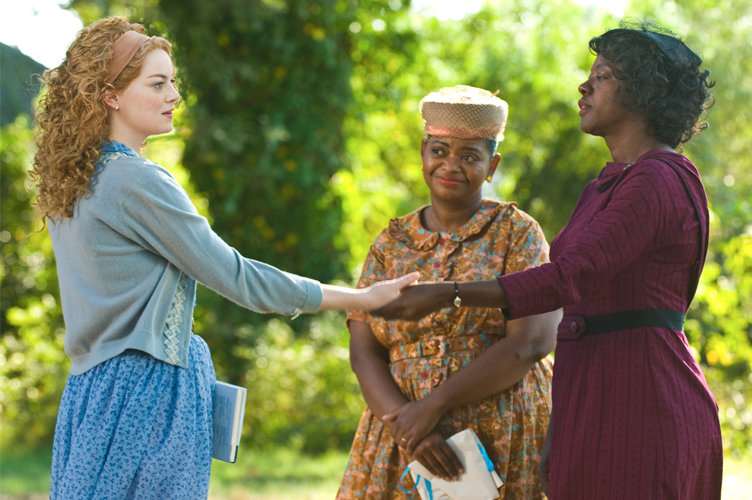
I remember reading this book in Qatar, just after I had moved back there from Kuwait. The Kuwait book club also read White Tiger and Half of a Yellow Sun, all of which had domestic service as at least part of the theme. It’s another one of those cultural things we all have in common – how do we treat the people who work for us? How do they see us? Who is raising our children and teaching them values?
In the Gulf, there are horror stories in the papers of servants who never receive their wages, or who work 16 hours a day, sun-up to sun-down, with never a day off. The families who take good care of their servants never make the papers, but I have seen good and caring relationships, lasting many years, between employers and employees. We’re glad we saw this movie, which sticks closely to the book. For a fuller experience – read the book.
Meanwhile, the temperature early this morning was below 69° F, which means that my tomatoes will begin setting once again and we may have a good crop coming before the cold sets in. I noticed, to my horror, I have a decent crop of weeds trying to establish themselves while it is too hot for me to go out and do battle with them. Some of my tomatoes actually continued producing even during the hottest days of the summer; I’m going to have to plant more of those next year. The golden pear and the red pear tomatoes are producing merrily; the bigger tomatoes have stopped – I hope temporarily.
Arabian Gulf Legacy
In today’s Lectionary, Psalm 107, there is the following verse:
41 but he raises up the needy out of distress,
and makes their families like flocks.
My heart goes back to Qatar, and I think of “my” family there, a family who adopted me, slowly but surely. The woman, who taught me Arabic, has twelve children. “Twelve children!” I used to think, was about ten too many, but I learned so much from this woman, and from her family. Every day she and her husband would sit together. They discussed each child. No child in that family was lost or overlooked; they cared for each and every one. I, too, know each child. I was particularly close to the oldest girls, but there was one young son who hit me on my bottom during my very first visit, hard, as I was bending over to put on my shoes. While everyone else looked on in horror, he just grinned up at me, and I couldn’t help but laugh. I pray for each and every one in this family, and they pray for me. Relationships don’t get much more intimate than that, I think, that we pray for one another, and we have some idea what to pray for.
And while they are not wealthy, they have enough, and they are a happy family. When one has a need, the others sacrifice, and I never hear a grumble of a complaint. Each has an assurance that when their turn comes – as it comes to all of us – their family will be there to assist them.

We said goodbye to our Saudi friends this week, on their way back to the desert kingdom to finish Ramadan and celebrate Eid with their family. They have been such a blessing in our lives here, and we wish them well. They left a lot of last minute things for me, a coffee and tea set with coffee cups, trays for serving drinks, spices, bags – the detritus of a life of moving, there are always things which still have use but for which you have no room in your packing crate. I am starting a lending closet with them; as other families arrive, I will offer them up to new arrivals who need the same pieces for their daily life and entertaining. The spices I will share with one of my co-mother-in-laws who makes a chicken biryani they call Chicken Perlow. It is moister than biryani, but has much the same flavor. Oh yummm.
As our Saudi friends depart, we have new friends arriving and we will have them for dinner tomorrow night. We have met them, one is Algerian, the other is Omani; as the Ramadan fast ended, the Algerian was trying to eat a piece of bruschetta with a knife and form. “You are so French!” I laughed, and told him we eat this with our fingers, which greatly relieved him, as he was standing, and to try to cut a piece of French break with a fork while standing is close to impossible. Both are a lot of fun, and while we will miss our departing Saudi friends, we are looking forward to these new friends.
One thing that pleases me greatly. I asked my Saudi friend how she was received when she went out, as she is fully covered, abaya and scarf and niqab (face covering). She said she had been warned before leaving Saudi Arabia that people would be unkind to her, but never once did she run into this, that people were always kind, “in the hospital, in the Wal-Mart, in the shopping, everywhere.” It just made me so proud to be living in Pensacola.
Surprising Secrets to Happiness
Received this in an e-mail this morning from Bottom Line, a service we have subscribed to for many years because they report some of the newest findings in concise and readable articles:
Surprising Secrets from the World’s Happiest People
Dan Buettner
We’ve all heard that “wealth doesn’t buy happiness.” Neither, it turns out, does social status, youth or beauty.
Social scientists have collected tens of millions of data points that help identify what truly makes people happy. Genetics and life circumstances can influence happiness, but personal choices account for about 55% of it. That means we all have more control over our happiness than we may realize.
National Geographic author and explorer Dan Buettner spent five years talking to people in areas identified by researchers as the world leaders in happiness—Denmark’s Jutland Peninsula… Singapore…Nuevo León, Mexico … and the town of San Luis Obispo in California.
In his new book, Thrive, he identified the main characteristics of what he calls thrivers, people who consistently report the highest levels of well-being. Here, secrets from the world’s happiest people…
Own one TV, no more. Americans spend more than four hours a day, on average, in front of the television. This is time that they’re not spending with other people, including their families. (Family time in front of the television is not the same as real interaction.)
In the places where happiness is highest, people spend the least time watching television. It’s not that they never watch—they just watch less than most people.
I advise people to own no more than one television—and to keep it in an out-of-the-way place, such as the basement. You still can watch your favorite programs, but watching will become a deliberate activity, not something you just do automatically.
Create a “flow room.” In Danish society, most families have an area in the house where everyone naturally congregates. I call these rooms “flow rooms” because they’re places where time seems to flow away when people are engaged and enjoying one another’s company. Flow rooms have no screens (TVs or computers) and no clocks. They are quiet environments where it’s easy to engage in meaningful activities with family.
In our house, I chose a room with good lighting and the best views—it’s comfortable, and everyone in the family wants to be there. I keep it stocked with good books, musical instruments and the best family games.
There’s nothing formal about our gatherings. People wander in and out. Because it’s so pleasant, we spend a lot more time there than in front of the TV or separated in different parts of the house.
Experience the “sun bonus.” By most standard measures, people in Mexico should be less happy than those in other countries. About 60% of the population is poor. Education and health care are less than optimal. Yet on the happiness scale, Mexico ranks high.
This is partly due to the “sun bonus.” People in sunnier climates are consistently happier than those who live in northern countries.
Those of us who live in colder, less sunny climates still can take advantage of the sunny days we do have by getting out and enjoying the sun. The vitamin D that is produced in the body from sun exposure is sometimes called the “happiness vitamin” because it increases brain levels of serotonin, the same neurotransmitter that is increased by some anti-depressant medications.
Stop shopping. The satisfaction that we get from buying things—an expensive watch, a new suit, a fancy car—wears off within 14 months. Yet in the US, we’re pressured by the media and social expectations to always want more. In order to get it, we have to work longer hours and take fewer vacations, which generally reduces happiness.
In Denmark, regulations limit the number of hours that shops can be open. In Mexico, most of the inhabitants are not running a status race with their neighbors.
For more happiness, take the money that you could spend on nonessential items and spend it on something that lasts. For example, take a vacation with your family or sign up for a painting class. The experiences and good memories will continue to give satisfaction for the rest of your life.
Employ yourself. Self-employed workers and business owners report some of the highest levels of well-being. It may be because they are more likely to pursue work that they love or simply because they feel more in control.
The happiness zone of San Luis Obispo, California, has far more self-employed people per capita than the average community in the US. These self-employed workers are shop owners, graphic designers, artists, wine-makers and the like. The more autonomy and control you have over your job, the more likely you will be satisfied with your work.
Make new friends. People around the world report higher levels of satisfaction when they spend time with family and friends. Every additional friend that you make (assuming that these friends are upbeat) increases your chances of being happy by 9%.
People who get together with others for at least seven hours a day have the highest levels of happiness. That sounds like a lot, but the time quickly adds up.
For example, everyone eats lunch. Ask a coworker to join you, or sit with a group in a cafeteria. Talk with friends during coffee breaks. After work, encourage the family to eat and socialize together, rather than dispersing to separate rooms. Take classes or join a club.
The Danes don’t identify themselves as being particularly outgoing, yet 19 out of 20 Danish adults belong to clubs dedicated to arts, exercise and hobbies.
Get addicted to this. The happiest people almost always volunteer in some fashion—at their church, with environmental groups, for social-service organizations and the like. Volunteering means spending time with others, and it also takes your mind off your own problems and increases self-worth and pride in your community.
Studies have shown that altruism has an effect on the brain that is similar to that of sugar and cocaine. It creates feelings of well-being, along with an addictive feedback loop that encourages people to keep doing it.
Also, volunteers are healthier. They tend to weigh less than those who don’t volunteer, and they’re even less likely to suffer a heart attack.
Commit to volunteering for a set period of time—say, once a week for four weeks. People are more likely to keep doing it when they make this initial commitment—and then get “hooked” on the rewards.
Keep the faith. Religious people tend to be happier than those without faith. It’s not clear whether religion makes people happy or if happy people tend to be drawn to religious practices. Either way, those who are religious have less disease, live longer and are less likely to engage in dangerous behavior (such as smoking and heavy drinking).
In Mexico, for example, more than 80% of people who were asked, “How important is God in your life?” responded with a 10 on a scale of one to 10, compared with only 58% in the US. This helps explain why people in some parts of Mexico, despite the hardships of daily life, tend to thrive emotionally.
Even if you’re not religious, you can achieve similar benefits by cultivating a sense of spirituality—and a belief in giving back to your community and making the world a better place.
Bottom Line/Personal interviewed Dan Buettner, founder of Blue Zones, an organization that studies the regions of the world where people commonly live active lives past the age of 100. Based in Minneapolis, he is a writer for National Geographic and author of Thrive: Finding Happiness the Blue Zones Way (National Geographic). http://www.BlueZones.com
Statistics Anomaly
Yesterday, I had over two thousand hits on the blog, after a year of sliding statistics, which I attribute to being less interesting now that I no longer live in exotic locations, post the Kuwait sunrise (I used to have a loyal clientele of Kuwaiti students off at university who loved seeing the sunrise in Kuwait every day), and that blogging is not so new and exciting. I’m not blogging as conscientiously as I used to – I don’t have the time I used to have.
This morning, as I check the blog, I can see I have almost as many hits by nine this morning as I had yesterday. It makes me smile – here is what the most hit-upon posts are:

Ramadan is coming! Ramadan Mubarak, Ramadan Kareem to all those waiting so eagerly for Ramadan to begin.
Last night we had a big dinner for my Mom’s birthday, and got to hear a shred of conversation I wanted to share with you. I was sitting next to an old family friend, famous for asking questions that will start a conversation that could last the rest of the evening, and across the table was Little Diamond, my niece, actually now Professor Diamond. 🙂 If we were German, we would call her Professor Doctor Diamond 🙂
Our friend asked her what had surprised her the most about teaching on the college level and she answered that as she is teaching her culture classes, she brought up plural marriages, and it was simply a non-issue. She said there are a couple of shows, Sister-Wives and Big Love, and all the kids have seen them and know what plural marriage is all about – at least in the United States. She said it was a big change, that plural marriage used to be a hot topic, but now, not-so-much. It was fascinating.
The ExPat Dilemma
A short while back, I told you about a book I read and loved, Cutting For Stone. You know it is a really good book when, months later, you are still thinking about it.
What I am thinking about today is how the main character writes about when he got to New York, and was homesick for Ethiopia, a country where he was born, but was always an expat. He spoke several Ethiopian dialects, he ate Ethiopian foods, he was affected by Ethiopian politics – but he was never Ethiopian. He was an Indian expat, working in Ethiopia, with Ethiopians, but always an expat.
He is in the US, and is desperately homesick for Ethiopia, and at the same time, he wryly notes that he is homesick for a country-not-his-own.
We’ve been away from Kuwait for two years now, but every now and then I am disoriented, missing Kuwait. It is hot now, for one thing, and it is so hot on some days that it feels like Kuwait. There are times my mind slips, and I am crossing the street near the Afghani shops, heading into the Mubarakiyya.
Today I am working on a new quilt, and I need a purple. I see just the right one, lurking on my purples shelf, and as I unfold it, a note falls out, from my good friend, and it says “(Intlxpatr) With love I dye this for you.”

I never cry, or hardly ever. I’m not crying now. I am in that fragile state where I COULD cry, my throat is a little thick and my eyes are a little watery, and I never saw it coming. It totally caught me by surprise.
I miss my friend. I miss Kuwait. I am home, and yet, I am homesick for a country-not-my-own, and a life I used to have.
Recent Comments
ExpatAlien on What Country am I Living … intlxpatr on Yellowstone: Old Faithful to C… Michelle on Yellowstone: Old Faithful to C… Cathy on No Grown-Ups in Charge intlxpatr on Waiting for Snow Wikipedia Donate Button

Amazina


Early Voting in Florida


 Here There and Everywhere