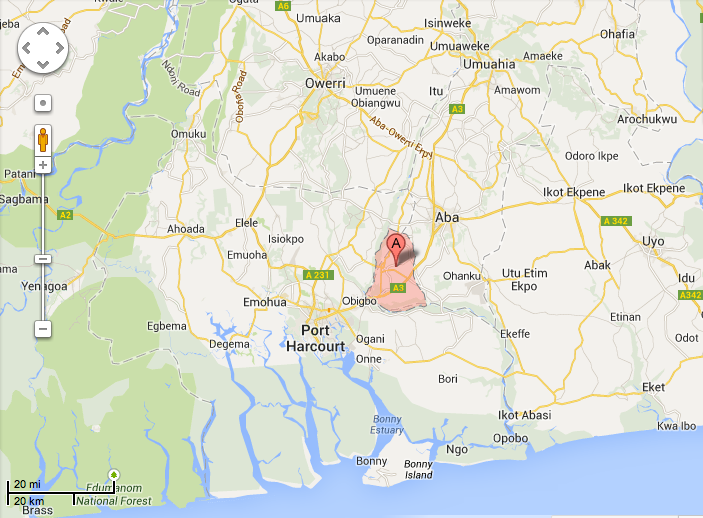
Where Are Dioceses of Ukwa and Umuahia (Aba, Nigeria)?
Every day our church prays for a different part of the world. Today it is Ukwa and Umuahia in Aba, Nigeria. I had to look it up:
“You Look Like a Happy Woman” on the M/V Kennicott
One of the birders approached me.
“I’ve been watching you. You always have a smile on your face. You watch the scenery and smile, and you look like a happy woman.”
“I am. I am really happy to be here.”
I do like living in Pensacola, I love being near our son and his wife and our two adorable grandchildren, but oh, this is where I was born. The sea is part of my blood, the piney clean smell of the Alaskan air, the clothes – jeans and something warm – this is how I grew up, this is how I am comfortable. I am. I am a happy woman.
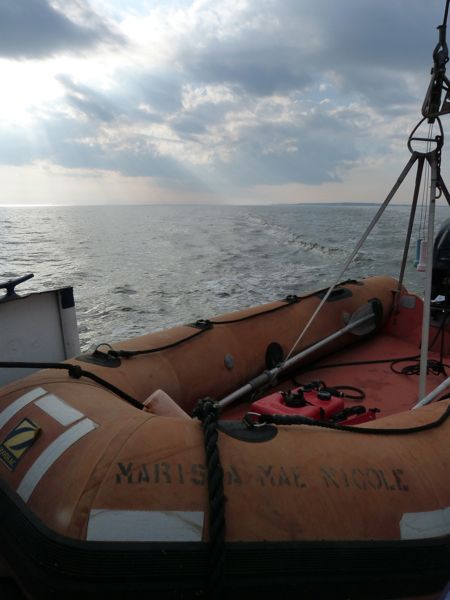
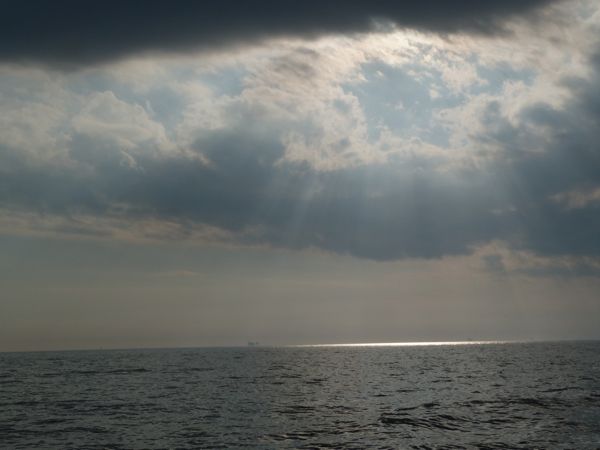
Here are some photos from this first day on board the M/V Kennicott:
Humpback whales!
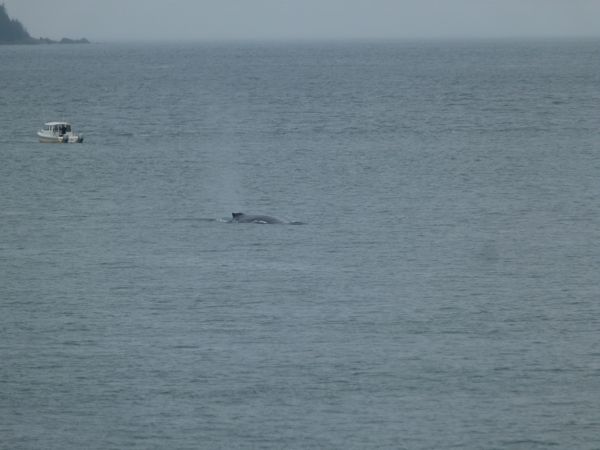
View from our cabin

I couldn’t figure out what this is, or if it is one creature, like a whale, or two, like a dolphin. We often saw things and had to try to puzzle out what we were seeing.


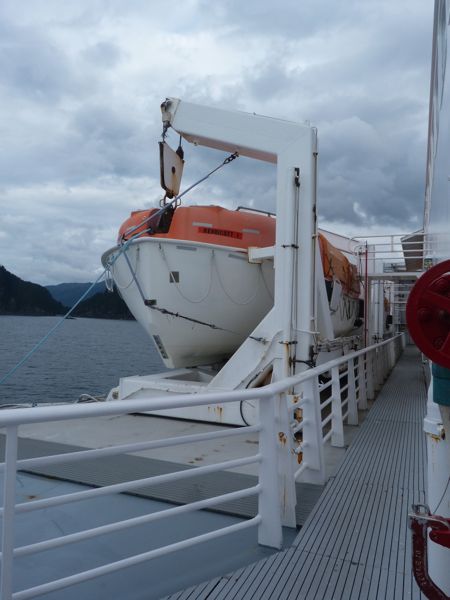

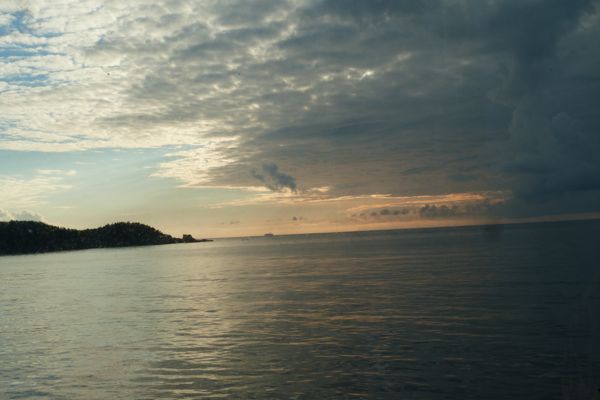
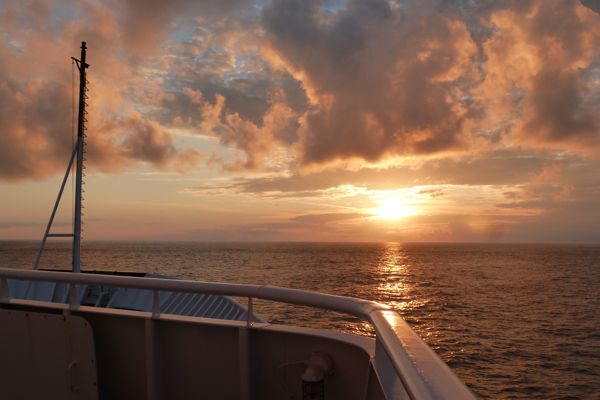
I mentioned before, the shock of discovering that the M/V Kennicott would not be wired for internet. It was equally shocking that it did not have a tower for cell phone coverage, or however that is done. Ferries in Seattle, just little commuter ferries, they’re wired! WiFi is everywhere. Really, I guess I am mad at myself for thinking all Alaska would also be wired; I just projected my own prejudices and got trapped in them.
But my compass on my iPhone worked, and as you know, I am also a map person. As we were to be heading out into the Gulf of Alaska (which would be North) my compass was reading South, and the afternoon sun was also on the wrong side of the boat. “Do you know where we are?” I asked a guy who looked like he would know as we picked up dinner. “We are going backwards!” he almost shouted! “We are ahead of schedule, so the pilot is giving an apprentice from Michigan a lesson in pilotage!”
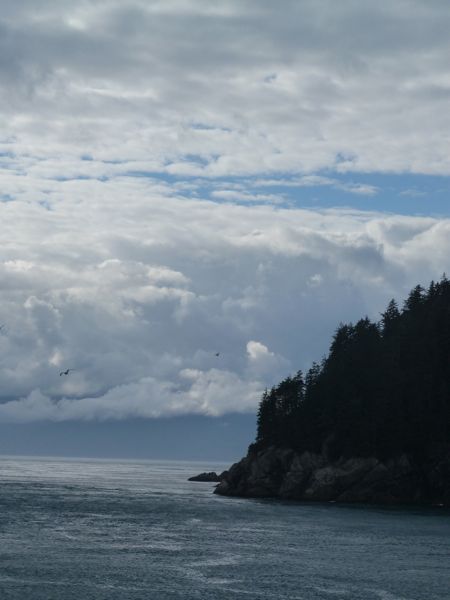
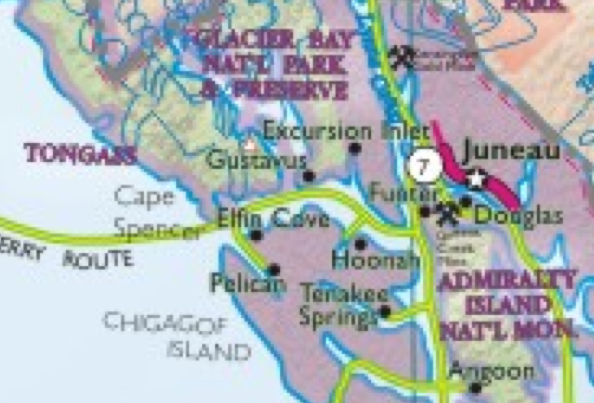
We were headed into an inlet that kept getting narrower, and narrower, and when we came to a village, Pelican, the ferry turned around and headed back where we had been coming from. I had wanted to see the mouth of Glacier Bay, but I never saw anything that looked anything like it, not until the return trip. We had some late day fog, so maybe the entrance and glaciers were shrouded. On the way back, we saw so many glaciers that at some point, I can’t even believe I am saying this, it was like “oh yeh, another glacier.”

The green line is more or less the route we took from Juneau to Yakutat to Whittier to Chenega Bay, to Kodiak Island and to Homer – and then back. The first day out, if you look at Juneau, near the mouth to the Gulf of Alaska you will see off to the left a narrow inlet down Chicagof Island to Pelican. That was the side trip we took on our first evening on the M/V Kennicott.
Sinkholes in Florida
Dont you just love Google? Today I asked Google to find “images sinkholes Florida” hoping I could find some graphic which would show me how often they occur in parts of the state, which is very very long. There it was.

It is not something I ever worried about until the neighborhood we bought a house in near Tampa suddenly had a rash of sinkhole damage and property values plummeted. I was lucky, not only was I not in the “band” of sinkholes, but my house sold very quickly, at the same price we had paid. I breathed a sigh of relief and moved on.
You never know where a sinkhole will suddenly appear, but as the graphic above demonstrates, some places are likelier than others.
Here is an article from today’s AOL Weather News:
ORLANDO, Fla. (AP) – Sections of a building at a resort near Orlando’s theme park district collapsed into a sinkhole late Sunday, forcing the evacuation of 105 guests in the structure and also dozens of visitors staying in two adjacent three-story buildings.

Watch out for those blue zones!
Sinkholes are as much a part of the Florida landscape as palm trees and alligators. Florida has more of them than any state in the nation. Earlier this year, a man near Tampa died when a sinkhole opened up underneath his bedroom.
PHOTOS ON SKYE: Astonishing Sinkholes Around the World
Experts say sinkholes aren’t occurring at a greater rate than usual but that the high-profile nature of recent one in populated areas has drawn attention to them. There also has been a rise in sinkhole claims in Florida, but insurance officials believe some of those claims are questionable. Here are some answers about why sinkholes form and their costs.
WHY ARE THERE SINKHOLES IN FLORIDA?
Florida’s peninsula is made up of porous carbonate rocks such as limestone that store and help move groundwater. Dirt, sand and clay sit on top of the carbonate rock. Over time, these rocks can dissolve from an acid created from oxygen in water, creating a void underneath the limestone roof. When the dirt, clay or sand gets too heavy for the limestone roof, it can collapse and form a sinkhole. Sinkholes are caused naturally but they can be triggered by outside events.
WHAT TRIGGERS SINKHOLES?
Although sinkholes are formed naturally, they can be triggered by heavy rainfall, drought followed by heavy rainfall, tropical storms and human activity. The most common actions by humans that cause sinkholes are heavy pumping of groundwater to spray on oranges and strawberries during freezes to keep them from being damaged, well drilling, excavating, creating landfills, leaking broken water lines and pounding or blasting from construction.
WHERE ARE SINKHOLES MOST COMMON IN FLORIDA?
Three counties in the Tampa region are known as “sinkhole alley.” Two-thirds of thesinkhole damage claims reported to the state Office of Insurance Regulation from 2006 to 2010 came from Hernando, Hillsborough and Pasco counties. Sinkholes are less common in South Florida, home to the state’s two most populous counties – Broward and Miami-Dade.
HOW MANY SINKHOLES OCCUR IN FLORIDA?
The state Office of Insurance Regulation says reported claims from sinkholes have risen in recent years. More than 2,300 claims were reported in Florida in 2006 but that figure jumped to almost 6,700 claims in 2010. There is no geological explanation for the rise and state insurance officials believe many claims are questionable. There must be structural damage to a home for a policyholder to claim a loss from a sinkhole, but insurance officials say claims are often paid without that proof.
HOW MUCH DAMAGE DO SINKHOLES DO?
The state Office of Insurance Regulation says sinkhole claims in Florida cost insurers $1.4 billion from 2006 to 2010.
Name that Country: A Most Difficult Challenge
This morning, as I was praying for Panama – there is always a diocese listed in the daily lectionary to be prayed for somewhere in the world – I was thinking how I know where Panama is. When we are praying for Nigeria, there are names I haven’t heard of. I now Lagos, and Port Harcourt, but where is Abuja? Owerri? I go to GoogleEarth and look them up.
I struggle with how little the average American knows about geographical location. It’s just embarrassing. Through all the years I lived abroad, most of the time, unless it was Germany, people couldn’t quite place where I was living. Many had heard of Tunisia; we had troops there in World War II, and Saudi Arabia, because they had seen it often enough on the news, but the rest of the Arab Gulf, Jordan, Syria, North Africa – beyond them.
Then, on the first night of one of my grad classes, the professor handed us this map and gave us ten minutes to put in the appropriate country names. He did not, thanks be to God, ask us to put in capitals. Not a single one of us got them all, and this was a class full of nation-oriented people.
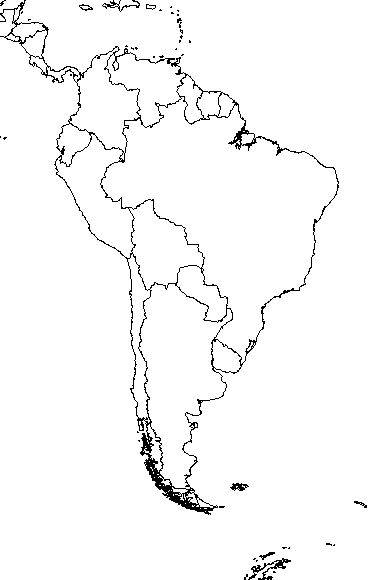
It was also on the final exam, three months later, and most of us got them all right – thanks to some fervent cramming and study groups.
Here are a couple more maps, in case you are feeling cocky. See if you can accurately fill in the name of each country:
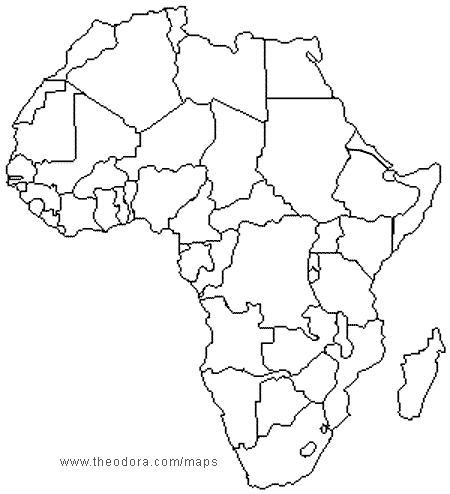

Bonne chance!
Where is Lokoja, Nigeria?
Today the church prays for the diocese of Lokoja, Nigeria. Don’t you just love technology? You can go right to Google Maps and within seconds, you know where Lokoja is, right on the banks of the Niger river, bisecting Nigeria.

Seafood Platter Deli AKA Gulf Coast Seafood Deli on 9 Mile Road
“We’re going to drive ‘all the way’ out there,” AdventureMan tells me and we laugh, because ‘all the way’ is such a relative term. When we lived in Kuwait and in Qatar, we would drive a minimum 30 minutes to get to a restaurant, any restaurant, not only because of distances but also because of traffic, horrendous traffic, in the evenings. While the Seafood Platter Deli is 13 miles away, it takes us less than 20 minutes to get there. Welcome to Pensacola 🙂

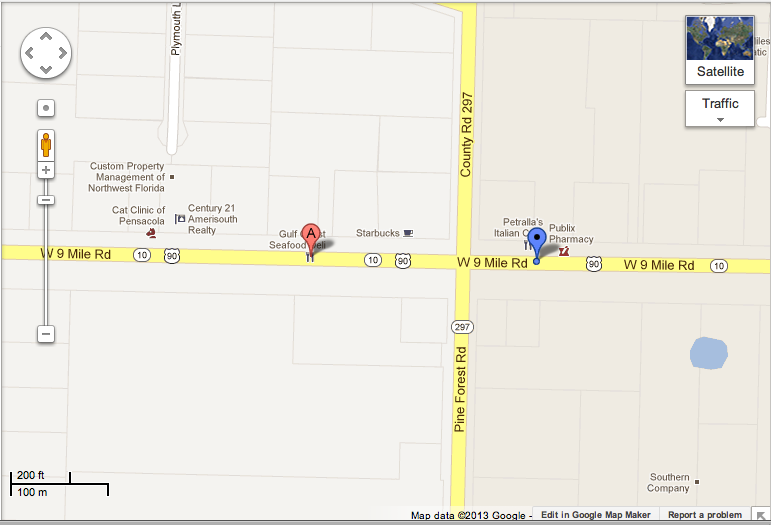
This is a very unusual restaurant. It is so old-timey Gulf Seacoast, and at the same time, I thought as we entered “My Moslem friends would love this!”
Many of my Moslem friends think Americans are unbelievers. They think we don’t talk about God. They don’t know we pray – sometimes without ceasing. Just as I was astounded as I learned things about Islam and Moslem culture living in the Middle East, they were also astounded learning things about us, like that we take care of our families. Think about it – most of what many people in the world know about Americans comes from the impact of cable TV. They watch American TV and they think they understand American culture. Horrifying thought, isn’t it?
So how amazing is it to walk into a restaurant where, as you stand at the counter to order, and you look at the big menu on the wall, there is a stand, with a bible on it. And there is paper, and a pencil, and a sign saying “Prayer requests.” I don’t know about your restaurant experiences, but this is unique in my experience – in America. In the Middle East, there are all kinds of restaurants with Qu’ranic verses on the walls, and the sounds of religious services piped into the restaurant. People talk about God all the time. It’s a whole different world; and my Moslem friends would feel right at home in the Seafood Platter Deli.

Of course, in Saudi Arabia, we would rush to buy our pre-sunset felafels, and then sit and munch, listening to all the souk grates coming down as shops closed for the Mahgrib prayer. Everything closed, five times a day, in Saudi Arabia, for prayer.
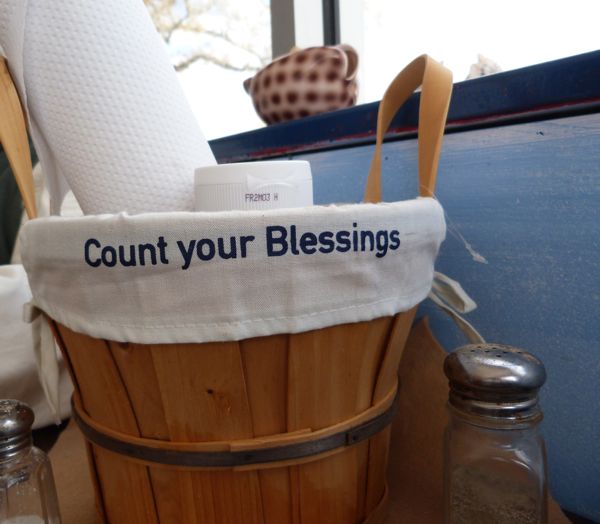
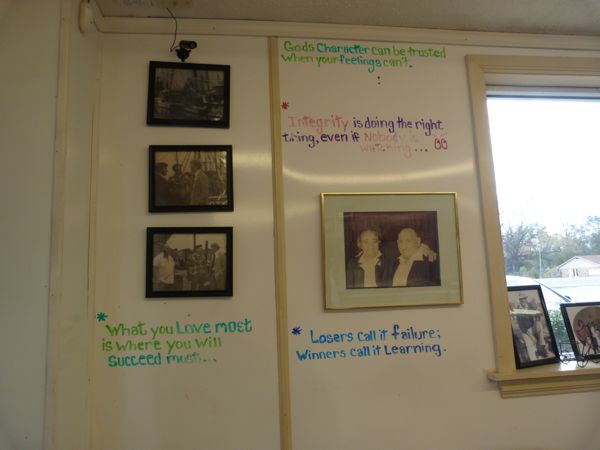
At the Gulf Coast Seafood Deli / Seafood Platter Deli (I don’t know what the real name is, and both names appear when you Google it) there are scriptures on the wall. When you sit down, the little basket holding condiments tells you to “count your blessings.”
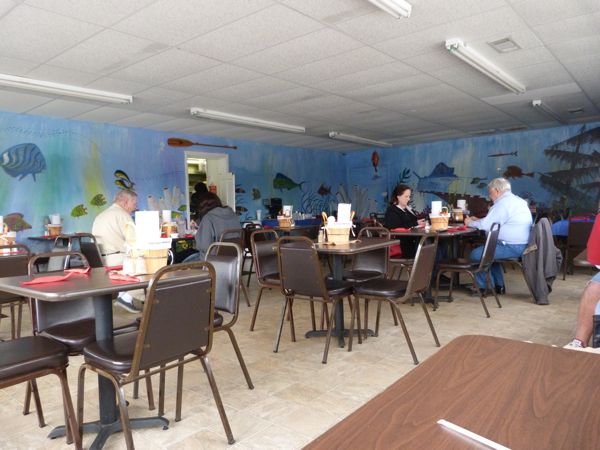
The interior dining room (as opposed to the deli section, and the counter where you order food when you come in) is wall-to-wall sea mural, family friendly, Fish and sea life everywhere. There are also families who pray when their meal is delivered to the table, before they eat. The wait-staff is patient, and personal. You get the impression they truly want you to have a good experience at this restaurant.
We were hungry. We are mildly disgruntled to see piping hot food delivered to tables around us who arrived after we did, but not very. Even though we are hungry, we know that our ordering our food grilled or blackened slows things up in the kitchen, where the majority of the meals are fried. It is really really hard for people like us to watch other customers thoroughly enjoying their fried shrimp, fried catfish, fried grouper, fried scallops, etc. They look SO delicious. Every now and then, maybe once every couple months, we slip up and eat something deep fried, just because yes, yes, it tastes so good, and we know it is like the WORST thing for us. What a pity that deliciousness can be so lethal.
Ah! There it is! Our meals! We tuck right in and then I remember “Oh no! I haven’t taken any pictures!” AdventureMan is used to this, and bless his heart, he stops eating so I can shoot what is left of his grilled scallops, so tasty and delicious, so fresh!
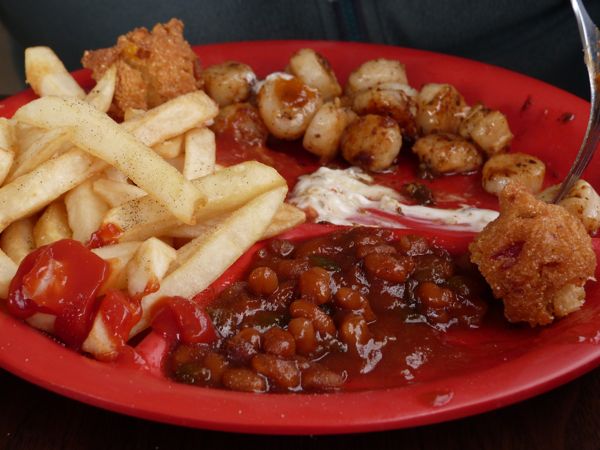
I had so much salmon on my platter that I had salmon and steamed vegetables for dinner, too! The salmon was copious, lightly blackened, seared on the outside, moist on the inside, just the way I love it. It was some of the best salmon I have had in Pensacola (not exactly salmon country, but that little Alaska girl still lives in my heart and I can’t resist salmon when I see it on the menu.)

There’s another thing we loved about the Seafood Platter Deli – remember Dembo’s Smokehouse? We love restaurants that honor their heritage, and the Seafood Platter Deli has this wonderful wall:
Last, but not least, the food was so good, and so plentiful, that we couldn’t eat it all and ended up taking some home. We also took home some dessert, one dessert, $1.99 for a goodly portion of Vanilla Wafer pudding, that old-fashioned kind, maybe Banana pudding. It was so GOOD, we wish we’d gotten two. 🙂
Gulf Coast Seafood Deli / Seafood Platter Deli
Address: 2250 W Nine Mile Rd, Pensacola, FL 32534
Phone:(850) 969-3299
We love this place, and look forward to driving ‘all the way out there’ for more fabulous Gulf seafood.
First Gator on Dauphin Island
“That’s my very first gator!” our friend said, watching the reptile sun himself on the side of the big pond in the Audubon Bird Sanctuary. We had taken the very short hike out to see the gators and the turtles, and any birds who might be migrating through this gorgeous February day between storms.
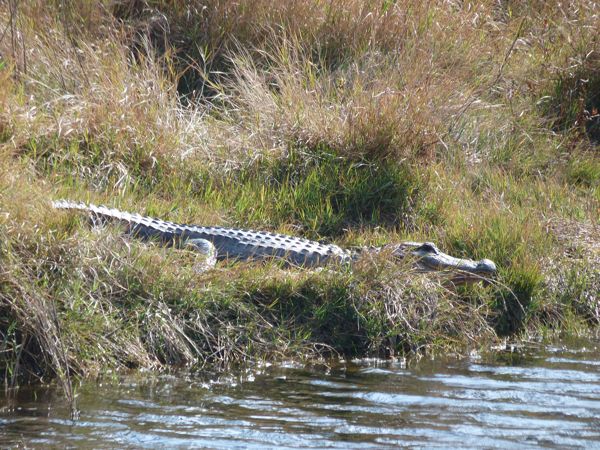
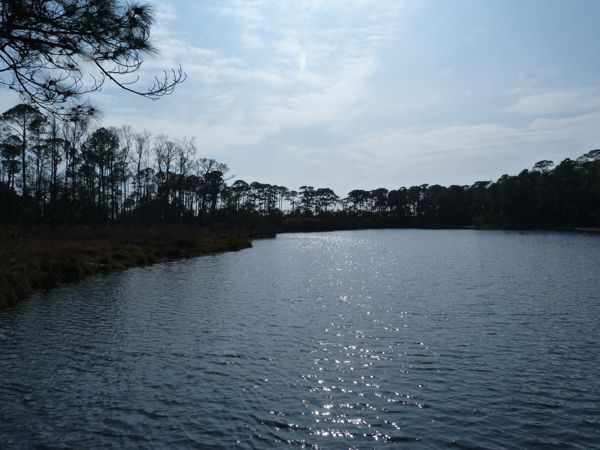
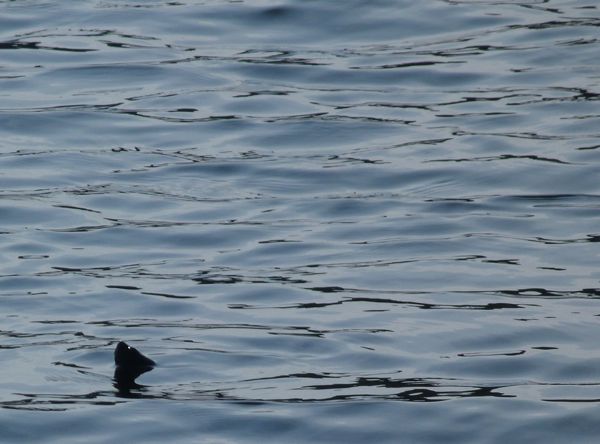
(That’s not a stick; it’s a turtle head sticking out of the water 🙂 )
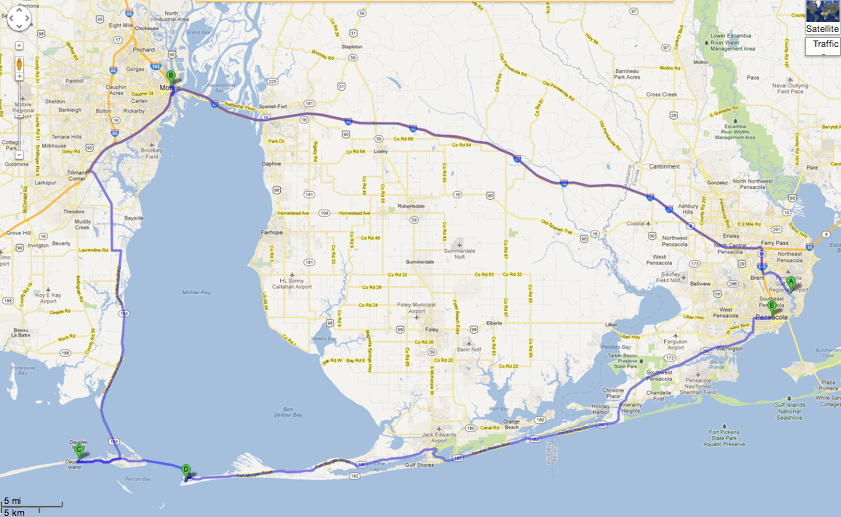
We had a great day for a drive and a ferry boat ride. The car ferry only handles maybe thirty cars max on the trip across Pelican Bay from Dauphin Island to Gulf Shores. It cuts off a long long trip back into Mobile and around the huge Mobile Bay, and takes us along the beach back into Pensacola.
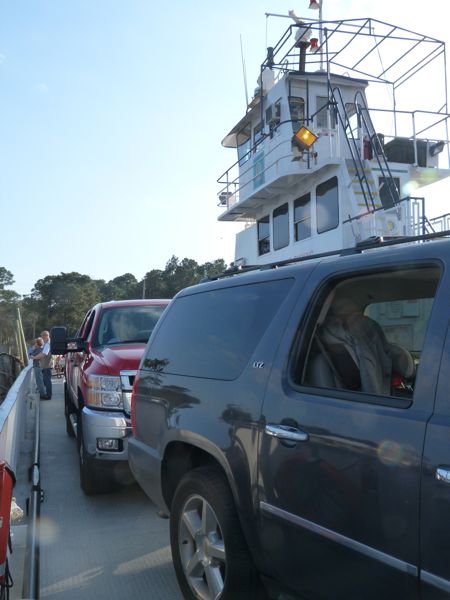



February is a great time of the year to walk these areas and to take a day trip. We had a wonderful day, mild temperatures and calm waters – altogether a great adventure, counting in our unforgettable stop at Smokey Dembo’s Smokehouse en route along Douphin Island Parkway.
Kuwait Quilt
There have been some good moments in the course of this nasty cold, good enough to finish my work on a quilt for a baby who is fast making his way into this world, a Kuwaiti baby :-). This is a quilt he can crawl on, snuggle under, take to school for nap time, and then take off to college to put on his wall:

We had some wonderful moments in Kuwait, many of which, for me, were spent in the fabric souks of Kuwait with other quilters from many nations, including Kuwait. Many of those fabrics are quilted into this piece, along with my everlasting gratitude to the friends we had there who made the experience so much the richer for us.
French Intercede to Save Mali
Heard yesterday on NPR that France was stepping up to the plate on Mali, found the story on BBC this morning . . . it isn’t easy. It’s like people in the US don’t get news of countries like Mali unless they really seek it out. You can find more stories on Mali and the Tuareg / Al Qaeda alliance tormenting Northern Mali at the BBC link.


The Ansar al Din is imposing in Mali the kind of Islam that the Taliban imposed in Afghanistan – an Islam which forbids music, forbids women to participate in public life, enforced by a group of ignorant, uneducated thugs with weapons. Everything Ansar al Din stands for is contrary to the true nature of Islam.
Go France!
French troops continue operation against Mali Islamists
Mali: Divided nation
French Defence Minister Jean-Yves Le Drian said army units had attacked a column of rebels heading towards the central town of Mopti.
He also revealed that a French pilot had been killed in fighting on Friday.
The French troops deployed on Friday after Mali’s army lost control of a strategically important town.
Mali’s government said its forces had recaptured the town, Konna, after the air strikes, but it was not clear if all Islamist fighters had left the area.
‘Terrorist state’
Armed groups, some linked to al-Qaeda, took control of the whole of northern Mali in April.
They have sought to enforce an extreme interpretation of Islamic law in the area.
Regional and Western governments have expressed growing concern about the security threat from extremists and organised crime.
Mr Le Drian said on Saturday that hundreds of French troops were involved in the military operation in Mali.
The minister said Paris had decided to act urgently to stop the Islamist offensive, which threatened to create “a terrorist state at the doorstep of France and Europe”.
He also revealed that a French pilot was killed in Friday’s fighting – during an air raid to support Mali’s ground troops in the battle for Konna.
“During this intense combat, one of our pilots… was fatally wounded,” the minister said.
Speaking on Friday, French President Francois Hollande said the intervention complied with international law and had been agreed with Malian interim President Dioncounda Traore.
It would last “as long as necessary”, Mr Hollande said.
French officials gave few operational details.
Residents in Mopti, just south of Konna, told the BBC they had seen French troops helping Malian forces prepare for a counter-offensive against the Islamists.
Mr Traore declared a state of emergency across Mali, which he said would remain in place for an initial period of 10 days.
He used a televised address to call on Malians to unite and “free every inch” of the country.
‘Crusader intervention’
The west African bloc Ecowas said it was authorising the immediate deployment of troops to Mali “to help the Malian army defend its territorial integrity”.
UN Secretary-General Ban Ki-moon says the situation in Mali is becoming increasingly volatile
The UN had previously approved plans to send some 3,000 African troops to Mali to recapture the north if no political solution could be found, but that intervention was not expected to happen until September.
French Foreign Minister Laurent Fabius said the aim of the operation was to stop Islamist militants advancing any further.
It was not clear how far the French would go in helping Mali’s government retake territory in the north.
At least seven French hostages are currently being held in the region, and Mr Fabius said France would “do everything” to save them.
A spokesman for al-Qaeda in the Islamic Maghreb (AQIM) said he considered the French operation a “Crusader intervention”, and told France it would be “would be digging the tombs of [its] sons” if the operation continued, according to the Mauritania-based Sahara Media website.
France ruled Mali as a colony until 1960.
This chart is from a Blog called The Moor Next Door:

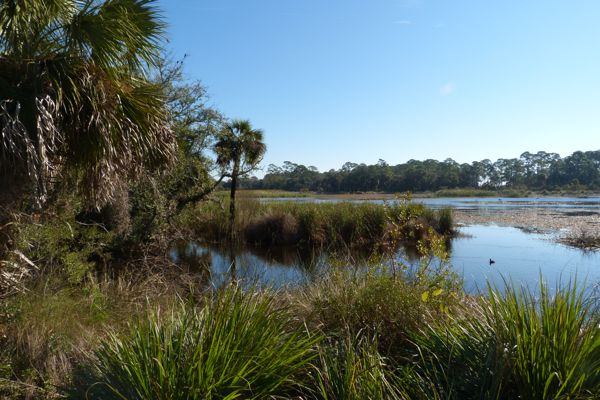
Birding at St. Mark’s National Wildlife Refuge

Some mornings, I am astonished at how wonderful it is to live in a place where we have the luxury to set aside wide tracts of lands to preserve our natural heritage. St. Mark’s National Wildlife Refuge evokes that response in me. It’s even more astonishing that because a couple years ago I bought a lifetime Senior Pass, getting into the national parks is free – for the rest of my life. What a great country we live in. 🙂
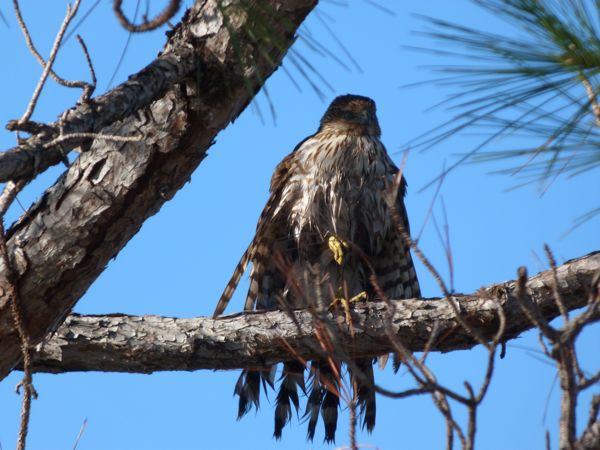
It is a cold and frosty morning as we load up to head out to St. Marks for some serious bird watching and photographing. Serious, that is, for AdventureMan, who actually does birding trips with other serious birders. I am a bird-appreciator, as in I know what a cardinal is, and a blue jay. I can pretty well recognize a buzzard. Hey, show me a painting and I can probably tell you who painted it, but birds . . . not so much.

I love being outdoors in Florida on a wonderful clear cool day with fabulous conditions for taking photos. I love just wandering along some of the birding trails and seeing what we can see. It’s an amazing place; in some of the areas where we stopped to wander, it reminded me of places we like to go in Africa, of Zambia, of Namibia, of Botswana . . . some of the habitat is so alike, I can almost hear those tectonic plates creaking apart, drifting, and wonder how much of the flora is directly related to African flora.
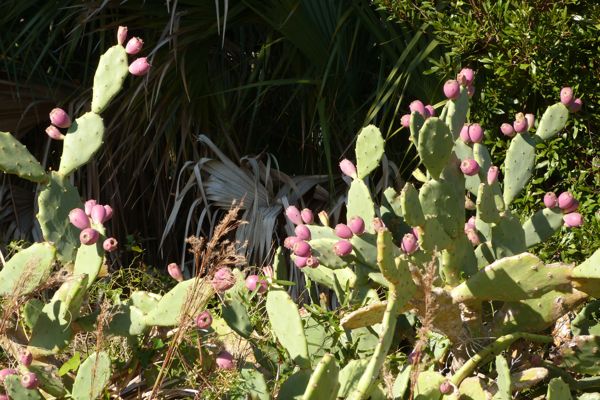
We had these in Tunisia; we called them Prickly Pear, and the Tunisians used them for borders to separate their lands. They also made jam with the prickly pears, and they skinned the leaves and fried up the meat from inside the thick prickly pear leaves. I think what a great border they would make in Pensacola, but a very unfriendly border. Good for keeping away thieves and burglers, but not very attractive, and not very welcoming . . . but very very African:
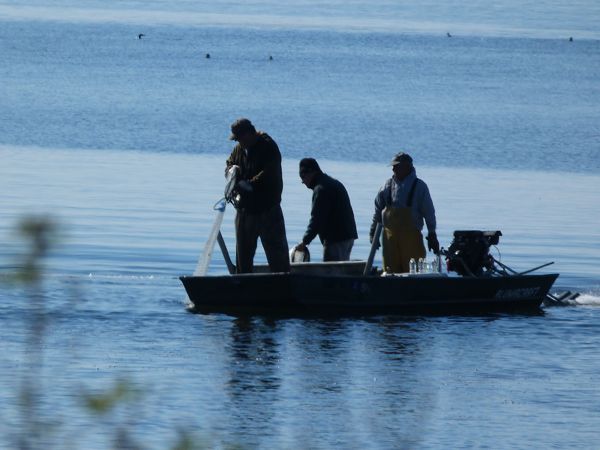
Some fishermen, probably setting some crab traps near the shore:

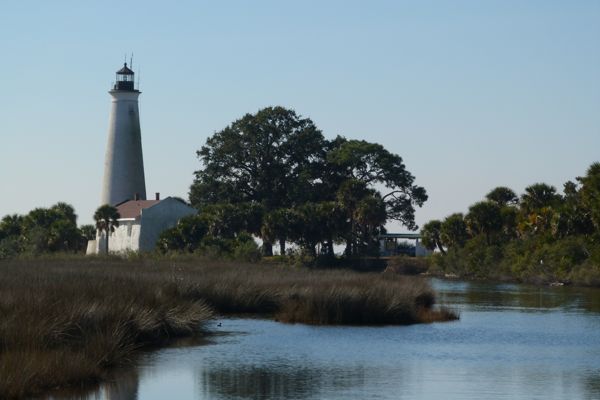
The St. Mark’s lighthouse:


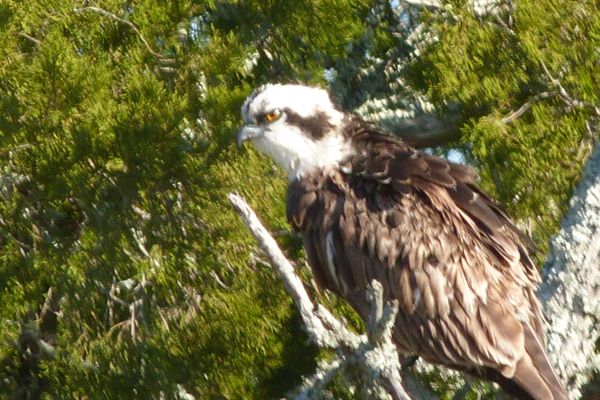

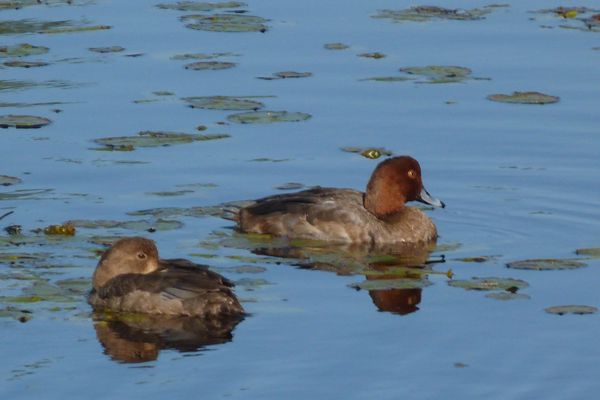


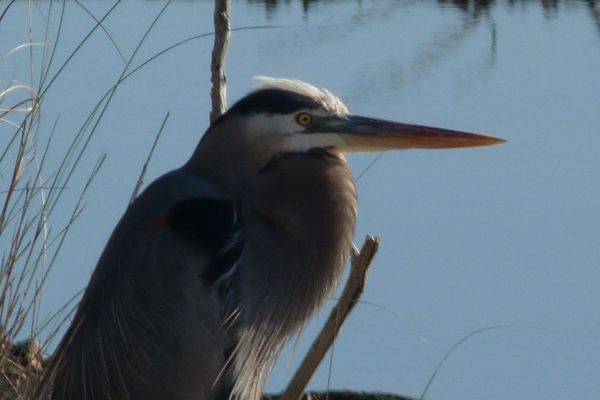
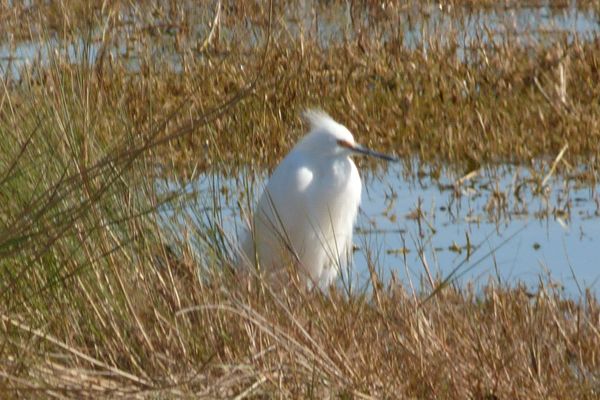
Every now and then you have a lucky moment, and I happened to shoot this heron just as he had a wiggling sparkly fish in his beak, just before he swallowed it. I admit it, I wasn’t trying. If I had been trying, I could never have gotten it just at the right moment:


Some very clever park person went around and made all the deer crossing signs into Rudolph signs, LOL!

The park is full of very serious-faced people carrying HUGE lenses on cameras attached to seriously sturdy tripods, lenses meant to capture the details of the pinfeathers, cameras to document a rare sighting. These people don’t talk about ducks, they talk about Merganzers and Koots, and the rarely seen such-and-such, and I just listen and keep my mouth shut while my head spins.
For me, it’s enough to see these wonderful creatures, free of fear, safe in their migrations. It’s enough to have a cool day, a great day for walking, and NO mosquitos. It’s a great day for my kind of birding, which is very non-serious to be sure.
Recent Comments
ExpatAlien on What Country am I Living … intlxpatr on Yellowstone: Old Faithful to C… Michelle on Yellowstone: Old Faithful to C… Cathy on No Grown-Ups in Charge intlxpatr on Waiting for Snow Wikipedia Donate Button

Amazina


Early Voting in Florida


 Here There and Everywhere