One New MERS Death in Saudi Arabia; One in Qatar
New in from Reuters, via AOL news:
DUBAI, Sept 8 (Reuters) – The MERS coronavirus has killed two more people in the Gulf, one in Saudi Arabia where the strain emerged last year, and one in neighbouring Qatar, health authorities said.
The death of a 74-year-old man in the Medinah region of western Saudi Arabia was the 45th fatality in the kingdom from Middle East Respiratory Syndrome Coronavirus (MERS-CoV) which can cause coughing, fever and pneumonia.
The Saudi Health Ministry also said on Sunday that three women aged between 64 and 75 had contracted the disease.
A 29-year-old Qatari admitted to hospital on Aug. 17 has died, Qatar’s Supreme Council of Health said in a statement dated Sept. 6, adding that another citizen who had contracted the disease while abroad had recovered.
The World Health Organization said last month the number of confirmed infections worldwide in the past year was 102, of whom almost half had died.
In a study into what kind of animal “reservoir” may be fuelling the outbreak, scientists said this month they had found strong evidence it is widespread among dromedary camels in the Middle East.
The virus has been reported in people in Tunisia, France, Germany, Italy, and Britain. (Reporting by Sami Aboudi in Dubai and Amena Bakr in Qatar; Editing by Robin Pomeroy)
The SeaTac Food Court
“Terminal T? Is that new? I don’t remember arriving at Terminal T before!”
Not even two weeks have passed, and we are going through SeaTac again, this time en route to Alaska. As we enter “Terminal T” we discover terminal T is like saying “Shrimp scampi” you are saying the same thing. T is the Terminal, it used to be the only terminal. It’s what used to be the original airport before all the South Terminals and North Terminals and others I don’t even know. Oh yeh, A, B, and C.
But the Main Terminal is a delight. Seattle loves public art, as do I, and arriving in Seattle at the main terminal, you find schools of little brass fish swirling under your footsteps, if you think to look. These little touches delight me.
We are flying out of Seattle to Alaska, and Alaska Airlines flies out of terminals C or N, and as it turns out, our flight flies out of N, or the North Concourse. On our way there, we are wondering if we will find something healthy to pick up for our dinner, when we come to the Food Court.
We’ve eaten here before, breakfast. They have an Anthony’s-in-the-Airport, and my best friend recommended their breakfast egg dishes. I hate oatmeal, but discovered that the oatmeal at Anthony’s is delicious! It must not be good for me; how can oatmeal that is good for me taste so good?
And, as it turns out, Anthony’s has a take-out section! Woo Hooo!


Well, hmmmm, not quite. They don’t have the Ceasar Salad with a piece of grilled salmon or halibut on the top, but isn’t salmon and chips almost as healthy? Although in intend to wait to eat on the plane, the odor of delicious deep fried salmon calls to me, along with a cup of freshly brewed mocha, and I go ahead and eat my dinner in the Seattle airport.
I love it that there are so many options. Anthony’s has a great restaurant, right in the old main terminal, with floor to ceiling glass, it is a glorious situation. There are other eating establishments where you can order and then sit in the same area at tables and chairs – Ivars, some Mexican, some others which are good, it’s just I love the take out from Anthony’s. Normally airport food can be a total drag, unless you go through Memphis and have some BBQ – or Seattle. Seattle does airport food right.
God Laughs; Life’s Craziness
One of my favorite Psalms is Psalm 2, which advises us to humbly submit to the will of Almighty God or suffer the consequences of our own actions. I’ve heard God laughing all week, sometimes at me, sometimes with me.
Psalm 2
1 Why do the nations conspire,
and the peoples plot in vain?
2 The kings of the earth set themselves,
and the rulers take counsel together,
against the Lord and his anointed, saying,
3 ‘Let us burst their bonds asunder,
and cast their cords from us.’
4 He who sits in the heavens laughs;
the Lord has them in derision.
5 Then he will speak to them in his wrath,
and terrify them in his fury, saying,
6 ‘I have set my king on Zion, my holy hill.’
7 I will tell of the decree of the Lord:
He said to me, ‘You are my son;
today I have begotten you.
8 Ask of me, and I will make the nations your heritage,
and the ends of the earth your possession.
9 You shall break them with a rod of iron,
and dash them in pieces like a potter’s vessel.’
10 Now therefore, O kings, be wise;
be warned, O rulers of the earth.
11 Serve the Lord with fear,
with trembling 12kiss his feet,*
or he will be angry, and you will perish in the way;
for his wrath is quickly kindled.
Happy are all who take refuge in him.
I’m a planner. I figure out what I want, and then I figure out how to get it. When we decided we wanted to take a trip to Alaska, we booked – and paid – a year in advance to get the kind of room we wanted. We also planned to buy a new car, and started saving for that, being pay-cash kind of people.
Then, early in the year we discovered we were going to become grandparents to a granddaughter! She would arrive shortly after we get back from our Alaska trip.
This week, God laughed. The doctors told our son and his wife that she needed to go on bedrest, and that this baby will be coming early. All the grandparents have been helping with childcare through the summer, now we just ratcheted it up a notch.
Do you know why God gives children to YOUNG parents? LOL, a three year old has SO much energy! So much curiousity! We have such a good time with him and when at the end of the day, we return him to his parents – we need a nap!
We are also trying to pack and prepare for our trip, get the Qatari Cat prepared for the cat hotel, get the guest suite prepared for the people who will stay while we are gone, and oh yes, finish up the purchase of that new car.
I had thought the first week in August would be a snooze, isn’t it always? Those long, hot humid days hit Pensacola, often one of those violent and emotional thunderstorms that clears the air in the late afternoon, lazy day after lazy day, right?

Not this year. This year was fly to Seattle for my Mom’s 90th birthday celebration, fly back, take care of our grandson for a week, do whatever we can to help out our son and his wife while she is on bed rest, buy and sell two cars, do our normal volunteer work – oh, and we had scheduled two meetings at our house, so we had to be presentable, and have some delicious things available. I could hear God laughing.

In the midst of all this, we are healthy. We have a good roof over our heads. We have the means to get a new car and travel to Seattle for Mom’s birthday. We pre-paid much of the Alaska vacation. Our little grandson is happy, and strong, and articulate, and fun to be around. Our son and his wife are wonderful, loving parents, and hard workers, and are preparing for this sweet new arrival. God laughs, and we thank him for his abundant blessings, and his abundant patience with us thinking we have any control over the months that come. We pray for the safe and healthy arrival of this little granddaughter who may arrive while we are gone, for a safe delivery, and a speedy recovery for her mother, and for strength and courage for her father, our son, who is a valiant man. We welcome your prayers.
Camels Source of MERS?

From today’s BBC News:
Mers coronavirus: Dromedary camels could be source
By Rebecca Morelle
Science reporter, BBC World Service
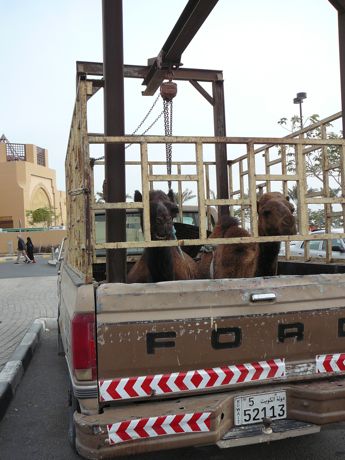
Dromedary camels could be responsible for passing to humans the deadly Mers coronavirus that emerged last year, research suggests.
Tests have shown the Mers (Middle East Respiratory Syndrome) virus, or one that is very closely related, has been circulating in the animals, offering a potential route for the spread.
The study is published in the journal Lancet Infectious Diseases.
But the scientists say more research is needed to confirm the findings.
The Mers coronavirus first emerged in the Middle East last year. So far, there have been 94 confirmed cases and 46 deaths.
While there has been evidence of the virus spreading between humans, most case are thought to have been caused by contact with an animal. But until now, scientists have struggled to work out which one.
‘Smoking gun’
To investigate, an international team looked at blood samples taken from livestock animals, including camels, sheep, goats and cows, from a number of different countries.
They tested them for antibodies – the proteins produced to fight infections – which can remain in the blood long after a virus has gone.
Professor Marion Koopmans, from the National Institute of Public Health and the Environment and Erasmus University in The Netherlands, said: “We did find antibodies that we think are specific for the Mers coronavirus or a virus that looks very similar to the Mers coronavirus in dromedary camels.”
The team found low levels of antibodies in 15 out of 105 camels from the Canary Islands and high levels in each of the 50 camels tested in Oman, suggesting the virus was circulating more recently.
“Antibodies point to exposure at some time in the life of those animals,” Prof Koopmans explained.
No human cases of the Mers virus have been reported in Oman or the Canary Islands, and the researchers say they now need to test more widely to see if the infection is present elsewhere.
This would include taking samples from camels in Saudi Arabia, the country where the virus is the most prevalent.
‘Priority search’
Prof Koopmans said: “It is a smoking gun, but it is not definitive proof.”
Commenting on the research, Professor Paul Kellam from the Wellcome Trust Sanger Institute in Cambridge and University College London, said the research was helping to narrow down the hunt for the source of the virus.
But he told BBC News: “The definitive proof would be to isolate the virus from an infected animal or to be able to sequence and characterise the genome from an infected animal.”
Health officials say confirming where the virus comes from is important, but then understanding how humans get infected is a priority.
Gregory Hartl, from the World Health Organization, said: “Only if we know what actions and interactions by humans lead to infection, can we work to prevent these infections.”
Data suggests that it is not yet infectious enough to pose a global threat and is still at a stage were its spread could be halted.
Worse Than Crack Cocaine? Growing up Poor
From AOL Daily Finance Poverty damages children more than being born to a crack addicted mother. Poverty keeps children from attaining their full potention, and hurts us all as a society as a huge waste of potential resource:

In the 1980s, the crack baby epidemic was hard to ignore. Television show after television show, article after article proclaimed that children born to addicts of the increasingly prevalent “crack” cocaine were all-but-guaranteed to have birth defects, including extremely low IQs and severe emotional problems. This “lost generation,” commentators emphasized, would be incapable of forming relationships or reaching full emotional maturity. They would be, in the words of Washington Post columnist Charles Krauthammer, condemned to “a life of certain suffering, of probable deviance, of permanent inferiority.”
A little over 20 years later, Krauthammer’s predictions have proven almost embarrassingly inaccurate. Last week, the findings of a 24-year-long study of crack babies revealed that parental use of the drug had little or no direct effect on the children. In the process of investigating the babies, however, researchers discovered another environmental problem that did, in fact, lead to problems with depression, anxiety, cognitive functioning, and a host of other issues: poverty.
In 1989, Dr. Hallam Hurt, chair of the neonatology department at Philadelphia’s Albert Einstein Medical Center, began tracking 224 near-term or full-term children who were born to crack addicts. In the ensuing years, her longitudinal study followed the children, finding that, overall, their IQs were about the same as a control group of children of non-addicted mothers. Further, the children in Hurt’s study had comparable outcomes when it came to educational and emotional development.
That having been said, Hurt’s study found that children raised in poverty — regardless of whether or not their mothers were addicted to crack — tended to have lower IQs and lower school readiness than those who weren’t raised in poverty. A big part of the problem, she argues, is environmental: Of the children in her study, “81 percent of the children had seen someone arrested; 74 percent had heard gunshots; 35 percent had seen someone get shot; and 19 percent had seen a dead body outside.” The children themselves acknowledged the effect of these events: “Those children who reported a high exposure to violence were likelier to show signs of depression and anxiety and to have lower self-esteem.”
In other words, while prenatal crack abuse may not have a major effect on children, the societal conditions in crack-ravaged communities most certainly do. As Hurt emphasized, “Given what we learned, we are invested in better understanding the effects of poverty. How can early effects be detected? Which developing systems are affected? And most important, how can findings inform interventions for our children?” Or, to put it another way, now that we understand that poverty is more dangerous for children than crack, what can we do to protect our children from its effects?
In Florida, the worst schools are those serving the poor. Many fell a full grade point in the Florida evaluations and would have fallen further if there were not a law – I am not kidding – that says they can only fall one grade point in a year. We are failing in the two most important areas that can help children pull themselves out of poverty – good health care, and good education.
The Official Worst Drivers in America: Miami
Slate.com has figured out which city has the worst drivers in America: Miami, Fla.
Slate looked at years of data about traffic accidents, automotive fatalities, alcohol-related driving deaths and pedestrian strike rates as indicators of bad driving.
Three out of the five cities with the worst drivers are found in the Sunshine State, with Miami topping the list as the absolute worst. Miami is first in auto fatalities and pedestrian strikes and, according to Slate, first in “obscenity-lace tirades of their fellow driver”. Fellow Floridian cities Hialeah, which comes in at number three, and Tampa at number four also seem to host a populace with a passion for running down pedestrians and fatal car accidents.
Miami shows up on more than just Slate.com’s worst list. The Huffington Post reported that Miami also had the most hit-and-runs in Florida last year, an incredible 35 a day. Transportation for America also ranked the most dangerous cities in America to drive in, with the top four all in Florida. Maybe Floridians should look into buying heavy-duty trucks and steering clear of sidewalks.
From the original report at Slate.com where you can read the entire article:
Adjusting the Allstate rankings for mileage this way has significant effects. Washington, D.C. remains the worst driving city using the insurance claims data, but Philadelphia surges to second worst. Hialeah drops seven places, from fourth to 11th.
Next we consider additional indicators. Car crashes are bad, but some accidents are worse than others. In July 2012, the Centers for Disease Control and Prevention published automobile fatality data for major cities and metropolitan statistical areas from the year 2009. It’s useful for our purposes, but it comes with a couple of caveats. The researchers didn’t publish data for some of the smaller cities on our list. In those cases, we’ll use data from the larger metropolitan area. In addition, three cities (Boston, Newark, N.J., and Providence) had fewer than 20 fatalities, but the precise number is unpublished. We’ll assume that each of these cities had 10 fatalities, so we have a number to enter into the calculations.
Drunk drivers are bad drivers, and some cities have far more of them than others. Not all locales publish reliable data on drunk driving fatalities, so we’ll turn to the Century Council, an association of distillers organized to combat drunk driving. The group published the number of fatalities from alcohol-related car accidents in 2011. The data are, unfortunately, broken down by state rather than city. So, for our purposes, the sins of the state will be visited upon the cities. (New York City has reliable data, so we can use city-specific data in that instance.) We can’t adjust the statewide data for mileage, because our mileage numbers relate only to cities themselves. So DWI fatalities will have to be computed per capita, unadjusted for how many miles residents of a city drive.
Pedestrian strikes are another key metric. For this indicator we turn to the CDC’s WONDER, a searchable database of morbidity and mortality statistics. It’s a priceless epidemiological tool as well as a bottomless source of trivia. The most granular data on pedestrian injuries and deaths is by county.
You might object to the use of pedestrian injuries as a metric of driver incompetence, because some cities have far more pedestrians than others. That’s a fair point, but consider New York City. It is, by far, the most walked city in the United States. Two-thirds of New Yorkers either walk or use public transit to get to work. According to the website WalkScore.com, only 2 percent of New Yorkers live in neighborhoods where cars are necessary. While every pedestrian strike is a tragedy, there are fewer in New York than you might expect. Miami-Dade County, a significantly less walked city, had 20 percent more pedestrian strikes per mile driven between 2006 and 2010 than New York.
. . . . .
And now, America, on to the cities with your worst drivers.
No. 5: Baltimore. Baltimoreans just can’t keep from running into each other. They were outside the top 10 in fatalities, DWI deaths, and pedestrian strikes, but their rate of collision couldn’t keep them out of the top five overall.
No. 4: Tampa, Fla. Tampa doesn’t do any single thing terribly, but it is consistently poor: 18th worst in years between accidents, fifth in traffic fatalities, tied for 11th in DWI fatalities, and 10th in pedestrian strikes. If the city had managed to get outside the bottom half in any individual category, Tampa residents might have avoided this distinction.
No. 3: Hialeah. The drivers of Hialeah get into a middling number of accidents, ranking 11th among the 39 candidates. But when they hit someone, they really mean it. The city finished third for fatalities. They also have a terrifying tendency to hit pedestrians.
No. 2: Philadelphia. Drivers in the city of brotherly love enjoy a good love tap behind the wheel. Second-places finishes in collisions and pedestrian strikes overwhelm their semi-respectable 16th-place ranking in DWI deaths.
No. 1: Miami. And it’s not even close. First in automotive fatalities, first in pedestrian strikes, first in the obscenity-laced tirades of their fellow drivers.
A couple of other noteworthy findings: Californians did reasonably well. Although the Golden State had seven cities among our 39 candidates, only Glendale finished in the top half of the table. Louisiana’s two entries, Baton Rouge and New Orleans, finished 6th and 15th, owing to the state’s terrible record of drunk driving fatalities.
Washington, D.C., the whipping boy of the Allstate rankings, dropped to 16th, owing to low numbers of DWI fatalities. Boston drivers don’t deserve the torment they receive. They have few automotive fatalities and rarely kill people in alcohol-related accidents. It goes to show how flawed opinion polls can be.
Touched the Hem of His Garment
Today’s meditation from Forward Day by Day touches on one of my very favorite stories – and its opposite. It’s all about the power of belief. The woman, suffering from bleeding, would have lived a terrible life, considered unclean, untouchable, and trying everything to be cured without success. Just a touch – one touch – and her illness is gone. Jesus is astonished and tells her that her faith has made her well.
In contrast, the people in his own village are skeptical. How can good ole Jesus, son of Mary and that carpenter, how can he be anything special? In the face of such callous disbelief, Jesus can do little.
SATURDAY, July 27
Mark 6:1-13. And he could do no deed of power there, except that he laid his hands on a few sick people and cured them.
What a contrast, in just a few verses. Yesterday the bleeding woman merely touched Jesus’ garment, and Jesus’ power streamed into her. Today he is home, and those who watched him grow up ask, “Just who do you think you are?” and the Son of God is stopped in his tracks, like Superman when he is exposed to kryptonite.
My field education rector preached on this passage a year ago, and I was spellbound by his ending. He asked, “If Jesus came to All Saints, would he be able to do deeds of power?” Then the rector got even more personal, asking, “If Jesus came to you, would he be able to deeds of power?”
Oh, how I hope so. I’m not sure how to have the faith that allows Jesus to perform deeds of power, but I can see what kind of behavior does. It is hopeful, brave actions that seem to open the way for Jesus to work; and it is arrogant, fear-based behavior that seems to block the way.
Lord, teach us not to fear the change you bring. Teach us to reach out to touch your garment.
When my Mother was still living on her own, there was a revolving guest room, and my sister left a CD for me there, as she departed and I arrived, which contained the song above. I want it sung at my funeral. It is a succinct statement of faith; it is the song of the bleeding woman who believes and is cured, and nothing is ever the same.
Saudis Say MERS Virus Not Following SARS Path
What do you think? While ministers in Saudi Arabia seem unconcerned, this virus, which appears to have originated among an as yet unidentified animal in Saudi Arabia, kills about half the people infected with it. And soon, with the Hajj, the Moslem pilgrimage to Mecca, thousands will travel to Saudi Arabia, testing the theory that this virus does not spread easily. . .
Mers: New virus ‘not following Sars’ path’
By James Gallagher
Health and science reporter, BBC News
The new Mers virus, which has killed half of those infected, is “unlikely” to reach the same scale as Sars, ministers in Saudi Arabia say.
Most of the 90 Mers cases reported so far have been in Saudi Arabia.
Mers is from the same group of viruses as the common cold and Sars, which killed 774 people.
However, a detailed analysis of the Saudi cases, published in Lancet Infectious Diseases, did warn of “major gaps” in understanding of the virus.
The Middle East respiratory-syndrome coronavirus (Mers) emerged in 2012 and has infected 90 people worldwide, 45 of them have died.
The global concern is that cases could spread much further, echoing the Sars outbreak.
Cases have been centred on the Middle East – with patients in Jordan, Qatar, Saudi Arabia and the United Arab Emirates. Additional cases in France, Germany, Italy, Tunisia and the UK have all been linked to travel to the Middle East.
Researchers in Saudi Arabia have published details of the 47 cases reported in the country.
They suggest a pattern of mostly older men being infected. Most cases were also in people with other medical problems, more than two-thirds of the reported cases also had diabetes.
Low threat
The lead researcher and Deputy Minister for Public Health, Prof Ziad Memish, said: “Despite sharing some clinical similarities with Sars, there are also some important differences.
“In contrast to Sars, which was much more infectious especially in healthcare settings and affected the healthier and the younger age group, Mers appears to be more deadly, with 60% of patients with co-existing chronic illnesses dying, compared with the 1% toll of Sars.
“Although this high mortality rate with Mers is probably spurious due to the fact that we are only picking up severe cases and missing a significant number of milder or asymptomatic cases.
“So far there is little to indicate that Mers will follow a similar path to Sars.”
A report earlier this month showed that the virus struggled to spread in people.
However, it and the latest Saudi investigation both highlighted the need to find where the virus was coming from.
Prof Memish’s report said: “Reducing the rate of introduction of Mers coronavirus into human beings is unpredictable because the source of the virus is not yet known.
“We are searching vigorously for the source.”
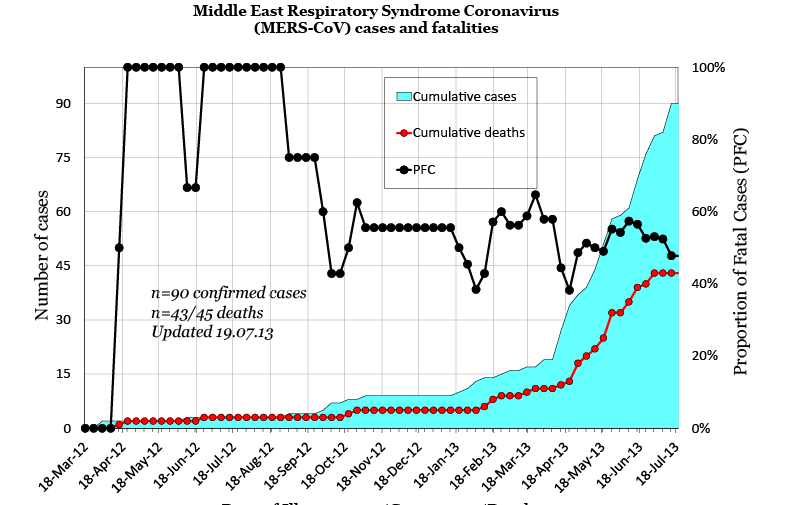
Here is a graph from a private report called Virology Down Under, a fascinating read on the identification and development of the MERS Virus by Middle East Respiratory Syndrome Coronavirus (MERS-CoV)..
Last Updated 19-Jul-2013
Written by Ian M. Mackay, PhD on his personal time.
All opinions are his own and do not represent medical advice or the views of any institution.:
Dubai’s Weight Loss Challenge: 1 Gram Gold Per Kilo Lost
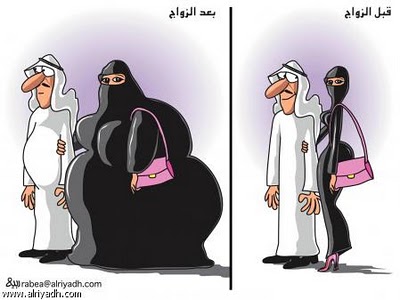
Need some motivation to cut that flab? If you live in Dubai, you can win gold to do just that. A new campaign “You are Worth … Your Weight in Gold” is aimed at promoting a healthy lifestyle and achieving optimal body weight. The contest is open for public.
The winner will be the one who loses maximum weight during the program period of 30 days from its inception on Friday this week. The top three winners will get a gold coin equivalent to AED 20,000. Other participants will get a gram of gold for each kilo reduced from their body weight. However, the minimum weight to lose for the eligibility is two kilograms.
Addressing a press conference on Tuesday, Dubai Municipality officials said the winners will get two grams of gold if they could reduce at least two kilograms within one month.
Hussain Nasser Lootah, director-general of Dubai Municipality, said the initiative comes after the grand success of ‘Yallah Walk’ campaign launched in 2011.
“It is also aimed at introducing walking tracks in different parks in the city of Dubai. Walking is an easy and economic way to stay fit and healthy. The municipality has provided residents with safe and accessible walking tracks in urban and rural areas,’ Lootah said.
“Currently Dubai has a total of 91 places where one can practice sport activities. These include residential parks, public parks, jogging track and beaches. In addition to this, every year the civic body opens new parks in more areas and adds sports equipments and tools for the public to promote a healthy community, he said.
“Ramadan is the most appropriate season to launch such initiatives as it reminds us about many health benefits of reducing weight and encourages us to take strong steps to change our bad lifestyles,’ he added.
The weight of each participant will be measured during registration and at the end of program. Participants can register at the event sites any day during the period. Participants must have excess weight to reduce and stay away from unhealthy methods to lose weight.
The final weight will be measured after the Eid holidays on Aug. 16.
Ahmed bin Sulayem, executive chairman of Dubai Multi Commodities Center (DMCC), said the DMCC is proud to support this health awareness drive to encourage society to change their daily routines in return for a healthier lifestyle.
‘We would highly encourage everyone from all walks of life to take part in this great initiative and hope DMCC’s contribution of AED 100,000 worth of gold coins will help motivate individuals reach the final target of improving and sustaining a healthy lifestyle and consequently a better quality of life,’ he said.
“I am sure Dubai can be the role model and astonish the world by its innovative ideas and initiatives,” said Anil Dhanak, general manager of Dubai Gold & Jewelry Group.”
Recent Comments
ExpatAlien on What Country am I Living … intlxpatr on Yellowstone: Old Faithful to C… Michelle on Yellowstone: Old Faithful to C… Cathy on No Grown-Ups in Charge intlxpatr on Waiting for Snow Wikipedia Donate Button

Amazina


Early Voting in Florida


 Here There and Everywhere