Perfect in Pensacola
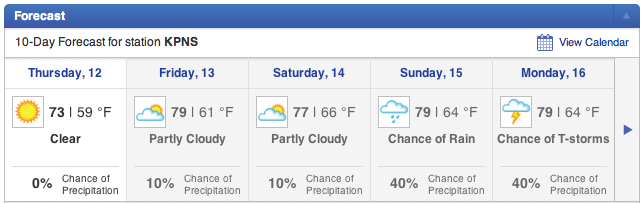

In spite of the constant pollen levels, and yes, I am still weeping and atch-oo’ing, the weather here couldn’t be much prettier. It’s the kind of weather where you never have to think about a coat, it’s balmy. The humidity is relatively low, low for Pensacola, and the nights have been down in the 50’s, so the A/C doesn’t kick on at all. You wake up refreshed, you can take a cup of coffee out on the back patio and sit and watch the birds come to the feeder, the bees sample the guara and the aloe, and fertilize the blueberries.
Our pomegranates have blossoms! One of the best things we ever did was to put in the pomegranate tree; this year we will add a Meyer’s lemon tree and a Satsuma, two trees which do well in Pensacola. We have a sheltered part of the yard where our yard coach/advisor/ landscaper thinks they will do well over the years. Even with my allergies, I can’t resist a daily walk around the yard to see how things are doing, what AdventureMan is up to now. His Purple Hyacinth is thriving, and we hope to cover a good section of the back wall with it.

(Our purple hyacinth is still just beginning; this is what we want it to look like)
All in all, life is sweet when the temperatures are mild, the humidity low, and the family nearby.
When we were down at the Pensacola Pier, where the children have a special fountain to play in, who should show up but Batman:

Batman doesn’t drive a Batmobile, he drives a big black truck. It’s kind of cute, some grown man pretending to be a superhero, but in the light of the recent Zimmerman / Trayvon Martin shooting, self-appointed super heros are a little scary. Knowing that in Florida, so many people are carrying guns in scary. No, I don’t feel better protected. My friends all say “but all the criminals have guns, we just want to protect ourselves.” Statistics show that you are more likely to be killed by a weapon when you are carrying a weapon.
If you read the newspapers, whether you are in Kuwait, or Kenya, or Florida, or anywhere in between, the criminals seem to shoot themselves in the foot. They take a stupid chance and get caught. Their own arrogance catches them up. They feel unstoppable, and they take risks they think they can get away with. Most criminals get caught, eventually, tripped up by their own pride. So to me, when you go up against a person who is not that rational, you can’t count on a weapon. A weapon can just get you into trouble. You need to use guile; live to fight another day. I trust that a criminal will get caught eventually. I don’t want to die going up against one.
Misery
There is no dignity in going around with red-rimmed, weepy eyes, tissue in hand to wipe my running nose, sneezing. It is pure misery, but I am not sick, there are things I need to do. Whatever is in the air is making me miserable.
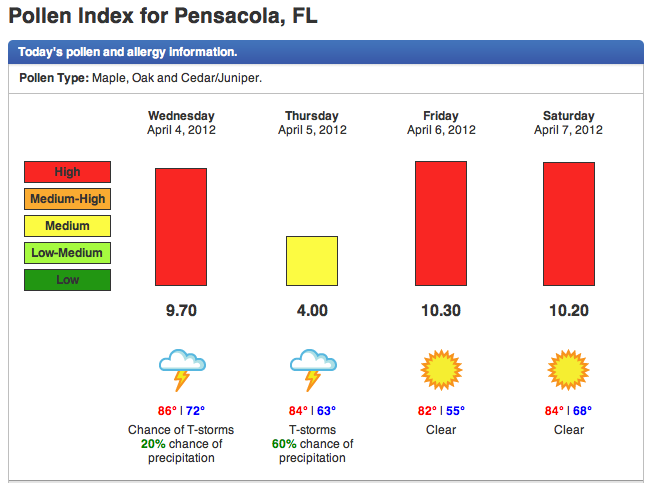
Maple, Oak and Cedar/Juniper . . . I am surrounded by oak trees . . .
“You Brought the Sunshine!”
When I arrived in Seattle, my best friend from University said “You brought the sunshine!”

(This week’s weather in Seattle)
Now, when I fly back to Seattle, it takes a mere half day, not a day and a half. When I leave early enough, I can arrive mid-day, and beat the rush hour traffic. You’d think after driving in Kuwait and Qatar that I would find Seattle traffic tame, but Germany, with it’s wide-laned autobahn, and Pensacola, with it’s laid back version of going-home traffic have spoiled me.
Seattle is beautiful, although my trip is one of those more stressful ones, with things to be done to manage changing circumstances. My Mom may – or may not – have had a stroke. What is verifiable is that she has been very very sick, too sick to live on her own any longer, sick enough to need hospitalization, and professional monitoring from now on. The sisters have handled mountains of work and desperate calls for assistance, and now it is my turn to do what I can.
I stayed in Mom’s condo, but it was a little soulless, all her favorite pieces of furniture moved to her new place, her plants languishing, the stuff and detritus of life waiting to be cleared out.
Thank God for my best friend, and for the sunshine.

The sun just beginning to color the mountains as it rises off in the east.
The sisters had a full day of business, money, finances, and Mom’s recovery plan. We get a little goofy after a while; it’s a family culture. Our way of handling the worst, worst of times is laughter, and there were several times we were almost breathless from laughing. Yeh, I guess some would find it inappropriate, but for us, for our family, I think it is how we survive.
My second day there, we had a joyful family wedding. It was one of the sweetest events I have attended in a long time, and I loved the way the bride and the groom looked at each other, that they enjoyed their own wedding, smiling, laughing, dancing. Their signature was over everything; the colors (Purples!) and the food and the music and the ceremony, it was all perfectly thought through and delightful.

Sun setting in the west over the Olympic mountains
The rest of the trip was just hard work. And now, back in Pensacola, I have flights booked already for my next trip back. All part of life’s circle, I guess.
Through all this, we have met with kind, helpful people, who have made all the sorting out easier. Thanks be to God.
Achoo!
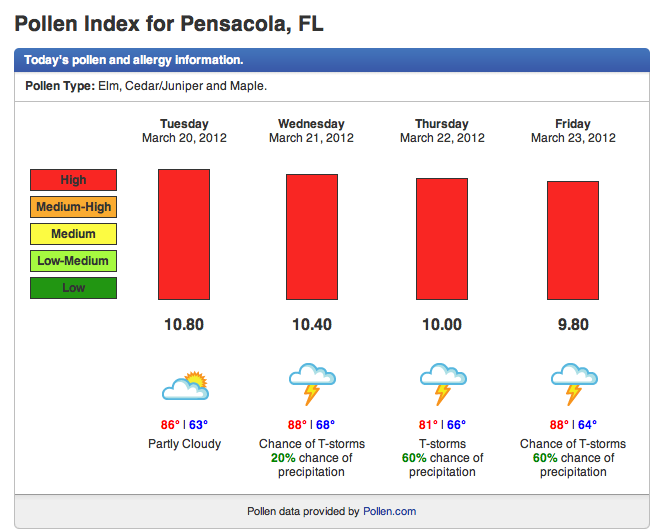
We were all sneezing in the office where I volunteer this morning, and when I happened to check today’s weather on Weather Underground for Pensacola, I saw that there was a pollen count measure of 10.8 out of 12.
I never knew that there was a Pollen.com, but there is. This is the graphic they show for pollen today in Pensacola. Oh – red means HIGH count.
Signs of Spring in Pensacola
Coming home from a meeting last night, I head into Joe Patti’s to pick up some crab for dinner, and holy smokes! The parking lot is full! There is no line coming out the door, and a car pulls out so I get a space, but what is going on?
Once I get in, I know. The place is PACKED, and most of these folk are wearing beach clothes or short sleeves, a couple young women in strapless sun dresses . . . I get it. It’s Spring Break time in Pensacola, and Joe Patti’s is as packed as it was on Christmas Eve Day. Lines to pay are snaking around everywhere, and I get the last loaf of multigrain French bread.
At least the lines are civil. The locals smile at one another – we’re all wearing long sleeves, it’s cloudy and a little on the cool side. Part of me smiles to think of myself as ‘local.’ Guess I’m getting there.

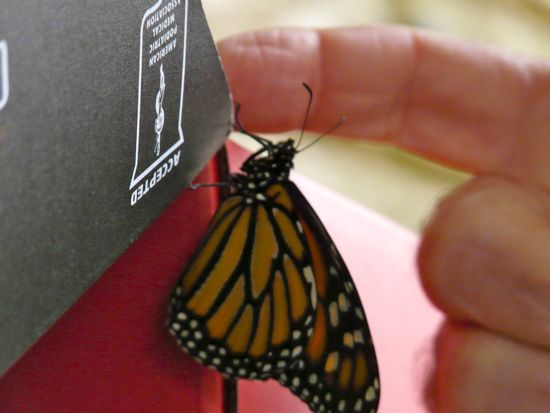
When I get home, AdventureMan is all smiles, and not just because I’m going to make Open Faced Crab Sandwiches for dinner. No! One of his Monarch butterflies has hatched! We’ve had such a mild winter that we’ve had a few hatching here and there all winter, but this is the first butterfly of spring, and he is fresh out of the cocoon. After losing two cocoons to hungry birds, he devised a protective shoe box. AdventureMan is fast becoming a local expert on creating a safe environments for butterflies to feed, lay eggs, cocoon and hatch. He’s also having a lot of fun with it.
On our back fence, a vine we planted last October is taking root and taking off. I think it is a coral honeysuckle, also called a coral trumpet honeysuckle, or coral trumpet vine. It attracts both butterflies and hummingbirds. 🙂


This is not particularly a Spring photo, but it is a seasonal photo. The oysters right now at the Marina Oyster Barn are HUGE! I had a bowl of oyster stew, AdventureMan had six raw oysters and the little lady sitting behind us had a full dozen. “I can’t get these in Illinois!” she exclaimed; AdventureMan could barely eat all six, they were so huge, so we had a hard time believing she could eat 12, but she did!

Just as the weather is perfect for getting outdoors and cleaning out the weeds, the pollen also starts flying. I get out while it is cool, weed a selected area and come back in and shower all the pollen off. It doesn’t do that much good; my eyes are still watering and I am sneezing, but who knows how bad it would be if I didn’t wash the pollen off?
Driving in Qatar
Almost every day, the two articles garnering the greatest number of hits have to do with new traffic rules in Kuwait and in Qatar. I think I wrote the posts in 2009. Here is what the US Department of State has to say to US Nationals about driving in Qatar:
TRAFFIC SAFETY AND ROAD CONDITIONS: While in Qatar, you may encounter road conditions that differ significantly from those in the United States. The information below concerning Qatar is provided for general reference only and is subject to change at any time. Current traffic regulations may be obtained through the Ministry of Interior’s Traffic Police.
Short-term visitors should obtain a valid International Driving Permit prior to arrival and should not drive in Qatar on a U.S. driver’s license. New and prospective residents should obtain a permanent Qatari Driving License immediately after arrival. To obtain a Qatari driver’s license, U.S. citizens need to pass a driving exam, including a road test. Short-term visitors and business travelers can also obtain a Temporary Qatari Driving License by presenting their U.S. driver’s license at any branch of Qatar’s Traffic Police.
Traffic accidents are among Qatar’s leading causes of death. Safety regulations in Qatar are improving, thanks to a more stringent traffic law adopted in October 2007 and a country-wide traffic safety campaign. However, informal rules of the road and the combination of local and third-country-national driving customs often prove frustrating for first-time drivers in Qatar. The combination of Qatar’s extensive use of roundabouts, many road construction projects and the high speeds at which drivers may travel can prove challenging. The rate of automobile accidents due to driver error and excessive speed is declining but remains higher than in the United States. In rural areas, poor lighting, wandering camels and un-shouldered roads present other hazards.
Despite the aggressive driving on Qatar’s roads, drivers should avoid altercations or arguments over traffic incidents, particularly with Qatari citizens who, if insulted, have filed complaints with local police that resulted in the arrest and overnight detention of U.S. citizens. Drivers can be held liable for injuries to other persons involved in a vehicular accident, and local police have detained U.S. citizens overnight until the extent of the person’s injuries were known. Due to its conservative Islamic norms, Qatar maintains a zero-tolerance policy against drinking and driving. Qatar’s Traffic Police have arrested Americans for driving after consuming amounts of alcohol at even smaller levels normally accepted in the U.S.
Any motor vehicle over five years old cannot be imported into the country. For specific information concerning Qatari driver’s permits, vehicle inspection, road tax and mandatory insurance, please contact either the Embassy of the State of Qatar in Washington, DC or the Consulate General of the State of Qatar in Houston, Texas.
There are things that the Department of State is too diplomatic to tell you, and that people living there will not write for fear of having a travel ban put against them, a case filed against them for ‘insulting’ a national or the government.
The beautiful roads in Qatar were wonderful when they had a tenth of the cars on the road they have now. There are two categories of “most dangerous.” One category is the expat $200 car held together with gum and rubber bands that breaks down in the worst possible place, or has a blow-out, or hits someone because the driver not only doesn’t have a license, he also doesn’t know how to drive.
Although there are rules about what trucks are allowed to haul and how it is to be tied down, the laws are ignored and unenforced. It is still important never to travel behind or beside a truck carrying cement blocks. They look like they are not secured. They are not secured. Watch out, too, for any truck delivering bottled water (that makes a huge mess all over the roundabout) or sheep or cows, which regularly overturn.
The worst hazard of all is Qatari male drivers between 11 and 35 years old. They own the roads. They will drive on the sidewalks, down the wrong way of a six lane highway to get to the roundabout, through red lights. They will push you into an unsafe roundabout with the Hummer daddy bought for their 12th birthday. If you insult a Qatari young male driver in any way, they may block you, stop you and threaten you, and no one, least of all the police, will come to your aid. They know no speed limits, blow through stop lights, harass female expat drivers, and they pay no fines for traffic violations. For a short time, the law was applied somewhat equally to all, but there were so many outraged Qataris paying the humungous fines that no one enforced the law against the Qataris anymore, and you rarely see the police stopping anyone except the poorest of the poor.
If you want to drive in Qatar, you will want a sturdy car to get over the unpaved areas and the roads torn up for infrastructure improvements, as well as for protection against the aggressive Qatari male drivers and the accidents that may not be your fault but cannot be avoided. You will want to drive only during the lowest traffic times of the day, if possible. Even during the summer, when much of the population goes elsewhere, anywhere, to avoid the heat, night traffic on the major ring roads, the major arterial roads and on the Corniche is gridlock.
The Department of State will also not tell you that if you are ever in trouble on the road, you are certain to have many kind older Qatari men stop and render assistance. They will insist on giving you water, and fixing whatever they can fix, or at the very least waiting with you until help comes. If they think you are lost as you journey around Qatar, they will make sure you get where you are going. There is a long tradition of taking good care of the guest, and of civility among the Qataris, but mostly it seems to kick in when they mature – like around 35 or so.
This may not be the truth for everyone; we all have our own stories, horror stories and stories of kindness. It’s a little bit of the wild west, driving in Qatar.
You Think Your Clean American Hospital is Safe?
We’ve long believed one of the ways to stay healthy is to stay out of hospitals as much as possible. A horrifying report I found on AOL Everyday Health:
Dirty Surgical Tools: A Hidden, Deadly Danger
A new report suggests that doctors all over the country are using medical instruments contaminated with blood, tissue, and other debris. Could the same devices that save your life also put it at risk?
THURSDAY, Feb. 23, 2012 — When John Harrison checked into Methodist Hospital in Houston, Texas, to have routine surgery for a damaged rotator cuff, he was told he’d need, at most, a one-night stay in the hospital followed by a few weeks of physical therapy. Seven follow-up operations and two-and-a-half years later, however, his shoulder is worse off than it was before, and Harrison, frankly, is lucky just to be alive.
Shortly after his initial surgery in 2009, the 63-year-old began experiencing severe pain and discomfort around the site of his scar, which had turned bright red and was oozing thick fluid. Doctors reopened him up to determine the problem — and found that an infection had eaten away part of the bone and set loose the screws and sutures they had placed just weeks earlier.
A Hidden Danger in the OR
Harrison’s case, unfortunately, was not an isolated one. Within days, at least six other joint surgery patients at Methodist developed similarly serious infections, leading to a temporary shutdown of the hospital’s operating rooms while officials from the U.S. Centers for Disease Control and Prevention (CDC) probed for a cause.
They found what they were looking for, and then some, in two commonly used surgical tools: an arthroscopic shaver and an inflow/outflow cannula. Both contained human tissue and bone, despite having been thoroughly cleaned after every procedure — a discovery that suggested the problem might be bigger than just one hospital in Texas.
In fact, according to a new report by investigative journalist Joe Eaton of the Center for Public Integrity, a nonprofit that focuses on ethics and accountability, dirty medical devices are a widespread and potentially deadly threat to your health. In 2008, Eaton notes, a hepatitis C outbreak in Las Vegas revealed that a local outpatient surgery center was working with contaminated tools, some of which were intended for only single use anyway. This, in turn, led to an inspection of 1,500 other such centers — and the finding that 28 percent of them had “infection control deficiencies related to equipment cleaning and sterilization.”
But that’s not even the worst of it. In 2009, the Department of Veterans Affairs admitted that improperly cleaned endoscopes had been used on more than 10,000 vets, some of whom later tested positive for HIV or hepatitis. It’s difficult to know for sure how many of those infections (if any) resulted from the dirty instruments, but experts say the risk is higher than most people realize.
“The cases we hear about,” CDC medical officer Melissa Schaefer, MD, told Eaton, “are only the tip of the iceberg.”
Whose Fault Is It, Anyway?
It would be easy to blame hospitals for this potentially deadly danger (and in some cases, we should), but Eaton says the problem is more complicated than it looks.
For one thing, research shows that sterilization instructions from manufacturers are often not up to industry standards. In a study presented last summer at a workshop for the Food and Drug Administration (FDA), scientists at the University of Michigan Health System ran a tiny video camera inside 350 “surgery-ready” suction tips and found that every one contained traces of blood, bone, tissue, and rust. Even more disturbing, however, was the fact that all but seven still contained debris after the team put the tools through the recommended cleaning and disinfection processes.
“I don’t know who approved this or who made this a reusable item, but this is not a reusable or cleanable item,” said lead researcher Jahan Azizi, a risk management clinical engineer at the University of Michigan, referring to one of the suction tips. Azizi blames the proliferation of dirty instruments on poor product design and manufacturing — but experts say there are many other factors to consider as well.
Among them, Eaton reports, is that as tools become more specialized and intricate, so too do their cleaning needs. There are added parts to sterilize, smaller channels to unclog, different materials to wield — you can’t just blast everything with a heavy shot of hot steam and move on.
“Cleaning was once a basic factory job,” said Joe Lewelling, vice-president of standards development at the Association for the Advancement of Medical Instrumentation. “Now it’s very complex. It takes a lot of steps. It’s more like a laboratory process.”
That process needs to be regulated, industry vets say — but by whom?
The Need for Action
According to Eaton, most sterilization of surgical instruments takes place in hospital basements, where underpaid employees work in less-than-ideal conditions to keep equipment in rotation, sometimes cleaning as many as 40,000 tools a day. Technicians are under a vast amount of pressure to do their jobs both quickly and well, which leads to high staff turnover and a frenetic atmosphere that lends itself to mistakes.
Mary Olivera, director of sterilization at a New York City medical facility and past president of the New York State Association of Central Service Professionals, thinks these issues could be addressed if central sterile techs were required to be certified to work in medical facilities. (Currently, only New Jersey mandates professional certification in the field.)
“The people who do your nails, they have to take an infection control course before they can apply for a license,” Olivera told Eaton. “Same with a dog groomer. Yet the people who deal with lifesaving equipment, they are required to have zero education.”
Olivera is among a group of people who have been pushing for legislation to regulate sterilization workers, but as she and her colleagues are finding out, change is easier said than done.
In July of 2009, after the CDC’s Methodist investigation, the FDA launched a safety review of arthroscopic shavers. Findings from the review have not been made public, but insiders say the results are “scary” and show serious potential for patient harm. Years later, however, the agency still has not taken any additional action to address the problem, save an alert on its Web site encouraging facilities to assess the effectiveness of their cleaning procedures.
“These are important products that have been used for decades with little evidence of risk to public health as a result of reprocessing,” FDA spokeswoman Karen Riley said by way of explanation. “In 2010, there were 2.1 million arthroscopic procedures of the knee performed and yet total adverse events from all causes was one percent. This does not merit withdrawal of a valuable device.”
John Harrison might disagree. Nearly three years after going under the knife for a “routine” operation, he can’t even raise his right arm to scratch an itch on his head. And the damage isn’t just physical.
“It’s changed my life,” he told NBC News. Every aspect of it.”
Cramming for the Exam
“I’m cramming for my exam” I said to AdventureMan, as he eyed my plate full of vegetables and my WonTon soup broth.
“What exam?” he asked.
“I have a follow up with Dr. Internal Medicine, and I need to get my blood tested in two weeks. In two weeks I can make sure my cholesterol and blood sugar and blood pressure are all in line,” I told him.
My sister, Big Diamond, told me that it only takes two weeks of proper eating to get the numbers right. I did it last time and it worked. Now and then, between exams, I eat something too sweet, or too white, or too high on the glycemic index, but not the two weeks before my blood test! No no no!
Whoda thunk I would reach this ripe, mature age and still have to worry about exams?
The Best Foods You can Eat
I wish I could publish this exactly as sent by my friend, Hayfa. It is a beautiful article!
The 40 Best Age-Erasing Superfoods
By: The editors of Men’s Health
The latest science on the musclebuilding,
brain-enhancing, wrinkleerasing,
heart-strengthening,
bone-protecting, immunityboosting,
and inflammationfighting
foods you should be
eating every day.
1. Almonds
These energy-rich snacks lower bad
cholesterol, thanks to plant sterols, and
benefit diabetics by lowering blood sugar.
They’re also rich in amino acids, which
bolster testosterone levels and muscle
growth. Almonds are also stuffed with
vitamin E, which helps defend against sun
damage. In a study, volunteers who
consumed 14 milligrams of the vitamin
(about 20 almonds) per day and then were
exposed to UV light burned less than those
who took none. And because vitamin E is
an antioxidant, it also works to keep your
arteries free of dangerous free radicals.
Low levels of vitamin E are also associated
with poor memory performance and cognitive decline, says dietitian Sari Greaves of New York
Presbyterian Hospital–Cornell.
2. Flaxseeds
Rich in protein and fiber, these little
seeds offer a payload of omega-3 fatty
acids, which erase spots and iron out
fine lines in the skin. The British Journal
of Nutrition reported that participants in
one study who downed about half a
teaspoon of omega-3s daily in 6 weeks
experienced significantly less irritation
and redness, along with better-hydrated skin. A recent study of people with high cholesterol
(greater than 240 mg/dL) compared statin treatment with eating 20 grams of flaxseed a day. After
60 days, those eating flaxseed did just as well as those on statins. Try sprinkling ground flaxseed
on oatmeal, yogurt, and salads.
Page | 2
3. Tomatoes
There are two things you need to know
about tomatoes: red are the best,
because they’re packed with more of
the antioxidant lycopene; and
processed tomatoes are just as potent
as fresh ones, because it’s easier for
the body to absorb the lycopene.
Studies show that a diet rich in
lycopene can decrease your risk of
bladder, lung, prostate, skin, and stomach cancers, as well as reduce the risk of coronary artery
disease, and help eliminate skin-aging free radicals caused by ultraviolet rays. “Cooked tomatoes
and tomato paste work best,” says celebrity trainer Gunnar Petersen.
4. Sweet Potatoes
Often confused with yams, these
tubers are one of the healthiest foods
on the planet. In addition to
countering the effects of secondhand
smoke and preventing diabetes,
sweet potatoes contain glutathione,
an antioxidant that can enhance
nutrient metabolism and immunesystem
health, as well as protect
against Alzheimer’s, Parkinson’s, liver
disease, cystic fibrosis, HIV, cancer, heart attack, and stroke. What’s more, they’re also loaded
with vitamin C, which smoothes out wrinkles by stimulating the production of collagen. A recent
study in the American Journal of Clinical Nutrition found that volunteers who consumed 4
milligrams of C (about half a small sweet potato) daily for 3 years decreased the appearance of
wrinkles by 11 percent.
5. Spinach
It may be green and leafy, but spinach—a
renowned muscle builder—is also the ultimate
man food. The heart-health equivalent of a firstballot
Hall of Famer, spinach is replete with the
essential minerals potassium and magnesium,
and it’s one of the top sources of lutein, an
antioxidant that may help prevent clogged
arteries. Plus its vitamins and nutrients can
bolster bone-mineral density, attack prostate
cancer cells, reduce the risk of skin tumors, fight
colon cancer, and, last but not least, increase
blood flow to the penis. “Popeye was on to
something,” says Susan Bowerman, assistant director of the Center for Human Nutrition at the
University of California at Los Angeles.
Page | 3
6. Rosemary
The carnosic acid found in this spice has
been shown to reduce stroke risk in mice
by 40 percent, according to a study
published in the Journal of
Neurochemistry. Carnosic acid appears to
set off a process that shields brain cells
from free-radical damage, which can
worsen the effects of a stroke. It can also
protect against degenerative diseases like
Alzheimer’s and the general effects of
aging.
7. Wild Salmon
A 4-ounce serving of salmon has
approximately 2,000 milligrams of
docosahexaenoic acid (DHA) and
eicosapentaenoic acid (EPA),
omega-3 fatty acids that serve as
oil for the brain’s hardware by
helping nerve cells communicate
with one another. Thirty-five percent
of your brain consists of fatty acids
like these, but they can decline as
the years stack up. A 2008 University of Cincinnati study, for instance, found that the brain tissue
of 65- to 80-year-olds contained 22 percent less DHA than the brain tissue of 29- to 35-year-olds.
“If you want to keep your wits about you as you age, start consuming omega-3s now,” says
William Harris, Ph.D., a nutrition researcher at the University of South Dakota. Why is wild so
important? Because farmed fish, which are fattened with soy, can be as high in inflammatory
omega-6 fats as a cheeseburger. If in doubt, opt for sockeye salmon, which can’t be farmed and
is always wild. Aim for at least two servings a week, says dietitian Joan Salge Blake, author of
Nutrition and You.
8. Blueberries
“This potent little fruit can help prevent
a range of diseases from cancer to
heart disease,” says Ryan Andrews,
the director of research at Precision
Nutrition, in Toronto, Canada. Think of
blueberries as anti-rust for your gray
matter, too. Besides being rich in fiber
and vitamins A and C, they’re also
packed with antioxidants—only açai,
an Amazonian berry, contains more—
that neutralize the free radicals that cause neuronal misfires. Eat a cup a day, and opt for wild
blueberries whenever possible, as they contain 26 percent more antioxidants than cultivated
varieties.
Page | 4
9. Green Tea
Green tea releases catechin, an antioxidant with proven anti-inflammatory and anticancer
properties. Research found that drinking 2 to 6 cups a day not only helps prevent skin cancer but
might also reverse the effects of sun damage by neutralizing the changes that appear in sunexposed
skin. Other studies show that green tea—infused with another antioxidant called
epigallocatechin gallate (EGCG)—can boost
your cardiovascular health and reduce the risk
of most types of cancer.
10. Dark Chocolate
Flavonoids, a natural nutrient in cocoa, improve
blood flow in the brain, which helps boost
cognitive function. Plus dark chocolate contains
a tannin called procyanidin, which is also found
in red wine, that can keep your arteries flexible
and your blood pressure low. It helps on the outside, too. In a study from the Journal of Nutrition,
women who drank cocoa fortified with a chocolate bar’s worth of flavonols had better skin texture
and stronger resistance to UV rays than those who drank significantly fewer flavonols. Indulge in
1 ounce a day to get all the benefits, says dietitian Sari Greaves of New York Presbyterian
Hospital–Cornell.
11. Tuna
Your favorite deli sandwich has a little secret:
Selenium. This nutrient helps preserve elastin, a
protein that keeps your skin smooth and tight. The
antioxidant is also believed to buffer against the sun
(it stops free radicals created by UV exposure from
damaging cells). Tuna is also a great source of
protein, contains no trans fat, and a 3-ounce serving
of chunk light contains 11 mg of heart-healthy niacin, which has been shown to help lower
cholesterol and help your body process fat. University of Rochester researchers determined that
niacin raises HDL cholesterol (the good kind) and lowers triglycerides more than most statins
alone.
12. Carrots
Think of carrots as orange wonder wands—
good for the eyeballs, and good for clearing up
breakouts. No magic here, though, just plenty of
vitamin A, which prevents overproduction of
cells in the skin’s outer layer. That means fewer
dead cells to combine with sebum and clog
pores. They’re also spiked with carotenoids—
fat-soluble compounds that are associated with a reduction in a wide range of cancers, as well as
a reduced risk and severity of inflammatory conditions such as asthma and rheumatoid arthritis.
Page | 5
13. Dried Plums
Also known as prunes, these dark shrivelers
are rich in copper and boron, both of which
can help prevent osteoporosis. “They also
contain a fiber called inulin, which, when
broken down by intestinal bacteria, makes
for a more acidic environment in the
digestive tract,” says Bowerman. “That, in
turn, facilitates calcium absorption.”
14. Whole Grains
Whole grains—oatmeal, wheat flour, barley,
brown rice—are high in fiber, which calms
inflamed tissues while keeping the heart
strong, the colon healthy, and the brain fueled.
Whole grains can be loaded with carbs, but
the release of those sugars is slowed by the
fiber, and because they can pack as much as
10 grams of protein per 1/2-cup serving, they
also deliver steady muscle-building energy.
But not all breads and crackers advertised as “whole grain” are the real deal. “Read the label,”
says Lynn Grieger, an online health, food, and fitness coach. “Those that aren’t whole grain can
be high in fat, which increases inflammation.”
15. Red Wine
Swimming in resveratrol—a natural compound that
lowers LDL, raises HDL, and prevents blood clots—red
wine can truly be a lifesaver. A recent review in
Alcoholism: Clinical and Experimental Research, for
instance, suggests that resveratrol may prevent or delay
the onset of chronic disease. But limit your intake to two
drinks a day. According to a study of 6,000 patients in the
Journal of the American Medical Association, you’re 97
percent more likely to reach your 85th birthday if you
keep your daily alcohol consumption to fewer than three
drinks. Vin rouge is also a rich source of flavonoids, antioxidants that help protect the lining of
blood vessels in your heart, and may make you less likely to die of cardiovascular disease,
according to Japanese researchers.
16. Yogurt
Various cultures claim yogurt as their own
creation, but the 2,000-year-old food’s health
benefits are not disputed: Fermentation spawns
hundreds of millions of probiotic organisms that
serve as reinforcements to the battalions of
Page | 6
beneficial bacteria in your body, which keep your digestive tract healthy and your immune system
in top form, and provide protection against cancer. Not all yogurts are probiotic, though, so make
sure the label says “live and active cultures.”
17. Avocado
Chock full of monounsaturated fat, avocados
deliver a double-barreled blast to LDL
cholesterol (the bad kind). They are also rich in
folate, a water-soluble B vitamin that helps
lower the levels of homocysteine, an amino
acid that can hinder the flow of blood through
blood vessels. Eat a 1/4 cup twice a week,
says Greaves.
18. Walnuts
Richer in heart-healthy omega-3s than salmon,
loaded with more anti-inflammatory polyphenols
than red wine, and packing half as much musclebuilding
protein as chicken, the walnut sounds like
a Frankenfood, but it grows on trees. Other nuts
combine only one or two of these features, not all
three. A serving of walnuts—about 1 ounce, or
seven nuts—is good anytime, but especially as a postworkout recovery snack.
19. Turmeric
Curcumin, the polyphenol that gives turmeric
its tang and yellow hue, has anticancer
properties, anti-inflammatory effects, and
tumor-fighting activities known in nutritionspeak
as anti-angiogenesis. Researchers at
UCLA have also found that it helps deter the
accumulation of amyloid plaques in the
brain, tiny blockages that may cause
Alzheimer’s disease. Turmeric’s prevalence
in India, the researchers suggest, may help explain why so few of the country’s senior citizens
have the disease, whereas the statistic is close to 13 percent in the United States, according to
the Alzheimer’s Association. One tip: Pair it with pepper in curries. “Adding black pepper to
turmeric or turmeric-spiced food enhances curcumin’s bioavailability by 1,000 times, due to black
pepper’s hot property called piperine,” says nutritionist Stacy Kennedy of the Dana Farber
Cancer Institute.
20. Black Beans
Page | 7
People who eat one 3-ounce serving of black beans a day decrease their risk of heart attack by
38 percent, according to a study in the Journal of Nutrition. And while other beans are also good
for your heart, none can boost your brainpower like black beans. That’s because they’re full of
anthocyanins, antioxidant compounds that have been shown to improve brain function. They’re
also packed with superstar nutrients, including protein, healthy fats, folate, magnesium, B
vitamins, potassium, and fiber.
21. Apples
An apple a day reduces swelling of all kinds, thanks to quercetin, a flavonoid also found in the
skin of red onions. Quercetin reduces the risk of allergies, heart attack, Alzheimer’s, Parkinson’s,
and prostate and lung cancers. If given the choice, opt
for Red Delicious. They contain the most inflammationfighting
antioxidants.
22. Alaskan King Crab
High in protein
and low in fat,
the sweet flesh of the king crab is spiked with zinc—a
whopping 7 milligrams per 3.5-ounce serving. “Zinc is
an antioxidant, but more important, it helps support
healthy bone mass and immune function,” says
Bowerman.
23. Pomegranates
The juice from the biblical fruit of many seeds
can reduce your risk of most cancers, thanks to
polyphenols called ellagitannins, which give the
fruit its color. In fact, a recent study at UCLA
found that pomegranate juice slows the growth
of prostate cancer cells by a factor of six.
24. Pak Choy
This crunchy cruciferous vegetable is more than the
filler that goes with shrimp in brown sauce. “Bok
choy is rich in bone-building calcium, as well as
vitamins A and C, folic acid, iron, beta-carotene,
and potassium,” says celebrity trainer Teddy Bass.
Potassium keeps your muscles and nerves in check
while lowering your blood pressure, and research
suggests that beta-carotene can reduce the risk of both lung and bladder cancers, as well as
macular degeneration.
Page | 8
25. Oysters
Shellfish, in general, is an excellent source of zinc, calcium,
copper, iodine, iron, potassium, and selenium. “But the creamy
flesh of oysters stands apart for its ability to elevate testosterone
levels and protect against prostate cancer,” says Bass.
26. Broccoli
One cup of
broccoli contains a hearty dose of calcium, as
well as manganese, potassium, phosphorus,
magnesium, and iron. And that’s in addition to
its high concentration of vitamins—including A,
C, and K—and the phytonutrient sulforaphane,
which studies at Johns Hopkins University
suggest has powerful anticancer properties.
27. Kiwis
Like bananas, this fuzzy fruit is high in bone-protecting
potassium. “They’re also rich in vitamin C and lutein, a
carotenoid that can help reduce the risk of heart disease,” says
Bowerman. “I try to eat at least one or two a week after
exercising.” Freeze them for a refreshing energy kick, but don’t
peel the skin: It’s edible and packed with nutrients.
28. Olive Oil
The extra-virgin variety is rich in beneficial monounsaturated
fats. “Its fatty acids and polyphenols reduce inflammation in
cells and joints,” says Grieger. A study in the journal Nature
found that it’s as effective as Advil at reducing inflammation.
“Have 2 tablespoons a day,” says Bowerman.
29. Leeks
“Leeks can support sexual functioning and reduce
the risk of prostate cancer,” says Michael
Dansinger, M.D., an assistant professor of
medicine and an obesity researcher at Tufts–New
England Medical Center, in Boston. “Chop the
green part of a medium leek into thin ribbons and
add it to soups, sautés, and salads as often as
possible.” These scallionlike cousins of garlic and onions are also packed with bone-bolstering
thiamine, riboflavin, calcium, and potassium, and they’re also rich in folic acid, a B vitamin that
studies have shown to lower levels of the artery-damaging amino acid homocystein in the blood.
Page | 9
30. Artichokes
Lauded for centuries as an aphrodisiac, this fiber-rich
plant contains more bone-building magnesium and
potassium than any other vegetable. Its leaves are
also rich in flavonoids and polyphenols—antioxidants
that can cut the risk of stroke—and vitamin C, which
helps maintain the immune system. “Eat them as often
as you can,” says Bowerman. Ripe ones feel heavy
for their size and squeak when squeezed.
31.
Chili
Peppers
“Chilis stimulate the metabolism, act as a natural
blood thinner, and help release endorphins,” says
Petersen. Plus, they’re a great way to add flavor
to food without increasing fat or calorie content.
Chilis are also rich in beta-carotene, which turns
into vitamin A in the blood and fights infections,
as well as capsaicin, which inhibits neuropeptides (chemicals that cause inflammation). A recent
study in the journal Cancer Research found that hot peppers even have anti-prostate-cancer
properties. All this from half a chili pepper (or 1 tablespoon of chili flakes) every day.
32. Ginger
Contrary to popular belief, ginger—a piquant addition to so
many Asian dishes—isn’t a root, it’s a stem, which means it
contains living compounds that improve your health. Chief
among them is gingerol, a cancer suppressor that studies
have shown to be particularly effective against that of the
colon. Chop ginger or grind it fresh and add it to soymarinated
fish or chicken as often as you can. The more
you can handle, the better.
33. Cinnamon
Known for making desserts sweet and Indian food complex,
cinnamon is rich in antioxidants that inhibit blood clotting and
bacterial growth (including the bad-breath variety). “Studies
also suggest that it may help stabilize blood sugar, reducing
the risk of type 2 diabetes,” says dietitian Nancy Clark, author
of Nancy Clark’s Sports Nutrition Guidebook. “What’s more, it
may help reduce bad cholesterol. Try half a teaspoon a day in
yogurt or oatmeal.”
Page | 10
34. Eggs
Those who have eggs for
breakfast lose 65 percent more
weight than those who down a
bagel breakfast with the same
number of calories, according
to a study in the International
Journal of Obesity. Eat the
yolk, too. Recent studies have proved that the fat in the yellow part is important to keep you
satiated, and the benefits of its minerals and nutrients outweigh its cholesterol effect.
35. Figs
Packed with potassium, manganese, and antioxidants, this
fruit also helps support proper pH levels in the body, making
it more difficult for pathogens to invade, says Petersen.
Plus, the fiber in figs can lower insulin and blood-sugar
levels, reducing the risk of diabetes and metabolic
syndrome. Select figs with dark skins (they contain more
nutrients) and eat them alone or add them to trail mix.
36. Grass-Fed Beef
Nothing beats pure protein when it comes to building
muscle. The problem with most store-bought beef, however,
is that the
majority of
cattle are
grain fed, which gives their meat a relatively high
ratio of omega-6 to omega-3 fatty acids. That, in
turn, contributes to inflammation. The fatty acids
in grass-fed beef, on the other hand, are skewed
toward the omega-3 variety. Such beef also
contains conjugated linoleic acid (CLA), which
studies have shown help reduce belly fat and
build lean muscle.
37. Mushrooms
Delicious when added to brown rice, reiki, shiitake, and
maitake mushrooms are rich in the antioxidant ergothioneine,
which protects cells from abnormal growth and replication. “In
short, they reduce the risk of cancer,” says Bowerman, who
recommends half a cup once or twice a week. “Cooking them
in red wine, which contains resveratrol, magnifies their
immunity-boosting power.”
Page | 11
38. Pineapples
With its potent mix of vitamins, antioxidants,
and enzymes—in particular, bromelain—
pineapple is an all-body anti-inflammation
cocktail. It also protects against colon cancer,
arthritis, and macular degeneration, says
Grieger. (If only the “colada” part of the
equation were as healthy.) Have half a cup,
two or three times a week.
39. Fruit or Vegetable Juice
Raise a glass of the good stuff. In a 2006
University of South Florida study, people who
drank three or more 4-ounce glasses of fruit or
vegetable juice each week were 76 percent less likely
to develop Alzheimer’s disease than those who drank
less. The high levels of polyphenols—antioxidants
found in fruits and vegetables—may protect brain
cells from the damage that may be caused by the
disease, says study author Amy Borenstein, Ph.D.
40. Bing Cherries
Research by the U.S. Department of
Agriculture shows that eating about 35 bing
cherries a day can lower the risk of tendinitis,
bursitis, arthritis, and gout, says Bowerman.
Studies also suggest that they reduce the risk
of chronic diseases and metabolic syndrome.
Recent Comments
ExpatAlien on What Country am I Living … intlxpatr on Yellowstone: Old Faithful to C… Michelle on Yellowstone: Old Faithful to C… Cathy on No Grown-Ups in Charge intlxpatr on Waiting for Snow Wikipedia Donate Button

Amazina


Early Voting in Florida


 Here There and Everywhere