Bu Yousef’s Haiti Challenge
My Kuwait blogging friend, Bu Yousef, is about to send a donation to the World Food Program designated to help Haiti. He has set a challenge to all bloggers and blog readers. Please, go comment on his post. For every unique comment he gets on his post (one per person), his donation will go up $1 from a minimum $50 to a maximum of $200. It’s up to us.
I would love for BuYousef to hit his maximum. I would love for him to be so overwhelmed, that he ups his maximum to $250. 😉
Please go say good morning/good evening to BuYousef, and do it NOW! Thank you!
Bu Yousef, AdventureMan and I will match your donation. 🙂
‘Glimmer of Hope’ in Doha Abduction Case
‘Glimmer of hope’ in custody battle
From the Qatar Gulf Times
British mother Rebecca Jones has described the decision by a Qatari judge to bring her son to court as a “glimmer of hope” in her ongoing battle to regain custody of Adam, saying that the judge’s decision that the boy’s attendance is necessary feels like her first victory in the case.
“I’m thrilled that Adam will be given the opportunity to tell the court how he wants to come home to his Mummy, Daddy and little sister, and that the court will have the chance to see how he is suffering,” she told Gulf Times yesterday.
Jones, who claimed that her son was kidnapped when she was “tricked” into visiting the country in October last year, is particularly worried about the mental and physical state of her son, saying that he had been ill in recent weeks because of the stress surrounding the current situation.
However, the most recent ruling in the case has given her some hope that she may be reunited with him on a permanent basis in the not too distant future.
Earlier this week a judge ruled that Jones’ appeal will be held on February 11, and that both Adam and his 77-year-old grandmother who was originally awarded custody of him, should attend the court hearing.
Jones is also fighting a court case to increase her visitation rights with her son, something that will be decided on February 3.
She is hoping to be awarded more time with Adam, as well as the ability to spend time with him outside of the house in which he is currently living.
“He seems to be ill because of stress and has been physically sick recently,” she claimed, adding “he is very upset and very nervous on each visit – the second I walk through the door he asks me when he can come home.”
Another major concern for Jones is the educational aspect of her son’s life as it will shortly be the fifth month that he has gone without attending school.
But for now, Jones is just looking forward to the court hearing in which her son will finally be given a voice. “I truly believe that the court will do the right thing,” she added.
100 Lashes Each for Illicit Relationships in Qatar
COURT ROUNDUP
100 lashes for illicit relations
By Nour Abuzant in today’s Gulf Times
Two Asians – a man and a woman – have been sentenced to 100 lashes each and subsequent deportation for maintaining illicit relations.
The father of the woman told the interrogators that he saw his 21-year-old daughter leaving the house in the morning of April 15, 2009 and boarding the car of her 26-year old lover.
The father also said he opposed their marriage and that he had planned his daughter’s marriage with another compatriot man.
The Doha court of first instance heard that the father found three mobile phones, belonging to her lover, in his daughter’s possession.
The accused Pakistani nationals confessed in the court that they were in love. The court said that the 100-lash penalty came in line with the Sharia rules, as both the accused were Muslims and unmarried.
That’s some angry father – turning in his own daughter to be jailed, humiliated in court and then subjected to the additional humiliation and pain of 100 lashes. Cannot imagine what that will do to her marriage prospects “with another compatriot man.”
Some people ask why I run these articles about expats. The truth, as I see it, is that any one of us who is not Qatari falls under these laws. We are ALL expats. The laws can be applied to any one of us at any time.
Losing Fat Easy and Painless – Too Good to be True?
In an article in today’s Peninsula I learned that I can go in for six treatments, just lie there, no sweat, no starvation diets, and fat can be . . . melted (?) by laser and then massaged away, drained away by my lymphatic system.
It sounds wonderful! No sedation, no risk of infection, no long term ill effects like stomach stapling or banding. The fat just goes away! My dream come true!
I am such a cynic. There is a part of me that just can’t believe it could be that easy. What do you think?
Al Emadi Hospital unveils new technology for fat reduction
Web posted at: 1/6/2010 1:43:36
Source ::: THE PENINSULA
DOHA: Al Emadi Hospital has launched fat reduction services by “Zerona”, the latest device to break down body fats, becoming the first medical facility in Qatar to have the new technology. The technology saves patient a great deal of time and works without any side effects eliminating Cellulite and fat from the skin, embroidering and strengthening the figure without any surgical interference.
“The significant role of the device has been scientifically proven success in detecting fat under the skin and fragmenting its sizes into liquid body fats which can be disposed of. The machine uses cold laser technology to break down the fat cells under the skin in several stages. The results do not appear until after six sessions – around two weeks,” said Dr Mohammed Al Emadi, Director, Al Emadi Hospital.
The body fat broken using cold laser can be disposed through the lymphatic vessels with an added help of several massage sessions.
“It can help to get rid of fats in areas which do not respond to exercise and diet. The device works on the upper and lower limbs, breast and abdomen, neck, back and hips. It helps to dispose of cellulite that leads to distortions in the skin, and helps remove the fat masses in the abdomen and buttocks where a difference can be seen in the outer thigh or waist after the completion of the required sessions,” said Dr Kamal Hussein Saleh, a consultant in medical and plastic surgery and replacements and laser treatments.
A clear change in all clothing measurements has been noted after the sessions, according to Dr Saleh. The fact that it does not cause sudden changes in weight is an added advantage of the device compared with other of laser devices. The device is easy to use and can be used at any time, with no sedation or surgical interference.
Since it is a cold laser, it does not generate any heat or redness on the skin and is makes it possible for the patient to continue normal work after the session. Since the device does not touch with the skin, it is superior to regular lasers which may lead to the transmission of some skin diseases. It does not cause emission of fumes or gases, as it is the case of laser hair removal.
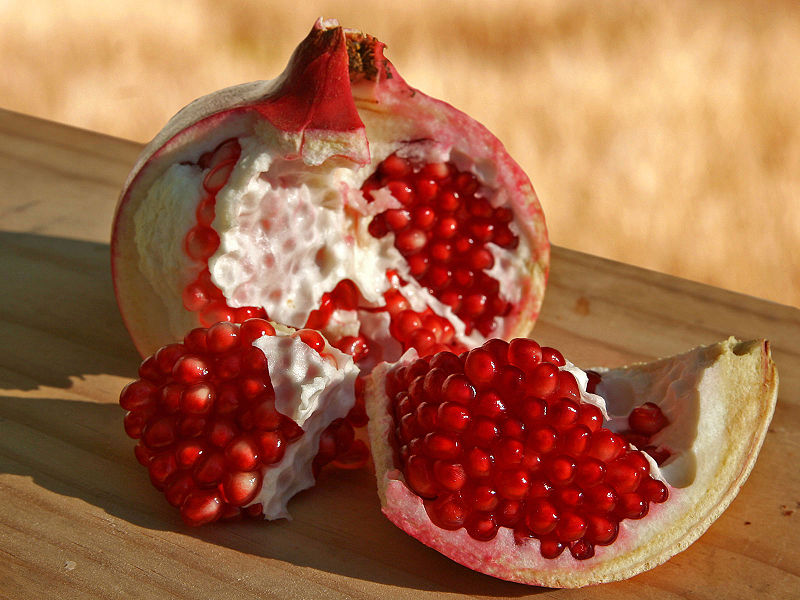
Pomegranate May Fight MRSA?
I found this article on AOL Health News and I am delighted to have any excuse to buy and eat a pomegranate. Now, even more so.
You may think I am overly concerned about MRSA, but I am convinced that it was MRSA that ended up killing my father. He was old, yes, but amazingly resilient and sturdy. He had a fighting spirit, and no matter what happened, he took control of his own “wellness.”
He went in for a routine operation (although few operations are ‘routine’ at 87) and ended up with a horrible infection where his IV had been inserted, an infection that wasn’t caught for about a week. He complained; people thought he was exaggerating. Eventually it was diagnosed as MRSA. He had to go through several rounds of intravenous Vancomycin, each of which lasted 30 days, and, I am convinced, none of which got rid of the infection because a month or so later, it would be roaring back.
What are we doing to ourselves? Antibiotic resistant bacteria are a result of over reliance on antibiotics, and for what? For viral diseases which cannot be cured by an antibiotic!
Eat more pomegranates!
By Katherine Tweed
Stopping the superbug methicillin resistant Staphylococcus aureus (MRSA) has researchers looking for new antibacterial agents in all corners of the globe. Not only are these bacteria difficult treat due to resistance to certain antibiotics, they are especially dangerous because they can be transmitted via casual contact. Scientists at the University of Kingston, Surrey in the UK have found there is promise in pomegranates.
Pomegranates have long been known for their antibacterial and therapeutic health benefits, especially in Brazil. While most of us think of pomegranates as being chock-full of antioxidants, they may fight more than free radicals. A study published in BMC Complementary and Alternative Medicine found that when the fruit’s rind is combined with metal salts and vitamin C, they hold promise in killing MRSA.
“It was the mix that fantastically increased the activity — there was synergy, where the combined effects were much greater than those exhibited by individual components,” study author Declan Naughton told the Daily Mail. “It shows nature still has a few tricks up its sleeve.”
Drug-resistant staph infections such as MRSA are a growing problem, primarily in hospital settings. MRSA infections accounted for two percent of staph infections in U.S. hospitals in 1974, but that figure jumped to 63 percent in 2004, according to the CDC.
Don’t reach for the pomegranate lotion just yet, however. The research was done in a lab setting, and it is still in the preliminary stages. Also, pomegranate rind on its own was not able to stop or slow the growth of drug-resistant staph infections. The authors say that while there is potential for pomegranates enhanced with metal salts, further investigation is needed.
How Norway Beats MRSA
This is the most amazing article. Are we willing to give up our abuse and overuse of antibiotics to keep ourselves well in the long run? Found this on AOL/Sphere/Health News:
Solution to Killer Superbug Found in Norway
Margie Mason and Martha Mendoza
AP
OSLO, Norway (Dec. 30) — Aker University Hospital is a dingy place to heal. The floors are streaked and scratched. A light layer of dust coats the blood pressure monitors. A faint stench of urine and bleach wafts from a pile of soiled bedsheets dropped in a corner.
Look closer, however, at a microscopic level, and this place is pristine. There is no sign of a dangerous and contagious staph infection that killed tens of thousands of patients in the most sophisticated hospitals of Europe, North America and Asia this year, soaring virtually unchecked.
The reason: Norwegians stopped taking so many drugs.
Twenty-five years ago, Norwegians were also losing their lives to this bacteria. But Norway’s public health system fought back with an aggressive program that made it the most infection-free country in the world. A key part of that program was cutting back severely on the use of antibiotics.
Now a spate of new studies from around the world prove that Norway’s model can be replicated with extraordinary success, and public health experts are saying these deaths — 19,000 in the U.S. each year alone, more than from AIDS — are unnecessary.
Kirsty Wigglesworth, AP
Dr. Lynne Liebowitz, a microbiologist, works in Queen Elizabeth Hospital in Kings Lynn, England.
“It’s a very sad situation that in some places so many are dying from this, because we have shown here in Norway that Methicillin-resistant Staphylococcus aureus (MRSA) can be controlled, and with not too much effort,” said Jan Hendrik-Binder, Oslo’s MRSA medical adviser. “But you have to take it seriously, you have to give it attention, and you must not give up.”
The World Health Organization says antibiotic resistance is one of the leading public health threats on the planet. A six-month investigation by The Associated Press found overuse and misuse of medicines has led to mutations in once curable diseases like tuberculosis and malaria, making them harder and in some cases impossible to treat.
Now, in Norway’s simple solution, there’s a glimmer of hope.
—
Dr. John Birger Haug shuffles down Aker’s scuffed corridors, patting the pocket of his baggy white scrubs. “My bible,” the infectious disease specialist says, pulling out a little red Antibiotic Guide that details this country’s impressive MRSA solution.
It’s what’s missing from this book — an array of antibiotics — that makes it so remarkable.
“There are times I must show these golden rules to our doctors and tell them they cannot prescribe something, but our patients do not suffer more and our nation, as a result, is mostly infection free,” he says.
Norway’s model is surprisingly straightforward.
— Norwegian doctors prescribe fewer antibiotics than any other country, so people do not have a chance to develop resistance to them.
— Patients with MRSA are isolated, and medical staff who test positive stay at home.
— Doctors track each case of MRSA by its individual strain, interviewing patients about where they’ve been and who they’ve been with, testing anyone who has been in contact with them.
Haug unlocks the dispensary, a small room lined with boxes of pills, bottles of syrups and tubes of ointment. What’s here? Medicines considered obsolete in many developed countries. What’s not? Some of the newest, most expensive antibiotics, which aren’t even registered for use in Norway, “because if we have them here, doctors will use them,” he says.
He points to an antibiotic. “If I treated someone with an infection in Spain with this penicillin, I would probably be thrown in jail,” he says, “and rightly so, because it’s useless there.”
Norwegians are sanguine about their coughs and colds, toughing it out through low-grade infections.
“We don’t throw antibiotics at every person with a fever. We tell them to hang on, wait and see, and we give them a Tylenol to feel better,” Haug says.
Convenience stores in downtown Oslo are stocked with an amazing and colorful array — 42 different brands at one downtown 7-Eleven — of soothing, but non-medicated, lozenges, sprays and tablets. All workers are paid on days they, or their children, stay home sick. And drug makers aren’t allowed to advertise, reducing patient demands for prescription drugs.
In fact, most marketing here sends the opposite message: “Penicillin is not a cough medicine,” says the tissue packet on the desk of Norway’s MRSA control director, Dr. Petter Elstrom.
He recognizes his country is “unique in the world and best in the world” when it comes to MRSA. Less than 1 percent of health care providers are positive carriers of MRSA staph.
But Elstrom worries about the bacteria slipping in through other countries. Last year almost every diagnosed case in Norway came from someone who had been abroad.
“So far we’ve managed to contain it, but if we lose this, it will be a huge problem,” he said. “To be very depressing about it, we might in some years be in a situation where MRSA is so endemic that we have to stop doing advanced surgeries, things like organ transplants, if we can’t prevent infections. In the worst-case scenario, we are back to 1913, before we had antibiotics.”
—
Forty years ago, a new spectrum of antibiotics enchanted public health officials, quickly quelling one infection after another. In wealthier countries that could afford them, patients and providers came to depend on antibiotics. Trouble was, the more antibiotics are consumed, the more resistant bacteria develop.
Norway responded swiftly to initial MRSA outbreaks in the 1980s by cutting antibiotic use. Thus while they got ahead of the infection, the rest of the world fell behind.
In Norway, MRSA has accounted for less than 1 percent of staph infections for years. That compares to 80 percent in Japan, the world leader in MRSA; 44 percent in Israel; and 38 percent in Greece.
In the U.S., cases have soared and MRSA cost $6 billion last year. Rates have gone up from 2 percent in 1974 to 63 percent in 2004. And in the United Kingdom, they rose from about 2 percent in the early 1990s to about 45 percent, although an aggressive control program is now starting to work.
About 1 percent of people in developed countries carry MRSA on their skin. Usually harmless, the bacteria can be deadly when they enter a body, often through a scratch. MRSA spreads rapidly in hospitals where sick people are more vulnerable, but there have been outbreaks in prisons, gyms, even on beaches. When dormant, the bacteria are easily detected by a quick nasal swab and destroyed by antibiotics.
Dr. John Jernigan at the U.S. Centers for Disease Control and Prevention said they incorporate some of Norway’s solutions in varying degrees, and his agency “requires hospitals to move the needle, to show improvement, and if they don’t show improvement, they need to do more.”
And if they don’t?
“Nobody is accountable to our recommendations,” he said, “but I assume hospitals and institutions are interested in doing the right thing.”
Dr. Barry Farr, a retired epidemiologist who watched a successful MRSA control program launched 30 years ago at the University of Virginia’s hospitals, blamed the CDC for clinging to past beliefs that hand washing is the best way to stop the spread of infections like MRSA. He says it’s time to add screening and isolation methods to their controls.
The CDC needs to “eat a little crow and say, ‘Yeah, it does work,'” he said. “There’s example after example. We don’t need another study. We need somebody to just do the right thing.”
—
But can Norway’s program really work elsewhere?
The answer lies in the busy laboratory of an aging little public hospital about 100 miles outside of London. It’s here that microbiologist Dr. Lynne Liebowitz got tired of seeing the stunningly low Nordic MRSA rates while facing her own burgeoning cases.
So she turned Queen Elizabeth Hospital in Kings Lynn into a petri dish, asking doctors to almost completely stop using two antibiotics known for provoking MRSA infections.
One month later, the results were in: MRSA rates were tumbling. And they’ve continued to plummet. Five years ago, the hospital had 47 MRSA bloodstream infections. This year they’ve had one.
“I was shocked, shocked,” Liebowitz says, bouncing onto her toes and grinning as colleagues nearby drip blood onto slides and peer through microscopes in the hospital laboratory.
When word spread of her success, Liebowitz’s phone began to ring. So far she has replicated her experiment at four other hospitals, all with the same dramatic results.
“It’s really very upsetting that some patients are dying from infections which could be prevented,” she says. “It’s wrong.”
Around the world, various medical providers have also successfully adapted Norway’s program with encouraging results. A medical center in Billings, Mont., cut MRSA infections by 89 percent by increasing screening, isolating patients and making all staff — not just doctors — responsible for increasing hygiene.
In Japan, with its cutting-edge technology and modern hospitals, about 17,000 people die from MRSA every year.
Dr. Satoshi Hori, chief infection control doctor at Juntendo University Hospital in Tokyo, says doctors overprescribe antibiotics because they are given financial incentives to push drugs on patients.
Hori now limits antibiotics only to patients who really need them and screens and isolates high-risk patients. So far his hospital has cut the number of MRSA cases by two-thirds.
In 2001, the CDC approached a Veterans Affairs hospital in Pittsburgh about conducting a small test program. It started in one unit, and within four years, the entire hospital was screening everyone who came through the door for MRSA. The result: an 80 percent decrease in MRSA infections. The program has now been expanded to all 153 VA hospitals, resulting in a 50 percent drop in MRSA bloodstream infections, said Dr. Robert Muder, chief of infectious diseases at the VA Pittsburgh Healthcare System.
“It’s kind of a no-brainer,” he said. “You save people pain, you save people the work of taking care of them, you save money, you save lives, and you can export what you learn to other hospital-acquired infections.”
Pittsburgh’s program has prompted all other major hospital-acquired infections to plummet as well, saving roughly $1 million a year.
“So, how do you pay for it?” Muder asked. “Well, we just don’t pay for MRSA infections, that’s all.”
—
Beth Reimer of Batavia, Ill., became an advocate for MRSA precautions after her 5-week-old daughter Madeline caught a cold that took a fatal turn. One day her beautiful baby had the sniffles. The next?
“She wasn’t breathing. She was limp,” the mother recalled. “Something was terribly wrong.”
MRSA had invaded her little lungs. The antibiotics were useless. Maddie struggled to breathe, swallow, survive, for two weeks.
“For me to sit and watch Madeline pass away from such an aggressive form of something, to watch her fight for her little life — it was too much,” Reimer said.
Since Madeline’s death, Reimer has become outspoken about the need for better precautions, pushing for methods successfully used in Norway. She’s stunned, she said, that anyone disputes the need for change.
“Why are they fighting for this not to take place?” she said.
Martha Mendoza is an AP national writer who reported from Norway and England. Margie Mason is an AP medical writer based in Vietnam, who reported while on a fellowship from The Nieman Foundation at Harvard University.
Real Age: 5 Foods that Boost Weight Loss
“I miss the church bells,” I said to AdventureMan last night as we welcomed in the New Year. In Germany, all the bells peal at midnight on New Years, it is a wonderful, rollicking sound. Here in Qatar, where New Year’s is a little suspect, a Western innovation, there is no official countdown, no fireworks – but there are parties. We could hear them!
Traditionally, January is when people get serious about weight loss and better health habits, partially in response to the excesses of the Thanksgiving/Christmas celebrations and partially in anticipation of the austerity of Lent. And the swimsuit season . . .
RealAge sends me the greatest tips, and this is one of them:
5 Foods That Boost Weight Loss
Ready to lose a few pounds in the new year? There are five foods that can help.
And the best part is that you won’t feel like you’re “eating light” with this group of weight-loss-boosting noshes. In fact, it’ll still feel like the holidays!
Salmon: Seems the omega-3 fatty acids in this fish may turbocharge your body’s fat-burning engines — especially when coupled with exercise, one study found.
Eggs: They’re back on the healthy-foods list. In one study, dieters who ate eggs for breakfast were able to stave off hunger longer than the folks who loaded up on carbs at breakfast.
Peanuts: May seem counterintuitive — after all, they are high in fat and calories — but a small daily serving of peanuts may discourage weight gain, research suggests. Possibly because the healthy fats in peanuts are easier to burn off than the unhealthy fats from other fatty treats, like cheesecake and chips. Just make sure you substitute the nuts for another high-calorie food.
Apples: Munch on an apple before every meal and you’ll be less likely to clean your dinner plate, research shows. Apples are fiber-filled yet low in calories, which means you fill up on less.
Fava beans: Why fava beans? Because these creamy beans are loaded with flavonoids. And a 14-year study in women showed that high flavonoid intake may help ward off belly fat.
Anti-Aging Brain Mix from RealAge.com
From the website Real Age.com to which I am totally addicted comes an Anti Aging Mix Recipe that actually sounds pretty good. If it doesn’t taste good, we won’t eat it, right?
Dr. Mao’s Anti-aging Brain Mix
Mix up a batch of the ingredients below and store it in an airtight container. That way, you’ll always have fresh brain food close at hand.
• 1 cup walnuts
• 1/2 cup pine nuts
• 1/4 cup sesame seeds
• 1/2 cup pumpkin seeds
• 1/3 cup dried goji berries
• 1/2 cup dried apricots
• 1/2 cup dried blueberries
7 Foods Experts Won’t Eat and Why
Aaarrgh – some of my favorites. I had no idea. A friend sent this, a recent article in Prevention Magazine.
The 7 foods experts won’t eat
by Liz Vaccariello, Editor-in-Chief, PREVENTION, on Tue Nov 24, 2009 11:15am PST
How healthy (or not) certain foods are—for us, for the environment—is a hotly debated topic among experts and consumers alike, and there are no easy answers. But when Prevention talked to the people at the forefront of food safety and asked them one simple question—“What foods do you avoid?”—we got some pretty interesting answers. Although these foods don’t necessarily make up a “banned” list, as you head into the holidays—and all the grocery shopping that comes with it—their answers are, well, food for thought:
20 ways to feed your family for $100 a week.
1. Canned Tomatoes
The expert: Fredrick vom Saal, PhD, an endocrinologist at the University of Missouri who studies bisphenol-A
The problem: The resin linings of tin cans contain bisphenol-A, a synthetic estrogen that has been linked to ailments ranging from reproductive problems to heart disease, diabetes, and obesity. Unfortunately, acidity (a prominent characteristic of tomatoes) causes BPA to leach into your food. Studies show that the BPA in most people’s body exceeds the amount that suppresses sperm production or causes chromosomal damage to the eggs of animals. “You can get 50 mcg of BPA per liter out of a tomato can, and that’s a level that is going to impact people, particularly the young,” says vom Saal. “I won’t go near canned tomatoes.”
The solution: Choose tomatoes in glass bottles (which do not need resin linings), such as the brands Bionaturae and Coluccio. You can also get several types in Tetra Pak boxes, like Trader Joe’s and Pomi.
14 worst health mistakes even smart women make.
2. Corn-Fed Beef
The expert: Joel Salatin, co-owner of Polyface Farms and author of half a dozen books on sustainable farming
The problem: Cattle evolved to eat grass, not grains. But farmers today feed their animals corn and soybeans, which fatten up the animals faster for slaughter. More money for cattle farmers (and lower prices at the grocery store) means a lot less nutrition for us. A recent comprehensive study conducted by the USDA and researchers from Clemson University found that compared with corn-fed beef, grass-fed beef is higher in beta-carotene, vitamin E, omega-3s, conjugated linoleic acid (CLA), calcium, magnesium, and potassium; lower in inflammatory omega-6s; and lower in saturated fats that have been linked to heart disease. “We need to respect the fact that cows are herbivores, and that does not mean feeding them corn and chicken manure,” says Salatin.
The solution: Buy grass-fed beef, which can be found at specialty grocers, farmers’ markets, and nationally at Whole Foods. It’s usually labeled because it demands a premium, but if you don’t see it, ask your butcher.
25 ridiculously healthy foods you should be eating now.
3. Microwave Popcorn
The expert: Olga Naidenko, PhD, a senior scientist for the Environmental Working Group,
The problem: Chemicals, including perfluorooctanoic acid (PFOA), in the lining of the bag, are part of a class of compounds that may be linked to infertility in humans, according to a recent study from UCLA. In animal testing, the chemicals cause liver, testicular, and pancreatic cancer. Studies show that microwaving causes the chemicals to vaporize—and migrate into your popcorn. “They stay in your body for years and accumulate there,” says Naidenko, which is why researchers worry that levels in humans could approach the amounts causing cancers in laboratory animals. DuPont and other manufacturers have promised to phase out PFOA by 2015 under a voluntary EPA plan, but millions of bags of popcorn will be sold between now and then.
The solution: Pop natural kernels the old-fashioned way: in a skillet. For flavorings, you can add real butter or dried seasonings, such as dillweed, vegetable flakes, or soup mix.
Your nutritional guide to grocery shopping.
4. Nonorganic Potatoes
The expert: Jeffrey Moyer, chair of the National Organic Standards Board
The problem: Root vegetables absorb herbicides, pesticides, and fungicides that wind up in soil. In the case of potatoes—the nation’s most popular vegetable—they’re treated with fungicides during the growing season, then sprayed with herbicides to kill off the fibrous vines before harvesting. After they’re dug up, the potatoes are treated yet again to prevent them from sprouting. “Try this experiment: Buy a conventional potato in a store, and try to get it to sprout. It won’t,” says Moyer, who is also farm director of the Rodale Institute (also owned by Rodale Inc., the publisher of Prevention). “I’ve talked with potato growers who say point-blank they would never eat the potatoes they sell. They have separate plots where they grow potatoes for themselves without all the chemicals.”
The solution: Buy organic potatoes. Washing isn’t good enough if you’re trying to remove chemicals that have been absorbed into the flesh.
14 ways to make veggies less boring.
5. Farmed Salmon
The expert: David Carpenter, MD, director of the Institute for Health and the Environment at the University at Albany and publisher of a major study in the journal Science on contamination in fish.
The problem: Nature didn’t intend for salmon to be crammed into pens and fed soy, poultry litter, and hydrolyzed chicken feathers. As a result, farmed salmon is lower in vitamin D and higher in contaminants, including carcinogens, PCBs, brominated flame retardants, and pesticides such as dioxin and DDT. According to Carpenter, the most contaminated fish come from Northern Europe, which can be found on American menus. “You can only safely eat one of these salmon dinners every 5 months without increasing your risk of cancer,” says Carpenter, whose 2004 fish contamination study got broad media attention. “It’s that bad.” Preliminary science has also linked DDT to diabetes and obesity, but some nutritionists believe the benefits of omega-3s outweigh the risks. There is also concern about the high level of antibiotics and pesticides used to treat these fish. When you eat farmed salmon, you get dosed with the same drugs and chemicals.
The solution: Switch to wild-caught Alaska salmon. If the package says fresh Atlantic, it’s farmed. There are no commercial fisheries left for wild Atlantic salmon.
Delicious and easy fish recipes
6. Milk Produced with Artificial Hormones
The expert: Rick North, project director of the Campaign for Safe Food at the Oregon Physicians for Social Responsibility and former CEO of the Oregon division of the American Cancer Society
The problem: Milk producers treat their dairy cattle with recombinant bovine growth hormone (rBGH or rBST, as it is also known) to boost milk production. But rBGH also increases udder infections and even pus in the milk. It also leads to higher levels of a hormone called insulin-like growth factor in milk. In people, high levels of IGF-1 may contribute to breast, prostate, and colon cancers. “When the government approved rBGH, it was thought that IGF-1 from milk would be broken down in the human digestive tract,” says North. As it turns out, the casein in milk protects most of it, according to several independent studies. “There’s not 100% proof that this is increasing cancer in humans,” admits North. “However, it’s banned in most industrialized countries.”
The solution: Check labels for rBGH-free, rBST-free, produced without artificial hormones, or organic milk. These phrases indicate rBGH-free products.
Don’t be fooled by these 11 health food imposters.
7. Conventional Apples
The expert: Mark Kastel, former executive for agribusiness and codirector of the Cornucopia Institute, a farm-policy research group that supports organic foods
The problem: If fall fruits held a “most doused in pesticides contest,” apples would win. Why? They are individually grafted (descended from a single tree) so that each variety maintains its distinctive flavor. As such, apples don’t develop resistance to pests and are sprayed frequently. The industry maintains that these residues are not harmful. But Kastel counters that it’s just common sense to minimize exposure by avoiding the most doused produce, like apples. “Farm workers have higher rates of many cancers,” he says. And increasing numbers of studies are starting to link a higher body burden of pesticides (from all sources) with Parkinson’s disease.
The solution: Buy organic apples. If you can’t afford organic, be sure to wash and peel them first.
Recent Comments
ExpatAlien on What Country am I Living … intlxpatr on Yellowstone: Old Faithful to C… Michelle on Yellowstone: Old Faithful to C… Cathy on No Grown-Ups in Charge intlxpatr on Waiting for Snow Wikipedia Donate Button

Amazina


Early Voting in Florida


 Here There and Everywhere