You Think Your Clean American Hospital is Safe?
We’ve long believed one of the ways to stay healthy is to stay out of hospitals as much as possible. A horrifying report I found on AOL Everyday Health:
Dirty Surgical Tools: A Hidden, Deadly Danger
A new report suggests that doctors all over the country are using medical instruments contaminated with blood, tissue, and other debris. Could the same devices that save your life also put it at risk?
THURSDAY, Feb. 23, 2012 — When John Harrison checked into Methodist Hospital in Houston, Texas, to have routine surgery for a damaged rotator cuff, he was told he’d need, at most, a one-night stay in the hospital followed by a few weeks of physical therapy. Seven follow-up operations and two-and-a-half years later, however, his shoulder is worse off than it was before, and Harrison, frankly, is lucky just to be alive.
Shortly after his initial surgery in 2009, the 63-year-old began experiencing severe pain and discomfort around the site of his scar, which had turned bright red and was oozing thick fluid. Doctors reopened him up to determine the problem — and found that an infection had eaten away part of the bone and set loose the screws and sutures they had placed just weeks earlier.
A Hidden Danger in the OR
Harrison’s case, unfortunately, was not an isolated one. Within days, at least six other joint surgery patients at Methodist developed similarly serious infections, leading to a temporary shutdown of the hospital’s operating rooms while officials from the U.S. Centers for Disease Control and Prevention (CDC) probed for a cause.
They found what they were looking for, and then some, in two commonly used surgical tools: an arthroscopic shaver and an inflow/outflow cannula. Both contained human tissue and bone, despite having been thoroughly cleaned after every procedure — a discovery that suggested the problem might be bigger than just one hospital in Texas.
In fact, according to a new report by investigative journalist Joe Eaton of the Center for Public Integrity, a nonprofit that focuses on ethics and accountability, dirty medical devices are a widespread and potentially deadly threat to your health. In 2008, Eaton notes, a hepatitis C outbreak in Las Vegas revealed that a local outpatient surgery center was working with contaminated tools, some of which were intended for only single use anyway. This, in turn, led to an inspection of 1,500 other such centers — and the finding that 28 percent of them had “infection control deficiencies related to equipment cleaning and sterilization.”
But that’s not even the worst of it. In 2009, the Department of Veterans Affairs admitted that improperly cleaned endoscopes had been used on more than 10,000 vets, some of whom later tested positive for HIV or hepatitis. It’s difficult to know for sure how many of those infections (if any) resulted from the dirty instruments, but experts say the risk is higher than most people realize.
“The cases we hear about,” CDC medical officer Melissa Schaefer, MD, told Eaton, “are only the tip of the iceberg.”
Whose Fault Is It, Anyway?
It would be easy to blame hospitals for this potentially deadly danger (and in some cases, we should), but Eaton says the problem is more complicated than it looks.
For one thing, research shows that sterilization instructions from manufacturers are often not up to industry standards. In a study presented last summer at a workshop for the Food and Drug Administration (FDA), scientists at the University of Michigan Health System ran a tiny video camera inside 350 “surgery-ready” suction tips and found that every one contained traces of blood, bone, tissue, and rust. Even more disturbing, however, was the fact that all but seven still contained debris after the team put the tools through the recommended cleaning and disinfection processes.
“I don’t know who approved this or who made this a reusable item, but this is not a reusable or cleanable item,” said lead researcher Jahan Azizi, a risk management clinical engineer at the University of Michigan, referring to one of the suction tips. Azizi blames the proliferation of dirty instruments on poor product design and manufacturing — but experts say there are many other factors to consider as well.
Among them, Eaton reports, is that as tools become more specialized and intricate, so too do their cleaning needs. There are added parts to sterilize, smaller channels to unclog, different materials to wield — you can’t just blast everything with a heavy shot of hot steam and move on.
“Cleaning was once a basic factory job,” said Joe Lewelling, vice-president of standards development at the Association for the Advancement of Medical Instrumentation. “Now it’s very complex. It takes a lot of steps. It’s more like a laboratory process.”
That process needs to be regulated, industry vets say — but by whom?
The Need for Action
According to Eaton, most sterilization of surgical instruments takes place in hospital basements, where underpaid employees work in less-than-ideal conditions to keep equipment in rotation, sometimes cleaning as many as 40,000 tools a day. Technicians are under a vast amount of pressure to do their jobs both quickly and well, which leads to high staff turnover and a frenetic atmosphere that lends itself to mistakes.
Mary Olivera, director of sterilization at a New York City medical facility and past president of the New York State Association of Central Service Professionals, thinks these issues could be addressed if central sterile techs were required to be certified to work in medical facilities. (Currently, only New Jersey mandates professional certification in the field.)
“The people who do your nails, they have to take an infection control course before they can apply for a license,” Olivera told Eaton. “Same with a dog groomer. Yet the people who deal with lifesaving equipment, they are required to have zero education.”
Olivera is among a group of people who have been pushing for legislation to regulate sterilization workers, but as she and her colleagues are finding out, change is easier said than done.
In July of 2009, after the CDC’s Methodist investigation, the FDA launched a safety review of arthroscopic shavers. Findings from the review have not been made public, but insiders say the results are “scary” and show serious potential for patient harm. Years later, however, the agency still has not taken any additional action to address the problem, save an alert on its Web site encouraging facilities to assess the effectiveness of their cleaning procedures.
“These are important products that have been used for decades with little evidence of risk to public health as a result of reprocessing,” FDA spokeswoman Karen Riley said by way of explanation. “In 2010, there were 2.1 million arthroscopic procedures of the knee performed and yet total adverse events from all causes was one percent. This does not merit withdrawal of a valuable device.”
John Harrison might disagree. Nearly three years after going under the knife for a “routine” operation, he can’t even raise his right arm to scratch an itch on his head. And the damage isn’t just physical.
“It’s changed my life,” he told NBC News. Every aspect of it.”
Naman: Cured or Pride?
Today’s Old Testament reading is from 2Kings. I like this story. Although it happened so long ago, it still applies to me today – do I want to be right or do I want to be cured?
2 Kings 5:1-19
5Naaman, commander of the army of the king of Aram, was a great man and in high favour with his master, because by him the Lord had given victory to Aram. The man, though a mighty warrior, suffered from leprosy.* 2Now the Arameans on one of their raids had taken a young girl captive from the land of Israel, and she served Naaman’s wife. 3She said to her mistress, ‘If only my lord were with the prophet who is in Samaria! He would cure him of his leprosy.’* 4So Naaman* went in and told his lord just what the girl from the land of Israel had said. 5And the king of Aram said, ‘Go then, and I will send along a letter to the king of Israel.’
He went, taking with him ten talents of silver, six thousand shekels of gold, and ten sets of garments. 6He brought the letter to the king of Israel, which read, ‘When this letter reaches you, know that I have sent to you my servant Naaman, that you may cure him of his leprosy.’* 7When the king of Israel read the letter, he tore his clothes and said, ‘Am I God, to give death or life, that this man sends word to me to cure a man of his leprosy?* Just look and see how he is trying to pick a quarrel with me.’
8 But when Elisha the man of God heard that the king of Israel had torn his clothes, he sent a message to the king, ‘Why have you torn your clothes? Let him come to me, that he may learn that there is a prophet in Israel.’ 9So Naaman came with his horses and chariots, and halted at the entrance of Elisha’s house. 10Elisha sent a messenger to him, saying, ‘Go, wash in the Jordan seven times, and your flesh shall be restored and you shall be clean.’
11But Naaman became angry and went away, saying, ‘I thought that for me he would surely come out, and stand and call on the name of the Lord his God, and would wave his hand over the spot, and cure the leprosy!* 12Are not Abana* and Pharpar, the rivers of Damascus, better than all the waters of Israel? Could I not wash in them, and be clean?’ He turned and went away in a rage. 13But his servants approached and said to him, ‘Father, if the prophet had commanded you to do something difficult, would you not have done it? How much more, when all he said to you was, “Wash, and be clean”?’ 14So he went down and immersed himself seven times in the Jordan, according to the word of the man of God; his flesh was restored like the flesh of a young boy, and he was clean.
15 Then he returned to the man of God, he and all his company; he came and stood before him and said, ‘Now I know that there is no God in all the earth except in Israel; please accept a present from your servant.’ 16But he said, ‘As the Lord lives, whom I serve, I will accept nothing!’ He urged him to accept, but he refused. 17Then Naaman said, ‘If not, please let two mule-loads of earth be given to your servant; for your servant will no longer offer burnt-offering or sacrifice to any god except the Lord. 18But may the Lord pardon your servant on one count: when my master goes into the house of Rimmon to worship there, leaning on my arm, and I bow down in the house of Rimmon, when I do bow down in the house of Rimmon, may the Lord pardon your servant on this one count.’ 19He said to him, ‘Go in peace.’
Room by Emma Donoghue
Hardly ever do I order a book in hardcover; they weigh too much, I do a lot of reading when flying, I prefer paperbacks so I can pass them on when I am finished (and no, I do not yet have a Kindle, because I like to pass my books along.) I made an exception for Room when I heard a review on National Public Radio. It sounded so different, and I wondered how it could be written without it being so horrible I couldn’t read it.

The story is told from the point of view of a five year old boy who lives in Room, an 11 x 11 foot space. He was born there, he has never been out of there.
As you read, you gain such huge admiration for the human spirit. Jake’s mother was abducted off the streets and kept in this room, which is totally soundproofed, surrounded by a chain metal cage, and can be entered and exited only by a door with a code entry lock. She raises Jake as best she can, keeping him hidden from her abductor. She teaches him reading and math, she tries to raise him eating nutritious foods, they have hygiene rules and daily physical education. Every now and then, she has a day when she is “gone”, when Jake wakes up and his mother won’t ‘switch on’ and just stays in her bed, sleeping all day. On those days, he feeds himself and plays quietly, knowing that his Mom will be back ‘on’ the next day – or so. He doesn’t understand his Mother’s despair, and she shelters him from it as best she can.
And then comes the time when she realizes that life is only going to get more and more difficult as Jake gets older. She makes a plan, a plan that relies on Jake, a desperate plan.
The book is fascinating. I have already passed it along; once I read it, I wanted to share it. In many ways, it is a cross-cultural book, because the culture Jake spends his first five years in is so insular, so enclosed. Emma Donoghue did a great job describing his world from his point of view, and dealing with the aftermath. I can’t tell you much more without spoiling the book for you in a major way. 🙂
There is a Reader’s Guide section at the back, and this book would be an excellent selection for a book club.
Germy Mistakes I Never Thought Of . . .
This caught my attention on AOL Health News this morning. Ewwwww!
5 Germy Mistakes You’re Making Everyday
By Glamour Jan 11th 2011 2:45PM
You wash your hands frequently, do your best to avoid coughing strangers, and generally consider yourself to be a germ-avoiding pro. Still you may be surprised at five little things you’re doing that may be leaving you susceptible to harmful bacteria and viruses.
1. Fruit peels: You buy lots of fruit to eat — bonus points! But, when it comes to fruit you peel (think: bananas, oranges), do you ever wash them first? If you grab that banana, peel it, then handle the fruit as you eat it, you’re potentially putting harmful bacteria right in your mouth. Think of all the people who handled that banana: the banana farmer in another part of the world, the guy at the grocery store who stocked the bunch, 19 customers who picked over it to get to the greener bunch they wanted, the checker at the market, the bagger — and then you!
2. The handles/railings in your house: Did your roommate have a cold this week? Sure, you kept your distance and washed your hands frequently, but did you think to wipe down the stair rails and doorknobs? Using a little hot soapy water or a light bleach solution (like Clorox Anywhere Spray) on frequently touched surfaces can keep you extra protected.
3. Your shoes: Do you keep your shoes on in your house? Yes, this is a controversial issue — those who like to keep their shoes on, thankyouverymuch, may take offense to rhetoric about removing shoes at the door. But, there has been a mounting amount of research in the past years indicating that what we track in on the bottom of our souls could be making us sick — from chemicals lingering on sidewalks and roads to the microbes you picked up in the public restroom. In fact, some health experts consider taking shoes off in your home as a way that anyone can improve their health. Even the super-doc Dr. Mehmet Oz suggested this year that it was on his top-5 list of things he’d recommend people do. So take those shoes off, darlings!
4. Touching your face: We all do it — a scratch here, a nose rub there. But every time we’re touching our face (especially our nose, mouth and eyes), we’re giving germs a free ride into our bods. Even if you can be a teensy bit more aware of when you touch your face throughout the day, you can reduce your germ exposure. No, don’t be compulsive about it, but if you avoid rubbing your eyes now and then, you’re doing your body a good service.
5. The water glass in the bathroom: When’s the last time you sent it for a run in the dishwasher? How about now? Frequently used items like glasses — especially when shared or left out on a countertop where droplets can accumulate from various sources — can be a breeding ground for germs. Wash those glasses frequently, and don’t share them!
Cockroaches VS Drug-Resistant Bacteria
You have to know, I truly hate cockroaches. They give me the creeps. When I see one – and cockroaches are a part of life in Florida, even with a pest service – my knees feel weak, and I feel shaky, but I have to force myself to stomp on them and flush them away. Now, AOL News tells us cockroaches can help us fight serious infections, including the one I hate the most, MRSA. You can read the entire article by clicking on the blue type above.

(Sept. 7) — Cockroaches, the creepy critters reviled for invading kitchens the country over, might be modern medicine’s best option for fending off dangerous, drug-resistant bacterial infections.
British researchers at the University of Nottingham’s School of Veterinary Medicine and Science are behind the discovery, which entails harnessing molecules from the tissues of cockroaches and locusts to combat bacteria like E. coli and MRSA (drug-resistant staph infections).
Chemicals found in the brain and central nervous tissues of cockroaches are able to kill 90 percent of dangerous bacteria in lab-based tests.
The potent chemicals, found in the brain and central nervous tissues of the critters, are able to kill 90 percent of E. coli and MRSA in lab-based tests.
“Superbugs … have shown the ability to cause untreatable infections and have become a major threat in our fight against bacterial diseases,” Dr. Naveed Khan, who supervised the work of lead researcher Simon Lee, said in a press release. “Thus, there is a continuous need to find additional sources of novel anti-microbials to confront this menace.”
In a twist that’s an ironic upside to our own revulsion for roaches, it’s their “unsanitary and unhygienic environments,” Lee speculated, that spurred the critters to develop toxins against the bacteria.
You can read the rest of the original news article by clicking here.
AdventureMan’s Bathroom
“Hey Dad, what happened, you draw the short straw?” our son asked AdventureMan when he saw the bathroom in the Pensacola house.
We really love having our own bathrooms. They may be small, but we don’t have to bump one another out of the way, we don’t have to try to groom while someone is showering and steaming, and while I can have the A/C blasting, AdventureMan can have the vents totally closed. It works for us.
But his bathroom had swinging doors, saloon style. And an old toilet that didn’t always flush completely. And an old bathtub with old tiles.

While he was away, we did a new bath – new walk-in shower with a rainfall showerhead, new toilet, and best of all, a pocketing door. He is going to be SO surprised. 🙂

It has been so hard keeping this secret. I can hardly wait to see his face.
BBC and the Oil Spill and Ethiopian Elections
You would think that living here on the Gulf Coast within miles of the huge oil spill spewing out to putrefy the beautiful, sparkling gulf waters, that we would have the best, most comprehensive coverage of the local news.
Not so.
“I love BBC!” I called out from my studio to AdventureMan, in his study next door. “Who else is covering the Ethiopian elections in such detail? And they have the best coverage of the oil spill!”
Here is the latest; and excerpt from the Huffington Post:
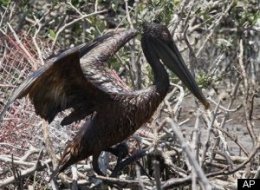
BARATARIA BAY, La. (AP) — As officials approached to survey the damage the Gulf oil spill caused in coastal marshes, some brown pelicans couldn’t fly away Sunday. All they could do was hobble.
Several pelicans were coated in oil on Barataria Bay off Louisiana, their usually brown and white feathers now jet black. Pelican eggs were glazed with rust-colored gunk, and new hatchlings and nests were also coated with crude.
It is unclear if the area can even be cleaned, or if the birds can be saved. It is also unknown how much of the Gulf Coast will end up looking the same way because of a well that has spewed untold millions of gallons of oil since an offshore rig exploded more than a month ago.
“As we talk, a total of more than 65 miles of our shoreline now has been oiled,” said Louisiana Gov. Bobby Jindal, who announced new efforts to keep the spill from spreading.
A mile-long tube operating for about a week has siphoned off more than half a million gallons in the past week, but it began sucking up oil at a slower rate over the weekend. Even at its best the effort did not capture all the oil leaking, and the next attempt to stanch the flow won’t be put into action until at least Tuesday. . . .
In Barataria Bay, orange oil had made its way a good 6 inches onto the shore, coating grasses and the nests of brown pelicans in mangrove trees. Just six months ago, the birds had been removed from the federal endangered species list.
The pelicans struggled to clean the crude from their bodies, splashing in the water and preening themselves. One stood at the edge of the island with its wings lifted slightly, its head drooping — so encrusted in oil it couldn’t fly.
Wildlife officials tried to rescue oil-soaked pelicans Sunday, but they suspended their efforts after spooking the birds. They weren’t sure whether they would try again. U.S. Fish and Wildlife spokeswoman Stacy Shelton said it is sometimes better to leave the animals alone than to disturb their colony.
Pelicans are especially vulnerable to oil. Not only could they eat tainted fish and feed it to their young, but they could die of hypothermia or drowning if they’re soaked in oil.
Globs of oil have soaked through containment booms set up in the area. Plaquemines Parish President Billy Nungesser said BP needed to send more booms. He said it would be up to federal wildlife authorities to decide whether to try to clean the oil that has already washed ashore.
My Newest Friends
Welcome! Welcome!
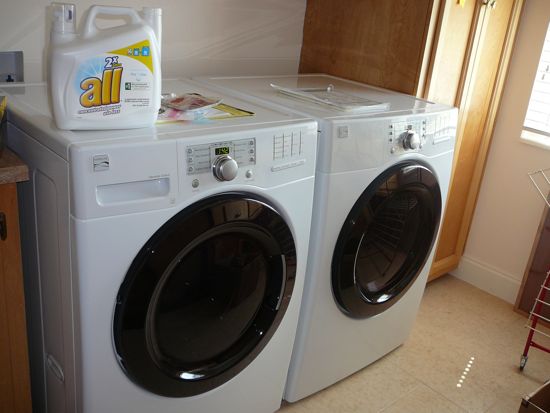
We ordered the washer and dryer almost a month ago, but because of a huge energy star promotion, there was a backlog, and it took forever to get them.
In the meantime, our household goods from storage – 12 years of storage – arrived, and almost everything we are keeping needs to be cleaned.
We had two old featherbeds from the former East Germany that had a little mildew on them. I almost threw them away, but I thought since I am going to throw them away, I might as well see if they could be saved. I put them in (one at a time; they are each too big to be put in together) on a cycle called “sanitize” and then dried them on high and . . . they came out perfect! Wooo HOOOO!
As you can see, even though I have done many loads, I still have a ways to go:

No, not the brass pot; it is not going in the washer. It needs to have a handle put back on, so it is waiting there with other low-priority projects for me to get around to it. 🙂 Isn’t this a great laundry room?
Precautions during Oil Spill Hazards
MEDIA ADVISORY: TUESDAY, MAY 4, 2010
CONTACT: PUBLIC INFORMATION (ESF 14): (850) 921-0217
Thanks, EnviroGirl, for the update. 🙂
FLORIDA DEEPWATER HORIZON RESPONSE MAY 4, 2010
TALLAHASSEE – The State Emergency Response Team, in support of the Department of Environmental Protection (DEP) as the lead response agency for the state of Florida, is actively monitoring the Deepwater Horizon response.
The following is a summary of state and BP response actions to date, as well as tips for residents and visitors to take precautions both pre and post-landfall.
Landfall Predictions:
Deepwater Horizon continues to discharge an estimated 5,000 barrels (210,000 gallons) per day.
BP has completed construction of a dome, expected to be in place as early as next weekend, which will be used in an attempt to contain the oil discharge. BP has also begun drilling a relief well to eliminate the discharge.
Currently, there are no impacts to the state projected in the next 72 hours; however, Florida continues to make preparations to safeguard the state’s shoreline.
The state of Florida reminds its residents and visitors that the state’s coastline has not been impacted at this time and remains open for public enjoyment.
State Actions:
Governor Charlie Crist confirmed that Florida will receive a $25-million block grant from BP for initial state and local preparation and response costs.
In the last 24 hours, the State Emergency Response Team sent several team members to Mobile to assist with Deepwater Horizon preparation and response.
The State Emergency Operations Center remains activated at a Level 2 or Partial activation.
On April 30, 2010, Governor Charlie Crist declared a state of emergency (Emergency Order 10-99) for Escambia, Santa Rosa, Okaloosa, Walton, Bay and Gulf Counties.
On May 3, 2010, Governor Charlie Crist extended a state of emergency declaration (Emergency Order 10-100) for the coastal counties of Franklin, Wakulla, Jefferson, Taylor, Dixie, Levy, Citrus, Hernando, Pasco, Pinellas, Hillsborough, Manatee and Sarasota.
Florida Governor Charlie Crist, Congressman Allen Boyd, Attorney General Bill McCollum and Chief Financial Officer Alex Sink were briefed at the Emergency Operations Center on the state’s Deepwater Horizon response efforts on Monday, May 3.
DEP has conducted water and sediment sampling to use as a baseline for ongoing monitoring.
DEP is continuously monitoring air quality data. The public can view this data at http://www.airnow.gov/ or http://www.epa.gov/bpspill/.
DEP, the Florida Fish and Wildlife Conservation Commission (FWC), county governments, water management districts and several federal agencies continue to conduct pre-impact assessments, including sampling of water, fish, shellfish and habitats along the Florida coastline and into the Gulf of Mexico.
Statewide monitoring is ongoing in coordination with the U.S. Environmental Protection Agency. Panhandle-specific data is expected to be completed early this week.
Emergency Support Function 15, Volunteers and Donations, successfully spearheaded pre-impact beach cleanups over the weekend of May 1-2. More than 1,200 volunteers participated in cleanups in Escambia, Santa Rosa and Wakulla counties to minimize the effect of the Deepwater Horizon incident. Volunteer Florida offers guidance for conducting safe pre-impact beach cleanups at http://www.volunteerflorida.org.
Florida residents are encouraged not to sign any documents provided to them in return for money from BP or anyone else until they know the extent of their loss, which may be significantly higher than the money being paid. These may be fraudulent or premature.
The Attorney General’s fraud hotline is open to receive any reports of fraud or price gouging. The hotline is 1-866-966-7226.
Boom Placement:
There is approximately 91,300 feet of boom placed along Florida’s panhandle in the Pensacola region.
An additional 35,000 feet is expected to be placed today.
Currently 50,700 feet of boom is staged in Pensacola. An additional 17,000 feet is staged at Panama City and 45,000 feet of boom is on order.
The Panama City staging area will be fully operational on Wednesday, May 5.
Placement of boom will be based on tides and where the oil is threatening and according to the Coast Guard Sector Mobile Area Contingency Plan. To view the plan visit Plan, visit http://ocean.floridamarine.org/ACP/MOBACP/StartHere.html.
The booming strategy focuses on identified environmentally sensitive areas.
Estuaries and inlets are at the top of the list, not the beach areas.
This is to protect sensitive habitat that support wildlife and fish.
If the oil washes on the beach, the sand can be cleaned.
Note that booms are not a failsafe solution.
They can become ineffective in high seas, strong winds, or currents over one knot.
Florida’s counties are working through the State Emergency Operations Center. Each county provides input, but the operational decisions are made through the Unified Command. The State Emergency Response Team is working with the counties, BP as well as the federal agencies to maximize protection and minimize impacts.
Health Effects:
At this time, there are no indications of any health risks to Floridians due to the Deepwater Horizon incident. The Department of Health (DOH) and DEP are closely monitoring health and environmental impacts to Florida’s beaches and will notice an advisory if conditions become unsafe.
Consider the following tips for avoiding negative health impacts from an oiled shoreline:
Avoid entering areas where oil can be seen or smelled.
Avoid direct skin contact with oil, oil-contaminated water and sediments.
Do not swim or ski in areas affected by the oil spill, and if traveling through the area by boat, take precautions when hoisting the boat anchor. If oil makes contact with skin, wash it off with soap and water.
Do not fish in oil spill-affected waters.
Do not harvest or eat dead fish, fish with oily residue or fish that have a petroleum odor.
Avoid boating through oil slicks or sheens.
Young children, pregnant women, people with compromised immune systems, and individuals with underlying respiratory conditions should avoid the area.
Prevent pets from entering oil-contaminated areas.
Impacts to Florida’s coastline could include tarballs – fragments or lumps of oil weathered to a semi-solid or solid consistency. Tarballs feel sticky, and are difficult to remove from contaminated surfaces. Impacts could also come in the form of an oil sheen or tar mat – a sheet of oil that is thicker than a sheen. Should individuals observe tarballs or other evidence of oil on Florida’s coastline, they should leave the area and report the incident to (866) 448-5816.
Those near Florida’s Gulf Coast may detect an odor because of the oil spill. Some people are more sensitive to these odors and may experience nasal irritation and feelings of nausea. In combination with seasonal allergies, such as sensitivity to pollen or pre-existing respiratory conditions such as asthma, some people may experience more severe symptoms.
Individuals experiencing symptoms that are aggravated by the odors from the oil spill should consider:
Staying indoors, in air conditioning, and avoiding strenuous outdoor activity.
If symptoms do not improve, contact a primary care physician or other health care provider for medical advice.
Individuals who have pre-existing medical conditions, such as asthma or other respiratory illness should contact their health care provider if feeling symptomatic.
Fisheries & Seafood:
On May 3, 2010 NOAA restricted fishing for a minimum of ten days in federal waters most affected by the BP oil spill, largely between Louisiana state waters at the mouth of the Mississippi River to waters off Florida’s Pensacola Bay. Details can be found here: http://sero.nmfs.noaa.gov/.
Fishermen who wish to contact BP about a claim should call (800) 440-0858.
There are no seafood alerts at this time.
FWC is working with DEP, county governments, water management districts and several federal agencies including NOAA and the U.S. Fish and Wildlife Service to conduct pre-impact wildlife assessments.
These assessments include samples of water, sediments, fish, shellfish and habitats along the Florida coastline and into the Gulf of Mexico. Assessments are needed to provide baseline information prior to the anticipated impact.
Examples of the assessments include the following:
FWC and the University of South Florida College of Marine Science are designing a multi-day scientific research study to obtain information on fisheries resources and plankton in the Gulf of Mexico near the Florida Panhandle.
Aerial surveys also are planned to identify locations of marine mammals.
Groups are marking the location of bird and sea turtle nesting sites along the beach. Nests are marked to help prioritize response with real-time information.
FWC urges citizens to report oiled wildlife to the Joint Information Center by calling 1-866-557-1401.
For the safety of the public as well as the safety of animals, rescues should be conducted by trained responders. Untrained rescuers may cause more harm than good.
Closures:
Currently there are no Florida State Park or beach closures. For more information about Florida State Parks, visit: http://www.floridastateparks.org.
Volunteer Opportunities:
The Governor’s Commission on Volunteerism and Community Service is encouraging Floridians and visitors to watch for oiled wildlife, vegetation, and beaches by becoming a Coast Watch volunteer.
The “Coast Watchers” will assist BP, the state of Florida and partnering organizations in identifying beaches that need attention.
Coast Watchers will work within the coastal communities where they live or visit and commit to do the following:
Report injured or oiled animals to the Wildlife Distress Hotline: 1-866-557-1401.
Report oiled shoreline to: 1-866-448-5816.
Report a change in Air Quality to: http://www.epa.gov/bpspill/.
For information on scheduled beach cleanups and other volunteer opportunities, visit http://www.VolunteerFlorida.org.
BP has established a volunteer program and set up a toll-free number for those interested in volunteering. When calling, interested parties should communicate what activities they are volunteering and locations in which they are available to work. In addition, potential volunteers may call this line to learn about the training that is required to work in oil spill clean-up operations. For information on assisting with the response efforts, please contact BP’s community information line at (866) 448-5816.
Learn More:
Today, DEP launched a Twitter account, @FLDEPalert, dedicated to providing updates on Florida’s response to the Deepwater Horizon Oil Spill. Visit http://www.Twitter.com/FLDEPalert.
On May 3, the Florida Emergency Information Line was activated in response to deepwater horizon incident. The hotline, which provides Floridians information regarding the Deepwater Horizon Response, will operate from 8:00 a.m. to 6:00 p.m. until further notice. The number for residents to call is: (800) 342-3557.
For more information DEP established an email sign-up for information alerts on its website as well as a resources page containing fact sheets and tips pertaining to health, safety, wildlife, and pre and post-landfall preparations. To view tips and sign up for email updates, visit http://www.dep.state.fl.us/deepwaterhorizon.
The following is a link to the State Emergency Response Team Situation Report for Tuesday, May 4, 2010: http://www.dep.state.fl.us/deepwaterhorizon/files/situation_report6_050410.pdf.
Joint Information Center Public Information Resources and Hotlines:
Environment/community hotline: to report oil on the beach or shoreline or other environment or community impacts and access the Rapid Response Team – (866) 448-5816.
Wildlife: to report and access care for impacted, i.e., oiled, wildlife (866) 557-1401.
Volunteers: to request volunteer information (866) 448-5816.
Services – to register as consultant, contractor, vendor, or submit information on alternative response technology, services, products or suggestions (281) 366-5511.
Vessels of Opportunity – to report and register boats available to assist with response (281) 366-5511.
Claims – All claims regardless of amount should be routed through the Claims line for assignment of Claim Number. Claims will be tracked so status can be provided. (800) 440-0858.
Twitter: http://twitter.com/RobertLAJIC.
Facebook: Deepwater Horizon Response.
Joint Information Center website: http://www.deepwaterhorizonresponse.com.
###
Which Restaurant??? Which Hotel???
From Gulf Times
Restaurant at five-star hotel ordered to close
Municipal authorities have ordered the closure of a restaurant in a prominent five-star hotel in Doha for non-compliance of regulations, says a report published in a local daily.
The hotel authorities have been charged on the count of not obtaining health clearance certificate for the staff employed in the restaurant. A charge-sheet was framed by the prosecution after a full investigation and the matter has been referred to a court of law.
“It is the result of the periodic random inspection carried out by the authorities on all the eateries,” says the report.
Recent Comments
intlxpatr on Yellowstone: Old Faithful to C… Michelle on Yellowstone: Old Faithful to C… Cathy on No Grown-Ups in Charge intlxpatr on Waiting for Snow intlxpatr on Waiting for Snow Wikipedia Donate Button

Amazina


Early Voting in Florida


 Here There and Everywhere