From the Kuwait Times, a fascinating comparative analysis of the influence of Saudi Arabia and Qatar on Islamic countries in transitions:
Qatar losing ground to Saudi diplomacy
DUBAI: Qatar, a key supporter of Islamists who rose to power in Arab Spring countries, is losing ground in regional politics to Saudi Arabia which appears to have seized the reins on key issues, notably Egypt and Syria. The decline in Qatar’s regional diplomacy comes as its powerful emir Sheikh Hamad bin Khalifa Al-Thani unexpectedly abdicated in favor of his son Tamim last month.
The wealthy Gulf state had transformed itself into a key regional player but began to retreat as heavyweight Saudi Arabia re-entered the political arena after lagging behind in the immediate period following the eruption of the Arab Spring uprisings in December 2010. The ouster of Egypt’s Islamist president Mohamed Morsi last week by the army and the election by the Syrian opposition of Saudi-linked Ahmad Assi Jarba as new leader stripped Qatar of strong influence in both countries.
“Qatar had tried to take a leading role in the region but overstepped its limits by openly backing the Muslim Brotherhood in Egypt, Syria, and other Arab Spring states,” said Kuwaiti political analyst Ayed Al-Manna. Jonathan Eyal, head of international relations at Britain’s Royal United Services Institute, argued that Qatar’s regional politics have failed.
“Qatar’s Middle Eastern diplomacy now lies in ruins: it failed to produce dividends in Libya, backfired in Syria and has now collapsed in Egypt,” local Emirati daily The National quoted him on Tuesday as saying. Realizing the damaging effects of their policies, Manna noted, “the Qataris sought to cut down on their commitments” which were already affected by the emir’s abdication and the sidelining of the influential prime minister Sheikh Hamad Bin Jabr Al-Thani.
As a result, “Saudi Arabia, a historical regional US ally, regained its role” in coordination with other oil-rich Gulf monarchies, said Manna. Saudi Arabia’s King Abdullah was the first foreign head of state to congratulate Egypt’s interim president Adly Mansour, hours after he was named to replace Morsi. And on Tuesday, the kingdom pledged $5 billion in assistance to Egypt. The United Arab Emirates, which has cracked down on the Muslim Brotherhood in the past few months, offered Egypt an aid package of $3 billion.
“Saudi Arabia wants to ensure stability in Arab Spring countries, regardless of its ideological interests,” said analyst Abdel Aziz Al-Sagr, head of the Gulf Research Centre. “It had supported the Muslim Brotherhood in Egypt but reconsidered this support after the Brotherhood failed to run the country wisely,” he argued. But the Saudi researcher downplayed the rivalry between Saudi Arabia and Qatar, both of which have been looking to expand their influence during the Arab Spring uprisings and prevent any potential revolt against their own autocratic regimes.
“The Saudi-Qatari harmony still exists and there is no battle for influence between the two countries,” said Sager. And as proof, “Riyadh was the first to be informed of the political change in Qatar, six months before it took place. And it welcomed it.” But the two countries, whose relations have been historically tense or at least marked by mistrust, support two different approaches of political Islam that emerged strongly in the wake of the Arab Spring.
Qatar sides with political parties linked to the Muslim Brotherhood, whose experience was cut short despite the strong media support they enjoyed from the influential Doha-based Al-Jazeera news channel. Meanwhile, Saudi Arabia promotes Salafist groups that focus less on politics and more on implementing Shariah Islamic law on daily life matters such as forcing women to wear a veil and prohibiting the mixing between sexes. Saudi King Abdullah has reiterated his country’s stance against using Islam for political purposes.
“Islam rejects divisions in the name of one party or another,” he said in a statement marking the start Wednesday of the Muslim holy month of Ramadan. The kingdom will never accept” the presence of political parties, that “only lead to conflict and failure.” But regardless of the political agendas of Saudi Arabia or Qatar, the people who rose up during the Arab Spring revolts will have the final word on their own political futures, argued former Bahraini cabinet minister Ali Fakhro. “It is the Arab people, not Qatar nor Saudi Arabia, who will determine the political future of the region.” – AFP
Don’t you love technology? It’s like working on a complex puzzle, and all of a sudden seeing how disparate pieces relate 🙂 This is a fascinating discovery from AOL/Huffpost:
Ancient DNA Linked To Living Descendants In Genetic Study
The Huffington Post | By Macrina Cooper-White Posted: 07/09/2013 2:24 pm EDT | Updated: 07/09/2013 9:12 pm EDT
In the study, U.S. and Canadian researchers used mitochondrial genome (mitogenome) sequencing to analyze DNA inherited exclusively through mothers. Looking at the mitogenome is cheap, easier to sequence than nuclear DNA, and skirts around the problem that European men mixed with Native American women.
The researchers collected DNA from 60 living indigenous people belonging to the Tsimshian, Haida and Nisga’a tribes in the northern coast of British Columbia. The tribes’ oral histories and archaeological sites indicate they have lived in the region for generations, which made them good candidates for tracing their lineage back so many years.
Complete mitogenomes were extracted from the remains of four Mid-Holocene individuals found in British Columbia’s Lucy Islands and Dodge Island, and then that information was compared to the DNA of the study participants.
What was found? The research team discovered one of the living individuals carried this same “mitogenomic signature” as a young adult female who lived on Dodge Island 2,500 years ago — which also matched the mitogenome of the remains of a woman who lived in the Lucy Islands 5,500 years ago. Wow.
Three other living participants had mitogenomes that linked back to the remains of another individual found on Dodge Island, who may have lived around 5,000 years ago.
“This is the beginning of the golden era for ancient DNA research because we can do so much now that we couldn’t do a few years ago because of advances in sequencing technologies,” study co-author Dr. Ripan Malhi, an anthropology professor at the University of Illinois and Institute for Genomic Biology professor, said in a written statement. “We’re just starting to get an idea of the mitogenomic diversity in the Americas, in the living individuals as well as the ancient individuals.”
The new study was published online on June 3, 2013 in the journal PLoSONE.
Honestly, who would want to be King? All those events and ceremonies, living your life in a fishbowl? Never a week went by in Doha without rumors of a new wife, speculation about an old wife, and comments on the Emir’s appearance. He has ushered Qatar through perilous times; few “blessings” are as two-sided as new wealth. He is looking healthier and happier than I have ever seen him; maybe he is looking forward to a life of privacy and leisure 🙂 We wish him well; we wish him safety and health and all good things. From today’s Doha News:
Sheikh Hamad bin Khalifa al Thani, the Emir of Qatar, will meet with members of the ruling family and several Qatari advisors today, government-funded channel Al Jazeera reports.
Over the past two weeks, several foreign diplomats have said that a transition of power in Qatar is imminent.
Citing “trusted sources” regarding its information about Monday’s meeting but not elaborating any further, Al Jazeera implied that the talks would revolve around the Emir’s succession plans.
Details about the upcoming changes in government are unclear. But the Emir is expected to cede power to his fourth son, 33-year-old Heir Apparent Sheikh Tamim bin Hamad Al Thani, while the Prime Minister/Foreign Minister, Sheikh Hamad bin Jassim Al Thani, is said to be stepping down.
If the reports are true, the succession would be a historic event for Qatar and the Middle East, a region where rulers normally reign until death.
“The emir is convinced that he should encourage the new generation. He plans to transfer power to the crown prince, Sheikh Tamim, and to carry out a ministerial reshuffle to bring a large number of young people into the cabinet,” a Qatari official told AFP on condition of anonymity.
The Emir himself was a young 43 years old when he took power from his father in a bloodless coup on June 27, 1995, according to the Amiri Diwan’s website.
Though Al Jazeera’s report came in around 1am Monday, online reaction has already been building, with many Qataris expressing sadness about the potential end of Sheikh Hamad’s rule.
UPDATE | 12:20pm
Two hashtags in English and Arabic, #ThankYouHamad and #شكراً_حمد, expressing gratitude for the Emir and his rule are trending in Qatar on Twitter.
This entry is a totally Here There and Everywhere moment; the impetus of which is today’s reading from Luke about the birth of John the Baptist, or as he is known in the Moslem world, the Prophet Yahya. We visited his tomb in Damascus; at our church in Kuwait on the Feast of the Nativity of St. John the Baptist, one of the readings was from the Quran. I love it when our worlds intersect and we can discover what we can learn from one another, to the advantage of all.
I also love it that each meditation from Forward Day by Day lists at the bottom the area of the world we are to include in our daily prayers. I love praying for Nigeria. I have old friends from my Kuwait church living there, and also a neighbor from Doha, a sweet book-club friend who lived across the street, who now lives in Lagos.
When I pray for Nigeria, I see the tiny flame of the holy spirit entering into each heart, and then I see God blowing lightly on each person, so that the flame grows. The flame helps them reach out and encourage one another, and others see, and are attracted, and thus the holy spirit spreads. I imagine it covering Nigeria, all believers, seeing one another as fellow believers, not as Ibo or Christian or village or . . . you get the drill. I pray that the light spreads through all Africa, and tiny embers spread out to join, and then further, so that sparks unite all over the world.
I pray, too, for Damascus, and for Syria, and all our friends there; I think of all the wonderful adventures and times we have shared in Syria, and I know and trust with all my heart that our good and loving God can bring good out of this horror. I pray for it to happen sooner rather than to allow this suffering to endure.
. . . And that was just ONE synapse connecting early on a Monday morning, LOL. Have a great day. 🙂
MONDAY, June 24 The Nativity of Saint John the Baptist
Luke 1:57-80.
On the eighth day they came to circumcise the child, and they were going to name him Zechariah after his father. But his mother said, “No; he is to be called John.”
It’s interesting to me that the name John means “God is gracious” and the meaning of the name Zechariah is “God has remembered.” Not all that different, given the content of the Song of Zechariah that he immediately launches into, but the miracle of the loosing of Zechariah’s mute tongue at that moment makes the point of the story pretty clear: going with the divine flow is the only way to go.
Most of us don’t receive such pointed visions that show us the fork in the road—“this way, not that way”—but all of us are constantly cultivating either a disposition of “my will be done” or of “thy will be done” that will suddenly show up in those crossroads moments. It may appear like divine intervention, but it is long-term divine cultivation.
Living into a larger pattern is both exciting and terrifying, because it means letting go of convention and stepping into new territory. Like Elizabeth and Zechariah, we do not step forward blind but with a promise: God remembers, and God is gracious.
A friend recently sent me one of Richard Rohr’s meditations and I was hooked. I especially love today’s meditation, which I will share with you. It reminds me of a song I have been teaching my grandson since the day he was born;
Jesus loves the little children,
all the little children of the world,
red and yellow, black and white,
we are precious in his sight,
Jesus loves the little children of the world.
Seven Underlying Themes of Richard Rohr’s Teachings
Fourth Theme: Everything belongs and no one needs to be scapegoated or excluded. Evil and illusion only need to be named and exposed truthfully, and they die in exposure to the light (Ecumenism).
Implications of Monotheism
Meditation 18 of 52
The Risen Christ is the eternal icon of the Divine Presence that is beyond any boundaries or limits of space or time, or any attempts to limit God to here or there. We cannot achieve our divine sonship and our divine daughterhood. All we can do is awaken to it and start drawing upon a universal mystery.
We live with an inherent dignity by reason of our very creation, a dignity that no human has given to us and no human can take from us. All things created bear the divine “fingerprint,” as St. Bonaventure put it.Our inherent dignity has nothing to do with our race or religion or class. Hindus have it, and Buddhists have it, and so-called “pagans” in Africa have it. They are just as much children of God as we are. Objectively. Theologically. Eternally. Where else do you think they came from? Did some other god create them, except THE GOD? Their divine DNA is identical to ours. We deny our supposed “monotheism” (there is one God) if we believe anything else. Far too many Jews, Christians, and Muslims have been anything but believers in “one God who created all things.”Adapted from The Cosmic Christ(CD, MP3)
A new report from the World Health Organisation has drawn together data from dozens of studies and found that worldwide, 35% of women have experienced violence – and that the consequences for their and that the consequences for their health can be devastating.
Indian women attend a prayer ceremony for a rape victim. Though rape has become a prominent issue in India, it’s certainly not the only country where violence against women is an issue Photograph: Adnan Abidis/Reuters
Most women know their attackers. 35% of women worldwide have experienced violence and, according to a new report from the World Health Organisation (WHO), that figure only falls to 30% when they studied violence against women that was by intimate partners.
This is the first time that WHO have gathered this worldwide data by pulling together dozens of national and regional studies. Here, we look at which women are most likely to be experience violence and how their health is affected as a result.
Regional differences
Though violence against women is undoubtedly a universal problem, the WHO research suggests that there are regional patterns in its prevalence. It finds that women in Africa are almost twice as likely to experience violence than women in Europe – a particularly striking finding given that ‘women’ are defined in the study as females aged 15 and over.
However, the term ‘Europe’ may be slightly misleading here. Only Europe’s low and middle-income countries are included (from Albania to Ukraine) while countries like the UK and France are grouped together with those from other regions in the ‘High Income’ category.
Types of violence
Violence by an intimate partner and violence by someone other than a woman’s partner are both considered in this report – although the two differ hugely in their prevalence.
The fact that 38% of all murders of women worldwide are committed by intimate partners stands out as one of the most startling figures in the entire report..
Most violence against women worldwide, whether sexual or not, is committed by their intimate partners. In South-East Asia for example, women are almost eight times more likely to experience violence by a current or former partner than someone else. Looking at the ratio between partner and non-partner violence makes these trends more explicit.
Health consequences
The report catalogues the disastrous consequences that violence has on women’s physical, mental and sexual and reproductive health. Many of these are complex and not immediately evident, but their impact is often enormous.
Non-fatal injuries are one of the most direct effects of violence. The report uses the USA as an example where half of women in abusive relationships are physically injured by their partners and that most of them sustain multiple types of injuries – the head, neck and face being the most common, followed by muscular, skeletal and genital injuries.
Several studies identified that women with a history of intimate partner violence are 16% more likely to have a low-birth-weight baby and twice as likely to report having had an induced abortion – nearly half of which globally take place in unsafe conditions. What’s more, when compared with women who have not experienced partner violence, those that have are 1.5 times more likely to acquire HIV.
Every study that looked at the relationship between intimate partner violence and harmful alcohol use found a positive correlation between the two – although substance abuse may also be linked mental health disorders which also increase a woman’s vulnerability to violence.
Depression and suicide was also consistently cited as a severe health consequence of violence against women. Traumatic stress is the mechanism most likely to explain the fact that depression rates are double for women who have experienced violence.
Conflict and violence against women
Several studies have explored how violence against women rises in times of conflict. In March this year Maplecroft, a risk analytics company, analysed the risk of sexual violence in conflict across 15 years using indicators such as the “systematic use of sexual violence as a weapon of war”.
Click to view full map. Source: Maplecroft 2013
Their findings may shed light on some of the regional trends in violence against women. Of the ten countries where the risk of sexual violence in conflict was highest, seven were in Africa.
The problem has also been recognised by the UN who have a specificcampaign called Stop Rape Now aimed at ending sexual violence in conflict.
Today’s report sheds light on not only how widespread violence against women is – but also the deep effect it has on their health. By highlighting the connection between violence and health, WHO has marked the first step in a public health response.
Today’s meditation is on the Gospel reading from the Lectionary found in Forward Day by Day. I’ve always loved this image, this humble, poor woman who gives what little she has.
THURSDAY, June 20
Luke 20:41—21:4. Jesus looked up and saw rich people putting their gifts into the treasury; he also saw a poor widow put in two small copper coins. He said, “Truly I tell you, this poor widow has put in more than all of them; for all of them have contributed out of their abundance, but she out of her poverty has put in all she had to live on.”
There is something about generosity that is compelling. Jesus says that the poor widow has given out of her poverty, but in reality it is only she who has given out of her abundance—an inner abundance of the heart that allows her to behave almost recklessly, as if she had more than enough.
I was taught to save those pennies, to save them for a rainy day, and it can still keep me looking to the horizon for any sign of clouds. My spouse, admittedly, has a much better relationship to money: it’s not about having or not having, but about knowing the relative value of wealth; it is energy to be moved around, rather than bankable power or security. Above all, it is a potent way to extend and manifest generosity.
As we see in the widow’s mite, it’s not the amount, but the heart’s intention behind it that matters. That is where the real power lies.
(Play the video of the Soweto Gospel Choir as you read this summary from today’s Lectionary Readings How I would love to be able to attend this festival!)
BERNARD MIZEKI
CATECHIST AND MARTYR IN AFRICA (18 JUNE 1896)
Bernard Mizeki was born in Portuguese East Africa (Mozambique) in about 1861. When he was twelve or a little older, he left his home and went to Capetown, South Africa, where for the next ten years he worked as a laborer, living in the slums of Capetown, but (perceiving the disastrous effects of drunkenness on many workers in the slums) firmly refusing to drink alcohol, and remaining largely uncorrupted by his surroundings. After his day’s work, he attended night classes at an Anglican school.
Under the influence of his teachers, from the Society of Saint John the Evangelist (SSJE, an Anglican religious order for men, popularly called the Cowley Fathers), he became a Christian and was baptized on 9 March 1886. Besides the fundamentals of European schooling, he mastered English, French, high Dutch, and at least eight local African languages. In time he would be an invaluable assistant when the Anglican church began translating its sacred texts into African languages.
After graduating from the school, he accompanied Bishop Knight-Bruce to Mashonaland, a tribal area in Southern Rhodesia (now Zimbabwe), to work there as a lay catechist. In 1891 the bishop assigned him to Nhowe, the village of paramount-chief Mangwende, and there he built a mission-complex. He prayed the Anglican hours each day, tended his subsistence garden, studied the local language (which he mastered better than any other foreigner in his day), and cultivated friendships with the villagers. He eventually opened a school, and won the hearts of many of the Mashona through his love for their children.
He moved his mission complex up onto a nearby plateau, next to a grove of trees sacred to the ancestral spirits of the Mashona. Although he had the chief’s permission, he angered the local religious leaders when he cut some of the trees down and carved crosses into others. Although he opposed some local traditional religious customs, Bernard was very attentive to the nuances of the Shona Spirit religion. He developed an approach that built on people’s already monotheistic faith in one God, Mwari, and on their sensitivity to spirit life, while at the same time he forthrightly proclaimed the Christ. Over the next five years (1891-1896), the mission at Nhowe produced an abundance of converts.
Many black African nationalists regarded all missionaries as working for the European colonial governments. During an uprising in 1896, Bernard was warned to flee. He refused, since he did not regard himself as working for anyone but Christ, and he would not desert his converts or his post.
On 18 June 1896, he was fatally speared outside his hut. His wife and a helper went to get food and blankets for him. They later reported that, from a distance, they saw a blinding light on the hillside where he had been lying, and heard a rushing sound, as though of many wings. When they returned to the spot his body had disappeared. The place of his death has become a focus of great devotion for Anglicans and other Christians, and one of the greatest of all Christian festivals in Africa takes place there every year around the feast day that marks the anniversary of his martyrdom, June 18.
When I start to fret about those in high places who oppress the poor and the workers, whose lives are so far from worrying about a roof over their head and food to eat that they will pass still laws further oppressing the poor and homeless, I take consolation in this psalm.
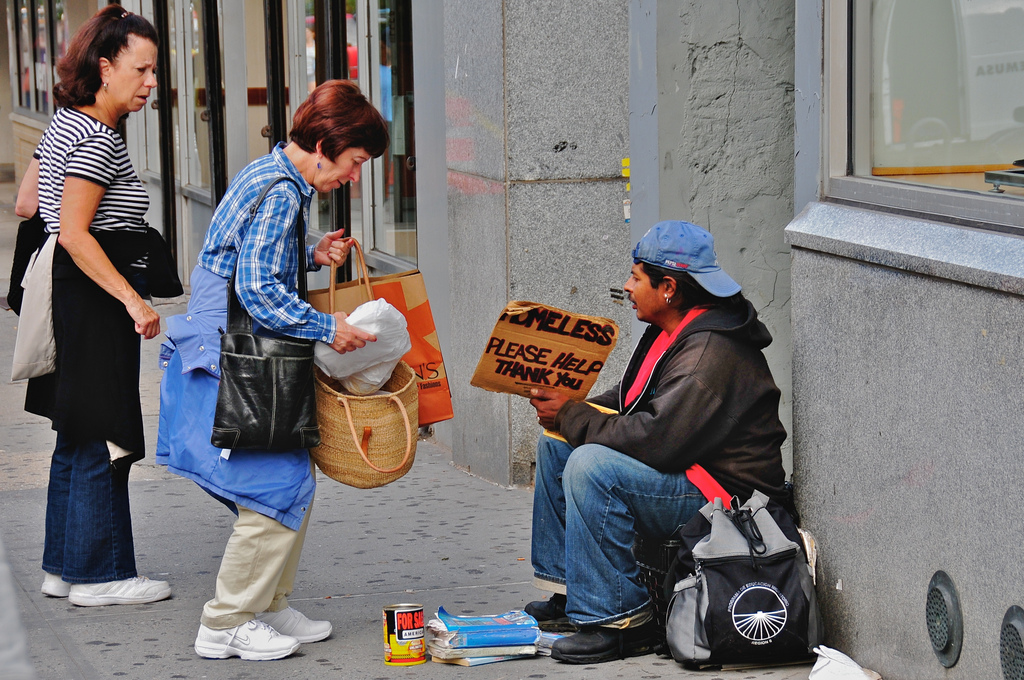
The Pensacola City Council is passing a draconian measure against the homeless. I’ve been so proud of Pensacola, and the citizen response to the homeless, the beds Pensacola provides, the meals the citizens, through a variety of church and social agencies, hand out. Their response is humane, and compassionate.
The homeless are attracted by the moderate climate; they are here in droves. They panhandle at the intersections, they approach you at downtown attractions. They often have dogs. For the most part, they greet people cheerfully or respectfully, and they aren’t aggressive.
They are, in truth, a kind of plague on Pensacola, but as a traveler, I have brushed my teeth in many a restroom, changed my clothes, even had to rise out a coffee stained outfit before my next flight once – these are things for which the homeless will be charged with an offense against the law. If I were without a place for the night, I might look for a safe public restroom in which to sleep, especially if I had a child with me, as so many women did when I worked with homeless women.
I understand the problem.
But I also understand the desperation of those who have little, and that very little – a public restroom, a safe place to sleep outdoors – are being taken away from them by this statute. It’s heartless, and if there is truly an accounting at the end of our lives, and an afterlife, I fear for those who put additional burdens on the poorest of the poor.
Psalm 37
Of David.
1 Do not fret because of the wicked;
do not be envious of wrongdoers,
2 for they will soon fade like the grass,
and wither like the green herb.
3 Trust in the Lord, and do good;
so you will live in the land, and enjoy security.
4 Take delight in the Lord,
and he will give you the desires of your heart.
5 Commit your way to the Lord;
trust in him, and he will act.
6 He will make your vindication shine like the light,
and the justice of your cause like the noonday.
7 Be still before the Lord, and wait patiently for him;
do not fret over those who prosper in their way,
over those who carry out evil devices.
8 Refrain from anger, and forsake wrath.
Do not fret—it leads only to evil.
9 For the wicked shall be cut off,
but those who wait for the Lord shall inherit the land.
10 Yet a little while, and the wicked will be no more;
though you look diligently for their place, they will not be there.
11 But the meek shall inherit the land,
and delight in abundant prosperity.
12 The wicked plot against the righteous,
and gnash their teeth at them;
13 but the Lord laughs at the wicked,
for he sees that their day is coming.
14 The wicked draw the sword and bend their bows
to bring down the poor and needy,
to kill those who walk uprightly;
15 their sword shall enter their own heart,
and their bows shall be broken.
16 Better is a little that the righteous person has
than the abundance of many wicked.
17 For the arms of the wicked shall be broken,
but the Lord upholds the righteous.
18 The Lord knows the days of the blameless,
and their heritage will abide for ever;
19 they are not put to shame in evil times,
in the days of famine they have abundance.
20 But the wicked perish,
and the enemies of the Lord are like the glory of the pastures;
they vanish—like smoke they vanish away.
21 The wicked borrow, and do not pay back,
but the righteous are generous and keep giving;
22 for those blessed by the Lord shall inherit the land,
but those cursed by him shall be cut off.
23 Our steps* are made firm by the Lord,
when he delights in our* way;
24 though we stumble,* we* shall not fall headlong,
for the Lord holds us* by the hand.
25 I have been young, and now am old,
yet I have not seen the righteous forsaken
or their children begging bread.
26 They are ever giving liberally and lending,
and their children become a blessing.
27 Depart from evil, and do good;
so you shall abide for ever.
28 For the Lord loves justice;
he will not forsake his faithful ones.
The righteous shall be kept safe for ever,
but the children of the wicked shall be cut off.
29 The righteous shall inherit the land,
and live in it for ever.
30 The mouths of the righteous utter wisdom,
and their tongues speak justice.
31 The law of their God is in their hearts;
their steps do not slip.
32 The wicked watch for the righteous,
and seek to kill them.
33 The Lord will not abandon them to their power,
or let them be condemned when they are brought to trial.
34 Wait for the Lord, and keep to his way,
and he will exalt you to inherit the land;
you will look on the destruction of the wicked.
35 I have seen the wicked oppressing,
and towering like a cedar of Lebanon.*
36 Again I* passed by, and they were no more;
though I sought them, they could not be found.
37 Mark the blameless, and behold the upright,
for there is posterity for the peaceable.
38 But transgressors shall be altogether destroyed;
the posterity of the wicked shall be cut off.
39 The salvation of the righteous is from the Lord;
he is their refuge in the time of trouble.
40 The Lord helps them and rescues them;
he rescues them from the wicked, and saves them,
because they take refuge in him.
My friends and I had an animated conversation about Florida politics as we sat around the table having a late breakfast at Adonna’s Bakery, down on Palafox in Pensacola. We were explaining how in the last election, if it were not for the voters handbook the League of Women Voters published, explaining exactly what a yes or no vote would mean for each proposed amendment, Florida would be stuck with constitutional amendments voters never intended to approve.
The League of Women Voters cuts through all the baloney and explains the issues, clearly and objectively. Without their clear, cool voice of reason, voters would be blown to and fro by the turbulent election rhetoric which blows at hurricane force during each election in Florida, obscuring the clearest issues. The League is neither liberal nor conservative, but contains members of all parties. Their goal is getting people to vote, and to understand the issue on which people are voting.
So grown up. So mature. So wise and clear sighted. Way too grown up for me, all these years, until, after that conversation, one of these friends sent me an invitation she had received for an upcoming League of Women Voters annual luncheon. As an added attraction, a local NPR reporter would be the speaker.
I hate meetings. It brings out the ADD child in me; I fidget, I wish I were anywhere but in the meeting.
And yet . . . this is a group I have long admired, and I want to support them. So I agreed, and we attended.
It was so much fun. These women – and men, about a fifth of the attendees were men – are people focused on ISSUES. They have study groups for how juveniles in the local area are arrested and treated in our jails and custodial facilities. They have groups which study the impact on the environment of legislative and local government decisions. They go to civic meetings, speak out, and report back to the League. This is a group of people who take positions and recommend actions! Exciting stuff.
You know I am a believer, so I might see things differently from you, or others, but I met some really cool members, people I believe I was meant to meet. One said wonderful things about my son as he practices his profession. There is no Mother’s Day gift on earth that means as much as the words she spoke, praising his ethics and integrity.
An elderly man sitting next to me was leaving this week to go to Heidelberg.
“Are you going for the closing down?” I asked, and told him I had graduated from Heidelberg American high school, lo, these many years ago. “Yes,” he replied, he has family who have lived there many years, and he has been back many times. It led to a discussion around the table, where I discovered two other women who had been in DoDs schools in Germany. What an unexpected blessing!
Every now and then, as you lead your life, you get the feeling you are exactly where you are meant to be at this very moment, and I had that feeling as I left the meeting. I am so thankful for the serendipity that led me there, and for the rush of blessings the meeting provided.
LOL, the group I thought might be stuffy and staid played this wonderful Lady Gaga video: