A Modern Parable
Thank you, Anita!
A MODERN PARABLE . .
A Japanese company ( Toyota ) and an American company (Ford) decided to have a canoe race on the Missouri River. Both teams practiced long and hard to reach their peak performance before the race.
On the big day, the Japanese won by a mile.
The Americans, very discouraged and depressed, decided to investigate the reason for the crushing defeat. A management team made up of senior management was formed to investigate and recommend appropriate action.
Their conclusion was the Japanese had 8 people rowing and 1 person steering, while the American team had 8 people steering and 1 person rowing.
Feeling a deeper study was in order, American management hired a consulting company and paid them a large amount of money for a second opinion.
They advised, of course, that too many people were steering the boat, while not enough people were rowing.
Not sure of how to utilize that information, but wanting to prevent another loss to the Japanese, the rowing team’s management structure was totally reorganized to 4 steering supervisors, 3 area steering superintendents, and 1 assistant superintendent steering manager.
They also implemented a new performance system that would give the 1 person rowing the boat greater incentive to work harder. It was called the ‘Rowing Team Quality First Program,’ with meetings, dinners, and free pens for the rower There was discussion of getting new paddles, canoes, and other equipment, extra vacation days for practices and bonuses.
The next year the Japanese won by two miles.
Humiliated, the American management laid off the rower for poor performance, halted development of a new canoe, sold the paddles, and cancelled all capital investments for new equipment. The money saved was distributed to the Senior Executives as bonuses and the next year’s racing team was out-sourced to India.
Sadly, The End.
Here’s something else to think about:
Ford has spent the last thirty years moving all its factories out of the US, claiming they can’t make money paying American wages.
TOYOTA has spent the last thirty years building more than a dozen plants inside the US. The last quarter’s results:
TOYOTA makes 4 billion in profits while Ford racked up 9 billion in losses.
Ford folks are still scratching their heads.
Space Storm Alert: 90 Seconds from Catastrophe
A fascinating article from New Scientist passed along by Law and Order Man. Thanks for a very scary article. 😦
According to the NAS report, a severe space weather event in the US could induce ground currents that would knock out 300 key transformers within about 90 seconds, cutting off the power for more than 130 million people (see map). From that moment, the clock is ticking for America.
First to go – immediately for some people – is drinkable water. Anyone living in a high-rise apartment, where water has to be pumped to reach them, would be cut off straight away. For the rest, drinking water will still come through the taps for maybe half a day. With no electricity to pump water from reservoirs, there is no more after that.
There is simply no electrically powered transport: no trains, underground or overground. Our just-in-time culture for delivery networks may represent the pinnacle of efficiency, but it means that supermarket shelves would empty very quickly – delivery trucks could only keep running until their tanks ran out of fuel, and there is no electricity to pump any more from the underground tanks at filling stations.
Back-up generators would run at pivotal sites – but only until their fuel ran out. For hospitals, that would mean about 72 hours of running a bare-bones, essential care only, service. After that, no more modern healthcare.
72 hours of healthcare remaining
The truly shocking finding is that this whole situation would not improve for months, maybe years: melted transformer hubs cannot be repaired, only replaced. “From the surveys I’ve done, you might have a few spare transformers around, but installing a new one takes a well-trained crew a week or more,” says Kappenman. “A major electrical utility might have one suitably trained crew, maybe two.”
Within a month, then, the handful of spare transformers would be used up. The rest will have to be built to order, something that can take up to 12 months.
Even when some systems are capable of receiving power again, there is no guarantee there will be any to deliver. Almost all natural gas and fuel pipelines require electricity to operate. Coal-fired power stations usually keep reserves to last 30 days, but with no transport systems running to bring more fuel, there will be no electricity in the second month.
You can read the entire, very scary article, by clicking NEW SCIENTIST
Problems with PayPal
Intlxpatr didn’t even know I had a PayPal account! Whoda thunk?
Dear Member,
Your account has expired.
You must renew it immediately or your account will be closed.
If you intend to use this service in the future, you must take action at once!
To continue click here, login to your PayPal account and follow the steps.
Thank you for using PayPal!
The PayPal Team
Please do not reply to this email. This mailbox is not monitored and you will not receive a respons. For assistence, log in to your PayPal
account and click the Help link located in the top right corner of any PayPal page.
PayPal Email ID PP3812
When I clicked the link, knowing this is a pfishing link, but wanting to print the website here, so anyone with a lot of free time can go mess with them, I got this warning:

Don’t you totally love it? I do!
Painful Sight
Everytime I go to Fehaheel – not all that often, but maybe two times a month – I see water overflowing from two manholes. Sometimes, it is a LOT of water. It makes a terrible hazard along Gulf Road, where traffic is chaotic at best, and worse – in a dry and thirsty land, it is a terrible thing to waste water.

Sometimes the water stinks like sewage. It makes me wonder where this water is coming from? It also makes me nervous because if it is sewage water, it comes up, it dries on the ground, a wind comes along and blows it on to my salad as I sit outside with AdventureMan having lunch – and I haven’t a clue what I have just ingested. Not good!
This isn’t something that happens rarely. It happens often, often enough that I think it is every time I am in Fehaheel. This isn’t just bad for the environment, it is also very bad for our health. Whatever is going wrong here needs a permanent fix.
Honored Guest
In every country where I have lived, we have felt like honored guests. This week, I have been truly honored, my blogging friend Hilaliya has asked me to be an occasional guest blogger on his revamped blog, now featuring a Kuwait Blogging Diwaniya. Pretty cool, huh? I have to admit it, I have a smile from ear to ear.
The revered blogger Don Veto led the way with an article yesterday, and I jumped in today.
In honor of my ear-to-ear smile, it’s called Smile for me Baby – Let Me See Your Grill but fair warning – it’s political polemic, about parliamentary gridlock, so you will see a grittier side of Intlxpatr.
The Most Dangerous Job in Kuwait
From today’s Al Watan:
KUWAIT: The operations room received a call informing them that an Asian domestic maid tried to commit suicide by stabbing herself while at her sponsor”s house in the Salmiya area. Police officers and medical teams rushed to the scene where paramedics administered emergency medical aid and rushed her to Mubarak Hospital, where she was admitted to the intensive care unit. However, on interrogating her, she alleged that she did not attempt suicide but that she had been stabbed. Investigations are underway to ascertain the authenticity of the statement.
OK. Stop and think about it. How do you stab yourself? I can imagine, if I were wanting to commit suicide, a hundred ways easier than trying to stab oneself. Don’t you think the police would have been suspicious from the very beginning?
Every time I read about another domestic committing suicide, I wonder. I have heard many many things.
I wonder how many women commit suicide by “jumping” off the balcony? Those who survive often say they were thrown, or pushed, by “the madam.”
One girl told me that every maid brought into the household where she works immediately has to have her hair cut very short (and unflattering) and to wear voluminous and ugly uniforms, because “the madam” is afraid her husband and sons will be attracted to the maids.
I wonder how many slaps, how much screaming, how many humiliations, how many approaches or attacks from male members of the household one endures before absconding?
Think about it. You’re from a really really poor country, and you leave behind family, even your own children, for the hope of earning enough money so that the children can go to school, and have a better life, so that maybe you can build your own little bungalow one day, not fancy, just a roof over your head. People who come here to earn a living have a lot of incentive to make it work. They will endure a great deal before seeking a way out.
I have so many friends who treat their household help like members of the family, teaching them new skills, helping them earn extra money, giving them food and clothing. I believe they are in the majority, the kind employers.
But so many stories of domestics being abused! Even if it is a mere, say 5%, what options does the domestic have? The brave ones, the self-confident ones, might go to the police, only to have her employers state that she stole something, and she finds herself under arrest, or quickly deported. Many cannot even leave the house, and have no telephone with which to call a friend in an emergency situation.
Will the new labor law have anything to say about protecting these very vulnerable family helpers from a dangerous or abusive employer? What effect does it have on children to see their parents treating employees like mere possessions? How does it impact our souls and our entrance into paradise when we don’t (as the Quran instructs) pay our employees their promised salary at the agreed upon time?
What will happen to this poor woman, stabbed, in a strange hospital, whose employers claim she stabbed herself?
Pecha Kucha Night at the Dar al-Athar al-Islamiyyah
Thank you, Little Diamond for sharing news of an upcoming event in Kuwait that sounds like a pretty cool evening, full of creatives sharing a small part of their vision. It sound like an evening full of energy, to me. Thought you might want to go, too! 🙂
Dear All,
I would like to invite you to Kuwait’s first Pecha Kucha Night at the
Dar al-Athar al-Islamiyyah
Date: Wednesday, 11 March 2009
Time: 7:00 pm
Place: Al-Maidan Cultural Centre ‘Abdullah al-Salem School, Maidan Hawalli, Near al Sha’ab Leisure Park.
Pecha Kucha Night, devised by Astrid Klein and Mark Dytham (Klein
Dytham architecture), was conceived in 2003 as a place for young
designers to meet, network, and show their work in public. Pecha Kucha
Night is a not-for profit event, conceived, inspired, and performed
solely to strengthen creativity whether it be famous or famous-to-be
talents.
But as we all know, give a mike to a designer (especially an
architect) and you’ll be trapped for hours. The key to Pecha Kucha
Night is its patented system for avoiding this fate. Each presenter is
allowed 20 images, each shown for 20 seconds each – giving 6 minutes
40 seconds of fame before the next presenter is up. This keeps
presentations concise, the interest level up, and gives more people the chance to show.
Pecha Kucha (which is Japanese for the sound of conversation) has
tapped into a demand for a forum in which creative work can be easily
and informally shown, without having to rent a gallery or chat up a
magazine editor. This is a demand that seems to be global – as Pecha
Kucha Night, without any pushing, has spread virally to over 160 cities across the world.
It comes to Kuwait for the first time on 11th of March.
Speakers for PKN #1 will include:
Lubna Saif Abbas: LB o J?zzaz
Ghadah Alkandari: Artist
Adlah Al-Sharhan: Chef
Maha Al-Asaker: Photographer
Mai al-Nakib: Kuwait University
Thomas Modeen: smArchitecture
Abdulaziz al-Humaidhi: Najeeb Al-Humaidhi Consultants
Khalid al-Hamad: American University of Kuwait
Waleed Shaalan: BrainStorm
Amera al-Awadhi: Amar International Real Estate Co.
Fatma al-Hamad: Amar International Real Estate Co.
Warmest regards,
Asseel al-Ragam
Asseel al-Ragam PhD
Assistant Professor
Department of Architecture
Kuwait University
Office: +965 24987595
Cell: +965 99761150
alragam@gmail.com
Recycle in Kuwait
This just made my heart flutter. Eshda3wa had mentioned I needed to visit Al Ahmadi to see the lights, and she was right. I had so much fun; all of Kuwait should decorate the way Ahmadi decorates – lights everywhere!
But here is what made my heart truly flutter:
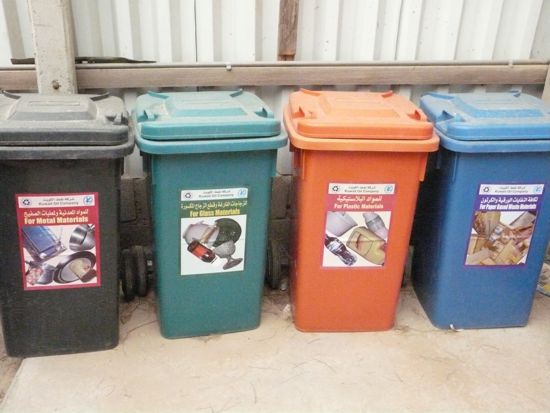
Recycle Bins! In Kuwait!
“When they first brought them,” my friend told me, “I thought ‘oh yeah, Kuwait, well maybe it will work for a week or two’ and so we gathered up EVERYTHING in the house and loaded the bins so we could get rid of them, but actually, they have been picking up regularly, right on schedule.”
WOW.
I have heard there is a new recycle company that will pick up for free. Who are they? How do we contact them?
Update June 2011 – two new options listed in the comments section, companies providing recycle services in Kuwait. 🙂
Walk-a-thon Tomorrow (Saturday)
The weather is PERFECT. There is no excuse – honestly – this is a wonderful activity!

LOL Catz Funny for Today

more animals
There is nothing so aggravating . . .
My son was telling me that I Can Has Cheezburger started with a bunch of people who once a week would publish funny cat photos, and they called it “Caturday.” Look at it now – an idea that lives on and on and on. It must be me, but I check it about once a week, and it always makes me laugh.
Recently, in the US, a kid posted a video of himself beating up the family cat. Bloggers were able to track him down, even though he had posted under a bogus name, and report him to the authorities in his home town. The cat (who is fine, by the way) has been taken from the home and is with a vet, looking to rehome him. My son says he is sure that cat will have many many offers. The kid, meanwhile, is meeting with the district attorneys.
Mistreating animals is a classic symptom of a person who will later abuse people. I wonder if there is hope that this young man can be rehabilitated? Who would think torturing a helpless animal is fun???
This is one hodgepodge of a post, isn’t it?
Some days, it just makes me happy to think there is a blogging community with a sense of community and responsibility.
Recent Comments
ExpatAlien on What Country am I Living … intlxpatr on Yellowstone: Old Faithful to C… Michelle on Yellowstone: Old Faithful to C… Cathy on No Grown-Ups in Charge intlxpatr on Waiting for Snow Wikipedia Donate Button

Amazina


Early Voting in Florida


 Here There and Everywhere