Kuwait Headscarf in Qatar souks
I can only imagine this was sent to the wrong country. Qatar’s colors are a blood-brownish marron red and pure white; these are Kuwait colors on a traditional headscarf:
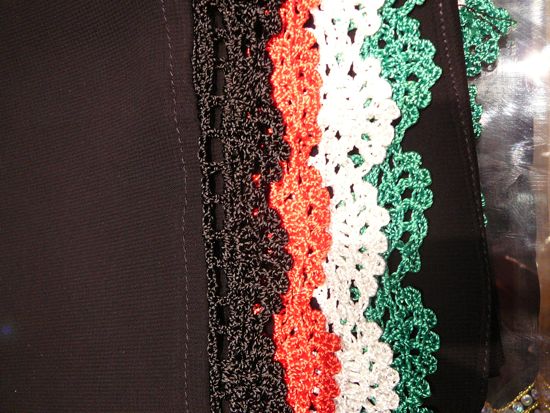
I found it in the Suq al Waqif.
Where Great Decisions are Made
Today, on my way home from a marathon-fun day, even though it was full of errands, I got to thinking great thoughts – in my car. Some of my best ideas come when I am sitting in traffic, something about the enforced nothing-to-do frees up my unconscious to tackle things I don’t otherwise think about.
One of the things I was thinking about was what, when I studied it, was called The Decision Making Process. It’s something you study in Political Science, and, although I can’t say this for sure because I haven’t specialized in these other areas, I am betting you would also study the process in Business, in Economics, in Engineering . . . when you know the process by which decisions are made, so the theory goes, you can get better at predicting how the decision making will go, what people will decide.
Or so the theory goes. . .
My personal observation is that human beings are highly unpredictable, and sometimes will make an opposite decision, even an irrational decision, in order not to be so predictable. I hate to be so cynical, but I think we are not so rational as we like to think we are.
In my Kuwait life, I remember being at a not-so-important meeting, more just a gathering, but at one point, I saw four people – influential people – meeting off in a corner, very casually, probably no one else even noticed, but they were deciding an outcome of an election, I realized later that day. OOps – not THE Kuwait election, my friends, no no no, a much lesser election. But that was where the decision was really made. These four quiet people were people who had the respect of others, and once they decided, they quietly shared their opinion with others, who shared their opinion with others and on it went, until the deed was done.

I have seen decisions made in a swimming pool. I know decisions are made on golf courses. I was hired for one job once after attending a concert, and for another because I had a responsible position in my church (it had nothing to do with the job I was hired for, but the skills were transferable.) I was hired once because my hair and eyes matched another woman working in the front office, and the boss wanted a “matched pair.” (I didn’t know that until later.)
I know that at one time AdventureMan helped lay out a military base. He said they were in a truck, and as they drove along someone dropped big stones out the back to mark the boundaries. Don’t you love it?
Gulf women tell me that weddings are important; young women are often spotted by future mother-in-laws, so moms try to make sure that their daughters are well appointed for major weddings, major events where they may be on display . . . and then they ask around checking on character and personality and suitability. But I wonder on what basis those decisions are really made, deep down? Family alliances? Securing a future? Business connections? I know there are rare alliances based on true and lasting love; I wonder how often that happens?
I know there are matrixes, and even simple two-column + – lists by which people can rationally work out what to decide. What I am cynical about – after all the matrixes are filled out, after all the plusses and minuses are totaled – I think that the decision can go counter to rationality, because we are – if not irrational – then intuitive, we are people who make decisions with other than our conscious minds. I think our hearts get involved, and you KNOW that feelings/emotions get involved. Sometimes we have “a gut feeling”; sometimes we know something on an unconscious level that we don’t know on a conscious level. If we all acted in our own rational self interest, there would not be young drivers dying on our roads, people would not be irrationally exuberant about investments, young people would not fall in love with the wrong people and life would sure a lot more dull, wouldn’t it?

I am cynical even about decisions made at the highest levels, because even decisions made by boards and after studies – even these decisions are ultimately based by human beings, and sometimes on “hunches.”
So I am wondering if YOU have had similar experiences? Have you seen major decisions made irrationally?
All this because I was stuck in traffic . . . .
Too Much Food
AdventureMan and I have lived more years outside our own country than inside it. We have lived on-and-off in the Middle East for more than 30 years. You’d think we would know everything by now, but we are still delighted to discover new things and to learn from the culture in which we are living.
Our Kuwaiti friends were good about letting us peek inside the culture, telling us stories of family life “before oil” and Kuwait traditions. Like women aren’t supposed to eat too much when they to to someone’s house for dinner or the people will say “do you think she has never seen food before?”
On the other hand, it is shameful not to provide enough food, so you always prepare way more than the group invited can possibly eat, like in ten years.
Sometimes a lot of the food goes to waste, but I have also discovered these wonderful plastic bags and tin trays found in every supermarket in the Middle East. What doesn’t get eaten now – gets eaten. I admit it, I am a lazy wife. I don’t like cooking big meals when it is just the two of us, so I love being able to pull something out of the freezer and have it all heated up and fresh for dinner.


It also makes me feel very ecological to have food in the freezer, ready to fix, and to know that not a lot went to waste. We are learning from our son and his sweet wife, and all the young adults in our family, who are WAY more ecologically aware than we ever were, and we thought we were pretty good, the generation who invented recycling.
AdventureMan used to bring home people for dinner, mostly guys from out of town in town for a short time who needed a home-cooked meal. We always had food in the freezer, something I could pull out on short notice.
One time, I made beef burgundy. When I went to serve it, I looked for the cheesecloth bundle of spices and couldn’t find it. I looked and looked, and then I figured I must have taken it out earlier and forgot I’d done it. Then, during dinner, one of the men had a very puzzled look on his face – he was chewing on the spices ball! I was SO embarrassed, but they all just laughed, thank God.
Boiled Cole Slaw Dressing
We really do love cole slaw, but we find that there are some cole slaws we love more than others. Neither AdventureMan nor I are big into mayonaiss-y cole slaws, we find we like vinegary cole slaws better. Probably we like vinegary ones better because many many years ago a wonderful friend gave us this recipe for cole slaw dressing, and it is our hands down favorite.
When I first came to Qatar and wanted to make this dressing, I looked everywhere for poppy seeds, only to be told that they are ILLEGAL in Qatar, I guess they think we are all going to get high on poppy seeds or something. I was told poppy seeds are legal in Kuwait, but as hard as I looked, I never found any. I will admit, from time to time I have to bring some back with me, just so I can make this Cole Slaw Dressing.
It is sweet – and tart. I also use it on cucumbers, and I like it even better!
1/2 cup sugar
1/3 cup vinegar
1 teaspoon salt
1 cup oil
1 Tablespoon poppy seed
1 teaspoon dry mustard
1/2 teaspoon onion juice (I use grated onion)
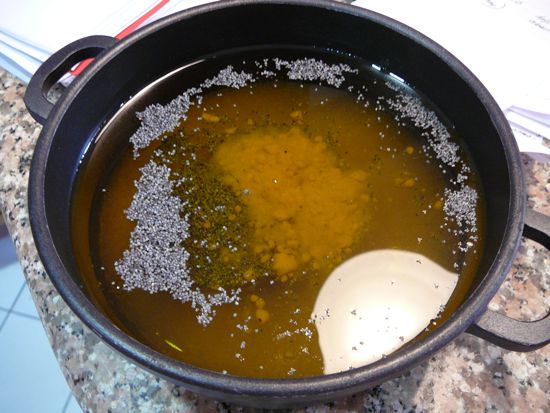
Bring all to a boil. Cool before using. Enough for one medium large head of cabbage. (Slice cabbage into thin shreds.) I also don’t let the dressing get too cool; I like the way it wilts the cabbage a little.
Driving Safety to Improve in Kuwait
I used to read a lot of science fiction. I can’t always remember the stories, but sometimes the concepts stick with me. I remember one story about a guy who gets to the future to discover nobody is as bright as they are in our time. One of the things they do to prevent the not-so-bright drivers from hurting themselves is to make the cars very rubbery and very slow, but the cars all make whoooooshing noises like they are going really really fast, so all the drivers are happy.
Kuwait loses a lot of young men, particularly, but also young women, to car accidents. Many pedestrians in Kuwait lose their lives, some stepping right in front of cars.
From today’s Arab Times: Kuwait
Strategy needed to counter hike in Kuwait’s road accidents: minister
KUWAIT CITY, Oct 11: Making our roads safer is in the interest of the nation’s progress as most of the deaths in traffic accidents involve youngsters and children, who are the future of our nation, said Kuwait’s Minister of Interior Sheikh Jaber Khaled Al-Sabah on behalf of HH the Prime Minister Sheikh Nasser Al-Mohammed Al-Sabah at the International Conference on Traffic in Kuwait Sunday.
The conference, held under the patronage of the prime minister at Holiday Inn Hotel, was organized by Kuwait Society for Traffic Safety, and was attended by delegates from the US, Turkey, UAE, Bahrain, Saudi Arabia, Lebanon, Jordan and other countries. Some of them also gave lectures. The Deputy Minister of Interior of Ukraine, Brigadier Oleksandr Savchenko, was a special guest at the conference.
The interior minister stressed the need for strategies to tackle the crisis of increasing road accidents in Kuwait based on the experiences of countries that have successfully handled the issue. “The lessons learnt from the conference must be implemented in Kuwait and all the government departments must cooperate with one another for bringing about positive changes in this direction.”
He also urged people from all walks of life to contribute to make roads safer “as it is the responsibility of the whole community.”
In the key note address, the chief of Kuwait Society for Traffic Safety said that road accidents in Kuwait have taken away more than 300,000 lives in the past, and caused severe disabilities. “The average age of those dying in accidents is 20. Between 1995 and 2008, more than 5000 people lost their lives in traffic accidents in Kuwait.”
Giving further statistics, he noted that 2.5 percent of Kuwait’s GDP is lost in accidents, “while in countries like the US it is only 0.1 percent of their GDP.
“According to WHO’s report, there are over 2 million accidents taking place every year, incurring losses to the tune of $2 billion.
“Kuwait Society for Traffic Safety will be soon launching a five-year program in Jan 2010 to bring about a change in the attitudes of people towards driving.”
Prof Fernand Cohen of Drexel University, USA, was the first speaker at the conference. He spoke on the topic, “How much can technological advancement increase traffic safety?”
He began by saying that the issue of traffic safety begins with man’s attitude. “To change traffic safety, we have to address that issue first.”
Prof Cohen said that technological advancement can reduce traffic accidents by up to 32 percent. He based his arguments on reliable studies in the field. “When you compare this percentage against the total number of accidents in the US every year, 5.8 million, it makes a significant difference.
“Basic safety features like seat belts and airbags have all become a standard feature in our cars, and have contributed to making our cars safer. But we have to go beyond that.”
Estimate
The professor mentioned studies estimate that deaths due to traffic accidents in the US will go down to 25,000 by 2020. “In 2004, the total number of road kills in the US was 43,000.
“We are moving more and more towards hybrid navigation system in car involving man-machine interaction. The car will make up for the shortfalls in the driver.
The professor said that the new technological approach to making roads safer must have a preventive rather than a punitive approach. “The focus should be crash avoidance technology. There should also be ‘Psychological Impact Technology.’
The emerging technologies, he noted, “looks at solutions such as a visual or audio alert signal for corrective action to avoid an imminent crash. There could be measures to make the car intervene and apply brakes when needed.”
Under crash avoidance technology, the professor presented technologies such as blind-spot detection, which provide greater visibility to drivers. “Rear view cameras can eliminate threat to pedestrians, children or animals while a car is backing.
“Lane Departure Warning can tell you if you are too fast to change lanes. It can prevent you from wandering out of lane.
Monitors
“The Wake-You-Up feature monitors a driver’s eyes, heart rate and other factors and gives a signal if the driver shows a tendency to fall asleep.”
He also touched upon other technologies such as sensors to indicate approaching vehicles, monitors to check tyre pressure, adaptive headlights that turn when the car is negotiating a curve and rollover prevention systems among others.
The professor then discussed technologies that can be incorporated on the road to make driving safer: warning signs prior to the red lights to warn cars to slow down; sensors at red lights to measure the speed of an oncoming car and prolong the duration of the signal if need be to allow a speeding car to pass; and encouraging drivers to drive at a particular speed, which would allow them to have green lights at every signal.
Some of the other topics handled during the conference were: The Lebanese Experience in Traffic Awareness; State of Road Safety Research in the US; Traffic Strategy for Kuwait.
By Valiya S. Sajjad
Arab Times Staff
Maid Builds Mansion with Elderly Employer’s ‘Gift’
This is a sticky situation – not a new situation, it is timeless, and not unique to Kuwait – it is everywhere. People with elderly parents need to pay attention; the elderly can be so vulnerable. He may well have given his caretaker the money. His poor 108 year old mother!
Maid coaxes elderly sponsor to sell home, buys villa with cash
KUWAIT CITY, Oct 3: Police have arrested a Sri Lankan housemaid who allegedly duped a Kuwaiti man in his 70s, and lured him into selling his home, reports Al-Watan Arabic daily.
It is reported the woman, who was working for the old man, induced him to sell his home, and then took the money from him. She is said to be worth about KD 120,000. She has also built a mansion in her home country.
A security source said the man’s mother, who is about 108 years old, and his family have lodged a complaint at the police station. However, the maid claims the man had given the money to her of his own free will.
Attempt to Kidnap Kuwaiti Girl: Print Their Names
From the Arab Times
Here is what scares me about this story – the language. It says “the side glass of the car broke.” That is very neutral language. I am pretty sure that the girl who was the intended victim would not break the glass; it was part of the barrier protecting her from the would-be kidnappers. It bothers me that it doesn’t state that the man broke the car glass attempting to kidnap the girl.
It also bothers me that the language says that they have been “detained for interrogation.” These men are a danger to society. They need to be locked up, for their own good and for the sake of the innocent young women who are their potential victims. There are witnesses, including the police. Enough! Try them, convict them and put them away!
It is also time to start publishing the names of the men who commit these acts. Would you want your daughter to marry such a man? Your cousin? Your sister? Doesn’t a woman have a right to know what sort of man she is marrying? Yes, it would shame the families from which the kidnappers have come. It seems that maybe shame is the only effective tool for deterring this kind of shameful behavior. If the families forbade this kind of behavior, you would see a drastic drop in the crime of kidnapping. Print their names.
Women are not the only victims. These same entitlement-loaded kidnappers seize boys and young me off the streets, sometimes lure their own friends, take them to the desert and rape them. What are they thinking? What makes them think they have that right? What makes them think there will be no consequences for bestial behavior?
Police save Kuwaiti girl from kidnappers’ clutches in Shaab Entertainment Park
KUWAIT CITY, Oct 2: The Hawalli police recently foiled at attempt by two Kuwaitis to kidnap a female compatriot from the parking lot of the Shaab Entertainment Park, reports Al-Shahid daily.
It has been reported as the victim was about to pull out of the parking lot, the youths blocked her way with their car and one of them got down from his vehicle and tried to drag the girl into his vehicle.
At this point the victim strongly resisted and in the confusion the side glass of the car broke. The victim then cried for help and a passing police patrol went to her rescue.
Seeing police the suspects grabbed the victim’s handbag containing her personal documents, cell phone and money and tried to escape but police chased and arrested them.
They have been detained at the Hawally Police Station for interrogation.
Predators prey on those they perceive to be weak and without protection. We, society, are supposed to be protecting the weak. When this man is refused sex, he and his friends try to rape the man, and trash the entire massage parlor?
Kuwaiti Man attempts to rape Jordanian massageur
KUWAIT CITY, Oct 2: An 18-year old Jordanian teenager reported at Jahra Police Station that a Kuwaiti man attempted to rape him while he was massaging the suspect inside a men’s salon — where the complainant works, in the Industrial Area on Thursday.
He narrated the man offered to pay him certain amount of money if he acceded to his demand for immoral act, which the complainant turned down and immediately asked the suspect to leave the salon.
He stressed the suspect later tried to kidnap him, which he resisted, so the suspect fled with his friends, but they destroyed some contents of the salon before fleeing the scene. However, he managed to record the number plate of the suspect’s car, which the detectives found out it belonged to a Kuwaiti man. A case has been registered against the suspect.
Everything Old Comes New Again

I love the Sephora ads, even if they won’t mail anything to me in Qatar. I have to use all my points when I am back in the USA. I still love seeing what I am missing, and if I really really want something, I can usually find someplace to order it or someone to take a run to Sephora to get it for me, especially when I am getting low on just-the-right-shade-of-eyeshadow. And no, no, the Sephoras in Kuwait and Qatar don’t carry all the brands that a full-fledged Sephora in France or Germany or the USA will carry. No Urban Decay for sure.
But this – this has a familiar ring to it. When I was young, even a kid, I think there was some lipstick that made the same claim, you put it on and it turns the right color for you.
So how does it do that?
Apartment With a Gulf View? Not so Fast!
Not so fast! Make sure you know who really owns those flats before you fork out the big bucks! This happens everywhere; people selling or renting property they don’t own, taking deposits, and disappearing!
From today’s Arab Times
Kuwaiti, wife make big money selling ‘sold out’ flats;
KUWAIT CITY, Sept 28: Eight Kuwaitis have filed complaints with the Al-Shaab Police Station accusing a compatriot and his Arab wife of cheating them, reports Al-Rai daily. The complainants said they bought apartments overlooking the sea from the compatriot and the wife received money on behalf of the husband. The complainants said each of them paid KD 100,000 in advance upon receipts and contracts only to discover the apartments have been sold to other people. The daily did not say in which country the complainants purchased the apartments.
Recent Comments
ExpatAlien on What Country am I Living … intlxpatr on Yellowstone: Old Faithful to C… Michelle on Yellowstone: Old Faithful to C… Cathy on No Grown-Ups in Charge intlxpatr on Waiting for Snow Wikipedia Donate Button

Amazina


Early Voting in Florida


 Here There and Everywhere