Kuwaiti police have busted a “wild party” and arrested 23 “cross-dressers and homosexuals” at a chalet in the south of the country on Sunday.
“The vice police received a tip about the party and a warrant was issued by the public prosecution to take action against the cross dressers and homosexuals,” a security source told local daily Al Rai.
“The police encircled the chalet to make sure no one escaped and proceeded to arrest the people participating in the party. Some of them tried to escape by using the backdoor of the chalet and heading to the sea, but they were caught,” the source added.
The daily said that investigations revealed the party was exclusively for “cross-dressers and homosexuals” who would face the charges of “engaging in immoral activities.”
Lesbian, Gay, Bisexual and Trans (LGBT) rights receive no protection in Kuwait and homosexual acts between two male adults can result in a six-year prison sentence, though there are no laws against sexual acts between two women. Cross-dressing is also illegal.
In 2013, Public health official Yousuf Mindkar announced the introduction of a screening process at Kuwait’s International Airport to prevent LGBT expatriates from entering Kuwait or other Gulf Cooperation Council (GCC) countries.
“Health centres conduct the routine medical check to assess the health of the expatriates when they come into the GCC countries,” he said.
“However, we will take stricter measures that will help us detect gays who will be then barred from entering Kuwait or any of the GCC member states.”
The same paper later showed the minister appearing to backtrack on the move saying it was a “mere proposal.”
“It may or may not be accepted,” he said.
“The debate will reflect the keen interest of the GCC countries in human rights, taking into consideration the teachings of our religion and international agreements.”
Some suggested that concerns over the hosting of the FIFA 2022 World Cup in Qatar, and the potential controversy that would ensue were fans to be screened, may have led to the backtrack.
The Lectionary reading in the Old Testament today is from Isaiah, one of my favorite books in the bible, and when I read it, I think of all my time in the Arabian peninsula, in Saudi Arabia, Qatar, and Kuwait. I think of this land, on the route from the rift valley in Kenya where man is supposed to have originated, how earliest humans would have crossed through these countries as they moved slowly away from their origins.
My Qatari and Kuwaiti friends tell me that legends say that these countries were once lush, green and beautiful. They are still beautiful, but the lushness and the greeness is only in small pockets when and where the arid land has water. I think nothing is impossible for God, and how wonderful it would be to see these countries lush and green and fertile once more.
The King is coming, coming as a tiny baby in human form to live with us and turn us away from our wickedness. He sees things differently. He tells us to love one another, to love our enemies, to take care of one another. He makes the blind to see, the lame to leap, and the deaf to hear. Come! Come, Emanuel!
Isaiah 35:1-10
35 The wilderness and the dry land shall be glad,
the desert shall rejoice and blossom;
like the crocus 2it shall blossom abundantly,
and rejoice with joy and singing.
The glory of Lebanon shall be given to it,
the majesty of Carmel and Sharon.
They shall see the glory of the Lord,
the majesty of our God.
3 Strengthen the weak hands,
and make firm the feeble knees.
4 Say to those who are of a fearful heart,
‘Be strong, do not fear!
Here is your God.
He will come with vengeance,
with terrible recompense.
He will come and save you.’
5 Then the eyes of the blind shall be opened,
and the ears of the deaf unstopped;
6 then the lame shall leap like a deer,
and the tongue of the speechless sing for joy.
For waters shall break forth in the wilderness,
and streams in the desert;
7 the burning sand shall become a pool,
and the thirsty ground springs of water;
the haunt of jackals shall become a swamp,*
the grass shall become reeds and rushes.
8 A highway shall be there,
and it shall be called the Holy Way;
the unclean shall not travel on it,*
but it shall be for God’s people;*
no traveller, not even fools, shall go astray.
9 No lion shall be there,
nor shall any ravenous beast come up on it;
they shall not be found there,
but the redeemed shall walk there.
10 And the ransomed of the Lord shall return,
and come to Zion with singing;
everlasting joy shall be upon their heads;
they shall obtain joy and gladness,
and sorrow and sighing shall flee away.
Even as I write those words, I smile. Our grandson inherited my cold genes through his father. By cold genes, I mean we are more comfortable being cool than hot. We sleep cool. We need less clothing to stay warm. He told his Baba, AdventureMan, that “chilly is not cold” because he didn’t want to wear long pants, he prefers shorts.
(There are a lot of images of John the Baptist, but this one made me grin; he looks a little Rastafarian, and I hadn’t thought of him as so long haired and skinny, but he was living in the wilderness and eating locusts and honey . . . )
Life is long, and full of surprises. I love it. I think the ability to be surprised, and to ponder those quick flickers of perspective keeps us young in heart, and young in spirit.
Today, John speaks to us, each and every one. The true path is coming, the word of God embodied in a human being, born a tiny baby, a human baby, God come down into flesh. (My Muslim friends are quivering with fear at this point, waiting for me to be struck down for such blasphemy. They don’t believe Jesus was the son of God, but that he was a messenger, like Mohammed. They also believe Jesus will be the judge at the end of times.)
Life among the Moslems. Bible study with the Baptist. My very Mormon friends. My own very Episcopalian faith. All these influences – and my Alaskan heritage – mashed together with smatterings of others, have gone into making me a very odd sort of Christian.
I’m OK with that.
Luke 3:1-9
3 In the fifteenth year of the reign of Emperor Tiberius, when Pontius Pilate was governor of Judea, and Herod was ruler* of Galilee, and his brother Philip ruler* of the region of Ituraea and Trachonitis, and Lysanias ruler* of Abilene, 2during the high-priesthood of Annas and Caiaphas, the word of God came to John son of Zechariah in the wilderness. 3He went into all the region around the Jordan, proclaiming a baptism of repentance for the forgiveness of sins, 4 as it is written in the book of the words of the prophet Isaiah,
‘The voice of one crying out in the wilderness:
“Prepare the way of the Lord,
make his paths straight.
5 Every valley shall be filled,
and every mountain and hill shall be made low,
and the crooked shall be made straight,
and the rough ways made smooth;
6 and all flesh shall see the salvation of God.” ’
7 John said to the crowds that came out to be baptized by him, ‘You brood of vipers! Who warned you to flee from the wrath to come? 8 Bear fruits worthy of repentance. Do not begin to say to yourselves, “We have Abraham as our ancestor”; for I tell you, God is able from these stones to raise up children to Abraham. 9 Even now the axe is lying at the root of the trees; every tree therefore that does not bear good fruit is cut down and thrown into the fire.’
‘Kuwait In Fight With Drugs, Money-Wash’UN Briefed On Efforts
NEW YORK, Oct 10, (KUNA): A Kuwaiti diplomat has briefed a United Nations commission about the State of Kuwait efforts to combat money laundering and other illegal financial activities as well as menace of narcotics. Ibrahim Faisal Al-Da’ee, the third secretary serving with the permanent Kuwaiti mission at the UN, in an address to the UN Social, Cultural and Humanitarian Affairs Committee (SOCHUM), underscored necessity of taking effective action against crime and boosting coordination at the international and regional levels in this respect. As to combating “corrupt financial activities and funding from illegitimate resources,” the third diplomat noted that the State of Kuwait issued lawinto- decree number 23 in 2012, setting up the public authority for combating corruption and issuing special rules for financial assets’ disclosure, as well as the Ministerial Resolution No. 37 (2013), containing executive regulations for combating money laundering and terrorism funding.
Established On basis of the above mentioned, diplomat Al-Da’ee continued, the national commission for combating money laundering and terrorism was established. Moreover, the Central Bank of Kuwait issued a number of decisions aimed at clamping down on money laundering, in tandem with Kuwait’s endorsement of the UN convention for combating corruption. Regarding the drugs, Kuwait urges for taking necessary precautions to resolve this international problem by means such as encouraging planting of legitimate crops and improving living conditions in rural regions. Also in this respect, he pointed out, Kuwait had signed international conventions concerning such issues. According to Kuwait’s Ministry of Interior, number of drug-related crimes, during 2010-2013, dropped 6.4 percent, drug dealing cases 7.2 percent and narcotics-linked deaths 30 percent. He concluded his address to the international commission, stressing on respect for human and basic rights, through action against crimes, urging for collective global efforts against narcotics.
So . . . now we have legislation and a decree. Does Kuwait have the resources and/or the will to go after those who are funneling the funds to ISIS? Legislations and decrees are great, but even greater is following through; it gives a government credibility.
AdventureMan and I are not even typical of our generation. Living overseas, living in so many countries, we just got used to paying in cash. In our early years, even countries like France had more places that didn’t take credit cards than places that did. When it comes to buying gas in France, you’d better have a bucketful of cash 😉
But even those in our generation tend to pull out their credit cards for meals out, so this week AdventureMan asked wait staff percentages of who paid cash and who paid with cards. The most common answer was around 85% paid with a card.
I can understand. The restaurants/stores don’t have to keep as much money on hand for change, so it is easier on them, and those who pay with a card can track their expenses. Part of me laughs and says I think we don’t want to track our eating-out expenses, and another part thinks that because we pay cash, we probably don’t indulge in extras so often, which, for us, is a good thing. If we have dessert, we normally split it.
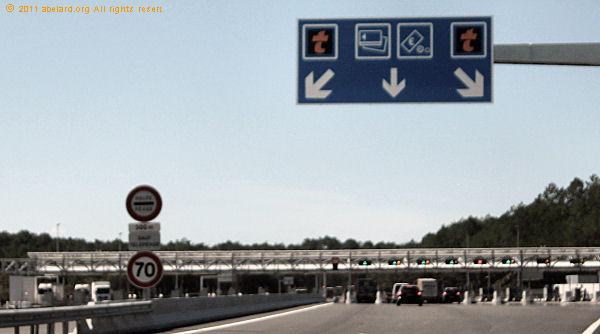
I do remember how wonderful it was to be able to pay all the tolls on the toll roads in France with a credit card, how wonderfully easy it was to use my credit card and the ATM’s in Kuwait and Qatar and Saudi Arabia – for some reason, it was like they were years ahead of the USA in banking technology, and banking by phone. But even there, in the smaller shops, you needed cash.
Hey, millennial! Yes, you there, standing in line at the Starbucks (SBUX) counter, tapping away on your smartphone, with the button-like doodads growing into your earlobes — put away that debit card.
No, don’t worry. No one’s going to nag you about buying a cup of overpriced coffee. We all have our vices. And you’re still basking in the fresh glow of youth. At least your vices won’t hurt you as much as they’d hurt us old codgers.
But the way you’re buying your coffee — you’re doing it wrong. And you’re not alone.
Paper or Plastic?
According to a recent survey by CreditCards.com, only about 1 in 3 American consumers currently uses a plastic card — credit or debit — when buying something that costs $5 or less. Most folks still pay with cash for such small purchases, with folks ages 65 and up having the greatest fondness for paying with greenbacks (82 percent).
But when it comes to the Millennials, 51 percent use plastic to pay for such purchases.
There’s only so much cash that will fit in your wallet, and if you limit yourself to paying in cash — you eventually run out. Old folks like me, whose memories aren’t what they used to be (and maybe never were), like this “automatic” check on spending. And as a result, CreditCards.com reports that the older a consumer is, the more likely he or she is to pay for small purchases in cash than to pull out a plastic card.
Not All Plastic Is Created Equal
Among plastic cards, nationally, consumers are about twice as likely (22 percent) to use a debit card to pay for a small purchase as to put the purchase on credit (11 percent). When the data is broken down by age group, it turns out that millennials are even more fond of debit cards than the average shopper. Consumers ages 18 to 29 use debit cards more often than any other age group when making small purchases.
But here’s the thing: Debit and credit cards may be nearly equal in their convenience of use when shopping for small items (eliminating the need to carry weighty pockets, jingling with unwanted coins). But they’re not at all equal in the financial benefits they convey to a consumer.
To cite the most obvious example, credit cards often offer you “rewards” for using them. With card companies charging retailers fat interchange fees for every transaction they process, they can afford to pay you generously when you “choose plastic.” Airline miles; “points” redeemable for cash back, account credits, merchandise, and gift cards; and just plain cash-back offers, as high as 5 percent, all make the choice between credit and debit a bit of a no-brainer. (Granted, some debit cards offer rewards of their own — but they’re rare, hard to find and usually much less generous.)
But rewards are only the most obvious monetary benefit of choosing credit over debit. Consider: When you pay for a purchase — large or small — with a debit card, that money is almost immediately deducted from your account.
What Warren Buffett Thinks
In contrast, a charge placed on a credit card is a debt that doesn’t come due — and needn’t be paid — until your credit card bill is sent to you. Depending on the date of purchase and the due date on your credit card bill, you may not have to pay that bill for as long as a month — which means you may be able to hang on to your money, and collect interest on it at your bank, for that time. (Super-investor Warren Buffett calls this concept of using someone else’s money, and collecting interest on it for your own benefit, “free float,” and deadpans that his business partner “Charlie and I find this enjoyable.”)
Granted, with the ultra-low interest rates that banks are paying on checking accounts these days, free float isn’t as profitable as it used to be — probably only pennies per credit card billing cycle. But still, free money is free money. Are you going to turn it down because you’re not being offered enough free money?
Of course, you do need to remember to pay your credit card bill on time, so as not to get hit by late fees. But as long as you can manage that, a credit card isn’t really a card you use for taking out long-term credit at all. It’s a pay-once-a-month debit card — that pays you free money every month.
The High Cost of Not Buying on Credit
Another advantage: CreditCards.com quotes Martin Lynch, director of education of the Cambridge Credit Counseling Corp. of Massachusetts, noting that “debit cards … can’t be reported to the credit bureaus and, thus, they don’t build [up] credit [ratings].” Building up a strong credit rating is crucial to a young person looking to buy his or her first car or to secure a mortgage on a starter home.
Getting charges and on-time payments, onto your credit report — to establish a track record as a reliable borrower — is therefore a good thing. It’s something you want to do as often as possible, and using a credit card to pay for small purchases is a great way to build up your credit report quickly.
Melinda Opperman, senior vice president of community outreach at Springboard Nonprofit Consumer Credit Management Inc., another expert interviewed by CreditCards.com, echoes the sentiment: “We like the idea of using credit cards frequently for small, manageable expenses. This gives users the benefit of an active credit history, but leaves them with monthly bills that are small enough to pay off in full, so they don’t have to pay any interest.”
Suffice it to say, any idea that’s supported by professional credit counselors, and by the world’s third richest man, is one that millennials would be well advised to take to heart.
Motley Fool contributor Rich Smith has no position in any stocks mentioned, and hasn’t used a debit card in years. The Motley Fool recommends and owns shares of Starbucks. To read about our favorite high-yielding dividend stocks for any investor, check out our free report.
The Islamic State of Iraq and Syria (ISIS), now threatening Baghdad, was funded for years by wealthy donors in Kuwait, Qatar, and Saudi Arabia, three U.S. allies that have dual agendas in the war on terror.
The extremist group that is threatening the existence of the Iraqi state was built and grown for years with the help of elite donors from American supposed allies in the Persian Gulf region. There, the threat of Iran, Assad, and the Sunni-Shiite sectarian war trumps the U.S. goal of stability and moderation in the region.It’s an ironic twist, especially for donors in Kuwait (who, to be fair, back a wide variety of militias). ISIS has aligned itself with remnants of the Baathist regime once led by Saddam Hussein. Back in 1990, the U.S. attacked Iraq in order to liberate Kuwait from Hussein’s clutches. Now Kuwait is helping the rise of his successors.As ISIS takes over town after town in Iraq, they are acquiring money and supplies including American made vehicles, arms, and ammunition. The group reportedly scored $430 million this week when they looted the main bank in Mosul. They reportedly now have a stream of steady income sources, including from selling oil in the Northern Syrian regions they control, sometimes directly to the Assad regime.
But in the years they were getting started, a key component of ISIS’s support came from wealthy individuals in the Arab Gulf States of Kuwait, Qatar and Saudi Arabia. Sometimes the support came with the tacit nod of approval from those regimes; often, it took advantage of poor money laundering protections in those states, according to officials, experts, and leaders of the Syrian opposition, which is fighting ISIS as well as the regime.
“Everybody knows the money is going through Kuwait and that it’s coming from the Arab Gulf,” said Andrew Tabler, senior fellow at the Washington Institute for Near East Policy. “Kuwait’s banking system and its money changers have long been a huge problem because they are a major conduit for money to extremist groups in Syria and now Iraq.”
Iraqi Prime Minister Nouri al-Maliki has been publicly accusing Saudi Arabia and Qatar of funding ISIS for months. Several reports have detailed how private Gulf funding to various Syrian rebel groups has splintered the Syrian opposition and paved the way for the rise of groups like ISIS and others.
“The U.S. has made the case as strongly as they can to regional countries, including Kuwait. But ultimately when you take a hands off, leading from behind approach to things, people don’t take you seriously and they take matters into their own hands.”
Gulf donors support ISIS, the Syrian branch of al Qaeda called the al Nusrah Front, and other Islamic groups fighting on the ground in Syria because they feel an obligation to protect Sunnis suffering under the atrocities of the Assad regime. Many of these backers don’t trust or like the American backed moderate opposition, which the West has refused to provide significant arms to.
Under significant U.S. pressure, the Arab Gulf governments have belatedly been cracking down on funding to Sunni extremist groups, but Gulf regimes are also under domestic pressure to fight in what many Sunnis see as an unavoidable Shiite-Sunni regional war that is only getting worse by the day.
“ISIS is part of the Sunni forces that are fighting Shia forces in this regional sectarian conflict. They are in an existential battle with both the (Iranian aligned) Maliki government and the Assad regime,” said Tabler. “The U.S. has made the case as strongly as they can to regional countries, including Kuwait. But ultimately when you take a hands off, leading from behind approach to things, people don’t take you seriously and they take matters into their own hands.”
Donors in Kuwait, the Sunni majority Kingdom on Iraq’s border, have taken advantage of Kuwait’s weak financial rules to channel hundreds of millions of dollars to a host of Syrian rebel brigades, according to a December 2013 report by The Brookings Institution, a Washington think tank that receives some funding from the Qatari government.
“Over the last two and a half years, Kuwait has emerged as a financing and organizational hub for charities and individuals supporting Syria’s myriad rebel groups,” the report said. “Today, there is evidence that Kuwaiti donors have backed rebels who have committed atrocities and who are either directly linked to al-Qa’ida or cooperate with its affiliated brigades on the ground.”
Kuwaiti donors collect funds from donors in other Arab Gulf countries and the money often travels through Turkey or Jordan before reaching its Syrian destination, the report said. The governments of Kuwait, Qatar, and Saudi Arabia have passed laws to curb the flow of illicit funds, but many donors still operate out in the open. The Brookings paper argues the U.S. government needs to do more.
“The U.S. Treasury is aware of this activity and has expressed concern about this flow of private financing. But Western diplomats’ and officials’ general response has been a collective shrug,” the report states.
When confronted with the problem, Gulf leaders often justify allowing their Salafi constituents to fund Syrian extremist groups by pointing back to what they see as a failed U.S. policy in Syria and a loss of credibility after President Obama reneged on his pledge to strike Assad after the regime used chemical weapons.
That’s what Prince Bandar bin Sultan, head of Saudi intelligence since 2012 and former Saudi ambassador in Washington, reportedly told Secretary of State John Kerry when Kerry pressed him on Saudi financing of extremist groups earlier this year. Saudi Arabia has retaken a leadership role in past months guiding help to the Syrian armed rebels, displacing Qatar, which was seen as supporting some of the worst of the worst organizations on the ground.
The rise of ISIS, a group that officially broke with al Qaeda core last year, is devastating for the moderate Syrian opposition, which is now fighting a war on two fronts, severely outmanned and outgunned by both extremist groups and the regime. There is increasing evidence that Assad is working with ISIS to squash the Free Syrian Army.
But the Syrian moderate opposition is also wary of confronting the Arab Gulf states about their support for extremist groups. The rebels are still competing for those governments’ favor and they are dependent on other types of support from Arab Gulf countries. So instead, they blame others—the regimes in Tehran and Damascus, for examples—for ISIS’ rise.
“The Iraqi State of Iraq and the [Sham] received support from Iran and the Syrian intelligence,” said Hassan Hachimi, Head of Political Affairs for the United States and Canada for Syrian National Coalition, at the Brookings U.S.-Islamic World Forum in Doha this week.
“There are private individuals in the Gulf that do support extremist groups there,” along with other funding sources, countered Mouaz Moustafa, executive director of the Syrian Emergency Task Force, a Syrian-American organization that supports the opposition “[The extremist groups] are the most well-resourced on the ground… If the United States and the international community better resourced [moderate] battalions… then many of the people will take that option instead of the other one.”
Wooo HOOOO Pensacola, getting those dealers off the streets. It’s not like its permanent, but it’s a start. There is one funny thing you will spot in this write-up in the Pensacola News Journal, that the next to last man named had charges that include selling cocaine within 1000 feet of a place of worship.
If you’ve ever been to Pensacola, you will understand how hilarious that is. You can’t go 1,000 feet away from one house of worship and not be within 1,000 feet of the next. It’s just like the mosques in Qatar and Kuwait, if you are lost, you can’t call someone and when they ask where you are, you can’t say “I’m by the big mosque/church on the corner!” because there are mosques/churches on EVERY corner! Pensacola has churches everywhere! I just think that’s interesting, that it seems to be an additional charge on the sheets in Pensacola.
An approximate 4-month-long investigation targeting street-level drug dealers resulted in the arrests of 13 people for selling crack cocaine to undercover Pensacola Police officers Friday.
Warrants for selling cocaine also have been issued for an additional 20 people, said Sgt. Marvin Miller, who supervises the department’s Vice & Narcotics Unit. Miller said the investigation targeted areas notorious for narcotics sales.
All of the charges are third-degree felonies punishable by up to five years in prison. Additional prison time can be added for selling within 1,000 feet of a specified area such as convenience stores, schools, and places of worship, or if the person is a repeat offender.
Officers from various units within the Pensacola Police Department spent approximately 12 hours today making the arrests.
Arrested today and charged with sale of cocaine and conspiracy to sell cocaine were:
Alfred Peasant, 34, of 1300 block of North Sixth Avenue, Pensacola
Sharon Pickett, 49, of 100 block of North J Street, Pensacola.
David Jones, 24, of 3600 block of Swan Lane, Pensacola.
Demarko Weathers, 21, of 2000 block of West Chase Street, Pensacola.
Minnie Mae Sapp, 54, of 100 block of South N Street, Pensacola.
Terry Crenshaw, 28, of 1000 block of West Hillary Street, Pensacola.
Larry Dornall Knight, 52, of 3600 block of North Ninth Avenue, Pensacola.
Antoine Booker, 34, of 1100 block of West Hope Drive, Pensacola.
Also arrested today were:
Donte A. Brazile, 36, of 3000 block of Torres Avenue, Pensacola. Charged with sale of cocaine.
Dominique Blackwell, 19, of 600 block of North B Street, Pensacola. Charged with possession of cocaine with intent to sell within 1,000 feet of a place of worship.
Kernist Ferrell, 57, address unavailable; Robert Lee Watts, 23, address unavailable; and Michael Coleman, 33, of 600 block of North A Street, Pensacola.
All three, who are currently in jail, were charged with sale of cocaine.
My annual “who knew I’d be blogging for X years?” post has turned into my any-excuse-will-do fun forage for elaborate and gorgeous cakes that I can invite you into my virtual world to sample, stop and chat, have a cup of virtual coffee, mint tea or even sweet fresh water and Iced tea (it’s a Southern thing).
The first cake pays homage to Kuwait and my blogger beginnings. Kuwait was an amazingly lively blogging scene, with some very daring bloggers, a couple of whom have since spent some time in prison for their daring.
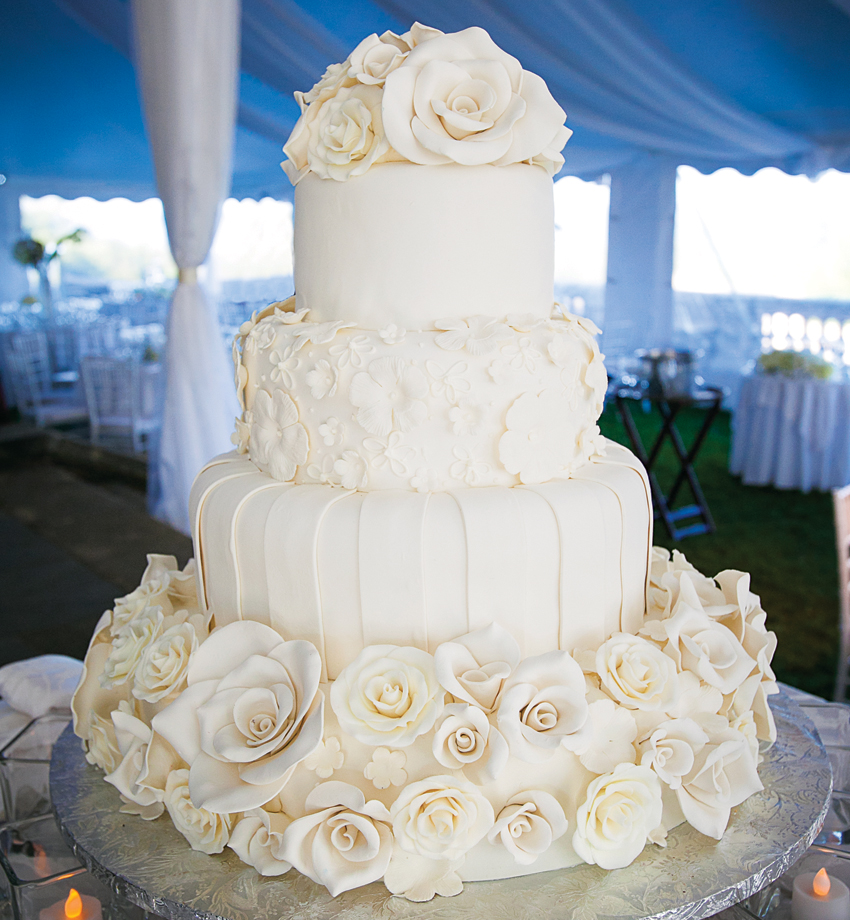
Something elegant and exquisite for my fancier friends:
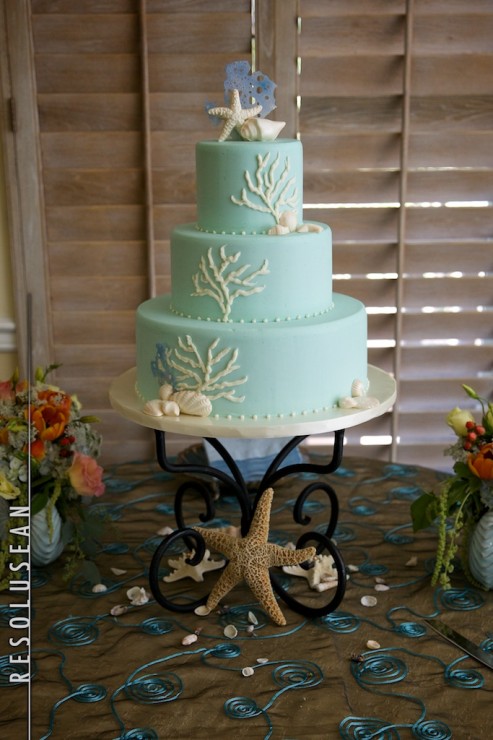
For those who love the beach as I do, love the waves and the seashells:
And for all my friends who are kids in their hearts, like us. ❤
I know my limits, and elaborate Eiffel tower cookies are outside my area of capability, but if you are painstaking and detail oriented, I have added a website where you can see, step by step, how to make these for yourself. I myself will just stand here and gobble as you head for the cakes 🙂
I’m surprised every year that I’ve kept at this. In truth, it was so much easier in Kuwait and in Qatar and all the traveling back and forth, there was so much more material! Now, my life is more private, and while blogging is a blessing, there may come a time when I say “enough.” Let’s raise our cups to another good year 🙂
The people in my group last week suffered greatly in the high temperatures and high humidity we are experiencing. I must be adapting a little; I remember being thankful for the breeze.
“What do you wear when it gets this hot?” they asked me, “like around the home?”
I laughed. I learned a thing or two in Tunis, in Amman, in Tabuk and Riyadh, in Kuwait and in Doha. At home, I dress like local women, in long loose dresses.
Or worse. I dress like their maids. In the souks you could find wonderful, 100% cotton dresss that were loose and flowing, and that is good in hot weather so the air can circulate. Some of the dresses were nicer, but the dresses I liked a lot for just being around the house doing what people do, like making sure the dishes are done and a meal prepped, doing a little quilting or reading . . . you could buy these great little dresses for about $3.00 in the souks. Not only were they practical – especially when you live in a house with a cat, and always put on “real” clothes just as you are about to run out the door so you don’t have any cat hair on you – but they came in great colors and prints, designs that made me happy to put them on.
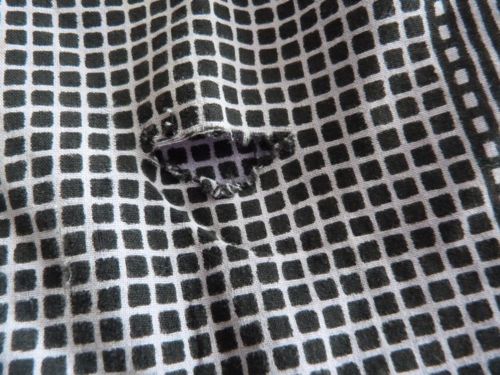
Now, one of my all time favorite dresses, in purple and black, has bit the dust. I liked it because it had some geometrics, and the geometrics changed, and – it was purple. I have worn it for about six years now, and I have worn it out. I mended it several times when the underarm seams ripped:
But now, it has gotten all soft, so soft the material just rips easily with holes that cannot be mended.
I like this dress so much I am saving it and cutting it up so it will have another new life as a quilt 🙂
And I am thinking it is time to plan a trip back to Doha and Kuwait to replenish my hot weather dresses 🙂
I had a really super group of diplomats in town this week, really smart people dealing with serious topics – arms control, human rights, freedom of the press, immigration – and the appointments were fabulous. They were greeted at Baskervile-Donovan by a German speaker, coffee and cakes, and the presentation was a clear outline on corporate fund raisers, goals, and candidate selection.
We had a few extra minutes before our next appointment, and as we were just next door to Joe Patti’s, I took them there for a peek into life for “real” Pensacolians. Of course, they loved Joe Patti’s.
While I was there, my phone rang and it was a stranger, telling me she had a package for me from a friend in Kuwait. When could she bring it by?
You know how sometimes it’s hard to think? My mind was full with my delegation, but I set a time – and I was at Joe Pattis, so I quickly bought some cookies to serve and headed out for our next appointment.
When I said goodbye to the delegation for the last time and headed home, I put the coffee on and prepared for my Kuwait guests. They arrived and we had a wonderful visit, a friend in common and lots to talk about. And oh my, the packet my friend sent, full of fabrics from the Kuwait souks, a care package for my quilting addiction:
Even better – and it feels so wonderful to have a friend who understands me so well – look at the bag she sent them in! It is SO adorable! It is something I would have bought in a heartbeat, so unique, so special! My heart is dancing with ideas for a new quilt!
Thank you, Hayfa 🙂 for a real treat, both the fabrics and the friend you sent to carry the package 🙂











 Here There and Everywhere