Kuwait Marriage and Divorce 2013
The presentation is a little confusing, but I have to guess that if 19% of the divorces are “non-Kuwaiti” by which they mean that one member of the marriage is not Kuwaiti. So what they are not saying is that 80% of the divorces are Kuwaitis married to Kuwaitis.
They also did not say how long marriages lasted – how many of those marriages were divorced in the first year, how many after many years? If the statistics are accurate, Kuwait is doing OK – more than half the marriages are succeeding.
OOps – found second report in the same Kuwait Times! See below
9,404 Kuwaiti marriages, 4,067 divorces in 2012
KUWAIT: More than 9,000 Kuwaiti couples married last year and more than 4,000 marriages ended in divorce the same year, a local daily reported yesterday quoting official statistics.
The statistics released by the Ministry of Justice and published by Al-Qabas daily indicate that 9,404 marriages between Kuwaitis took place last year compared to 4,067 divorces, or 43.3 percent.
The same statistics also indicated that 4,910 marriages took place between a Kuwaiti and non-Kuwaiti spouse in 2012, compared to 2,605 divorces in the same category. In detail, the statistics show that 814 Kuwaiti men married non-Kuwaiti women in 2012, while 648 Kuwaiti women married non-Kuwaiti men the same year.
The percentage of Kuwait couples in the total number of marriages last year reached 65 percent, according to the statistics, while 19 percent took place between non-Kuwaiti couples. 10 percent of marriages took place between a Kuwaiti man and a non-Kuwaiti woman, while marriages between a non-Kuwaiti man and a Kuwaiti woman also reach 10 percent.
Regarding divorce percentages, the statistics show that 19 percent of divorce cases happened between non-Kuwaiti couples; 12 percent between couples in which the husband is Kuwaiti and the wife is non-Kuwaiti, and 7 percent between couples in which the husband is non-Kuwaiti and the wife is Kuwaiti.
Regarding academic qualifications, the statistics show that 35 percent of women married last year have university degrees, 30 percent have high school degrees, and 19 percent have diplomas, whereas 29 percent of men have university degrees, 24 percent have high school degrees, 21 percent have middle school qualifications and 20 percent have diplomas. On the other hand, the statistics show that the majority of women divorced last year have university degrees (29 percent), while the majority percentage of divorced men have middle school qualifications (29 percent).
55% couples married in last 4 years seek divorce
KUWAIT: Almost 55 percent of couples filing for divorce in Kuwait have been married for four years only, including 25 percent who are yet to celebrate the first anniversary of their wedding, a local daily reported yesterday quoting official statistics. The statistical report released by the Research and Statistics Department in the Ministry of Justice and obtained by Al- Qabas daily further indicates that out of 5,662 couples who sought marriage counseling, only 20 percent had their issue successfully resolved.
Lack of willingness to coexist was identified as the primary cause for divorce requests, with 32 percent of the requests made by husbands and 23 percent by wives.
The statistics further indicate that 77 percent of couples who attended marriage counseling were Kuwaitis compared to 22 percent non-Kuwaitis.
Meanwhile, 62 percent of those couples do not have children, 34 percent have one to three children, and 2.7 percent have between four and six children.
Regarding age groups, the statistics show that 42 percent of couples seeking marriage counseling are aged between 25 and 34, 22 percent aged between 35 and 44, and 20 percent aged between 15 and 25. And according to the couples’ academic levels, the statistics indicate that 28 percent of husbands have middle school degrees, 22 percent have high school degrees and 21 percent have university degrees, whereas 27 percent of wives have high school degrees, 23 percent have university degree, 22 percent have diploma and 20 percent have middle school
One Night in Hawali; Cops Book 995 “To Fight Chaos On the Roads”
KUWAIT: Traffic police in the area of Hawalli have set a record by booking 995 drivers and motorcycle riders in a one-day campaign to fight chaos on the roads. “A large team of traffic policemen was deployed in the area to check the extent of discipline and compliance with the law on the roads,” security sources told local daily Al-Rai. “The policemen detained 20 people and impounded their cars. Among them, there were five people who did not have a driving licence, seven who were utterly reckless in their driving, three who staged a race and five who did not have licences to ride their motorcycles,” the sources said. According to the figures he revealed, 23 cars and five motorbikes were impounded in the crackdown conducted on Friday.
Lesser violations included uninsured vehicles, tinted windows, not wearing seat belts and parking in areas for people with special needs, the sources said. Traffic officers in Kuwait have been actively engaged in relentless campaigns to restore order in a sector plagued by a high toll of accident fatalities, reckless driving and non-compliance with administrative procedures. Foreigners who repeatedly broke the law have been deported for endangering lives while citizens have been deprived of their vehicles or licences.
Abdul Fattah Al Ali, assistant undersecretary for traffic and the force behind the campaigns, who had come under attack, mainly from the opposition, for his strong approach towards foreign drivers who commit several traffic offences, said that the trend to end the chaos and impose road discipline would continue.
“I am not an abusive person, but I do apply the law and assume my responsibilities to save lives and protect people from reckless drivers,” he said. “The expatriates who do not respect the law should be sent home. We will deport the irresponsible expatriates who do not respect the laws of the country,” he said. “We have also extended the vehicle impounding period from two to four months and drivers can now be held for 48 hours for the sake of the investigation and the normal procedures.”
The crackdown led the authorities to discover that 20,000 forged driving licences had been issued since 2010. “We have withdrawn 7,000 forged licences, and we are working on tracking down and cancelling all the others,” Al-Ali has said.
He added that expatriates summoned to the traffic directorate should come forth and hand their licences, assuring them that there would be “no questions asked”. However, those who fail to show up to hand back the licences will face forgery charges and will be deported, he said.
Comment: 20,000 forged licenses??? 20,000???
Kuwait Traffic Deaths Plunge from 50 to 19 Per Month
From the Kuwait Times, an awesome statistic. In just months, the Al-Ali states the traffic deaths per month have dropped from 50 to 19. That’s incredible:
Traffic chief criticizes ‘non-cooperative’ departments
KUWAIT: Maj Gen Abdulfattah Al-Ali has been credited for positive changes seen on roads around Kuwait ever since he assumed post as Undersecretary Assistant for Traffic Affairs at the Interior Ministry five months ago. The senior official recently said that he did not come up with anything new but merely made sure that the existing laws were enforced. Al-Ali was interviewed by Al-Qabas as he spoke of efforts which have helped reduce traffic violations by 30 percent, cut road deaths and eased traffic jams. “We still have a long way to go because traffic awareness does not happen overnight”, he said, “and there is a lot of work to do before we can reach a level of contentment”.
During the interview Al-Ali criticized several state departments who he accused of being ‘non-cooperative’ with proposals to address the traffic jam problem. “There are ministries who remain unwilling to take simple decisions that can help reduce traffic congestions”, Al-Ali said. He also criticized the Kuwait municipality for allowing contractors to build apartments without allocating enough parking space. He also indicated that efforts to license parking lots with a capacity of 120 vehicles are often rejected. On Tuesday Al-Qabas published figures that Al-Ali mentioned during the interview, including withdrawal of 4,000 driver’s licenses which were obtained through wasta, as well as reducing a monthly rate of issuing licenses from 7,000 to 1,200. The official credited extensive traffic campaigns for reducing the average road deaths from 50 to 19 per month.
The General Traffic Department in the Interior Ministry launched extensive campaigns last April and these have resulted in thousands of traffic tickets, millions of Kuwaiti dinars collected in fines, and the deportation of thousands of expatriate drivers, in addition to firmer penalties against Kuwaiti offenders. No timetable is set for the end of campaigns and Major General Al-Ali has repeatedly indicated that crackdowns will continue as part of the department’s efforts to reduce traffic jams, curb the number of road fatalities and fight traffic offenses. Al-Ali also spoke to Al-Rai daily who quoted his statements yesterday in which he reiterated that fines should be paid to avoid a travel ban and suspension of license.
According to the senior official, the Interior Ministry has so far managed to collect KD 38 million out of KD 41 million it is owed, and withdrew more than 7,000 out of nearly 20,000 forged licenses issued since 2010. Meanwhile, Al-Watan quoted an Interior Ministry source yesterday who blamed state departments for “failure of implementing the General Traffic Department’s plans to reduce traffic”. Speaking on the condition of anonymity, the source stated that unnamed state departments have been ignoring offers to change timings that the traffic departments have been proposing since 2005. Major General Al-Ali attended a meeting last week with officials from the Ministry of Education and the Civil Service Commission, but no consensus was reached to change schools timings ahead of the beginning of the academic year. —
Happy 7th Blog-iversary to Me!
Once a year I get to troll the internet looking for cakes. It is so much fun. I had no idea there is so much creativity out there, so much daring. I found a wedding cake that is tilted! Something in me loved it, loved the spirit of a woman who would marry knowing life is often off-kilter and messy.
I love white roses, so this year I have sent some to myself:

Come on by, have some virtual cake with me to celebrate seven years of blogging:



And here, an elegant combination of cake and white roses:

Seven years ago in Kuwait, I started blogging. There was a wild blogging scene in Kuwait, a lively community. Blogs were candid, and many were substantial, dealing (carefully) with political and economic issues in Kuwait. I remember reading and learning, and finally gathering up my courage to write my very first entry, and it has been a recurring theme, cross-cultural communication. I learned so much from my life in the Middle East, Tunisia, Jordan, Saudi Arabia, Qatar and Kuwait. I made the most amazing friends. It changed my life and my perceptions utterly.
Of the three Kuwait female bloggers who inspired me to start blogging, Jewaira has gone private, 1001 Nights is a good friend, a mother, and an author 🙂 and Desert Girl is still going strong. Mark, at 2:48 a.m. is also still going strong, so strong that he has been able to leave his full time employment and operate on a consultant basis.
Of course, as any blogger will, I sometimes think of quitting. There are days I find myself with nothing to say, nothing in my life so interesting that I think it is worth sharing, not even a news story worth noting. So I’ve had to ask myself why I continue.
I do it for myself. When I started, I had a reason and that reason still stands. I forget things. This isn’t age-related, it’s busy-life busy-world related; we forget the details.
My Mother saved all my letters from Tunisia. I remember reading them and laughing because at three, my son’s best friend in his day school was a boy he called Cutlet. I know his real name is Khalid, but Cutlet was as close as this little American boy in a French-Tunisian school could get. I had totally forgotten, until I read the letter. So my primary reason for continuing to blog is documentary – just plain record keeping, like an old fashioned diary. Noting things in my daily life or the life around me.
Even now, sometimes I see a post written long ago, usually one of our Africa trips, Botswana, Namibia, Tanzania, Zanzibar, Zambia – will start getting a rush of stats. It thrills my heart. It makes it all worthwhile, knowing something I have put out there is helping others, even years later. Perhaps one day, I will quit blogging, but leave the blog up, with these informational articles.
My stats make no sense at all, one of my biggest stat gainers this year was a news article I tossed off about the prank on the South Korean pilot names after the plane crash landed in San Francisco. It just made me giggle, and I couldn’t resist printing it. It ended up with a life of its own, as many entries do – and you just never know. Someone pins an image and you get a million (ok hyperbole here) hits you never expected.
In the end, I believe that those who keep blogging do it because as Martin Luther once said, “I cannot other.” We do it because something within needs to be expressed, even if it is just some kind of daily record. I know it’s why I blog.
Whittier and Chenega Bay on the M/V Kennicott
Today we awoke in Whittier, a major shipping hub into the interior of Alaska,
and a connector to Anchorage. Although the town has only a population around
500, it is a very busy little port, acres of shipping containers, miles and
miles of train tracks, and trains coming in and out every few minutes.





There is an old government building, it looks like something the Soviets built.
It is huge, and was damaged by a bad earthquake several years ago so it has been condemned as unusable, but would be so expensive to destroy that they haven’t torn it down yet. It has become a sort of cult place, a favorite for raves and spontaneous parties, young people camp there. It is rumored to be haunted, which only makes it more alluring. No matter how secure they try to make the building, someone finds a way in.

There is some confusion in my mind about arrivals and departures – they are not
the same as the list I so carefully printed off from the website. If I had known we would be in Whittier until 10:30 we would have debarked, which we are allowed to do if we have tickets and ID to get back on. My little calendar showed a 0800 departure, so we waited, and waited – but the ferries make their own rules, according to weather and tides and what they are porting from one seaside village to another. We watched containers full of goods come on for the more remote locations.
I used to surprise my Kuwait friends, telling them it was a lot like Alaska, and the longer I am back here, the more parallels I see. One is that almost
everything you eat or wear or build with has to come from somewhere else. That
requires shipping, or flying something in. I remember my Mother used to order
our snow suits in August, so they would arrive before the ships stopped coming
in. Like Kuwait, groceries are expensive, especially specialty items that are
imported. Like Kuwait, people are dressed modestly, all the important parts
covered – it’s cold! Most women are covered from their toes to their wrists! If
the weather is bad enough, even their hair is covered, and occasionally their
faces! Men, too! Very modest people, these Alaskans 🙂

AdventureMan wanted to take a shower, but the ferry system asks that we not
shower while in port; they like not to dump waste water in port, so as soon as
we departed, he jumped in the nice warm shower. Once again, almost all we can
see is open water, en route to Chenega Bay, and fog.


During the trip to Chenega Bay, the big excitement is the once-a-week fire drill, and this time, the fire was near our cabin (pretend fire.) I am guessing some people would rather ignore the fire drills, but think about it – aren’t you glad the crew goes through these exercises in case there is some emergency? Aren’t you glad they know what to do? One of the guys laughed and said “We get a lot of respect and people step aside when they see us carrying these fire extinguishers!” The purser told me that sometimes people STEAL the signs they put on doors – imagine!
Lifeboat being lowered:

Do Not Enter tag on our door:

Chenega Bay – We arrive, foggy but no rain, to find an eagle perched in nearby tree, welcoming us.


Very short turn around time shown, so once again, we do not leave the ship, but wish we had when departure time is postponed. The dock is not near anything, but a short walk over the hill takes you to the small village of Chinega Bay and a beautiful Russian Orthodox Church and an Alaska Native arts museum named after fisherman Johnny Totenoff.
What love what happens here – this village of only maybe 50 people are welcomed on board whenever the ferry docks. They are isolated, remote. The men, women and children ride their ATV’s down the hill to the ferry, come aboard, and chow down on hamburgers, fries, and soft ice cream cones. Some of the young girls are dressed in long dresses, sort of odd, maybe a religious group. Others are wearing short short skirts and tank tops in the cool, foggy weather. Before the ferry departs, the Chenega Bay residents all have to debark.
Departing Chenega Bay:

Beginning to see snow peaked mountains en route to Kodiak Island

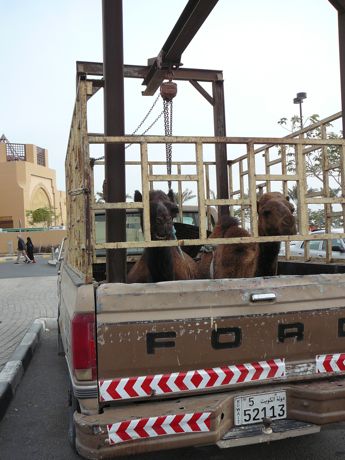
Camels Source of MERS?

From today’s BBC News:
Mers coronavirus: Dromedary camels could be source
By Rebecca Morelle
Science reporter, BBC World Service
Dromedary camels could be responsible for passing to humans the deadly Mers coronavirus that emerged last year, research suggests.
Tests have shown the Mers (Middle East Respiratory Syndrome) virus, or one that is very closely related, has been circulating in the animals, offering a potential route for the spread.
The study is published in the journal Lancet Infectious Diseases.
But the scientists say more research is needed to confirm the findings.
The Mers coronavirus first emerged in the Middle East last year. So far, there have been 94 confirmed cases and 46 deaths.
While there has been evidence of the virus spreading between humans, most case are thought to have been caused by contact with an animal. But until now, scientists have struggled to work out which one.
‘Smoking gun’
To investigate, an international team looked at blood samples taken from livestock animals, including camels, sheep, goats and cows, from a number of different countries.
They tested them for antibodies – the proteins produced to fight infections – which can remain in the blood long after a virus has gone.
Professor Marion Koopmans, from the National Institute of Public Health and the Environment and Erasmus University in The Netherlands, said: “We did find antibodies that we think are specific for the Mers coronavirus or a virus that looks very similar to the Mers coronavirus in dromedary camels.”
The team found low levels of antibodies in 15 out of 105 camels from the Canary Islands and high levels in each of the 50 camels tested in Oman, suggesting the virus was circulating more recently.
“Antibodies point to exposure at some time in the life of those animals,” Prof Koopmans explained.
No human cases of the Mers virus have been reported in Oman or the Canary Islands, and the researchers say they now need to test more widely to see if the infection is present elsewhere.
This would include taking samples from camels in Saudi Arabia, the country where the virus is the most prevalent.
‘Priority search’
Prof Koopmans said: “It is a smoking gun, but it is not definitive proof.”
Commenting on the research, Professor Paul Kellam from the Wellcome Trust Sanger Institute in Cambridge and University College London, said the research was helping to narrow down the hunt for the source of the virus.
But he told BBC News: “The definitive proof would be to isolate the virus from an infected animal or to be able to sequence and characterise the genome from an infected animal.”
Health officials say confirming where the virus comes from is important, but then understanding how humans get infected is a priority.
Gregory Hartl, from the World Health Organization, said: “Only if we know what actions and interactions by humans lead to infection, can we work to prevent these infections.”
Data suggests that it is not yet infectious enough to pose a global threat and is still at a stage were its spread could be halted.
“Heavyweight Saudi Arabia” Influence Counters “Over-Stepping” Qatar?
From the Kuwait Times, a fascinating comparative analysis of the influence of Saudi Arabia and Qatar on Islamic countries in transitions:
Qatar losing ground to Saudi diplomacy

DUBAI: Qatar, a key supporter of Islamists who rose to power in Arab Spring countries, is losing ground in regional politics to Saudi Arabia which appears to have seized the reins on key issues, notably Egypt and Syria. The decline in Qatar’s regional diplomacy comes as its powerful emir Sheikh Hamad bin Khalifa Al-Thani unexpectedly abdicated in favor of his son Tamim last month.
The wealthy Gulf state had transformed itself into a key regional player but began to retreat as heavyweight Saudi Arabia re-entered the political arena after lagging behind in the immediate period following the eruption of the Arab Spring uprisings in December 2010. The ouster of Egypt’s Islamist president Mohamed Morsi last week by the army and the election by the Syrian opposition of Saudi-linked Ahmad Assi Jarba as new leader stripped Qatar of strong influence in both countries.
“Qatar had tried to take a leading role in the region but overstepped its limits by openly backing the Muslim Brotherhood in Egypt, Syria, and other Arab Spring states,” said Kuwaiti political analyst Ayed Al-Manna. Jonathan Eyal, head of international relations at Britain’s Royal United Services Institute, argued that Qatar’s regional politics have failed.
“Qatar’s Middle Eastern diplomacy now lies in ruins: it failed to produce dividends in Libya, backfired in Syria and has now collapsed in Egypt,” local Emirati daily The National quoted him on Tuesday as saying. Realizing the damaging effects of their policies, Manna noted, “the Qataris sought to cut down on their commitments” which were already affected by the emir’s abdication and the sidelining of the influential prime minister Sheikh Hamad Bin Jabr Al-Thani.
As a result, “Saudi Arabia, a historical regional US ally, regained its role” in coordination with other oil-rich Gulf monarchies, said Manna. Saudi Arabia’s King Abdullah was the first foreign head of state to congratulate Egypt’s interim president Adly Mansour, hours after he was named to replace Morsi. And on Tuesday, the kingdom pledged $5 billion in assistance to Egypt. The United Arab Emirates, which has cracked down on the Muslim Brotherhood in the past few months, offered Egypt an aid package of $3 billion.
“Saudi Arabia wants to ensure stability in Arab Spring countries, regardless of its ideological interests,” said analyst Abdel Aziz Al-Sagr, head of the Gulf Research Centre. “It had supported the Muslim Brotherhood in Egypt but reconsidered this support after the Brotherhood failed to run the country wisely,” he argued. But the Saudi researcher downplayed the rivalry between Saudi Arabia and Qatar, both of which have been looking to expand their influence during the Arab Spring uprisings and prevent any potential revolt against their own autocratic regimes.
“The Saudi-Qatari harmony still exists and there is no battle for influence between the two countries,” said Sager. And as proof, “Riyadh was the first to be informed of the political change in Qatar, six months before it took place. And it welcomed it.” But the two countries, whose relations have been historically tense or at least marked by mistrust, support two different approaches of political Islam that emerged strongly in the wake of the Arab Spring.
Qatar sides with political parties linked to the Muslim Brotherhood, whose experience was cut short despite the strong media support they enjoyed from the influential Doha-based Al-Jazeera news channel. Meanwhile, Saudi Arabia promotes Salafist groups that focus less on politics and more on implementing Shariah Islamic law on daily life matters such as forcing women to wear a veil and prohibiting the mixing between sexes. Saudi King Abdullah has reiterated his country’s stance against using Islam for political purposes.
“Islam rejects divisions in the name of one party or another,” he said in a statement marking the start Wednesday of the Muslim holy month of Ramadan. The kingdom will never accept” the presence of political parties, that “only lead to conflict and failure.” But regardless of the political agendas of Saudi Arabia or Qatar, the people who rose up during the Arab Spring revolts will have the final word on their own political futures, argued former Bahraini cabinet minister Ali Fakhro. “It is the Arab people, not Qatar nor Saudi Arabia, who will determine the political future of the region.” – AFP
Kuwait has Highest BMI in the World
The countries which contain the heaviest and lightest citizens can be revealed today.
This extraordinary graphic shows the average body mass index values for adults around the globe – with some surprising results.
With its wealthy society and love of fast food outlets, many would place the U.S. at the top of the list.

But it is pipped to first place in the body mass index chart by Kuwait. The Arab state has an average body mass index of 27.5 for men and 31.4 for women.
This beats America in second place which averages 26.5 for men and 29 for women.
From UPI:
Mexico is world fattest nation, United States No. 2
UNITED NATIONS, July 10 (UPI) — Officials at the U.N. Food and Agricultural Organization say Mexico with a 32.8 percent adult obesity rate is the most overweight of the industrialized nations.
Previously, the United States with an adult obesity rate of 31.8 percent was the world’s fattest nation. Last year, the percentage of U.S. adults overweight went down slightly.
A report by the FAO said Mexico’s widely available inexpensive junk food and penetration of U.S. fast-food chains combined with a more sedentary lifestyle all contributed to Mexico’s bulging waistline.
About 70 percent of Mexican adults are overweight, while childhood obesity tripled in a decade and about a third of teenagers are overweight as well, the Global Post said.
Weight-related diabetes claims 1-of-6 one of Mexican adults — or 70,000 people a year — suffering from the disease each year, the report said.
Recent Comments
ExpatAlien on What Country am I Living … intlxpatr on Yellowstone: Old Faithful to C… Michelle on Yellowstone: Old Faithful to C… Cathy on No Grown-Ups in Charge intlxpatr on Waiting for Snow Wikipedia Donate Button

Amazina


Early Voting in Florida


 Here There and Everywhere