Al Jazeera (English) Covers Egypt
If you are in the USA, the best coverage I have been able to find has been on Al Jazeera live. They have English language coverage. Unlike Egypt, which has closed down all access to the internet, you can stream Al Jazeera live by clicking on the blue type below.
Their coverage is – from what I can tell – fair and balanced.

It’s in the mid 70’s Fahrenheit, in Cairo in the daytime, getting down to the 50’s – 60’s at night – perfect weather for a protest. Looks like Paris in the late 60’s.
‘Lost Boy’ Casts Vote for Independence
I found this today on NPR News and it delights me for a number of reasons. For one thing, I didn’t know David Eggars (you remember him from Zeitoun) had helped with the writing of ‘What Is The What?’. Second, who knew that any of these kids would survive? Survive, write a book, thrive, go back to the Sudan, give to the country – and vote. Every now and then in this sad world you hear a good story. This is one.
January 10, 2011
During Sudan’s civil war, in which some 2 million people died, Valentino Achak Deng fled to Ethiopia on foot. Separated from his family for 17 years, Deng is one of Sudan’s so-called Lost Boys, children who were orphaned or separated from their families during the brutal war.
Now, voting is under way in Southern Sudan in a referendum that is expected to split Africa’s largest country. Among those voting this week are the Lost Boys, including Deng, whose life became a best-selling novel in America and who has returned to his homeland to build a school.
After a peace agreement between north and south, Deng returned to Juba, the capital of Southern Sudan, in 2006. He says when he got there, the place was still a wreck.
“On some of these roads, you could see old war tanks. On some of these roads, in some neighborhoods you could see the bones and skulls of dead people,” he recalls now, driving around Juba.
Now, as Southern Sudan appears headed for independence, Deng is optimistic — and Juba looks a lot better. Paved roads, now lined with hotels and restaurants, arrived for the first time in 2007.
Juba is a booming city, one of incredible contrast: Barefoot women selling piles of gravel by the side of the road sit next to a Toyota dealership.
Peace is spurring investment and consumer demand. Juba’s growth is driven by Southern Sudan’s oil revenue as well aid from foreign governments and nongovernmental organizations.
Deng grew up in a tiny village called Marial Bai. In the 1980s, northern bombers and Arab militias came.
“They bombed Marial Bai, destroyed it, killed everything, burned crops and livestock,” he says.
Deng was there when the fighting came. He says he “ran away with the rest.” He was 9 years old.
Deng joined thousands of Lost Boys, who spent months trekking across Sudan to refugee camps in Ethiopia. His experience is captured in What Is the What, a novel by Dave Eggers, which reads like a modern-day story of Job.
The boys, some naked, march across an unforgiving landscape, facing Arab horsemen, bombing raids, lions and crocodiles.
Deng eventually resettled in the U.S., where he attended college and was mentored and sponsored by ordinary Americans.
In 2007, he returned to start a high school in Marial Bai, where there was none.
“We have 250 students. Our annual budget now stands at about $200,000 because the school is free,” he says.
The school is funded by Deng’s private foundation. He says most donations come from Americans touched by his story and the plight of Southern Sudan.
Deng, now 32, has just cast his vote for independence. He says that for a Sudanese child of war, his life’s journey is almost inconceivable.
“I never imagined I would be the person I am right now,” he says.
The King’s Speech
“The movie is sold out!” my friend exclaimed as she and her husband joined me in the theater. We had really good seats. I had accidentally managed to get there early enough to get seats right in the center, close enough, but not too close. People looked at the seats I was saving for my friend and her husband with envy, and it was all I could do not to make a sign against the ‘evil eye.’ 🙂

Whoda thunk? Who would have thought a movie about an English king with a speech problem would sell out the entire theatre?
Must be word of mouth. The film is really, really good, and takes a personal tragedy and turns it into an inspiration. You wouldn’t think there could be anything funny about tackling such a problem, but the movie has some very very funny moments – the king, George VI, actually CAN speak without a stammer when he is swearing, when he is singing, or when he is very very angry.
His unorthodox speech tutor gives the King a new vision of himself, and helps him find insights into how the problem developed. There are some very moving moments, and some highly inspiring ones, too. All in all, the movie keeps moving, keeps you informed and makes you glad you spent the money on movie tickets.
Amer Al Hilal on Kuwait’s Ban on DSLR Cameras
Woooooo Hooooo Amer Al-Hilal, a man I am proud to call my friend. It takes such great courage to speak out when something is going terribly wrong, and Amer knows how to do it articulately, rationally, and as the gentleman he is.
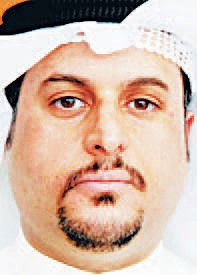
From his article in the Arab Times:
Camera ban regressive idea
‘Don’t stifle home-grown talent’
For a country that possesses a Constitution which safeguards civil liberties and freedom of speech, Kuwait sporadically sure likes toying with those liberties such as tentatively banning the Blackberry service, shutting down You Tube, impeding public gatherings and marches, banning and censoring books, literature, films and magazines which are available elsewhere in the Gulf.
This week according to media reports, and highlighted extensively in local Weblogs and Twitter, a palpable growing outcry is directed at the tentative plans by The Ministry of Information, Ministry of Social Affairs and Ministry of Finance to outlaw public photography and relegate it to journalism purposes only. This has allegedly resulted in the ban of Digital Single Lens Reflex Cameras (DSLRs) in public places. If this charade is true, then it bodes ill for this country, another regressive move into the annals of ignorance.
During the 1980s video cameras and photographic equipment were also shunned by the authorities. I remember visiting Failaka in 1985 and being confronted by a military officer who demanded I hand in my bulky video camera until I left the island. These types of infringements in the name of security were insignificant — we still had an attempt on HH the Amir, explosions at Foreign Embassies in Kuwait and an actual invasion.
Why does this country always attempt to stifle home-grown talent? Banning cameras in public places is demoralizing to all the passionate, talented young Kuwait men and women who have excelled in this field and love their hobby, not to mention visitors who attempt to document their travels here. Moreover, banning DSLR cameras is irrational and counterproductive if you think about it; in this day and age of iPhones, Blackberries, 5 MP plus camera phones, Google Earth and the like, anyone can take photograph of anything, quietly, without fanfare, which makes the potential DSLR ban even more preposterous.
I have just returned from a trip to Dubai where I witnessed dozens of tourists proudly using their cameras to document Burg Khalifa and the other picturesque locations. No one stopped them, impeded them or asked them what they were doing and you know why, because they respect people’s rights and are intent on making their country more appealing. UAE is able to manage security matters confidently because they have proper security and ID processes in place: eye scanners at airports and entry points, proper electronic government, high fines for breaking the law, a brilliant CCTV system in place in every street corner (not the shoddy black and white choppy, streaming-like quality of the limited equipment we have here) — they truly invest in their infrastructure, maintain it and upgrade it.
If Kuwait is serious about its security then it should invest in the same caliber of CCTV and not the bargain basement tenders that usually go towards ineffective systems (i.e. Highway signs with the useless ‘no mobile’ plasma screen) belonging to members of the matching ministry who want a ‘piece of the action’. The sad reality is the government sector here would rather ban something than actually strive to improve it through sheer hard work and effective processes. It’s just easier to ban; a question of laziness and neglect.
Needless to say, Kuwait seems unfazed when foreign jets infiltrate our airspace and take aerial shots of our oil refineries and military installations, or when agents and their local conspirators are found to possess blueprints and photographs of said installations, but no, lets go after the ‘little guy’, the amateur photographer or tourist on the street taking pictures. It’s a hypocritical, spineless action by the authorities.
Moreover, I suspect the issue is not just relegated to security, a myriad of reasons could have led to the support of this ban, fundamentalists who felt cameras and pictures are a ‘Tool of the Devil,’ government officials and ministries disgraced at seeing shots of Kuwait’s dilapidated infrastructure, environment and mismanagement on weblogs, internet forums and magazines. You cannot conceal the squalid side of Kuwait; it is there for everyone to see.
Furthermore, this law against public photography will not be enforced, just as seatbelt, no mobile while driving, no litter, no smoking areas, and other ‘laws’ cannot be enforced in this Land of Confusion.
Amer Al-Hilal is webmaster of http://www.hilaliya.com and can be reached at amer@hilaliya.com.
Gulf Coast Citizen Diplomacy Council
I have a friend from church; she is a woman I admire greatly. Older than I am, though not much, she participates in the Spartacus Program at the “Y”, she is good at running things, she is good at making phone calls and even sounds like she enjoys them, she enjoys social life and she sparkles.
She is always thinking.
“I think I know just the group for you!” she exclaimed as we were working on a project. “Have you heard about the Gulf Coast Citizen Diplomacy Council?”
No, no, I hadn’t heard about that. Having lived here six months now, there is a lot I don’t know.
She told me all about it and she was right. It is right up my alley. The Gulf Coast Citizen Diplomacy Council greets foreign visitors and performs a variety of services, escorting them to appointments, showing them the area, even taking them shopping or inviting them for a dinner in your private home, all in the name of hospitality and showing the best side of this beautiful part of the United States.
The Gulf Coast Citizen Diplomacy Council is a non-partisan, non-profit organization whose mission is to create and encourage collaboration between like-minded community stakeholders who value sharing the Central Gulf Coast with the rest of the world by:
° Facilitating professional and personal interaction for international leaders during official visits to the Central Gulf Coast
° Enhancing respect and communication through international exchanges and alliances
Forging cultural, educational, and business relationships with the global community through citizen diplomacy
° Promoting greater understanding of global affairs in our community through a balance of public events, educational activities, and the International Visitor Leadership Program
° Promoting the Central Gulf Coast as an important center of commerce, culture, and tourism
How cool is that? Even AdventureMan is excited about joining this club; we are so grateful for all the wonderful hospitality shown us through many years of adventures abroad. We feel grateful for an opportunity to be hosts in turn.
In this club I am not so alien. The club members are people who have a broad world view. I met other people who have lived or visited in Qatar or Kuwait, and other parts of the world where I have never been. Oh, what fun.
Many of the members are former military, and I found myself listening to a discussion of an upcoming meeting. As this is a community that parties hearty during Mardi Gras, I assumed it must be the name of a Krewe, a Mardi Gras social club, all these high-testosterone men were discussing camellias, must be a code word for some secret society, right?
Wrong. As it turns out, many people here, men and women, are passionate about gardening, and there is a club devoted to turning out perfect camellias, and they are having a show coming up in December. I learn new things ever day. 🙂
The Gulf Coast Citizen Diplomacy Council was only founded a short couple years ago, and has already won awards for its programs and hospitality. A truly impressive group. 🙂
Veteran’s Day Tribute
Thank you for your faithful service to your country, and to mankind.
Show Me the Money
Two themes came together, early this Sunday morning in Pensacola, first, as Father Harry spoke to us at Christ Church this morning on stewardship, and giving generously, and then later, as I was reading my Sunday Pensacola News Journal, an article on our elected officials, and their finances, their net worth and where their money is coming from.
Father Harry spoke about the rich man, at whose gate Lazarus begs, covered with sores, and then, at death, how the rich man asks God to send Lazarus to wet his lips, as he burns in the eternal hellfires, and Lazarus sits with God. He also asks God to send Lazarus to warn his rich family members that their choices, their lack of generosity, will have consequences, but God says (I paraphrase here) that Moses already told them, and earlier prophets, and that if the rich didn’t listen to them, they are not going to listen to Lazarus.
To me, it seems a given, that if you are blessed with plenty, then you have an obligation to help those who struggle. It isn’t necessarily money, it can be food, it can be time, it can be expertise, or – in my case – it can even be fabric. 🙂 We learn it in pre-school and kindergarten, don’t we? Share what you have, and everyone gets along.
It totally boggles my mind that many of our good friends, government and military people, have excellent health care under a highly socialized system – that’s what the military health care system is all about, we all have access to the same treatment. Many of the people who have access to medical treatment become rabid about supporting health care for those who don’t. Part of it seems to be “I earned it, and those lazy bums expect it for nothing.”
Most of my life, I’ve worked with ‘those lazy bums’ and have grown to have a lot of understanding and compassion for the circumstances that can make an entire family bone poor. Sometimes, it is poor choices – but how do people learn to make better choices without help? How do people aspire to more when they think that the ‘more’ is inaccessible to them?
The face of our nation changed after World War II when many more Americans gained access to higher education as a veteran’s benefit; prior to the GI Bill, higher education was only available to those comfortable people who could afford it.
Also in today’s Pensacola News Journal is an article about Study: Educating Women Saves Millions of Children which is an Associated Press Story about a study published this month in Lancet. “Educated women tend to use health services more and often make better choices on hygiene, nutrition and parenting,” the study (funded by the Bill and Melinda Gates Foundation) concludes.
And last, in the Pensacola News Journal, is an article that makes my heart sing, that makes me proud to live in a democracy, the article about how much our elected officials are worth, and where there money is coming from. I love it that we hold our leaders accountable, and that their wealth is (theoretically) transparent to us.
I’m a great advocate of wealth. I admire people who create wealth, who invest, who work hard for their money. The best of these people, and I mentioned Bill and Melinda Gates (above) for a reason, give back generously. Many people don’t start out rich, they start from little or nothing and build slowly slowly until they have reached a comfortable level. Sometimes, even in hard times, if you have built a strong foundation, that money just keeps multiplying, especially if it is invested with some diversity.
“It’s called the law of the harvest,” my Mormon friends told me when we were discussing how what you give comes back to you multiplied. It was so graphic, I’ve never forgotten it. There is nothing wrong with money. Money is just another tool, like a computer, or a hammer. It’s what you do with your money (tool) that makes the difference. Money is kind of like a seed, you plant and you harvest, but it is also like fertilizer – you spread it around, and amazing things happen.
Having money is a blessing, and giving it away is even more of a blessing. When you give, good things come back to you, multiplied. It’s the Law of the Harvest.
So Much Hatred . . .
Today I saw a story about US soldiers in Afghanistan, killing for fun. It follows hard on the heels of the story of Reverend Terry Jones who has ‘prayerfully’ decided to burn a copy of the Quran on the anniversary, today, of 9-11. These stories are like wounds in my heart, and I begin to wonder if there is any hope for ‘peace on earth, good will toward men.’
Sometimes I get discouraged.
9-11 wounded us badly, wounded that fountain of optimism that believes we can all be friends, that we can overcome, that ‘Yes, we can.’
We’ve recovered.
Acts of hate are acts of hate, whether they originate from Americans, from Moslems, from Hindus, from Mongolians, from Krakens . . . We each have it within us to make the right choice, to choose NOT to act in hate against our fellow man. It’s not a one-time choice. It’s a choice we each, individually, make over and over again, every day.
God Loves a Cheerful Giver
“So let each one give as he purposes in his heart, not grudgingly or of necessity; for God loves a cheerful giver” (2 Corinthians 9:7)
I’ve always thought of this verse as the secret to a wealthy life. Whatever you give, with open hands and open hearts, comes back to you multiplied. When you give cheerfully, gladly, you see the riches in your life, and you have the gift of a grateful heart.
Warren Buffett and Bill Gates know that money doesn’t buy happiness – but giving it away does. 🙂
From AOL Business Roundup
Billionaires To Donate Fortunes: The Sage of Omaha, Warren Buffett, said Wednesday he and 39 other of America’s wealthiest people have agreed to donate a bulk of their wealth to charity either during their lifetimes or upon their deaths. As DailyFinance’s Carrie Coolidge reports, the initiative, known as Giving Pledge, is a moral commitment to give, not a legal contract. “At its core, the Giving Pledge is about asking wealthy families to have important conversations about their wealth and how it will be used,” says Buffett, chairman and CEO of Berkshire Hathaway (BRK.A).
See full article from DailyFinance: http://srph.it/dxRFZx
Recent Comments
ExpatAlien on What Country am I Living … intlxpatr on Yellowstone: Old Faithful to C… Michelle on Yellowstone: Old Faithful to C… Cathy on No Grown-Ups in Charge intlxpatr on Waiting for Snow Wikipedia Donate Button

Amazina


Early Voting in Florida


 Here There and Everywhere