This is an interlude post, not a trip post. This is a social issues post, and a very personal post. Just skip over this; like I’ve said, it’s personal.
This is what we say we believe. This is what believers believe:
Matthew 25:35-40New International Version (NIV)
35 For I was hungry and you gave me something to eat, I was thirsty and you gave me something to drink, I was a stranger and you invited me in,36 I needed clothes and you clothed me, I was sick and you looked after me, I was in prison and you came to visit me.’
37 “Then the righteous will answer him, ‘Lord, when did we see you hungry and feed you, or thirsty and give you something to drink?38 When did we see you a stranger and invite you in, or needing clothes and clothe you?39 When did we see you sick or in prison and go to visit you?’
40 “The King will reply, ‘Truly I tell you, whatever you did for one of the least of these brothers and sisters of mine, you did for me.’
This is what we believe. We are told that belief/faith is nothing without actions.
We are horrified. We are stunned, of course, by another election where a candidate wins the popular vote and loses the electoral college. We are stunned by the divisions in our country. We are stunned at all the hatefulness coming out of hiding, people proudly exposing racist and sexist beliefs in superiority and joy. Good Christian people so full of hate for the Other.
What shocks me is not only that the most vicious and vulgar candidate won, but also that the winners are so jubilant and so nasty.
AdventureMan had just listened to a National Public Radio article about Francis Ford Coppola and his famous movie “The Godfather;” he was in the mood for Italian food. We headed to our favorite place, and were seated before we realized we were sitting next to a table of true Southern Good Old Boys, and they didn’t care who heard what they had to say. We hadn’t been there long, when another entered and came to their table to be welcomed with “Boy, this is a great day for the Confederacy!” They found the safety pin movement hilarious. They had a lot to say about liberal thinking, about race, and about women. They talked about the spread of red on the map, the pockets of blue and the heavy blue of the cities and coastlines, implying it was racial.
What we should have done is ask to have our table changed. As it was, we listened to opinions that made us feel tarnished and dirty. We had the rest of our lunch packed up and got out as soon as we could.
Those of us who stand with The Other, we have our work cut out for us. Who will protect the food we eat? Who will insure we don’t have another housing meltdown, thanks to unregulated banks and loan associations? Who will protect the health of the poor? Who will measure pollution in our rivers and seas, and regulate emissions from factories and sewage plants? Who will protect us from chemicals in the air, and make sure our railways are safe?
Who will work to bring female salaries into full parity with men? Who will enforce laws in a way that every United States citizen is equal before the law, and that they are not differentiated by skin color or religion? Who will protect us from greedy pharmaceutical companies marketing their drugs to people who don’t need them, or using harmful components?
Who will give the poor and middle class the opportunities they need to climb the economic ladder?
Those of us who can, are identifying the NGO’s that are holding the line against corruption and the exploitation of the weakest members of our society, and budgeting so we can continue to fight the good fight. When you have a government of thugs, that is no easy task.
The saddest prayer of all “Lord, who is my neighbor?”
I belong to a group that I can only describe as “thoughtful” Christians; it’s a church-related study group, and as everywhere else in the US of A, people are discussing recent events in Paris, and the related issue of resettling Syrian (and not only Syrian) refugees in the United States.
The same discussions are taking place on FaceBook. I’m inclined to think that those who are thinking lime me are measured, and thoughtful, and that those who disagree with me are overly emotional, even rabid, and that their attitudes might be Un-Christian as well as Un-American.
I am not so blind as to not see that they may see the exact same thing, in reverse. It’s the times, and the issues.
One very smart woman communicated something I haven’t heard anywhere else, that investigators believe these Paris murderers might have been communicating by creating a Play Station group, so you can message your group members, and your message disappears seconds later.
One neuron sparks, synapses connect and the outline of a picture emerges. Of course. This plot was not that complex. My major focus would be on how they got the weapons, but other friends tell me that now weaponry can be had very inexpensively on the dark market in Europe.
But what has puzzled me, until now, was the kind of thinking that would put this scenario together, and I have concluded that we did. By our entertainment technology, we have taught them to strategize. We have trained them to think through scenarios, and to have branching options. We have taught them to join forces. We have taught them to work in teams. Some may have had some training to operate the weapons so accurately, but this was the equivalent of a canned hunt, shooting fish in a barrel. They had rapid fire weapons, and rooms full of people expecting no more than a pleasant night out. Before they knew what was happening, the event had come and gone.
They are young. The so called “master-mind” (I really don’t like that label; I don’t think this took masterful planning, and they did not accomplish their major goal, which was terrorizing the soccer game) escaped, but not for long. They calculatedly and callously used expendables to accomplish their mission. There was no escape planned for most; give them suicide belts. Give them death. Did they know that the one pulling the strings had no intention of dying with them? So why on earth didn’t they question this plan?
When you are playing games on a Play Station, and you lose, you get another life. Hey, just like jihad! They are young, death means little, and they are easily manipulated. A glorious death, if you don’t look too closely. As I was in water aerobics this morning, we danced along to an old ditty called “Just Like Romeo and Juliet” and I thought how appropriate it was to these times and circumstances – a tradition of hatred between two groups, two young people who cross the lines, and then, their death rather than the hard work of trying to make changes in the real world.
Death isn’t romantic, and the God we share, the God of Father Abraham, hates the shedding of innocent blood, no matter by what name you call him. He tells us that only he knows the intentions of the human heart. When he chooses someone to do his work, it tends to be leaving this country and walking to another, leading a people out of slavery, bearing a child, or memorizing the words of an angel, not bombing, or shooting, or forcing others to worship in the way you believe everyone must worship.
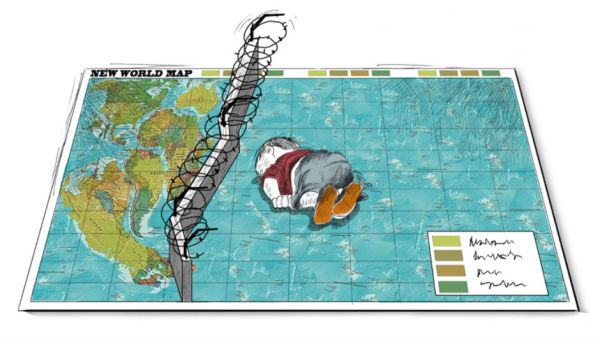
The one true God also tells us, all of us, that we are to love our neighbor, and that our neighbor is that naked, helpless, beaten man lying by the side of the road that the fastidious religious men crossed the street to avoid helping. We are to take him in, pay for his care at the inn, tend to his wounds, not for any hope of gain, but because it is the right thing to do, the decent thing to do, for our fellow human being, our neighbor.
One final note, when we use the Statue of Liberty coming to the rescue of France, showing the colors of France, noting her origins in France to honor our own “Liberte” we most not fail to take note of the words at her base: Give me your tired, your poor; The huddled masses yearning to breathe free; The wretched refuse of your teeming shores; send these – the homeless, tempest tossed to me! I lift my lamp beside the golden door!”
I have to take a break from my trip stories to express an opinion.
We are The People of the Book. Suicide is not an option. The most precious gift we are given, of the many gifts, is the gift of life. One of the most heinous crimes against God / Allah is to shed innocent blood.
A callous theocracy sends “inspired” martyrs, testosterone-hopped-up jihadists to kill themselves, and to take as many victims as they can with them.
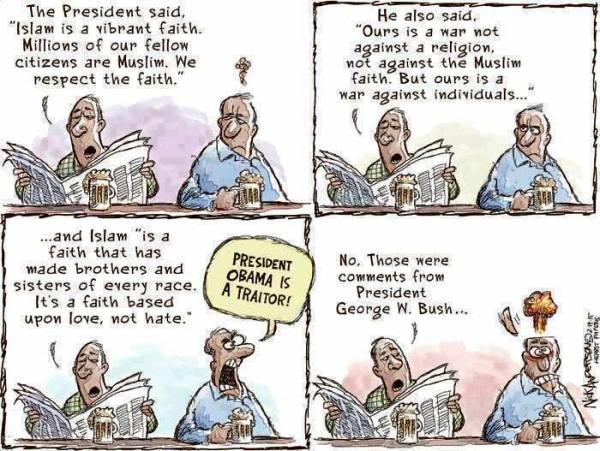
By what stretch can they claim to do God’s will? Where is the submission to the word of God? Where is the peaceful Islam of the Prophet Mohammed?
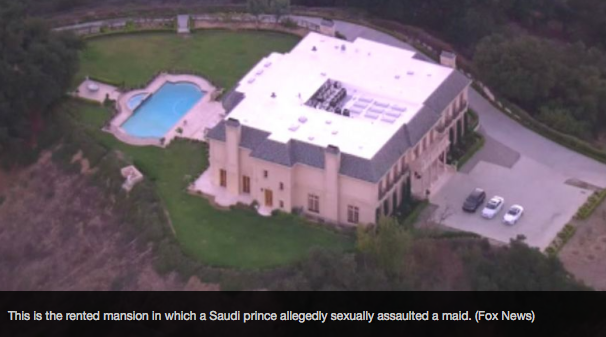
Not only did Sheikh Khalid bin Hamad al Thani rent this house before he fled the USA fearing arrest for reckless driving, but now Saudi Prince Majed Abdelaziz Al-Saud rents the same house and is arrested after forcing some young woman to have oral sex. She was seen escaping the house and crawling over the wall to get away. Sorry guys. You may get away with these things in Qatar and Saudi Arabia, but not in the USA. And it’s just embarrassing to claim diplomatic immunity when it’s so easy to prove you have none. We have to play by your rules when we live in your country. It’s called being a good guest. Please pay us the same courtesy. It’s our country.
A Saudi prince was arrested Wednesday at a compound near Beverly Hills in connection with an alleged sex crime after a bleeding woman was seen trying to flee the grounds.
Majed Abdulaziz Al-Saud, 28, was arrested on suspicion of forced oral copulation of an adult, according to the Los Angeles Times. Police were called to the gated compound after a caretaker at the home reported the disturbance. The Times, citing jail records, reports Al-Saud was freed on $300,000 bail Thursday afternoon. LAPD officer Drake Madison told the newspaper the suspect was booked after 4 p.m.
Capt. Tina Nieto said the police department has a consul liaison that checks with foreign nations’ consulates regarding a certain person’s diplomatic immunity. Nieto said Al-Saud doesn’t have immunity in this case.
Tennyson Collins, a neighbor, told the Times he saw a bleeding woman trying to scale the property’s 8-foot wall on Wednesday. When Collins returned home from work, police followed his car through the gates and then onto the property. He said officers escorted about 20 people out of the compound, most of them staff members.
Police said Al-Saud was renting the home, which Zillow values at $37 million. Collins said different foreign nationals have been renting out the home for weeks at a time over the past year.
Earlier this month, a Qatari prince, Sheikh Khalid bin Hamad al Thani, was videotaped racing a yellow Ferrari through Beverly Hills at speeds of up to 100 miles per hour, blowing through stop signs and frightening residents. Al Thani later denied driving recklessly and claimed he had diplomatic immunity, Beverly Hills police said. Authorities consulted with the State Department and the Qatar consulate and determined he did not have diplomatic immunity, police Chief Dominick Rivetti said during a Sept. 17 news conference.
Al Thani reportedly flew back to Qatar before he could be arrested.
Sorry, Sheikh Khalid, you do not have diplomatic immunity and you are not above the law. This is from AOL AutoBlog:
A prominent Qatari national has reportedly fled the United States after a video ostensibly showing his Ferrari racing through the streets of Beverly Hills went viral. Although the exact identity of the driver remains unclear, it is believed that the yellow LaFerrari was owned by Sheikh Khalid bin Hamad Al-Thani, a member of the ruling family of Qatar, the country’s former interior minister and a well-known racing enthusiast.
The video below, which has already attracted some 1.5 million views (but contains language that may not be safe for the workplace), shows the yellow hybrid hypercar racing with reckless abandon against a white Porsche 991 GT3 through the swanky Los Angeles neighborhood. The Ferrari is shown scraping its chin spoiler on the road before pulling back into the driveway (alongside a black Bugatti Veyron) with smoke billowing out its engine bay. Neither of the European exotics appear to show much regard for traffic laws, running stop signs as they speed through a residential area. The Ferrari appears to be wearing Qatari plates, while the Porsche does not appear to be carrying plates at all – just some racing decals on the doors and hood.
According to reports, the Ferrari belongs to Sheikh Khalid, but the identities of the drivers behind the wheel of either car has not been ascertained. The Al-Thanis are known for their supercar collection, which is shipped around the world for the enjoyment of royal family members. Their signature teal and black exotics are a regular site around London.
The Beverly Hills Police Department confirmed that, when approach by officials, the driver claimed diplomatic immunity – which the driver may not actually have. “It is against a federal law for someone to claim diplomatic immunity when they don’t have it,” said police chief Dominick Rivetti. The Ferrari was not, according to reports, registered with the State Department as belonging to a credentialed diplomat. Al-Thani has since reportedly fled the country, and taken his cars with him.
“Shisha, what’s all this Fourth of July stuff? What is the Fourth of July?”
“It’s a birthday! It’s the birthday of the United States of America!”
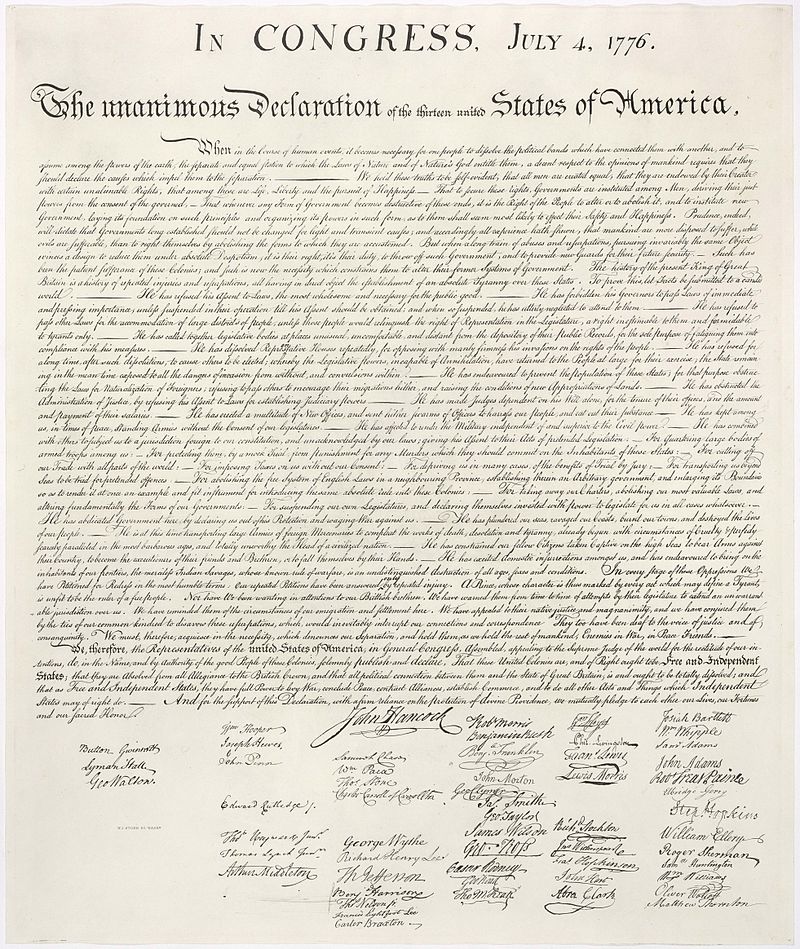
Have you ever read the Declaration of Independence? It is an extraordinary document.
Happy Birthday, United States of America!
The Declaration of Independence: A Transcription
IN CONGRESS, July 4, 1776.
The unanimous Declaration of the thirteen united States of America,
When in the Course of human events, it becomes necessary for one people to dissolve the political bands which have connected them with another, and to assume among the powers of the earth, the separate and equal station to which the Laws of Nature and of Nature’s God entitle them, a decent respect to the opinions of mankind requires that they should declare the causes which impel them to the separation.
We hold these truths to be self-evident, that all men are created equal, that they are endowed by their Creator with certain unalienable Rights, that among these are Life, Liberty and the pursuit of Happiness.–That to secure these rights, Governments are instituted among Men, deriving their just powers from the consent of the governed, –That whenever any Form of Government becomes destructive of these ends, it is the Right of the People to alter or to abolish it, and to institute new Government, laying its foundation on such principles and organizing its powers in such form, as to them shall seem most likely to effect their Safety and Happiness. Prudence, indeed, will dictate that Governments long established should not be changed for light and transient causes; and accordingly all experience hath shewn, that mankind are more disposed to suffer, while evils are sufferable, than to right themselves by abolishing the forms to which they are accustomed. But when a long train of abuses and usurpations, pursuing invariably the same Object evinces a design to reduce them under absolute Despotism, it is their right, it is their duty, to throw off such Government, and to provide new Guards for their future security.–Such has been the patient sufferance of these Colonies; and such is now the necessity which constrains them to alter their former Systems of Government. The history of the present King of Great Britain is a history of repeated injuries and usurpations, all having in direct object the establishment of an absolute Tyranny over these States. To prove this, let Facts be submitted to a candid world.
He has refused his Assent to Laws, the most wholesome and necessary for the public good.
He has forbidden his Governors to pass Laws of immediate and pressing importance, unless suspended in their operation till his Assent should be obtained; and when so suspended, he has utterly neglected to attend to them.
He has refused to pass other Laws for the accommodation of large districts of people, unless those people would relinquish the right of Representation in the Legislature, a right inestimable to them and formidable to tyrants only.
He has called together legislative bodies at places unusual, uncomfortable, and distant from the depository of their public Records, for the sole purpose of fatiguing them into compliance with his measures.
He has dissolved Representative Houses repeatedly, for opposing with manly firmness his invasions on the rights of the people.
He has refused for a long time, after such dissolutions, to cause others to be elected; whereby the Legislative powers, incapable of Annihilation, have returned to the People at large for their exercise; the State remaining in the mean time exposed to all the dangers of invasion from without, and convulsions within.
He has endeavoured to prevent the population of these States; for that purpose obstructing the Laws for Naturalization of Foreigners; refusing to pass others to encourage their migrations hither, and raising the conditions of new Appropriations of Lands.
He has obstructed the Administration of Justice, by refusing his Assent to Laws for establishing Judiciary powers.
He has made Judges dependent on his Will alone, for the tenure of their offices, and the amount and payment of their salaries.
He has erected a multitude of New Offices, and sent hither swarms of Officers to harrass our people, and eat out their substance.
He has kept among us, in times of peace, Standing Armies without the Consent of our legislatures.
He has affected to render the Military independent of and superior to the Civil power.
He has combined with others to subject us to a jurisdiction foreign to our constitution, and unacknowledged by our laws; giving his Assent to their Acts of pretended Legislation:
For Quartering large bodies of armed troops among us:
For protecting them, by a mock Trial, from punishment for any Murders which they should commit on the Inhabitants of these States:
For cutting off our Trade with all parts of the world:
For imposing Taxes on us without our Consent:
For depriving us in many cases, of the benefits of Trial by Jury:
For transporting us beyond Seas to be tried for pretended offences
For abolishing the free System of English Laws in a neighbouring Province, establishing therein an Arbitrary government, and enlarging its Boundaries so as to render it at once an example and fit instrument for introducing the same absolute rule into these Colonies:
For taking away our Charters, abolishing our most valuable Laws, and altering fundamentally the Forms of our Governments:
For suspending our own Legislatures, and declaring themselves invested with power to legislate for us in all cases whatsoever.
He has abdicated Government here, by declaring us out of his Protection and waging War against us.
He has plundered our seas, ravaged our Coasts, burnt our towns, and destroyed the lives of our people.
He is at this time transporting large Armies of foreign Mercenaries to compleat the works of death, desolation and tyranny, already begun with circumstances of Cruelty & perfidy scarcely paralleled in the most barbarous ages, and totally unworthy the Head of a civilized nation.
He has constrained our fellow Citizens taken Captive on the high Seas to bear Arms against their Country, to become the executioners of their friends and Brethren, or to fall themselves by their Hands.
He has excited domestic insurrections amongst us, and has endeavoured to bring on the inhabitants of our frontiers, the merciless Indian Savages, whose known rule of warfare, is an undistinguished destruction of all ages, sexes and conditions.
In every stage of these Oppressions We have Petitioned for Redress in the most humble terms: Our repeated Petitions have been answered only by repeated injury. A Prince whose character is thus marked by every act which may define a Tyrant, is unfit to be the ruler of a free people.
Nor have We been wanting in attentions to our Brittish brethren. We have warned them from time to time of attempts by their legislature to extend an unwarrantable jurisdiction over us. We have reminded them of the circumstances of our emigration and settlement here. We have appealed to their native justice and magnanimity, and we have conjured them by the ties of our common kindred to disavow these usurpations, which, would inevitably interrupt our connections and correspondence. They too have been deaf to the voice of justice and of consanguinity. We must, therefore, acquiesce in the necessity, which denounces our Separation, and hold them, as we hold the rest of mankind, Enemies in War, in Peace Friends.
We, therefore, the Representatives of the united States of America, in General Congress, Assembled, appealing to the Supreme Judge of the world for the rectitude of our intentions, do, in the Name, and by Authority of the good People of these Colonies, solemnly publish and declare, That these United Colonies are, and of Right ought to be Free and Independent States; that they are Absolved from all Allegiance to the British Crown, and that all political connection between them and the State of Great Britain, is and ought to be totally dissolved; and that as Free and Independent States, they have full Power to levy War, conclude Peace, contract Alliances, establish Commerce, and to do all other Acts and Things which Independent States may of right do. And for the support of this Declaration, with a firm reliance on the protection of divine Providence, we mutually pledge to each other our Lives, our Fortunes and our sacred Honor.
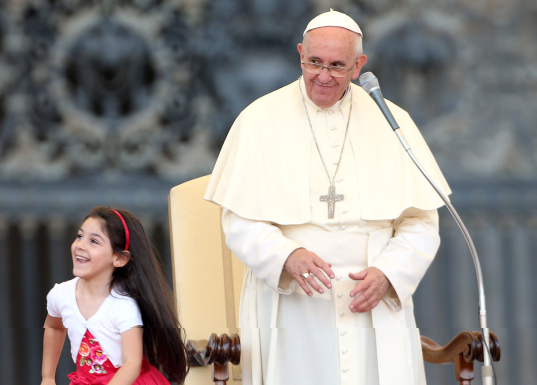
“God bless the work of your hands!” was one of the Moslem sayings I most loved as I lived my daily life in various countries in the Middle East. So, Pope Francis, God bless the work of your hands yesterday in your encyclical saying we are all responsible for the price we pay for progress. You are a brave man, and you don’t hesitate to name corruption when you see it, and to do your best to correct us, and straighten the path of the Lord.
“Everything is related, and we human beings are united as brothers and sisters on a wonderful pilgrimage, woven together by the love God has for each of his creatures and which also unites us in fond affection with brother sun, sister moon, brother river and mother earth,” he writes.
It is not entirely a happy message for me. One of the items he castigates is air conditioning, and as Pensacola hits the nineties every day, I hate to think of how I would live without air conditioning. I think I would turn into a slug, swinging in my hammock for hours every day reading a book. My house would be full of dirty dishes and dust. And I remember living in Tunis, and in Jordan, without air conditioning. We managed, by the grace of God.
Meanwhile, during the hottest months of the year, yesterday, our Moslem brothers and sisters began Ramadan, the holy month of fasting and personal purification. Imagine, going all day without water and without food, breaking the fast only as the sun goes down. I wonder if the Pope made his world-changing address on the eve of Ramadan on purpose, as he clearly made it to all mankind, not only to his Catholic followers.
Ramadan Kareem, my Moslem brothers and sisters, whom I cherish, and who taught me so much. May your fasting bring you great insights and purity of spirit.
When I lived in Kuwait and Qatar, I was appalled by the way rapes were treated, it was like this huge wave of abductions and violations, and nothing was done. As it turns out, things are changing a lot slower in my own country than I thought. This new film, The Hunting Ground, is by the same person who documented violence and rape in the US military, spurring then Secretary of Defense Leon Panetta, a truly decent man, to put the fear of God into the military leaders who were covering up the many rapes and blaming the victims. We have the same problem on college campuses.
There is only one cure. We have to raise our sons to respect women. We have to continue raising the bar for equality in our country until women have equal access to jobs, health treatment, legal proceedings, etc. Films like The Hunting Ground are painful, and at the same time, help us to face, and to overcome our societal short comings.
I love it that this film is “giving voice to those who have no voices;” that these courageous women speaking out have bravely named their rapists and described their circumstances. It can’t be comfortable, but it is their right. I am proud that they are not intimidated by fear of the ‘blame the victim’ mentality they have endured on their college campuses. When did colleges and universities begin placing money-making and winning teams before the well-being of their students?
New film gives chilling account of sexual assault on college campuses
Sexual assaults on college campuses have reached alarming levels and the issue has drawn the attention of Congress and even President Obama himself. The latest research indicates that one in five college women will be sexually assaulted and as many as 90% of reported assaults are acquaintance rapes. It is believed that more than 100,000 college students will be sexually assaulted during the current school year. Nowhere is the deck stacked more against sexual assault victims than in college athletics. In just the last few years alone there have been cases at Florida State, Michigan, Oregon, Vanderbilt andMissouri.
All of this is a backdrop to a harrowing new film that premiers in theaters on Friday in New York City and Los Angeles. The Hunting Ground is a jarring exposé that shines a bright light on the epidemic number of sexual assaults taking place on college campuses each year.
The Hunting Ground features a group of survivors who faced harsh retaliation and harassment for reporting that they had been raped. The film focuses on institutional cover-ups and the brutal backlash against survivors at campuses such as Harvard, Yale,Dartmouth, the University of North Carolina at Chapel Hill, USC and the University ofCalifornia-Berkeley, among others.
Some of the most vexing stories featured in the film involve women who were assaulted by athletes. While The Hunting Ground isn’t all about sports, the most dramatic moment in the film occurs two-thirds of the way through when the woman who accused former Florida State quarterback Jameis Winston—who after a strong showing in last week’s Combine is projected by many to be the No. 1 pick in this spring’s NFL draft—appears and tells her story publicly for the first time. The woman, who is named in the film but SI.com has chosen to protect her identity, is shown on camera and gives her life-changing account of what she says happened the night in December 2012 she left a Tallahassee bar with Winston.
Photo: Getty Images
A high school honor student who planned to attend medical school, the woman is articulate and attractive. She looks like the girl next door, a person you would trust to babysit your children. It is uncomfortable to watch—yet impossible to look away—when she describes being beneath Winston on his bathroom floor, repeatedly telling him “no” before being physically overpowered.
“We’re grateful it’s the first time people will get to hear [her] story,” said The Hunting Ground director Kirby Dick. “It’s her first-hand testimony. Up to this point it hasn’t been in a public space.”
The woman’s parents also appear in the film. Her father talks about driving to Tallahassee Memorial Hospital with his wife to be with their daughter hours after the incident.
There is nothing easy about retelling these stories for the world to see. But the attorney for the woman who says she was raped by Winston, John Clune, said his client decided to break her silence in the film because she felt it was the right venue to tell her story.
“The film was a once-in-a-lifetime opportunity,” Clune said. “The work by these filmmakers is nothing less than groundbreaking. It took tremendous courage, but our client and all of the incredibly brave women in the film have advanced the cause of rape survivors everywhere.”
The Hunting Ground also examines a sexual assault accusation against a Notre Damefootball player in 2010. Tom Seeberg, whose daughter committed suicide after she says she was sexually assaulted by a Fighting Irish starter, tells a heartbreaking account of school officials thwarting the investigation into his daughter’s complaint. A former Notre Dame police officer reveals that he and his colleagues were not allowed to approach or question an athlete on athletic properties.
The film also mentions rape cases involving football players at Missouri and Vanderbilt, as well as basketball players at Oregon.
The testimonials of rape survivors are wrapped between raw footage that is both gut-wrenching and disturbing. A small mob of unruly fraternity pledges at Yale are captured on film outside a freshman dorm for women, chanting: “No means yes. Yes means anal.” All the while a guy with a bullhorn is shouting: “Louder.”
In another scene we see drunken frat boys spilling out of a house where there is a sign out front that says: “THANKS FOR YOUR DAUGHTERS.” It’s enough to outrage any parent with a daughter heading off to college.
The film is directed by Dick and produced by Amy Ziering, the team behind the Oscar-nominated film The Invisible War, which revealed systemic sexual assaults and cover-ups within the U.S. military. That movie prompted Secretary of Defense Leon Panetta to announce significant policy changes and inspired the passage of the Military Justice Improvement Act.
Dick and Ziering started looking into the situation on college campuses shortly after the release of The Invisible War. “We were astonished that the problem was as serious in higher education as it was in the military,” Dick said.
Full disclosure: I appear in The Hunting Ground as an expert. Two of the cases in the film—Lizzy Seeberg’s alleged assault at Notre Dame and running back Derrick Washington’s sexual assault of a student at the University of Missouri—are featured in my book The System: The Glory and Scandal of Big-Time College Football, which I wrote with 60 Minutes correspondent Armen Keteyian.
Some of my research is also featured in the film, including the statistic that student-athletes are responsible for 19% of the reported sexual assaults on campus, despite the fact that they comprise just 3.3% of the male student population. Those figures arose from a first-of-its-kind study I conducted with researchers at the University of Massachusetts in the mid-90s when we were granted access to judicial affairs records and police reports at colleges across the country.
Photo: Don Juan Moore/Getty Images
Over the past 20 years I have researched hundreds of cases of sexual assault involving athletes. During that time I’ve interviewed countless sexual assault victims. The thing I found most telling was what prosecutor Willie Meggs did not say in the film. Meggs was asked if he thought a rape took place in Winston’s apartment. It was a perfect opportunity for the man who chose not to prosecute Winston to say no. Instead, he said something “bad” happened in that apartment that night. He just didn’t have sufficient evidence to prove it.
That’s not unusual. That’s typical. Only about 20% of rapes reported to the police in the U.S. are prosecuted. Yet at least 92% of reported sexual assault claims are found to be true. The problem is that date rape cases are very difficult to prove beyond a reasonable doubt, especially when alcohol is involved and the incident occurs in the perpetrator’s apartment, dorm or hotel room. The doubts raised by those factors are amplified when the accused is a star athlete.
The greatest achievement of The Hunting Ground is that it empowers rape victims to team up with each other and come forward. It’s fair to say that for the first time in many years, women like Jameis Winston’s alleged victim have powerful allies.
By the time the NFL draft takes place in May, the film will be in theaters around the country, the name of Winston’s accuser will be everywhere and more details about the night in question will likely come out. All of this brings to mind the legal maxim caveat emptor, which essentially is a warning that means let the buyer beware.
Jason Licht, the general manager for the Tampa Bay Buccaneers, ultimately has to decide whether to use the first pick on Winston. He’s on record saying: “This is the most important pick, potentially, in the history of the franchise.”
Memo to Licht: Watch The Hunting Ground.
The ramifications in this instance are equally big for the NFL, whose image took a beating over the last year after Ray Rice was caught on tape knocking out his then-fiancé in an elevator. The controversy erupted after Commissioner Roger Goodell imposed a two-game suspension without bothering to obtain and watch the video.
Memo to the Commissioner: Watch The Hunting Ground.
No matter what happens with Winston, the film succeeds in its main goal: to shine a light on sexual assault on college campuses. It’s an important issue that isn’t going away, and if something drastic isn’t done immediately, it will only get worse.
Jeff Benedict is a lawyer and has written five books on athletes and violence against women, including Public Heroes, Private Felons: Athletes and Violence Against Women, and Out of Bounds: Inside the NBA’s Culture of Rape, Violence and Crime.
The good news is that Saudi women know better. They don’t buy this line any more than we do. They visit America, they go to school in America. And oh yes, they DRIVE in America. The second part of the good news is that the younger generation buys this line a whole lot less than our parent’s generation, and change is coming. It’s coming faster than this historian thinks.
Saudi Historian Says U.S. Women Drive Because They Don’t Care If They’re Raped
Saleh al-Saadoon claimed in a recent TV interview that women can be raped when a car breaks down, but unlike other countries, Saudi Arabia protects its women from that risk by not allowing them to drive in the first place, according to a translation posted online by the Middle East Media Research Institute.
“They don’t care if they are raped on the roadside, but we do,” al-Saadoon said on Saudi Rotana Khalijiyya TV.
“Hold on. Who told you they don’t care about getting raped on the roadside?” asked the host, a woman who is not named in the transcript.
“It’s no big deal for them beyond the damage to their morale,” al-Saadoon replied. “In our case, however, the problem is of a social and religious nature.”
Two other guests on the show — a man and a woman — appeared to be in shock over his comments. Al-Saadoon said they were out of touch.
“They should listen to me and get used to what society thinks,” al-Saadoon said.
Since the rape argument didn’t seem to be convincing anyone, al-Saadoon tried another approach, claiming that women are treated “like queens” in Saudi Arabia because they are driven around by the men of the family and male chauffeurs. That led the host to ask if he wasn’t afraid that women might be raped by their chauffeurs.
Al-Saadoon agreed.
“There is a solution, but the government officials and the clerics refuse to hear of it,” he said. “The solution is to bring in female foreign chauffeurs to drive our wives.”
That caused the female host to laugh and cover her face with her palm.
“Female foreign chauffeurs?” she said. “Seriously?”
Today the church prays for Lafia, Nigeria, which is near Abuja, in the part of Nigeria where Boko Haram runs rampant, and where over 250 girls were kidnapped from their school in 2014. Some few escaped, most were married off to poor young Boko Haram soldiers into hardship and near-slavery. Boko Haram does not believe in educating women. The Nigerian government at one point announced that Boko Haram had agreed to return the girls, but nothing happened. The Nigerian military and police do nothing to get them back.