Here Comes Karen
As I’ve watched Pensacola weather over the three years we have lived here, I have seen a hilarious co-incidence. If there is ever going to be a cold spell, or a lengthy rainy spell, it is going to hit for the weekend. It’s a pity, the beaches in Pensacola are at their most glorious in October, no tourists, just locals enjoying the God-given beauty of sun, sand and surf. The restaurants are accessible, you can find parking . . . and then the rain hits.
Long term forecasts for the summer were that while the rest of the USA would have record highs, we would have cooler, overcast skies. I don’t remember them mentioning record rains, that would rot the crops in the fields.
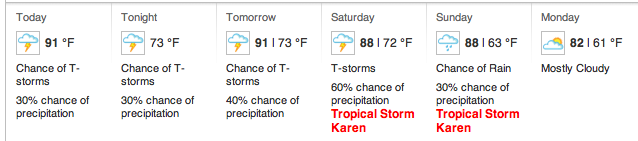
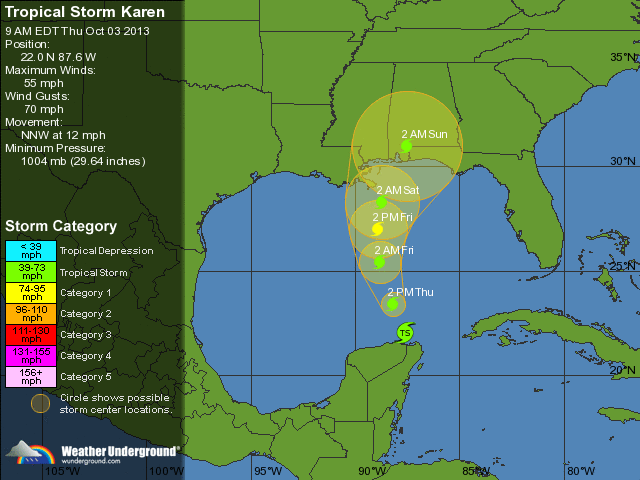
Last night, at an event, a friend said she and her closest 300 friends were going camping, but she had heard there might be something blowing in this weekend. Sure enough, when I checked WeatherUnderground this morning, there are bit warnings for Tropical Storm Karen to hit – you guessed it – on Saturday. Oh aarrgh.
Batten down the hatches, matey. Oh wait, Talk-like-a-pirate-day was last week.
‘Staggering’ Traffic in Qatar as Cars Exceed Highway Capacity
From the Gulf Times Qatar
By Bonnie James/Deputy News Editor
Increase in the number of vehicles beyond the carrying capacity of roads, improper driving manners of many motorists and road works are among the key factors behind the acute traffic congestion currently being experienced in Doha and suburbs, it has been pointed out.
Brigadier Mohamed Saad al-Kharji, director of the Traffic Department, was on record the other day that the number of vehicles in Qatar has exceeded 1mn.
The total number of registered vehicles in Qatar had stood at 876,039 in 2012, according to official statistics. This means, as many as 123,961 new vehicles have been added to the roads within nine months of this year, at the average rate of a 13,773 every month, whereas the 2012 average for new vehicles was only 5,138 per month.
“The increase in the number of new vehicles is staggering and at almost three times the monthly average from 2012, it now exceeds the carrying capacity of the roads of Doha and suburbs, even from a layman’s perspective,” a traffic safety expert said.
This is evident on Al Shamal Road, a vital link of the Qatar Expressway Programme and a major arterial thoroughfare, during peak hours from Sunday to Thursday. All the way from The Mall signal to the Gharrafa area, the highway is clogged with bumper-to-bumper traffic.
“The average speed on Al Shamal Road would be around 30kmh, as against the maximum allowed speed of 100kmh, and that too if there are no accidents,” observed a motorist who drives on the highway regularly.
The congestion on Al Shamal Road has gone from bad to worse ever since the reopening of schools on September 10, compared to the time before the summer vacation, asserted another resident.
“Al Shamal Road is the preferred choice of tens of thousands of motorists who have to travel to the northern parts of the country and back, but the carrying capacity of its busiest portions has been exceeded,” the expert maintained.
Though Al Shamal Road has three lanes each in either direction, they are proving thoroughly inadequate during the rush hours. “You have to go beyond the Gharrafa stretch to be able to drive at the maximum permissible speed, if proceeding to the north,” a motorist said.
Many road users also feel the traffic management strategy leaves much to be desired, especially with regard to Al Shamal Road.
“On Thursday, access from many service roads to Al Shamal Road was blocked off in a bid to ease congestion on the highway. But this led to vehicles being stuck on the service roads for up to 40 minutes,” a road user recalled.
A parent who drives his children from the Qatar Decoration area of Salwa Road to their school at Duhail, a distance of about 23km, said it took him more than one hour to reach the destination, as access to Al Shamal Road from the service road at Al Waab was blocked.
“My children were late for school the first time this academic year as we were stuck on a service road for nearly 40 minutes while vehicles were moving fast on Al Shamal Road, a rare sight these days,” he said.
Many motorists don’t use indicators or move ahead promptly when the vehicle in front moves. “It is a common sight to see people having their breakfast, putting on make up, or having animated conversations on a handheld phone, while they are behind the wheel, oblivious to the fact that they are holding up traffic and aggravating the congestion,” noted a woman who observes the road scenes from her front passenger seat.
The traffic situation on the Corniche is expected to take a turn for the worse, given that Grand Hamad Street’s intersection with Doha Corniche has been closed for 10 days from Thursday midnight.
“If I used to start from home at 6.30am before summer vacation, I leave 15 minutes early these days, but now I guess I have no option but to start even earlier,” another motorist added.
The helicopter patrol, introduced by the Traffic Department since last week, to help ease congestion on Qatar roads by giving guidance to police on the ground during morning rush hours has improved traffic flow by 30%, according to Brigadier al-Kharji.
The Meat You Eat Can Make You Sick
A fascinating – if long – article on how our meat is farmed and the high cost of ‘cheap’ meat:
‘Healthy’ Cows, Sick Consumers: CDC Warns of a High Cost in Cheap Meat
by Bruce Watson Sep 25th 2013 6:00AM
On the surface, it’s hard to question the cost-effectiveness of factory-farmed meat. After all, the math is pretty simple: You start with inexpensive animals, raise them at relatively minimal cost, butcher them in the cheapest way possible, and sell them for low, low prices.
But the math gets a little more complicated when you look at the long-term health impact of all that cheap meat. Of course, there are the obvious things that everyone’s already worried about — issues like cholesterol and high blood pressure and gout and whatnot — but the biggest downside comes from something that you probably haven’t considered: antibiotic-resistant bacteria.
In a recent report, the Centers for Disease Control estimated that 2 million Americans are hit with antibiotic-resistant infections every year — and 23,000 people die from them.
Doctor Feelgood
So what causes all these outbreaks? In part, it’s our overreliance on antibiotics. Every time your doctor prescribes antibiotics to you, the bacteria in your body grow more able to tolerate them. Those antibiotic-resistant germs can then get passed on to other people, leading to the spread of harder-to-kill infections, which leads to more doctor visits, and so on, in a vicious cycle.
So, obviously, the first solution to our antibiotic-resistant bug problem is to stop overprescribing antibiotics. We should, many health experts argue, save the antibiotics for the times when we really need them.
This Little Piggie Had Penicillin …
But our overuse of erythromycin and amoxicillin is just a small part of the problem. Even if you never fill your antibiotic prescriptions — even if your doctor never writes them — chances are that you’re still consuming a huge amount of antibiotics in your food. More specifically, in your meat.
When factory farms look for ways to cut costs, space is one of the first things to go: Factory owners often crowd animals together in cramped pens. But when cows, pigs and chickens live in such cramped conditions, often with open wounds and amid ever-growing piles of feces, the barns become a breeding ground for bacterial infections. One way to cut back on this is to give the animals more space. Another way is to pump them full of antibiotics.
Not surprisingly, most factory farm operations go for the latter. In fact, the meat industry currently uses 80 percent of all antibiotics that are consumed in the US. All those drugs keep the animals relatively disease-free — and help keep meat cheap. But it’s not exactly an impressive price cut for the customer: According to one estimate, the use of antibiotics on farms saves the average meat-eating consumer $5 to $10 a year.
And those minor savings may come at a huge cost. Sloppy slaughtering methods often contaminate meat with antibiotic-resistant bacteria from the animals’ colons and stomachs. And, even if factory-farmed meat makes it to your grocery store without becoming contaminated, there are other ways animal waste enters the food cycle: Water and manure that are left over from factory animals often get used on crops, further spreading antibiotic-resistant bacteria.
So What Can You Do?
As I’ve pointed out in the past, there are a few ways to protect yourself. To begin with, you can ensure that your meat is cooked to an internal temperature of 160 degrees F — both at your home, and in any restaurants that you visit. Unfortunately, while this will kill any bacteria hiding inside your burger, it will also transform it into a well-done hockey puck.
Maybe you should just stick to the brisket.
You can also try looking for organic meat. While a little more expensive, it is produced without antibiotics, which lowers your chance of encountering antibiotic-resistant bacteria. For that matter, you may want to think about using organic vegetables — or, at least, carefully washing your fresh produce.
Another option is to get involved. Last week, I wrote about new USDA procedures would cut inspections on chicken and pork, and would allow Chinese poultry to be sold in American markets. Since these plans also reduce the number of USDA inspectors — among the few barriers between you and food poisoning — they could directly affect your health. If you get a chance, you may want to tell your congressman or senator that you’ve got some problems with this.
Given the huge lobbying efforts behind the USDA’s inspector cuts and opening the U.S. to Chinese chicken imports, chances are that both policy changes will happen. Even if they don’t, however, it never hurts to be safer with your food.
Bruce Watson is DailyFinance’s Savings Editor. You can reach him by e-mail at bruce.watson@teamaol.com, or follow him on Twitter at @bruce1971.
“Is Your Cat Always Fractious?”

“Fractious” isn’t a word you often hear. Clearly the veterinary tech had just read the word off the record, perhaps there is some warning in there about the Qatari Cat.
The Qatari Cat was born on the streets of Qatar, and had a bumpy start with another owner. While the man and his daughter liked him just fine, the wife and her mother did not. When the Qatari cat came to live with us, he was very wary of me. It took a couple years for him to fully trust me. He watched my feet all the time. He quailed in fear, ears back, if I used a loud voice. He was terrified of the sound of plastic bags.
Slowly, slowly, we built a relationship. Today, ten years later, he is a sweet cat.
He is a sweet cat every single day of the year, but he still has his street instincts. AdventureMan has learned that you can’t play rough with the Qatari Cat; you play rough, you lose. I never speak loudly to him; it just won’t work, it just gets his back up. Because he knows I am the boss, I speak sternly, but softly to him and he will do just what I ask him to do.
Our first visit to the vet went badly. You can read about it here. He was fine until the buzzing razor hit his bottom and then all his survival instincts kicked in. He’s been back twice, and he has been as good as gold, but somehow . . . that notation has stuck.
“No!” I replied, maybe a little bit too loudly.”No! He is a sweet kitty! He is snuggly and loving and quiet and good! But if he is scared, he wants to defend himself.” I told the tech about the Italian vet the Qatari Cat fell in love with in Kuwait, she snuggled him and told him how beautiful he was and how much she loved him and he was putty in her hands. I was almost jealous. I thought maybe she distilled some catnip and mixed it with her perfume or something, Qatari Cat’s eyes glazed a little in sheer adoration when he was around her, and he even drooled a little. She could take his temperature, give him a shot and check his innards and he never complained, just looked at her adoringly.
The tech shot a skeptical look at me and exited the room. I could hear her repeat this to the vet, and muffled laughter before she entered the room again.
So the vet came in and snuggled Qatari Cat, and told him he was pretty, and while she did not say it with an Italian accent, Qatari Cat was clearly intrigued – and on his best behavior. It doesn’t take much . . . he’s a male. Snuggle him a little, rub his fur the right way, chat him up . . . it doesn’t have to be rational, it’s all in the tone of voice and the flirtation. He totally digs it, he eats it up. A little grope here, a quick look at the teeth, a quick injection and he’s finished, not a fractious moment in the entire visit.
On the way home, we laughed thinking of our sensitivity at having our cat called “fractious.” We remember the indignant response of friends whose cat was annotated as “vicious” by a German vet. The cat was diabetic and objected to the roughness with which the vet wanted to take his blood. I think if you are a veterinarian, you might have an understanding that a sick animal, or a scared animal, might act unpredictably or defensively, there are big thick gloves you can wear if an animal seems wired up.
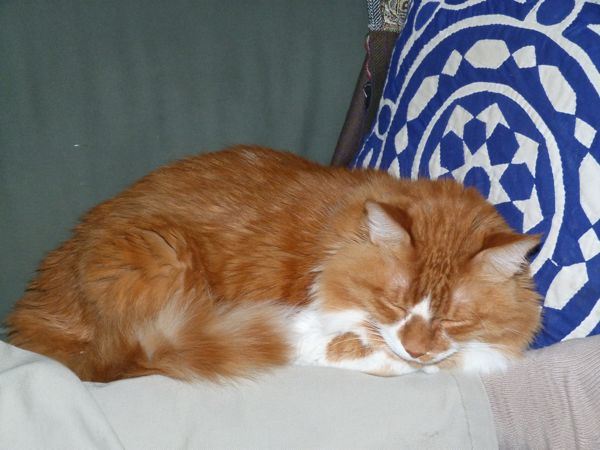
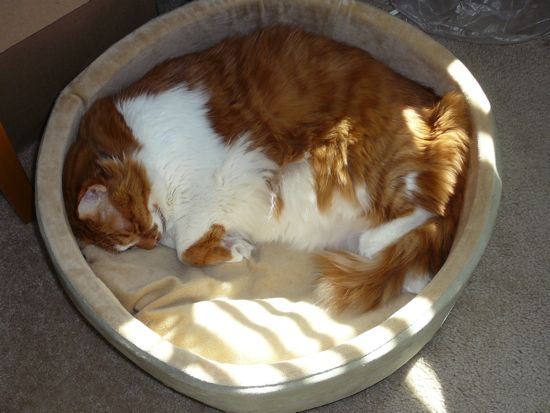
Does this look like a fractious cat to you?
MRSA Link to Pigs

From Nature.com News:
People living near pig farms or agricultural fields fertilized with pig manure are more likely to become infected with methicillin-resistant Staphylococcus aureus (MRSA) bacteria, according to a paper published today in JAMA Internal Medicine1.
Previous research has found that livestock workers are at high risk of carrying MRSA, compared to the general population2. But it has been unclear whether the spreading of MRSA through livestock puts the public at risk of infection.
The study examined the incidence of infections in Pennsylvania, where manure from pig farms is often spread on crop fields to comply with state regulations for manure disposal. Researchers reviewed electronic health-care records from patients who sought care from the Pennsylvania-based Geisinger Health System (which helped to fund the study) in 2005–10.
The team analysed cases of two different types of MRSA — community-associated MRSA (CA-MRSA), which affected 1,539 patients, and health-care-associated MRSA (HA-MRSA), which affected 1,335 patients. (The two categories refer to where patients acquire the infection as well as the bacteria’s genetic lineages, but the distinction has grown fuzzier as more patients bring MRSA in and out of the hospital.)
Then the researchers examined whether infected people lived near pig farms or agricultural land where pig manure was spread. They found that people who had the highest exposure to manure — calculated on the basis of how close they lived to farms, how large the farms were and how much manure was used — were 38% more likely to get CA-MRSA and 30% more likely to get HA-MRSA.
The researchers also analysed 200 skin, blood, and sputum samples isolated from patients in the same health-care system in 2012. The MRSA strains found in those samples are commonly found in humans. Researchers did not find any evidence of bacteria belonging to clonal complex 398 (CC398), a MRSA strain classically associated with livestock and found in farms and farmworkers in many previous studies.
However, there is little information about which MRSA strains are most common on US farms, so the absence of CC398 is not a sign that MRSA is not being transmitted from livestock to humans. “We’ve done studies in Iowa, we haven’t always found CC398. That’s not too shocking,” says Tara Smith, a microbiologist at Kent State University in Ohio, who was not involved in the study.
Many researchers think that widespread use of antibiotics to encourage growth in farm animals fuels the proliferation of MRSA and other drug-resistant bacteria. The latest findings suggest that manure is helping antibiotic resistance to spread, says Joan Casey, an environmental-health scientist at the Johns Hopkins Bloomberg School of Public Health in Baltimore, Maryland, and a co-author of the study.
“We’ve certainly described a connection we think is plausible,” she says. “We haven’t described every step in the path.”
“It’s a pretty interesting and provocative observation,” says Robert Daum, a paediatrician and the principal investigator of the MRSA Research Center at the University of Chicago in Illinois. He adds that he would like to see similar studies done in different geographic regions, and research to find out whether the MRSA strains carried in pig manure are the same as the MRSA strains found in nearby human infections.
Casey is at work on a follow-up genetics study to identify the most common MRSA strains in the region.
Nature doi:10.1038/nature.2013.13752
References
Casey, J. A., Curriero, F. C., Cosgrove S. E., Nachman, K. E. & Schwartz, B. S. JAMA Intern. Med. http://dx.doi.org/10.1001/jamainternmed/2013.10408 (2013).
Show context
Smith, T. C. et al. PLoS ONE 8, e63704 (2013).
My Travel Must-Have
I don’t like large handbags. I am small; a large bag is disproportionate. At the same time, I wanted a bag big enough to stick my computer in without looking like a briefcase. I wanted to be able to take my computer to Alaska with me.
I looked and looked, searching for the right bag. I looked in Pensacola, I looked online, I looked in Seattle. It had to be the right size, a nice heavy leather, a sturdy leather carry strap, and a neutral color as I was only taking one bag. Finally, at the very last minute I found this wonderful bag, and the computer fit beautifully, leaving room for my camera and wallet – what more do I need, right?

Then, me being me, the night before leaving for Alaska I decided I really did not need to carry a full sized computer, that the iPad had enough capacity and besides, it had books and Sudoku on it. But I still liked the purse; I stuck a nightshirt inside in case my luggage got lost, it has a side zip pocket for tickets, car rental brochures and car keys, and with everything inside, it was still roomy and not too heavy. It is wonderful boarding airplanes with just a purse!
By the end of the trip, I was in love. It is a great bag, goes everywhere, can be filled or used with little, it is versatile. I love this bag!
One Thing Leads to Another
“I’m afraid to go home,” AdventureMan told our son. “She’s moving the furniture.”
“She can do that without consulting?” our son asked.
“Yeh, she can,” AdventureMan responded, “And I count myself lucky that she hasn’t bought another house and said we’re moving.”

Moving furniture is one of those things I do. I get tired of everything the same-old same-old. If I’m not moving, it gives me a chance to re-think things, and try something else to see if that works better.
We have a dining room we hardly ever use. We have never eaten a meal in there. We had too much furniture, and besides, in the family room we have a huge circular teak table that seats eight. It’s less formal and a lot more fun. The dining room is in a very quiet part of the house, so we talked about turning it into a library (see! we talked!) and that is what I did. But when you move a piece of furniture, or get rid of another, or both, you end up also having to evaluate all the things inside that piece of furniture, and having to think through where things need to go.
Life is so different. As an Army wife, we entertained all the time. I hit the sales in Czechoslovakia and have bar ware and wine glasses for our 48 closest friends, and we just don’t entertain like that any more. We don’t even drink like that!
We do entertain; we host the monthly book club some months, I have my quilting group in frequently, and we have dinners for family and dinners for visiting IVLP delegates. We entertain people we like. It’s a whole different world when it’s a choice. I’m getting rid of a lot of pieces I’ll never use again and I’ll never miss once they’re gone.
I’m getting rid a lot of irrelevant things, including an old TV cabinet, you remember them? They enclosed an old fashioned TV, had shelves for videos (remember them?) and little drawers for CDs? I’ve been using it as storage for art work and a thing that plays music from an iPod or two. I’ll hang some of the art work, get rid of some, and find another place for the MP3 player.
Yesterday was the big work, the figuring out how to change furniture and carpets into new positions. Of course, once you move something, you have to clean the places no one ever sees, so it takes more time, but you’ve got to do it right.

Today was the small but time-consuming work of getting things put away in a kind of order so that they can be found again. When I put books on the shelves three years ago, it was like fiction here and non-fiction there, and I never went back. Now, I have them sorted into subjects and country, art related, or religious. Got rid of about half my CD’s but still have too many.
It’s a messy process; you take something fixed, turn it into chaos and slowly, slowly, bring a new pattern into being. Tomorrow I need to hang some more art work. It’s been three years.
Then we live with the changes and see if they work for us. If not . . . the process starts over, but in the meanwhile, got rid of some stuff! One of these days, need to tackle the closets . . . Have an entire closed full of evening clothes I never wear, and can’t bear to part with . . . yet.
Dinner at the Twisted Fish in Juneau
Even though it was down on the docks where the cruise ships dock, local people we asked often mentioned Twisted Fish as the place they liked to dine in Juneau. Here is the menu so my Mom can see the prices 🙂

The entrance to Twisted Fish facing the wharf:

Interior dining area with view

Interior Host(ess) and Bar

Very nice side salad

First Mate’s Plate – grilled salmon, grilled halibut and (for us) a side of sauteed spinach instead of fries or mashed potatoes 🙂
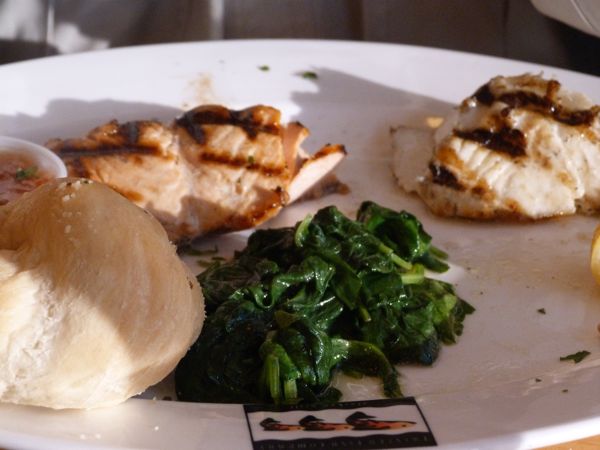
Although it is on the cruise ship docks, it is way down at the south end, and many of the cruise ship people would rather eat free (well, already paid for) on board, or eat elsewhere. The Twisted Fish was recommended by a local, and we can see several locals already seated when we come in. The hostess is good at finding us a good table with a view – we like this place.
Twisted Fish is in the same building as the Taku smoked fish building. It has a lot of wood decor, and a lively bar, and a good menu. AdventureMan and I end up ordering the same thing – side salads, and the First Mate’s Plate, which is a slab of grilled halibut and a slab of grilled salmon, served, as we requested, with no rice or potatoes, but with sauteed spinach, YUMMY. We had a Lost Angels cabernet, nice, dry, complex. The sun set behind one of the cruise ships, LOL.
I had hoped they might have some kind of berry cobbler for dessert, but all their desserts were huge mammoth portions of fudgy chocolatey or creamy things, and we passed on dessert and went looking for gelato. We were hugely full anyway, and very happy with our dinners. It’s a good thing, because by seven, all the tourist-oriented stores and ice cream places are closed down, hosing down their outside venues, pulling all their display items inside.
It’s hilarious how quickly and how early everything shuts down. I wonder what the Europeans think; do they look for night life? I wonder about our Middle Eastern friends used to the souks with lights and colors staying open all hours of the night ‘for your buying convenience?’ 😉
Zen Chinese Food in Juneau, Alaska
I felt so bad, I felt like I was betraying my heritage, but after nearly two weeks of eating salmon and halibut and crab and shrimp and scallops . . . we were ready for a change. AdventureMan spotted Zen, a restaurant in the Goldbelt Hotel, and it looked interesting. When we went inside, there were a lot of people there already, but many of them were busy accessing the internet, waiting for friends, arranging upcoming parties, etc. We were ready to EAT.
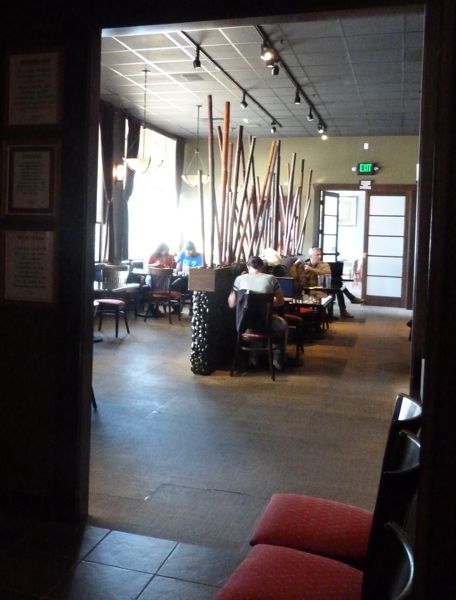
It gets worse – they have a really good menu. There are halibut dishes, shrimp dishes – I could have stayed true to the traditional and had ginger halibut, or something, but no, when I backslid, I backslid all the way.

We looked around, everyone was ordering the lunch specials. There are so many to choose from!

AdventureMan settled on the Hot and Sour Soup and the Cashew Chicken. When it arrived, he was impressed. Not only was there an abundance of cashews, they were also deliciously roasted:
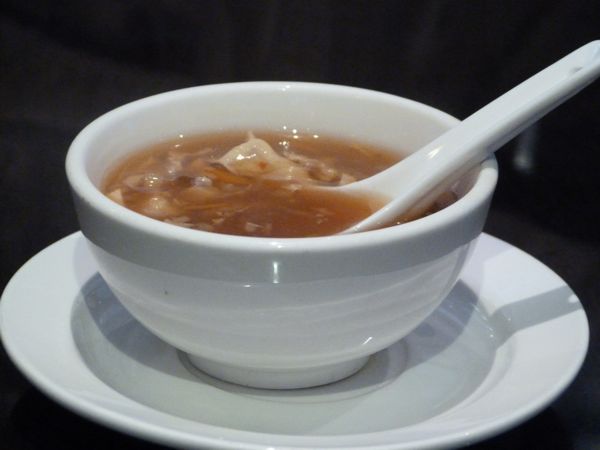
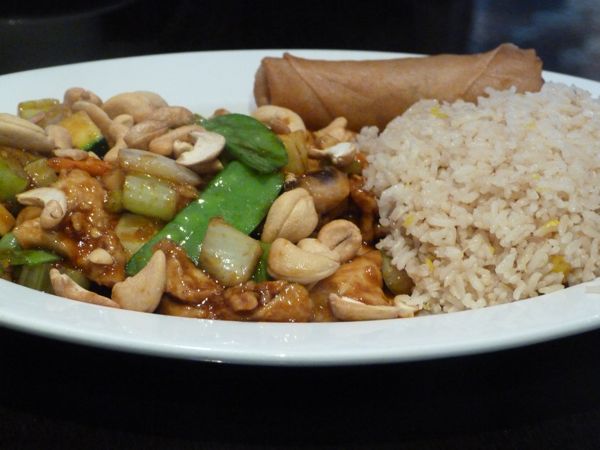
I had the Miso soup and Vegetables with Garlic – perfect!


Might as well go all the way, once you backslide. You can always pick yourself up and behave tomorrow! 😉
The food came quickly and was beautifully prepared. We were surprised at how much care had been taken on dishes that were part of the daily specials. Service was prompt without being intrusive, and friendly. We were glad we ate there. We lament the lack of really good Chinese food in Pensacola; sadly, Zen had the edge over the best that Pensacola offers.
Recent Comments
ExpatAlien on What Country am I Living … intlxpatr on Yellowstone: Old Faithful to C… Michelle on Yellowstone: Old Faithful to C… Cathy on No Grown-Ups in Charge intlxpatr on Waiting for Snow Wikipedia Donate Button

Amazina


Early Voting in Florida


 Here There and Everywhere