Severe Weather Warning

The severe weather warning ended at 4, the Pensacola News Journal has photos up uprooted trees and flooded areas, but up above, the skies continue to thunder, and the rain keeps a tumblin’ down.
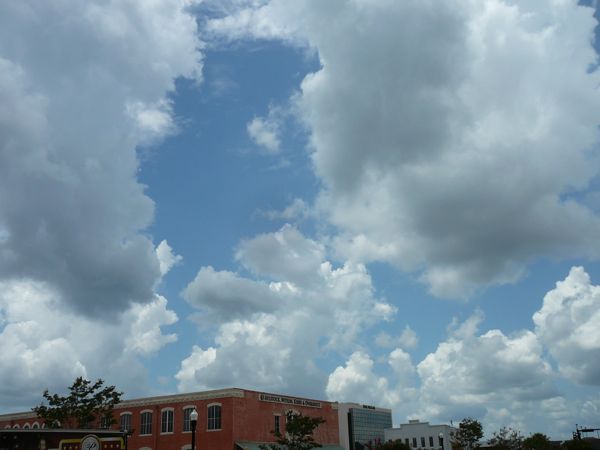
Clouds beginning to pile up:

they just keep coming:
Et le deluge:
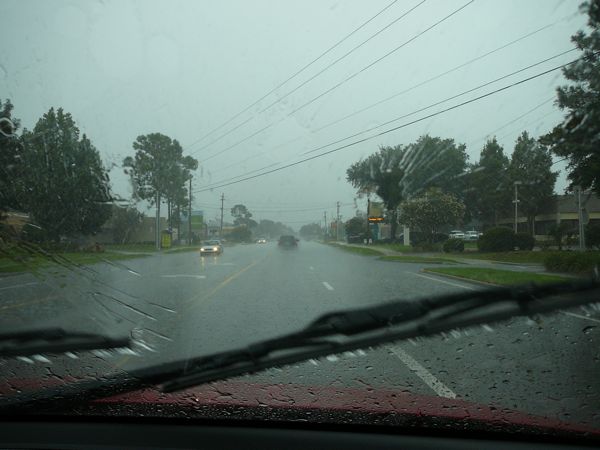

My family out in Seattle would kill for some sunshine as we roll into August and the Seafair events begin taking place, the parades, the Blue Angels and the Hydroplane races . . .
The temperatures are down into the seventies, a blessing, but when they go up again, it will once again be HOT AND HUMID.
Hemingway and A Movable Feast

After reading The Paris Wife, I had to read Hemingway’s A Movable Feast. I wanted to see how he saw his Paris years, and how his version integrated with the fiction version of Hadley’s. I was prepared to not like the book.
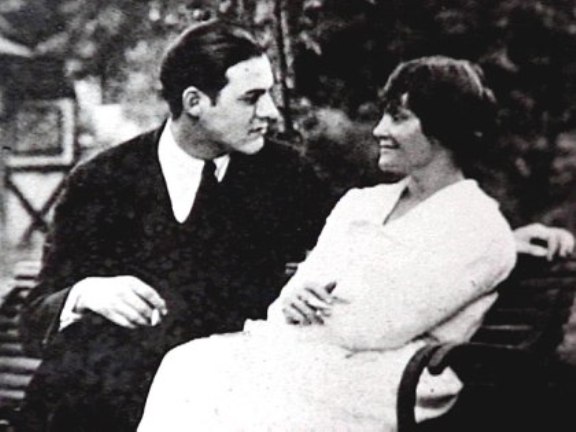
I was not prepared to like it as much as I did. Hemingway writes of the years when he was young, newly married and wildly happy, living a stimulating and lively life with lively friends. They were poor, but he was following his dream. They had a lot of fun.
Hemingway wrote this book, full of stories of their Paris life, full of names you know – Ezra Pound, Scott and Zelda Fitzgerald, Picasso, Closerie des Lilas, Les Deux Magots, Brasserie Lipp, the Louvre . . . and as you read it, you are there. He writes in the moment; you are right there experiencing it along with him. He writes of people he likes, and people he doesn’t like. He writes about his own vices – an addiction to horse racing, for example – and he writes with enormous sadness about how he came to be distracted from his marriage and lost the most wonderful relationship that ever happened to him. He blames it on the careless rich. He takes some responsibility.
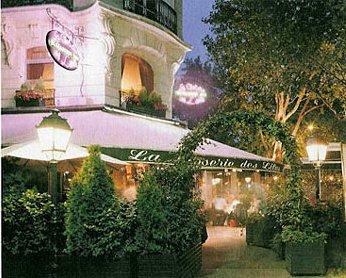
He also writes very frankly and openly about people he doesn’t like and why. I couldn’t help but think it is a heady thing, being an acclaimed author, where you can take revenge by putting people you dislike in your books. Hemingway uses real names and real people and often portrays them in a distinctly unflattering light. It made me wonder if he was planning to commit suicide all along; that or he just didn’t care what people think, and it seems he might have been the kind just not to care.
Just after finishing this book, and talking one last time with his first wife, Hadly, Hemingway committed suicide. It leaves me wondering if he was driven to suicide by regret, or by fears that his bigger-than-life life of adventure, travel, high life and travel was over, or if he had serious bouts of depression all his life, and this was just another, deeper depression?
It is a great read, especially paired with Paula McLain’s book, The Paris Wife. I thought it might be “he said – she said,” but Hemingway and the fictional Hadley in The Paris Wife both agree that they had a love and marriage that was very special, that Paris was a wonderful stimulating, alive environment, and that it was a great tragedy when the marriage ended. A Movable Feast seems to say that destroying his marriage to Hadley was one of a cocktail of self-destructive behaviors over which he tried to ride herd (gambling on the horse races, drinking, drugs, a coterie of star-struck sex partners outside of marriage, inability to focus on his work, a curmudgeonly nature . . .)

It’s also an easy read. I particularly enjoyed reading it on the iPad because you can do that swirly-finger-thing and find out what words mean or see the street locations as he walks Paris, see whether a cafe or restaurant in Paris still exist. It would be a good airline read – keeps your attention and finishes quickly.
As little as I like Woody Allen, it was fun to see Midnight in Paris, and to have some visuals of this go-go inter-war era.
Two things that stuck out for me: Hemingway loved walking in Paris, as do I. He also talks here and there about the benefits of being hungry. There were times when money was tight; they wore old shabby clothes, and there were times they didn’t have much food. He talks about hunger sharpening your other senses. On the other hand, very quickly when he has money, he has a great meal and a drink – or two – or three.
Bottom line, I’m glad I read this book. It’s given me a lot to think about.
Rain for Ramadan
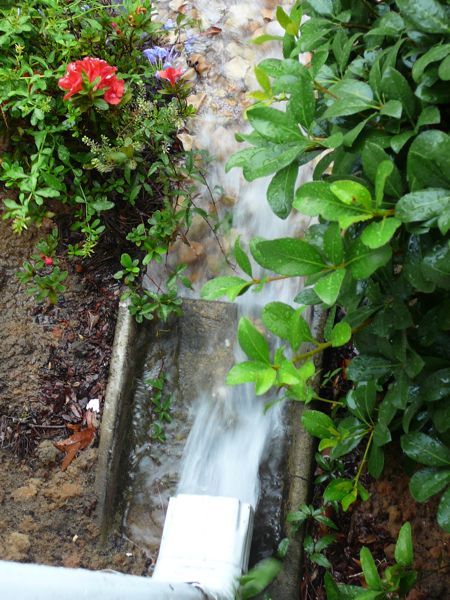
Frequent commenter Daggero asked for photos of clouds and rain to help him get through the long hot days of Ramadan in Kuwait. Yesterday I published cloud photos; today we had a downpour, so here are some rain photos:

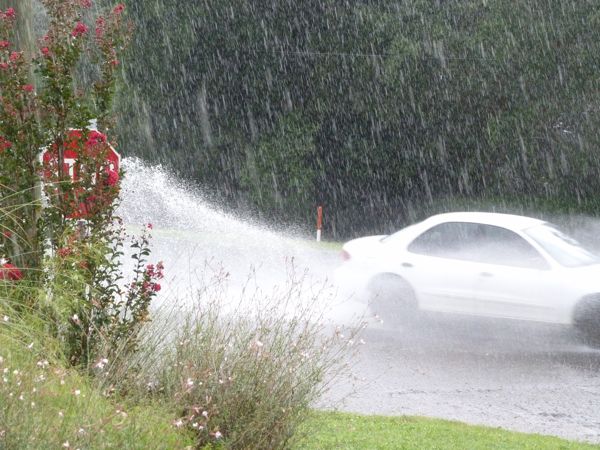


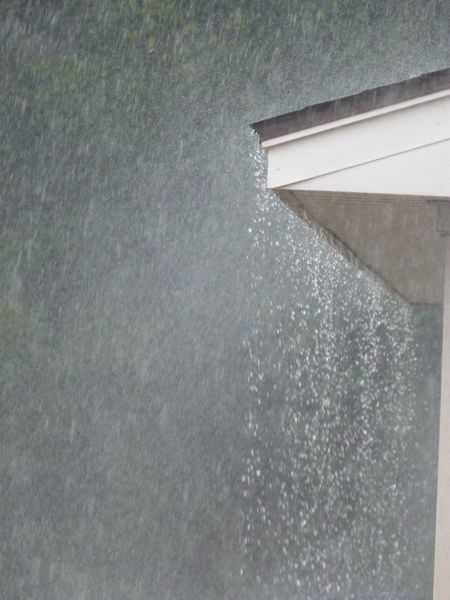


First thing I learned is that it’s not that easy to shoot rain drops. You have to shoot them against a darker background, and you have to shoot them at a slower speed, else you don’t see them at all.
This was great exercise. Now I want to go to Paris in November for more practice. Paris gets lots of rain in November, fewer tourists, it’s more the real Paris. It would also be great for shooting in black and white, people holding umbrellas, bent against the wind-driven rain, great architectural and textured backgrounds . . . 🙂
Deepwater Horizon Spill and Hazards
On the front page of today’s Pensacola News Journal is a report by the Associated Press saying:
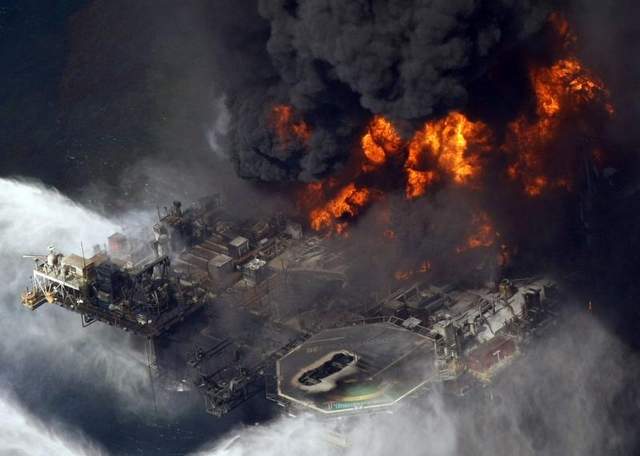
BP Missed Big Hazards, report says: Focus on worker safety obscured other problems.
HOUSTON – BP and the drilling contractor that operated the ill-fated Deepwater Horizon were so focused on worker safety they didn’t do enough to prevent major hazards, such as the 2010 rig explosion in the Gulf of Mexico that killed 11 people, federal investigators said yesterday.
Excuse me? Does that make sense to anyone?? So concerned with safety that 11 people got killed because they overlooked SAFETY problems?? I thought I must be crazy, but the report goes on to say the following:
The panel listed a litany of problems large and small they had already uncovered even though it has not received all of the records from Transocean, the drilling contractor that has challenged the board’s right to investigate the offshore incident.
Among the panel’s findings:
• BP and Transocean’s “bridging document,” designed to align safety procedures between the companies, was generic and addressed only six safety issues, but none of them dealt with major issues.
• The companies didn’t have key process limits or controls for safe drilling.
• There were no written instructions for how to conduct a crucial test at the end of the cementing process, one that ultimately was misinterpreted by the crew after it was conducted several times, each time differently.
• Similar concerns about too narrow a focus on personal safety were raised after an explosion in 2005 at BP’s Texas City refinery that killed 15 people, but few of the panel’s recommendations were implemented on the offshore rig.
“It’s always puzzled me why a company like BP … that has major resources available … is involved with two of the biggest accidents,” said John Bresland, a member of the board who is wrapping up his second five-year term and was involved in both investigations.
The drilling company doesn’t want to cooperate, and doesn’t think the federal government has the right to investigate? The company so focused on worker safety had an agreement with the drilling company that only focused on minor issues? NO key processes or controls?
What is wrong with this story? From this story, it is clear that worker safety was never a focus of BP. BP had another blowup with 15 deaths at a Texas refinery resulting from safety processes that were too narrowly focused, and now they are saying they are too focused on worker safety, and that is why they have so many worker deaths?
I guess, following the same reasoning, that the Deepwater Horizon blowup, which killed sealife, is still blackening beaches, which has created a tar carpet along the ocean floor, created birth defects among birds and mammals, and will create havok for a lifetime to come, all that resulted from BP’s excessive concern for the Environment?
Is this craziness? That kind of communication just makes me crazy.
I don’t care how much they end up paying to universities, groups promoting tourism, people who lost work, wildlife organizations, etc. as a result of the Deepwater Horizon explosion. You have to see that whatever they are paying is to buy silence, to buy complicity, to keep us from complaining too much when problems associated with the explosion continue to – literally – surface. Their money is to co-opt us. No matter what they are paying, it is too little.
A Swallowtail is Born
“Come down! Come down!” AdventureMan is calling me from the garden, and I can tell it is something special.
“Look! He just came out of the chrysalis! He’s still wet!”
It is a beautiful new swallowtail butterfly. When the eggs are laid – it takes a mere second, a mere brush-by as the tiny egg is placed on the fennel – they are a mere 1/32 of an inch, you can barely see them with your bare eyes.

It is 78° in the cool of the morning, the best part of the day. The sun is coming up, and a new swallowtail is drying off, preparing to fly away to a new life.

Iran Raids Coffee Shops as Un-Islamic

(Starbucks in Dubai Mail)
I always thought coffee shops started in that part of the world – oh wait, right, those were just for men.
LOL, found this on AOL, from Huffpost, from a Reuters report:
DUBAI, July 15 (Reuters) – Iranian police shut down dozens of restaurants and coffee shops over the weekend, Iranian media reported, in a renewed crackdown on what the state sees as immoral and un-Islamic behaviour.
Regular officers and members of the “morality police” raided 87 cafes and restaurants in a single district of the capital Tehran on Saturday and arrested women for flouting the Islamic dress code, according to the Iranian Students’ News Agency (ISNA).
“These places were shut for not following Islamic values, providing hookah to women, and lacking proper licenses,” said Tehran police official Alireza Mehrabi, according to ISNA. Women are not allowed to smoke hookah, water pipes, in public.
Mehrabi said the raid came as part of a plan to provide “neighbourhood-oriented” security, and would continue in other parts of Tehran.
Coffee shop culture has flourished in Iran in recent years, offering wireless Internet, snacks, hot drinks, and a place to hang out for Iranian youth in a country where there are no bars or Western chain restaurants or cafes.
But that trend has been criticised by conservative Iranians who consider it a cultural imposition from the West and incompatible with Islamic values. The government periodically cracks down on behaviour it considers un-Islamic, including mingling between the sexes outside of marriage.
In 2007, Tehran police closed down 24 Internet cafes and other coffee shops in as many hours, detaining 23 people. (Reporting By Yeganeh Torbati; Editing by Robin Pomeroy)
Reading Eight Months on Ghazzah Street by Hilary Mantel
When I told my niece I had become thoroughly engrossed in Hilary Mantel’s Wolf Hall and Bring Up The Bodies, she asked me if I had read her book Eight Months on Ghazzah Street. I hadn’t.

Meanwhile, I had started re-reading George R.R. Martin’s A Storm of Swords, so I’ll be ready when HBO does Season Three, and while there is no redeeming value, I sure enjoy the escape, and like my sister Sparkle, sometimes I forget it isn’t the real world, it’s not history, it’s FICTION. I enjoy every minute.
But now I am reading Eight Months on Ghazzah Street, and from the opening pages – where the main character is living in Zambia – I have been totally engrossed.
Frances and her husband Andy move to Saudi Arabia. It’s 1985, Andy is going to build a Saudi ministry headquarters, but it might well been the late nineties, when we lived there. Her flight into Saudi Arabia whipped me back to those days, and to all the loud-mouthed drinkers who kept the rest of us awake.
Frances goes in with preconceptions, but also with a spirit of adventure, and is quickly stifled by the claustrophobic apartment, the limited social opportunities and the lack of free movement as a woman. The heat is oppressive, the clothing rules arbitrary and annoying, and Frances finds all the cockroaches good company during her long lonely days while her husband works.
Her situation was not mine. I lived on a compound, with bus routes that took women shopping every day, twice many days. We had a pool, and a small store, and a video rental kiosk. I had more options, and I probably had more fun. AdventureMan was good about taking me down to the souks at night; it was exotic and interesting. It was also, as Frances describes it, stultifying. It was oppressive. Sometimes the phone worked just fine. Sometimes your dial-up access to the internet functioned. Even on a compound, where some women did drive, walking on your own invited ogling and comments from non-Western men. Living in a country where your sponsor holds on to your passport, and where you need to ask permission to leave the country, and where laws are enforced sometimes, and sometimes not, and where women cannot drive but 12 year old boys have their own cars – it’s La La Land, it’s crazy-making.
Even though I had options and friends, Hilary Mantel captures the time alone. You spend a lot of time alone. In my case, I got used to it . . . we also had a lot of time on our own in Qatar and in Kuwait, where you are more free, where women can drive, but where you can only go to the malls and souks so many times; even when the heat isn’t enough to knock you over, there really just isn’t that much to do. You learn to amuse yourself, you develop a talent for creating, you learn to like your own company.
Then you get back to the USA and the availability of so many options makes you feel semi-autistic, bombarded by so much stimulation you quail and retreat.
I haven’t even gotten to the meat of the plot; I’m about a third of the way in, and I’m feeling hot and sticky and restless and she has totally taken me back to expat life in Saudi Arabia.
Does the Surf Burger on Pensacola Beach Rock?
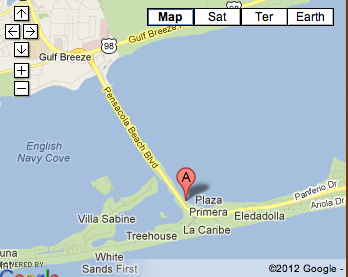
AdventureMan and I disagree about the Surf Burger on Pensacola Beach.
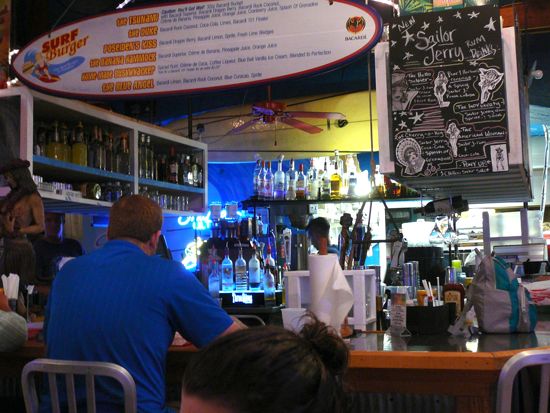
I don’t eat a lot of hamburgers. In fact, I eat about one a year, and it has become a sort of tradition that I go to the Red Robin around the Fourth of July for my annual hamburger quota. Like, if you’re going to do it, do it right. (“YUMMMMMMMMMMMMMMM.”) 🙂
But it was close to the 4th of July when our son called and said they were headed to the beach and did we want to meet them at the Surf Burger for dinner. We said sure, there is always something on the menu we can eat at most places, and we’ve never been to the Surf Burger. How can you live in Pensacola and never eat at the Surf Burger?
We got there first. There’s a part of me that felt comfortable there right away. It’s a lot like the old Red Robin used to be, the one we used to go to when I was in university, kind of a dive. There is a bar, and semi-sloshed looking people dressed in not-very-much trying to pick each other up, and a very basic menu, mostly hamburgers. And beer. And those mixed drinks with cute names you find at most beaches with 7 or more potentially lethal kinds of alcohol – in each drink.
It is both family friendly and pet friendly. If you are not wearing beach gear, you are overdressed. Service can be slow when they have a lot of customers, and often, they have a lot of customers. It’s very very hard on a Sunday night to find a parking place.
I knew just what I wanted – a Firecracker Burger. When it came, on two slices of toasted bread, I was disappointed, until I bit in. Once I tried it, I was happy. The burger tasted like 100% real meat, none of these chain burgers that you’re not sure how much is meat and how much is ‘special ingredients’ you really don’t want to know. It was SPICY; it was a Firecracker. I enjoyed every bite, and that is a good thing when you only eat one burger a year.

AdventureMan was not so happy. He ordered a SurfBurger. He hated the French Fries. He found his burger not that great. He thought it was greasy.
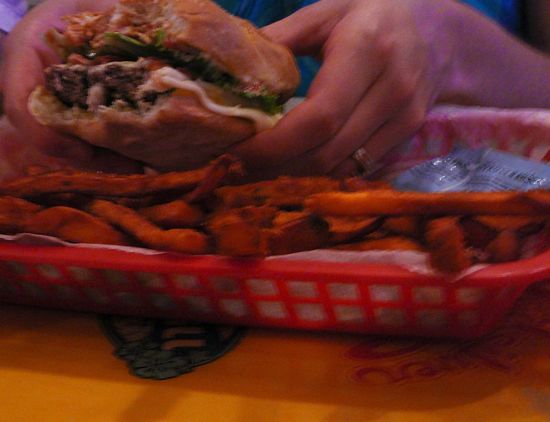
Our Vegan ordered a VeggieBurger, and she was happy, too. She said it tasted like meat, and had a great texture, but it wasn’t meat.

Surf Burger is probably not your destination kind of restaurant. It’s a burger joint. You go there for a hamburger because you are at the beach and you are hungry. You go there maybe to drink and hook up with a new friend. You go there because it is easy and comfortable and you don’t want to get cleaned up or dressed up. All those are good reasons to go to the Surf Burger.
Surf Burger
500 Quietwater Beach Blvd
Pensacola Beach, FL
850-932-1417
TO GO ORDERS WELCOMED
Mon – Thur: 11am – 10pm
Fri: 11am – 11pm
Sat: 8am – 11pm
Sun: 8am – 10pm
5 Stars for Bonnie, at Pensacola’s Fish House
It’s another rainy, stormy day in Pensacola, and we decide we want to have comfort food for lunch. That narrows our selection down to three places – Tudo’s, 5 Sisters, and The Fish House. We decide this is a good day for The Fish House – maybe we can get in without a wait, with all the people heading out to Pensacola Beach.
We have to wait in the car, once we get there, because the rain is coming down in buckets, and the wind is blowing it sideways.
Our windshield looking at the Fish House:
Once it abates a little, AdventureMan gets his umbrella, runs around to my side of the car, and covers us both as best we can as we run up the steps and inside the restaurant.
Things can change in a heartbeat, we think, watching out the window next to the table where we are seated. Today is the Blue Angel’s Day at Pensacola Beach, but with all this thunder and lightning and we can’t imagine how this can work.

“There is always a bubble over the beach,” Bonnie, who has a sweet smiling face, informs us. Even when it is raining in Pensacola, most of the time it is fine out at the beach.”
That’s a comfort, because the rain is really coming down.
We order, and when our order comes, AdventureMan’s pizza is covered with cheese. That is a good thing, if you are a normal American, but not such a good thing if you are us. We’ve eaten pizza for so long overseas that we aren’t used to the gooey layers of cheese covering most American pizzas. AdventureMan scrapes it off, and eats the pesto and tomato topping underneath. (My Grits a Ya Ya are divine.)
Bonnie is dismayed.
“Can I take it back and have it done the way you like it?” she asks.
“No, no” we assure her, it’s our fault, our idea of pizza is different and we just forgot that momentarily, we are fine.
She couldn’t let it go. She felt so badly seeing all his piles of melted cheese.
“Let me buy you dessert,” she tried.
“No, No, Bonnie, this isn’t your fault or the Fish House fault; it’s our fault for not remembering that pizzas here come with more cheese. It’s not you’re problem, we are happy with this nice table and a great waitress. We don’t fault anyone for this.”
She brought the bill. As we handed the payment to her, she handed us a small take-away box.
“I want you to have this,” she insisted. We opened it when we got to the car. It was a piece of their special blueberry cheesecake, garnished with a flower.
You know me. I complain about bad customer service. It’s only fair that when we get superb customer service that we tell you about that, too. Bonnie was superb. She has mastered the art of customer service. She is a reason people come back to The Fish House. 🙂
Hot Rain For Pensacola Blue Angels

It’s the biggest week for Pensacola and Pensacola Beach, it’s Blue Angels week, and people come from all over the USA to watch our home team do arial acrobatics. It’s always a thrill, driving to an appointment, when suddenly the Blue Angels appear in the sky, flying in close formation. Their practices are a weekly delight to Pensacolians.
It’s a funny week, though, a week when we have had rain almost every day. It makes summer in Pensacola different from summer in Kuwait and Qatar. In Pensacola, rain is a good thing, sometimes we don’t get enough. This year, we have been deluged; one area of our city flooded while we were in Zambia, and even our house suffered from the hurricane-force wind-driven rain.
It’s not a cold rain, it’s a hot rain, the rain falls and the temperatures are in the 90’s, falling to the high 80’s. We are planning to go out to the beach to watch the big practice on Friday (we do not plan to go for the full show on Saturday! Maybe someday when we can book a hotel room for that time) hoping the beach breezes keep the mosquitos at bay. Thundershowers are forecast for the entire week, through Saturday, but, when they come, they don’t last too long, an hour at most, and then the air is clear and clean. Not crisp, but clear and clean and HUMID!

The mosquitos are thriving. It was forecasted when we had such a mild winter that the insect population would rocket, and already, barely midsummer, or at least mid-heat of summer, and dengue fever has hit in New York, Miami, and other mosquito-borne illnesses are showing up throughout Florida. Dengue fever, the article referenced above states, used to be seen only in people returning from overseas country where it was present, but now, mosquitos in the USA are carrying it. Good time to wear repellant. 🙂
Recent Comments
intlxpatr on Shampoo Ginger tigerbutterya0c5ff1d… on Shampoo Ginger intlxpatr on British Soldier Kidnapped, Esc… John on British Soldier Kidnapped, Esc… intlxpatr on British Soldier Kidnapped, Esc… Wikipedia Donate Button

Amazina


Early Voting in Florida


