Hot Rain For Pensacola Blue Angels

It’s the biggest week for Pensacola and Pensacola Beach, it’s Blue Angels week, and people come from all over the USA to watch our home team do arial acrobatics. It’s always a thrill, driving to an appointment, when suddenly the Blue Angels appear in the sky, flying in close formation. Their practices are a weekly delight to Pensacolians.
It’s a funny week, though, a week when we have had rain almost every day. It makes summer in Pensacola different from summer in Kuwait and Qatar. In Pensacola, rain is a good thing, sometimes we don’t get enough. This year, we have been deluged; one area of our city flooded while we were in Zambia, and even our house suffered from the hurricane-force wind-driven rain.
It’s not a cold rain, it’s a hot rain, the rain falls and the temperatures are in the 90’s, falling to the high 80’s. We are planning to go out to the beach to watch the big practice on Friday (we do not plan to go for the full show on Saturday! Maybe someday when we can book a hotel room for that time) hoping the beach breezes keep the mosquitos at bay. Thundershowers are forecast for the entire week, through Saturday, but, when they come, they don’t last too long, an hour at most, and then the air is clear and clean. Not crisp, but clear and clean and HUMID!

The mosquitos are thriving. It was forecasted when we had such a mild winter that the insect population would rocket, and already, barely midsummer, or at least mid-heat of summer, and dengue fever has hit in New York, Miami, and other mosquito-borne illnesses are showing up throughout Florida. Dengue fever, the article referenced above states, used to be seen only in people returning from overseas country where it was present, but now, mosquitos in the USA are carrying it. Good time to wear repellant. 🙂
Hilary Mantel: Wolf Hall & Bring Up the Bodies
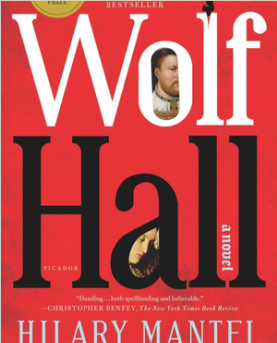

While it is unusual for me to comment on two books at the same time, Bring Up the Bodies follows so seamlessly the preceding book, Wolf Hall, as to be one book. It is also unusual that I would choose to read a book about Thomas Cromwell, whose great-grandson brings into dictionaries the adjective Cromwellian, and whose morals and values drift so far from my own. Most unusual of all is that I would find myself liking – and understanding – Thomas Cromwell as described and defined by Hilary Mantel.
While reading, if forced away from the book, I couldn’t wait to get back to it. I felt totally immersed in the 1500’s, I felt like I was there. Hilary Mantel uses the senses to bring an immediacy to the story that makes you feel you are there, participating, perhaps one of Cromwell’s clerks.
Thomas Cromwell has a rough beginning, son of a blacksmith and sometimes moonshiner, often beaten to within an inch of his life by his father, Walter, who seems to hate him. He leaves home and the next few years of his life are murky – he fights for the French, he becomes a servant and later a clerk in a high ranking Italian household, he learns the wool trade, and the silk trade, he spends some years in Antwerp and then he finds himself as chief clerk and messenger to Cardinal Wolsey, advisor to Henry VIII.
We experience losing our loved one to the plague. In these two books, through Cromwell’s eyes, we watch that spoiled, self-centered King Henry VIII rationalize his divorce of Katherine, and then the beheading of Anne Boleyn.
Here is something I hate about Thomas Cromwell, no matter how human and humane and lovable Hilary Mantel made him, that his primary value throughout was that whatever Henry wanted, he would work to make it so.
We learn early in Wolf Hall how very dangerous it is to go up against King Henry, we watch Cardinal Wolsey stripped of his honors, his luxuries, humiliated and defeated. We see Thomas More badgered to execution. So we can understand, a little, Thomas Cromwell’s motivation to keep his hard-earned money, honors, position, etc.
What I don’t understand is how a really, very smart man like Cromwell doesn’t see that he needs to be hiding his wealth away, investing in places where Henry can never find it, so that he can leave the King’s service, withdraw from public life and from the dangers that go with it. By the end of Bring Up the Bodies, Cromwell has made a lot of enemies. Such a nice man, such a benign man, but he relentlessly prosecutes the four men who may – or may not – have slept with Queen Anne Boleyn. It’s what the king wants. He does it.
This is a protrait of Thomas Cromwell painted by the famous Hans Holbein:

Wolf Hall won the Man Booker Prize in 2009. Bring Up the Bodies is sometimes referred to as Wolf Hall #2. These are books you can’t stop thinking about, and I am hoping there will be one more.
Wooo HOOO, Saudi Arabia Allowing Female Olympic Athletes
It hasn’t been so long in our own country since Title IX made it possible for more and more women to participate in athletic events, making funding possible, giving women in the United States an opportunity to participate in healthy athletic activities.
RIYADH, June 25 (Reuters) – Saudi Arabia will allow its women athletes to compete in the Olympic Games for the first time ever in London this summer, the Islamic kingdom’s London embassy said on its website.
Human rights groups had called on the International Olympic Committee to bar Saudi Arabia from competing in London, citing its failure ever to send a woman athlete to the Olympics and its ban on sports in girls’ state schools.
Powerful Muslim clerics in the ultra-conservative state have repeatedly spoken out against the participation of girls and women in sports.
“I think this is a victory for Saudi sportswomen and hopefully it will promote sports and women’s health awareness for the Saudi society,” said Lina al-Maeena, co-founder of Jeddah United Sports Company, a rare women’s exercise club that runs a female basketball team.
In Saudi Arabia women have a lower legal status than men, are banned from driving and need a male guardian’s permission to work, travel or open a bank account.
Under King Abdullah, however, the government has pushed for them to have better education and work opportunities and will allow them to vote in future municipal elections, the only public polls held in the kingdom.
Saudi women will be able to compete in the London Olympics only if they reach the qualifying standard for their event, and the Games opens in just over one month, on July 27.
“The kingdom of Saudi Arabia is looking forward to its complete participation in the London 2012 Olympic Games through the Saudi Arabian Olympic Committee, which will oversee the participation of women athletes who can qualify for the Games,” said a statement published on the embassy website.
The woman most likely to compete under the Saudi flag in London, show jumper Dalma Malhas, was ruled out on Monday when the World Equestrian Federation (FEI) said the 20-year-old’s mare Caramell KS had been sidelined by injury for a month during the qualifying period and had missed a June 17 deadline.
“Regretfully the Saudi Arabian rider Dalma Rushdi Malhas has not attained the minimum eligibility standards and … will not be competing” at the London Olympics, FEI secretary general Ingmar De Vos told the FEI website (www.fei.org).
Malhas won individual bronze at the junior Olympics in Singapore in 2010, but without official support or recognition.
In April the head of the General Presidency of Youth Welfare, which regulates sport in Saudi Arabia, said it would not prevent women from competing but they would not have official government endorsement.
The government’s role would be limited to ensuring that Saudi women’s participation “is in the proper framework and in conformity with sharia”, he said.
The IOC said on Monday that talks with the Saudis were “ongoing” and that “we are working to ensure the participation of Saudi women at the Games in London”.
The head of the kingdom’s Olympic mission, Khalid al-Dakheel, told Reuters on Sunday that he was unaware of any developments allowing women to participate.
Top Saudi clerics, who hold government positions and have always constituted an important support base for the ruling al-Saud royal family, have spoken against female participation in sports.
In 2009 a senior cleric said girls risked losing their virginity by tearing their hymen if they took part in energetic sport.
Physical education is banned in girls’ state schools in the kingdom, but Saudi Arabia’s only female deputy minister, Noura al-Fayez, has written to Human Rights Watch saying there is a plan to introduce it. (Reporting by Angus McDowall and Asma Alsharif; editing by Tim Pearce)
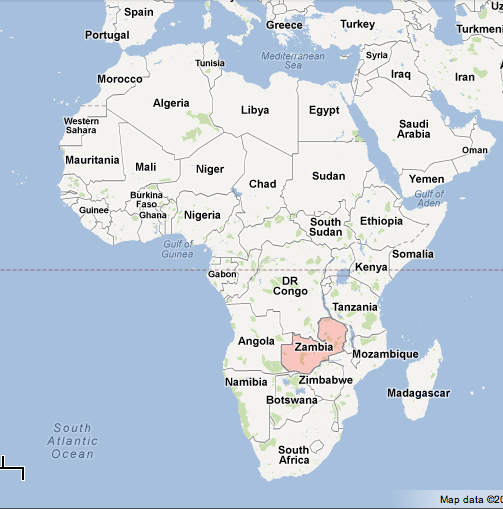
Where is Zambia?
Zambia is in the central part of southern Africa:
It is a beautiful and varied country, with many peoples speaking many different dialects. It is an amazing country in that they have all managed to learn to get along with one another. They learn each other’s languages in the schools, they have instilled a culture of respect for the differences as well as a focus on the similarities they share. Our Zambian friends work hard, and they are very proud of Zambia. When you visit, you can’t help but respect and admire their pride.

I found a photo of Zambia’s flag on Wikipedia, and an explanation for the graphics and colors:
The colors used in the flag of Zambia are rich in symbolism. Green stands for the nation’s lush flora, red for the nation’s struggle for freedom, black for the Zambian people, and orange for the land’s natural resources and mineral wealth. Additionally, the eagle flying above the colored stripes is intended to represent the people’s ability to rise above the nation’s problems.

We traveled often to Zambia from our homes on the Arabian Gulf, but this will be a very different trip, crossing 8 time zones and flying a very very long time to get there. It will take us longer to get to Zambia, via South Africa, than it used to take us to get to Qatar or Kuwait. We’ll have two nights, one in Johannesburg and one in Lusaka, before we start out on our safaris.

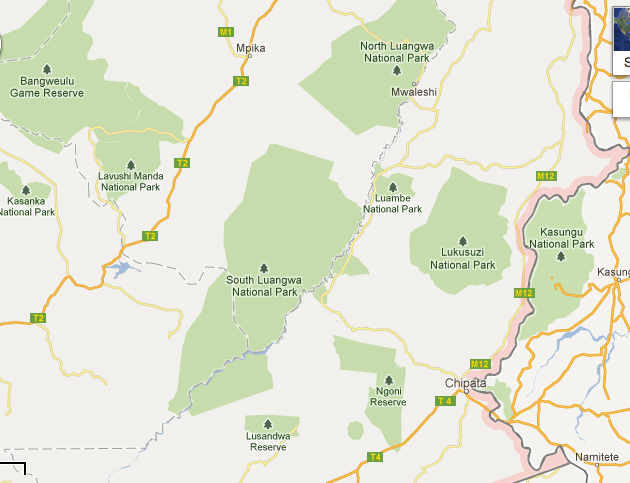
It’s a different world. You know it as soon as you get there. It smells different. You smell wood-burning fires and dust. Out in the South Luangwa, where we are going, you hear the hippos saying ha-ha-ha-ha-ha-haaaaaaaaaaaah in the nearby rivers and ponds, and sometimes you will hear elephants fighting, and it is very loud with lots of crashes. You hear soft birds, and when you hear English, it is spoken with a different lilt, so you have to listen more carefully, pay better attention, so you will understand what is being said.
It’s a different world, too, in that sometimes your bags don’t catch up with you. Sometimes bags are just never seen again! We are carrying our nightclothes and a change of clothes with us to help us deal with unforeseen challenges.
Did I mention we are very excited?
I am thinking we need an eagle flying above our stripes to symbolize American belief that we can rise above our nation’s problems . . . 🙂
Packing For a Purpose
Part of what we love about the Robin Pope Safari Camps is that we also get to go into the village and see how the schools are doing. There is a consortium of safari camp service providers who donate a portion of their profits every year to providing for and maintaining schools, finding sponsors for children who have no parents, finding help for teachers in obtaining much needed supplies.
Many of the children of the village are truly being raised by the village, as fathers and mothers succumb to the dreaded wasting disease, to malaria, to yellow fever and to problems attending poor nutrition and inadequate access to health care. The camps bring in a volunteer doctor, when they can, who works with the villages six months to a year or so. Children are looked after by aunts and uncles, or grandparents, or a neighbor – who may not have much to spare, with her own children to look after.
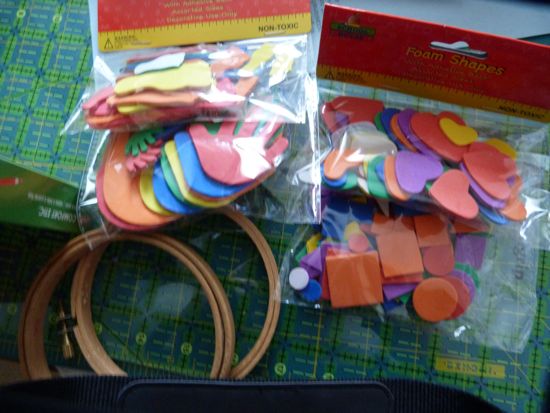
So, with a prayer, we headed for Staples to pick up school supplies. What a deal! Pocket dictionaries! Boxes of 60 pens! It is so exciting, I bought too much, and now we are hoping they won’t weigh our suitcases too accurately. We’ve jammed a lot in . . .

I should have checked the website again before I shopped, or I wouldn’t have bought so many pencils, but they DO still need erasers, and I bought a lot of those. And I try to stick in something they might have some fun with – sticky notes. foam shapes. glue sticks. This year I am including some threads and counted cross stitch fabrics, hoping maybe someone will develop an interest in needlework 🙂
We are getting so excited we can hardly stand it. AdventureMan is trying lots of new techniques and camera equipment, hoping to get some stellar shots. I am taking my new Lumix, the FZ40/45, a lightweight camera with a 24X optical zoom. He gets great artistic shots (water drops dripping off a wide-open hippo mouth as he opens his jaw unbelievably wide) and I get great documentary shots – the rooms, the bathroom fixtures (LOLL, yes, I can’t help it, I love creative design!) and textiles, as well as the wildlife and the environment.
We had just enough room in our suitcases for all the school supplies. Now we will have room for that last stop at Tribal Textiles . . . 🙂
The Winner!
You’d think, now that we are ‘retired’ that we would have a lot of time, but we have plugged in to our community, and we are busy and scheduled! Before I left for Seattle, I was preparing for, and then helping with the Pensacola Quilt Show, held only every two years.
It was a lot of fun. Pensacola has amazing quilters, people who hand-piece and hand quilt, people who are amazingly skilled at machine quilting, and I am honored to know some of them, and delighted when I get a chance to work alongside them.
Whether or not I had won a ribbon, I would be honored just hanging my quilts in the same room with these talented women. Nevertheless, I did win an honorable mention in the theme quilt catagory, which was Snail’s Trail. I am only telling you this because I want to show you the ribbon, which is whimisical, clever and delightful:

I smile every time I look at it.
In addition, I won one of the offerings at the Chinese Auction. I have seen these auctions run different ways, but in this one, you get 25 chances for $5, and I put all my chances in the jar for these fabrics, I wanted them so badly. I took a class from the lady who made them, and I love the work she does. Winning this is like winning a pot of gold for a quilter 🙂
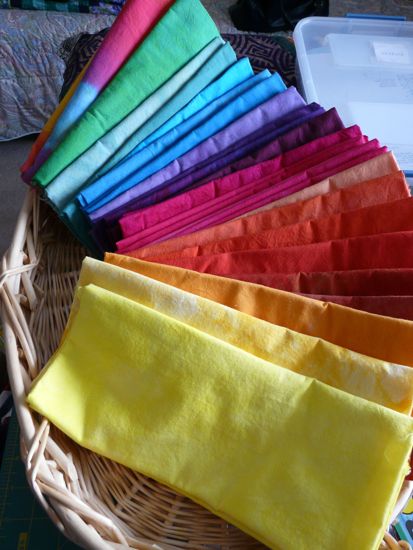
When I look at these fabrics, I am ready to start quilting again!
Signs of Spring in Pensacola
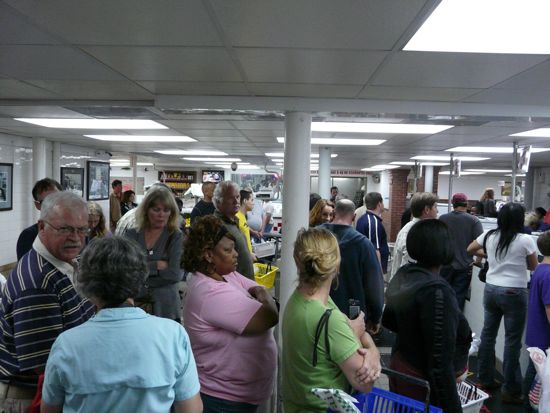
Coming home from a meeting last night, I head into Joe Patti’s to pick up some crab for dinner, and holy smokes! The parking lot is full! There is no line coming out the door, and a car pulls out so I get a space, but what is going on?
Once I get in, I know. The place is PACKED, and most of these folk are wearing beach clothes or short sleeves, a couple young women in strapless sun dresses . . . I get it. It’s Spring Break time in Pensacola, and Joe Patti’s is as packed as it was on Christmas Eve Day. Lines to pay are snaking around everywhere, and I get the last loaf of multigrain French bread.
At least the lines are civil. The locals smile at one another – we’re all wearing long sleeves, it’s cloudy and a little on the cool side. Part of me smiles to think of myself as ‘local.’ Guess I’m getting there.
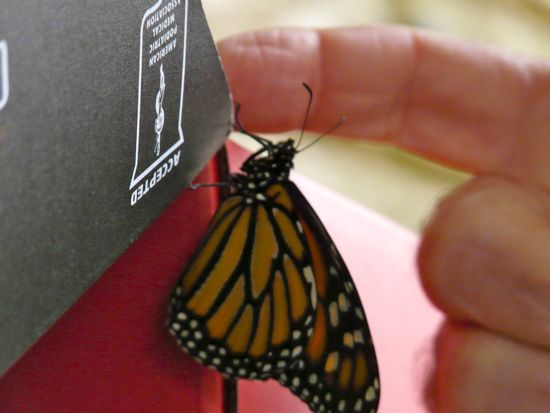
When I get home, AdventureMan is all smiles, and not just because I’m going to make Open Faced Crab Sandwiches for dinner. No! One of his Monarch butterflies has hatched! We’ve had such a mild winter that we’ve had a few hatching here and there all winter, but this is the first butterfly of spring, and he is fresh out of the cocoon. After losing two cocoons to hungry birds, he devised a protective shoe box. AdventureMan is fast becoming a local expert on creating a safe environments for butterflies to feed, lay eggs, cocoon and hatch. He’s also having a lot of fun with it.
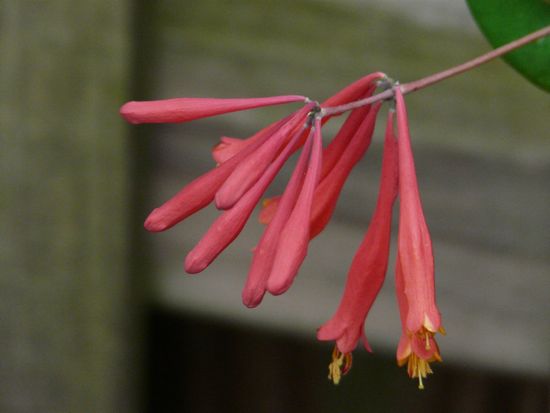
On our back fence, a vine we planted last October is taking root and taking off. I think it is a coral honeysuckle, also called a coral trumpet honeysuckle, or coral trumpet vine. It attracts both butterflies and hummingbirds. 🙂

This is not particularly a Spring photo, but it is a seasonal photo. The oysters right now at the Marina Oyster Barn are HUGE! I had a bowl of oyster stew, AdventureMan had six raw oysters and the little lady sitting behind us had a full dozen. “I can’t get these in Illinois!” she exclaimed; AdventureMan could barely eat all six, they were so huge, so we had a hard time believing she could eat 12, but she did!

Just as the weather is perfect for getting outdoors and cleaning out the weeds, the pollen also starts flying. I get out while it is cool, weed a selected area and come back in and shower all the pollen off. It doesn’t do that much good; my eyes are still watering and I am sneezing, but who knows how bad it would be if I didn’t wash the pollen off?
Scanning Obituaries
Who knew? I certainly didn’t, and yet I find that I’m not alone. AdventureMan does it, too, and other friends. One friend says she thinks she scans the obituaries to celebrate the fact that she is still alive. That may be it for most of us, but in addition, I find that there are people living among us with amazing histories, and we don’t even know. Sometimes when you read an obit, you can tell that the person wrote it himself or herself, and what that person considered important in his/her life. Sometimes the obituary is not very loving.
Southern newspapers, in my experience, are much richer in extraordinary detail that newspapers in bigger cities, like Seattle. In bigger cities, only the rich and famous or notorious get much space; it may be that the space is far more expensive in the bigger cities, or that families are less willing to shell out from the estate for the bigger coverage. Southerners value family, and history; it’s a part of the culture.
Yesterday, when I took the Pensacola News Journal in to AdventureMan, I had circled something in one of the obituaries, knowing that he, like me, only reads them now and then. I didn’t want him to miss this line:
(Name) was a Past Mighty Chosen One of the Zelica Daughters of Mokanna, Ladies Auxiliary to the Grotto.
Holy smokes! I thought it might be one of the Mardi Gras Krewe things, but AdventureMan googled, and discovered that is a Masonic offshoot, and their larger groups are called Cauldrons. (!)
In America of the early 1900’s, social affiliation groups were important. People belonged to religious groups like Knights of Columbus, Ladies of the Church, etc, quasi-religious groups like Masons and Shriners, and social groups like the Elks and Moose and Lions Club. Some groups still exist, and are still going strong, like Rotary Club, and special interest groups. In Pensacola, there is a Tea Party AND a Coffee Party. There is a Philipino-American Republican Club. When people gather together regularly to share something in common, they can form a group. All of these groups help people be connected in their communities and in their lives, and help people to look after one another.
I belonged to a group once that called ourselves the Aqua-Babes. To be perfectly honest, we might not be total babes, but hey – it’s our group, we can call ourselves what we want, right?
But oh, my, to be a Mighty Chosen One . . .
The Problem of Saint Bridget
Today is the Feast of St. Bridget, and I found the following in our Lectionary for today. The problem for Christians is that we are to travel lightly on the earth, caring not for possessions, as Bridget did. The poem is hilarious:
ST BRIDGET OF KILDARE
ABBESS (1 FEB 523)
Bridget (Brigid, Bride, Bridey, or in Welsh, Ffraid) of Kildare was born around 450 into a Druid family, being the daughter of Dubhthach, court poet to King Loeghaire. At an early age, she decided to become a Christian, and she eventually took vows as a nun. Together with a group of other women, she established a nunnery at Kildare (meaning, Church of the Oak). She was later joined by a community of monks led by Conlaed. Kildare had formerly been a pagan shrine where a sacred fire was kept perpetually burning, and Bridget and her nuns, instead of stamping out the fire, kept it going but gave it a Christian interpretation. (This was in keeping with the general process whereby Druidism in Ireland gave way to Christianity with very little opposition, the Druids for the most part saying that their own beliefs were a partial and tentative insight into the nature of God, and that they recognized in Christianity what they had been looking for.) Bridget as an abbess participated in several Irish councils, and her influence on the policies of the Church in Ireland was considerable.
Many stories of her younger days deal with her generosity toward the needy. This aspect of her character has been the subject of a poem:
“The Giveaway” (from The Love Leters of Phyllis McGinley, New York, Viking Press, 1957)
 Saint Bridget was
A problem child.
Although a lass
Demure and mild,
And one who strove
To please her dad,
Saint Bridget drove
The family mad.
For here’s the fault in Bridget lay:
She would give everything away.
To any soul
Whose luck was out
She’d give her bowl
Of stirabout;
She’d give her shawl,
Divide her purse
With one or all.
And what was worse,
When she ran out of things to give
She’d borrow from a relative.
Her father’s gold,
Her grandsire’s dinner,
She’d hand to cold
and hungry sinner;
Give wine, give meat,
No matter whose;
Take from her feet
The very shoes,
And when her shoes had gone to others,
Fetch forth her sister’s and her mother’s.
She could not quit.
She had to share;
Gave bit by bit
The silverware,
The barnyard geese,
The parlor rug,
Her little
niece’s christening mug,
Even her bed to those in want,
And then the mattress of her aunt.
An easy touch
For poor and lowly,
She gave so much
And grew so holy
That when she died
Of years and fame,
The countryside
Put on her name,
And still the Isles of Erin fidget
With generous girls named Bride or Bridget.
Well, one must love her.
Nonetheless,
In thinking of her
Givingness,
There’s no denial
She must have been
A sort of trial
Unto her kin.
The moral, too, seems rather quaint.
Who had the patience of a saint,
From evidence presented here?
Saint Bridget? Or her near and dear?
It is reported of Francis of Assisi that as a young man he had a dream in which God said to him, “Francis, repair my church.” He took this to refer to a church building near Assisi which was in need of repair, and he sold a bale of silk from his father’s warehouse to obtain building materials. His father was furious. Francis had not asked for permission: he simply took it for granted that his father would wish to contribute to such a worthy cause. It is said of Bridget that as a young girl she made similar assumptions about her family.
 |
| St. Bridgit’s Cross, at St. Bridgit’s Church in Kildare |
There is a problem here. On the one hand, it can be argued that if our family members do not choose to make sacrifices for God we have no right to make that choice for them. Some time ago, if I remember aright, one listmember wrote in considerable bitterness about a childhood that had been blighted by the decision of the father that it would be nice if the whole family lived in Christian Poverty. (Said listmember found no spiritual blessings in the experience, and saw no sign that anyone else did, emphatically including said father.)
On the other hand, I far more frequently hear Christians argue that their sacred duty to keep everything nice for their spouses and children prevents them, not only from going as missionaries to distant shores, but also from volunteering even quite moderate amounts of their time and money for worthy causes down the block. (Not that all unattached Christians are blameless in this regard.) You will note that Saint Paul, writing to the Corinthians, told them that marriage, while instituted of God and a sign of the union between Christ and His Church, was not without its dangers to the spiritual life of the Christian. But the danger he saw had nothing to do with sex. He was concerned instead that the married are tempted to overvalue security, to feel that they cannot afford, for their families’ sakes, to take chances. And since he expected Christians to be facing persecution soon, he saw this as a matter of urgency.
So, as I said, there is a problem here. I have no final answer to give, but commend it to your consideration.
by James Kiefer
Pensacola Nutcracker
AdventureMan and I had a truly wonderful seasonal adventure tonight, as we attended the opening night of the Ballet Pensacola production of The Nutcracker. All over America, ballet companies pay their bills by putting on this annual favorite, but Pensacola has a knack for making it fresh and new every season.
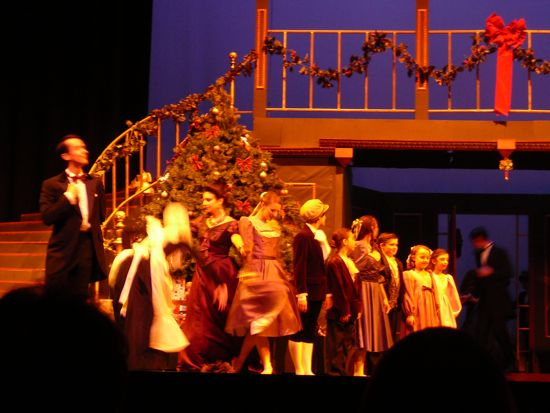
I am sorry, this is the only photo I have that turned out halfway decent, and AdventureMan was poking me and huffing about my rudeness because my little camera will shoot in low light, but I brought the wrong one, and this one doesn’t have an viewfinder, so it’s ‘making too much light’ to quote AdventureMan.
The sets and costuming are wonderful. The sets were lush and colorful; the costumes fresh and delightful. The snowflakes really sparkled, and had sparkly silver hairpieces that looked light, stayed in place, and captured the sparkly lightness of real snowflakes; it was one of the highlights of the ballet for me. I also loved the coffee costumes – sort of Middle East-y if Middle East dancers wore sparkly pinkish scarves and tinkling belly dancer wraps around their hips. The costumes were delightful, and the dancers seemed to be having a lot of fun.
The tiny angels were hilarious, and oh, my stars, the sheep! You must go, you must see the sheep! This is one sweet production, a treasure of the season, and you might still have a chance to buy a ticket for the Saturday night performance at 7 or the Sunday afternoon performance, both at the Saenger Theatre on Palafox. Children are DRESSED; this is the South, and this is The Nutcracker Ballet!
Recent Comments
intlxpatr on Shampoo Ginger tigerbutterya0c5ff1d… on Shampoo Ginger intlxpatr on British Soldier Kidnapped, Esc… John on British Soldier Kidnapped, Esc… intlxpatr on British Soldier Kidnapped, Esc… Wikipedia Donate Button

Amazina


Early Voting in Florida


 Here There and Everywhere