Arabesk and Jon Courtenay Grimwood
I am blessed with friends and family who share books, and Pashazade came into my life courtesy of Little Diamond, my globe-trotting glamourous niece. She always leaves a trail of books as she wanders hither and yon. Some of them are just too deep for me, or need too much attention. This series, the Arabesk Trilogy by Jon Courtenay Grimwood almost fell in that category.
I missed a clue. I kept trying to start the first volume, Pashazade, but was having a problem keeping up with the plot and the technology. I would go back and read again, trying to figure out what I was missing. I know I’m living in Kuwait, but I read! I keep up with the news! When did all this new stuff happen?
And then I just happened to look at the cover of the book and it all became clear – it is a parallel world, it is science fiction, and once I started reading and accepting all the strange words and implants as literary license, the book became fun, and intriguing, and very very hard to put down. And then I had to wait while the second and third volumes (Effendi and Felaheen) because the series is that much fun.
The main character, Ashraf al-Mansur has a complicated past. The plot is complex enough, but Ashraf doesn’t know who he is, we don’t know who he is, and we have to take time out from the plot now and then to get another piece of the puzzle. Fortunately, the puzzle pieces are in all kinds of cool places – Alexandria (but a different Alexandria from current day Alexandria) and the Sudan) but a slightly different Sudan, with a prophetic edge to it) and Seattle and a mental institution, and Tunis and the desert oases . . . oh, this is a lot of fun.
So Ashraf starts out in Alexandria, with his Aunt Nafisa who lives in this marvelous old madresa in Al Iskandriya, but then his aunt is killed, Ashraf becomes guardian to an exceedingly bright and introverted young girl, and falls in love with a young woman with whom he refused an arranged marriage.
Ashraf has friends in high places, is believed to have relations in high places, and although he gets into the worst situations, he has WASTA and a lot of problems just disappear. (For my non-Kuwaiti readers, wasta is sort of like the-power-of-connection-and-who-you-know-and-maybe-who-owes-you-a-favor-or-might-be-open-to-a-little-encouragement). These connections get people killed in the Arabesk trilogy, threaten chaos and mutilation and disaster, and take you on a great ride. Oh! Did I mention this is also a mystery, romance and has political intrigue, too?
It’s modern day – or maybe a year or two in the future – and with a huge twist in the universe here and there, so that it seems familiar, but it isn’t. There are dark shadows and differences that can be critical. And it has a whole raft of “who’s your ally?” kind of situations. It is a richly textured romp, and you are along for the ride. Don’t fight it, just lean back and hang on.
It is pure escapism, no great deep thoughts here. When the trilogy ends, however, you remember the characters, you remember the plots, and you still grin about them months later.
Pashazade, the first volume, is available through Amazon in hardcover and paperback. Paperback starts under $5.00, through used vendors.
Effendi is available from $10.20, new paperback edition.
Felaheen is available new and used from $8.99

Bahrain Censors Google Earth
This morning my nephew from GE sent me an e-mail with an article from the Financial Times on Mahmoud’s Den and Google Earth in Bahrain. When Google Earth upgraded the resolution on Bahrain, Bahrainis started recording the discrepancy in properties, and circulating copies of residencies, luxury cars, boats, etc. in contrast to the poor, crowded villages. The Bahraini government banned the use of Google Earth in Bahrain. You can guess what happened next – downloads shot through the roof. It’s just human nature.
The article in Financial Times gives more information.
When are governments going to figure out that when you ban a technology, you only make it more attractive? Google Earth downloads for free, it is available to everyone with a computer and adequate bandwidth. No matter what safeguards you put in, there are ways around it. That’s just the nature of technology.
Mahmoud’s Den sports a button that says “No Sunni, No Shiia, Just Bahraini”.
Early Christmas Preparations
Did you know that Thanksgiving used to be earlier in November, and when it was moved to the 4th Thursday in November, the merchants objected because it shortened the Christmas shopping season? It seems to me that the season gets started earlier and earlier every year, in spite of the Thanksgiving change.
In Germany, many people used to put up the tree on Christmas Eve day. We usually put ours up around December 15th – we wanted to have the beauty in the house, but also wanted to be sure it would last without drying out and becoming a fire hazard. It was cold enough that we could buy the tree and keep it outside, and then put it up when we had the time and energy.
And our tradition was that the tree had to be down by the Feast of Epiphany, on January 6th, the day the church celebrates the Wise Men (probably Persians) who came seeking the small baby born in Bethlehem.
We are having a smaller Christmas this year. With my Dad so ill, I don’t have the psychic energy to go all out as usual. Last year, we were all together; Dad and Mom bought tickets for Christmas Eve Day for all of us, the huge entire family, to go see the Nutcracker Ballet together. It was hugely fun. The production was lively and beautiful and delightful, all our plans went smoothly, and then we gathered back at Mom and Dad’s for finger-food dinner and a cut-throat game of Hearts. So much laughter, so much fun.
So I have the packages wrapped and my husband, God bless him, will get them in the mail today to insure they will arrive in time for Christmas. Although we are not going back, our son and his bride will be with us for Christmas here in Kuwait – alhamdullah! In my heart, I think of her as “the Seaside bride” – they were married on a gorgeous late afternoon in April on a snowy white sand beach in Florida. She was glowing and beautiful. He was beside himself with happiness. It was one of the happiest days in my life.
It was a bright, sunny afternoon. The minister, in his black suit, had sunglasses on. When we posted the photos, all our friends asked if he was FBI. He looked like a “man in black”.
On our way to church last night, I saw people who already have Christmas trees up and ready, all lit up in their windows. I remember last year in Qatar, where the word “Christmas” is never mentioned in the ads; stores advertise “seasonal decorations”. We celebrated 50 years of the church in Kuwait last night, and I thank God to live in a sophisticated country, where we are free to worship the same God, but in our own way.

(Qatteri Cat thinking about getting ready for Christmas)
But for me, it’s still too early to put up a tree. It is too bright, too sunny, the Christmas tree looks diminished in the bright light. I have my boxes labled so I can pull out the early decorations first, without having to go through everything. Just a few baubles, a few little lights, and a little more next week.

(Thought I would go silver this year, courtesy of some cool stuff from IKEA, but it was too cold and hard, softened up by adding just a little additional color)
Philippa Gregory and Catherine of Aragon
Being sick has one advantage. . . you can catch up on some of your reading. Philippa Gregory is one of my favorite writers of historical fiction.
To my great shame, I have a very difficult time reading history. Unless it is vigorously written, it puts me to sleep. It is particularly embarassing when my husband has a degree in History, and his eyes light up discussing battles and strategems and who said what to whom and why it matters. It has to do with my hard-wiring, it’s not even a gender thing.
So I gravitate toward historical fiction; give me people and motivations and interactions any day, and I can remember it. Sometimes, I even learn something. Philippa Gregory never lets me down. She researches, she documents, and she might speculate, but you always have a clear idea what is real (historically documented) and what is a good story, putting meat on the bones of the history.
Out of sequence, I read The Queen’s Fool and The Other Boleyn Girl. Each of these books is peripheral to the story of Catherine of Aragon. The first features a woman chosen to be a Fool at the court of Queen Mary, Catherine’s daughter. She is of Jewish descent, hiding as a Christian, escaped from the fires of the Spanish Inquisition. She lives in fear of being caught out in her deception. With her father, a printer, she tries to secrete and maintain many of the books of Moorish Spain, the knowledge of the ancients, which the church begins to declare heretical in England. The second book, The Other Boleyn Girl, is about Anne Boleyn, but told from the perspective of her sister, Lady Mary, who was also mistress to Henry, King of England, while he was married to Catherine of Aragon. The Boleyn girls are portrayed as mere pawns in the great game of power in the English court.
So this newest book, The Constant Princess, opens in Spain, as Queen Isabella of Castile, Catherine’s mother, and King Ferdinand of Aragon fight to eliminate the Moors and to unite their lands into one Kingdom. The little girl, whose mother is the chief strategist and who fights in armor alongside her husband, learns battlefield tactics at her parent’s feet and in their camps and learns diplomatic skills in their throne rooms.
We follow Catherine to England, married first to Arthur, then after Arthur’s death, to Henry. She assures them her marriage to Arthur was never consummated, that Arthur was too young, and impotent. Gregory assumes this was a lie. We don’t know. I would guess that it was one of those lies that nobody believes but was convenient to all to pretend to believe, for money, for power, for alliances.
We stand with Catherine as she sends Henry off to fight the French, then leads her own troops up to vanquish the Scots. We agonize with her as she strives to become pregnant, to carry an heir to the throne full term to birth, and as she loses a seemingly perfect baby boy to infant death. We sit with her in stragegic councils, watch her balance the budgets for court and state, and scheme to protect the English borders against all threats. Whew! Being a Queen of England is hard work!
The book ends with Catherine facing the eccliastical trial as her own husband disputes the validity of her marriage to him and seeks to set her aside for his freedom to marry Anne Boleyn.
I don’t review every book I read, but I was captivated by the cross cultural threads in this book, and by the fact that while we all know the basic facts of the story – Henry divorces Catherine of Aragon to marry Anne Boeyn – Catherine’s history, her talents, her strengths and victories were news to me. The influence of her upbringing in Moorish Spain and the influence it played on her growing understanding of the world is a golden thread woven throughout the story.
Early in her first marriage, the young princess tells her beloved husband of her childhood in Grenada:
” . . . We walk in their gardens, we bathe in their hammams, we step into their scented leather slippers and we live a life that is more refined and more luxurious than they could dream of in Paris or London or Rome. We live graciously. We live, as we have always aspired to do, like Moors. Our fellow Christians herd goats in the mountains, pray at roadside cairns to the Madonna, are terrified by superstition and lousy with disease, live dirty and die young. We learn from Moslem scholars, we are attended by their doctors, study the stars in the sky which they have named, count with their numbers which start at the magical zero, eat of their sweetest fruits and delight in the waters which run through their aquaeducts. Their architecture pleases us: at every turn of every corner we know that we are living inside beauty. . . . We learn their poetry, we laugh at their games, we delight in their gardens in their fruits, we bathe in the waters that have made flow. We are the victors, but they have taught us how to rule. . . .”
I can hardly wait for a trip to Spain!
What is YOUR Comfort Food?
You know how it is. You’re not yourself. Your throat hurts or your tummy hurts and Mom fixes something something you love, and it happens so often throughout your childhood that when you get to be an adult, and you find yourself sick, it’s the food you think of.
And, of course, it depends on the illness. For tummy things, I remember chicken broth and jello. But for colds and flu, it was always tomato soup and grilled cheese sandwiches. Now, even if I just had a bad day, grilled cheese sandwich and tomato soup can still cheer me up.
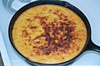
For my husband, raised in another part of the country, it is vegetable soup and cornbread. After we married, I learned to make cornbread in an iron skillet, and it is pretty good. He breaks it up and puts it in a glass of milk, though, and I can’t even watch him eat it.
Our son grew up in Tunis – when he has a sore throat, nothing will do but mint tea.

So what is YOUR comfort food? What did your Mamma (or Papa) make you when you were sick as a child? What do you dream of even now, all grown up, but sick and miserable?
Little Diamond
My neice is blogging! She started just as I did, without telling anyone. When I saw her on Friday, she very casually mentioned it in passing. Woooo Hoooooo! She is beautiful, and articulate, and always full of amazing information, and a lot of fun. Her website is A Diamond in Sunlight.
The “A” Word: Accountability
My internet was out when I got up – waaaaaay too early this morning, totally jet lagging, so I read this morning’s Kuwait Times, which I usually save as my reward for getting work done. (Yep, total news geek.)
You can usually scan a politician’s speech quickly to tell if it is platitudes or substance – so Speaker of the National Assemply Jassem Mohammed al-Koraifi’s speech at the opening of the National Assembly yesterday caught my eye. For one thing, he used the “A” word – accountability – three times. That’s a very brave word for a government official to use, and he used it in impressive ways.
He may have used the “A” word more than three times – I am betting he was speaking in Arabic, and the full text of the speech is not printed, only excerpts. Still – three times!
First, I’m impressed that he encourage women who are interested in participating as elected officials to start running NOW. He’s right. It takes more than an electoral season to build a winning platform. You know there are good women out there qualified and capable of public office – encourage them, support them, and introduce them to your friends.
The KT quotes the Speaker as saying that “reform is a responsibility that lies with all, and that that both parliament and government are first to bear that responsibility. ‘I stress to the head and members of the government; you are responsible for laying policies and responsible for implementing legislation and are accountable for your institutions and bodies’ performance, and bear the responsibility before your superiors.'” (emphasis mine)
His next reported use of the word is in his section on reform: “Parliament is a constitutional partner in the planning of reform precedures and legislation, and an overseer over implementing reform programs and realization of its objectives, and a body those who abuse its means and tools shall stand accountable to.” (emphasis mine)
The last reported use was in the part of his address on building consensus. “This should all come within a positive relationship based on transparency, credibility, mutual respect, and guarantees for optimal use of supervisory and accountability tools and where the independence of the judicial authority is maintained with none interfering in its affairs and where its objectives are the interests of Kuwait and its future, its security and its stability.”
My favorite part of the speech, beyond the “A” word, is this: “When coming upon difference inopinion or disagreement over an issue, the matter should be dealt with in parliament and in its committees and with a keeness to preserve this partnership.
“Handling such issues should be as partners who disagree rather than as enemies with a dispute; none shall question the patriotism of another, it is not right for any to doubt another’s loyalty, and there cannot be hurling of accusations and abuse and settling of scores as that would strain the social fabric and dispel amicability and respect.”
I started reading blogs when I was coming to Kuwait, and trying to find out what the issues were. The papers are . . . ambiguous. Vague. I could catch glimpses, but it was following the blogs that I have learned the most. One blog helped me understand the issues in May The Ultimate with words and photos and a discussion of what the difference was between one voting district, five voting districts or ten voting districts – something I had never found in reading the English press.
I find committment, passion, insight and intelligence in your blogs. I find potential leadership, and an honesty when you are talking with one another that I don’t find when I ask questions myself. We are all so careful in our cross-cultural conversations, not to offend, not to give too much information which makes us look bad.
My country is also young – only 200 years. We have had our corrupt Presidents, scandals, lax standards and poorly enforced laws. Rule of Law is not something that happens overnight – it only happens when a good majority of the people have the conviction that the rule of the majority serves the greater good of all, while still protecting the interests of the minority. It takes time. It takes committment. And it takes accountability.
A Visit to Williams Sonoma
I am visiting Williams Sonoma looking for the elusive white truffel butter required in The Equalizer’s recipe for Pumpkin Risotto. Can’t find the white truffel butter, but I did find some very lovely things – things we can get a lot cheaper, maybe even better, in the Middle East.
First is what they call a Greek pepper grinder, for a mere $79.

I bought the same, beautiful pepper grinder in the Diraa souk in Riyadh for $10 – and I believe it came from Turkey. It grinds peppercorns beautifully and stores the grindings airtight in the bottom until you need to use them.
Then these two pots. The first one is $200, and the second ranges from the low $200’s to $320, depending on the size . . .


they are beautiful, hammered copper from Italy . . .and we bought beautiful, heavier pots with beautiful handles in Damascus for a fraction of what these cost. If I had to choose, I would choose Damascus any day for shopping, over Dubai. 😉
Is there anyplace in Kuwait where you can get copper pots re-tinned? Or has that, too, gone by the wayside?
(And a BIG shout-out to Joan of Arc who patiently taught me how to link pretty)
Dubai 2010
My niece (Little Diamond aka adiamondinsunlight) doesn’t have her own blog yet. Until she does, I get to share all the information she shares with me.
This one is from New Left Review and is a fascinating article about the Dubai of the Future, a playground for the rich and idle, with unimaginable luxuries – but at what cost?
Some Things Just Don’t Translate
Three sets of eyes looked at me with disbelief, mixed with horror. I was explaining to my three students that I was having a group of American university students at my house for Halloween. We would all welcome the Hallowe’en trick-or-treaters as they came around in our compound. We expected hundreds – children from far and wide throughout the city came to trick-or-treat where the westerners lived. Even if the children didn’t “get” Halloween, they liked the costumes and the candy.
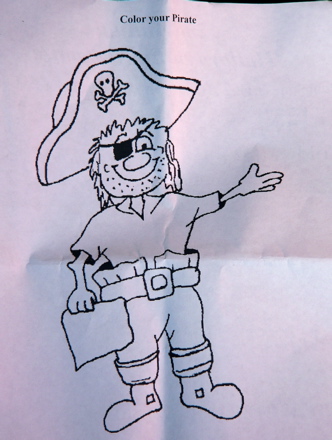
It wasn’t the trick-or-treating my students didn’t get. It was that I had said we would all be dressed as pirates. We would have patches and capes and bandannas, some would have hooks, others would have swords. We would say things like “Ay matey!” and “Aaargh” and “Pieces of eight.”
They didn’t know what pirates were. They had never seen Peter Pan with Captain Hook, they hadn’t seen Johnny Depp in his fey performance as Captain Jack Sparrow in Pirates of the Caribbean. I started off with enthusiasm.
“Oh, pirates lived a long time ago. Hmmm, no actually, there are still pirates today. They sail old ships, and then they stop and capture ships on the high seas and like hold people for ransom. They sing songs and drink grog and some of them have peg legs, or hooks for hands . . .” even I could see that this was not going well.

“No no!” one cried. “Why would you want to be a pirate?”
“hmmm, well you’re right, REAL pirates weren’t very nice, I guess. They raped and stole from others, but for some reason we just dress up and PRETEND to be pirates. . .”
Now, it’s even starting to sound lame to me.
“There were some good pirates, too. . .”
“What did they do, khalti?”
(I am totally blank. I have an image of a deer in the headlights; the deer is me with no where to run.)
I don’t know. Were there any good pirates? Why do we think pirates are so much fun? Is it the costumes? As kids we would make each other walk the plank, and swashbuckle around, it was a good break from cowboys and Indians. Seeing it through my students’ eyes, though, it just wasn’t working.
Some things just don’t translate.
Recent Comments
ExpatAlien on What Country am I Living … intlxpatr on Yellowstone: Old Faithful to C… Michelle on Yellowstone: Old Faithful to C… Cathy on No Grown-Ups in Charge intlxpatr on Waiting for Snow Wikipedia Donate Button

Amazina


Early Voting in Florida


 Here There and Everywhere