I’m not a person who likes to be rushed, and I am a person who front-loads, who gets things done early, so as not to have to make decisions or preparations in a rush. If I can plan, and execute early, it all falls into place.
So when we had another early cold spell this week, our second ‘unseasonal’ cold spell, so cold we had to cover our more sensitive plants and bring others into protected areas, and with Thanksgiving coming so late this year, I decided I could let myself do a little early Christmas prep.
No, no tree, not yet, and no lights outside. Time enough for all that, just a little sparkle to get us started. As much as I love real greenery, real garlands, the temperatures here are too high for it it stay green longer than a week, so I use the artificial kind. You’d think the benefit would be no dropping needles, but this stuff also drops ‘needles’, and we laugh at where we find them hiding in August.
We bought our crêche many years ago in Germany, and it has gone with us everywhere we lived. It has lost a lot of its Germanic moss through the years, but I wouldn’t dream of replacing it:
The normal crêche occupants through the years have been supplemented by extra sheep and camels, and actually, by French santons, extra wise men, an angel ornament . . . hmmm, maybe it’s getting a little kitchy, but we wouldn’t sacrifice a single thing. One of our Saudi friends contributed a line of camels 🙂
In France and in Germany, crafters make the cutest sheep, and we found ourselves buying them at Christmas or crafts markets.
And, from Doha, The Church of the Epiphany, our “Aboona” or Our Father, the Lords Prayer written in Arabic calligraphy, one of our treasures.
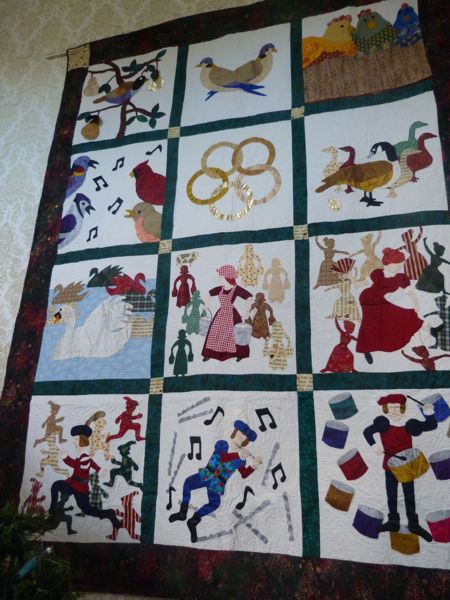
Last, but not least, time to change the hallway quilt, and The 12 Days of Christmas will reign for more like 40 days 🙂
The Islamic State of Iraq and Syria (ISIS), now threatening Baghdad, was funded for years by wealthy donors in Kuwait, Qatar, and Saudi Arabia, three U.S. allies that have dual agendas in the war on terror.
The extremist group that is threatening the existence of the Iraqi state was built and grown for years with the help of elite donors from American supposed allies in the Persian Gulf region. There, the threat of Iran, Assad, and the Sunni-Shiite sectarian war trumps the U.S. goal of stability and moderation in the region.It’s an ironic twist, especially for donors in Kuwait (who, to be fair, back a wide variety of militias). ISIS has aligned itself with remnants of the Baathist regime once led by Saddam Hussein. Back in 1990, the U.S. attacked Iraq in order to liberate Kuwait from Hussein’s clutches. Now Kuwait is helping the rise of his successors.As ISIS takes over town after town in Iraq, they are acquiring money and supplies including American made vehicles, arms, and ammunition. The group reportedly scored $430 million this week when they looted the main bank in Mosul. They reportedly now have a stream of steady income sources, including from selling oil in the Northern Syrian regions they control, sometimes directly to the Assad regime.
But in the years they were getting started, a key component of ISIS’s support came from wealthy individuals in the Arab Gulf States of Kuwait, Qatar and Saudi Arabia. Sometimes the support came with the tacit nod of approval from those regimes; often, it took advantage of poor money laundering protections in those states, according to officials, experts, and leaders of the Syrian opposition, which is fighting ISIS as well as the regime.
“Everybody knows the money is going through Kuwait and that it’s coming from the Arab Gulf,” said Andrew Tabler, senior fellow at the Washington Institute for Near East Policy. “Kuwait’s banking system and its money changers have long been a huge problem because they are a major conduit for money to extremist groups in Syria and now Iraq.”
Iraqi Prime Minister Nouri al-Maliki has been publicly accusing Saudi Arabia and Qatar of funding ISIS for months. Several reports have detailed how private Gulf funding to various Syrian rebel groups has splintered the Syrian opposition and paved the way for the rise of groups like ISIS and others.
“The U.S. has made the case as strongly as they can to regional countries, including Kuwait. But ultimately when you take a hands off, leading from behind approach to things, people don’t take you seriously and they take matters into their own hands.”
Gulf donors support ISIS, the Syrian branch of al Qaeda called the al Nusrah Front, and other Islamic groups fighting on the ground in Syria because they feel an obligation to protect Sunnis suffering under the atrocities of the Assad regime. Many of these backers don’t trust or like the American backed moderate opposition, which the West has refused to provide significant arms to.
Under significant U.S. pressure, the Arab Gulf governments have belatedly been cracking down on funding to Sunni extremist groups, but Gulf regimes are also under domestic pressure to fight in what many Sunnis see as an unavoidable Shiite-Sunni regional war that is only getting worse by the day.
“ISIS is part of the Sunni forces that are fighting Shia forces in this regional sectarian conflict. They are in an existential battle with both the (Iranian aligned) Maliki government and the Assad regime,” said Tabler. “The U.S. has made the case as strongly as they can to regional countries, including Kuwait. But ultimately when you take a hands off, leading from behind approach to things, people don’t take you seriously and they take matters into their own hands.”
Donors in Kuwait, the Sunni majority Kingdom on Iraq’s border, have taken advantage of Kuwait’s weak financial rules to channel hundreds of millions of dollars to a host of Syrian rebel brigades, according to a December 2013 report by The Brookings Institution, a Washington think tank that receives some funding from the Qatari government.
“Over the last two and a half years, Kuwait has emerged as a financing and organizational hub for charities and individuals supporting Syria’s myriad rebel groups,” the report said. “Today, there is evidence that Kuwaiti donors have backed rebels who have committed atrocities and who are either directly linked to al-Qa’ida or cooperate with its affiliated brigades on the ground.”
Kuwaiti donors collect funds from donors in other Arab Gulf countries and the money often travels through Turkey or Jordan before reaching its Syrian destination, the report said. The governments of Kuwait, Qatar, and Saudi Arabia have passed laws to curb the flow of illicit funds, but many donors still operate out in the open. The Brookings paper argues the U.S. government needs to do more.
“The U.S. Treasury is aware of this activity and has expressed concern about this flow of private financing. But Western diplomats’ and officials’ general response has been a collective shrug,” the report states.
When confronted with the problem, Gulf leaders often justify allowing their Salafi constituents to fund Syrian extremist groups by pointing back to what they see as a failed U.S. policy in Syria and a loss of credibility after President Obama reneged on his pledge to strike Assad after the regime used chemical weapons.
That’s what Prince Bandar bin Sultan, head of Saudi intelligence since 2012 and former Saudi ambassador in Washington, reportedly told Secretary of State John Kerry when Kerry pressed him on Saudi financing of extremist groups earlier this year. Saudi Arabia has retaken a leadership role in past months guiding help to the Syrian armed rebels, displacing Qatar, which was seen as supporting some of the worst of the worst organizations on the ground.
The rise of ISIS, a group that officially broke with al Qaeda core last year, is devastating for the moderate Syrian opposition, which is now fighting a war on two fronts, severely outmanned and outgunned by both extremist groups and the regime. There is increasing evidence that Assad is working with ISIS to squash the Free Syrian Army.
But the Syrian moderate opposition is also wary of confronting the Arab Gulf states about their support for extremist groups. The rebels are still competing for those governments’ favor and they are dependent on other types of support from Arab Gulf countries. So instead, they blame others—the regimes in Tehran and Damascus, for examples—for ISIS’ rise.
“The Iraqi State of Iraq and the [Sham] received support from Iran and the Syrian intelligence,” said Hassan Hachimi, Head of Political Affairs for the United States and Canada for Syrian National Coalition, at the Brookings U.S.-Islamic World Forum in Doha this week.
“There are private individuals in the Gulf that do support extremist groups there,” along with other funding sources, countered Mouaz Moustafa, executive director of the Syrian Emergency Task Force, a Syrian-American organization that supports the opposition “[The extremist groups] are the most well-resourced on the ground… If the United States and the international community better resourced [moderate] battalions… then many of the people will take that option instead of the other one.”
FIFA Executive Says He Doesn’t Think 2022 World Cup Will Be In Qatar
* Zwanziger is member of FIFA Executive Committee
* Plans under way to shift World Cup to European winter (Updates with FIFA reaction)
BERLIN, Sept 22 (Reuters) – The 2022 World Cup will not be held in Qatar because of the scorching temperatures in the Middle East country, FIFA Executive Committee member Theo Zwanziger said on Monday.
“I personally think that in the end the 2022 World Cup will not take place in Qatar,” the German told Sport Bild on Monday.
“Medics say that they cannot accept responsibility with a World Cup taking place under these conditions,” the former German football (DFB) chief, who is now a member of the world soccer’s governing body FIFA that awarded the tournament to Qatar in 2010.
Although wealthy Qatar has insisted that a summer World Cup is viable thanks to cooling technologies it is developing for stadiums, training areas and fan zones, there is still widespread concern over the health of the players and visiting supporters.
“They may be able to cool the stadiums but a World Cup does not take place only there,” Zwanziger said.
“Fans from around the world will be coming and traveling in this heat and the first life-threatening case will trigger an investigation by a state prosecutor.
“That is not something that FIFA Exco members want to answer for.”
FIFA officials, contacted by Reuters, said Zwanziger was not giving the view of the all powerful Executive Committee.
“He is expressing a personal opinion and he explicitly says so,” FIFA spokewoman Delia Fischer said. “We will not comment on a personal opinion.”
FIFA President Sepp Blatter said in May that awarding the World Cup to Qatar was a ‘mistake’ and the tournament would probably have to be held in the European winter.
“Of course, it was a mistake. You know, one comes across a lot of mistakes in life,” he told Swiss television station RTS in an interview at the time.
“The Qatar technical report indicated clearly that it is too hot in summer, but the executive committee with quite a big majority decided all the same that the tournament would be in Qatar,” he added.
FIFA is now looking to shift the tournament to a European winter date to avoid the scorching summer where temperatures routinely rise over 40 Celsius.
Asian Football Confederation (AFC) president Sheik Salman Bin Ebrahim Al Khalifa chaired a meeting to discuss the matter earlier this month with the options of January/February 2022 and November/December 2022 offered as alternatives to June/July.
However, talk of a potential change away from the usual dates has resulted in plenty of opposition from domestic leagues around the world, worried the schedule switch would severely disrupt them.
Both FIFA and Qatar World Cup organizers have also been fending off questions of corruption ever since they were awarded the tournament back in 2010, while Qatar has also been criticized for the conditions provided for migrant workers’ in the tiny Gulf state. (Reporting by Karolos Grohmann. Editing by Patrick Johnston)
The people in my group last week suffered greatly in the high temperatures and high humidity we are experiencing. I must be adapting a little; I remember being thankful for the breeze.
“What do you wear when it gets this hot?” they asked me, “like around the home?”
I laughed. I learned a thing or two in Tunis, in Amman, in Tabuk and Riyadh, in Kuwait and in Doha. At home, I dress like local women, in long loose dresses.
Or worse. I dress like their maids. In the souks you could find wonderful, 100% cotton dresss that were loose and flowing, and that is good in hot weather so the air can circulate. Some of the dresses were nicer, but the dresses I liked a lot for just being around the house doing what people do, like making sure the dishes are done and a meal prepped, doing a little quilting or reading . . . you could buy these great little dresses for about $3.00 in the souks. Not only were they practical – especially when you live in a house with a cat, and always put on “real” clothes just as you are about to run out the door so you don’t have any cat hair on you – but they came in great colors and prints, designs that made me happy to put them on.
Now, one of my all time favorite dresses, in purple and black, has bit the dust. I liked it because it had some geometrics, and the geometrics changed, and – it was purple. I have worn it for about six years now, and I have worn it out. I mended it several times when the underarm seams ripped:
But now, it has gotten all soft, so soft the material just rips easily with holes that cannot be mended.
I like this dress so much I am saving it and cutting it up so it will have another new life as a quilt 🙂
And I am thinking it is time to plan a trip back to Doha and Kuwait to replenish my hot weather dresses 🙂
Thank you, Desert Girl, for making known this wonderful video on earlier times in Kuwait. It brings back so many wonderful memories of our time as a young family in the Middle East and North Africa in the late 70’s and 80’s.
And thank you Ammar Alabbad for a wonderful production. I love this film.
BEIRUT: The Arab world is among the most unequal regions in the world when it comes to gender and education, according to a new report released Monday by UNESCO.
The Education for All Global Monitoring Report studied gender imbalances in education across the globe, finding that 100 million women in low- and middle-income countries were unable to read a single sentence. The report concludes that not a single goal set by the U.N.’s Education for All initiative will be reached by the 2015 deadline.
According to the report, it is projected that by 2015, only 70 percent of countries will have achieved parity between the sexes in primary education and 56 percent will have achieved parity in lower secondary education. The report calls for immediate efforts to address this gap and ensure equal access to education for both boys and girls.
In the Arab world, girls make up 60 percent of children out of school, the largest percentage of any of the regions in the report, including sub-Saharan Africa. Moreover, that number has not budged since 1999, indicating little if any progress.
“The Arab world is the region that is lagging most behind in that respect,” the study’s author, Pauline Rose, told The Daily Star by phone from London. “The reasons are largely cultural.”
Cultural biases are compounded by poverty, Rose said, explaining that many poor families in countries like Yemen can only afford to send some of their children to school, and they see their male children as a better investment for the family.
“They are more likely to get a return on their son’s education, because they expect them to get work and give more back to the household,” Rose, who is the outgoing director of the EFA Global Monitoring Report, said.
In some countries in the region, such as Syria, violence has interrupted education for all children, but it is more likely to adversely affect girls than boys.
“In insecure contexts, girls are more likely to be subjected to sexual violence, and parents are less likely to let them go to school if they have to worry about them walking through the streets,” Rose said. “This is in addition to whether there are any schools.”
Even the seemingly bright spots in the report, such as that educated Arab women make 87 cents to the dollar men make – above the global average – are likely evidence of other socioeconomic inequalities.
“I think the reason for this is a very high selection bias,” explained Rose. “If you are a woman who gets a job, you are likely be from a better-off family, to have connections.”
One of the domino effects of having fewer girls in school is that the Arab world suffers from a shortage of female teachers in a region where segregated education is common and even preferred, especially in the same rural, disadvantaged areas where female teachers are needed most.
The two moderate success stories from the region were Iraq and Turkey, which both managed to close their gender gaps in education with teacher training and other targeted programs.
Even lower income countries can shorten this gap by reorganizing resources, Rose insisted. The key is to convince countries that girls’ education benefits not only women, but also the society as a whole, leading to lower birth rates and higher survival rates among mothers and children.
Several strategies that have yielded positive results in some countries include giving stipends to families for sending their girls to school; providing scholarships to girls, especially for secondary school; and recruiting teachers from underserved areas who are more likely to stay and understand the culture.
“In West Africa, one of the things that helped is that religious leaders and community leaders have mobilized to encourage parents to send girls to school. Poverty is still affecting girls more. … This is where cultural and community mobilization comes in, and it’s not very costly.”
A version of this article appeared in the print edition of The Daily Star on March 10, 2014, on page 9.
We had no idea when we left home this morning that when we got to the school, all the parking spaces would be full and it would be almost impossible to find a seat in the auditorium. It was only 8:45 in the morning, and it was only the Pre-K 3’s who would be performing.
We had forgotten – Pensacola is like the Middle East. Family first, and time off for a Christmas Pageant – well, of course!
Pensacola is not like Seattle, or any of the larger cities. While spread out, it is only around 50,000 people, and the worst traffic is never that bad, not if you’ve driven in Amman, or Seattle, or Qatar, or Kuwait. You may not have to stop while the shepherd and his sheep cross the road, but you can get to downtown Pensacola from almost any part of the city in under 15 minutes.
The parking spaces were GONE. The auditorium was PACKED. Friends were greeting friends, all dressed in the reds and greens of Christmas time.
And then the children marched in, and it was barely controlled bedlam as these young stars spotted parents and grandparents and yelled “Grandpa! Here I am!” and angels and sheep and shepherds and wise men all were carefully lined up to sing their songs and tell us the Christmas Story as only 3-years-old can. Oh, it was not to be missed!
We love it that Pensacola is not a city with a lot of rushing about; people have time to go see their children in the school Christmas pageant, that the teachers take the time to herd these cats so that they can sing the songs, do the motions, and probably, if asked, give a rough outline of what happened on that first Christmas.
It’s all a matter of priorities. Pensacola, like our homes in the Middle East, places a high value on family activities, family time, and a balance of work and family where family time has a cherished place.
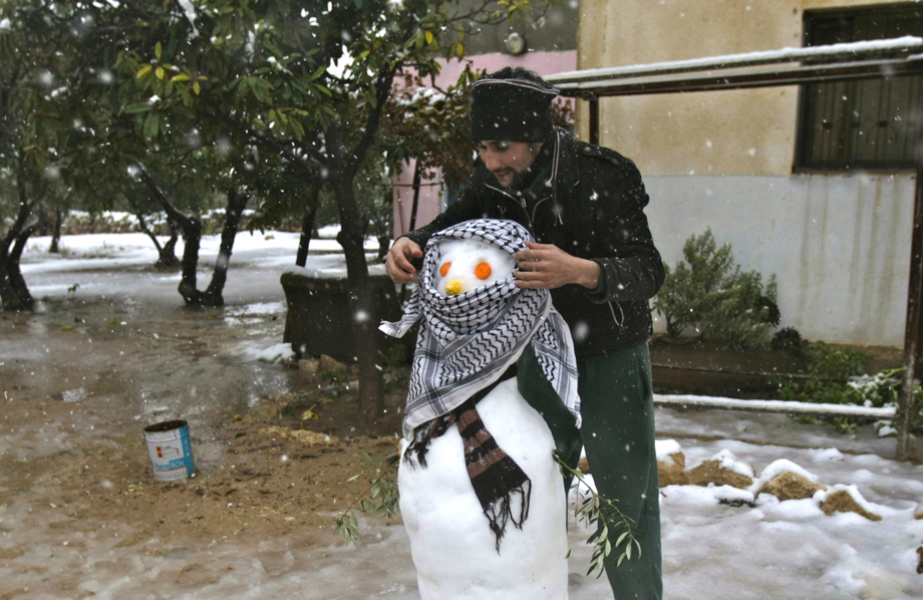
Love this photo from Skye news; Palestinian photo as snowstorm hits Middle East. We were flying back from Cairo to Amman once, only to discover Amman had a snowstorm and there was maybe 4 inches of snow in a city ill-prepared for snow removal, LOL. When we moved there, we knew it got hot – but we had no idea how very cold it also got, and how the cold was amplified by the marble floors and hard surfaces. We LIVED in flannel shirts 🙂
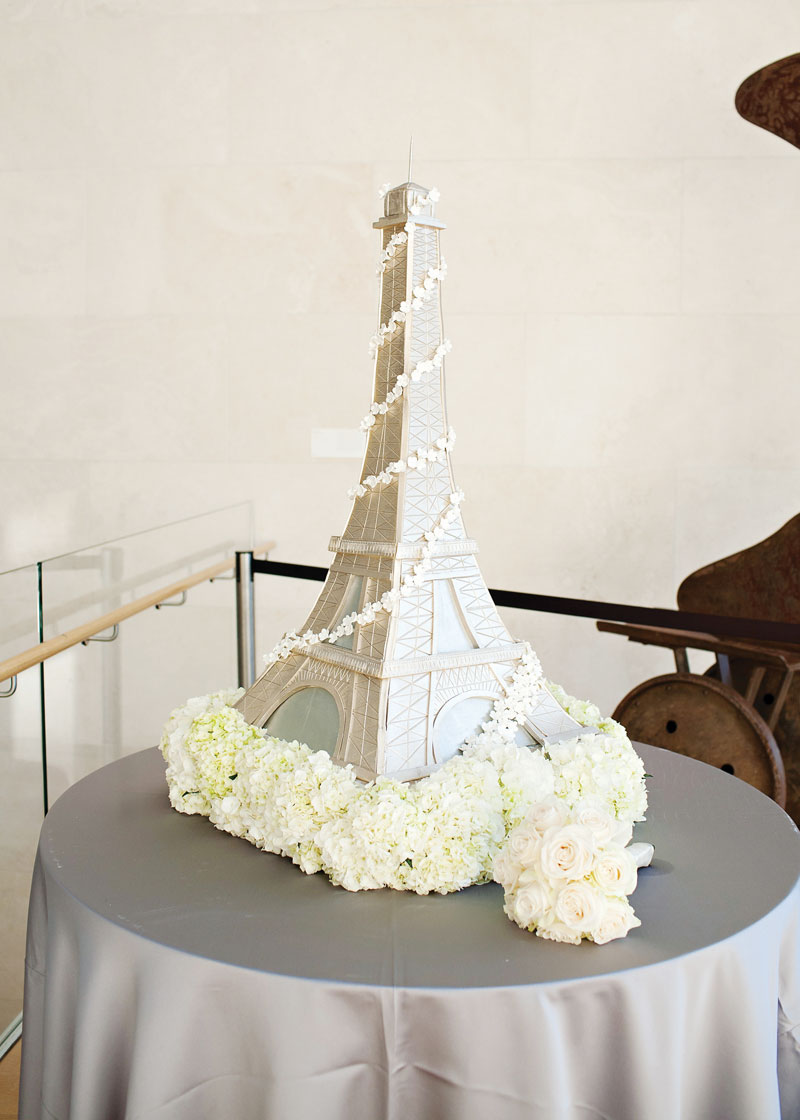
Once a year I get to troll the internet looking for cakes. It is so much fun. I had no idea there is so much creativity out there, so much daring. I found a wedding cake that is tilted! Something in me loved it, loved the spirit of a woman who would marry knowing life is often off-kilter and messy.
I love white roses, so this year I have sent some to myself:
Come on by, have some virtual cake with me to celebrate seven years of blogging:
And here, an elegant combination of cake and white roses:
Seven years ago in Kuwait, I started blogging. There was a wild blogging scene in Kuwait, a lively community. Blogs were candid, and many were substantial, dealing (carefully) with political and economic issues in Kuwait. I remember reading and learning, and finally gathering up my courage to write my very first entry, and it has been a recurring theme, cross-cultural communication. I learned so much from my life in the Middle East, Tunisia, Jordan, Saudi Arabia, Qatar and Kuwait. I made the most amazing friends. It changed my life and my perceptions utterly.
Of the three Kuwait female bloggers who inspired me to start blogging, Jewaira has gone private, 1001 Nights is a good friend, a mother, and an author 🙂 and Desert Girl is still going strong. Mark, at 2:48 a.m. is also still going strong, so strong that he has been able to leave his full time employment and operate on a consultant basis.
Of course, as any blogger will, I sometimes think of quitting. There are days I find myself with nothing to say, nothing in my life so interesting that I think it is worth sharing, not even a news story worth noting. So I’ve had to ask myself why I continue.
I do it for myself. When I started, I had a reason and that reason still stands. I forget things. This isn’t age-related, it’s busy-life busy-world related; we forget the details.
My Mother saved all my letters from Tunisia. I remember reading them and laughing because at three, my son’s best friend in his day school was a boy he called Cutlet. I know his real name is Khalid, but Cutlet was as close as this little American boy in a French-Tunisian school could get. I had totally forgotten, until I read the letter. So my primary reason for continuing to blog is documentary – just plain record keeping, like an old fashioned diary. Noting things in my daily life or the life around me.
Even now, sometimes I see a post written long ago, usually one of our Africa trips, Botswana, Namibia, Tanzania, Zanzibar, Zambia – will start getting a rush of stats. It thrills my heart. It makes it all worthwhile, knowing something I have put out there is helping others, even years later. Perhaps one day, I will quit blogging, but leave the blog up, with these informational articles.
My stats make no sense at all, one of my biggest stat gainers this year was a news article I tossed off about the prank on the South Korean pilot names after the plane crash landed in San Francisco. It just made me giggle, and I couldn’t resist printing it. It ended up with a life of its own, as many entries do – and you just never know. Someone pins an image and you get a million (ok hyperbole here) hits you never expected.
In the end, I believe that those who keep blogging do it because as Martin Luther once said, “I cannot other.” We do it because something within needs to be expressed, even if it is just some kind of daily record. I know it’s why I blog.