Woman Receives Allowance
Sometimes, it’s a little article that has a huge impact. This little article, about a recent court decision in Kuwait, has potential for such an impact;
This is from today’s Arab Times:
Court orders allowance for woman
KUWAIT CITY : The Constitutional Court Wednesday received a petition filed by a Kuwaiti woman, requesting the court to declare the second paragraph of Item No. 2 and fifth paragraph of Item No. 3 of Cabinet decision No. 142 /1992 unconstitutional.
The court then declared the two paragraphs unconstitutional.
In her lawsuit submitted by her lawyer, Attorney Khaled Al-Hamdan, the woman said she was appointed as a lawyer at the Fatwa and Legislation Department in December 2000 and was promoted to ‘Lawyer A’ in December 2006.
The woman was surprised when she learnt her male colleagues were receiving housing allowance of KD 200 for the bachelors and KD 300 for those who are married. She then filed a case as she has not received any housing allowance since she joined the department.
The session was presided over by Judge Rashid Al-Hammad.
By Moamen Al-Masri
Special to the Arab Times
Pretty cool, huh? Wooo Hoooo on Judge Rashid Al-Hammad! Woooo Hooooo on Lawyer “A”, who fought for her rights – and WON. Wooo Hoooo, Kuwait!
Beating Jet Lag: Don’t Eat
Just in time – well, actually, not just in time or I wouldn’t have eaten – a new study reported on BBC Health News finds that if you want to re-set your body clock, fast. If you fast for 16 hours – like no eating en route from the USA to Kuwait – it helps you adjust faster and minimizes the effects of jet lag.
They seem to find something new every year, and then another study comes along and fails to confirm the findings. I do my best, but it usually takes me a week to get back to sleeping during normal hours.
Top Colleges Dig Deeper in Wait Lists for Students
Is this a sign of economic times? A demographic portent of things to come? Dipping into the waiting lists is significant enough to show up in The New York Times: Education Good news for the not-quite-first-pick students.
By TAMAR LEWIN
Published: May 9, 2008
In what may be a happy surprise for thousands of high school seniors, Harvard plans to offer admission to 150 to 175 students on its waiting list, and Princeton and the University of Pennsylvania each expect to take 90, creating ripples that will send other highly selective colleges deeper into their waiting lists as well.
“This year has been less predictable than any recent year,” said Eric J. Kaplan, interim dean of admissions at Penn, adding that when one college in the top tier goes deep into its wait list, others are affected. “We all need to fill our classes and replace students who have been taken off wait lists at other institutions. The wait-list activity could extend for a significant time.”
Although colleges turn to wait lists to fill out their classes, it is unusual for the most selective to go so deep, college officials say.
For high-school students graduating in an unusually large class and for colleges trying to shape a freshman class, this has been an unusually challenging year, with the changes in early-admissions programs and the broad expansion of financial aid at many elite universities.
Right up until the May 1 deadline for students to respond to admissions offers, colleges have been unsure what to expect.
“Our class is coming in exactly the way we wanted it to, fitting into the plan we had to get to a class of 1,240,” said Janet Rapelye, dean of admission at Princeton, which, like Harvard and the University of Virginia, eliminated early admissions this year.
Ms. Rapelye said that with such a big change in policy, it was difficult to predict results, so “we deliberately aimed to have a slightly smaller group.”
Harvard would not confirm its plans for its wait list. In an e-mail message sent on Thursday to colleagues at dozens of other institutions and passed on to The New York Times, William Fitzsimmons, the Harvard College dean of admissions, said, “Harvard will admit somewhere in the range of 150 to 175 from the waiting list, possibly more depending on late May 1 returns and other waiting list activity.”
AHarvard spokesman said the college had accepted fewer students this year to avoid overcrowding the freshman class.
The Yale dean of admissions, Jeffrey Brenzel, said there would be about 45 wait-list offers this week and probably another round later this month.
Even colleges that had more than filled their freshman classes were wondering how many students would melt away if admitted off waiting lists elsewhere.
“We’re over target right now, so we’re in good shape,” said Rick Shaw, the Stanford dean of admissions. “But I’m keeping a small group on the wait list, because I think there’ll be some impact of wait-list activity at other schools.”
At Dartmouth, Maria Laskaris, the dean of admissions, said although Dartmouth had more than enough accepted students committing, she was “in a holding pattern, because it depends on what other schools do.”
Wonders 1 and 2: Good Morning America
Yesterday I posted a photo of the skywalk, featured on Good Morning America’s 7 Wonders of the U.S. series and people wondered what the first two are.
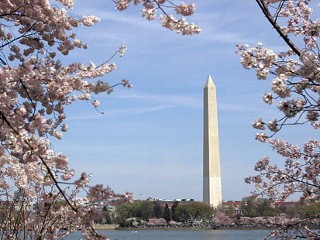
The first wonder selected was the National Mall and National Park in Washington DC, a celebration of Democracy, “where American voices are heard.”
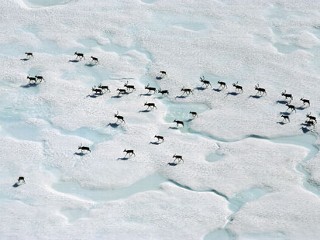
The second – and by far my favorite – was the Arctic National Wildlife Preserve, a brutal place where there are still huge herds of caribou, shaggy buffalo, polar bear . . . and where George Bush tells us we wouldn’t be paying so much for gas if we would only give him and the oil companies the go-ahead to go in and exploit the oil resources there. (See #1 George Bush – the American people raised their voices and said “NO!”)
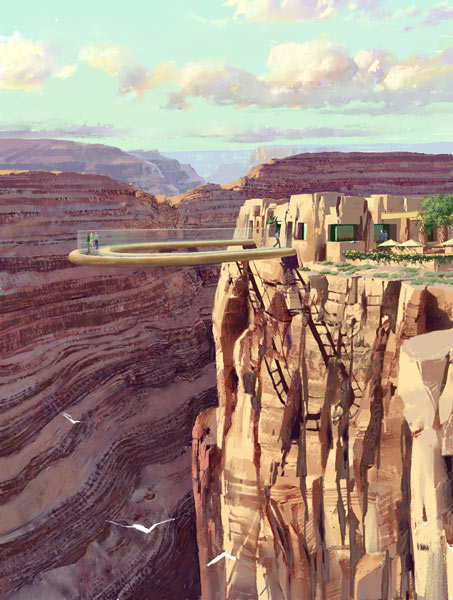
The Grand Canyon was the third wonder announced.
There are still four more wonders to be announced. Good Morning America comes on America Plus Monday – Friday in the afternoon, maybe two or three in the afternoon, in case you want to catch the rest, or you can just click on the blue hypertext above where it says Good Morning America, and you will go to the ABC website for the Seven Wonders.
Sky Walk – I Couldn’t Do it
Today on Good Morning America, they hit the 3rd of America’s Seven Natural Wonders. It is the Grand Canyon, and they broadcast from the new skywalk that they built cantilevered out over the Canyon. It has a glass floor, and you walk out 4,000 feet above the bottom of the canyon.
I almost threw up.
Just looking at it makes my blood pressure jump; my heart is beating fast and my palms start to sweat.
I have a mild case of fear-of-heights. (Acrophobia) I feel unbalanced looking down, I feel like I could fall right over.
AdventureMan, thank God, has the same sensitivity, so he doesn’t tease me. I know we will visit this skywalk one day, and I wonder if he will be able to force himself to walk out on it. I already know I won’t be doing it. It’s just too stressful for me. . . . Even watching it on Good Morning America, I feel all stressed out!
NYT: In Democracy Kuwait Trusts, but Not Much
The New York Times had a full length article on the upcoming Kuwait election yesterday:
KUWAIT — In a vast, high-ceilinged tent, Ali al-Rashed sounded an anguished note as he delivered the first speech of his campaign for Parliament.
“Kuwait used to be No. 1 in the economy, in politics, in sports, in culture, in everything,” he said, his voice floating out in the warm evening air to hundreds of potential voters seated on white damask-lined chairs. “What happened?”
It is a question many people are asking as this tiny, oil-rich nation of 2.6 million people approaches its latest round of elections. And the unlikely answer being whispered around, both here and in neighboring countries on the Persian Gulf: too much democracy.
In a region where autocracy is the rule, Kuwait is a remarkable exception, with a powerful and truculent elected Parliament that sets the emir’s salary and is the nation’s sole source of legislation. Women gained the right to vote and run for office two years ago, and a popular movement won further electoral changes.
Despite those gains, Kuwait has been overshadowed by its dynamic neighbors — Dubai, Abu Dhabi and Qatar — where economies are booming under absolute monarchies. Efforts to overhaul Kuwait’s sclerotic welfare state have stalled in its fractious and divided Parliament, and scandals led the emir to dissolve the chamber last month for the second time in less than two years, forcing new elections.
All this has left many Kuwaitis deeply disenchanted with their 50-member elected legislature. The collapse of the Bush administration’s efforts to promote democracy in the region and the continuing chaos in Iraq, just to the north — once heralded as the birthplace of a new democratic model — have also contributed to a popular suspicion that democracy itself is one Western import that has not lived up to its advertising.
“People say democracy is just slowing us down, and that we’d be better off if we were more like Dubai,” said Waleed al-Sager, 24, who is advising his father’s campaign for Parliament.
Like many Kuwaitis, Mr. Sager quickly distanced himself from that view. But as the May 17 parliamentary elections approach, with near-constant coverage in a dozen new newspapers and on satellite television stations, candidates refer again and again to a “halat ihbaat” — state of frustration. His father, Mohammed al-Sager, a longtime member of Parliament, delivered his own opening campaign speech shortly after Mr. Rashed two weeks ago, and spent much of it urgently reminding his listeners of the need for an elected assembly.
“Some people have called for a permanent dissolution of Parliament,” he said, his face telecast on an enormous screen to a thick overflow crowd outside the tent. “But everywhere in the world — in Africa, in Palestine, in the old Soviet Union — people have turned to elections to solve their problems, not away from them. Whatever problems we have in our Parliament, we must remember that it is much better than no Parliament at all.”
One source of frustration has been the failure to reform Kuwait’s state-controlled economy. After the 2006 elections, many Kuwaitis were hoping for changes to cumbersome government rules that allow land to be allocated for business projects. Instead, the effort was blocked in Parliament. The slow pace of efforts to privatize the national airline and parts of the oil sector has also caused disappointment.
Many Kuwaitis also complain about government neglect of public hospitals and schools. Problems with the power grid caused brownouts last summer.
Although parts of Kuwait City were rebuilt after the Iraqi invasion of 1990, much of it looks faded and tatty, a striking contrast with the gleaming hyper-modernity of Dubai, Abu Dhabi and Qatar.
The current political malaise is especially striking because most Kuwaitis take pride in their nation’s relatively democratic traditions. The ruling Sabah family acquired its position not through conquest, but with an agreement among the coastal traders of the region in the mid-18th century. After Kuwait gained independence from the British in 1961, the emir approved a written Constitution that sharply limited his power in relation to Parliament.
The article is long – you can read the rest HERE.
Today’s Crack-Up
From today’s Kuwait Times:
Citizen Sneaks
Border police detained a Kuwaiti citizen for attempting to sneak through the Salmi Border on foot to enter Saudi Arabia. They approached the man thinking he was a sheep, as he was wearing sheep wool to disguise himself.
On questioning him, he said he was banned from leaving the country due to alcohol cases pending against him so he planned to sneak into Saudi Arabia.
This cracks me up on so many levels. First, just the visual, the idea of a man wearing a sheep’s pelt to sneak across the border. Second, a man with alcohol problems wanting to sneak into Saudi Arabia, where alcohol is slightly less friendly to alcohol than Kuwait. You have to wonder if he was sober when he donned the sheep’s pelt?
Lemba, Arc of the Covenant and DNA
As I work in the Project Room, I often have the radio on, BBC. I get to hear all about the US elections from another point of view, I get exposure to music I might otherwise never hear, and I hear things that show up weeks, even months later in the news.
AdventureMan called and asked if I had heard the segment on the Lemba in Zimbabwe. I hadn’t, but I listened closely for the next couple days and it was repeated.
It is about a professor who discovered what he thinks is a replica of the Arc of the Covenant in a dusty museum in Zimbabwe. He explored further, and discovered the Lemba claim ancient connections with the Arc, and had priestly customs similar to old Jewish customs. When they underwent DNA testing, the priestly clan of the Lemba had the same genetic markers as the priestly clan of the Jews, the descendants of Aaron.
How fascinating is that? Legend has always claimed the Arc of the Covenant is or was hidden somewhere in Ethiopia . . . transport to Zimbabwe from Ethiopia would not be out of the question.
I went to BBC news online and did a search – no results. Maybe it takes a while for their newest stories to be documented in their search files.
Googling on the internet, I found Ethiomedia which says the following:
In a newly released book, University of London Professor Tudor Parfitt claims to have located the treasured artifact on a dusty shelf of an out-of-the-way museum in Harare, Zimbabwe.
“It was just by chance that I finally managed to track it down to a storeroom in Harare, was able to analyze it and discover that quite apart from anything else, it’s quite probably the oldest wooden object in sub-Sahara Africa,” said Parfitt, an expert in Oriental and African Studies.
“It’s massively important in terms of history, even apart from its status as the last surviving link to the original Ark of Moses.”
In his HarperCollins’ book, “The Lost Ark of the Covenant: Solving the 2,500 Year Old Mystery of the Fabled Biblical Ark,” Parfitt describes traipsing around the globe, decoding ancient texts and deciphering numerous clues to locate the enigmatic object.
Along the way, the man dubbed the “British Indiana Jones” by friends, colleagues and the Wall Street Journal uncovered genetic evidence confirming claims by the Lemba tribe that they
are descendants of ancient Israelite priests, the caretakers of the lost Ark.
He experienced a major breakthrough in 1999 when he took DNA samples from 136 male members of the Lemba tribe. In a finding that drew worldwide publicity, a genetic analysis confirmed they were descendants of Aaron, the brother of Moses.

So many discoveries have proven to be fraudulent that I hesitate to put too much faith in this discovery, but I have to admit that it appeals to the little girl in me, who still believes archaeologists have great adventures, and loves the Indiana Jones movies!
(I hear there is a new Indiana Jones movie coming out soon. I hope old Harrison Ford can recapture enough of his youth to make this as good as the first one.)
That’s Very Different!
A grin today from the FAIL Blog. This one had me helpless with the giggles.

Even some English speakers have problems with why this is funny – the word they meant to use on the news captioning was “evacuating.” The word they used has a very different meaning.
Touching up Your Photos
Interesting article for the non-professional photographers among us about how to do some quick-and-dirty touch ups to eliminate common causes of less than ideal photos: shiny face, distracting background, and red eye. You can read the entire article at Wired: Touch up your pics
If only your girlfriend didn’t look sweaty and possessed — and the background didn’t resemble the mothership’s control room — this snapshot would be frame-worthy. With Adobe’s consumer-grade image editor Photoshop Elements ($100 for PC, $90 for Mac), you can remedy these common photo spoilers in seconds.
If you’re on a Mac, you can also try using the lightweight photo-editing app Pixelmator ($60). And those of you on Linux can give the free and open-source GIMP a shot. The controls and keyboard shortcuts won’t be exactly the same as the techniques described below, but they’ll be close enough that you should be able to figure out the correct combinations.
So far, I’m kind of low-tech. The MacBook Pro comes with iPhoto, and it takes care of just about everything I need. I crop, every now and then I adjust contrast or give it a little more or less lighting. Once I even straightened a photo that was tilted – wow, that makes me feel so powerful!.
AdventureMan has PhotoShop Elements, which he has explored, but I think maybe he was a little overwhelmed by all the processes. We both like taking photos, but we aren’t going to spend a lot of time trying to make a bad shot into a great shot. We try to do that when we are taking the photo. It’s all fun for us, when we start taking it too seriously, it stops being fun.
I like articles like this, though, that take something step by step and make it easy.
Do you PhotoShop? What’s your favorite tool?
Recent Comments
ExpatAlien on What Country am I Living … intlxpatr on Yellowstone: Old Faithful to C… Michelle on Yellowstone: Old Faithful to C… Cathy on No Grown-Ups in Charge intlxpatr on Waiting for Snow Wikipedia Donate Button

Amazina


Early Voting in Florida


 Here There and Everywhere