The Patter of Little Feet
AdventureMan said “I’m ready.”
He caught me by surprise.
We lost Zakat in July; one Saturday night at bedtime, he noticed Zakat had a dime-sized hole in his side. In the time it took us to get dressed and head for the animal emergency care hospital, it had grown to the size of a quarter. As we waited – the hospital was full, that night, of heartbreaking cases – it continued to grow. We had to leave him there to be sewn up, but they called us and told us that his skin wouldn’t hold stitches, and other lesions had opened. “A cat can’t live without skin” she said. We had to let him go.
When we adopted him, we hoped we would have more time with him. Zakat was the sweetest cat we have ever had, just full of love and trust. He was also FiV positive, feline AIDS, and he was susceptible to everything. He lost teeth. He had frequent pink eye. He would have fevers. He had skin problems. Through it all, he was sweet. When we lost him, we were desolate. AdventureMan said “No more cats.”
I think Trump changed his mind. I think he had to do something to fight our increasing dismay and outrage, we had to have some source of laughter in our lives. We know these immigrants he wants to keep out; we have lived among them and know them, for the most part, to be peaceful, hospitable people, very much like the people we live among in Pensacola. We have trans friends, and gay friends, and to limit their freedom threatens our own, for where do you start restraining those who hate? We prefer to drink untainted water, and to breathe unpolluted air, and we trust the EPA to measure, and to confront, and to enforce. And we want to trust in the “truthiness” of our elected officials, which we demonstrably cannot.
We have become activists. Who would have though it?
And, to nourish our souls, we have adopted Ragnar, a Russian Blue mix, and Uhtred, a creamy gold total mutt, both street cats, both sweet and funny and playful and delightful. Our house is once again a jumble of scattered and wrinkled carpets, dining room chairs knocked out of place, training not to go on countertops, and clear duct tape on the furniture to train them not to scratch there, but on the scratching posts. They give us joy, and a delightful reason to get up in the morning.
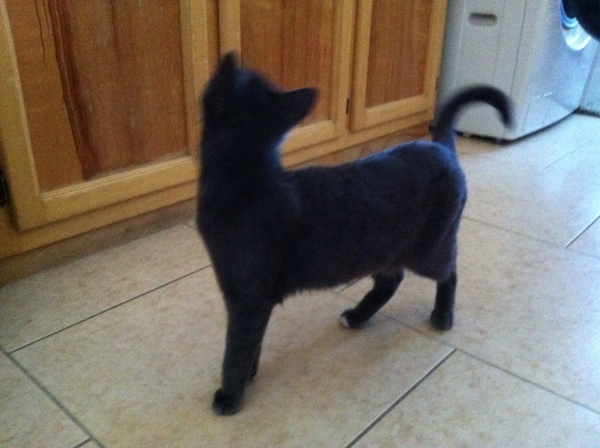
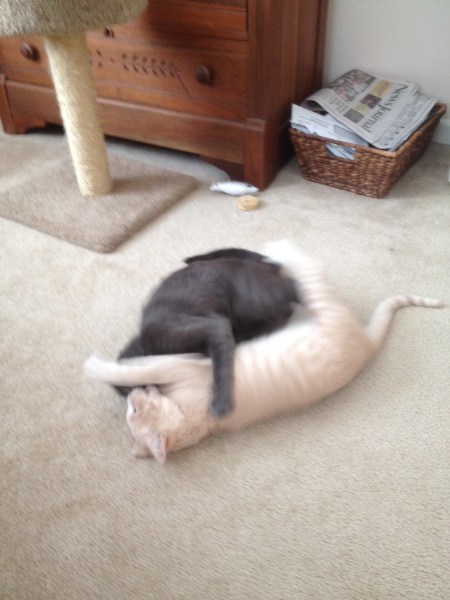

So, thank you, Donald Trump, for being so obnoxious and so depressing that we welcomed the diversion of these two delightful little angels into our household. One small step to help a hurting world.
Grieving for Damascus
“This is a place I would love to retire,” I once told AdventureMan, as we wandered the streets. “It has all the things I love. Beautiful architecture and a rich history. It’s on a river. It gets cold in the winter. You can walk to local stores.”
Today, with great sadness, I read that Damascus is now rated the #1 Most Unlivable City in the World, beating out Douala, Cameroon; Harare, Zimbabwe; Karachi, Pakistan; Algiers, Algeria; Dhaka, Bangladesh; Lagos, Nigeria; and Tripoli, Libya. This is what the report summarized about Damascus:
Damascus has forgotten more than your city will likely ever know-and it has been a battleground for almost its entire existence. The City of Jasmine is a UNESCO World Heritage Site and, according to The Economist Intelligence Unit, the least livable city in the world-for good reason. More than 13 million Syrians require humanitarian aid, 6.5 million have been displaced, and almost half a million have been killed on all sides of the conflict there-government soldiers, opposition soldiers, and civilians. It’s scores are predictably abysmal, with a 15 (out of 100) for stability at the bottom end and a mere 43.3 for culture and environment at the top end.
This is a city which has been at the crossroads of civilization about as long as civilization has been around. This is a city which was refined, and tolerant, a city which was once full of caravans carrying spices, silks and riches to the West.
We were last there in 2007, and we are so glad we went when we did. Damascus was revitalizing, building up a tourism business with grand hotels, and lovely, intimate boutique hotels.
We stayed at the Talisman. We grieve for the fine people we met there, and for all the losses they have suffered.
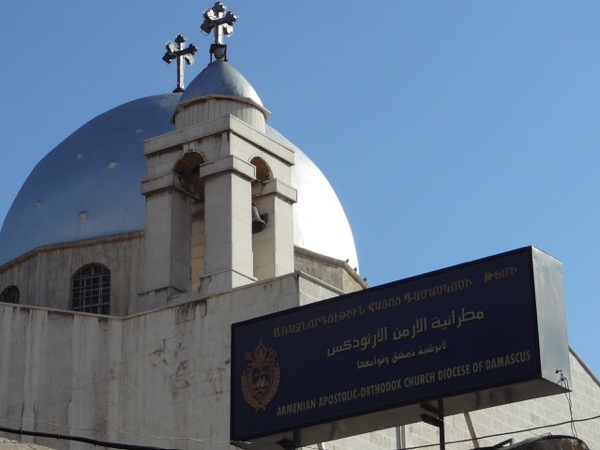
AdventureMan said “why don’t you do a photo-share, like you did with Doha?” At first, I didn’t want to, but then, I looked at the photos – and once again, I was smitten. I pray for a miracle for Syria, for new, enlightened, tolerant leadership and opportunities for the good Syrian people. For renewed vigor in churches and mosques and synagogues there. (The Talisman is in the old Jewish quarter, where the Greek Orthodox also have their headquarters.)
This is the majlis – sitting area – at the Talisman.


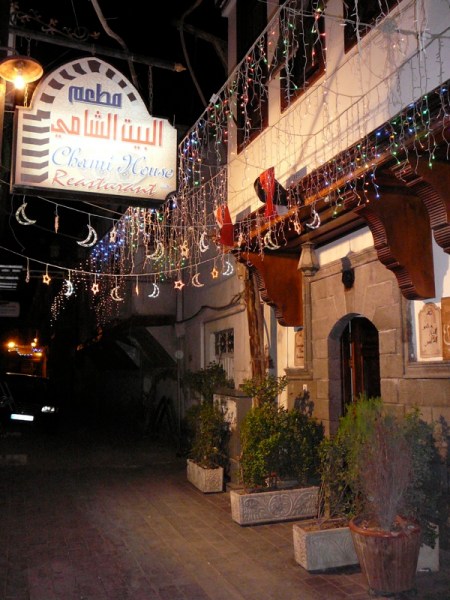
A restaurant nearby the Talisman:
Breakfast at the Talisman:

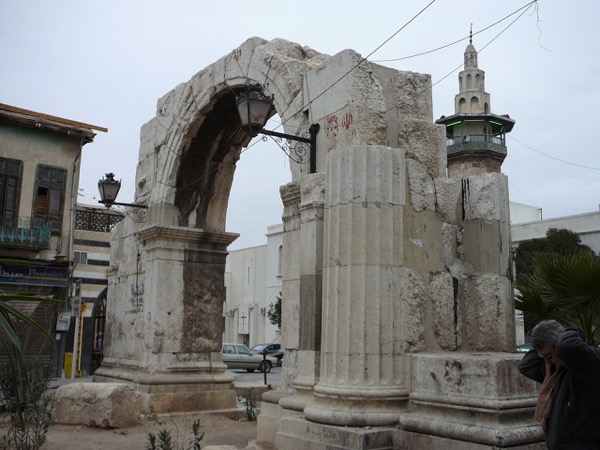
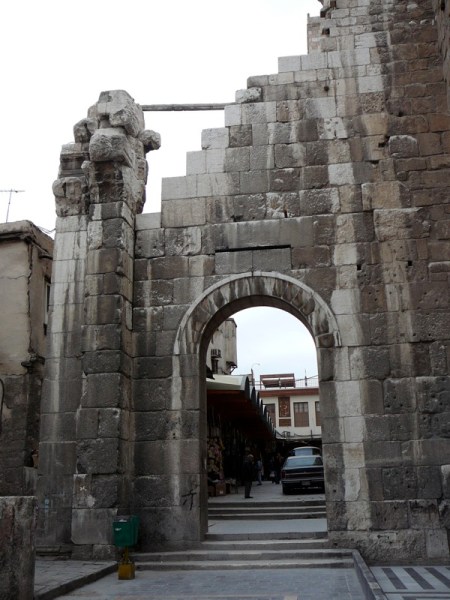
The historical nearby Bab, or gate:
A nearby Tabak and the friendly operator:

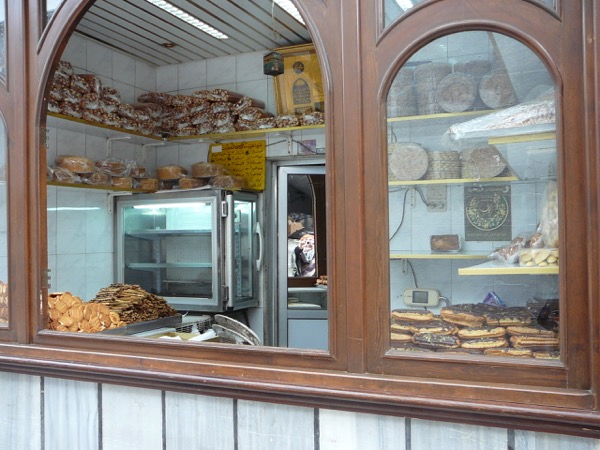
Streetside bakery:
A courtyard restaurant, with lovely dishes. And note the Christmas tree; Christmas decorations and greenery everywhere!

A Christian Shop near Bab Thoma:



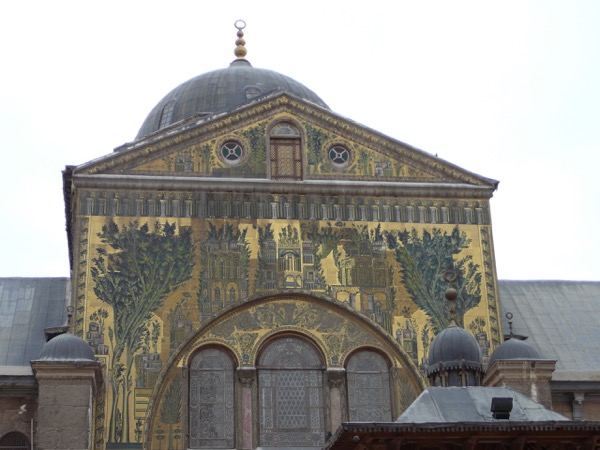
Interior at Umayyad Mosque, all are welcome and abayas provided. You leave your shoes at the door. This is the rear of the Tomb of John the Baptist:





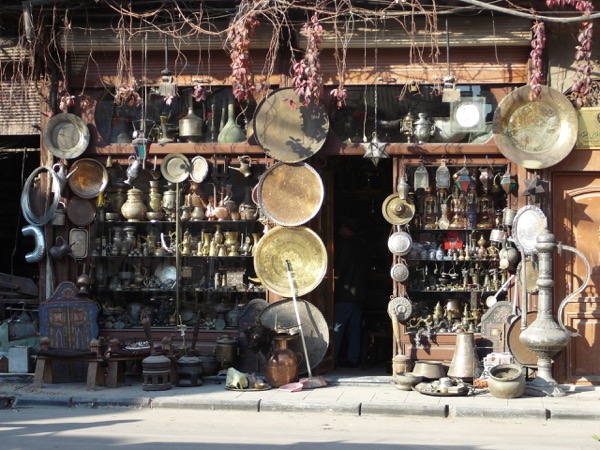
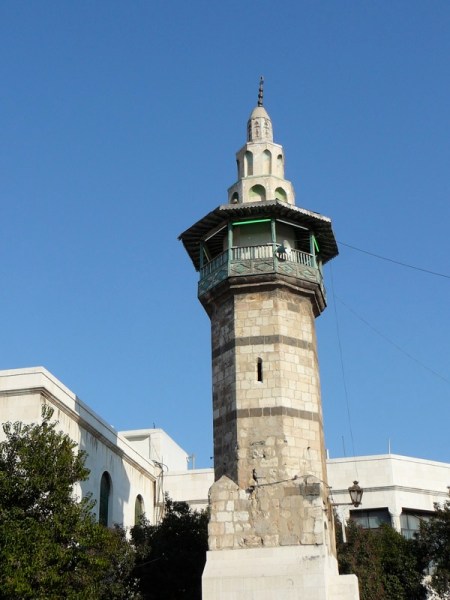
Naranj, our favorite restaurant. I understand branches of Naranj have opened in Gulf Countries, Qatar, Kuwait, as wealthier Syrians take their money out of Syria and wait for more peaceful times. I am betting they will return to Syria as soon as they can.

Inside Naranj



A merchant in the Souk al Hamidiyya

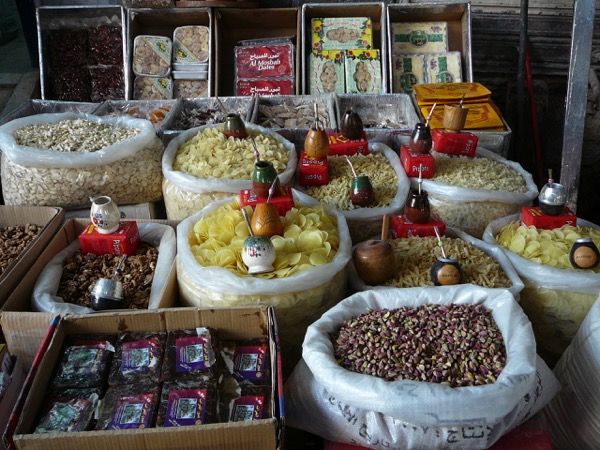
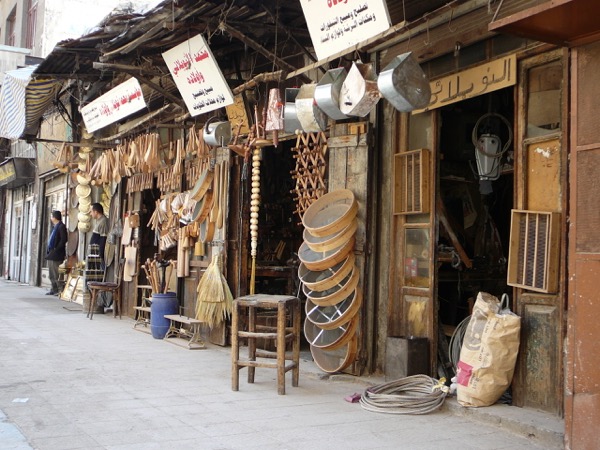


A courtyard restaurant set up for Christmas dinners:


I’ve never met a Syrian who wasn’t educated and working hard to make a good life for his/her family. We wonder if we will ever be able to visit Syria again in our lifetime?
For more photos of Damascus, you can visit my 2007 posts, Walking Old Damascus, by clicking here.
What Successful People (Who Are Actually Happy) Do Differently
The outcome of the recent election has not been a positive thing for everyone. Fuzzy headed liberal thinkers like me have some hard work to do in the next four years, feeding the hungry, making sure the homeless have a warm place on a cold night, protecting our drinking water, our drugs, protecting the air we breathe (what? you didn’t think all that regulation was for you?) and protecting against the removal of financial protections against those shenanigans by banks and financial institutions which brought us the great recession that peaked during the last year of the second Bush administration.
We will be the guard-dogs against gerrymandering, and against the stripping of human rights, reproductive rights, voting rights, protection against child abuse, spousal abuse and animal abuse. We will insist that the laws are enforced, equally, and do our best to protect against bad legislation.
Meanwhile, this wonderful article appeared in the HuffPost, well worth a read. Successful people have some really healthy habits and attitudes.
What Successful People (Who Are Actually Happy) Do Differently
Achievement rarely produces the sense of lasting happiness that you think it will. Once you finally accomplish the goal you’ve been chasing, two new goals tend to pop up unexpectedly.
We long for new achievements because we quickly habituate to what we’ve already accomplished. This habituation to success is as inevitable as it is frustrating, and it’s more powerful than you realize.
The key to beating habituation is to pursue, what researchers call, enduring accomplishments. Unlike run-of-the-mill accomplishments that produce fleeting happiness, the pleasure from enduring accomplishments lasts long after that initial buzz. Enduring accomplishments are so critical that they separate those who are successful and happy from those who are always left wanting more.
Researchers from the Harvard Business School studied this phenomenon by interviewing and assessing professionals who had attained great success. The aim was to break down what these exceptional professionals did differently to achieve both long-lasting and fulfilling success.
The researchers found that people who were both successful and happy over the long term intentionally structured their activities around four major needs:
Happiness: They pursued activities that produced pleasure and satisfaction.
Achievement: They pursued activities that got tangible results.
Significance: They pursued activities that made a positive impact on the people who matter most.
Legacy: They pursued activities through which they could pass their values and knowledge on to others.
Lasting fulfillment comes when you pursue activities that address all four of these needs. When any one of them is missing, you get a nagging sense that you should be doing more (or something different).
The behaviors that follow are the hallmarks of people who are successful and happy because they address these four needs. Try them out and see what they do for you.
1. They are passionate. Jane Goodall left her home in England and moved to Tanzania at age 26 to begin studying chimpanzees. It became her life’s work, and Goodall has devoted herself fully to her cause while inspiring many others to do the same. Successful, happy people don’t just have interests; they have passions, and they devote themselves completely to them.
2. They swim against the current. There’s a reason that successful and happy people tend to be a little, well, different. To be truly successful and happy, you have to follow your passions and values no matter the costs. Just think what the world would have missed out on if Bill Gates or Richard Branson had played it safe and stayed in school or if Stephen King hadn’t spent every free second he had as teacher writing novels. To swim against the current, you have to be willing to take risks.
“To be normal is the ideal aim of the unsuccessful.”
– Carl Jung
3. They finish what they start. Coming up with a great idea means absolutely nothing if you don’t execute that idea. The most successful and happy people bring their ideas to fruition, deriving just as much satisfaction from working through the complications and daily grind as they do from coming up with the initial idea. They know that a vision remains a meaningless thought until it is acted upon. Only then does it begin to grow.
4. They are resilient. To be successful and happy in the long term, you have to learn to make mistakes, look like an idiot, and try again, all without flinching. In a recent study at the College of William and Mary, researchers interviewed over 800 entrepreneurs and found that the most successful among them tended to have two critical things in common: they were terrible at imagining failure, and they tended not to care what other people thought of them. In other words, the most successful entrepreneurs put no time or energy into stressing about their failures as they see failure as a small and necessary step in the process of reaching their goals.
5. They make their health a priority. There are an absurd number of links between your health, happiness, and success. I’ve beaten them to death over the years, but the absolute essential health habits that successful and happy people practice consistently are good sleep hygiene (fights stress, improves focus, and is great for your mood), eating healthy food (helps you to focus), and exercise (great for energy levels and confidence).
6. They don’t dwell on problems. Where you focus your attention determines your emotional state. By fixating on your problems, you create and prolong negative emotions and stress, which hinder performance. However, by focusing on actions to better yourself and your circumstances, you can create a sense of personal efficacy that produces positive emotions and improves performance. Successful, happy people don’t dwell on problems because they know that they’re most effective when they focus on solutions.
7. They celebrate other people’s successes. Insecure people constantly doubt their relevance, and because of this, they try to steal the spotlight and criticize others in order to prove their worth. Confident people, on the other hand, aren’t worried about their relevance because they draw their self-worth from within. Instead of insecurely focusing inward, confident people focus outward, which allows them to see all the wonderful things that other people bring to the table. Praising people for their contributions is a natural result of this.
8. They live outside the box. Successful and happy people haven’t arrived at where they are by thinking in the same way as everyone else. While others stay in their comfort-zone prisons and invest all their energy in reinforcing their existing beliefs, successful people are out challenging the status quo and exposing themselves to new ideas.
9. They keep an open mind. Exposing yourself to a variety of people is useless if you spend that time disagreeing with them and comforting yourself with your own opinions. Successful, happy people recognize that every perspective provides an opportunity for growth. You need to practice empathy by putting yourself in the other person’s shoes so that you can understand how their perspective makes sense (at least, to them). A great way to keep an open mind is to try to glean at least one interesting or useful thing from every conversation you have.
10. They don’t let anyone limit their joy. When your sense of pleasure and satisfaction are derived from comparing yourself to others, you are no longer the master of your own happiness. When successful, happy people feel good about something that they’ve done, they don’t let anyone’s opinions or accomplishments take that away from them. While it’s impossible to turn off your reactions to what others think of you, you don’t have to compare yourself to others, and you can always take people’s opinions with a grain of salt. That way, no matter what other people are thinking or doing, your self-worth comes from within. Regardless of what people think of you at any particular moment, one thing is certain — you’re never as good or bad as they say you are.
Bringing It All Together
People who are successful and happy focus on activities that address a variety of needs, not just immediate achievements.
What other habits can make you happy and successful in the long term? Please share your thoughts in the comments section below, as I learn just as much from you as you do from me.


“Boys, It’s a Great Day for the Confederacy”
This is an interlude post, not a trip post. This is a social issues post, and a very personal post. Just skip over this; like I’ve said, it’s personal.
This is what we say we believe. This is what believers believe:
Matthew 25:35-40New International Version (NIV)
35 For I was hungry and you gave me something to eat, I was thirsty and you gave me something to drink, I was a stranger and you invited me in, 36 I needed clothes and you clothed me, I was sick and you looked after me, I was in prison and you came to visit me.’
37 “Then the righteous will answer him, ‘Lord, when did we see you hungry and feed you, or thirsty and give you something to drink? 38 When did we see you a stranger and invite you in, or needing clothes and clothe you? 39 When did we see you sick or in prison and go to visit you?’
40 “The King will reply, ‘Truly I tell you, whatever you did for one of the least of these brothers and sisters of mine, you did for me.’
This is what we believe. We are told that belief/faith is nothing without actions.
We are horrified. We are stunned, of course, by another election where a candidate wins the popular vote and loses the electoral college. We are stunned by the divisions in our country. We are stunned at all the hatefulness coming out of hiding, people proudly exposing racist and sexist beliefs in superiority and joy. Good Christian people so full of hate for the Other.
What shocks me is not only that the most vicious and vulgar candidate won, but also that the winners are so jubilant and so nasty.
AdventureMan had just listened to a National Public Radio article about Francis Ford Coppola and his famous movie “The Godfather;” he was in the mood for Italian food. We headed to our favorite place, and were seated before we realized we were sitting next to a table of true Southern Good Old Boys, and they didn’t care who heard what they had to say. We hadn’t been there long, when another entered and came to their table to be welcomed with “Boy, this is a great day for the Confederacy!” They found the safety pin movement hilarious. They had a lot to say about liberal thinking, about race, and about women. They talked about the spread of red on the map, the pockets of blue and the heavy blue of the cities and coastlines, implying it was racial.
What we should have done is ask to have our table changed. As it was, we listened to opinions that made us feel tarnished and dirty. We had the rest of our lunch packed up and got out as soon as we could.
I had my own moment of joy yesterday as I learned that Planned Parenthood is getting record-setting donations, and that many people are donating in the name of Mike Pence, notorious for his anti-women positions on reproductive rights. For each donation, he gets a thank-you note. That just tickles my heart.
Those of us who stand with The Other, we have our work cut out for us. Who will protect the food we eat? Who will insure we don’t have another housing meltdown, thanks to unregulated banks and loan associations? Who will protect the health of the poor? Who will measure pollution in our rivers and seas, and regulate emissions from factories and sewage plants? Who will protect us from chemicals in the air, and make sure our railways are safe?
Who will work to bring female salaries into full parity with men? Who will enforce laws in a way that every United States citizen is equal before the law, and that they are not differentiated by skin color or religion? Who will protect us from greedy pharmaceutical companies marketing their drugs to people who don’t need them, or using harmful components?
Who will give the poor and middle class the opportunities they need to climb the economic ladder?
Those of us who can, are identifying the NGO’s that are holding the line against corruption and the exploitation of the weakest members of our society, and budgeting so we can continue to fight the good fight. When you have a government of thugs, that is no easy task.
The saddest prayer of all “Lord, who is my neighbor?”
Peaceful Transfer of Power: It’s What We Do

President Obama acted with his customary graciousness, quick to invite the new President-Elect to the White House to discuss the transition. Once the election is over, we do the right thing. It doesn’t matter what your feelings are, or the words spoken in the heat of the election, the vote has been taken, and the winner becomes President. We pride ourselves in an orderly transition.
It is not, however, a mandate, no matter how many times the Republicans say it. In most states where Trump won, it was by one tenth of one percent – or less. He lost the popular vote; Hillary Clinton won that by about 200,000 votes. So while more people voted for Hillary overall (this has happened before, with the George Bush v Al Gore election), Trump won the electoral college. No one expected this, not even Trump supporters. A mandate requires a substantial victory. This was a squeaky victory.
But a victory. On. On. Those of us who did not support Trump have a lot of work to do in the following months, shoring up agencies who support immigrants, reproductive rights, gender issues, regulations of air quality, water quality, food quality and restraint of corrupt financial practices by banks and lending organizations. We will need to truly be Stronger Together to combat the onslaught against the common citizen.
Trumpery: A Word A Day
Back in the day when I lived in expat world, I sometimes taught English. I always recommended A Word a Day (Anu Garg) to aspiring English speakers. Vocabulary is important. A Word a Day gives you both the meaning and will pronounce it for you, too.
Today, AWAD made me laugh. Today’s word is Trumpery.
trumpery
PRONUNCIATION:
(TRUHM-puh-ree) 
MEANING:
noun:
1. Something showy but worthless.
2. Nonsense or rubbish.
3. Deceit; fraud; trickery.
1. Something showy but worthless.
2. Nonsense or rubbish.
3. Deceit; fraud; trickery.
ETYMOLOGY:
From French tromper (to deceive). Earliest documented use: 1481.
USAGE:
“The room was crowded with a chilly miscellany of knick-knacks and ornaments, gewgaws, and trumpery of every kind.”
Leo Bruce; Case for Three Detectives; Academy Chicago; 1980.
Leo Bruce; Case for Three Detectives; Academy Chicago; 1980.
“History, made up as it is of so much trumpery, treachery, and tyranny, needs deeds of valor, of sacrifice, and of heroism if it is to be palatable.”
The Medal of Honor: A History of Service Above and Beyond; Zenith Press; 2014.
See more usage examples of trumpery in Vocabulary.com’s dictionary.
A THOUGHT FOR TODAY:
I have three ex-wives. I can’t remember any of their names, so I just call ’em Plaintiff. -Lewis Grizzard, humorist (20 Oct 1946-1994)
Abortion Online
First, I need to tell you that I believe abortion is wrong. I believe the death penalty is wrong. Because I am a believer, I believe our lives are in God’s hands.
And.
And I also believe that every woman who faces an unwanted pregnancy has to make that decision for herself. It is not for me to decide how YOU live your life. There are circumstances when even a believer has to make a difficult decision, like a soldier facing killing on the battlefield, or a president with his finger on the nuclear trigger. People have to make unhappy decisions.
Here is an organization that gives women those options:
Abortion Without Borders
8 diggsSave
When RA1 found out she was pregnant, she had two options: Have a baby she did not want or risk her life and face prison.
RA, who was born and raised in Dubai, lives with her husband and two children in Egypt, where abortion is illegal, except to save a woman’s life. Women who voluntarily induce abortions face criminal charges and up to three years in prison.
“I already had a girl and a boy, so the best of both worlds,” says RA. “It’s not easy raising kids in Egypt — financially, culturally and psychologically — and I didn’t want another baby.”
RA found doctors who could help, but they either advised against abortion, insisted on surgery or were illegal “under the staircase” doctors — notorious for abusing their power over women.
Instead, she scoured the internet for alternatives and found articles discussing the use of methotrexate, normally used to abort pregnancies that occur outside of the womb, a complication known as an ectopic pregnancy.
RA’s pregnancy was healthy, but out of desperation, she took the methotrexate.
“It was a huge risk, but I felt so helpless, like I couldn’t even control my own body,” she says. “I cried for days. I hated the situation I was in.”
The methotrexate failed. RA went back to the internet in search of help. Eventually, she came across Women on Web, an online-only abortion service that conducts free web-based medical consultations and mails eligible women pills for medical abortions. It saved her life.
Since it was founded by Dutch physician Rebecca Gomperts in 2005, more than 200,000 women from 140 countries have completed Women on Web’s online consultation, and approximately 50,000 women have performed medical abortions at home. Women on Web’s helpdesk answers 10,000 emails daily in 17 languages, and the website attracts almost one million unique monthly visitors.
But before Women on Web became a safe harbor, it was a rogue vessel on the open ocean.
(This is a long informative article. You can read the whole article HERE.)
Snopes and Truth Checking
You all know me – I read. I especially read newspapers and reliable news magazines, and I read even the small articles. I get two wonderful news services that alert me to sometimes obscure stories, or stories the bigger news channels aren’t carrying.
On social media, I often check a story one of my friends has posted. I use Snopes, by preference.
Today, in Digg, is a lengthy article you will want to read – about Snopes.
Here is the leading quote:
The fact-checking website was launched to correct urban legends and false rumours. Now, with even presidential candidates repeating fake stories from the web, its co-founder David Mikkelson says ‘the bilge is rising faster than you can pump’
Here is the full article from The Guardian.
Free speech doesn’t mean you can lie and get away with it. And free speech is critical to contradict a really BIG liar
Recent Comments
Kitchen on Isiais: Winding Down intlxpatr on Shampoo Ginger tigerbutterya0c5ff1d… on Shampoo Ginger intlxpatr on British Soldier Kidnapped, Esc… John on British Soldier Kidnapped, Esc… Wikipedia Donate Button

Amazina


Early Voting in Florida


