A Ray of Hope for Free and Fair Elections
This, just in from NPR News:
“Immigration and Customs Enforcement agents will not patrol polling locations during this year’s midterm elections, a Department of Homeland Security official said yesterday on a call with top state voting officials. Kentucky Republican Secretary of State Michael Adams confirmed the promise in a social media post. The declaration comes as the president has continued to push false claims of noncitizen voter fraud, as recently as in Tuesday night’s State of the Union address. “
“Cunning, Ambitious, Unprincipled Men”
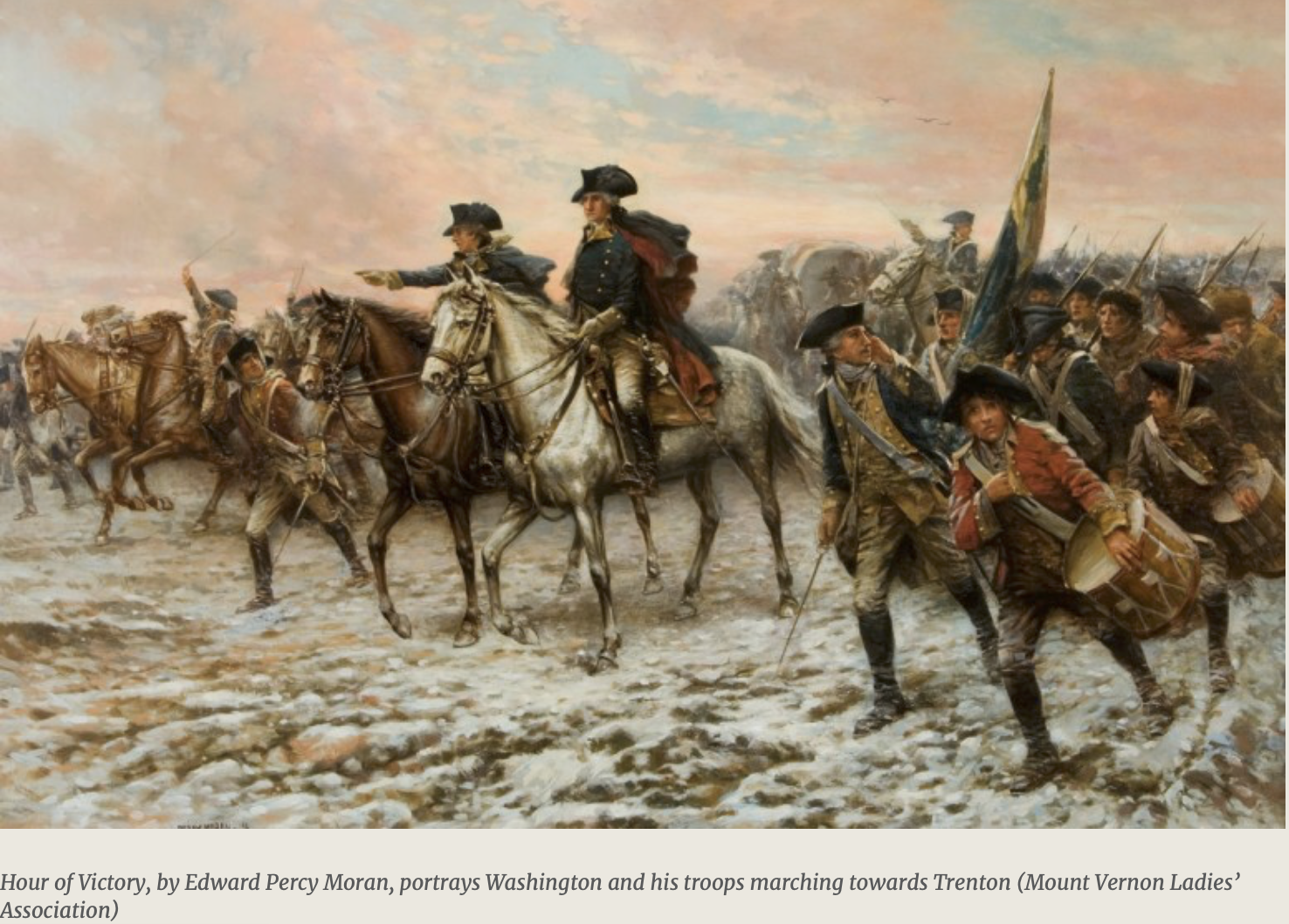
” However [political parties] may now and then answer popular ends, they are likely in the course of time and things, to become potent engines, by which cunning, ambitious, and unprincipled men will be enabled to subvert the power of the people and to usurp for themselves the reins of government, destroying afterwards the very engines which have lifted them to unjust dominion. “
George Washington, FAREWELL ADDRESS | SATURDAY, SEPTEMBER 17, 1796
The proposed SAVE act addresses a problem that does not exist. There IS occasional voter fraud, it is very rare and it is as often committed by one party as the other. Our elections are safe.
The SAVE act creates barriers for legal voters, especially for women who have changed their name as American citizens culturally do. So if you are a married woman, your ID does not match your birth certificate.
As a woman who has had to scramble in my life time to gather original documents, I know how frustrating, time-consuming and expensive it can be. I had to provide my birth certificate and marriage certificate to live in some foreign countries as we served our country. I was strongly motivated, and I had the luxury of clear instructions, TIME, and enough money to buy the documents I needed.
It is primarily American citizens; Women and the poor, who will be inconvenienced by this act, or unable to vote due to lack of money and time to access their documents.
In my state, Florida, restrictions have already gone into place that diminish voting: a requirement to renew your voting registration every other year, limits on early voting, and limits on absentee voting (especially hard for the elderly with limited abilities). Voters are increasingly forced to wait in long lines in the Florida heat and humidity. Oh – and there is an effort by one party to forbid groups who want to provide water for those standing in line to vote, a concern that a bottle of water might influence a vote.
LOL, this is an AI summary of Florida voting restrictions:
Overview of Voting Restrictions in Florida
Florida has implemented several voting restrictions that affect voter eligibility and the voting process. These changes have been a topic of significant debate.
Key Restrictions
Citizenship Verification
- Voters must provide proof of citizenship to register and vote.
- This requirement aims to ensure that only eligible citizens participate in elections.
Identification Requirements
- Certain forms of identification that were previously accepted may no longer be valid.
- Voters must present specific forms of ID when voting in person.
Voter Eligibility Challenges
- Individuals can challenge another person’s eligibility to vote, but this process is regulated.
- Challenges must be submitted in writing and can only occur within a specific timeframe before an election.
Provisional Ballots
- Voters whose eligibility is challenged can cast provisional ballots.
- These ballots are counted only after verifying the voter’s eligibility.
Impact on Voters
Affected Groups
- The new laws may disproportionately impact students, seniors, and women, who may lack the required identification or documentation.
- Critics argue that these restrictions could suppress voter turnout among eligible citizens.
Registration Deadlines
- Voters must register at least 29 days before an election.
- Changes to voter registration, such as party affiliation or address, must also be submitted by specific deadlines.
These restrictions are part of ongoing discussions about election integrity and access to voting in Florida.
These are moves designed to usurp the reins of government.
What Iran and the United States Have in Common

I don’t think I ever met an Iranian woman I didn’t like.
The Iranian women I met – it seemed to me – were all gorgeous. They were educated, and they liked to read books and if you ever want to have a great conversation, look for the Iranian woman. I survived many a stuffy reception, finding intelligent women and talking books, or customs, or history.
So I shudder as I see our forces gathering for a potential strike on Iran.
I get it. Iranian men are smart too, I used to run into them in college, always talking engineering, as in huge national engineering projects, and, way above my head, nuclear physics. They are smart, creative, and great problem solvers.
Here is what makes me laugh. I don’t think the Iranian nuclear threat is the problem. I think Iran is too much like the USA.
Iran has a strong, unpopular leader who is particularly tough on uppity women (do you see where this is going?) and has an economy which is slowly tanking. Iran wants the population to be COMPLIANT and does not like civil protest. Iran is hard on student protestors, but especially hard on non-compliant women.
Our equally unpopular leader, equally chaotic, arbitrary, and cruel, envies the Ayatollah’s theocratic autonomy. Theocracy in Iran has all the power; they can jail people with impunity. They kill protestors with impunity. Not only are they the LAW, but they are above the law.
So how is that working out for Iran? Not so great. It hasn’t worked out so great since the overthrow of the Shah. When people don’t have a voice in how the country are run, they aren’t happy, and unhappy people have ways of resisting, and sabotaging the oppressive regime.
I think that all this massing of power and threatening to invade Iran is a distraction from our own orange leader’s problems with leading. After one year of his leadership, jobs are declining, people cannot afford health care, colleges are afraid to teach critical thinking skills, and we have poorly trained goons and thugs with carte blanche to invade people’s houses, shove demonstrators around, and to kill with impunity. Or at least that is how I see it. I have seen no accountability for the killing of Renee Good or Jonathan Pretti in Minneapolis, nor for the homicides in the “detention centers” which are like huge cattle corrals.
And to what point? As long as the Iranians are increasingly unhappy with their own leader, their leadership has big problems. When the leadership can point their finger at an impending danger caused by an encroaching bully, it rallies the people to the national cause.
Oh, but the power and the might makes the heart beat faster, and what a perfect opportunity to play with all our ships and planes and the great glory of it all, you know, like what happened in Iraq and Afghanistan.
Oh wait! Another similarity! Our leader uses emergency powers because of an ALIEN INVASION! The Rule of Law no longer applies! We are overrun by our roofers! Our gardeners and landscapers! Our waiters! Our housekeepers! Our fruit and vegetable pickers! Our meat packers! Our teacher assistants! Our janitors! Our nursing home care-givers! Our teachers and professors! Our potential citizens, tempest-tossed, waiting by the Golden Door (posted on our Statue of Liberty, welcoming our fore-fathers to this country).
These are not the criminals and rapists our toddler-in-chief tells us he is saving us from; over 90% of those violently arrested and detained are NOT criminals, just people who will work hard to try to provide their family with a living wage and a roof over their heads, and enough food. Many are documented, going through the system. The system is failing them, and failing us, as a country. We are a nation of immigrants.
Like the Ayatollah, our leader seeks total control, including “protecting” our elections – protecting us from voting against him and his politics of hatred, inequality, and humiliation.
Do you think there is a long-term strategy in all this? Do you believe in the Board of Peace as a functional institute? Do you see anything here that is truly in the national interest of the citizens of the United States of America? All I see is a dance of chaos, self-enrichment, self-aggrandizement, vanity, and a grab for all the power.
League of Women Voters: State of Union Bingo Cards
Gotta love those ladies in pearls, although lately the League has been attracting a much younger group of activists. An amazingly non-political group, the League looks at issues and candidates, and encourages INFORMED voters. All people are welcome; in spite of the name, the league also includes men. This is a group that makes a difference.

With their wicked sense of humor, the National League encourages all Americans to watch the dreaded State of the Union speech tonight, and has published a set of Bingo Cards to keep you engaged. You can download them for yourself and your family members at League of Women Voters: State of the Union Bingo or you can print these, which I downloaded from their website.
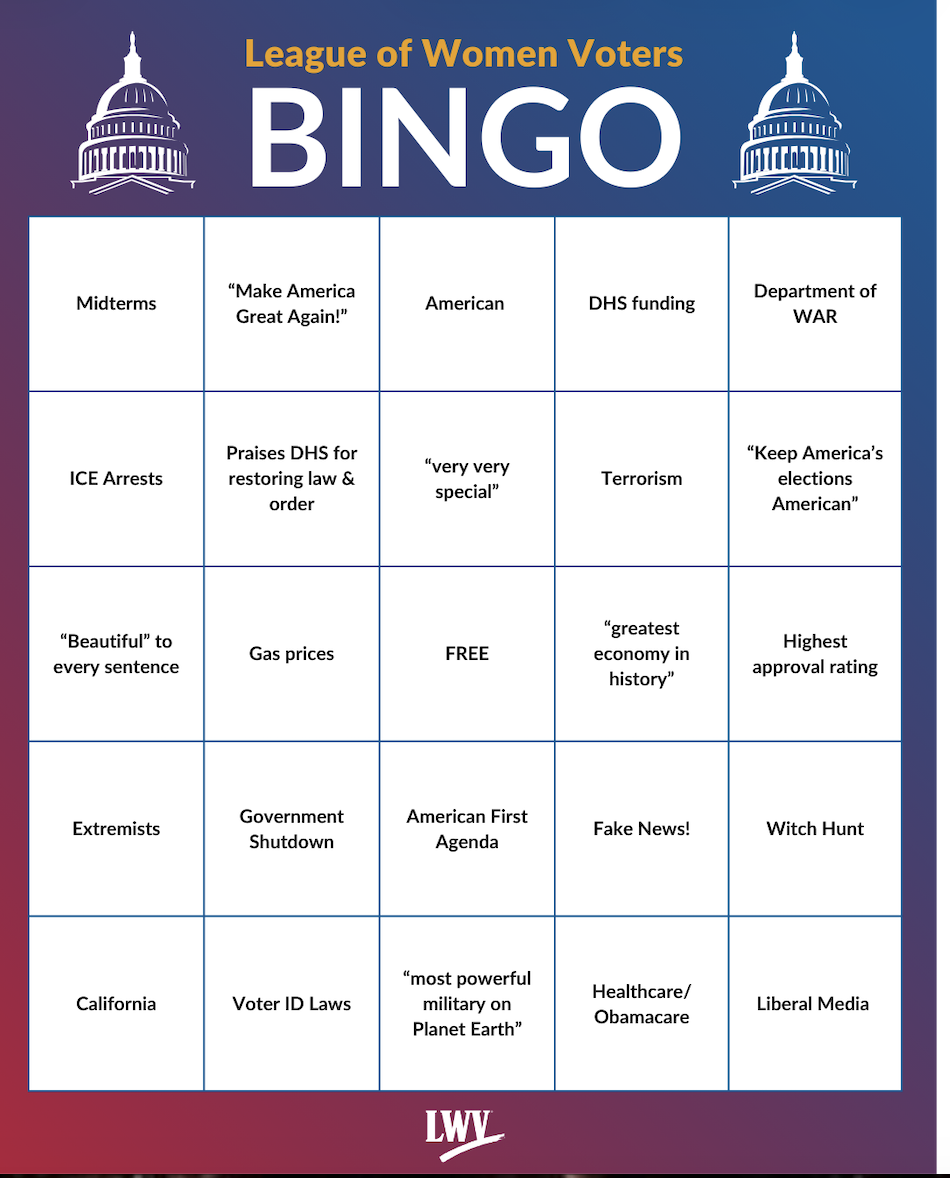
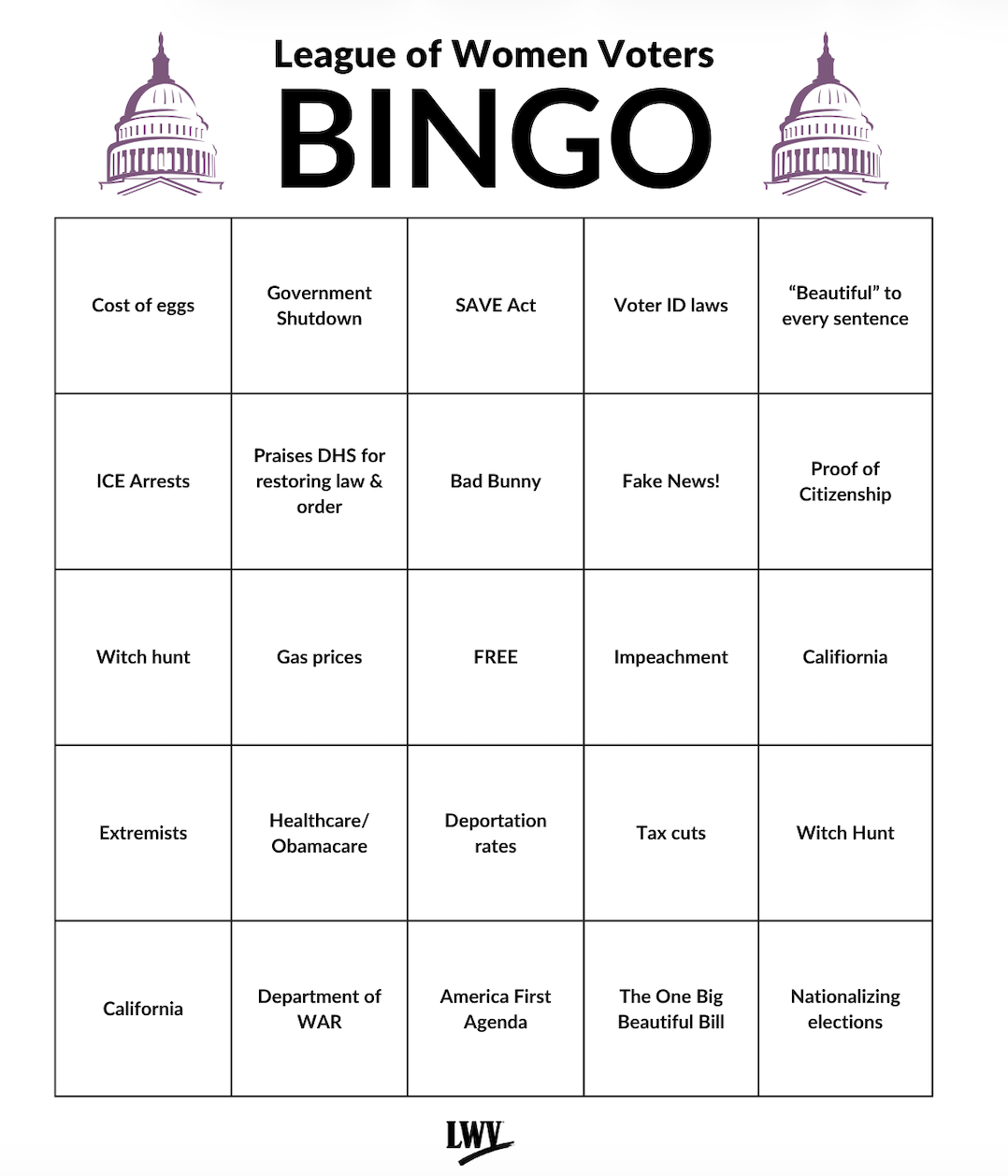

Yes, I am a member of this group. They keep up with the important issues, and they invite speakers to meetings to explain the substance to the public. They educate people about voting rights without bias.
They help with elections, and, where allowed, they help register new voters – people turning 18, new citizens, people who haven’t voted before. The current stereotype of this group as elderly educated women in pearls is quickly changing as super-charged young people seek to exert their rights in an orderly, lawful fashion.
By uniting women from all parties and all walks of life, they have a big voice and have effectively challenged unjust and unconstitutional laws at the local, state, and national levels. They take their commitment voting rights, issues, and impartiality very seriously.
And, they have a wonderful sense of humor 😄.
“Where Law Ends, Tyranny Begins”

From AOL News this morning, Saturday, February 21, 2026:
WASHINGTON (AP) — “A lawyer picked by judges to serve as the top federal prosecutor for a Virginia office that pursued cases against foes of President Donald Trump was swiftly fired Friday by the Justice Department in the latest clash over the appointments of powerful U.S. attorneys.
Deputy Attorney General Todd Blanche announced the firing of James Hundley on social media shortly after he was unanimously chosen by judges to replace former Trump lawyer Lindsey Halligan as interim U.S. attorney for the Eastern District of Virginia. While the law says that the district court may choose U.S. attorneys when an initial appointment expires, the Trump administration has insisted that the power lies only in the hands of the executive branch.
“EDVA judges do not pick our US Attorney. POTUS does. James Hundley, you’re fired!” Blanche said in a post on X.
Hundley, who has handled criminal and civil cases for more than 30 years, didn’t immediately respond to an email seeking comment Friday evening.”
Bored of Peace

The man who mercilessly called Joe Biden “Sleepy Joe” dozes through his own “Peace” meeting. Pony up a billion dollars and anyone can join. Maybe his son-in-law gets in for free.
What will greed and corruption contribute to the Palestinian situation in Israel? When Trump talks of villas and high rises facing a Mediterranean basin, is he talking about housing for Palestinians? Is he talking about establishing a beautiful Palestinian state on the Gaza strip?
Or is he seeking to monetize and take advantage of a political void to eliminate the Palestinian inhabitants and create a sleazy nouveau riche community a la Mar-a-Lago?
A Tale of Grace
For perspective, this is the legendary acquisition by Father Abraham of the first Jewish purchase of land. It is a tale of grace, hospitality, and sharing between two cultures:
Genesis 23:1-20
23
Sarah lived for one hundred and twenty-seven years; this was the length of Sarah’s life. 2And Sarah died at Kiriath-arba (that is, Hebron) in the land of Canaan; and Abraham went in to mourn for Sarah and to weep for her.
3Abraham rose up from beside his dead, and said to the Hittites, 4‘I am a stranger and an alien residing among you; give me property among you for a burying-place, so that I may bury my dead out of my sight.’
5The Hittites answered Abraham, 6‘Hear us, my lord; you are a mighty prince among us. Bury your dead in the choicest of our burial places; none of us will withhold from you any burial ground for burying your dead.’
7Abraham rose and bowed to the Hittites, the people of the land. 8He said to them, ‘If you are willing that I should bury my dead out of my sight, hear me, and entreat for me Ephron son of Zohar, 9so that he may give me the cave of Machpelah, which he owns; it is at the end of his field. For the full price let him give it to me in your presence as a possession for a burying-place.’ 10Now Ephron was sitting among the Hittites; and Ephron the Hittite answered Abraham in the hearing of the Hittites, of all who went in at the gate of his city,
11‘No, my lord, hear me; I give you the field, and I give you the cave that is in it; in the presence of my people I give it to you; bury your dead.’ 12Then Abraham bowed down before the people of the land. 13He said to Ephron in the hearing of the people of the land, ‘If you only will listen to me! I will give the price of the field; accept it from me, so that I may bury my dead there.’ 14Ephron answered Abraham,
15‘My lord, listen to me; a piece of land worth four hundred shekels of silver—what is that between you and me? Bury your dead.’ 16Abraham agreed with Ephron; and Abraham weighed out for Ephron the silver that he had named in the hearing of the Hittites, four hundred shekels of silver, according to the weights current among the merchants.
17 So the field of Ephron in Machpelah, which was to the east of Mamre, the field with the cave that was in it and all the trees that were in the field, throughout its whole area, passed 18to Abraham as a possession in the presence of the Hittites, in the presence of all who went in at the gate of his city. 19After this, Abraham buried Sarah his wife in the cave of the field of Machpelah facing Mamre (that is, Hebron) in the land of Canaan. 20The field and the cave that is in it passed from the Hittites into Abraham’s possession as a burying-place.
No Grown-Ups in Charge
We thought we would change the world, my generation. How on earth did we end up with a President who has the self-control, self-restraint, self-discipline, and dignity of a two-year-old?
How did we end up with a President who supports COAL, flying in the face of science, and wants to roll back protections against climate change, air pollution, water pollution, vaccinations, human rights, and stewardship of earthly resources?
What happened to the dawning of the Age of Aquarius, where we worked on harmony and understanding, and the dignity of ALL human beings?
How did we get stuck with a government of morons, whose first move was to remove all the bureaucratics who knew what they were doing? How did we allow all the oversights to be abolished?
How do we continue to allow the oligarchs to forbid the completion of a bridge between Canada and Michigan because of a conflict with a rich man who owns a competing bridge? How do we allow a Presidency which makes private deals to enrich his sons and son-in-law with opaque deals outside the public view?
How do we accept a new army of MERCENARIES, attracted by a $50K bonus for signing on, who have paltry training, disobey standard policing standards and who act with disregard to our national constitution?
I may be old, but I am not blind, nor am I stupid. I see, to my horror. I witness, and I document. I am part of a large and growing crowd of witnesses, (dead and alive!) who will call this administration to account for their grave injustices.
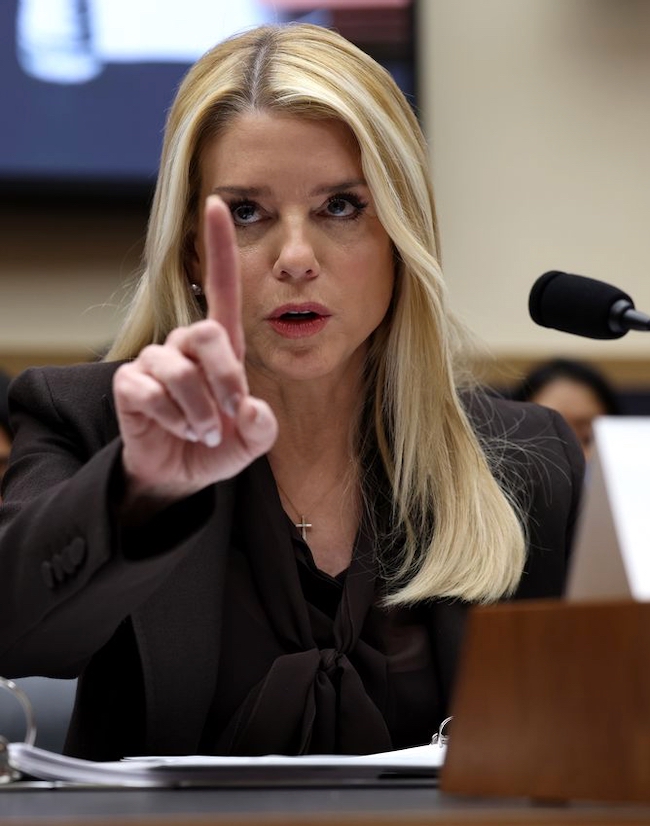
Pam Bondi, who cannot answer questions, who is protecting her boss, mentioned over one million times in the Epstein files, pointing her finger.
This week I attended a school service at our church, and the Old Testament reading was from Isaiah. It heartened me; this is what we are teaching our children
ISAIAH 58: 6-10
“Is not this the kind of fasting I have chosen:
to loose the chains of injustice
and untie the cords of the yoke,
to set the oppressed free
and break every yoke?
7 Is it not to share your food with the hungry
and to provide the poor wanderer with shelter—
when you see the naked, to clothe them,
and not to turn away from your own flesh and blood?
8 Then your light will break forth like the dawn,
and your healing will quickly appear;
then your righteousness will go before you,
and the glory of the Lord will be your rear guard.
9 Then you will call, and the Lord will answer;
you will cry for help, and he will say: Here am I.
“If you do away with the yoke of oppression,
with the pointing finger and malicious talk,
10 and if you spend yourselves in behalf of the hungry
and satisfy the needs of the oppressed,
then your light will rise in the darkness,
and your night will become like the noonday.”
Let us shine. Let us seek to shine.
Bravo, Judge Leon!
Judge Leon blocks Pentagon and Hegseth in prosecution to punish Mark Kelly over ‘illegal orders’ video
U.S. District Judge Richard Leon, an appointee of former President George W. Bush, noted that while serving in the armed forces, military forces have limitations on some of their freedoms, but said that no court had ever extended that doctrine to retired service members, and he would not be the first to do so.
“This Court has all it needs to conclude that Defendants have trampled on Senator Kelly’s First Amendment freedoms and threatened the constitutional liberties of millions of military retirees,” the judge wrote.
Leon quoted singer-songwriter Bob Dylan to say, “You don’t need a weatherman to know which way the wind blows.” ”
The Judge had some pithy and appropriate things to say about military retirees and their rights to free speech, and in particular to Kelly’s position not only as a retired veteran, but also as a current Senator, where his responsibility to represent his electorate would be severely hampered by intimidating threats to take away or reduce his pension, or bring him back on duty to court-martial him for his “crime.”
His crime? Senator Kelly appeared in a video with five other veterans serving in the Senate reminding service members they have a responsibility NOT to obey illegal orders.
After WWII, many German leaders tried to excuse their crimes by saying “We were only following orders.”
When orders violate the Constitution, we do not have to comply. Constitutional rights apply to all people living in the United States, all residents; every person is authorized due process of the law.
These Constitutional Rights are being tested. Judge Leon is a Bush appointed judge, a man with years of judicial procedures behind him.
We are finding some ironic ways in which our President is unifying us. Republicans and Democrats alike recoiled in horror at the goon-squad “policing” in Minnesota. Republican and Democrat judicial appointees are correcting mistaken applications of power and brute force, and corraling them back where they belong. And God Bless Bad Bunny for reminding us that America is two continents, and that we are all stronger together. The vast majority of Americans on both continents were ready for some joy, and words of brotherhood, liberty and equality. We have more in common than we have differences.
If the United States of America is to continue to be a land welcoming those seeking opportunity and freedom, we all have to work towards this together, supporting our common values and finding ways to cooperate, even in areas where we disagree.
By the way, under the catagory of unanticipated consequences, Senator Mark Kelly received a huge surge of financial contributions to defend himself against this intimidation by our Secretary of Defense. This is a man who could successfully run for President, with his presence, his courage, his background and his steadfast approach.
Oath of Citizenship: Joyful Celebration
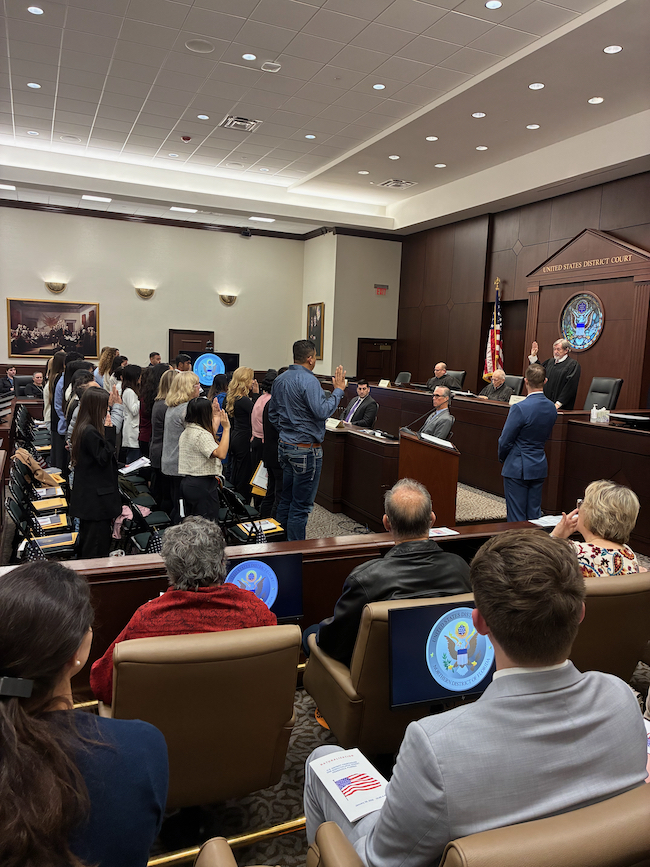
It’s not often a courtroom is packed with joyful people. And only for this one significant celebration are cameras allowed – even encouraged – in the courtroom. The difference in atmosphere is palpable.
Yesterday, 33 people from a variety of nations took their oath to be responsible American citizens. There were moments when their was no sound, no noise at all, in the courtroom; the silence was a salute to the importance of the event, and respect for the moment.
Judge Collier managed to be both solemn and celebratory, lauding the diversity of the group and the importance of their choice to be US citizens. He, and other, congratulated the applicants for “earning” their citizenship by learning our history, customs and language, and appreciating it’s rewards even more than those of us who are citizens by birth and heritage.
David Stafford, our long time Supervisor of Elections, now the right-hand man to Pensacola’s Mayor Reeves, gave a moving and motivating speech about the gift of citizenship, its rewards, and the great responsibility each citizen has to sign up to vote – and to vote.
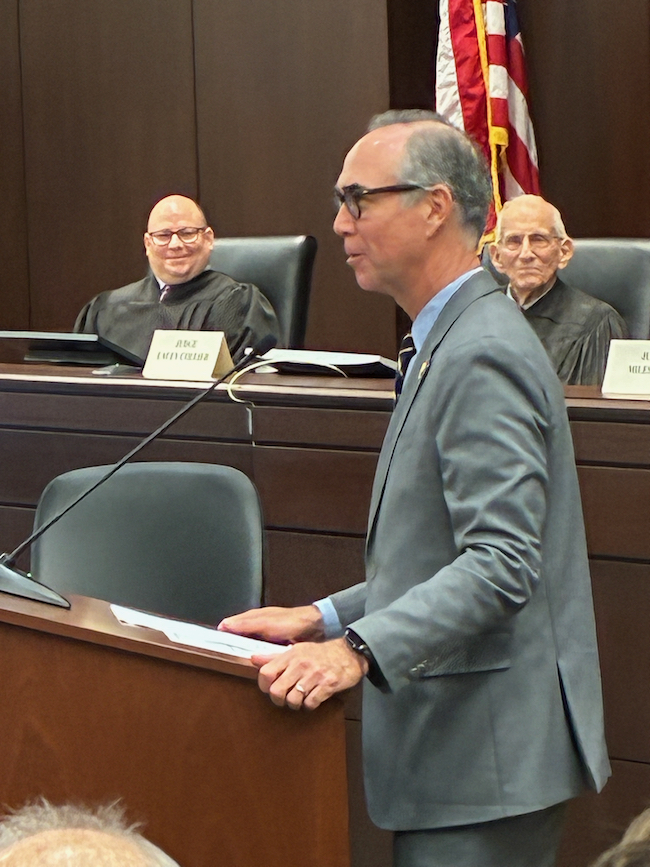
My friends, you receive my frustrated rants and my frequent musings. Today, I share with you a day full of pure joy. A packed courtroom, for all the right reasons; official speeches, short, pithy, and full of positivity and possibilities, and people who fully believe in the Rule of Law, Equality, Diversity as a strength, and the great inclusionary current of neighborly brotherhood that connects people in the United States of America.
EPSTEIN Files, Please, DOJ Pam Bondi
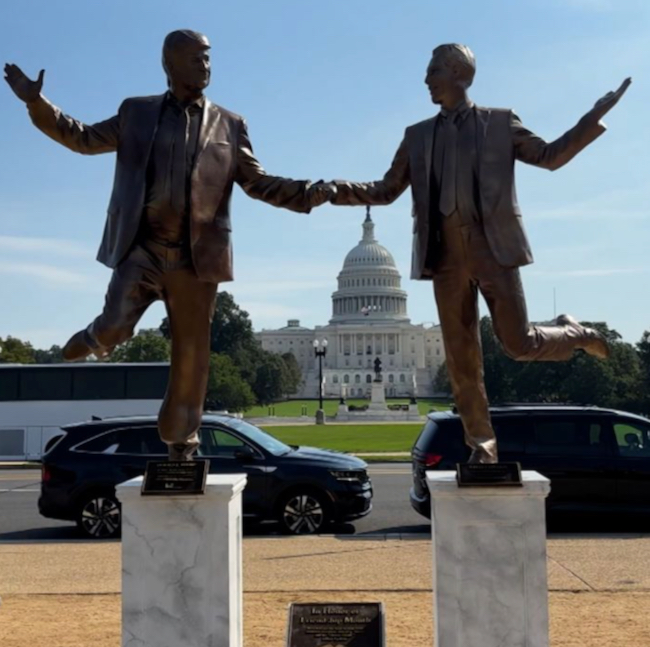
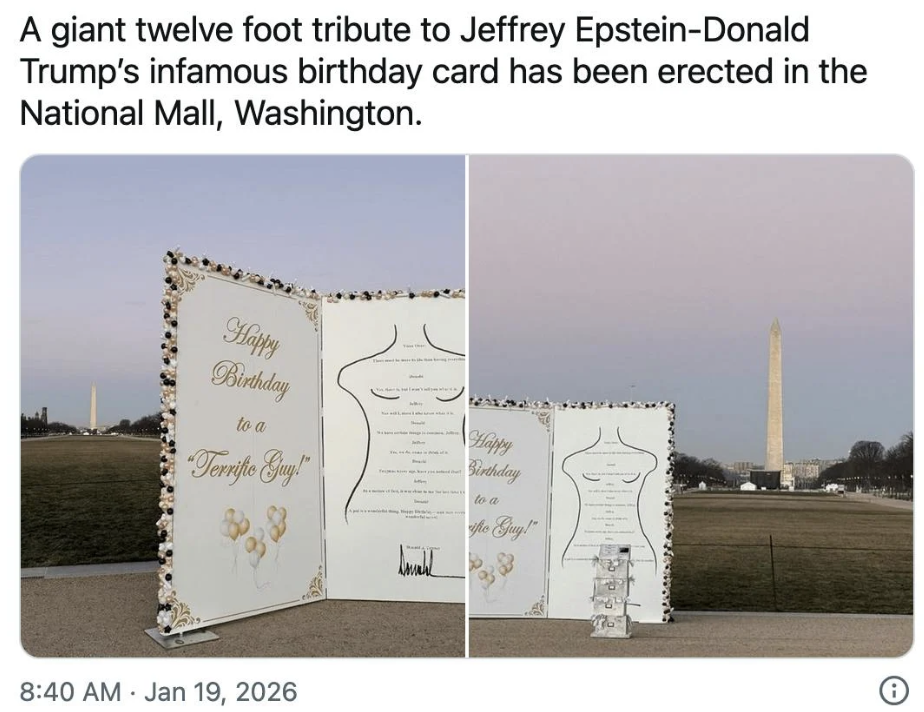
While we watch aghast as ill-trained ICE agents take down and kill American citizens, and Pam Bondi demands voter registration rolls from Minnesota (and according to the Brennan Center for Justice and Democracy Docket, looking for “sensitive” voter registration information from ALL states), 2 million (estimated) Epstein files have yet to be released.
Minnesotans are the least likely “domestic terrorists” ever, dressed in their buffalo plaid wool shirts and snow boots. Minnesotan, those white bread Scandinavian immigrants from long ago, Paul Bunyan-esque in strength an behavior, amicably welcomed their Somali newcomers, and are now protecting them as best they can while staying alive.
We all have to step back and ask ourselves “Am I a DOMESTIC TERRORIST?”
Look at these good church-going Minnesotans, shuttling immigrant children to school, picking up and delivering groceries to them surreptitiously, taking families hidden in their SUV’s to medical appointments. Do these seem like people who are afraid of their immigrant neighbors?
I respect Customs officials. I respect the rules of our nation. I do not respect those who overstep their jobs, who take delight in the adrenaline rush of attacking protestors, who shoot, rather than exhibit the self-rstraint we expect of law-enforcement. Most of us have no problem with ICE going after, as they state, violent criminals, few as they are.
It’s a Numbers Game
What we object to is going after people who are NOT criminals just because the Toddler-In-Chief wants to be able to show numbers. Trump, you started off your campaign in 2015 going after those rapists, criminals and drug addicts. We didn’t believe you then, and we sure don’t believe you now. We believe our own eyes. We are witnesses to violations of our Constitution by people who should be models of legal behavior.
Corrupting the FBI to investigate political appointments, and firing prosecutors when they tell you there is not evidence to get a conviction is not the American Way.
We know you want to keep your party in power. We know you’re afraid you are going to lose big in upcoming elections, and that is the purpose behind bullying the blue states and trying to intimidate their officials is to get an upper hand on the elections. YOU, who complain about rigged elections, YOU who whine that you really won the 2020 election (and your own elections supervisors would not support your claims) YOU are trying to bully, intimidate and subdue the population so that YOU can rig the elections!
Props to Minnesota! Props to them for showing fortitude, for being good neighbors, for welcoming the stranger (as Moses and Jesus taught us) and for showing self-restraint in the face of thugs and goons itching for a fight. Trump is eager to invoke the Insurrection Act, we know because he says so! Props to you, Minnesota, and to you, Portland for having the maturity and persistence and yes, a sense of humor to outlast, outplay and survive this despicable tyrant.
Recent Comments
ExpatAlien on What Country am I Living … intlxpatr on Yellowstone: Old Faithful to C… Michelle on Yellowstone: Old Faithful to C… Cathy on No Grown-Ups in Charge intlxpatr on Waiting for Snow Wikipedia Donate Button

Amazina


Early Voting in Florida


 Here There and Everywhere