EPSTEIN Files, Please, DOJ Pam Bondi
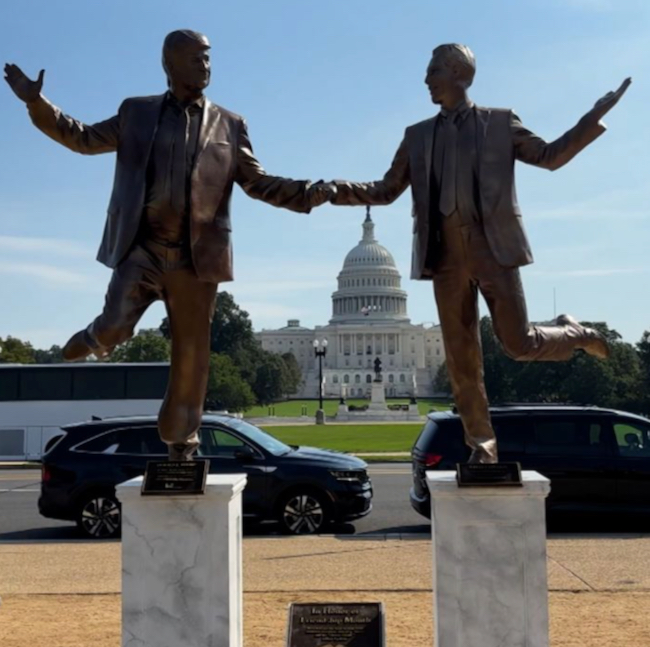
While we watch aghast as ill-trained ICE agents take down and kill American citizens, and Pam Bondi demands voter registration rolls from Minnesota (and according to the Brennan Center for Justice and Democracy Docket, looking for “sensitive” voter registration information from ALL states), 2 million (estimated) Epstein files have yet to be released.
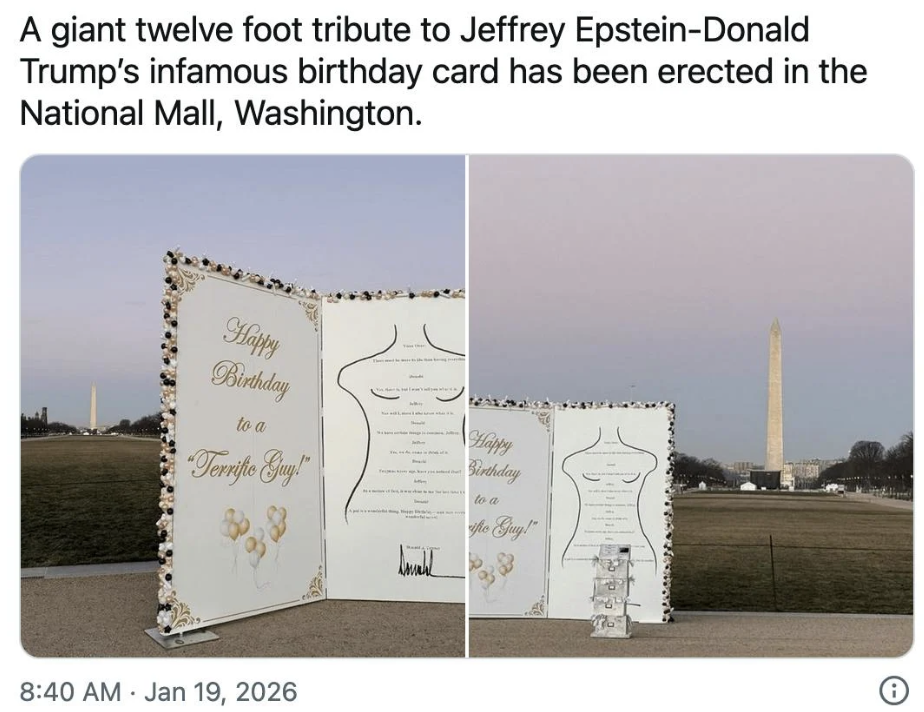
Minnesotans are the least likely “domestic terrorists” ever, dressed in their buffalo plaid wool shirts and snow boots. Minnesotan, those white bread Scandinavian immigrants from long ago, Paul Bunyan-esque in strength an behavior, amicably welcomed their Somali newcomers, and are now protecting them as best they can while staying alive.
We all have to step back and ask ourselves “Am I a DOMESTIC TERRORIST?”
Look at these good church-going Minnesotans, shuttling immigrant children to school, picking up and delivering groceries to them surreptitiously, taking families hidden in their SUV’s to medical appointments. Do these seem like people who are afraid of their immigrant neighbors?
I respect Customs officials. I respect the rules of our nation. I do not respect those who overstep their jobs, who take delight in the adrenaline rush of attacking protestors, who shoot, rather than exhibit the self-rstraint we expect of law-enforcement. Most of us have no problem with ICE going after, as they state, violent criminals, few as they are.
It’s a Numbers Game
What we object to is going after people who are NOT criminals just because the Toddler-In-Chief wants to be able to show numbers. Trump, you started off your campaign in 2015 going after those rapists, criminals and drug addicts. We didn’t believe you then, and we sure don’t believe you now. We believe our own eyes. We are witnesses to violations of our Constitution by people who should be models of legal behavior.
Corrupting the FBI to investigate political appointments, and firing prosecutors when they tell you there is not evidence to get a conviction is not the American Way.
We know you want to keep your party in power. We know you’re afraid you are going to lose big in upcoming elections, and that is the purpose behind bullying the blue states and trying to intimidate their officials is to get an upper hand on the elections. YOU, who complain about rigged elections, YOU who whine that you really won the 2020 election (and your own elections supervisors would not support your claims) YOU are trying to bully, intimidate and subdue the population so that YOU can rig the elections!
Props to Minnesota! Props to them for showing fortitude, for being good neighbors, for welcoming the stranger (as Moses and Jesus taught us) and for showing self-restraint in the face of thugs and goons itching for a fight. Trump is eager to invoke the Insurrection Act, we know because he says so! Props to you, Minnesota, and to you, Portland for having the maturity and persistence and yes, a sense of humor to outlast, outplay and survive this despicable tyrant.
Orwellian Insurrection Talk v. Free Elections
I am haunted by memories of our Janus-like leader telling people while running for the office of President that if we voted for him, we would never have to vote again. What could he have meant by that? Aren’t elections part of what we value as a Democracy?
I am troubled by a leader who insists that what we saw with our own eyes on January 6th, that the thugs beating policemen, breaking and entering the Congress, chasing down Mike Pence with a noose was NOT an insurrection, not at all what he was going for when he told followers to “Fight Like Hell!” or we would have no Democracy. This leader who said he would be with them, and scurried back to the white house to watch events unfold on his Presidential television. He didn’t call off these hooligans and goons until HOURS after the violence began.
He PARDONED these thugs who invaded the Congress. He now calls it a “Day of Love.” Like we can’t see with our own eyes?
Just in time for Black History Month, he continues to dismantle exhibitions exploring the relationship between the enslaved and the enslavers. If it makes white people uncomfortable, isn’t that appropriate? Is slavery something we want to return to? And who, exactly do we enslave. Like are camera bearing Democrats candidates for the new underclass?
Armed with Whistles and Phone Cameras
J.D. Vance tells us to “lower the temperature” and help the ICE forces. J.D. Vance, you are talking to Minnesotans! You are talking to the descendants of Norwegians, the very nationality our orange leader wants to come to the USA! You are talking to people who have peacefully incorporated people from many nations, welcomed them! YOU created a spurious policy, based on a poorly made video by a social influencer. Yes, there was a child care scandal, and the people charged were not Somali but US citizens! YOU are creating the rise is heated emotions, and those you are shooting are armed with whistles and phone cameras!
Who has a history of creating violent insurrections? Who has sent unwelcome storm troopers into Minnesota? Who is poking Minnesota officials? Who is creating the problem and like every school boy bully, blaming the victim – “You started it!”
Go HOME, ICE. You are not welcome, you are not needed. You are invading the homes of US CITIZENS without a warrant, and laughing! You are shouting “Boo HOO!” to witnesses when you shoot a non-violent demonstrator 10 times! 10 Times! If that isn’t excessive force, what is?
I applaud the citizens of Minneapolis who are standing against this villainy and this bullying. I applaud their self-restraint and their persistence. I applaud Portland, Oregon for utilizing the legal system to lower the temperature and resist the pressure to give the radical bullying thugs any opportunity to raise the stakes.
Self restraint and Persistence while we activate the legal system is our only hope if we want to continue to have free and safe elections, and I believe that is what this is all really about.
Oh Those Poor White People, Those Poor White Men
First, a disclaimer. I like men. I like men a lot. Some of my best friends are men, of all colors and nationalities. I am married to a white man.
Our Glorious Leader, the Bone-Spur Coward-in-Chief declares (as he has in Executive Orders from Day One of his Regency) that diversity, equality and inclusiveness are discrimitory against white males, and are hurting them.
I challenge Trump to take a look at statistics. I challenge him to tally the ranks of CEOs and Executives in the USA to see just what percentage of each sex and race are in those positions, and in what proportions. IF white males are not dominant, I will eat this post.
Yes. This is a rant. Yes, I am livid. As a woman, I was privileged to go to university, privileged because my own father was sure that women’s place was in the home, having children, taking care of you know, women things. He was shocked and horrified that I didn’t get a teacher’s degree or a nursing degree, or why had he sent me to college?
A very small percentage of women and people of color have managed to get to the highest positions of influence, power and wealth in the United States. So tell me about the poor white men!
For my American friends who scorn the Middle East; I lived in three countries, Qatar, Kuwait and Saudi Arabia where the voters – men – recently voted for the women in their countries to have the vote. These were men who love their mothers, sisters, cousins, wives and daughters and wanted them to have the dignity of choice of leadership in their own countries. They educated their daughters, and even, in Saudia Arabia, would take their daughters out to the deserts and teach them how to drive, even though it was illegal in Saudi Arabia for women to drive. These Arab, Islamic men you denigrate supported the right of females to vote, to have access to good education. At one time they sent them to the United States. I don’t imagine they will be sending their daughters -or their sons – here now.
It is unthinkable to me that these statements are issuing from privileged white men in charge of our country. We’re looking at universities in Ireland and Scotland where universities will, as US universities once did, encourage free exchange of ideas and fraternity, and equality and respect and dignity of all people.
At one time, not too long ago, in our country, we had laws, and those laws were obeyed! We had laws protecting the cleanliness of our air and water, we had laws protecting the rights of citizens – and non-citizens. We had laws against profiting from public office, laws requiring the disclosure of personal interests, and recusal from decisions that might enrich the decision-maker. We had laws requiring oversight of government policies. We had a Supreme Court that acted with impartiality. We had a President who was not above the law. We had alliances with countries with whom we stood shoulder to shoulder for decades against bullies and thugs.
I expect my son will call and warn me that our Orange Acting President of Venezuela is about to take away my citizenship and send his Goons to my door with zip ties for speaking out. Or maybe just come and shoot me in the face as I offer cookies and ice tea?
So Much For Health and Transparency
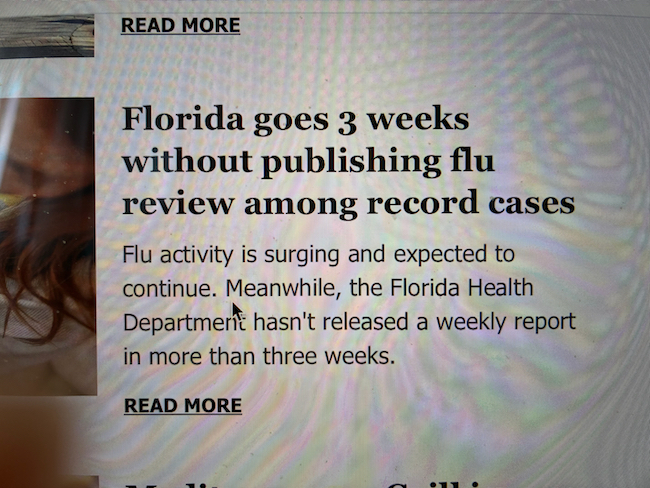
It started during COVID. Politicians and their Administrations stopped publicizing statistics when the stats revealed their government was doing little or nothing to prevent spread of disease. Now, under the cover of cost reductions and eliminating fraud they are gutting the agencies that maintain the statistics and restricting publications of what few statistics are being gathered. Fortunately, private institutions and individuals are watching, keeping track, and doing their best to keep a vulnerable population informed.
Crime Wave? Another Lie
Today I am sharing a blog post from Robert Reich, about how we can deal with the absurdities we are hearing about crime waves – but only in inconveniently Democratic majority cities:
How to respond to Trump’s lies about a “crime wave”
AUG 28, 2025
Friends,
Trump’s escalating rhetoric of a “crime wave” in America, coupled with threats to occupy Chicago, New York, Baltimore, and many other cities, has put many Democrats in a bind.
They worry if they deny crime is a problem, they could turn off swing voters who always and inevitably worry about crime.
As with immigration, crime is an issue that Trump can demagogue because, while the rate of serious crime his fallen dramatically, most Americans continue to fear crime. That fear has been heightened by expanding homeless encampments and drug overdoses in plain view, no matter what the statistics say.
Crime has also been a racial dog whistle. At least since Richard Nixon emphasized “law and order” and Ronald Reagan said he’d be “tough on crime,” Republicans have used fear of crime as code for white fear of Black people.
So what should Democrats do? My suggestion: Don’t simply give statistics showing that the rate of dangerous has fallen. Say safety is critically important, but local police rather than federal troops are best at dealing with it.
Don’t stop there. Hammer Trump for pardoning the 1,500 criminals who violently attacked the United States capitol and caused the deaths of four police officers — and for then firing the federal prosecutors who held them accountable.
Attack him for opening the floodgates to white-collar crime — hobbling the Consumer Financial Protection Bureau, freezing enforcement of the Foreign Corrupt Practices Act, disbanding the National Cryptocurrency Enforcement Team, and retreating from almost all federal lawsuits involving money laundering, crypto markets, and foreign corruption.
Since retaking the White House, Trump has granted clemency to Lawrence Duran, a health care executive who was convicted of leading a Medicare fraud and money laundering scheme. Trump has commuted the 14-year sentence of Jason Galanis, who defrauded investors, including a Native American tribe and a teachers’ pension fund, of tens of millions of dollars. He has pardoned Julie and Todd Chrisley, the reality TV stars convicted of bank fraud and tax evasion.
In April, the Wall Street Journal reported that Attorney General Pam Bondi was “swapping out and sidelining career supervisors who were responsible for charging crimes such as corruption, price fixing and securities fraud.”
Trump is soft on crime as long as the crime serves his own purposes. People who try to get on Trump’s good side — such as New York City Mayor Eric Adams, who was indicted on bribery charges during the Biden administration — have seen Trump’s Justice Department drop its charges against them.
Before they poured money into Trump’s initiatives and PACs, many Big Tech corporations were facing federal investigations and enforcement actions. Those investigations and lawsuits are now being dropped.
Earlier this year, the Department of Justice dropped its criminal case against Boeing, which involved the company’s role in two plane crashes that killed 346 people — despite Boeing previously agreeing to plead guilty in the case.
Trump is himself a criminal, found guilty on all 34 counts of falsifying business records in the first degree related to payments made to Stormy Daniels before the 2016 presidential election.
Don’t just accuse him of manufacturing a pretext to go into American cities. Hit him hard on his own horrific record of coddling criminals.
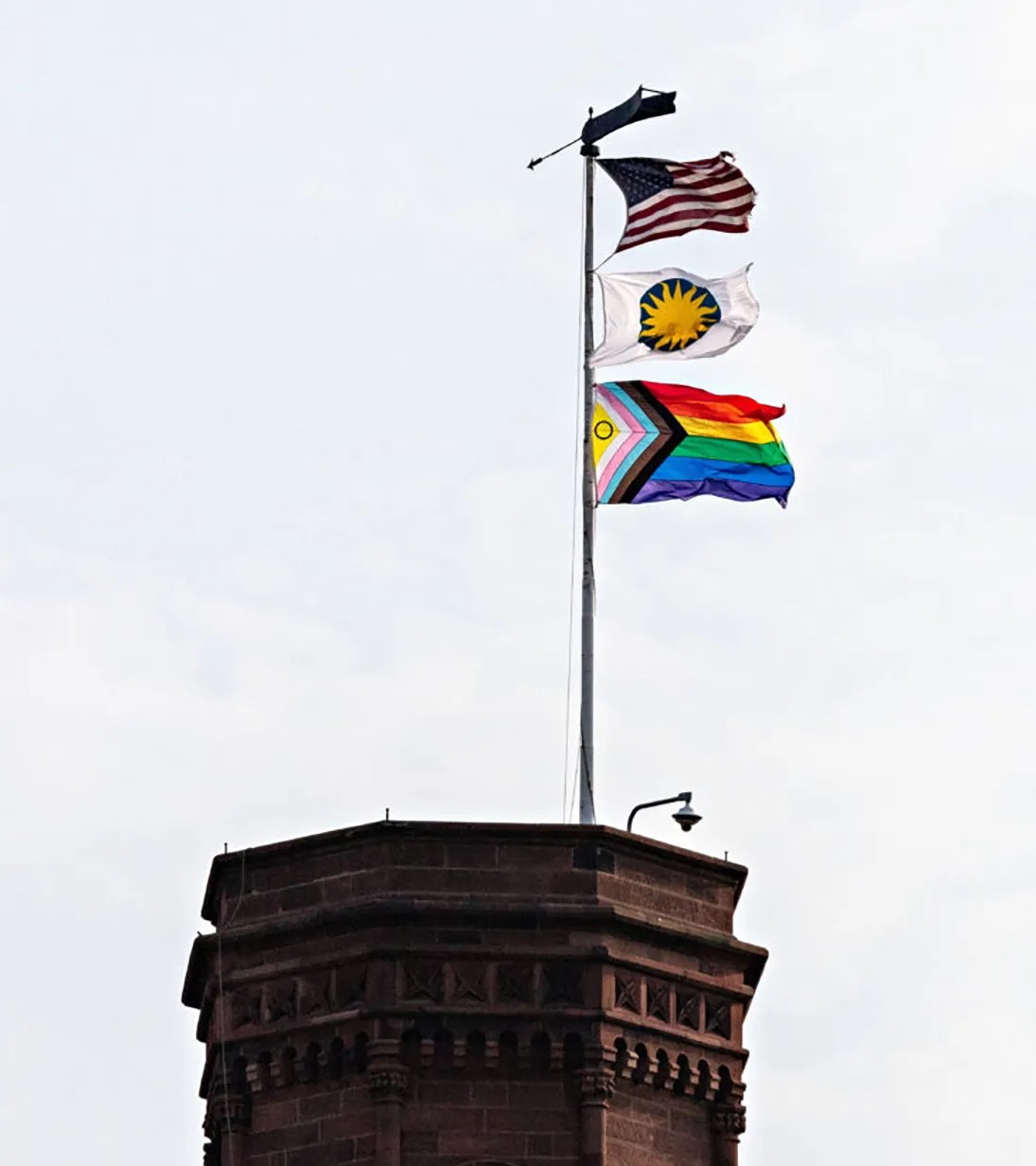
History the White House Doesn’t Like: The List of Exhibits Trump Wants Gone
It’s a strange honor to have exhibits selected that the President wants gone. As in Literature, when you read through the list, you learn a lot about the fears and the prejudices of the creator. In recent decades, the United States of America has had a greater tolerance for the idiosyncratic views of artists, appreciating their differing perceptions. The list below is taken word for word from the White House Post called The President is Right About the Smithsonian.
- The National Museum of African American History and Culture debuted a series to educate people on “a society that privileges white people and whiteness” — defining so-called “white dominant culture“ as “ways white people and their traditions, attitudes, and ways of life have been normalized over time” and portraying “the nuclear family,” “work ethic,” and “intellect” as white qualities rooted in racism.
- The campaign featured content from hardcore woke activist Ibram X. Kendi

As part of its campaign to stop being “wealthy, pale, and male,” the National Portrait Gallery featured a choreographed “modern dance performance“ detailing the “ramifications“ of the southern border wall and commissioned an entire series to examine “American portraiture and institutional history… through the lens of historical exclusion.”
The National Portrait Gallery features art commemorating the act of illegally crossing the “inclusive and exclusionary” southern border — even making it a finalist for one of its awards.
(Intlxpatr comment: This painting reminds me of the painting of Mary, Joseph and the Baby Jesus escaping to Egypt to avoid King Herod’s massacre of the innocents)

The National Museum of African Art displayed an exhibit on “works of speculative fiction that bring to life an immersive, feminist and sacred aquatopia inspired by the legend of Drexciya,” an “underwater kingdom populated by the children of pregnant women who had been thrown overboard or jumped into the ocean during the Middle Passage.”
The American History Museum’s “LGBTQ+ History” exhibit seeks to “understand evolving and overlapping identities such as lesbian, gay, bi-sexual, transgender, queer, transsexual, transvestite, mahu, homosexual, fluid, invert, urning, third sex, two sex, gender-bender, sapphist, hijra, friend of Dorothy, drag queen/king, and many other experiences,” and includes articles on “LGBTQ+ inclusion and skateboarding“ and “the rise of drag ball culture in the 1920s.”
The National Museum of the American Latino features programming highlighting “animated Latinos and Latinas with disabilities” — with content from “a disabled, plus-sized actress” and an “ambulatory wheelchair user” who “educates on their identity being Latinx, LGBTQ+, and disabled.”
The National Museum of the American Latino characterizes the Texas Revolution as a “massive defense of slavery waged by ‘white Anglo Saxon’ settlers against anti-slavery Mexicans fighting for freedom, not a Texan war of independence from Mexico,” and frames the Mexican-American War as “the North American invasion” that was “unprovoked and motivated by pro-slavery politicians.”
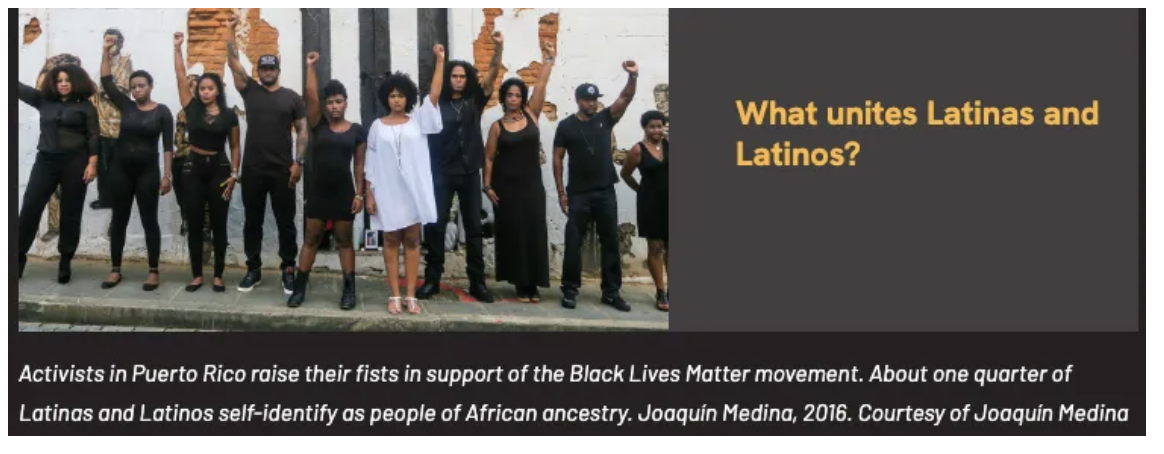
According to the National Museum of the American Latino, “what unites Latinas and Latinos“ is “the Black Lives Matter movement.”
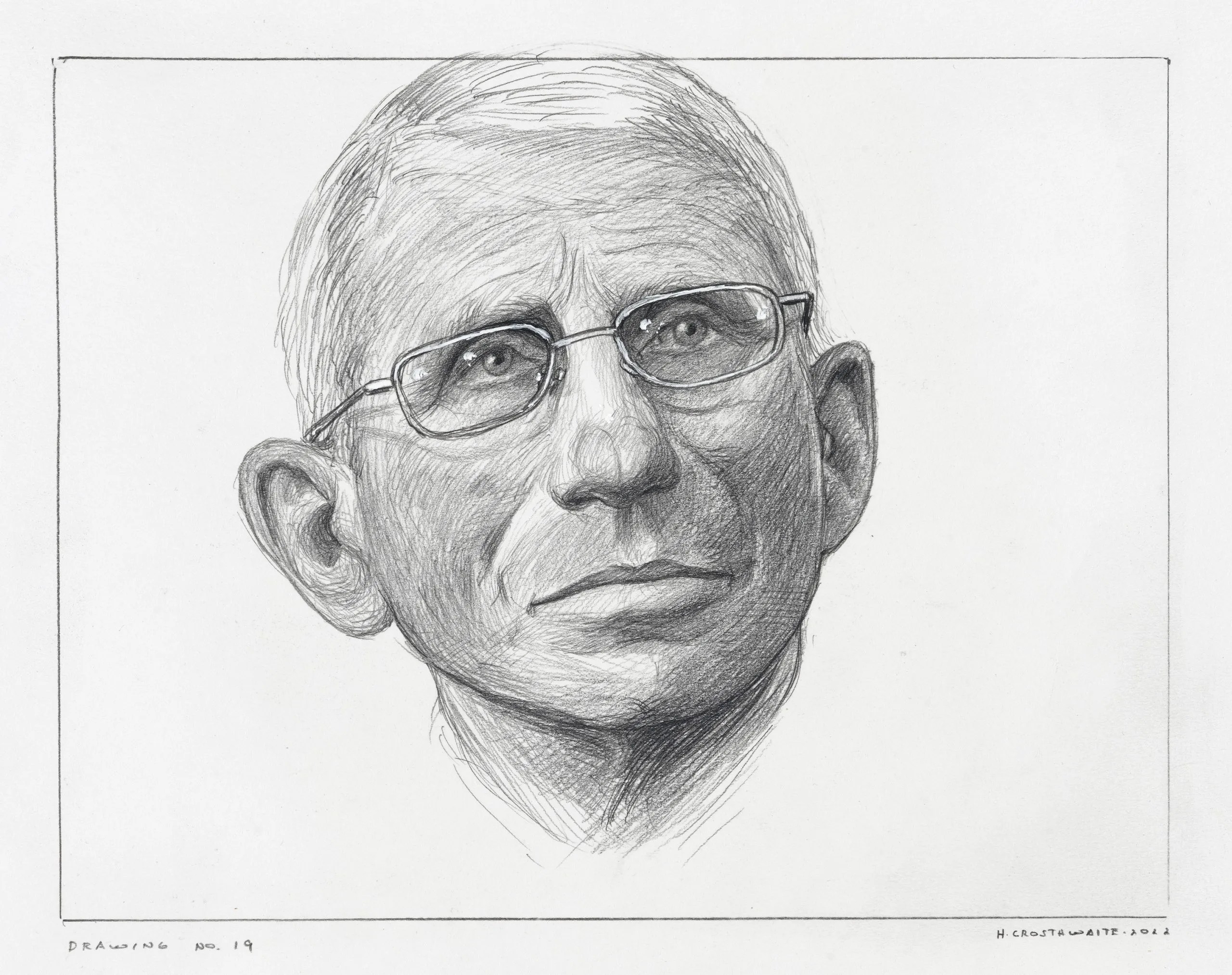
The National Portrait Gallery commissioned a “stop-motion drawing animation” that “examines the career“ of Anthony Fauci.
The American History Museum’s exhibit marking the 50th anniversary of Title IX includesbiological men competing in women’s sports and argues in favor of “transgender” athletes competing in sports against the opposite biological sex.
A exhibit at the American History Museum depicts migrants watching Independence Day fireworks “through an opening in the U.S.-Mexico border wall” and says America’s founders “feared non-White immigration.”

The American History Museum features a display that refers to the founding of America as “a profound unsettling of the continent.”
The American History Museum’s “American Democracy” exhibit claims voter integrity measures are “attempts to minimize the political power” of “new and diverse groups of Americans,” while its section on “demonstrations” includes only leftist causes.
An American History Museum exhibit features a depiction of the Statue of Liberty “holding a tomato in her right hand instead of a torch, and a basket of tomatoes in her left hand instead of a tablet.”

- The National Museum of the American Latino features an anti-American exhibit that defines Latino history as centuries of victimhood and exploitation, suggests the U.S. is stolen land, and characterizes U.S. history as rooted in “colonization.”
- The exhibit features writing from illegal immigrants “fighting to belong.”
- The exhibit displays a quote from Claudia de la Cruz, the socialist nominee for president and a director an anti-American hate group, as well as another quote that reads, “We didn’t cross the border; the border crossed us.”
- The exhibit remains prominently featured on its website alongside a quote from the Communist Party USA’s Angela Davis, who was once among the FBI’s Top 10 Most Wanted Fugitives.

- The National Museum of the American Latino features an anti-American exhibit that defines Latino history as centuries of victimhood and exploitation, suggests the U.S. is stolen land, and characterizes U.S. history as rooted in “colonization.”
- The exhibit features writing from illegal immigrants “fighting to belong.”
- The exhibit displays a quote from Claudia de la Cruz, the socialist nominee for president and a director an anti-American hate group, as well as another quote that reads, “We didn’t cross the border; the border crossed us.”
- The exhibit remains prominently featured on its website alongside a quote from the Communist Party USA’s Angela Davis, who was once among the FBI’s Top 10 Most Wanted Fugitives.

The former interim director of the future Smithsonian American Women’s History Museum declared the museum will be “inclusive” of biological men posing as women.
Commentary from The Hill, August 22, 2025:
White House lists 20 objectionable Smithsonian exhibits, artworks
BY ASHLEIGH FIELDS – 08/22/25 10:34 AM ET
The Trump administration specifically targeted the American history museum’s “LGBTQ+ History” exhibit and condemned a separate display lauding the 50th anniversary of Title IX with a focus on transgender athletes. President Trump signed an executive order in February barring transgender women from competing in women’s sports.
The decision to highlight more than a dozen exhibits and artworks as “woke” comes days after Trump criticized the history museum for its depiction of slavery and its impact on Black Americans.
“The Smithsonian is OUT OF CONTROL, where everything discussed is how horrible our Country is, how bad Slavery was, and how unaccomplished the downtrodden have been — Nothing about Success, nothing about Brightness, nothing about the Future,” the president wrote Tuesday in a Truth Social post.
“We are not going to allow this to happen, and I have instructed my attorneys to go through the Museums, and start the exact same process that has been done with Colleges and Universities where tremendous progress has been made,” he added. “This Country cannot be WOKE, because WOKE IS BROKE.”
During his first term, Trump lauded the opening of the National Museum of African American History and Culture for its portrayal of harsh truths and storied victories for disenfranchised Black citizens.
Trump’s issue with the depiction of slavery in museums has been widely challenged by Black historians and community leaders.
“Just as the Holocaust is remembered in all its brutality, so must America reckon with the truth of chattel slavery, Jim Crow and racial terror,” Toni Draper, publisher of the Afro-American Newspaper — the archives of which were used to help curate the museum — wrote in a recent op-ed for Afro.com. “Anything less is historical erasure, a rewriting of facts to make the nation appear more palatable.”
“But history is not meant to comfort — it is meant to confront. And only in confrontation do we find the lessons that lead us forward,” she added.
Morocco Malta and the Med: Algiers!

We are excited. Algiers is one of the reasons we booked this tour, knowing that things can happen, and that for political reasons, or because of weather, it might not really happen. When you travel, you just have to accept that things are not always going to work out.
(On this trip, by the grace of God, every single thing worked out.)
It’s still dark, and we are sailing into the harbor at Algiers. On the hill I see – A Christmas Tree??!! No, as it turns out, this is a memorial to the martys of the war, the Algerian war for freedom from the French.



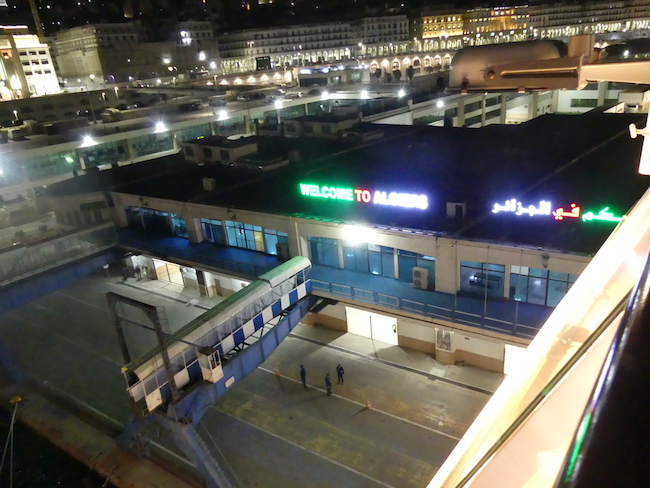
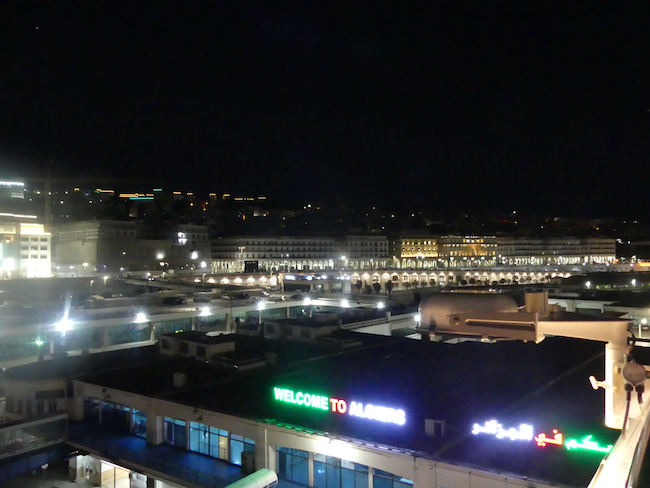

Algiers is the only port in which I heard the call to prayer. It was hauntingly beautiful. The mosques do not all start at the same time, so there is a kind of cacaphonic beauty from a large number of prayers going up at the same time.




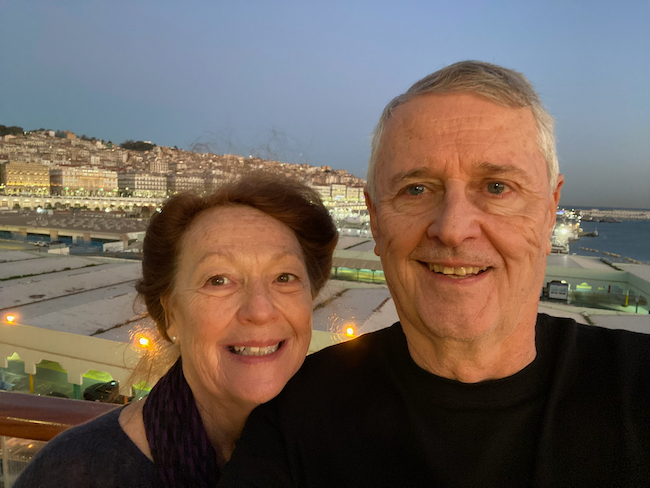
The Hall of Honor is where we process through to get to our buses.

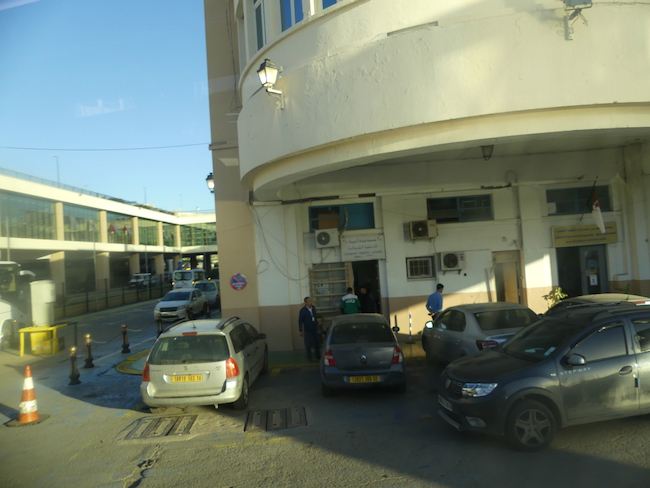
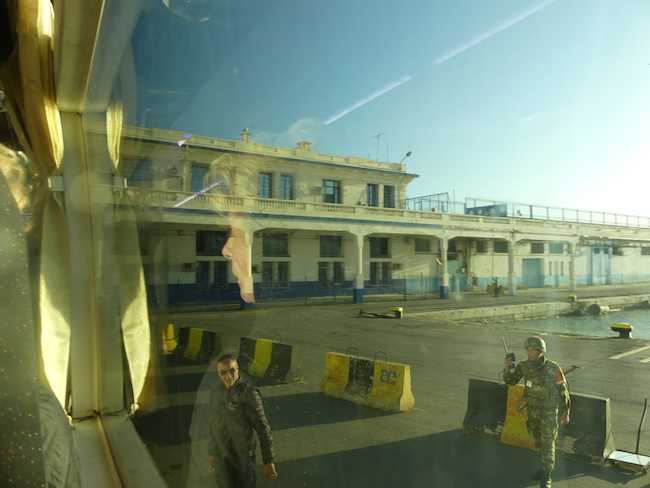


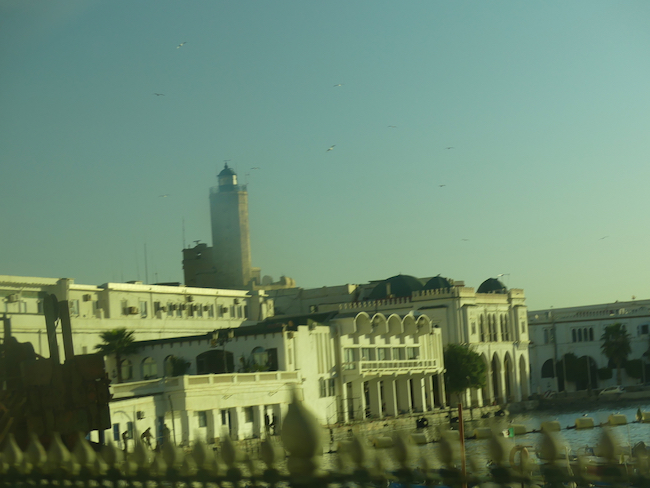
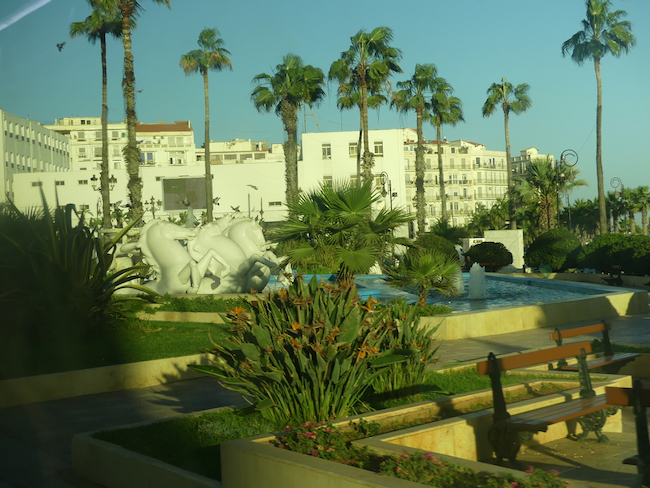
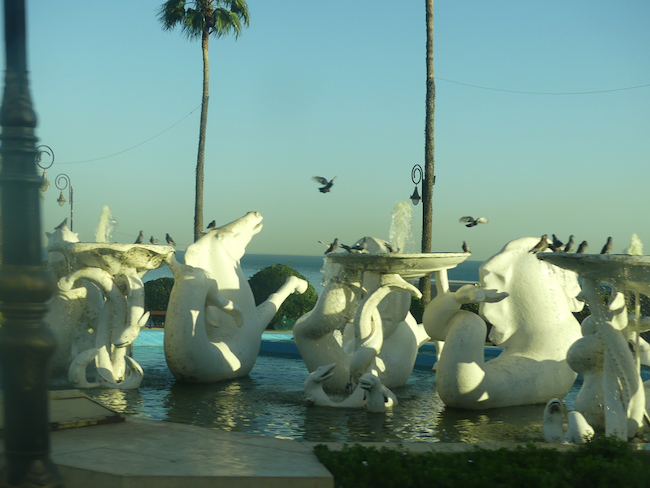
We used to see these “Palm Trees” in Kuwait, really communication towers.

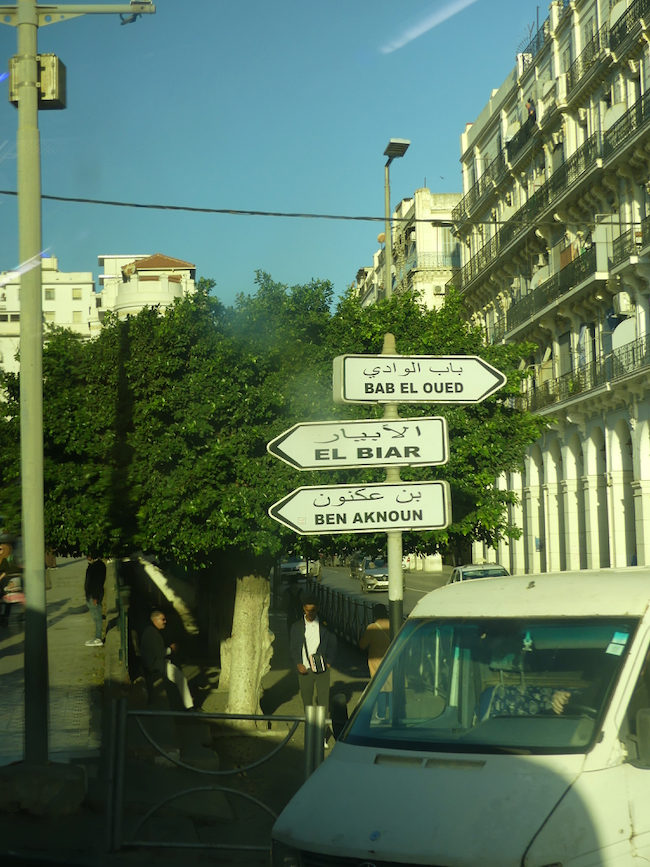
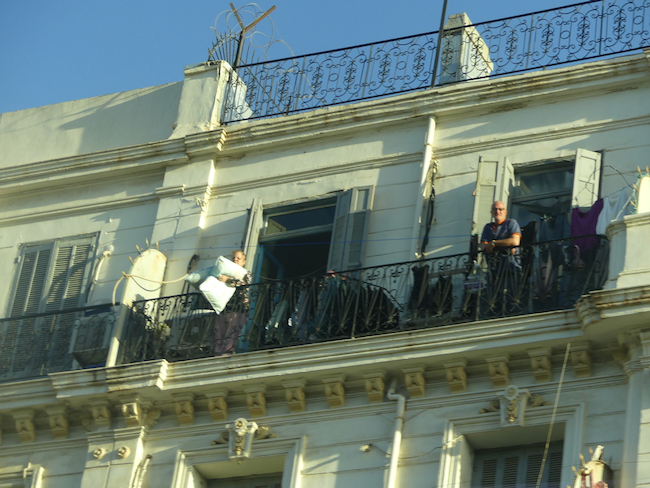


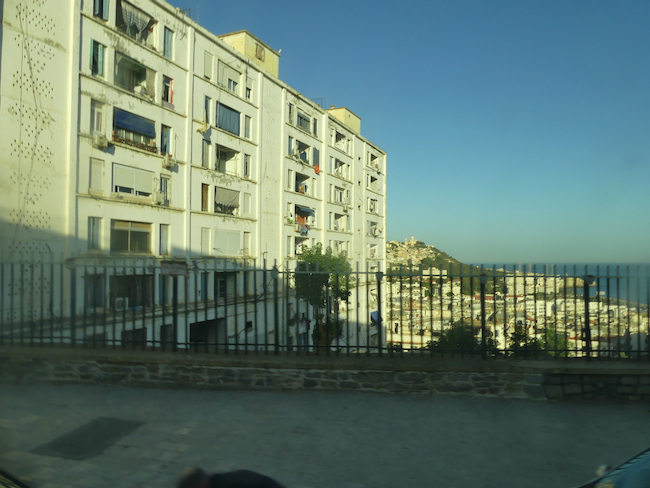
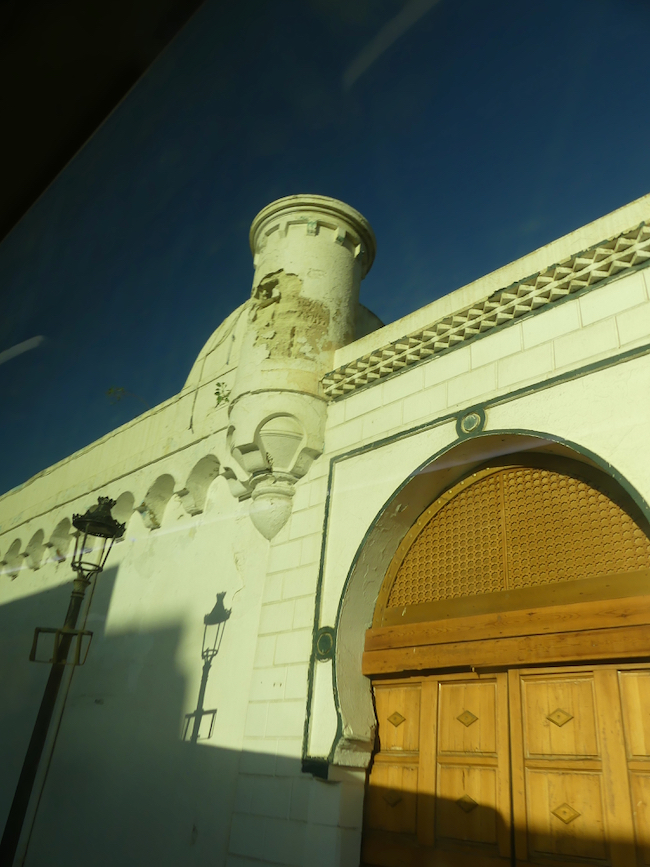


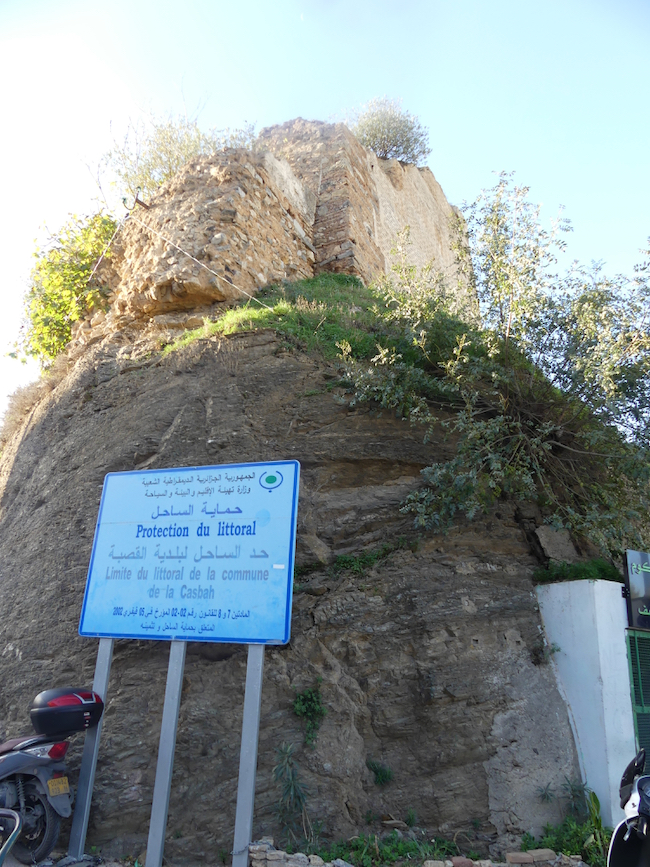


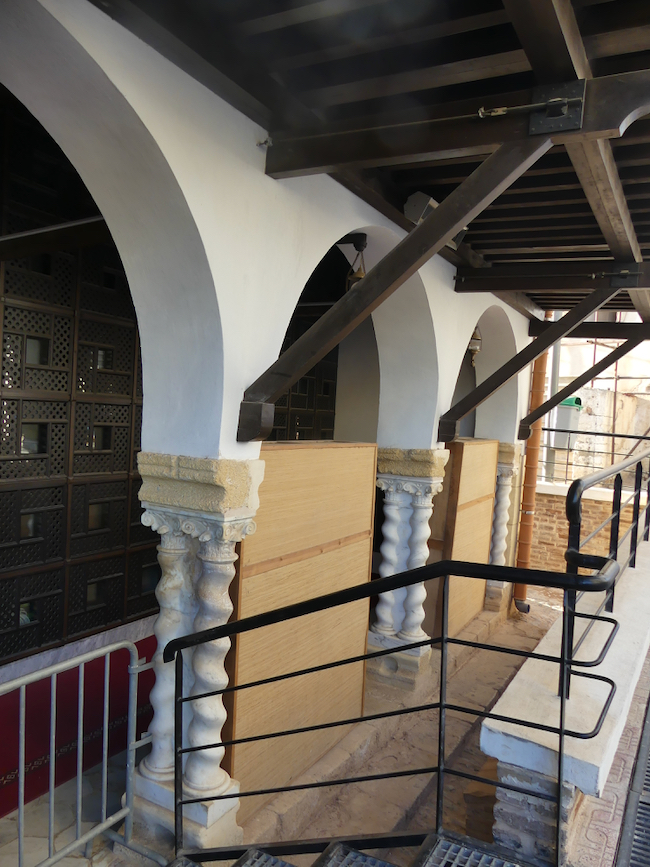
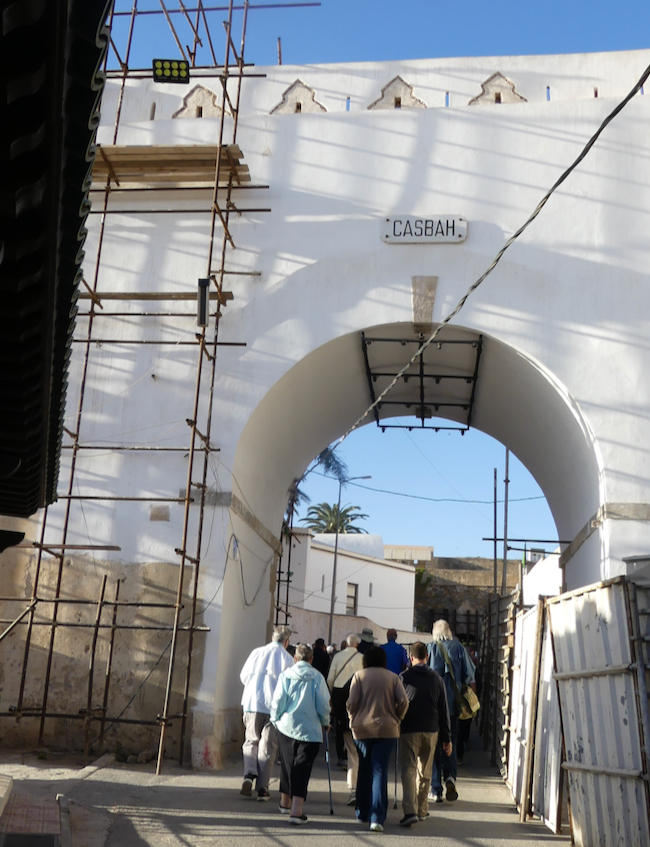
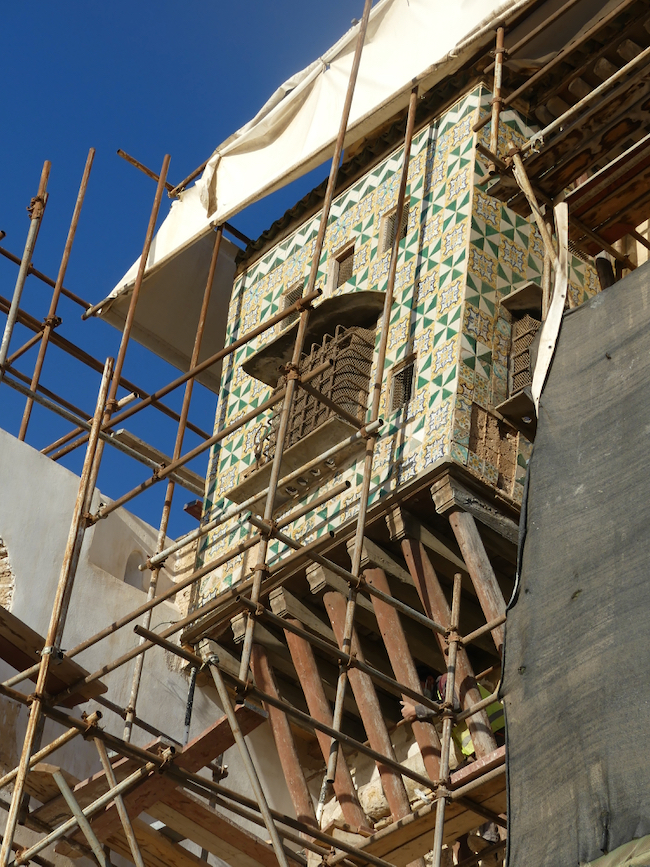




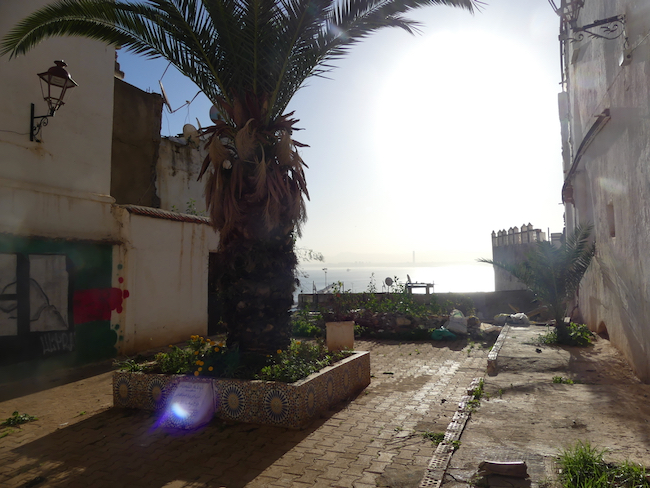
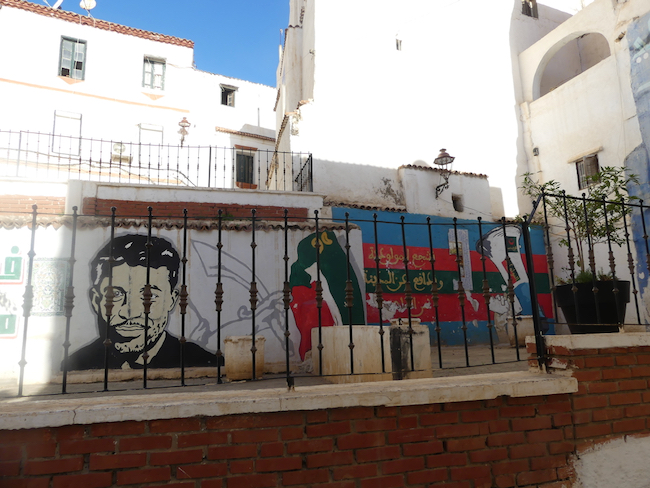
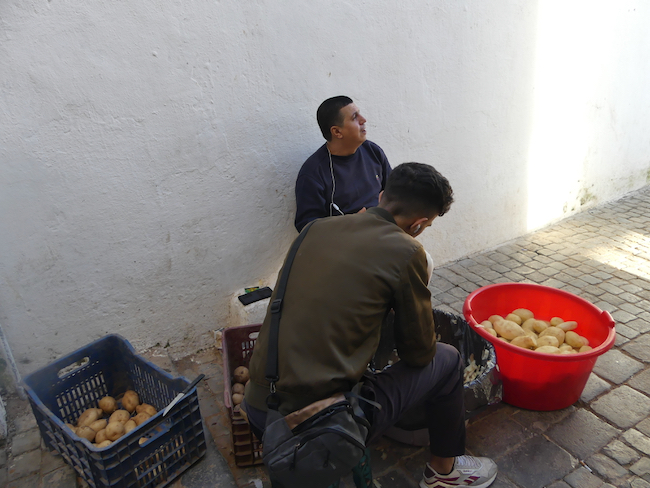
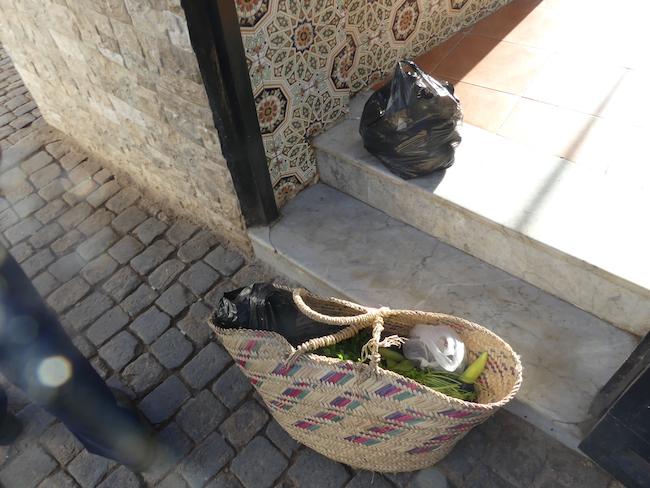
You may be thinking, “Some of the photos here are not the quality we expect!” So, I will explain that I am shooting as fast as I can, surrounded by people I am trying to keep out of my shots, so I can give you an idea of what we are seeing. There is one group after another, all holding up their cameras, getting in one another’s shots. I try to stay ahead or behind, but trust me, the pressure is on. Each group is about twenty-five people, each group with five poorly disguised armed guards, trying to not look like armed guards. They turned out to be really nice guys. Trying to keep American tourists in a line going at a steady pace is a thankless task.


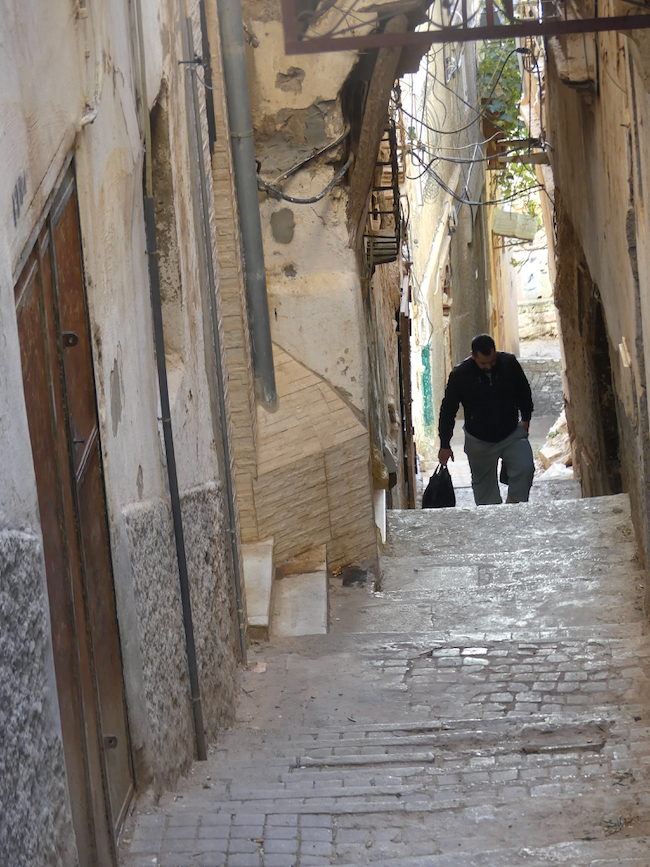


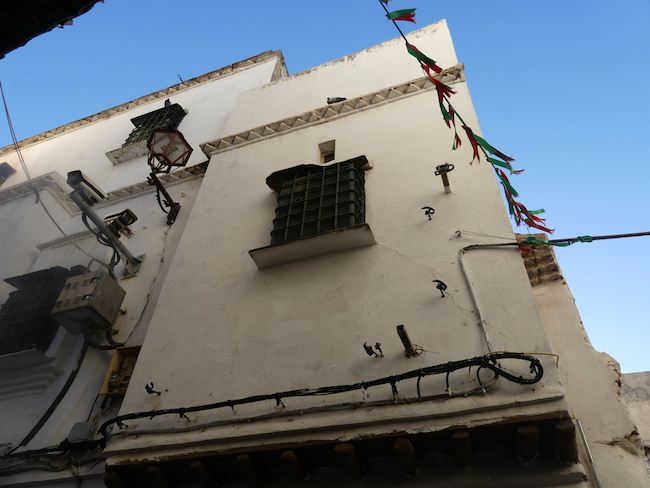
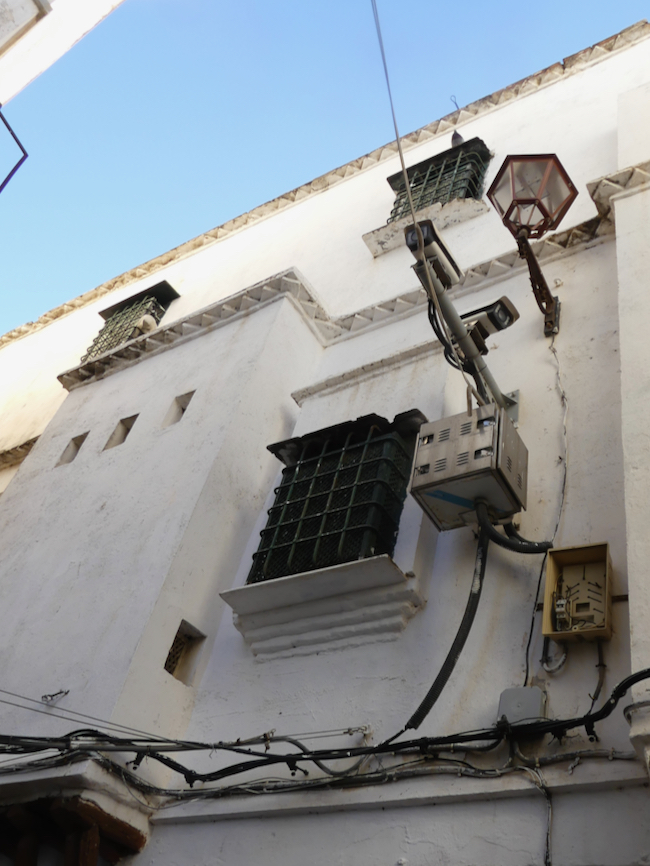
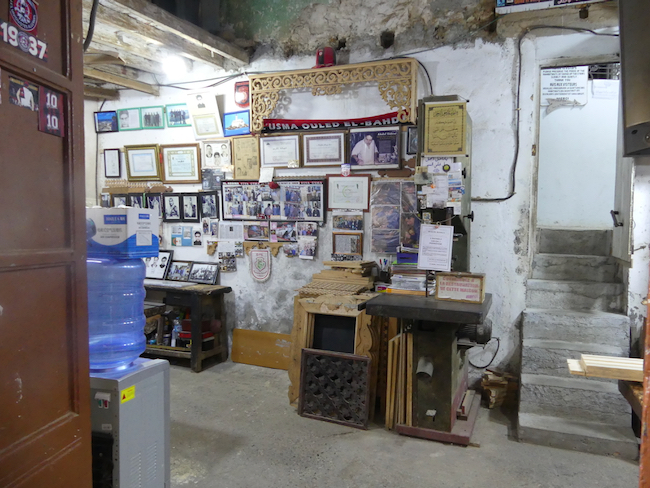

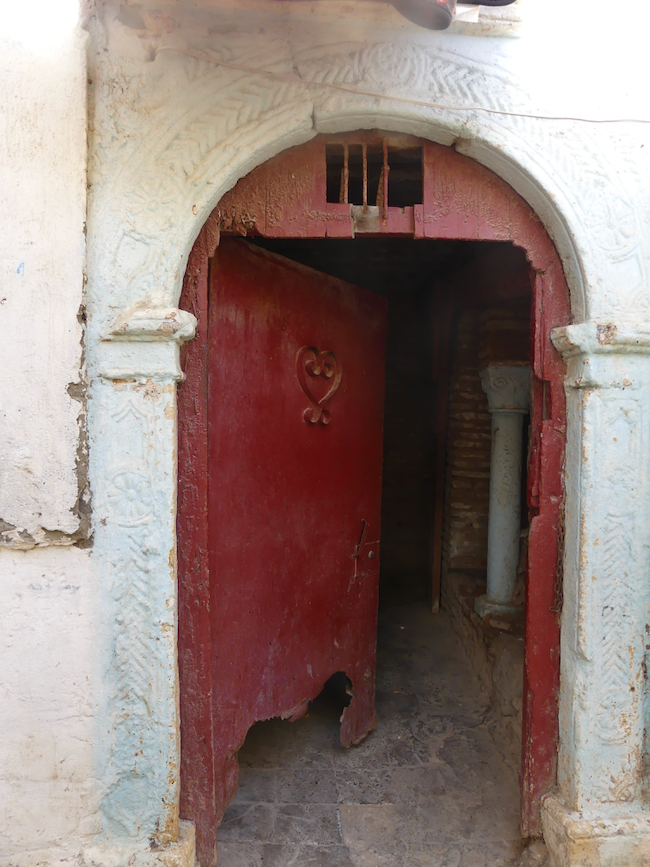



To me it was a little weird that every rectangular plastic basket I saw was purple.
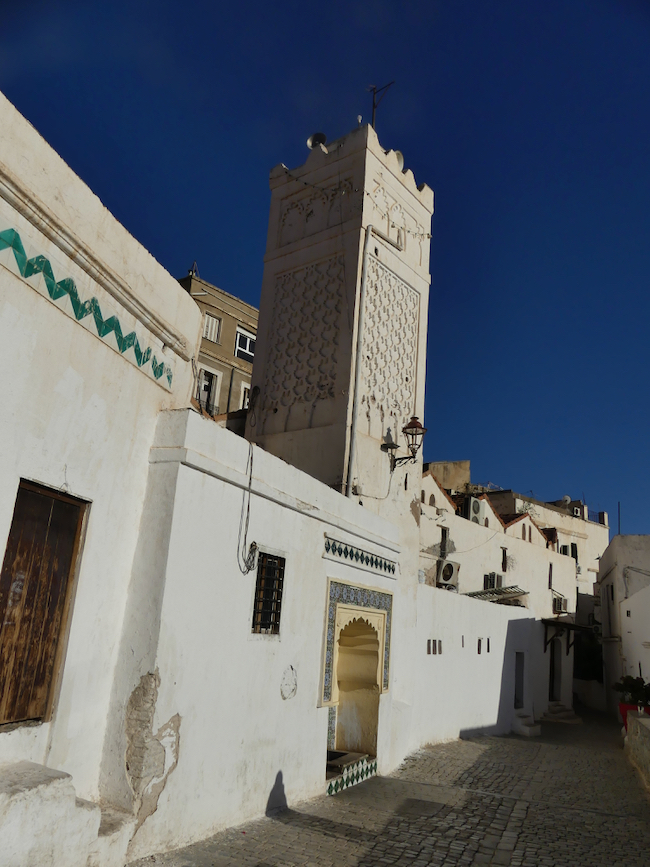

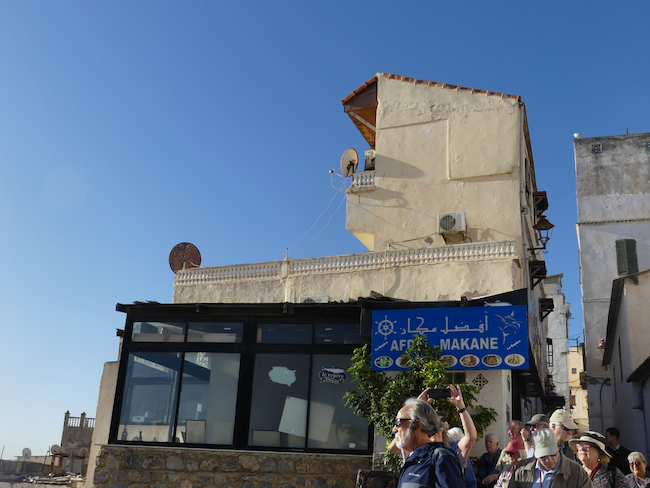

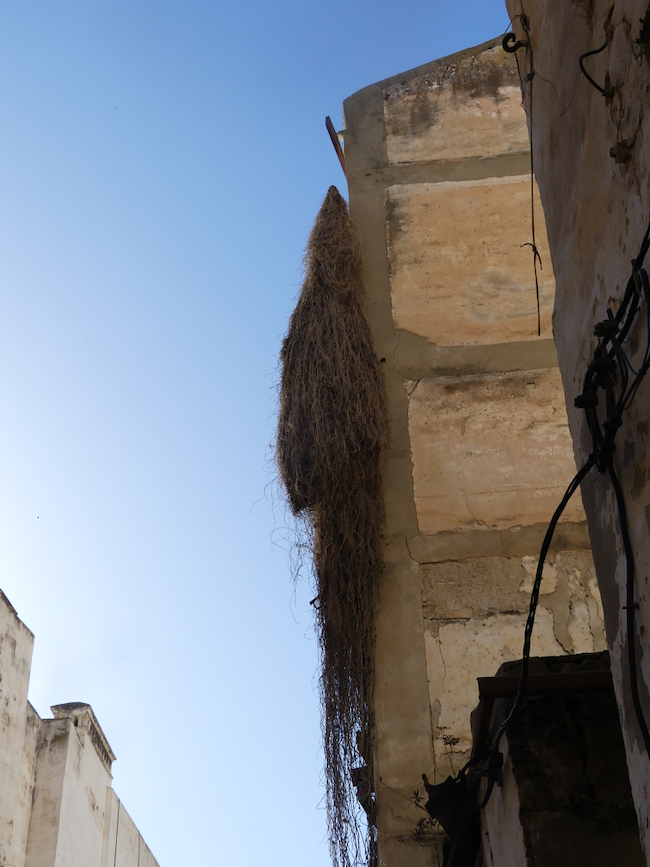
I find some of these construction techniques and electrical wiring workarounds concerning.

We are taken to a hospitality villa, where they serve fresh dates, mint tea from fresh mint leaves, and fresh baked cookies and pastries.


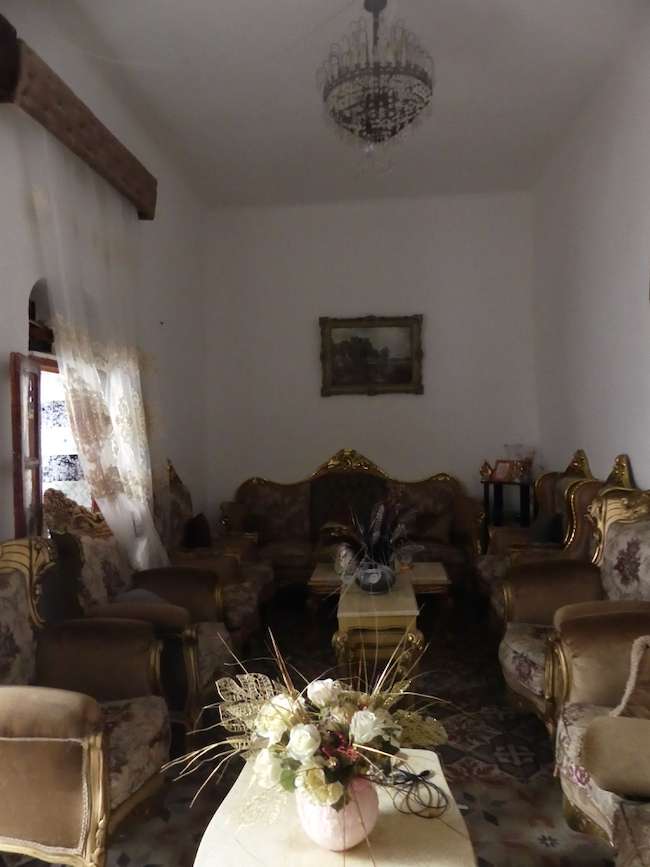
We think our guide is terrific. First, we love that he showed up in old traditional garb (which we learned he had specially made for this very purpose.) He is full of great information, very patient with his flock, and somehow he manages to get us all going in the same direction and is able to keep us somehow together.







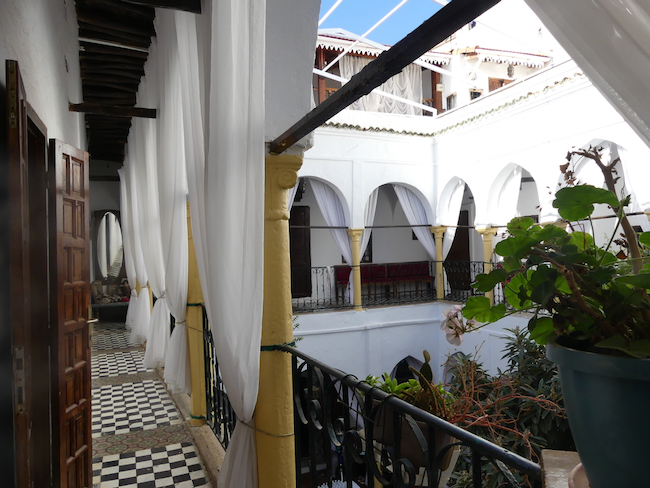

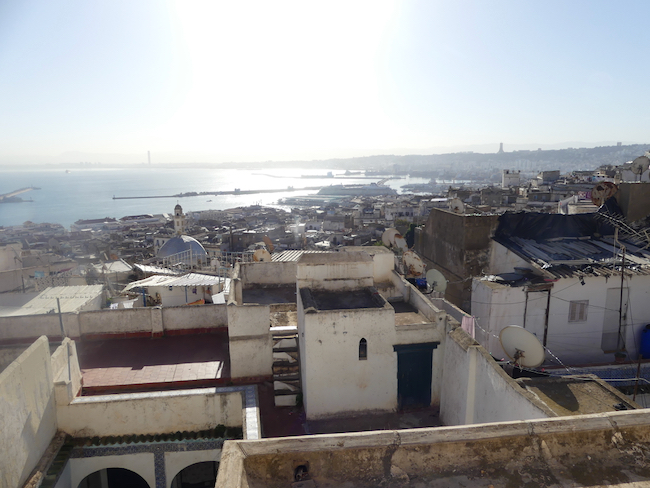
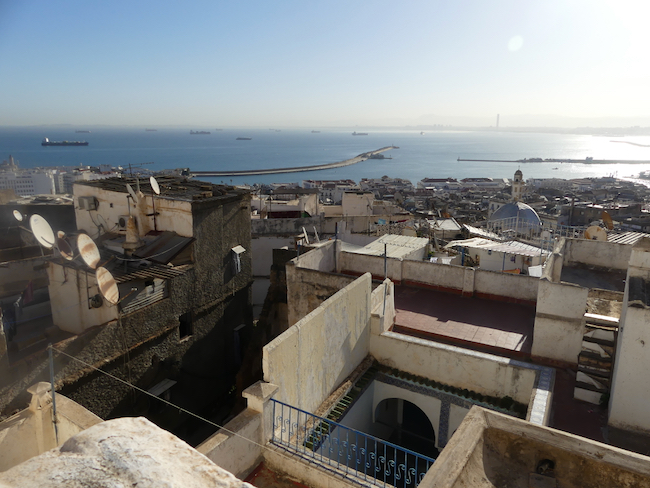

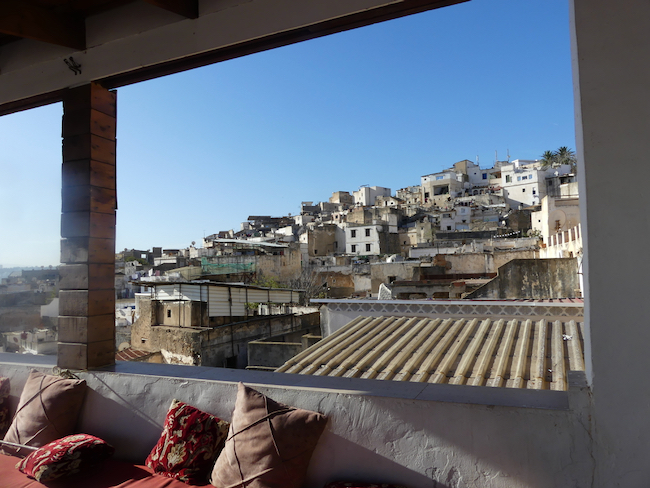


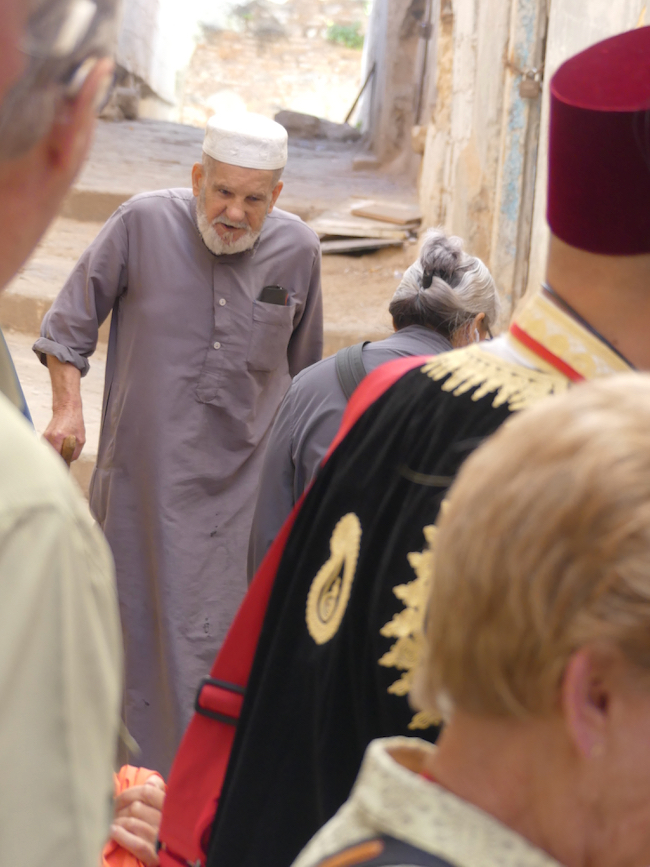
I love this photo. The shopkeeper, trying to keep his street clean and orderly; the donkey, picking up garbage on the street impossible for a garbage truck (and with steps!) and our guide in his traditional garb.


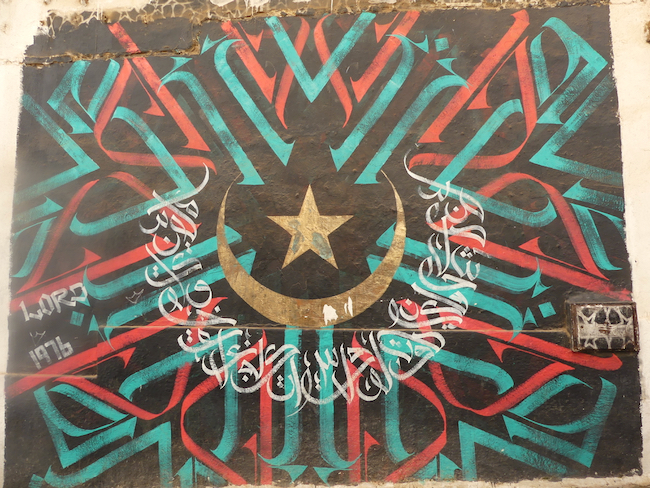

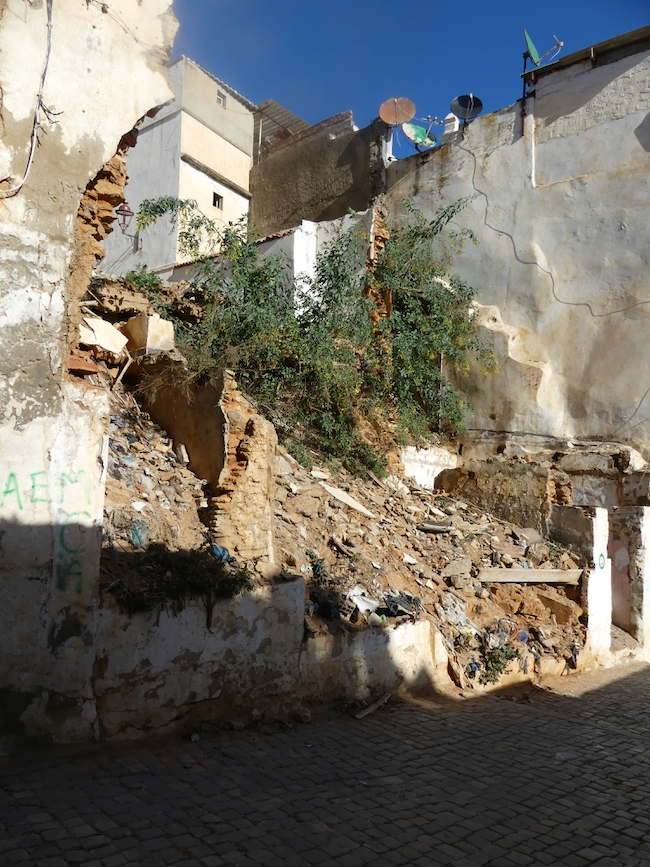
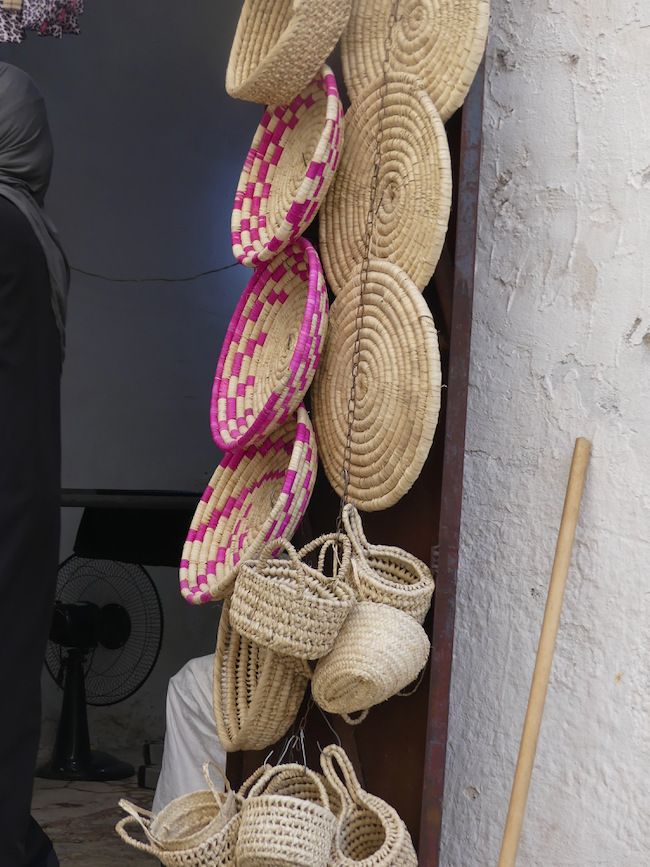



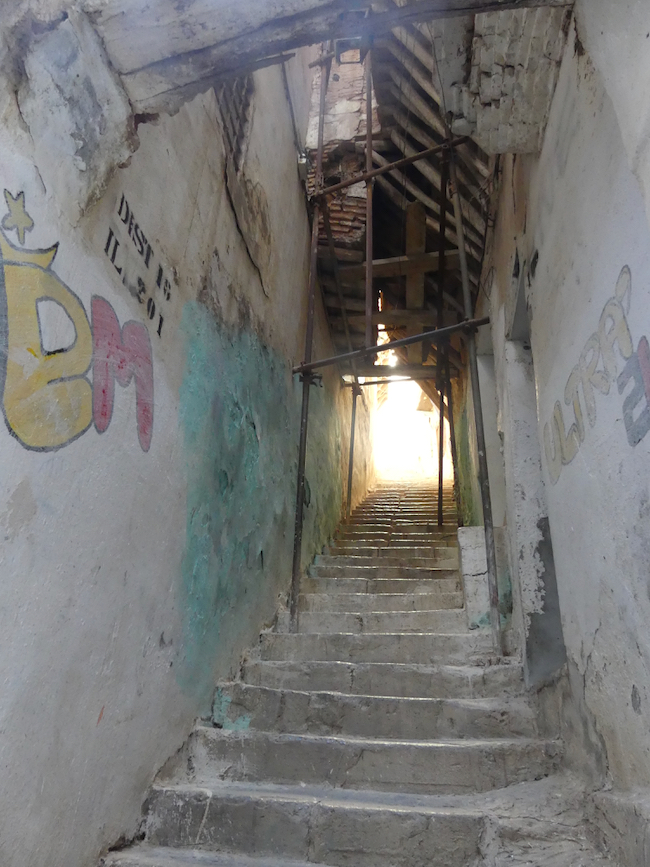
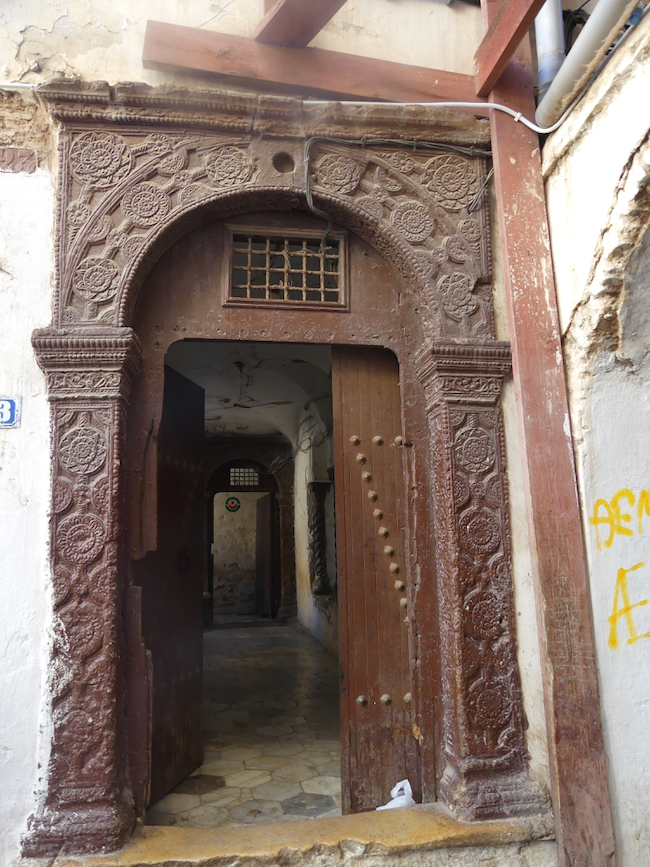



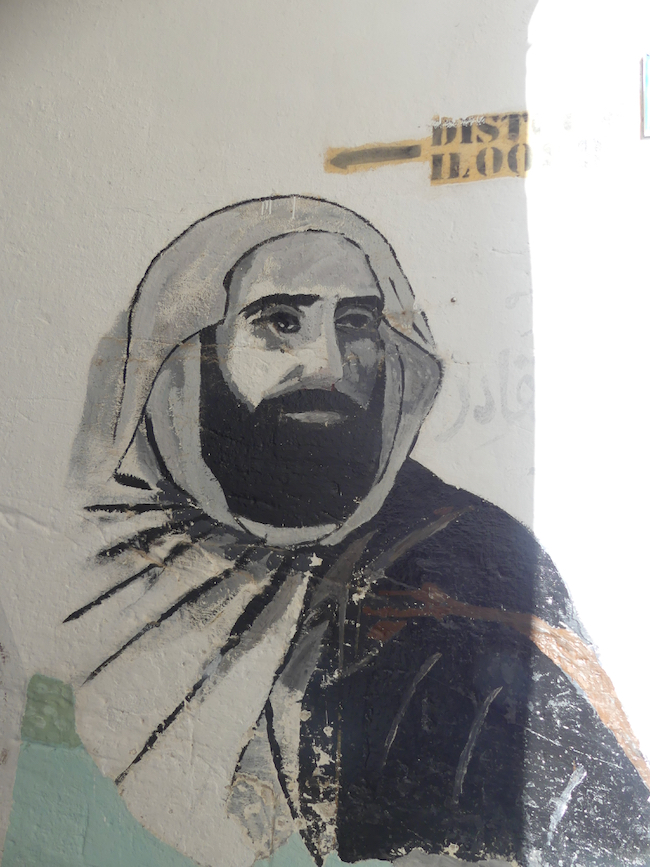
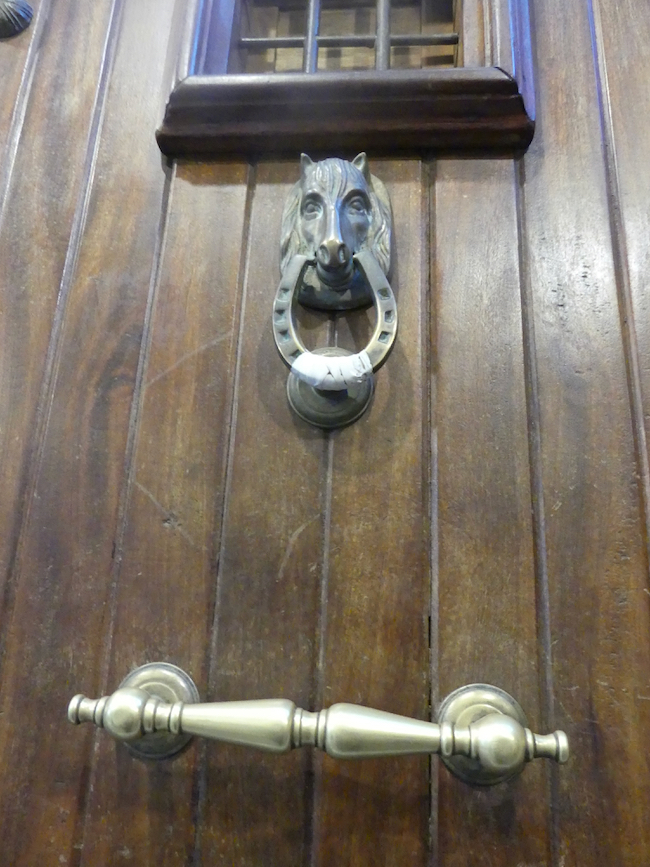

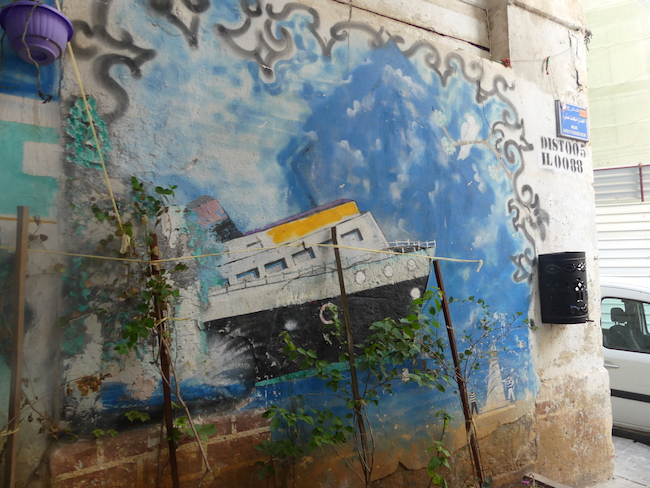
I believe this is the shop that made the traditional outfit for our guide.


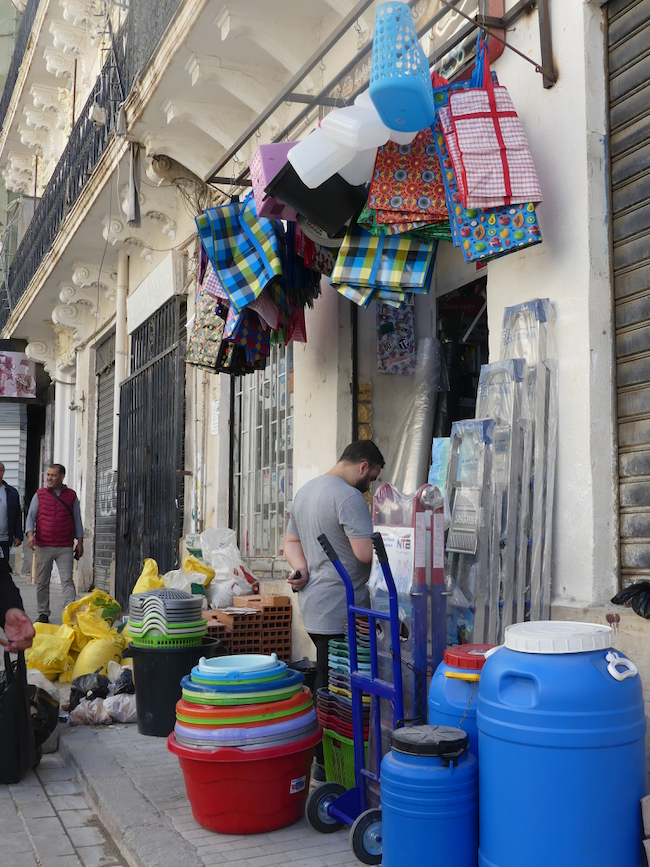


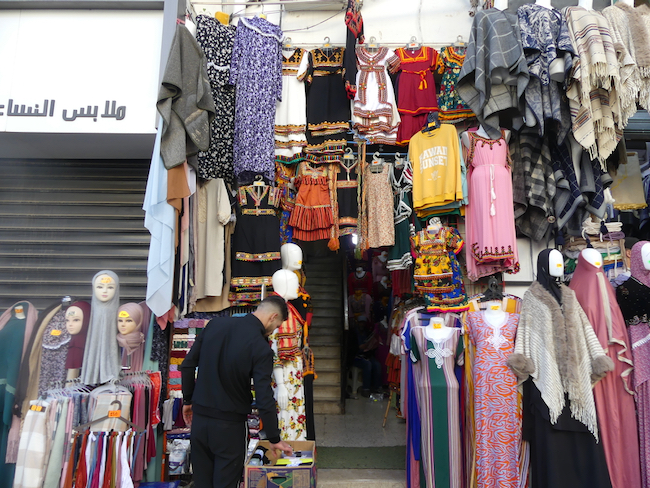
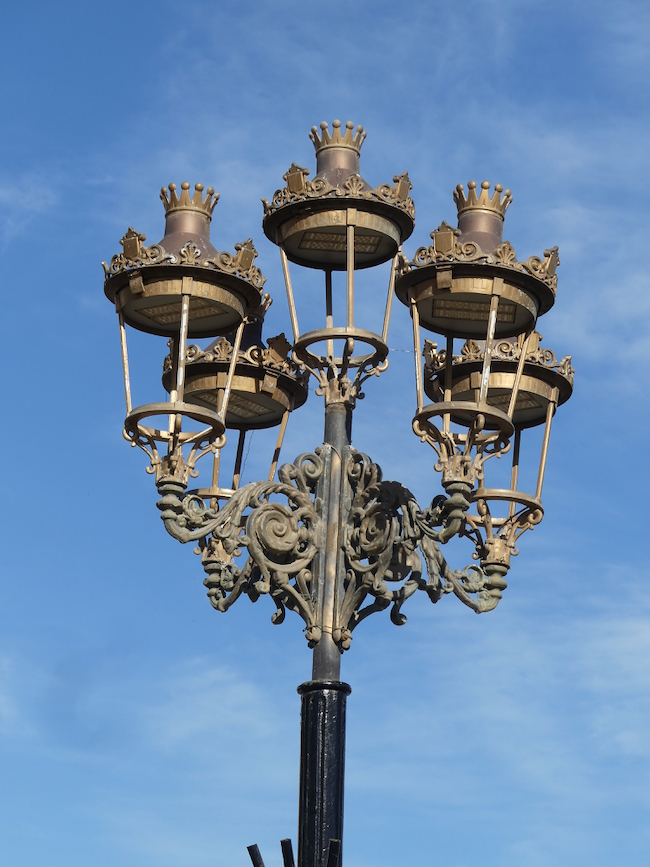
I am betting this is the fish market.
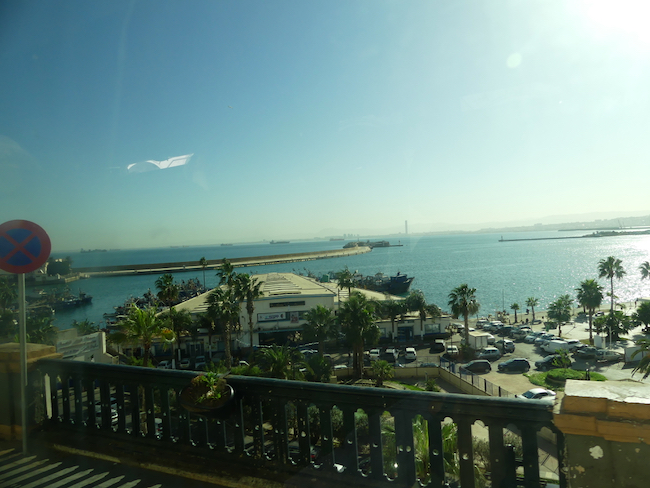
Now I am pretty sure it is the fish market!
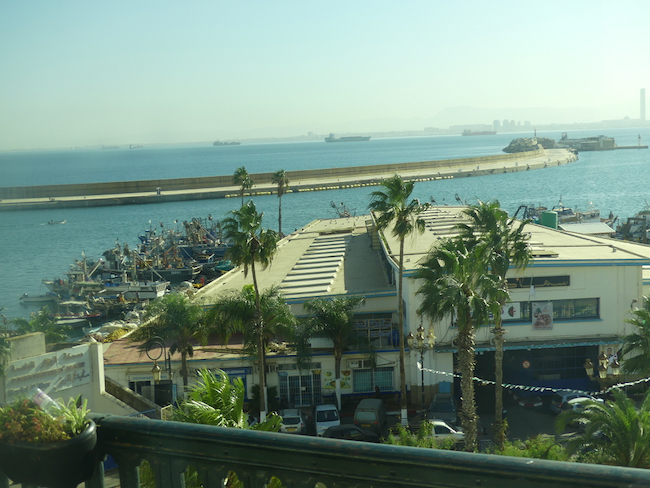
We reboard the ship. We can’t get off again. We are really glad we chose the Casbah walking trip, we feel we got a good feel for that part of town. We never felt hostility, only curiosity, even though a huge crowd of Americans in groups of twenty-five on the narrow, normally quiet pedestrian streets must have been disruptive.
For many of the people who chose this trip, the terrain was challenging. It was stone, sometimes slippery due to sand or moisture. The steps were uneven, the stones rough and irregular. For many, the poverty was distressing, and the dirtiness and disorderlyness made them uncomfortable. I think, too, that it would have been good to let them do a little shopping, good for the tourists and good for the Algerian merchants, but the security concerns were so great that tourists were not given any time to interact with the people or the economy. Too bad. We learned that Algiers will not be included in future Morocco Malta and the Mediterranean trips.
I think, too, maybe it felt familiar to us because the slice of Algiers that we saw was very like Tunisia in the late 1970s, and it was at first a challenge to us, but we learned and adjusted.





Farewell, Algiers!
Morocco Malta and the Med: Barcelona Farewell as We Board Viking Saturn
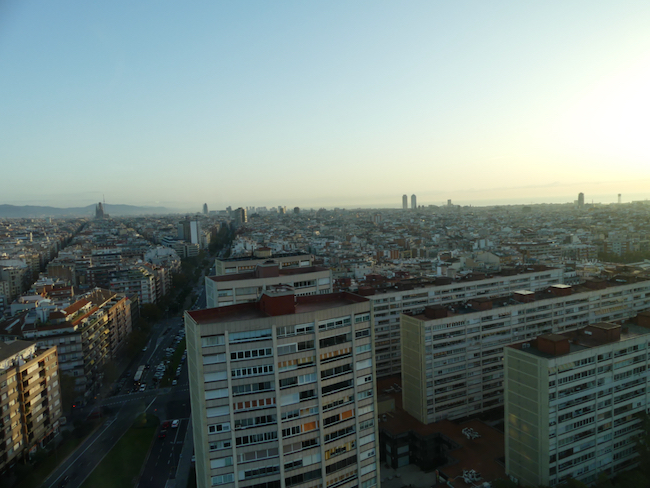
Today, we board the Viking Saturn. We have to have our bags in the hallway to go to the ship by 0700, and we have to check in with the Viking organizers to get our bus assignment. First, we have to have breakfast, us and all the other Viking passengers gathered in the hotel. There are long lines and few tables for two, so we are put together with six others at a large table, and it is fine. We discover something in common – we are all excited by the itinerary.
At this point, I want to tell you something odd. Or maybe not so much. We are just a week away from one of the most contentious elections in American history, the victor claiming a mandate with a tiny margin over his opponent, and in all my little chats with fellow passengers, it never comes up. Never. And the entire trip, 23 days, it never came up. For a year, we’ve been talking about the election. Now, nothing. Not a word. And no, I’m not about to bring it up, I just find it weird.
I needed my camera, and there were so many people waiting for the elevators, I decided to walk down. About ten stories down I thought maybe I should try the elevator, but the key card only unlocks to door to the floor your room is on, and I still have another ten plus stories to go. Oh well. I walk the entire way, find my camera, and take the view above, with the sun rising over Barcelona. Later, I pay dearly for the 23 story downstairs hike becoming acquainted with muscles I didn’t know I had.
Our bus assignment is one of the later ones to leave; they time these things so as not to overcrowd any one location with too many Viking guests. We don’t mind; our bus is only half loaded and very comfortable. As we leave, there is another motorcycle car accident outside our hotel, with all the police and emergency people.

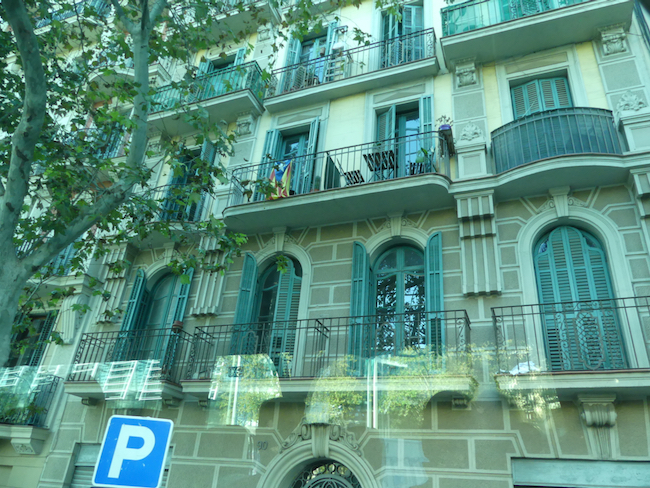
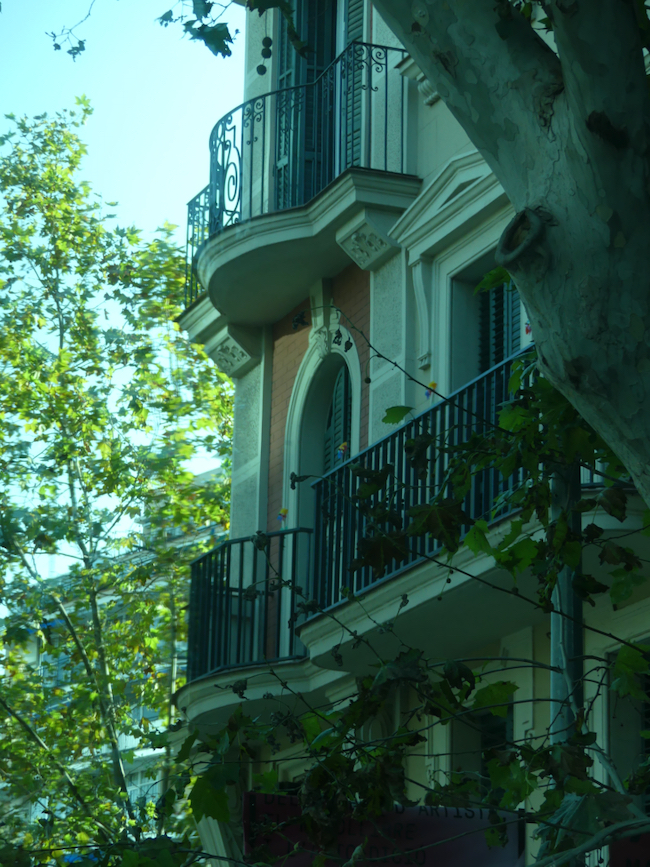
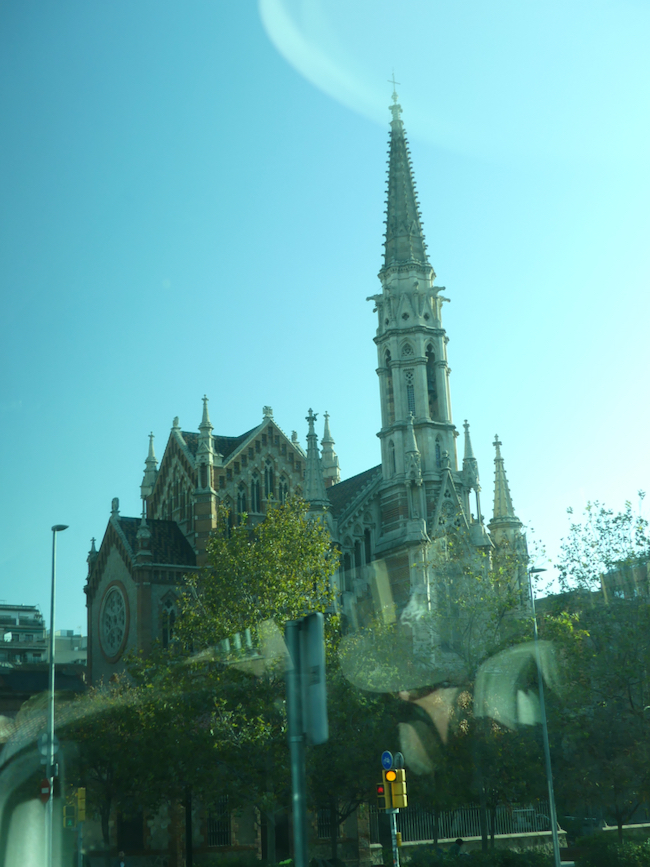
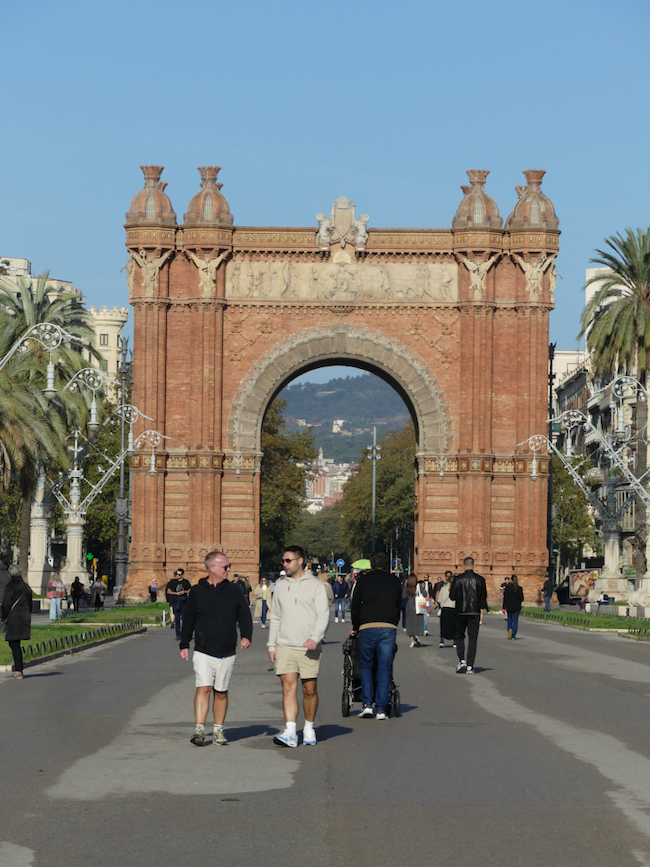
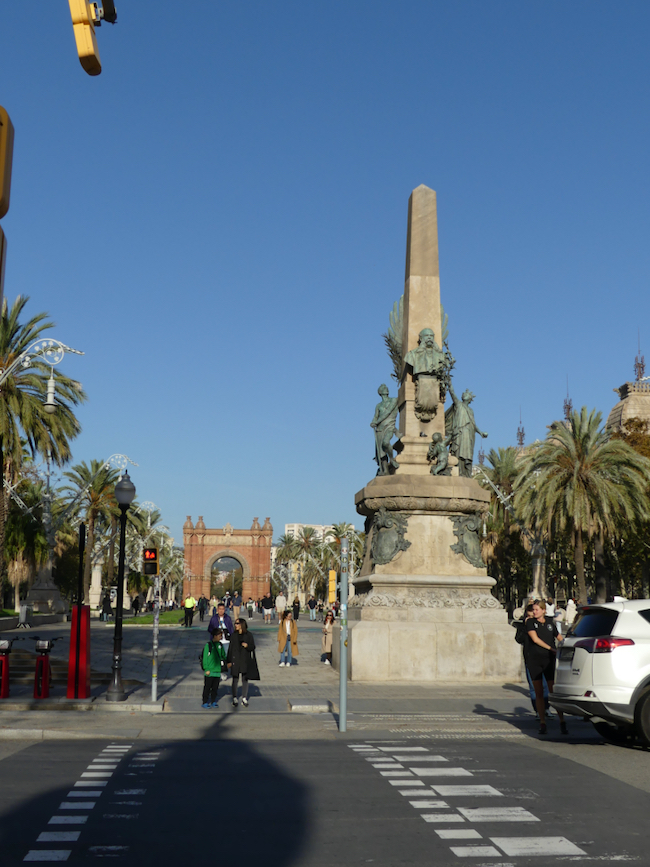
Our first stop is at the Arc de Triomf built for the Barcelona World Fair in 1888. The Fair took place to bring some revenue into Barcelona during a desperate time but also gave the city an opportunity – and excuse – to demolish the Citadel and replace it with much-needed green spaces for Barcelona’s citizens.

I love this building, designed in the Modernisme style by Liuis Domenech i Montaner. Here is what Wikipedia tells us about him:
His buildings displayed a mixture between rationalism and fabulous ornamentation inspired by Spanish-Arabic architecture, and followed the curvilinear design typical of Art Nouveau. In the El castell dels 3 dragons restaurant in Barcelona (built for the World’s Fair in 1888), which was for many years the Zoological Museum, he applied very advanced solutions (a visible iron structure and ceramics). He later developed this style further in other buildings, such as the Palau de la Música Catalana in Barcelona (1908), where he made extensive use of mosaic, ceramics and stained glass, the Hospital de Sant Pau in Barcelona, and the Institut Pere Mata in Reus.
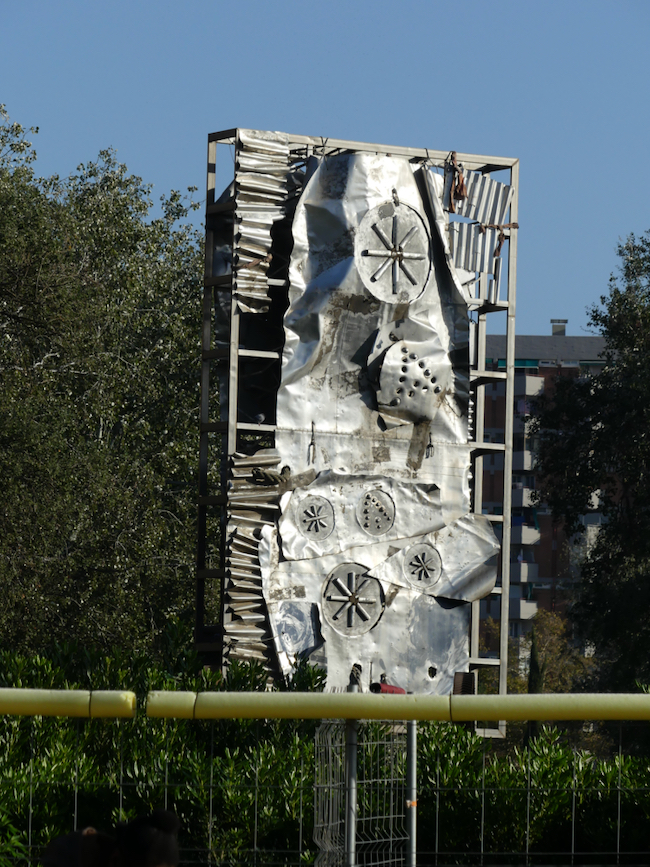
This is the Castle of Three Dragons!

I remember Spain used to be a country where we needed to dress modestly. It is mid-November and we are wearing long sleeves and sweaters. These lovely fitness seekers must be cold!

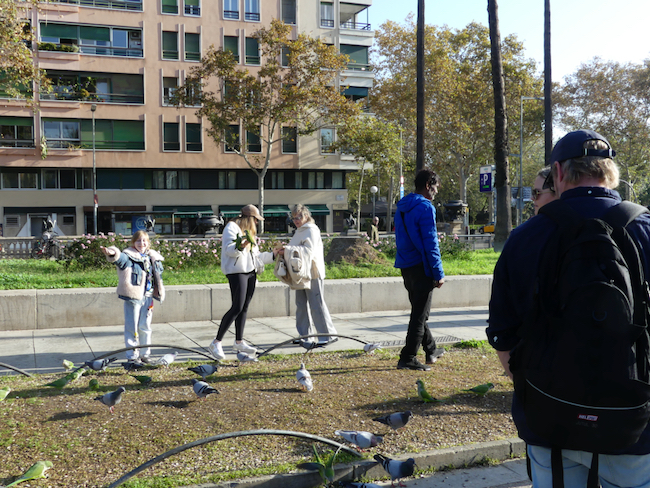
Parakeets!
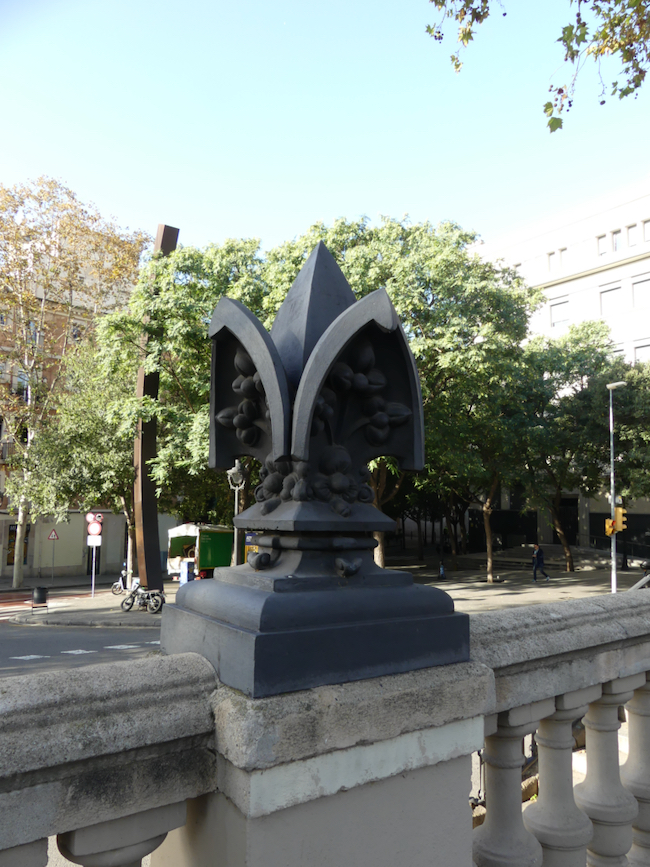

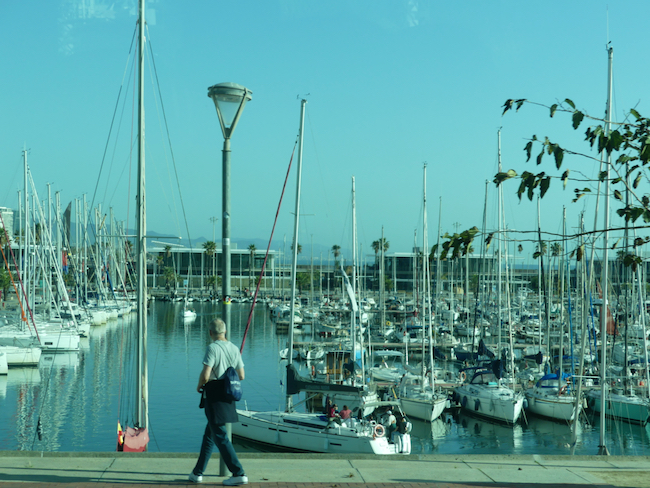
Port of Barcelona
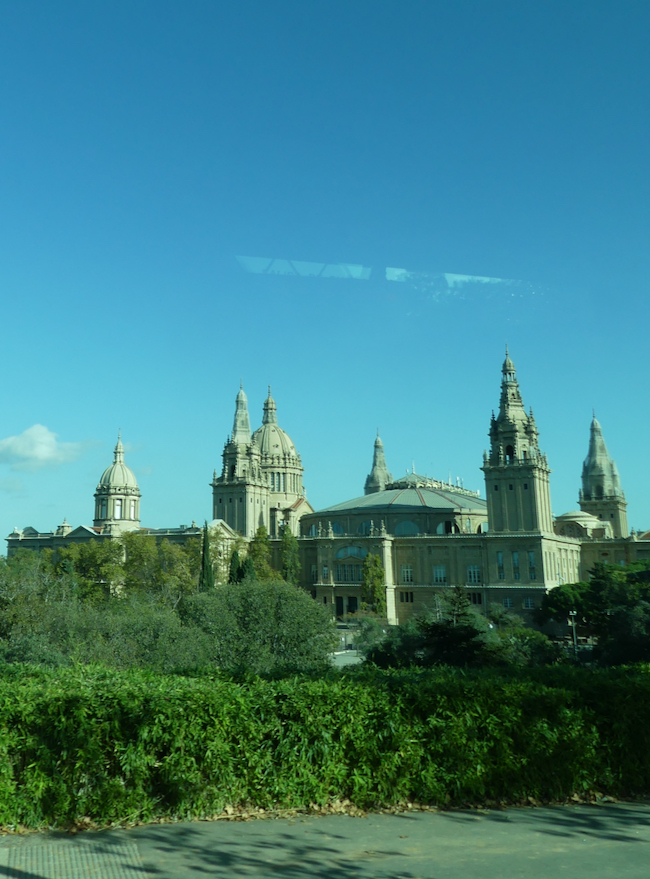
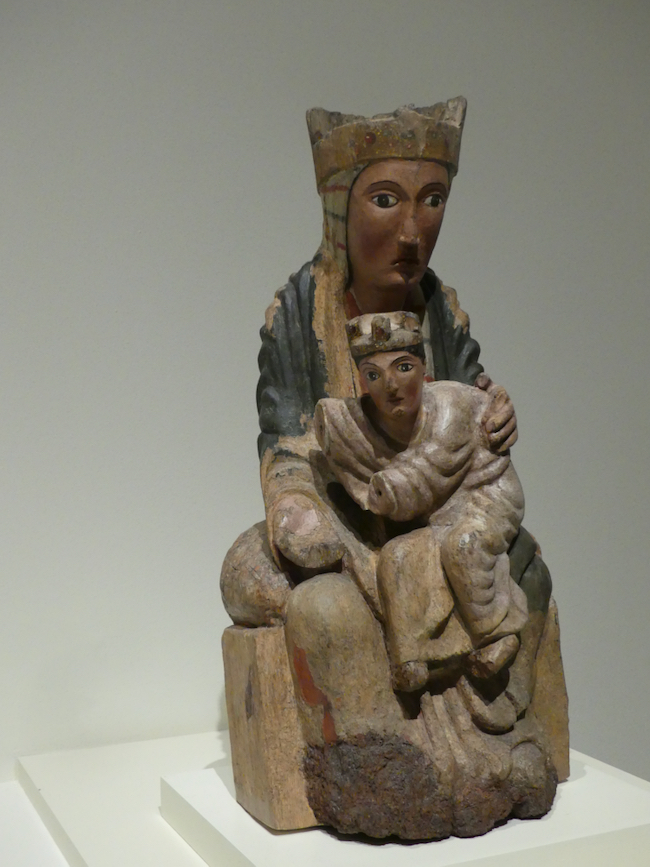
The highlight of the bus tour – an hour at the National Museum of Art of Catalunya. If you had your passport or something proving you were over 65, you got free entrance to the special exhibits. I had a copy of my passport page and AdventureMan’s passport page. I told the cashier we were OLD and she laughed and gave us tickets to the special exhibit I wanted to see with very early church art preserved in this museum.
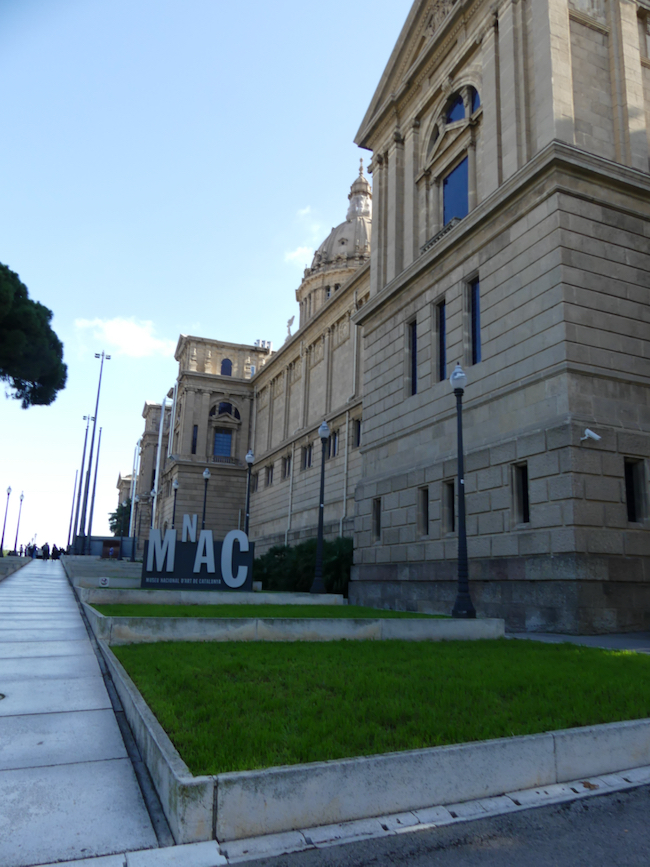

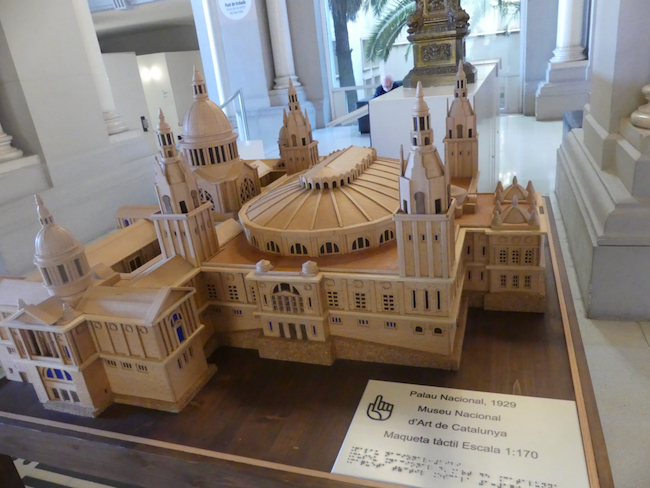

I hope you find these as breathtaking as I do!


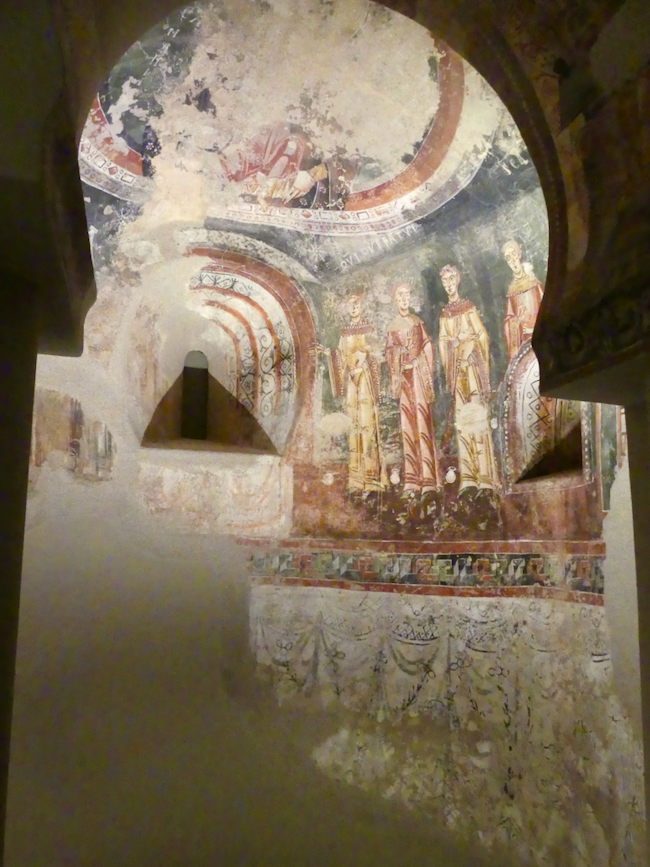


Don’t you love how little Jesus is crouched on Mary’s lap?


Our ticket also allowed us access to the Museum roof, with 360 degree views of Barcelona.
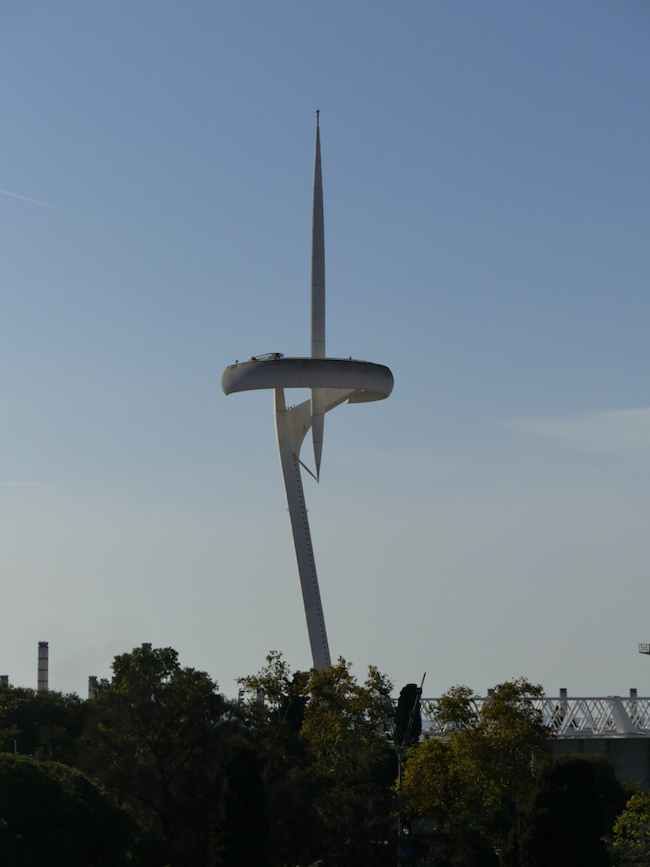
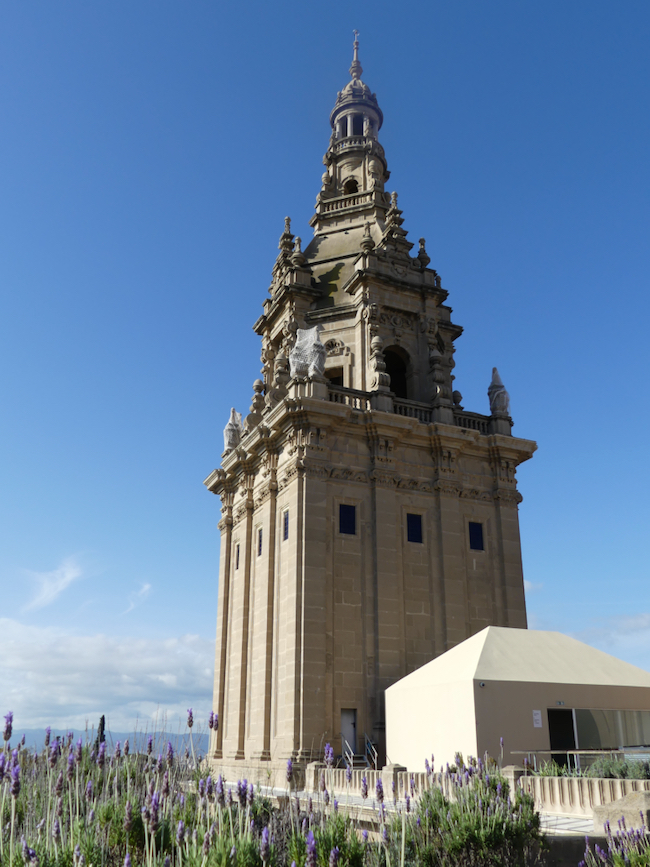


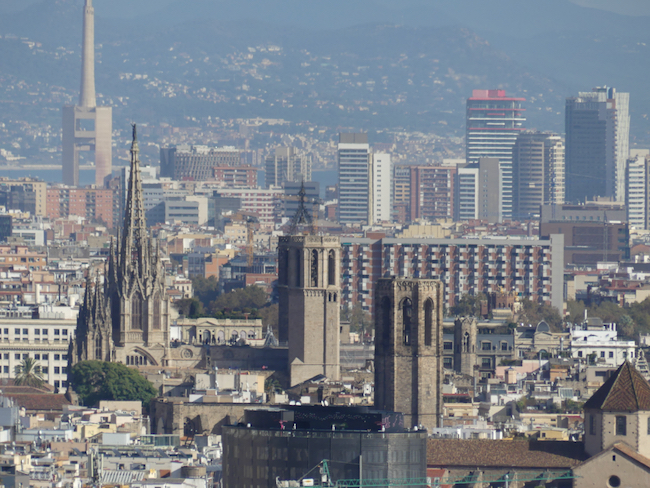
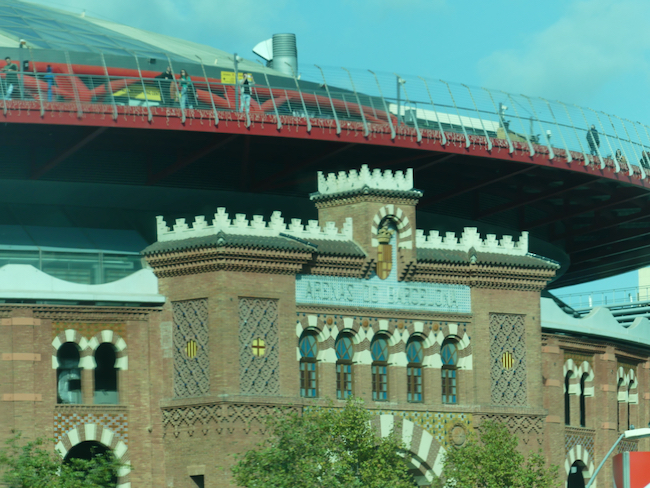
A last view of what we learned was once a bull fighting arena, which has been transformed into a Mall.
So now we are delivered to the ship, and we are starving. We quickly embark, drop our gear and head for the World Cafe, where we can find something to eat. Dan Noodles for me, with Chinese shrimp. Yummm.


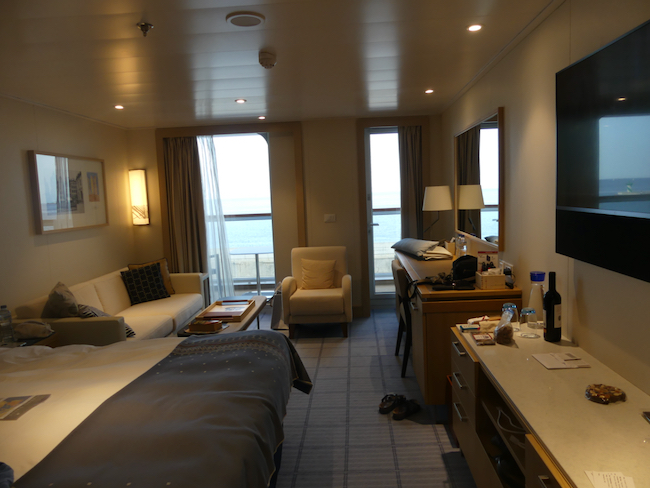
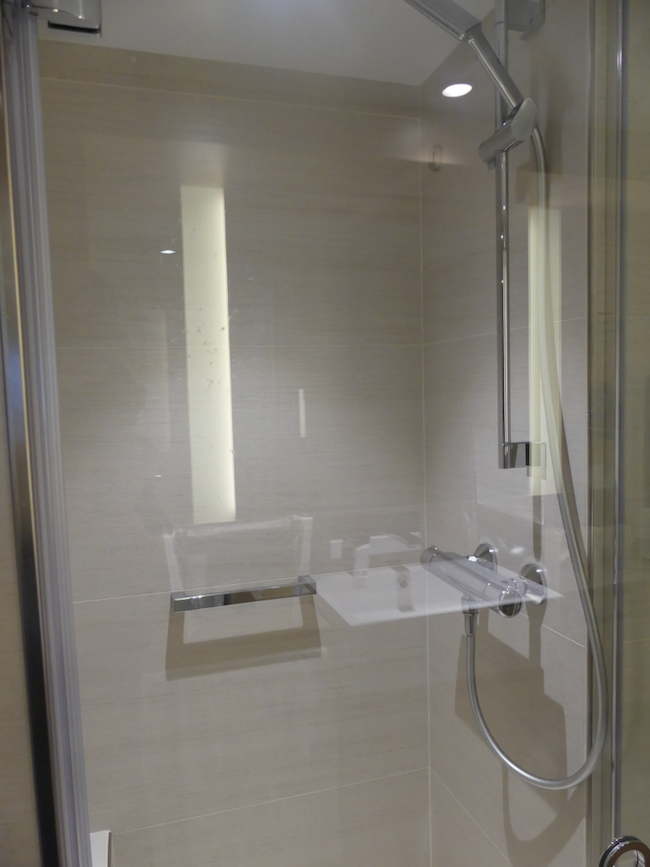
This is our view, and this is our cabin.


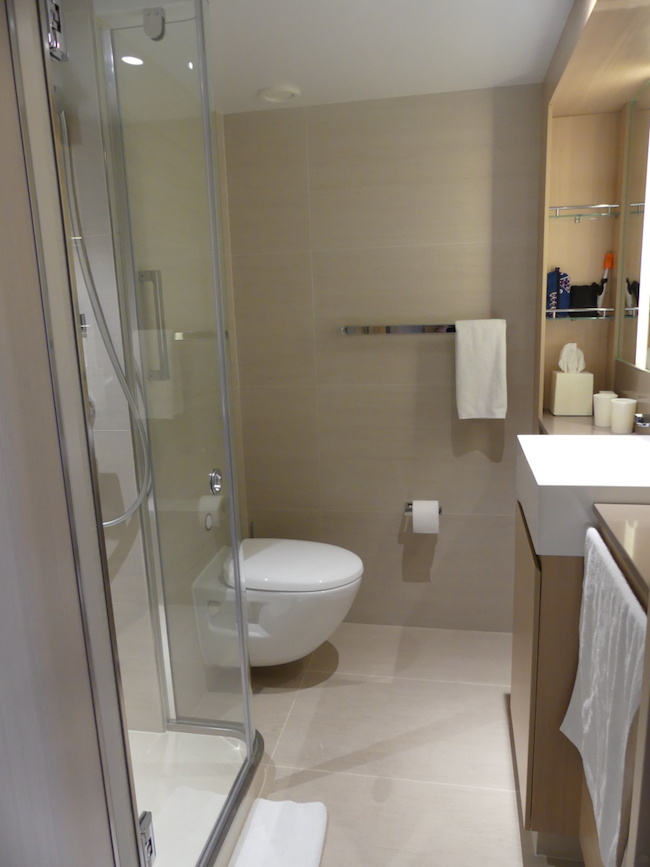
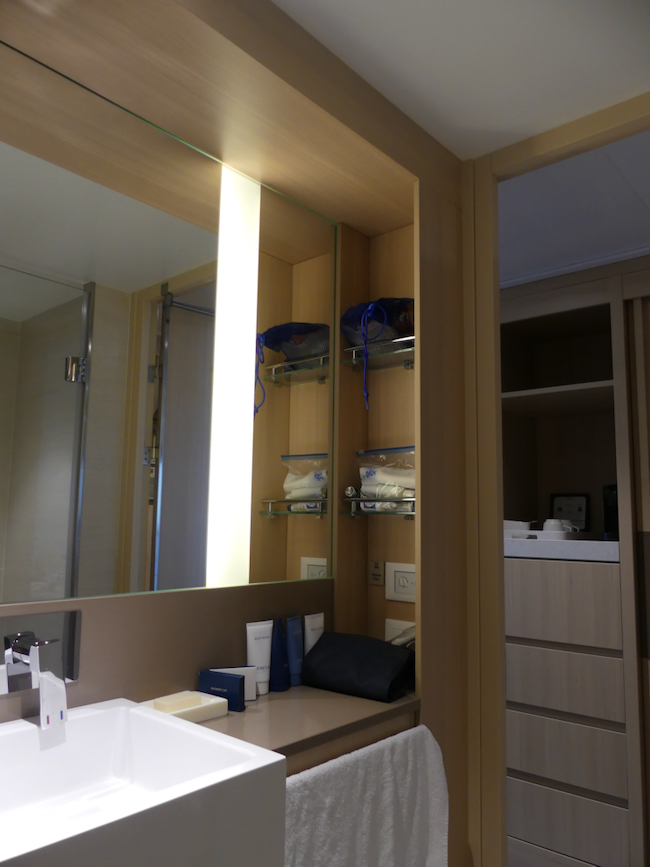
Lots of storage space

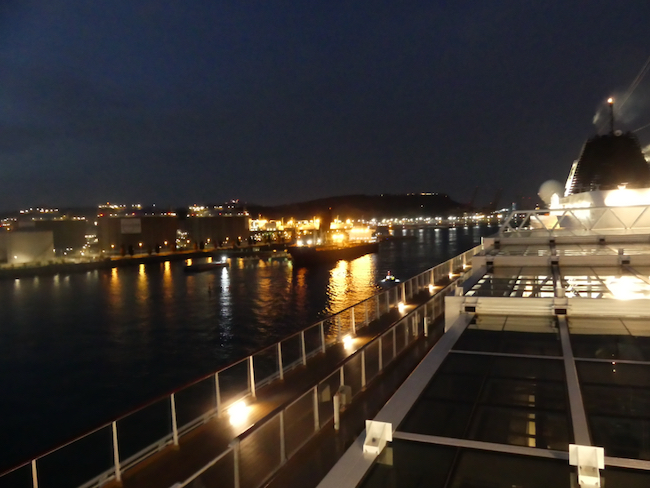
Sail Away from Barcelona.


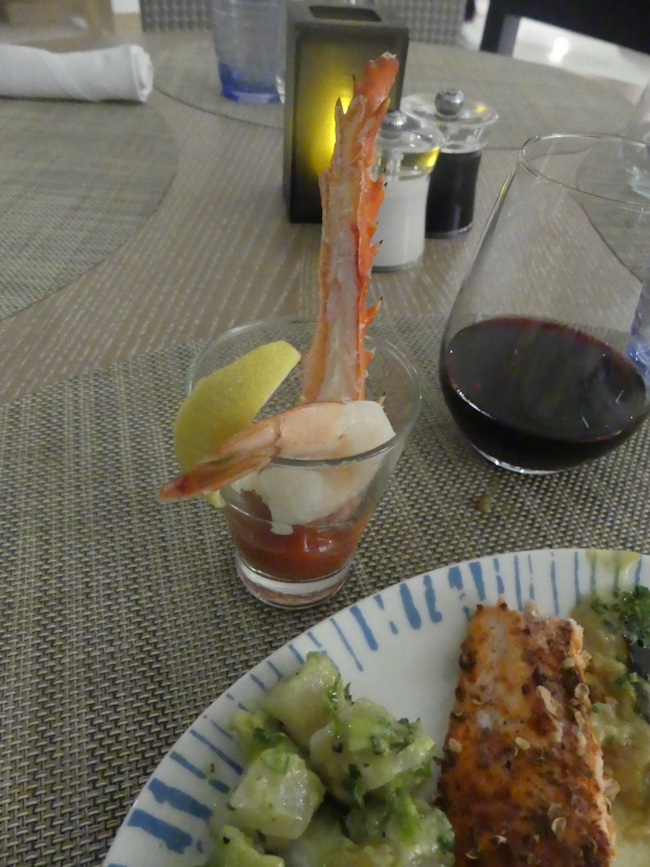
Dinner as we sail away

Thank You, Montana
A moment of clarity and good will brought to us by one of the manliest, reddest states in the
USA. Every family has individuals with gender issues. We’ve learned not to demonize our brothers and sisters, not to punish them for the way they are wired. Thank you, Montana for a breath of fresh air and good sense. Thank you, Washington Post, for a lucid exposition of the actions taken.
With GOP help, Montana lawmakers vote down transgender bathroom rule
The measure would have barred Rep. Zooey Zephyr from using women’s bathrooms near the House and Senate chambers.

Montana state Rep. Zooey Zephyr (D) stands in protest on the House floor on April 24, 2023 at the state Capitol in Helena. (Thom Bridge/Independent Record/AP)
Several Montana Republicans joined Democrats on Tuesday to block a measure that would have barred transgender lawmakers from using the state Capitol bathrooms that aligned with their gender identities.
The proposed measure would have banned Rep. Zooey Zephyr, a transgender Democratic lawmaker who was reelected in November, from using the women’s bathroom outside Montana’s House and Senate chambers. Last year, Zephyr was silenced in the House after speaking out against her Republican colleagues for their support of a ban on gender-affirming care for transgender children.
Weeks ahead of her return to the House floor, Zephyr’s colleagues in the chamber rejected the bathroom measure in a 12-10 vote. Three Republicans joined Democrats in voting against it, characterizing it as a rule that would not add value to their work while also noting they didn’t necessarily disagree with the ideology driving it.
Zephyr told The Washington Post on Wednesday that she was grateful to her GOP colleagues who voted “no.” She said she has a “good working relationship” with them, adding that their votes against the measure showed they were “able to recognize this for the distraction that it is.”
(Created with Datawrapper/The Washington Post)
Anti-trans bills have doubled since 2022. Our map shows where states stand.
“I hope that it serves as a signal to other Republicans across the country that there are more important things that governments should be focusing on besides targeting transgender people,” Zephyr said.
Montana’s measure paralleled a resolution introduced by Rep. Nancy Mace (R-South Carolina) last month that proposed changing House rules to ban trans lawmakers and visitors to the U.S. Capitol from using bathrooms associated with their gender identity. Mace’s resolution came two weeks after Sarah McBride, a Democrat from Delaware, became the first openly trans person elected to Congress.
Ahead of Tuesday’s vote, state Rep. David Bedey (R) said he would “reluctantly” cast a “no” vote, describing the measure as “a distraction.” Bedey, though, also made clear that he still had his “own opinion” on gender dysphoria, which he said was a “scientific issue actually that needs to be resolved.”
“This particular action will have the effect of making people famous in the national news and will not contribute to the effective conduct of our business,” Bedey said.
The Montana legislature made headlines across the country in April 2023, when the House was discussing four anti-trans bills — one of them a ban on gender-affirming care for trans children.
During an April 18 debate on the House floor, Zephyr said restricting access to care for trans minors was “tantamount to torture.”
“This body should be ashamed,” she said.
Later on in her remarks, addressing colleagues supporting the ban, Zephyr said: “I hope the next time there’s an invocation, when you bow your heads in prayer, you see the blood on your hands.”
Afterward, GOP leaders in the House silenced Zephyr, declining to recognize her during debate for days. Protests ensued, and about one week later, Zephyr’s Republican colleagues voted to formally punish her, saying that her comments were derogatory and that she had violated decorum in the legislature.
Zephyr was no longer allowed to debate and could only vote remotely.
Montana’s legislature did not meet this year, meaning Zephyr’s reelection last month opened the door for her to return to the House floor in January for the first time in 19 months.
On Tuesday, the Joint Rules Committee met to discuss amending rules ahead of the new legislative session, including the bathroom measure.
State Rep. Jerry Schillinger opened the discussion by saying that the proposal put forth a “relatively simple rule change.”
“It says what probably shouldn’t need to be said and puts into rules what probably shouldn’t need to be put into rules,” Schillinger said.
Multiple Republicans agreed with him.
State Rep. Jedediah Hinkle (R) said he knew multiple lawmakers who did not use the women’s bathroom outside the House and Senate chambers, adding that they walked across the Capitol to use a different one because they were uncomfortable “being in the same bathroom with a man,” an apparentreference to Zephyr.
He urged his colleagues to help Montana set an early precedent as lawmakers around the country are beginning to confront the same issue in legislative buildings.
Hinkle did not call out Zephyr by name but indirectly referenced her in his argument supporting the measure.
“We have one representative right now, but in the future, we could have many,” Hinkle said. “This could be an ongoing thing, and I think it’s time that this body addresses this issue now, as they are addressing it nationally.”
During the last legislative session, Hinkle said, lawmakers had installed locks on the doors leading into multi-stall bathrooms to permit individual legislators to use them alone if they desired.But that accommodation did not work, he said, adding that it kept lawmakers from their duties. Bedey, one of the Republicans who voted against the measure, later countered Hinkle’s point, saying that there was no evidence that lawmakers had missed votes.
Otherwise, Bedey said, he “might have a different opinion.” Following about 12 minutes of discussion, the measure passed in the Senate committee, 11-7. But the House voted it down, aided by the Republican votes. Zephyr commended her GOP colleagues who voted against it.
“I think those Republicans are likely talking to people in their district who are also saying, ‘Listen, people of Montana are struggling right now,’” Zephyr told The Post.
She said Wednesday that there were issues — including housing and health care — to address in the months to come, and a measure about the Montana Capitol bathrooms “is not helpful for the work that we were sent here to do.”
Recent Comments
ExpatAlien on What Country am I Living … intlxpatr on Yellowstone: Old Faithful to C… Michelle on Yellowstone: Old Faithful to C… Cathy on No Grown-Ups in Charge intlxpatr on Waiting for Snow Wikipedia Donate Button

Amazina


Early Voting in Florida


 Here There and Everywhere