The New York Times had a full length article on the upcoming Kuwait election yesterday:
KUWAIT — In a vast, high-ceilinged tent, Ali al-Rashed sounded an anguished note as he delivered the first speech of his campaign for Parliament.
“Kuwait used to be No. 1 in the economy, in politics, in sports, in culture, in everything,” he said, his voice floating out in the warm evening air to hundreds of potential voters seated on white damask-lined chairs. “What happened?”
It is a question many people are asking as this tiny, oil-rich nation of 2.6 million people approaches its latest round of elections. And the unlikely answer being whispered around, both here and in neighboring countries on the Persian Gulf: too much democracy.
In a region where autocracy is the rule, Kuwait is a remarkable exception, with a powerful and truculent elected Parliament that sets the emir’s salary and is the nation’s sole source of legislation. Women gained the right to vote and run for office two years ago, and a popular movement won further electoral changes.
Despite those gains, Kuwait has been overshadowed by its dynamic neighbors — Dubai, Abu Dhabi and Qatar — where economies are booming under absolute monarchies. Efforts to overhaul Kuwait’s sclerotic welfare state have stalled in its fractious and divided Parliament, and scandals led the emir to dissolve the chamber last month for the second time in less than two years, forcing new elections.
All this has left many Kuwaitis deeply disenchanted with their 50-member elected legislature. The collapse of the Bush administration’s efforts to promote democracy in the region and the continuing chaos in Iraq, just to the north — once heralded as the birthplace of a new democratic model — have also contributed to a popular suspicion that democracy itself is one Western import that has not lived up to its advertising.
“People say democracy is just slowing us down, and that we’d be better off if we were more like Dubai,” said Waleed al-Sager, 24, who is advising his father’s campaign for Parliament.
Like many Kuwaitis, Mr. Sager quickly distanced himself from that view. But as the May 17 parliamentary elections approach, with near-constant coverage in a dozen new newspapers and on satellite television stations, candidates refer again and again to a “halat ihbaat” — state of frustration. His father, Mohammed al-Sager, a longtime member of Parliament, delivered his own opening campaign speech shortly after Mr. Rashed two weeks ago, and spent much of it urgently reminding his listeners of the need for an elected assembly.
“Some people have called for a permanent dissolution of Parliament,” he said, his face telecast on an enormous screen to a thick overflow crowd outside the tent. “But everywhere in the world — in Africa, in Palestine, in the old Soviet Union — people have turned to elections to solve their problems, not away from them. Whatever problems we have in our Parliament, we must remember that it is much better than no Parliament at all.”
One source of frustration has been the failure to reform Kuwait’s state-controlled economy. After the 2006 elections, many Kuwaitis were hoping for changes to cumbersome government rules that allow land to be allocated for business projects. Instead, the effort was blocked in Parliament. The slow pace of efforts to privatize the national airline and parts of the oil sector has also caused disappointment.
Many Kuwaitis also complain about government neglect of public hospitals and schools. Problems with the power grid caused brownouts last summer.
Although parts of Kuwait City were rebuilt after the Iraqi invasion of 1990, much of it looks faded and tatty, a striking contrast with the gleaming hyper-modernity of Dubai, Abu Dhabi and Qatar.
The current political malaise is especially striking because most Kuwaitis take pride in their nation’s relatively democratic traditions. The ruling Sabah family acquired its position not through conquest, but with an agreement among the coastal traders of the region in the mid-18th century. After Kuwait gained independence from the British in 1961, the emir approved a written Constitution that sharply limited his power in relation to Parliament.
The article is long – you can read the rest HERE.
May 7, 2008
Posted by intlxpatr |
Community, Cross Cultural, Kuwait, Leadership, Living Conditions, News, Political Issues, Social Issues | elections |
4 Comments
This report came out in August of 2007, on WIRED so it is not new news.
What it IS, is something for those who are considering monitoring blogs in Kuwait, to think about.
It isn’t bloggers complaining about roads, or complaining about a do-nothing-but-hold-a-grill-party Parliament, or about laws not being enforced. If bloggers are blogging and comlaining, people are grumbling. Bloggers might be considered a weather-vane, but bloggers are not creating the weather, if you catch my drift.
The US Army was blaming bloggers – until a study showed that it was their own OFFICIAL websites that gave away important information.
I used to ask AdventureMan about things and he would snap “Where did you hear that? It’s classified!” and I would tell him I read it in the New York Times – or in the Stars and Stripes.
We bloggers aren’t your problem. We bloggers are mostly geeks and nerds who love our computers, love thinking about things, and we are not out there rabble raising . . . we are sharing ideas. We don’t all agree. We are not your problem.
For years, members of the military brass have been warning that soldiers’ blogs could pose a security threat by leaking sensitive wartime information. But a series of online audits, conducted by the Army, suggests that official Defense Department websites post far more potentially-harmful than blogs do.
The audits, performed by the Army Web Risk Assessment Cell between January 2006 and January 2007, found at least 1,813 violations of operational security policy on 878 official military websites. In contrast, the 10-man, Manassas, Virginia, unit discovered 28 breaches, at most, on 594 individual blogs during the same period.
The results were obtained by the Electronic Frontier Foundation, after the digital rights group filed a lawsuit under the Freedom of Information Act.
“It’s clear that official Army websites are the real security problem, not blogs,” said EFF staff attorney Marcia Hofmann. “Bloggers, on the whole, have been very careful and conscientious. It’s a pretty major disparity.” The findings stand in stark contrast to Army statements about the risks that blogs pose.
April 27, 2008
Posted by intlxpatr |
Blogging, Bureaucracy, Community, Counter-terrorism, Crime, Cross Cultural, Cultural, ExPat Life, Kuwait, Living Conditions, Political Issues, Privacy, Social Issues, Statistics | national security, security issues |
Leave a comment
Front page of the online Arab Times:
They’re buying votes … Do something
KUWAIT CITY : The Ministry of Interior should immediately take the necessary action to curb the widespread vote-buying in some constituencies and prevent incompetent candidates from entering the Parliament, former MPs and 2008 parliamentary election candidates told the Arab Times.
One of the smartest bloggers out there, Touche´, wrote a comment on an earlier election blog entry, and it was SO good, so memorable (this man should be writing and editing for one of the daily English papers and teaching Political Science) on vote buying and how it is implemented that I am going to reprint his comments here to illustrate how the vote buying in Kuwait is accomplished.
Let me indulge you with our rotten political trends.
This is a funny ironic melancholic TRUE story, I have a colleague at work who is “Mutawa” (fresh your old post) who belongs to “Salaf a.k.a. The Islamic Heritage Rejuvenating Society (this is my best translation) and who is has the last name of one of the tribes. Now on the last elections back on 2006 I asked him to whom did you vote, thinking that he must have voted for that group’s candidates, and the shocking news is that he said the week before elections I swore an oath with all the area followers to vote for the Islamic candidates and I quote him “When I went there to vote and tried to vote for the sworn names, the pen would go directly to those candidates who belong to my tribe, I couldn’t do it, so I voted for one of the Islamic candidates and the other vote went to our tribe’s guy”. Now I told him that you’ve sworn on the Quran!! How cold you do that? The answer was simple, “I just couldn’t, it’s in my blood, it’s something beyond your comprehension”
As for your question about votes purchasing, it starts as follows (sorry but I had to put them into steps for clarity purposes:
1. The buyer’s representative (BR) scouts the area for the right voters who are willing to sell their votes for money.
2. BR approaches the voter and persuade him/her and both agree on the price of each vote (female votes are being negotiated with the woman’s brother, father or husband)
3. Once the deal is closed, the voter has to submit his/her national ID to the BR to insure that voter hasn’t closed another deal with another candidate and the documents are held with the BR until elections day (on extreme cases, a trust worthy voter won’t submit the documents and his word is taken as it is considered stronger than oak)
4. All BRs know each other as they are basically residents of the same area and they exchange a list of those voters who sold their votes an cross examine them for duplications to prevent any frauds.
5. Now the interesting tactics, on election day, a candidate may choose not to give the national ID to the voter if the he feels that he has secured his win and thus eliminating any chances of any frauds by voter to shift his votes to opponents.
6. If the candidate needs the vote, the corresponding BR calls up the voter and walks him to the election classroom signaling another same candidate’s BR who sits in that classroom to observe the integrity of the processes, now that guy knows that the voter isn’t a supporter and has been paid based on the signal thus he keeps a hawk eye on him trying to see how many ticks were placed on the voting form and does the tick fits the area on the form where candidate’s name is printed (it’s merely an approximate observation).
P.S.
a. The timing of the purchased votes isn’t random and are chosen specifically by the candidate’s campaign and usually the purchased voted are being herded as sheep in groups either at the early morning or an hour before the closing time.
b. The paid amount is %50 before voting and the remaining %50 when the inside BR sms the voter’s delivery BR that the vote has been verified based on his observation and thus the full payment is due.
c. The vote’s price depends on the nature of the vote itself (solo/dual for the old election ways). Solos are the highest paid and the ones which BRs aim for.
d. Buying votes isn’t to insure number of votes, the key element of the whole process is to target those votes which are considered as opponents insured votes, by keeping those national ID (voting ID for this election) the candidate uses a term called “Votes Burning” where he holds back those IDs and never giving them to voters until election boxes are sealed to eliminate opponents’ insured votes.

Blogger Chirp reports being offered KD 4000 (that’s about $16,000) for her vote. Imagine the temptation! Chirp has character and integrity, and turned it down, but imagine how tempting that might be to a young person who wants education, or a new car, or to pay off debts, or who has a wedding coming up. That’s a LOT of money for just one vote; imagine the deep pockets who can afford to buy that many votes?
April 18, 2008
Posted by intlxpatr |
Blogging, Bureaucracy, Character, Community, Crime, Cross Cultural, ExPat Life, Family Issues, Kuwait, Living Conditions, News, Political Issues, Social Issues | elections, vote buying |
4 Comments
Just as the Qatteri Cat monitors traffic in front of our place, I monitor my blog traffic – a lot like Qatteri Cat, sort of lazily, desultory.
Yesterday, I got the most hits – a lot – on MOC bans Porno Film Sites, a post I wrote almost a year ago.
80 hits. That’s a lot for a post almost a year old. Why so much interest? Are there new movements afoot in the Ministry of Communication to ban undesirable content? Are there new technologies available that make that possible?

I knew exactly the kind of photo I wanted to include here, so I googled “saudi censorship image” and found this wonderful blog: Your World Today. I really like his blog.
April 17, 2008
Posted by intlxpatr |
Bureaucracy, Communication, Community, Cross Cultural, ExPat Life, Family Issues, Kuwait, Living Conditions, Political Issues, Relationships, Satire, Saudi Arabia, Social Issues, Technical Issue, Women's Issues | censorship, pornography |
8 Comments
“Dynamic” being a euphemism for “we don’t want to tell you where the torch will be running because we don’t want the embarrassing fiascos of Paris and London repeated here.” You can read the entire story in
The New York Times.
Published: April 9, 2008
SAN FRANCISCO — The Olympic torch arrived at the airport here from Paris in the wee hours Tuesday morning, exited out a side door and was escorted by motorcade to a downtown hotel. There it took a well-deserved break in a room complete with cable TV, room service and views of the city’s popular Union Square shopping district.

The New York Times
“It has very comfortable accommodations,” said Mike McCarron, an airport spokesman, who said the flame — ensconced in a handsome brass lantern and accompanied by several backup flames — was “treated similar to a head of state.”
On Wednesday afternoon, the flame will be under no such bushel as it makes its only appearance in the United States on an increasingly tense international tour en route to Beijing. It will star in a two-and-a-half-hour relay along this city’s waterfront, involving six miles of pavement, 79 runners and untold scores of law enforcement officials.
The precise route remained in flux on Tuesday as the torch extravaganza threatened to become more civic migraine than celebration in the face of potential protests by those upset with China’s human rights record and recent crackdown in Tibet. Mayor Gavin Newsom met with police and relay officials amid concerns that disruptions in London and Paris this week not be repeated here.
“I can only confirm that the route is dynamic,” said Nathan Ballard, a city spokesman.
April 9, 2008
Posted by intlxpatr |
Bureaucracy, Entertainment, Events, News, Political Issues, Words | China, Tibet |
2 Comments
I wish he wouldn’t say things like that. Robert Mueller told BBC News that he thinks we will see the end of Al Qaeda in three years.
To me, that is like waving a red flag in front of a bull. It’s a dare. I wish he would just go about defeating Al Qaeda in three years, and not talk about it until it’s done. Maybe it is superstitious; I prefer action to talk. When you talk about defeating someone, you might just be setting yourself up to eat humble pie.
The head of the FBI has said he believes the West can achieve victory over al-Qaeda within three-and-a-half years.
Robert Mueller described how his organisation is working closely with British intelligence to confront ever-more-complex plots.
Flanked by broad-shouldered security men with tell-tale bulges beneath their suits, the director of the FBI gave a rare public address in London.
As head of one of 16 US intelligence agencies, Mr Mueller is at the forefront of preventing a repeat of the September 11 attacks.
It was a task, he said, which could not be done without strategic partnerships with allies like Britain.
You can read the entire article HERE.
April 8, 2008
Posted by intlxpatr |
Bureaucracy, Communication, Community, Counter-terrorism, Crime, ExPat Life, Morocco, News, Pakistan, Political Issues, Social Issues, Words |
4 Comments
From the New York Times
Peacekeeping in Darfur Hits More Obstacles
By LYDIA POLGREEN
Published: March 24, 2008
ABU SUROUJ, Sudan — As Darfur smolders in the aftermath of a new government offensive, a long-sought peacekeeping force, expected to be the world’s largest, is in danger of failing even as it begins its mission because of bureaucratic delays, stonewalling by Sudan’s government and reluctance from troop-contributing countries to send peacekeeping forces into an active conflict.
The force, a joint mission of the African Union and the United Nations, officially took over from an overstretched and exhausted African Union force in Darfur on Jan. 1. It now has just over 9,000 of an expected 26,000 soldiers and police officers and will not fully deploy until the end of the year, United Nations officials said.
Even the troops that are in place, the old African Union force and two new battalions, lack essential equipment, like sufficient armored personnel carriers and helicopters, to carry out even the most rudimentary of peacekeeping tasks. Some even had to buy their own paint to turn their green helmets United Nations blue, peacekeepers here said.
The peacekeepers’ work is more essential than ever. At least 30,000 people were displaced last month as the government and its allied militias fought to retake territory held by rebel groups fighting in the region, according to United Nations human rights officials.
For weeks after the attacks, many of the displaced were hiding in the bush nearby or living in the open along the volatile border between Sudan and Chad, inaccessible to aid workers. Most wanted to return to their scorched villages and rebuild but did not feel safe from roaming bandits and militias.
A week spent this month with the peacekeeping troops based here at the headquarters of Sector West, a wind-blown outpost at the heart of the recent violence, revealed a force struggling mightily to do better than its much-maligned predecessor, but with little new manpower or equipment.
Despite this, the force is managing to project a greater sense of security for the tens of thousands of vulnerable civilians in the vast territory it covers, mounting night patrols in displaced people’s camps and sending long-range patrols to the areas hardest hit by fighting. But these small gains are fragile, and if more troops do not arrive soon, the force will be written off as being as ineffective and compromised as the one before.
You can read the rest of the article HERE
March 25, 2008
Posted by intlxpatr |
Africa, Bureaucracy, Counter-terrorism, Dharfur, Family Issues, News, Political Issues, Social Issues |
Leave a comment
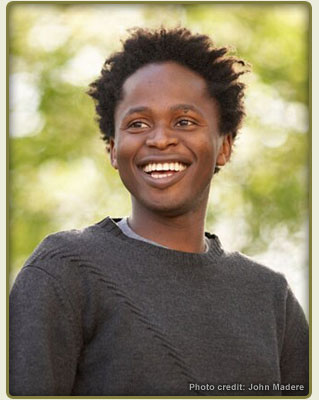

Back when I wrote an update on Dharfur, my blogging friend Chirp recommended a book, A Long Way Gone; Memoirs of a Boy Soldier by Ishmael Beah. I ordered it that very day, and read it this last week.
It is a truly heartbreaking autobiographical book about a young mischievous boy growing up in Sierra Leone, leading a relatively simple and carefree life in his village with his family. It is very African. He talks about the games he and his friends play, his fascination with rap music and the simple joys of the life he is leading.
Then the rebels come. The invade the villages, hopped up on dope, their dead eyes with no pity, raping, killing, chopping off limbs, stealing all the village food and burning the village behind them, often with people locked inside their huts.
Ishmael escapes once with friends, eventually returning to the village to find his entire family gone. Most of the book has to do with what he has to do to survive. Many villages are very afraid of groups of boys, even boys as young as these are – in their early adolescence – and will hurt them. At the very least, most of the villages hurry them along. At one point Ishmael is hiding out in the jungle forest on his own, hiding from lions, giant feral pigs, sleeping up in trees and looking for the rare fruit or grass that he can eat without getting sick.
Finally, after meeting up with some other boys and continuing to try to find his family, a village takes him in, a village run by the state soldiers. As they are attacked by rebels, the boys are forced to make a choice – go out on their own again (where the rebels will also try to recruit them, and if they refuse, will kill them) or agree to be soldiers. These are kids 12, 13, 14 carrying AK 47’s. As part of their training they are given drugs on a regular basis which keep them hopped up, full of energy, and not sleeping for days. The young boys learn to kill without pity. He becomes the very people he was fleeing.
This is a book about redemption. At the center where the boy soldiers are taken, they are constantly told “none of this was your fault.” It is a very African approach, a very human and loving approach to redemption of lives that might have been totally lost to the horrors they have witnessed and inflicted. The author is now nearly 30, and sounds – unlikely as it might be – happy.
Thank you, Chirp, for recommending this wonderful book.
March 25, 2008
Posted by intlxpatr |
Adventure, Africa, Biography, Blogging, Books, Bureaucracy, Character, Community, Family Issues, Living Conditions, Political Issues, Social Issues, Spiritual |
19 Comments
I have a very dear friend who will say “I don’t have a dog in that fight” and that is the way I feel about your upcoming elections. You (Kuwait, Kuwait leadership, Kuwait people) are in our prayers for a fair election, and that you elect good leadership. You know what a mess it has been; it would be nice to elect people who can work with the government to get things done.
So I don’t have a clue who those people would be, but I know YOU do.
Here is what tickles me, what I can’t resist commenting on from this morning’s Kuwait Times:
ELECTION FEVER GRIPS STATE
Tribes, groups move to chose candidates • Eligible voters rise to 361,000 including 200,000 women
Holy Smokes! Almost FORTY THOUSAND more women voters than men voters??? Woooo HOOOOOO, Kuwaiti women!
March 23, 2008
Posted by intlxpatr |
Bureaucracy, Community, ExPat Life, Generational, Kuwait, Leadership, Political Issues, Social Issues, Statistics, Women's Issues |
18 Comments
I have seen opinions, and heard people talking about how Kuwait has more important things to do than to penalize people who are using their mobile phones. They are outraged! Clean up the highways first, they say, give us better schools, enforce the laws already on the books (but leave our cell phones alone!)
I am sorry. I know I am going to get killed for this opinion, but have you ever followed someone driving while talking on a cell phone? Do you watch them wobble out of their lane, try to steer the car with their knee because they have the phone in one hand and they need to adjust the volume of the radio? In countries where mobile phone use has been monitored and statistics kept, they attribute a huge rise in inattentive driving to cell phone use. They have statistics. They can prove that cell phone use is linked to a rise in accidents.
Brave Qatar brought in a team of experts who interviewed seriously injured accident victims. Every single one of them was on a cell phone when involved in the accident.
My rant is this: a 5KD fine? In Kuwait, that is just laughable. A 5 KD fine (about $20 with the dollar diving into the cellar) is not a deterrent. I want to see a sliding scale: start at 50KD for the first incidence, double it for the second, double it again for the third, etc. Make it hurt.
There are too many drivers for the roads, even with the ongoing improvements. The drivers are ill experienced, and careless. Driving in Kuwait is lethal enough without the additional factor of cell phones. If you need to ask directions, pull over. It’s not that hard, you’re smart, you can figure it out.
March 19, 2008
Posted by intlxpatr |
Adventure, Bureaucracy, Community, Crime, Cultural, ExPat Life, Family Issues, Health Issues, Kuwait, Living Conditions, Political Issues, Statistics, Technical Issue |
22 Comments


