Saudi Government Informing ‘Responsible Male’ When Women Leave Saudi Arabia
Thank you, John Mueller, for this fascinating article from FRANCE 24:
Electronic tracking: new constraint for Saudi women – FRANCE 24
AFP – Denied the right to travel without consent from their male guardians and banned from driving, women in Saudi Arabia are now monitored by an electronic system that tracks any cross-border movements.
Since last week, Saudi women’s male guardians began receiving text messages on their phones informing them when women under their custody leave the country, even if they are travelling together.
Manal al-Sherif, who became the symbol of a campaign launched last year urging Saudi women to defy a driving ban, began spreading the information on Twitter, after she was alerted by a couple.
The husband, who was travelling with his wife, received a text message from the immigration authorities informing him that his wife had left the international airport in Riyadh.
“The authorities are using technology to monitor women,” said columnist Badriya al-Bishr, who criticised the “state of slavery under which women are held” in the ultra-conservative kingdom.
Women are not allowed to leave the kingdom without permission from their male guardian, who must give his consent by signing what is known as the “yellow sheet” at the airport or border.
The move by the Saudi authorities was swiftly condemned on social network Twitter — a rare bubble of freedom for millions in the kingdom — with critics mocking the decision.
“Hello Taliban, herewith some tips from the Saudi e-government!” read one post.
“Why don’t you cuff your women with tracking ankle bracelets too?” wrote Israa.
“Why don’t we just install a microchip into our women to track them around?” joked another.
“If I need an SMS to let me know my wife is leaving Saudi Arabia, then I’m either married to the wrong woman or need a psychiatrist,” tweeted Hisham.
“This is technology used to serve backwardness in order to keep women imprisoned,” said Bishr, the columnist.
“It would have been better for the government to busy itself with finding a solution for women subjected to domestic violence” than track their movements into and out of the country.
Saudi Arabia applies a strict interpretation of sharia, or Islamic law, and is the only country in the world where women are not allowed to drive.
In June 2011, female activists launched a campaign to defy the ban, with many arrested for doing so and forced to sign a pledge they will never drive again.
No law specifically forbids women in Saudi Arabia from driving, but the interior minister formally banned them after 47 women were arrested and punished after demonstrating in cars in November 1990.
Last year, King Abdullah — a cautious reformer — granted women the right to vote and run in the 2015 municipal elections, a historic first for the country.
In January, the 89-year-old monarch appointed Sheikh Abdullatif Abdel Aziz al-Sheikh, a moderate, to head the notorious religious police commission, which enforces the kingdom’s severe version of sharia law.
Following his appointment, Sheikh banned members of the commission from harassing Saudi women over their behaviour and attire, raising hopes a more lenient force will ease draconian social constraints in the country.
But the kingdom’s “religious establishment” is still to blame for the discrimination of women in Saudi Arabia, says liberal activist Suad Shemmari.
“Saudi women are treated as minors throughout their lives even if they hold high positions,” said Shemmari, who believes “there can never be reform in the kingdom without changing the status of women and treating them” as equals to men.
But that seems a very long way off.
The kingdom enforces strict rules governing mixing between the sexes, while women are forced to wear a veil and a black cloak, or abaya, that covers them from head to toe except for their hands and faces.
The many restrictions on women have led to high rates of female unemployment, officially estimated at around 30 percent.
In October, local media published a justice ministry directive allowing all women lawyers who have a law degree and who have spent at least three years working in a lawyer’s office to plead cases in court.
But the ruling, which was to take effect this month, has not been implemented.
Social Network Interactions
I do go to FaceBook now and then, and I have connected with old friends, college friends, high school friends, and people from the many ‘places I remember’ in my life . . .
It’s pretty public, don’t you think? And you do one little thing, and it’s like glue, you’re stuck with that relationship. I am now careful who I ‘like’, because I seem to end up linked to them, and honestly, I try to be careful to limit my connections to people I know, or have known, people I have something in common with, like a family member, etc.
It’s like if you indicate any interest at all, you get linked. Is it just me? I don’t think of myself as isolationist, but time is precious, and I try to spend it wisely, focusing on genuine long term relationships, family relationships and people with whom I have commonalities.
I find that magazines who which I subscribe, cultural organizations, charitable organizations are all sending me surveys; they want to get to know me better. (? ? ? )
It’s too much relationship for me. I know there are people who can handle a huge number of social acquaintances . . . that’s not me. I am civil, even cordial. I don’t want to get to know organizations through surveys, nor businesses, relationships take TIME. So many of the ‘relationships’ make me feel rushed, and when I feel rushed, or pushed, my reaction tends to be to drop the relationship; it just doesn’t work for me.
I do believe we are all supposed to be connected, to be kind to one another, to care about one another. It’s asking too much of me to expect it to happen quickly. Am I the only one? Does anyone else have any problems with the instant sort of intimacy that seems to spring up so commonly on the social networks?
Disable Your GPS Settings for Camera on Your Smart Phone
Thanks to my very savvy Kuwait friend for forwarding this timely reminder to be careful about what you post. What stalkers can learn from a photo on a social-networking site is frightening.
Amer Al Hilal on Kuwait’s Ban on DSLR Cameras
Woooooo Hooooo Amer Al-Hilal, a man I am proud to call my friend. It takes such great courage to speak out when something is going terribly wrong, and Amer knows how to do it articulately, rationally, and as the gentleman he is.
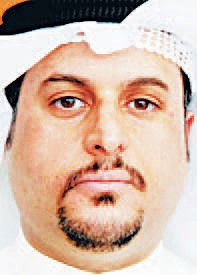
From his article in the Arab Times:
Camera ban regressive idea
‘Don’t stifle home-grown talent’
For a country that possesses a Constitution which safeguards civil liberties and freedom of speech, Kuwait sporadically sure likes toying with those liberties such as tentatively banning the Blackberry service, shutting down You Tube, impeding public gatherings and marches, banning and censoring books, literature, films and magazines which are available elsewhere in the Gulf.
This week according to media reports, and highlighted extensively in local Weblogs and Twitter, a palpable growing outcry is directed at the tentative plans by The Ministry of Information, Ministry of Social Affairs and Ministry of Finance to outlaw public photography and relegate it to journalism purposes only. This has allegedly resulted in the ban of Digital Single Lens Reflex Cameras (DSLRs) in public places. If this charade is true, then it bodes ill for this country, another regressive move into the annals of ignorance.
During the 1980s video cameras and photographic equipment were also shunned by the authorities. I remember visiting Failaka in 1985 and being confronted by a military officer who demanded I hand in my bulky video camera until I left the island. These types of infringements in the name of security were insignificant — we still had an attempt on HH the Amir, explosions at Foreign Embassies in Kuwait and an actual invasion.
Why does this country always attempt to stifle home-grown talent? Banning cameras in public places is demoralizing to all the passionate, talented young Kuwait men and women who have excelled in this field and love their hobby, not to mention visitors who attempt to document their travels here. Moreover, banning DSLR cameras is irrational and counterproductive if you think about it; in this day and age of iPhones, Blackberries, 5 MP plus camera phones, Google Earth and the like, anyone can take photograph of anything, quietly, without fanfare, which makes the potential DSLR ban even more preposterous.
I have just returned from a trip to Dubai where I witnessed dozens of tourists proudly using their cameras to document Burg Khalifa and the other picturesque locations. No one stopped them, impeded them or asked them what they were doing and you know why, because they respect people’s rights and are intent on making their country more appealing. UAE is able to manage security matters confidently because they have proper security and ID processes in place: eye scanners at airports and entry points, proper electronic government, high fines for breaking the law, a brilliant CCTV system in place in every street corner (not the shoddy black and white choppy, streaming-like quality of the limited equipment we have here) — they truly invest in their infrastructure, maintain it and upgrade it.
If Kuwait is serious about its security then it should invest in the same caliber of CCTV and not the bargain basement tenders that usually go towards ineffective systems (i.e. Highway signs with the useless ‘no mobile’ plasma screen) belonging to members of the matching ministry who want a ‘piece of the action’. The sad reality is the government sector here would rather ban something than actually strive to improve it through sheer hard work and effective processes. It’s just easier to ban; a question of laziness and neglect.
Needless to say, Kuwait seems unfazed when foreign jets infiltrate our airspace and take aerial shots of our oil refineries and military installations, or when agents and their local conspirators are found to possess blueprints and photographs of said installations, but no, lets go after the ‘little guy’, the amateur photographer or tourist on the street taking pictures. It’s a hypocritical, spineless action by the authorities.
Moreover, I suspect the issue is not just relegated to security, a myriad of reasons could have led to the support of this ban, fundamentalists who felt cameras and pictures are a ‘Tool of the Devil,’ government officials and ministries disgraced at seeing shots of Kuwait’s dilapidated infrastructure, environment and mismanagement on weblogs, internet forums and magazines. You cannot conceal the squalid side of Kuwait; it is there for everyone to see.
Furthermore, this law against public photography will not be enforced, just as seatbelt, no mobile while driving, no litter, no smoking areas, and other ‘laws’ cannot be enforced in this Land of Confusion.
Amer Al-Hilal is webmaster of http://www.hilaliya.com and can be reached at amer@hilaliya.com.
A Little TSA Humor
Thank you, KitKat 🙂



Cheaters Leave Digital Tracks
No, not another post about cheetahs – this is about cheaters.
Today in AOL: Sphere
(Dec. 3) — Tiger Woods has long since mastered the use of every club in his golf bag. Yet he, like many Americans, apparently is still learning the hazards of communicating too openly by modern methods such as text messaging.
Woods is certainly not alone. As communication technology continues to evolve, unfaithful partners are finding it easier to keep in touch with their illicit lovers — but it’s also a lot easier to get caught.
The golf champion has said only that “I have let my family down” through unspecified “transgressions.” But one of his alleged mistresses, Jaimee Grubbs, says she still has 300 text messages sent to her by Woods. In one, Grubbs tells RadarOnline.com, Woods says, “Send me something very naughty. … Go to the bathroom and take [a picture].”
Us Weekly magazine has also posted a voice mail Grubbs says is from Woods, warning that his wife has examined his cell phone and may have discovered the former cocktail waitress’ name via caller ID.
“Any electronic means of communication — a cell phone call, an e-mail or a text message — will leave some sort of trail behind,” said Ed Edmister, a private investigator and computer forensic expert at Integrity Security & Investigation Services, which has branches in California and Virginia. “Even if you toss your phone in an incinerator or dump your computer in a lake, there are still records kept by phone and Internet companies. Digital forensics has become a huge field.”
Of course, not every spouse needs to hire a private investigator, or send in a partner’s cell phone to one of the dozens of companies that specialize in recovering deleted text messages and call logs. Sometimes, the evidence is hiding in plain sight.
Take the case of Tony, a 38-year-old Jacksonville, Fla., man who did not want to use his real name for this article. After eight years of marriage, Tony began an affair with a younger woman. “We sent text messages to each other all the time,” Tony said. “I carried my cell phone with me wherever I went.”
After staying out late one night with his mistress, Tony slept in while his wife and two sons ate breakfast together in the kitchen. His cell phone, carelessly left in a coat pocket, chirped to indicate a text message had been received. “My 8-year-old son picked it up and read the message aloud,” Tony recalled. “It said, ‘Good morning, honey. Have a good day.'”
Tony’s wife snatched the phone from her son’s hand, headed into the bedroom and confronted her husband. Six months later, the couple divorced.
“Infidelity is so much easier today,” said Ruth Houston, author of “Is He Cheating on You? 829 Telltale Signs” and a widely cited infidelity expert. “In the past, a potential cheater would go to a bar or a nightclub — very risky stuff when you’re in a marriage. Now you can sit down in your home and click on a mouse and find willing partners.”
Thanks to unreliable self-reporting, trustworthy infidelity statistics are difficult to come by. But a recent study sponsored by the National Science Foundation, and reported in The New York Times, showed marked increases in infidelity among both men and women from 1991 to 2006.
“Infidelity is definitely on the rise because of technology,” Houston said.
Even in innocuous ways, the Internet can bring together aspiring adulterers. After all, the Web is quick to sort users into affinity groups. Two people who meet in a dedicated chat room already have some interest in common, and that can foster a rapid sense of intimacy.
“Women, especially, crave emotional intimacy,” Houston said. “E-mail or chatting can start off innocently, but if there are actual connections, relationships develop quickly.”
In any case, adulterers are slow to grasp that modern communication devices are not nearly as private and secure as many people believe. Just ask South Carolina Gov. Mark Sanford, whose e-mails to his mistress, Maria Belen Chapur, were first made public by The State, a Columbia, S.C., newspaper.
Kwame Kilpatrick, the former mayor of Detroit, suffered a similar turn in the electronic pillory. Some 6,000 text messages from his mistress’ pager were posted online by The Detroit Free Press and helped lead to his conviction on perjury charges.
Those politicians are certainly not the only ones to be caught with their virtual pants down. Digital technology, which has democratized almost everything it touches, is making adultery accessible to the masses.
Debate on Media Freedom in Doha, Qatar
From today’s Gulf Times:
Debate on Qatari press law
The Doha Centre for Media Freedom (DCMF) will hold a roundtable discussion on the Qatari press law that dates back to 1979, on Wednesday, at The Ritz-Carlton Doha, an official said yesterday.
According to the official, under the discussion will be the need for a Qatari media, and the view concerning modification and changes to the accrual Press Law, in order for it to match the requirements of the current era.
Discussions will be moderated by DCMF deputy director general Maryam al-Khater, while senior media officials of the country, editor-in-chiefs, senior journalists, heads of media organisations and others are expected to be in attendance.
After an introductory presentation of the most-recent study prepared by DCMF on the Press Law, comprising recommendations, suggestions, and analyses, the floor will be opened to what is expected to be a “vigorous debate”, the official said.
“The DCMF calls on all media specialists to exercise their right of expression by participating in this gathering and sharing their thoughts about the possibility of amending the negative provisions of the law for journalists’ rights as well as adding provisions which respond to their ambitions,” the official added.
The event coincides with the National Day for Human Rights, which falls on November 11 every year.
There was an earlier report, on June 24th, that most of the original members of the DCMF had resigned:
Media Freedom Centre team leaves office
DOHA: Robert Ménard, director- general of the Doha Centre for Media Freedom and his team have left the Centre.
“We no longer have either the freedom or the resources to do our work,” said Menard, in a statement issued yesterday.
The heads of the assistance, research and communications departments have also left the Centre, said the statement.
The Center was set up on the initiative of H H Sheikha Mozah bint Nasser Al Missned and Reporters Without Borders in December 2007.
Ménard, who became director-general on April 1, 2008, was the founder of Reporters Without Borders, which he headed for 23 years.
I imagine this is going to be a very interesting “vigorous” debate, of interest to all those who write – or blog – on Qatar. One of the things I notice in both Kuwait and Qatar is that in the interest of self-preservation, the newspapers self-censor. For example, when a crime is committed, if it is an Asian, or even, rarely, a westerner, the name of the criminal can be printed. If it is a local citizen, they do not print the names, not ever, unless it is a rare case where the defendant is convicted and appeals – on rare occasions, the name will appear then. In order to spare the family the embarrassment, I have been told, but I would think that the fear of embarrassing the family would have a strong deterrent effect on young men, for example, who think it is OK to abduct, rape and humiliate young men and women, without fear of having their crime made public.
In Kuwait, they publish the crimes committed, at least. In Qatar, you would think from reading the papers, that these crimes don’t exist. They do. They aren’t reported.
I think it is very cool that in Qatar, many of these issues are opened for public debate, as in this media debate, and in the ongoing Doha Debate series.
New Regulations Enforced for Drinking in Qatar Bars
New bar rules evoke complaints
By Peter Townson/Staff Reporter
From The Gulf Times
A number of residents in Doha have complained about recently introduced regulations requiring them to apply for membership to certain bars and clubs as well as providing ID upon entering such establishments in Qatar.
Due to new national regulations, hotels are enforcing membership rules, ensuring that all visitors have either a valid Qatari ID, their passport, or in many cases a membership card to enter the premises.
The bars now have a published set of rules outside the premises to indicate the necessary entry requirements, and although certain rules change from place to place, the general guidelines are the same throughout.
All applicants for membership must be over 21 years of age and possess a valid Qatari ID card, and the printing of membership cards usually costs a small fee, ranging from around QR30 to QR50 (and QR100 for replacements in some cases).
However, the new rules have meant that many places have substantial queues outside their establishments, and during special events guests can often have to wait for over half-an-hour to have their membership cards of ID scanned by hotel staff.
A representative of one hotel bar in Doha claimed that another major issue with the new membership rules had been the problem of informing their guests of the regulations.
“It seems it has been the hotels who have had to tell people about these new rules, not the people who have instigated them,” he said, arguing that it would have been beneficial to have some information regarding the reasons for the new rules and their specific details.
“I think they brought in the rules to prevent people who are living here illegally from drinking in the bars, and also to stop Qatari ladies from entering any drinking establishments,” he added.
Another hotel representative explained that the introduction of the new membership system had cost the hotel a significant amount.
“It was a big cost to the hotel to get all the necessary software and hardware to create the membership cards and register everyone’s details,” he said, adding: “However, we are trying to keep the cost of membership as low as possible for our guests.”
He pointed out that the new regulations do make it somewhat easier to “control the clientele,” and said that the rules have made life easier for the busier bars in Qatar.
However, a number of Western expatriates who have lived here for many years have become disgruntled at the new rules, claiming that it makes it more difficult for them to enter bars – especially if they have guests visiting from aboard.
Many have reported that visitors have travelled to hotels, only to be informed that they cannot enter without their passport – a document most travellers like to keep safe in their hotel room when abroad.
And other visitors to the bars – especially those who are quite obviously over 21 – resent the need to screen their ID before entering establishments they have been frequenting for years.
Government regulations defining what is appropriate dress and behaviour have also been highlighted by the hotels.
But these have also been bemoaned by customers who have in fact been turned away from places because of the clothes they are wearing.
Government officials were unable to comment, except to confirm that new rules had recently been introduced to all establishments serving alcohol in the country.
Irrelevant Clothing, Shoes and Scissors
It doesn’t matter how long I have been living in the Middle East, it doesn’t matter how many times I have made the trip back and forth, I never seem to get it quite right.
I knew it was going to be less hot in Seattle. I knew it. And still, I didn’t pack a single pair of closed toe shoes, a single pair of nylon stockings, and only a couple long sleeved things. It doesn’t matter that I have lived in Seattle, that I know Seattle, when I am in the middle of the heat and humidity of August in Doha, I lack the imagination to think clearly about the coolness of August in Seattle. I have a lot of lightweight cotton dresses . . . hmmm, so irrelevant in Seattle.
I keep a storage locker here. It started when we moved our parents from their big house to a 2 BR condo (with a water view 🙂 ) and Mom had separated out some of her treasures to divide among us movers. The problem was, I didn’t really want to take them with me (bulky and I would have to bring them back) and I have already imposed on the sister who lives here with a bunch of my stuff, so I finally decided to rent a storage locker. I discovered as a landlord, it actually comes off my taxes. I still have to pay for it, but it isn’t a total loss. I keep Seattle supplies in the locker, too.
When I went to the locker yesterday to pick up some more long sleeved stuff, and my Seattle hairdryer, and my Seattle make-up and living supplies (dishwashing soap, coffee filters, paper towels, laundry soap, etc.) yesterday, with my Mom in the car, nothing went right. My code didn’t work. I had to go inside, leaving my Mom sitting in the car, and it took them a while to work out what was wrong.
(“We don’t have seven number codes! . . . .Hmmm, , mmm, , , yeh, it says you have a seven number code all right, . . .. so here is your new code . . . )
And the new code didn’t work either.
They opened the gate for me, I went to my locker, and with my Mom sitting in the car, discovered my laundry soap had leaked during the time between visits, and with my Mom sitting in the car, I had to clean it all up AND dig out some relevant clothing, and some wrapping paper for gifts I need to send, and scotch tape and scissors (yes, I keep all the things that I frequently use in the locker so I don’t have to buy them again and again and again.) I also grabbed the bag of cosmetic items – like shampoo, toothpaste, my Seattle toothbrush, etc.)
My poor Mom! Remember her? She is still out there sitting in the car!
(The code didn’t work on the way out, either.)
So after all that sitting in the car, I treated Mom to a trip to Trader Joe’s, a place we both love. I picked up sugar snap peas; I just eat them like candy, instead of candy, they are SO good, and some sushi for later on, and Mom picked up things that were really bad, like triple gingersnaps and a wonderfully fragrant new Rosemary Tree.
On the way home, she said “you know you have some stuff in the guest bathroom” and I assured her that I did not, that it was all my middle sister’s stuff, and she said “No, Little Diamond looked at it while she was staying here and said it was yours, that it was stuff you use.” Hmmm. Little Diamond said that?
So when we got back to Mom’s house, I checked the cupboard, and there was one of those zipper bags like (ahem) I always use, and inside was . . . yep. Another hairbrush. Another Seattle toothbrush. Scotch tape. Scissors. My particular make-up back-ups. Shampoo. I brought it with me, and I had two almost identical zipper bags full of Seattle supplies. I can only imagine that sometimes when I get here after all those hours of traveling that my mind is just so addled I am not thinking.

It also makes me feel a little weird that Little Diamond knows me so well that she can identify MY things with just a glance at the contents of the plastic bag, LLOOLLLL! I am that predictable?
On my way over to my Mom’s, I had stopped at the local Fred Meyer’s, a Target-like local store I just love. Now that I am in Seattle, I see things differently. I see things I can hardly resist, like something in me feels like getting ready for the winter, but then, Thank God, my sterner self jerks me back just as I am reaching for:

Look at those socks! Look at those colors! I can barely resist, they are such a hoot! but then . . . where would I wear them? Even if I were abaya’d, people could see my bright polka-dot chartreused ankles and it would draw unwanted attention . . . . maybe just around the house . . .
But no . . . around the house – look at these!

Thick, fuzzy sleepers, only $16.99, like we wore when we were kids, only these are for grownups, and oh! look at that zebra print! The cheetah! They are almost irresistable!
And so irrelevant in Doha!
Busted
Today, as I was getting ready to leave the church services, one of my very special friends hugged me and said farewell, and then said “But of course, I can keep up with you on your blog.”
It was as if time stopped for a second, then started up again.
“My blog? You read my blog? You know?” I stammered, not loudly because there were other people around.
She laughed.
“I figured it out when you described this guy,” she said, punching AdventureMan lightly on the shoulder. “I KNEW it was you.”
When we got into the car, AdventureMan had a big smug grin on his face.
“I almost told her I read your blog quickly first, to see if I’m in it,” he said, “but then I was embarrassed that I am so vain.”
LLLOOOLLLL!
I’ve gotten less careful. It’s becoming less and less relevant as I get closer to leaving.
Recent Comments
ExpatAlien on What Country am I Living … intlxpatr on Yellowstone: Old Faithful to C… Michelle on Yellowstone: Old Faithful to C… Cathy on No Grown-Ups in Charge intlxpatr on Waiting for Snow Wikipedia Donate Button

Amazina


Early Voting in Florida


 Here There and Everywhere