Tareq Rajab Museum of Islamic Calligraphy
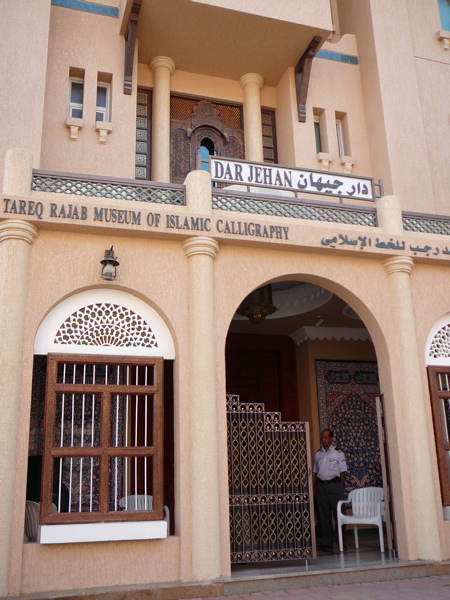
One of the most beautiful buildings in Kuwait is the new – open only since March – Museum of Islamic Calligraphy in Kuwait. I am in total awe of this family, who have an eye for the history and culture of this area, collect it lovingly, and then display it – free of cost – to all who wish to visit.
The TR Museum of Islamic Calligraphy is on the same street as the Dar al Cid, where many art exhibits are held, also under the auspices of the Tareq Rajab family. It is around the corner from the Tareq Rejab Museum.
It is open every day:
Mornings 9 am – 12 noon
Afternoon 4 pm – 7 pm
Friday 9am – 12 noon
We visited recently. The museum is beautiful, and well organized. We wished only that more of the exhibits had explanations; sometimes we would be looking at something very beautiful, but we didn’t know the significance of what we were seeing.
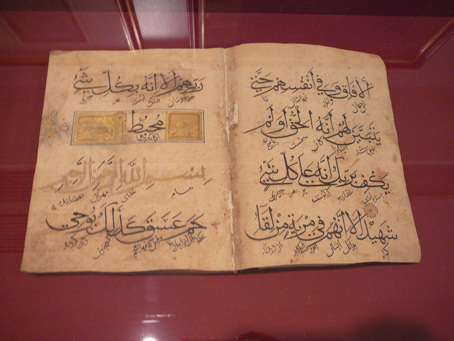
The calligraphy is manifest in hangings, ancient Qurans, quiltings, posters and carved wood. Each item is a work of art. We were fascinated by some of the Chinese calligraphy, and by the video they run showing how calligraphic quills are made, how the paper is prepared, even how the calligrapher prepares for work.
This is the entry to the Museum of Islamic Calligraphy:
Some examples of the beautiful works on display:


If you are looking for books about Kuwait, and/or Islamic Arts, the Tareq Rajab Museum has a well stocked little shop with books, cards, postcards, etc. for reasonable prices.
We take all our houseguests to these museums, and every time we go, we are moved by the generous hearts that create these museums and then offer them to the public – free of charge. They give so much to their community. It’s like a little piece of heaven. Visit soon!
Ozymandias: Nothing beside remains
This is one of my favorite poems. I learned it as a child, and didn’t understand it, but liked the exotic loneliness it evoked. I could hear the wind whistling across the empty sands, feel the grains on my cheek – so very different from my home in Alaska, and yet – not so different. In Alaska, the wind blew cold, and the grit against my cheek was snow! The memory of these ironic words lives in my heart.
The words come back to me, now and again as we stand amidst remains of complex, abundant civilizations that are now lifeless stone and rubble.
Ozymandias
by Percy Bysshe Shelley
I met a traveler from an antique land
Who said: Two vast and trunkless legs of stone
Stand in the desert. Near them, on the sand,
Half sunk, a shattered visage lies, whose frown,
And wrinkled lip, and sneer of cold command,
Tell that its sculptor well those passions read
Which yet survive, stamped on these lifeless things,
The hand that mocked them, and the heart that fed;
And on the pedestal these words appear:
“My name is Ozymandias, king of kings:
Look upon my works, ye Mighty, and despair!”
Nothing beside remains. Round the decay
Of that colossal wreck, boundless and bare
The lone and level sands stretch far away.

If you read through the entire poem, you are challenged to tell us about a poem that YOU still remember, and why. 😉
Kuwait Blue Sky
Friday, for the first time, the really blue sky was back! There must have been a subtle shift in the wind, as all we have seen all summer has been haze, and at best, a slight lightening of the haze.
My public art for this week:
A Salmiyya power station

A giant sized rosewater bottle on 303 (Look at the sky!)
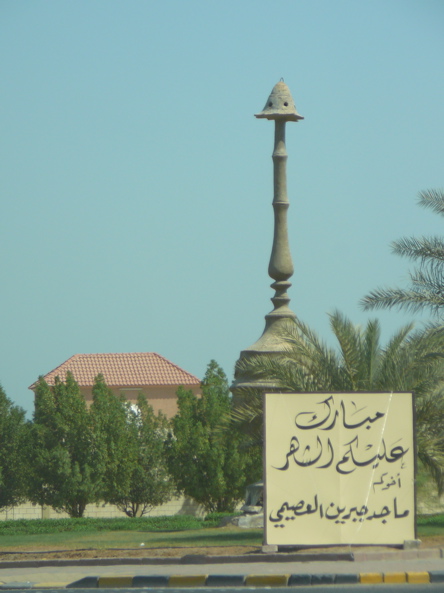
Last, but not least, I spotted another of those Palm Tree Antennas in front of the old Regency Palace Hotel. I can’t remember seeing it before, so maybe it is new. Where have YOU seen other Palm Tree Antennas?
The Street of Ramadan Lanterns
Over 15 years ago, this article appeared in the March/April edition of SaudiAramco World.
Blessed is He who made constellations in the skies and placed therein a lamp and a moon giving light; and it is He who made the night and day to follow each other: For such as have the will to celebrate His praises or to show their gratitude.
The Qu’ran, Chapter XXV (Al-Funqan, The Criterion), Verses 61-62
Written and photographed by John Feeney
No one knows for certain when the use of children’s Ramadan lanterns began, but it is a very old Egyptian tradition. Indeed, lanterns and lamps of various kinds, of many hues and degrees of brightness, and even both real and imaginary, have always been special to Egypt. For centuries before the coming of electricity, Cairo itself was noted for its spectacular use of lanterns to illuminate the city, especially during the holy month of Ramadan.
Ramadan, the ninth month of the Muslim lunar year, is a time of fasting, blessings and prayers. It also commemorates the revelation of the first verses of the Qur’an to the Prophet Muhammad.
As a way of giving thanks to God during this holy month, and as a way of unifying the worldwide community of believers, Muslims – with special exceptions for the sick, nursing mothers, pregnant women and travelers – spend the daylight hours fasting. The hours of the night, until dawn, are marked by prayers, ceremonial meals and celebration of the day’s spiritual victory over human desires. After sunset, streets and squares all over the Muslim world are thronged with people out buying food after the long day’s fast, or visiting friends, or preparing for sahur, the last meal of the night, which will be taken before dawn. It is then that young Cairenes, allowed to stay up late because of Ramadan, traditionally gather in groups of three or four to go out among the crowds, swinging their glowing lanterns and chanting their ancient song of Ramadan – just as children in other lands go caroling – hoping to receive in return a few nuts or sweets for their vocal efforts.
Passed on by children from generation to generation, the traditional song, in colloquial Egyptian Arabic, accompanies the swinging of the lanterns in the little ones’ hands. It goes like this:
Wahawi, ya wahawi
iyyahah
You have gone, O Sha’ban,
You have come, O Ramadan,
iyyahah
The daughter of the Sultan
is wearing her caftan,
iyyahah
For God the forgiver
Give us this season’s gift.
Some believe that the children’s lantern song comes all the way from Pharaonic times, like the ancient Egyptian song called O-Faleh in the Pharaonic tongue and al-Bahr Sa’id in Arabic (meaning “The River Has Risen”). In the days before the Aswan Dam was built, that song was sung by groups out in small boats on the night the Nile reached the peak of its annual flood. Certainly, the lantern song is very old, and very Egyptian.
The opening lines – “Wahawi ya, wahawi iyyahah” – have no known meaning. “You have gone, O Sha’ban” refers to the month that comes before Ramadan in the Muslims’ lunar hijri calendar, and “the daughter of the Sultan is wearing her caftan” means she is dressed in the garment worn when going out, maybe to the mosque. “Give us this season’s gift” refers to the small presents children receive from family and friends at the time of the ‘Id or holiday that follows the month of fasting.
In the days leading up to Ramadan, children become more insistent about having a lantern; many can hardly wait to start swinging and singing – for what child, from its earliest years, is not attracted by a glowing, magical lantern? Yet Cairo children may be the most “lantern-struck” of all: Recent research by Dr. Marsin Mahdi of Harvard University indicates that Scheherezade’s ‘Alaa’ al-Din (Aladdin) of the magic lamp may well have been a Cairo boy.
One week before Ramadan begins, part of Ahmad Maher Street, for most of the year a humble thoroughfare in the old medieval quarter of Cairo, is transformed. Usually home to tinsmiths, marble-cutters and makers of mousetraps, for one glorious month it becomes “The Street of the Lanterns.”
Filmmaker John Feeney, who has lived in Cairo for a quarter century, is a long-time contributor toAramco World. He wishes to thank Laila Ibrahim, renowned authority on Mamluk Egypt, for her help with this article.
This article appeared on pages 14-23 of the March/April 1992 print edition of Saudi Aramco World.
You can read the rest of this fascinating article HERE.
I love the Ramadan lanterns. I’ve been to Cairo, and found the heat and the teeming population, the gridlocked traffic and all the begging a little scary. But I would go back in a heartbeat to see this street of lanterns!
For my non-Muslim readers, I found a wonderful site while researching Ramadan lanterns that gives a simple overview of Ramadan: Hamad El Afandi’s Ramadan Kareem. It is heavily illustrated with photos.
Sheikh Faisal Bin Qassim Al Thani Museum
On a recent flight, I found an insert for the Sheikh Faisal Bin Qassim Al Thani Museum, the Doha equivalent to the Tarek Rajab Museum here in Kuwait. I have visited both of these museums many times – and have marvelled that private individuals would amass such great collections and share them – free – with the public.

You have to be invited, or you have to ask (groups often do) if you can visit; it is not open daily the way the Tarek Rajab Museum is.
You can find the museum online at Sheikh Faisal Bin Qassim Al Thani Museum.
Packaging
Dont ya just love it when someone goes to a little extra trouble to delight you?
I have a routine when I get to Amsterdam, my half way point. After all those hours of flying, I love having a shower. I love having the small room all to myself, quiet, to get all clean, to brush my teeth, fix my frowzy-airplane hair, apply a little fresh makeup. I don’t usually get a lot of sleep on my first flight – could it be that last strong cup of coffee I eat before getting on the plane? 😉
And then I wait the endless hours for my flight to Kuwait, trying not to nod off, because the overburdened lounge staff at KLM don’t do flight announcements, and I am so afraid I will fall deeply asleep and miss my plane. All around me are sleeping people – many on their way to Accra, Entebbe, Mumbai . . . and a few familiar faces heading back to Kuwait. Whoda thunk, this early in August, so many people would be returning?
I get restless. I don’t like the lounge food, it has a stale feel to it, and is mostly processed unidentifiable meat slices and hardening cheese, so I head down for the sushi bar. It’s purely psychological, but I believe the miso soup hardens my immune system against airplane-air-germs, so I almost always have a cup of soup and a small tray of sushi, something cooked or vegetable so I won’t offend whoever is sitting next to me on the way back to Kuwait.
And, because the sushi bar was packed, I got it all to go and found a quiet place in Concourse D to sit and eat. And look what I found!
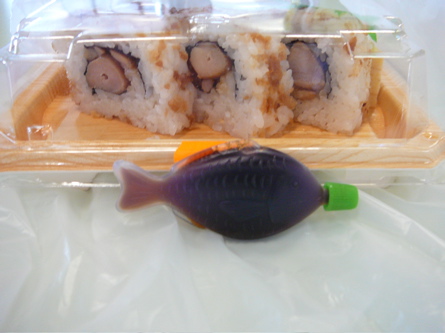
Now YOU tell me – isn’t that adorable?
Normally soy sauce comes in one of those nasty plastic or aluminum packets that you have to tear off an end. This – in a tiny little fish with a plastic screw-off cap – this gave me a moment’s grin in the middle of the limbo of airport transitions. And I thought of you, and how you might enjoy it along with me.
I’m sure it costs them more than a plastic packet. I love it that the top screws off, that the shape is a fish, I love the whole concept.
“It’s just soy-sauce”, you might say, shaking your head in mild disgust at how easily amused I am.
Yes, it is just soy sauce. And packaging matters.
Leaving Seattle
Here is what it is like, leaving Seattle.
For days, the televisions and radios have been telling us that traffic on I-5, the major interstate, will slow to a crawl for a month as serious repairs are made to the overpasses and bridgework supporting the freeway.
Remember the bridge collapse in Minnesota? I-5 is THE major route in and out of Seattle, traffic is unbelievably heavy, and yet . . . without regular inspection and maintenance, infrastructure fails, and a failure in mid-town Seattle could be catastrophic. The stoic Seattleites would much rather be inconvenienced than suffer a catastrophe, so they are all working to find alternate routes.
My drive through Seattle was a breeze. It was the last day before the closure. I was in prime time traffic. I don’t know if everyone thought the closures had happened already or if half the population is on vacation, but the drive was a delight – and the roads were dry.
My least favorite part of every trip is trying to get my bags to the check-in. Once, I left my bags in my rental car while I went for a cart, only to find on my return that the car – and my bags – were gone! It took half an hour to get the car back again. Now, I lug my treasure filled bags with me to the baggage cart section, wishing I were in Kuwait or Doha where someone would be running up to me with a cart, offering to cart my bags.
Check in is always another delight – because my ticket, even though it is an e-ticket, is booked in Kuwait, I have to wait for a real person to check me in, I can’t check in online or through one of the machines. But, by the grace of God, it all goes smoothly, and I am on my way to the gate.
But because I give myself plenty of time to get across town, I always have plenty of time before my flight, so I go to the food court. I love this food court. You could get Burger King, and a lot of people do, or you could get a wide assortment of organic foods, and a lot of people do, or you could get sushi and udon, which so many people do that they are usually sold out in short time. My favorite is a bacon, lettuce and tomato sandwich.
I have my favorite place to sit and eat, and I love to look at the airport art work. Look at the light fixture. . . I don’t think it is a Chihuly, but just look at it! In the middle of the food court! Isn’t it just gorgeous? Doesn’t it remind you of a very cold river, in the shallows, flowing over rocks?

Flash for Sparkle: Atlanta 2
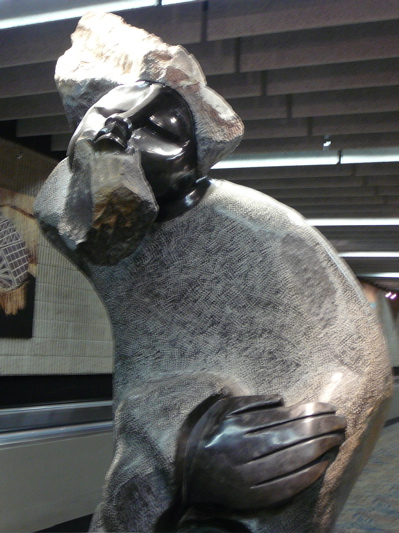
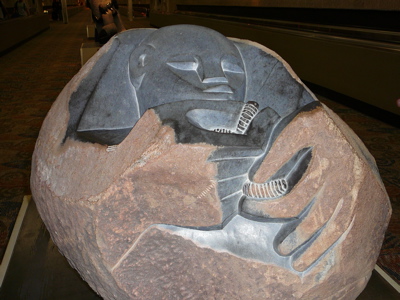
More from the Atlanta airport – just look at the texture in these statues!
This one is about the sea:

This one is my favorite. I wish you could stand closely with me and see the texture carefully incised in this piece:

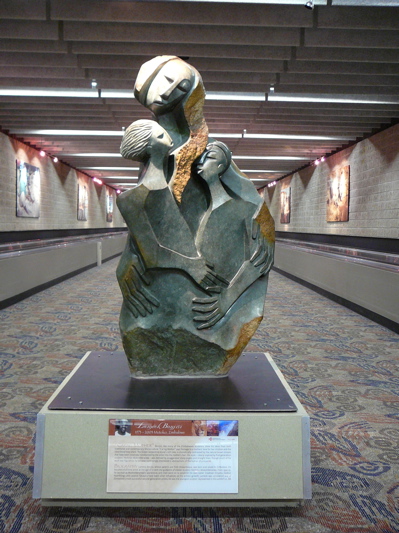
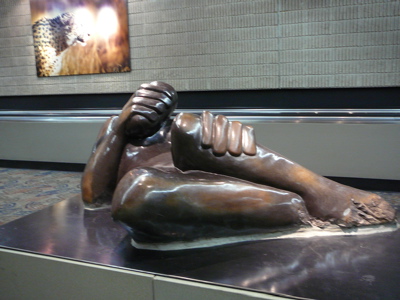
Again, thank you Atlanta, you made my day.
Flash for Sparkle: Atlanta 1
My sister, Sparkle Plenty has a blog on which she writes about only GOOD things, the tiny light that defies the darkness. As I was enduring my trip back this time, I thought of her when I got to Atlanta.
In fact, I was so impressed with this flash of light that I stopped, unloaded my camera from the carryon, and juggling my carry-on, my venti and my camera, walked the kilometer or so that this exhibit was staged between the A concourse and B concourse in Atlanta.
I am so glad I did. It totally lifted my mood, and it felt like a gift from the city of Atlanta. These are all statues by Zimbabwean artists – yes, plonked down as a public art project in the middle of the Atlanta airport. They must have paid a fortune to ship these statues, to create the huge posters on the walls showing crafts and scenes from Zimbabwe, poor Zimbabwe, in it’s steady downward spiral, these artists pull miracles out of the hat.
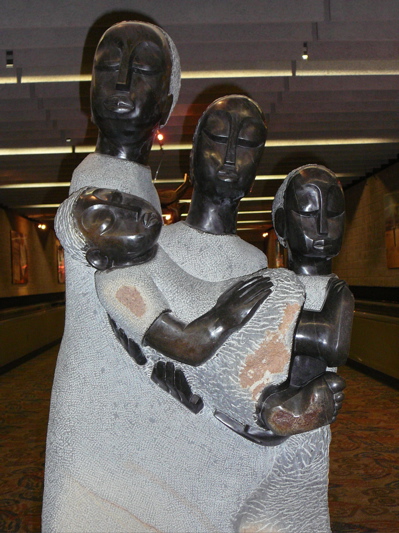
This was one of the wall posters, featuring Zimbabwean hand woven baskets:
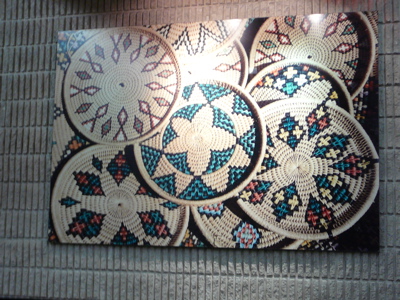
Bravo to all cities that spend a little so that we can be lifted out of our everyday doings and taken to another world of texture, ideas and line. Bravo, Atlanta!
Kuwait Minarets
I love mosques. I love the very simple old old ones, made with clay, that look like they are slowly melting back into the ground, and I love the new modern ones that look like spaceships about to lift off, and I love all those in-between. I have so many photos of mosques, mosques minarets and mosques at sunset, in moonlight . . .
So here is my question for you: Do any Kuwait mosques use LIVE muezzin to call out the Call to Prayer?
Here are some Kuwaiti mosques I have photographed recently.
This one is near the Sadu House, in an area being renovated:
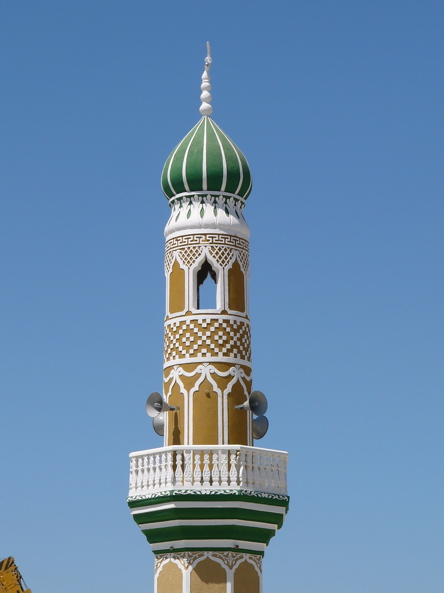
And here is what it looked like before renovation:
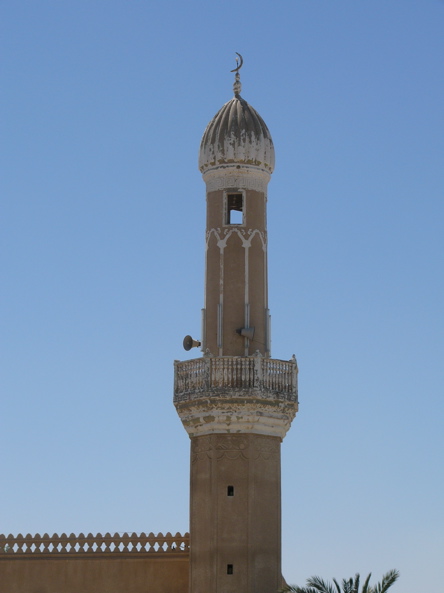
I LOVE this one – it’s old, but it has STARS on the side of the minaret, going toward the top, cut out, probably to allow light to filter in where there are, I assume, steps or maybe a ladder.

This mosque is between fourth and fifth ring, where you used to turn to get to the old IKEA:

Recent Comments
ExpatAlien on What Country am I Living … intlxpatr on Yellowstone: Old Faithful to C… Michelle on Yellowstone: Old Faithful to C… Cathy on No Grown-Ups in Charge intlxpatr on Waiting for Snow Wikipedia Donate Button

Amazina


Early Voting in Florida


 Here There and Everywhere