Qatar’s Balancing Act (from National Post)
Fascinating article on Qatar – thank you, John Mueller, who sends me these great news articles.

From the National Post
Qatar’s balancing act
Fadi Al-Assaad, Reuters Files
Qatar’s Emir, Sheikh Hamad bin Khalifa Al-Thani, has steadily built a reputation for mediation and seeks to be regarded as an “honest broker” in the Middle East.
TwitterEmail
inShare
Peter Goodspeed, National Post · Feb. 25, 2012 | Last Updated: Feb. 25, 2012 5:16 AM ET
The tiny country of Qatar used the slogan “Expect the Amazing” when it successfully bid to host soccer’s 2022 World Cup.
It’s a phrase that could summarize the reign of Emir Sheik Hamad bin Khalifa Al-Thani, who in just 17 years has turned a small Arabian peninsula of salt and sand flats, once one of the poorest countries in the Persian Gulf, into the world’s richest country and possibly the Middle East’s most influential state.
A former British protectorate, which was noted for its declining pearl fishery when it became independent in 1971, Qatar was once described by the Lonely Planet Travel Guide as “possibly the most boring place on Earth.”
Now, according to the World Bank, its 250,000 citizens and 1.5 million foreign workers have the highest per capita income in the world (US$84,000, twice that of the United States) and an economy that outstripped China by growing 15.8% last year.
Since 2006, Qatar has been the world’s largest exporter of liquefied natural gas and the kingdom is transforming its new wealth into worldwide influence.
Qatar recently led the Arab League’s expulsion of Syria and, on Friday, called for the creation of an Arab military force to open humanitarian corridors to protect civilians in Syria.
Last month, it allowed Afghanistan’s Taliban to open an office in Doha to facilitate peace talks with the U.S.
And in the spring, it was the first Arab country to recognize the rebel government in Libya.
The emirate sent six Mirage fighters to Crete to help NATO enforce a no fly zone over Libya.
It also supplied rebels with the fuel, weapons, cash and the training they needed to overthrow dictator Muammar Gaddafi. Qatari special forces provided basic infantry training in the Nafusa Mountains, west of Tripoli and some helped lead the final assault on Col. Gaddafi’s compound in the capital.
They were so proud of their achievement, they hung a Qatari flag from the wreckage of his palace.
“The Qataris have really adopted a kind of adventurous foreign policy in the last couple of years and shown a willingness to send special forces to these kind of areas of conflict,” said Andrew McGregor, senior editor of the Global Terrorism Monitor for the Jamestown Foundation.
“They’ve used their considerable wealth to supply arms and whatever else is needed.
“I would be keeping a close eye on what they are doing [in Syria]. They are rapidly emerging as a real power in the Arab League, despite their size. They are very influential and very wealthy, and they have shown a willingness to be engaged.”
The Emir, Sheikh Hamad bin Khalifa Al-Thani, sometimes referred to disparagingly as the “Arab World’s Henry Kissinger,” has steadily built a reputation for mediation and seeks to be regarded as an “honest broker” in the Middle East.
“Since the mid-1990s, Qatar has pursued an activist foreign policy, using its affluence, unthreatening military position and skills as a mediator to interject itself in conflicts around the Middle East and beyond,” said David Roberts, deputy director of the Royal United Services Institute’s Doha Centre.
In recent years, Sheikh Hamad has carefully inserted himself in conflicts in Libya, Lebanon, Gaza and the West Bank, Sudan, Syria, Yemen and Afghanistan.
In 2008, an agreement negotiated in Doha averted another civil war in Lebanon by establishing a power sharing agreement between the country’s different factions. Around the same time, Qatar helped negotiate a short-lived ceasefire in Yemen, mediated a border dispute between Djibouti and Eritrea, and hosted peace talks between Sudan and rebel groups in Darfur.
A regional actor with international reach, Sheikh Hamad has pursued a foreign policy that is ripe with conflicts and contradictions.
Qatar maintains good relations with Iran, while still offering the U.S. its biggest and most important air base in the Middle East at al-Udeid, a few kilometres outside Doha.
Unlike most Arab states, Qatar has generally had good relations with Israel and allowed the Israelis to maintain a commercial office in Doha until the 2009 Gaza invasion.
At the same time, it has warm relations with Israel’s enemies Hamas and Hezbollah, and provides safe haven to hardline Islamists from all over the Arab world.
Leaders of the Muslim Brotherhood in Egypt and Syria fled to Qatar in the 1960s and 1970s, even though the kingdom’s rulers frown on organized political Islam and ban all political parties.
Qatar “has a reputation for ‘omni-balancing’ between seemingly incompatible policies,” said Kristian Coates Ulrichsen, a Gulf expert at the London School of Economics.
“Qatar’s rise, seemingly from nowhere, is rooted in deeper political, economic and security shifts and, in turn, is reconfiguring the balance of regional power.”
Those changes highlight Sheikh Hamad’s own rise to power and his reign in Qatar, where his family has ruled since the 19th century.
Raised by a maternal uncle’s family, after his mother died young, the Emir attended the Royal Military Academy at Sandhurst, west of London, graduating in 1971, the year Qatar won its independence and when its first natural gas field was discovered.
He was made a lieutenant colonel in Qatar’s army and, after his father deposed an uncle to become emir in 1972, he rapidly rose to become commander-in-chief of its armed forces.
As crown prince, Sheikh Hamad was gradually given the power to run the country day-to-day, while his father cultivated a taste for extravagance and spent most of his time on the French Riviera.
Sheikh Hamad oversaw development of Qatar’s oil and gas industry and carefully planned an economy that provides Qataris with free education, health care, housing and utilities – and no taxes.
But when his father returned home briefly in 1995 and arbitrarily demoted another son from his position as prime minister, Crown Prince Sheikh Hamad staged a bloodless coup. He informed his father by telephone while he was holidaying in Switzerland.
The old emir returned to the Gulf the following year, publicly disowning his son and trying to drum up support for a countercoup, but Sheik Hamad snuffed out the plot by freezing billions of dollars in his father’s overseas bank accounts.
Then, just 44 and the youngest ruler in the Gulf, he set about to reform and redefine Qatar.
Surrounding himself with young, Western-educated advisors, he drew up a longterm plan to develop a post-oil knowledge-based economy.
He has allocated 40% of Qatar’s budget between now and 2016 to massive infrastructure projects, including an $11billion international airport, a $5.5-billion deep-water seaport and a $1-billion transport corridor in Doha, as well as $20billion in new roads.
He has also invited foreign universities to establish Middle East campuses in a $100-billion Education City in Doha.
Without an elected parliament to advise him, the Emir has final say in the disposition of the country’s $70-billion to $100-billion sovereign wealth fund, which has made it a financial powerhouse internationally by investing heavily in everything from German carmakers Porsche and Volk-swagen to the Agricultural Bank of China, Harrods department store in London, a Brazilian bank, Chinese oil refineries, a Spanish soccer team and a French fashion house.
The Emir’s most influential investment was his creation of the 24-hour Arab-language Al Jazeera television network in 1996.
Granted a level of editorial independence unheard of in the Arab world, Al Jazeera is encouraged to report freely and aggressively on everything but Qatari politics, and is the most watched TV network in the Middle East.
The broadcaster was widely regarded as one of the driving forces behind the spread of the Arab Spring.
“Qatar hopes to insert itself as the key mediator between the Muslim world and the West,” Mr. Roberts said.
“Qatar sees its role as a highly specialized interlocutor between the two worlds, making – from the West’s point of view – unpalatable but necessary friendships and alliances with anti-Western leaders.”
Sheikh Hamad Bin Jasem Al-Thani, Qatar’s Prime Minister and a distant cousin of the Emir, likes to say his country is small and has to be proactive to protect its interest and avoid being run over by more powerful neighbours.
“Our policy is to be friendly with everybody,” the Emir said recently in a television interview. “We are looking for peace. It doesn’t mean if two parties turn against each other, we have to go to one party. No, we would like to stick with the two parties.”
– Formerly a British protectorate, Qatar has been ruled by the Al-Thani family since the mid-1800s. The current Emir, Hamad bin Khalifa Al-Thani, overthrew his father in a bloodless coup in 1995.
– Oil and natural gas revenues have enabled Qatar to attain the highest per-capita income in the world (US$84,000 according to a report this year by Global Finance).
– Oil output at current levels should last 57 years, according to the CIA World Factbook.
– It has a zero unemployment rate and zero percentage below the poverty line.
– The mostly flat and desert land is 11,586 square kilometres – only slightly larger than Jasper National Park.
– It has a population of 848,016 – similar to the population of Edmonton.
SOURCE: NATIONAL POST NEWS SERVICES
JONATHON RIVAIT / NATIONAL POST
pgoodspeed@nationalpost.com
Houston CC: Qatar Unable to Credit Coursework?
TThe western universities in Qatar have fought long and hard to have accountability and enforced standards . . . and there are always challenges. Here is a hilarious article about one such newer university facing significant challenges (thanks, John! )
Faulty planning may be to blame for HCC Qatar campus’s problems
By Jeannie Kever, Houston Chronicle
Updated 09:01 p.m., Saturday, February 4, 2012

As top officials at Houston Community College were collecting awards and publishing papers about their international ventures last year, their effort in Qatar was struggling with disagreements over accreditation, high faculty turnover and growing worries that the dean hired by the Qataris to lead the effort was working against them.
The problems, detailed in emails and internal documents obtained through a public records request, raise questions about whether HCC was prepared for the ambitious foreign undertaking.
The dean chosen by the Qatari government was replaced in November by a veteran HCC employee, Butch Herrod, as part of an administrative overhaul. Enrollment has reached 750 students, less than two years after HCC signed an agreement with the Qatari government to create that nation’s first community college.
But students have not received HCC credits for their classes there – a cornerstone of the promises made when the partnership was announced – and for now it appears unlikely their coursework will transfer to the six U.S. universities with operations in Qatar. After months of student protests, a deal signed last month will allow graduates of the new community college to enroll in Qatar University.
Things were so bad last spring an HCC administrator in Qatar wrote HCC Chancellor Mary Spangler that Community College of Qatar, or CCQ, had become known as “the Crazy College of Qatar.”
From the beginning, Spangler said the Qatar contract was a way to earn money as state funding dropped and property tax revenues remained flat. HCC records indicate the college has collected $640,034 from the deal; it projects a profit of $4.6 million by 2015, slightly more than expected.
Deputy Chancellor Art Tyler said in a recent interview that things now are running smoothly, and that misunderstandings are unavoidable in any international operation.
“The world is not exactly flat,” he said. “It may have gotten smaller over the years, thanks to technology, but when you’re dealing with people, with communities, you can’t know everything.”
Women taught separately
Among the things HCC didn’t know until just before classes began in September 2010: The Qatari government decided male and female students would be educated separately, contrary to the five-year, $45 million contract, which called for coeducational classes.
Former employees say that was just one of the surprises when they arrived in Qatar, ranging from delays in getting textbooks to worries over their exit visas.
“Things did not go smoothly at all,” said Randi Perlman, hired to teach English to Arabic-speaking students. “There were a lot of issues that came up … that I think didn’t need to happen.”
Overseas campuses
With more than 70,000 students, HCC is one of the nation’s largest community college systems, offering lower division academic classes and workforce training.
Over the past decade, it has become increasingly involved in international ventures, as well, with projects in Vietnam, Saudi Arabia, Brazil and Qatar.
Tyler said Qatar, located on the Persian Gulf, is a natural match for a Houston institution: energy industry ties, Qatar Airlines’ nonstop flights and the presence of the Qatar Consulate here. Six U.S. universities have campuses there, including Texas A&M.
The Methodist Hospital System has an office in the United Arab Emirates and is helping to build an ambulatory care center in the capital city of Doha.
Visa requirement
The first wave of HCC faculty and staff discovered after being hired – in some cases, after arriving in Doha – that their visas required them to get permission before leaving the country.
“That seemed to me to be a human-rights violation,” said Jan McNeil, a veteran English teacher who had previously worked in Singapore.
HCC offered interviews with three employees who worked in Qatar last year, all of whom said the visas posed no problem.
David Ross, chairman of the English as a second language and English departments in Qatar, said the system worked but acknowledged the six-day window to use the visas made timing tricky and the lack of multiple exit visas – standard for U.S. employees of American universities and companies there – provoked anxiety.
Internal emails also detail delays in preparing apartments for the expatriate employees, paying tuition at schools for their children and complaints about spotty Internet service.
“That whole piece of helping faculty and staff feel at home … was a challenge,” Tyler said.
‘A matter of learning’
Perlman, who now teaches at Texas A&M in College Station, attributed many of the challenges to poor planning, including hiring administrators – many of whom transferred from Houston – without experience working in a foreign country.
“You need people on the ground there, to help you get things done,” said Perlman. “They didn’t have that.”
Mark Weichold, dean and CEO of Texas A&M’s Qatar campus and a member of an interim board appointed last fall to govern CCQ, said missteps are to be expected.
“Watching HCC help get the community college established, some of the bumps are similar to what I’ve seen the other branch campuses (in Qatar) experience,” he said. “It’s a matter of learning how to do things in a different part of the world.”
Little control at top
But former employees and internal documents suggest HCC’s biggest problem came from a contract that authorized the Qatari government to hire the school’s chief academic official, giving HCC little control over decisions at the top.
Judith Hansen was hired by Qatar’s Supreme Education Council and served as dean until late last year.
Tyler declined to discuss the circumstances that led to Hansen’s departure in November.
Hansen, who had been forced out of the president’s job at Southwestern Oregon Community College in 2008 following three no-confidence votes by faculty and staff groups, did not respond to requests for comment.
But she was at the center of disputes over accreditation and whether CCQ could change HCC’s curriculum or claim it as its own.
She insisted on independence in an email to Tyler last winter: “The request for no assistance with (Southern Association of Colleges and Schools) accreditation means there is no need for HCC to be concerned about CCQ organizational chart,” she wrote.
‘Crazy College of Qatar’
Not so fast, Spangler said after Tyler passed on the message.
“We will not accept this response,” the HCC chancellor wrote to Tyler. “She is not calling the shots.”
Cheryl Sterling, an HCC administrator now in Qatar, wrote Tyler and Spangler last spring after Tyler acknowledged no HCC credit would be awarded for the spring 2011 semester.
“If students do not receive HCC credits this Spring, we will have a major crisis (all out war),” she wrote. “The Dean has held several forums assuring them of credits. … we are known as CCQ, the Crazy College of Qatar.”
At about the same time, faculty members issued a “no confidence” vote against Hansen.
John Moretta, a faculty member now in Qatar, was in contact with Spangler before the vote.
“She avoids me because she knows … that I know what she is doing is in direct contravention of so many HCC policies,” he wrote of Hansen. “Should we proceed with the faculty-senate vote of no confidence? … Please advise.”
Spangler replied the same day.
“The short answer is yes, and we didn’t have this conversation,” she told him.
Qatar, the Magical Kingdom
I just finished watching the 13 minute segment 60 minutes showed this last weekend on Qatar:
Oh, to be in the Souk al Wakif in January / February. My Doha buddies and I are getting together next weekend; if only we could have breakfast once again together at the Beirut. We truly enjoyed our years in Qatar.

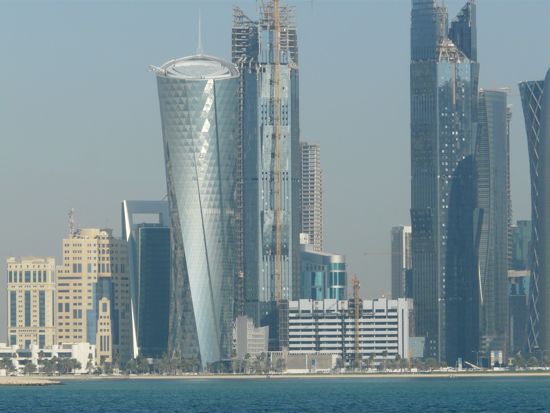
It was fun seeing the shiny sparkly skyline, only five or six of those buildings were there when we arrived in January of 2003. When my husband used to travel to Doha in the ’80’s, it was called “sleepy little Doha” or even “Doh-ha-ha-ha” but no one is laughing at Doha any more, and sleepy little Doha has gone uptown in a big way.

The Emir used to carry a lot more weight – literally. He looks good, he looks healthier and more fit, and consequently younger, and more vital. I’m betting he has the Sheikha Moza to thank for that; don’t we all nag our husbands a little to encourage them to take care of themselves? We want them to live a long, healthy life.

Not a single mention of the Sheikha Moza in the entire segment, nor of her influence in the creation of the Qatar foundation, bringing reputable American and Canadian universities to Qatar, the creation of the Islamic Museum of Art, the face-lift to the Souk al Waqif, the creation of the symphony. Not a mention of her influence on the schools, the health system, the modern face of Qatar.

Only a passing reference to the appalling conditions under which the laborers work in Qatar, treated like animals, worked to the bone. Not a mention that many of those glorious buildings don’t meet any codes, that proper building standards have not been enforced, and that the standards for safety are noticeable in their absence. Not a mention of the malls where the laborers are not allowed on Fridays, their only day off, or the beatings they get if they wander into the Souk al Waqif. The miracle of this richest city on earth is built on the back of the Indians, Philipinos, and Nepalese who sacrifice health, family and comfort to be able to send something back in hopes that their children will be educated and live better lives.

Not a mention of the concerns among the conservatives that Qatar has modernized too fast, that traditional standards are not being respected, that English is the language spoken in all the stores, not Arabic. Not a mention that this ‘richest nation on earth’ is now also the fattest nation on earth, that the Qatari children are suffering obesity, and are greatly raised by the household help. Not a mention of the crisis of intermarriage, and the tragic health problems the children suffer from inbreeding. The 6 minute segment showed a Qatar that was all shine and glitter, and none of the dark underbelly.

First Flash Mob in Doha, Qatar
Thank you, my friend Hayfa, for sending this flash mob from City Center Mall; very nice;
But this one dates from May 2011, and I love the energy!
And one more, this time at Villagio! Wooo HOOOO, Qatar!
I’m eager to see one done at the Souk al Waqif!
I think Qatar’s National Day is December 18th, and the Qataris know how to party. It would be lovely to see a Qatari flash mob.
Flying Out of Pensacola International Airport
No. No, there are not any flights to any cities outside the United States. I thought there was a rule! I remember other small airports that called themselves “international” but they always had at least one flight like to Mexico, or some Caribbean island . . . I didn’t know you could name an airport Pensacola INTERNATIONAL Airport just because you thought it sounded cool. Guess the joke is on me.

(Have you noticed how much more dominant blue bulbs are now? They used to just fade into obscurity, but now they are brilliant. These trees decorate Pensacola International Airport.)
So as I check in – at the curbside, YES! I am appreciating how much easier flying is when you are not flying to Kuwait or Qatar, or even Germany. You can drop your luggage right at the curb, you already have your boarding passes; you checked in and printed them at home (none of this is possible if you are flying to the Middle East) so you can go straight to your gate . . . oh yeh, forgot, you still have to go through security.
There is a LONG line and I overhear one of the security guards say to a Pensacola friend “Yeh, you can’t just get here an hour before your flight any more and expect to catch your flight . . . ” and I am thinking “Holy Smokes! I thought getting there an hour before your flight was overkill in Pensacola!”
As soon as I get through security (no more ‘special’ treatment, now that I am not flying to Kuwait or Qatar, no more pat downs, no more extra questions) I get to my flight, which is already boarding, and both my flights, early early on a Sunday morning are PACKED, every seat is booked. I cannot imagine.
The good news is that every flight leaves on time, lands on time, and the flights are uneventful. I love ‘uneventful.’
I find that I don’t get as much reading done as I used to when I was flying two, three, four times a year from the Middle East to Seattle. I used to be able to read three or four books in each direction, now I am down to one book and maybe a little Sudoku.
Beautiful flight:

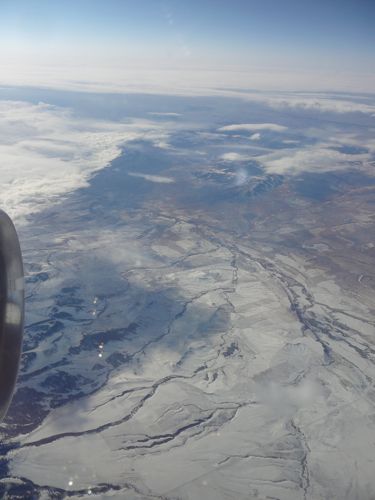
When we get near Seattle, you can see five mountains in a row, from Mount Rainier looking south, including the remains of Mount Saint Helens. The weather in Seattle is cool and brisk, my car is waiting and the roads out Edmonds are clear and dry, Wooo HOOOOO!
Qatar: The Richest Fattest Nation on Earth
Thank you, reader John, for passing along this fascinating article from The Atlantic:
Qatar is a tiny country with a big problem.
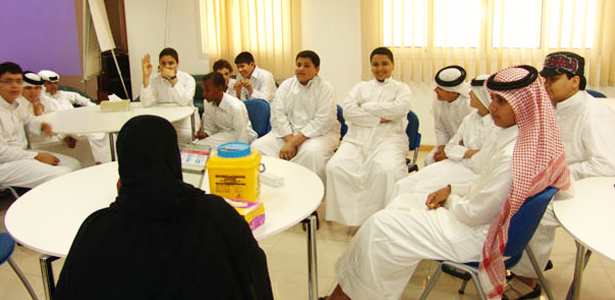
This Connecticut-sized nation, sticking out like a loose tooth in the Persian Gulf, is one of the most obese nations in the world, with residents fatter, on average, than even those of the United States, which often takes the cake in such competitions.
According to recent studies, roughly half of adults and a third of children in Qatar are obese, and almost 17 percent of the native population suffers from diabetes. By comparison, about a third of Americans are obese, and eight percent are diabetic. Qatar also has very high rates of birth defects and genetic disorders — problems that, along with the prevalence of obesity (PDF) and diabetes, have worsened in recent decades, according to local and international health experts.
So what’s going wrong in little Qatar?
Qatar also has very high rates of birth defects and genetic disorders — problems that have worsened in recent decades.
To misappropriate a well-worn phrase: It’s the economy, stupid. In September, Qatar officially became the richest nation in the world, as measured by per capita gross domestic product. It also recently became the world’s biggest exporter of natural gas, and earned the title of fastest growing economy in the world. By international development standards, all this growth has happened virtually overnight, making Qataris’ lifestyles much more unhealthy, and at the same time leading many to hang on resolutely to what’s left of their fleeting tribal traditions — practices that include inter-marriage between close family members and cousins.
“They’re concentrating the gene pool, and at the same time, they’re facing rapid affluence,” said Sharoud Al-Jundi Matthis, the program manager at the Qatar Diabetes Association, a government funded health center in Doha, the capital. As a result of these factors, Qataris are becoming obese, passing on genetic disorders at an alarming rate, and getting diabetes much more often than others around the world. They’re also getting diabetes a decade younger than the average age of onset, which is pushing up rates of related illnesses and complications, like hypertension, blindness, partial paralysis, heart disease, and loss of productivity. “It’s a very, very serious problem facing the future of Qatar,” Matthis said.
It’s a fascinating read, not too long, little more than double what you have already read. You can read the entire article by clicking HERE: The Atlantic
Thank you, John, for the recomendation.
What Tiny Qatar Stands To Gain In Libya
Another fascinating discussion on National Public Radio, which covers subjects not covered by major national news sources.
Of course, anything having to do with Qatar is of interest to us, as we lived there for four years during a time of breathtaking and exhilarating change. It is astounding, and wonderful, to us, that Qatar defies the lethargy and inertia of the Gulf Countries, and has transformed itself into a major influence, in spite of its smaller size, and even smaller population of native Qataris. They have taken the huge influx of cash that came with the discovery of natural gas, and leveraged it into massive modernization, transformation, and influence on the international scene. It’s an amazing accomplishment.

ROBERT SIEGEL, host: The Libyan rebels received decisive air support from NATO. But there was another, less publicized, smaller-scale but equally remarkable foreign involvement in support of the uprising, the involvement of Qatar, Q-A-T-A-R.
Qatar is a peninsula, a little smaller than Connecticut. It juts north into the Persian Gulf. On the south, it borders Saudi Arabia. It is rich in oil and natural gas. Its population is only about 900,000. And while it is an Arab country, a monarchy ruled by the al-Thani family, the majority of its residents are non-Arabs, non-citizens from India and Pakistan. Qatar is also home to the TV channel Al Jazeera. It will host soccer’s World Cup and it was an important player in Libya.
Ibrahim Sharqieh is deputy director of the Brookings Doha Center. Doha is the capital of Qatar. And, Ibrahim, first, what did the Qataris do in support of the Libyan rebels?
Dr. IBRAHIM SHARQIEH: That Qataris’ support to the Libyan rebels has been politically, diplomatically and militarily. We had about five Qatari fighter jets. In Qatar, we had about the training of Libyan rebels. And Qatar also played an important role in developing an Arab League support through the military intervention in Libya, which this Arab League support actually has provided the umbrella for the NATO intervention and for the military intervention and provided the legitimacy that, for example, was missing in Iraq.
SIEGEL: Why? What are the motives behind Qatar’s involvement in Libya and some of its broader ambitions in the region?
SHARQIEH: Oh, there are many theories. The one that makes the most sense in my view is that Qatar is supporting the revolution for humanitarian reasons. And in addition to this, Qatar is working and supporting the revolution is they’re strictly with its vision for its role in the region and in the world.
SIEGEL: One thing we should note, though, in this year of the Arab Spring, one thing Qatar isn’t is it isn’t a democracy. It isn’t an elected parliamentary republic.
SHARQIEH: Well, there is very high level satisfaction of the people here in the country, of the political system and of its leadership. So there haven’t been – we haven’t seen any cause for change or any protests or any different types of complaints. So the system seems to work and we seem to have a stable country. That distance itself very far away from the protests that are happening in the region.
SIEGEL: How would you describe U.S.-Qatar relations?
SHARQIEH: We know it’s a strong relationship. Qatar hosts a military base, the largest in the region here, in Al Udeid. And this has been a sophisticated policy where Qatar managed to have a good relationship between the United States and other rivals in the region, like Iran. In order to protect yourself as a small, wealthy country, some sort of striking a balance is needed and Qatar has been more influential in this crisis and other regions in Benghazi.
Going back to Libya, when you go outside the offices of the National Transition Council, you see the American flag. You see the French flag. You see the British flag, and you see also the Qatari flag.
SIEGEL: Yes. Here’s a country that aspires to a very high profile in regional affairs, but it consists of fewer than a million people. And of them only about 350,000 I read are citizens. That doesn’t sound like a country that can really be a world player, you know? It just sounds too tiny.
SHARQIEH: Well, it is too tiny but, hey, we are living in an international system that you have the means to play it right and become an important player. Qatar has invested in the right political market by mediation. Qatar was successful in the mediating an agreement between the Yemeni government and the Houthi rebels. Prevented a civil war almost in Lebanon, brokered peace agreements between the Palestinians, Fatah and Hamas, and also intervened in the fall in Sudan.
So, Qatar has proved to me an important, major emerging power in the region and to play it right and position itself very well in the international scene.
SIEGEL: Well, Ibrahim Sharqieh, thank you very much for talking with us about Qatar.
SHARQIEH: My pleasure. Thank you for having me, Robert.
SIEGEL: Ibrahim Sharqieh is deputy director of the Brookings Doha Center. Doha is the capital city of Qatar.

Changes in the Air
“It’s still hot,” I said as we were coming out of the movie, “but can you feel a change in the air? Even though it’s hot, the air is changing, the light is changing – you can feel hints that Fall is coming . . . ”
We had just been to see “The Help,” and if you haven’t seen it yet, you need to make plans to see it soon. It is a really good movie, which will make you laugh, and cry, and remember that it wasn’t so long ago in our country when it took place. (You can read my review of the unforgettable book here.)
The movie is a serious movie, and at the same time, I loved the attention to detail – the hair, the fashions, the manners – all very 50’s, even though it is the 1960’s in Jackson, Mississippi.
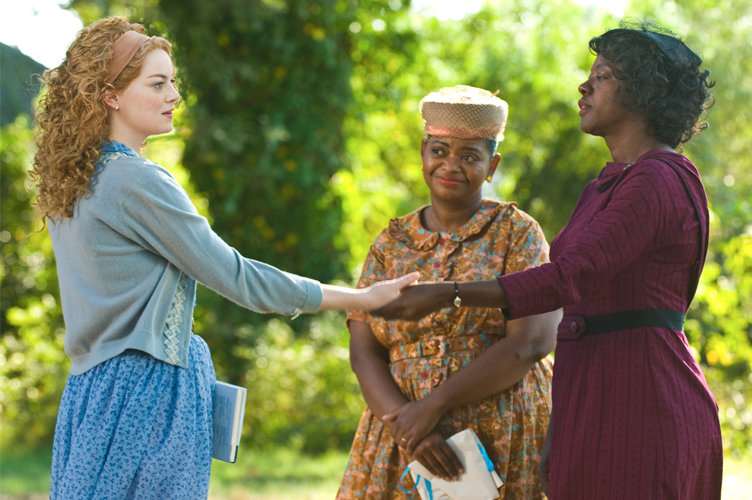
I remember reading this book in Qatar, just after I had moved back there from Kuwait. The Kuwait book club also read White Tiger and Half of a Yellow Sun, all of which had domestic service as at least part of the theme. It’s another one of those cultural things we all have in common – how do we treat the people who work for us? How do they see us? Who is raising our children and teaching them values?
In the Gulf, there are horror stories in the papers of servants who never receive their wages, or who work 16 hours a day, sun-up to sun-down, with never a day off. The families who take good care of their servants never make the papers, but I have seen good and caring relationships, lasting many years, between employers and employees. We’re glad we saw this movie, which sticks closely to the book. For a fuller experience – read the book.
Meanwhile, the temperature early this morning was below 69° F, which means that my tomatoes will begin setting once again and we may have a good crop coming before the cold sets in. I noticed, to my horror, I have a decent crop of weeds trying to establish themselves while it is too hot for me to go out and do battle with them. Some of my tomatoes actually continued producing even during the hottest days of the summer; I’m going to have to plant more of those next year. The golden pear and the red pear tomatoes are producing merrily; the bigger tomatoes have stopped – I hope temporarily.
Arabian Gulf Legacy
In today’s Lectionary, Psalm 107, there is the following verse:
41 but he raises up the needy out of distress,
and makes their families like flocks.
My heart goes back to Qatar, and I think of “my” family there, a family who adopted me, slowly but surely. The woman, who taught me Arabic, has twelve children. “Twelve children!” I used to think, was about ten too many, but I learned so much from this woman, and from her family. Every day she and her husband would sit together. They discussed each child. No child in that family was lost or overlooked; they cared for each and every one. I, too, know each child. I was particularly close to the oldest girls, but there was one young son who hit me on my bottom during my very first visit, hard, as I was bending over to put on my shoes. While everyone else looked on in horror, he just grinned up at me, and I couldn’t help but laugh. I pray for each and every one in this family, and they pray for me. Relationships don’t get much more intimate than that, I think, that we pray for one another, and we have some idea what to pray for.
And while they are not wealthy, they have enough, and they are a happy family. When one has a need, the others sacrifice, and I never hear a grumble of a complaint. Each has an assurance that when their turn comes – as it comes to all of us – their family will be there to assist them.
We said goodbye to our Saudi friends this week, on their way back to the desert kingdom to finish Ramadan and celebrate Eid with their family. They have been such a blessing in our lives here, and we wish them well. They left a lot of last minute things for me, a coffee and tea set with coffee cups, trays for serving drinks, spices, bags – the detritus of a life of moving, there are always things which still have use but for which you have no room in your packing crate. I am starting a lending closet with them; as other families arrive, I will offer them up to new arrivals who need the same pieces for their daily life and entertaining. The spices I will share with one of my co-mother-in-laws who makes a chicken biryani they call Chicken Perlow. It is moister than biryani, but has much the same flavor. Oh yummm.
As our Saudi friends depart, we have new friends arriving and we will have them for dinner tomorrow night. We have met them, one is Algerian, the other is Omani; as the Ramadan fast ended, the Algerian was trying to eat a piece of bruschetta with a knife and form. “You are so French!” I laughed, and told him we eat this with our fingers, which greatly relieved him, as he was standing, and to try to cut a piece of French break with a fork while standing is close to impossible. Both are a lot of fun, and while we will miss our departing Saudi friends, we are looking forward to these new friends.
One thing that pleases me greatly. I asked my Saudi friend how she was received when she went out, as she is fully covered, abaya and scarf and niqab (face covering). She said she had been warned before leaving Saudi Arabia that people would be unkind to her, but never once did she run into this, that people were always kind, “in the hospital, in the Wal-Mart, in the shopping, everywhere.” It just made me so proud to be living in Pensacola.
Recent Comments
intlxpatr on Yellowstone: Old Faithful to C… Michelle on Yellowstone: Old Faithful to C… Cathy on No Grown-Ups in Charge intlxpatr on Waiting for Snow intlxpatr on Waiting for Snow Wikipedia Donate Button

Amazina


Early Voting in Florida


 Here There and Everywhere