FIFA Executive Says He Doesn’t Think 2022 World Cup Will Be In Qatar

* Zwanziger is member of FIFA Executive Committee
* Plans under way to shift World Cup to European winter (Updates with FIFA reaction)
BERLIN, Sept 22 (Reuters) – The 2022 World Cup will not be held in Qatar because of the scorching temperatures in the Middle East country, FIFA Executive Committee member Theo Zwanziger said on Monday.
“I personally think that in the end the 2022 World Cup will not take place in Qatar,” the German told Sport Bild on Monday.
“Medics say that they cannot accept responsibility with a World Cup taking place under these conditions,” the former German football (DFB) chief, who is now a member of the world soccer’s governing body FIFA that awarded the tournament to Qatar in 2010.
Although wealthy Qatar has insisted that a summer World Cup is viable thanks to cooling technologies it is developing for stadiums, training areas and fan zones, there is still widespread concern over the health of the players and visiting supporters.
“They may be able to cool the stadiums but a World Cup does not take place only there,” Zwanziger said.
“Fans from around the world will be coming and traveling in this heat and the first life-threatening case will trigger an investigation by a state prosecutor.
“That is not something that FIFA Exco members want to answer for.”
FIFA officials, contacted by Reuters, said Zwanziger was not giving the view of the all powerful Executive Committee.
“He is expressing a personal opinion and he explicitly says so,” FIFA spokewoman Delia Fischer said. “We will not comment on a personal opinion.”
FIFA President Sepp Blatter said in May that awarding the World Cup to Qatar was a ‘mistake’ and the tournament would probably have to be held in the European winter.
“Of course, it was a mistake. You know, one comes across a lot of mistakes in life,” he told Swiss television station RTS in an interview at the time.
“The Qatar technical report indicated clearly that it is too hot in summer, but the executive committee with quite a big majority decided all the same that the tournament would be in Qatar,” he added.
FIFA is now looking to shift the tournament to a European winter date to avoid the scorching summer where temperatures routinely rise over 40 Celsius.
Asian Football Confederation (AFC) president Sheik Salman Bin Ebrahim Al Khalifa chaired a meeting to discuss the matter earlier this month with the options of January/February 2022 and November/December 2022 offered as alternatives to June/July.
However, talk of a potential change away from the usual dates has resulted in plenty of opposition from domestic leagues around the world, worried the schedule switch would severely disrupt them.
Both FIFA and Qatar World Cup organizers have also been fending off questions of corruption ever since they were awarded the tournament back in 2010, while Qatar has also been criticized for the conditions provided for migrant workers’ in the tiny Gulf state. (Reporting by Karolos Grohmann. Editing by Patrick Johnston)
September 22, 2014
Posted by intlxpatr |
Middle East, Qatar, Quality of Life Issues, Weather, Work Related Issues | FIFA 2022 Qatar |
Leave a comment
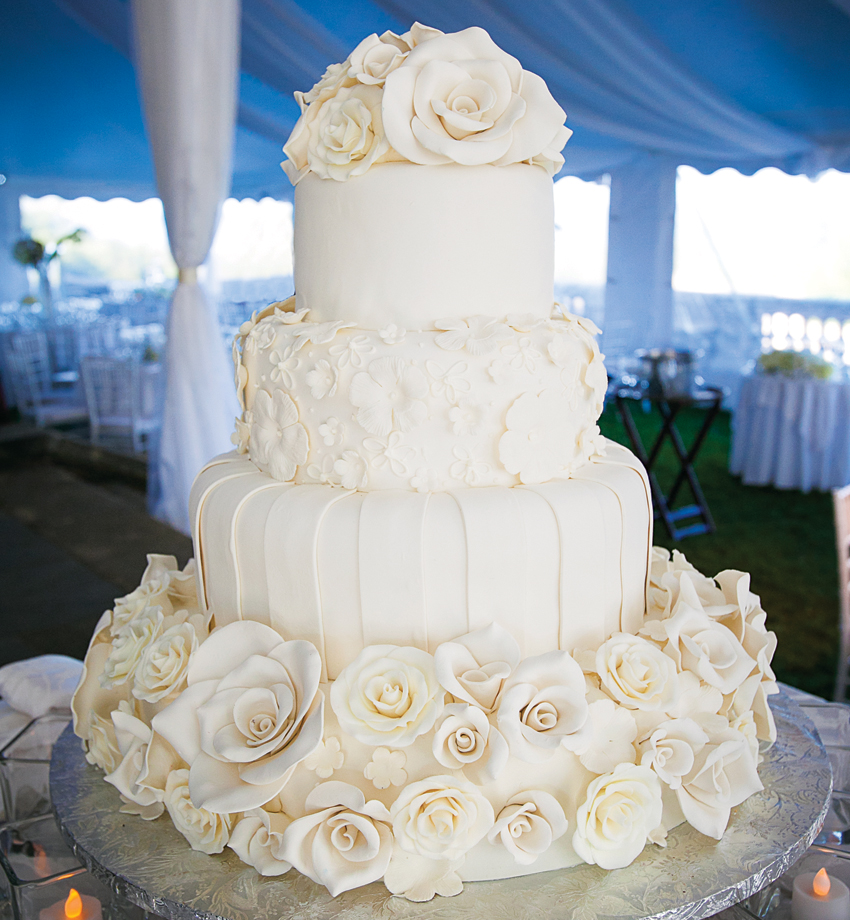
My annual “who knew I’d be blogging for X years?” post has turned into my any-excuse-will-do fun forage for elaborate and gorgeous cakes that I can invite you into my virtual world to sample, stop and chat, have a cup of virtual coffee, mint tea or even sweet fresh water and Iced tea (it’s a Southern thing).
The first cake pays homage to Kuwait and my blogger beginnings. Kuwait was an amazingly lively blogging scene, with some very daring bloggers, a couple of whom have since spent some time in prison for their daring.
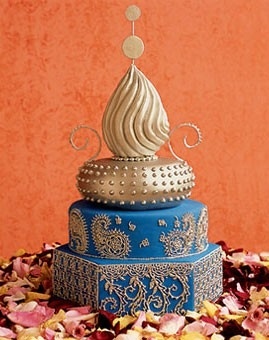
Something elegant and exquisite for my fancier friends:


For those who love the beach as I do, love the waves and the seashells:

And for all my friends who are kids in their hearts, like us. ❤

I know my limits, and elaborate Eiffel tower cookies are outside my area of capability, but if you are painstaking and detail oriented, I have added a website where you can see, step by step, how to make these for yourself. I myself will just stand here and gobble as you head for the cakes 🙂
TomKat Studios How to Make an Eiffel Tower Cookie

I’m surprised every year that I’ve kept at this. In truth, it was so much easier in Kuwait and in Qatar and all the traveling back and forth, there was so much more material! Now, my life is more private, and while blogging is a blessing, there may come a time when I say “enough.” Let’s raise our cups to another good year 🙂
September 6, 2014
Posted by intlxpatr |
Adventure, Beauty, Blogging, ExPat Life, Kuwait, Pensacola, Qatar | Blogaversary, Cakes |
2 Comments
 The people in my group last week suffered greatly in the high temperatures and high humidity we are experiencing. I must be adapting a little; I remember being thankful for the breeze.
“What do you wear when it gets this hot?” they asked me, “like around the home?”
I laughed. I learned a thing or two in Tunis, in Amman, in Tabuk and Riyadh, in Kuwait and in Doha. At home, I dress like local women, in long loose dresses.
Or worse. I dress like their maids. In the souks you could find wonderful, 100% cotton dresss that were loose and flowing, and that is good in hot weather so the air can circulate. Some of the dresses were nicer, but the dresses I liked a lot for just being around the house doing what people do, like making sure the dishes are done and a meal prepped, doing a little quilting or reading . . . you could buy these great little dresses for about $3.00 in the souks. Not only were they practical – especially when you live in a house with a cat, and always put on “real” clothes just as you are about to run out the door so you don’t have any cat hair on you – but they came in great colors and prints, designs that made me happy to put them on.
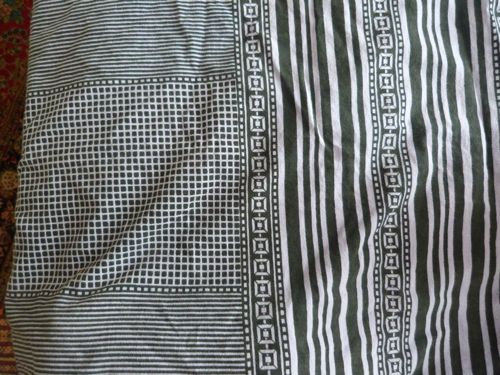
Now, one of my all time favorite dresses, in purple and black, has bit the dust. I liked it because it had some geometrics, and the geometrics changed, and – it was purple. I have worn it for about six years now, and I have worn it out. I mended it several times when the underarm seams ripped:

But now, it has gotten all soft, so soft the material just rips easily with holes that cannot be mended.
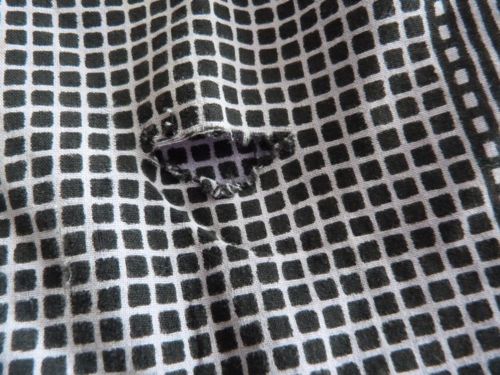
I like this dress so much I am saving it and cutting it up so it will have another new life as a quilt 🙂
And I am thinking it is time to plan a trip back to Doha and Kuwait to replenish my hot weather dresses 🙂
August 24, 2014
Posted by intlxpatr |
Arts & Handicrafts, Beauty, Cross Cultural, Doha, ExPat Life, Financial Issues, Jordan, Kuwait, Living Conditions, Middle East, Pensacola, Qatar, Quality of Life Issues, Saudi Arabia, Shopping, Tunisia |
2 Comments
Ripped from the headlines at AOL News as reported on Al Jazeera:
Organizers for the 2022 FIFA World Cup in Qatar are certain that hosting rights to the tournament will not be taken away, despite a FIFA investigation into alleged bribery and corruption, according a report from Al Jazeera.
Qatari officials have denied misconduct, but allegations that the Gulf State bought the World Cup have persisted. Qatar 2022 communications director Nasser Al Khater told Al Jazeera that organizers are not concerned that the World Cup be stripped from the country:
“We are not worried, we are confident that the World Cup will take place in Qatar.”
Al Khater also said that Qatar has held itself to “the highest ethical standards” throughout the entire process.
Qatar was selected to host the 2022 World Cup in December 2010 over bids from the United States, Australia, Japan and South Korea. Since FIFA made its selection, rumors have persisted that Qatar bribed its way to victory, allegations that gained steam in March when The Telegraph reported that Qatari football official Mohamed Bin Hammam had paid millions of dollars to former FIFA vice president Jack Warner.
Since the report was released, pressure has mounted on FIFA to take action, or at least mount a serious investigation. A number of World Cup sponsors called on FIFA to look into the allegations, and politicians from both the United States and Britain have urged FIFA to take action.
FIFA’s ethics committee has been looking into the bribery allegations.
The 2022 World Cup has faced criticism for more than alleged corruption. Roughly 4,000 migrant workers in Qatar will die by time the 2022 World Cup starts if the current pace of worker fatalities remains stable. A number of media outlets, including ESPN and The Guardian, have published in-depth investigations into the country’s poor treatment of migrant workers, many of whom are building infrastructure and stadiums for the World Cup.
FIFA has also admitted that the 2022 World Cup may have to be played in the winter rather than the summer, as Qatar’s summer heat would be potentially dangerous for players.
Though FIFA president Sepp Blatter has said that awarding Qatar the 2022 World Cup was “a mistake,” he also labeled allegations of Qatar 2022 corruption as “racism.”
July 17, 2014
Posted by intlxpatr |
Doha, ExPat Life, Living Conditions, Political Issues, Qatar | corruption, FIFA, migrant workers abuse, Qatar infrastructure, World Cup 2022 |
Leave a comment
You’ll have to read this from the bottom up. I don’t even know if this is a for real or someone screwing with me, and in blog-world, it is more likely the latter. I was always careful in both Kuwait and Qatar to put the spotlight on issues by quoting real journalist sources: newspapers, Cable, National Public Radio, etc. I know sometimes journalists get the news wrong, but in this case, there has been a LOT in the news about labor abuses in Qatar related to the World Cup 2022. I believe he is just trying to bully me into pulling my post.
Pull the post? Hmmm. No. I don’t think so. Can WordPress be sued to eliminate my blog altogether, as he threatens? I don’t believe so. If so, it’s been an interesting ride and new blogs pop up all the time . . . 😛
He has also spelled his name Majed M. Garoup, Majed M. Group, and Majed M. Garoub. His English is atrocious and unprofessional.
His reply:
Hello,
We know that you have copied it from Dailystar Lebanese. But you don’t have the rights to publish this kind of news. You site don’t have any authority to publish such news and you are not an authorized person. We mailed you to notify you regarding this issue. If you are not willing to delete the post, we will file the case to delete your whole blog from wordpress hosting.
Majed M Group
Senior Legal Executive.
Sent: Friday, June 27, 2014 at 5:41 AM
From: intlxpatr@aol.com
To: civil.gov@lawyer.com
Subject: Re: Notice to remove the blog post
(my reply)
LOL, it’s a reprint of a Lebanese newspaper article
—–Original Message—–
From: Majed M Garoub
To: Intlxpatr
Sent: Thu, Jun 26, 2014 12:34 pm
Subject: Notice to remove the blog post
Dear Admin,
Myself Majed M Garoup, senior legal Executive. We need to bring a
serious concern infront of you regarding an article which you have
posted on your blog https://intlxpatr.wordpress.com/. The article which
you have posted contains defamatory content about our country. It has
some news which is not relevant and also having some wrong statements
about the country which is purely illegal. Publishing this kind of half
true matters through online is a punishable offense. Before posting any
article about a particular country you need to verify those things to
us. You need to ask the story from both the parties while publishing
such kind of articles. But we haven’t recieved any such calls or mails
from your side. Posting such news without proper confirmation from the
relevant party is a serious crime.And you are a blogger and don’t have
any rights to publish this kind of news on your blog. So this page
should get remove imediately from your blog otherwise legal action will
be taken against your wordpress blog for posting defamatory content and
half true matters on your blog which is spoiling the reputation of our
country.
Link to the article
: https://intlxpatr.wordpress.com/2014/03/09/imf-says-negative-publicity-w
ill-force-qatar-to-pay-laborers-more/
Majed M Group
Senior Legal Executive.
June 28, 2014
Posted by intlxpatr |
Blogging, Bureaucracy, Cultural, Doha, Just Bad English, Living Conditions, Qatar, Work Related Issues | defamatory content, IMF, legal action, Majed M. Garoub, Majed M. Garoup, Majed M. Group, negative publicity, Qatar, World Cup |
Leave a comment
Today I got this notice:
Dear Admin,
Myself Majed M Garoup, senior legal Executive. We need to bring a serious concern infront of you regarding an article which you have posted on your blog https://intlxpatr.wordpress.com/. The article which you have posted contains defamatory content about our country. It has some news which is not relevant and also having some wrong statements about the country which is purely illegal. Publishing this kind of half true matters through online is a punishable offense. Before posting any article about a particular country you need to verify those things to us. You need to ask the story from both the parties while publishing such kind of articles. But we haven’t recieved any such calls or mails from your side. Posting such news without proper confirmation from the relevant party is a serious crime.And you are a blogger and don’t have any rights to publish this kind of news on your blog. So this page should get remove imediately from your blog otherwise legal action will be taken against your wordpress blog for posting defamatory content and half true matters on your blog which is spoiling the reputation of our country.
Link to the article : https://intlxpatr.wordpress.com/2014/03/09/imf-says-negative-publicity-will-force-qatar-to-pay-laborers-more/
Majed M Group
Senior Legal Executive.
Majed M Garoub civil.gov@lawyer.com
The post is a reprint of an article on labor abuse in Qatar from a Lebanese paper. I guess he’s feeling a little touchy; Qatar is getting a lot of unwelcome publicity lately for labor abuses. How is that for a country whose labor laws give everyone except household help a day off?
June 27, 2014
Posted by intlxpatr |
Blogging, Political Issues, Qatar, Social Issues, Women's Issues, WordPress, Work Related Issues |
4 Comments
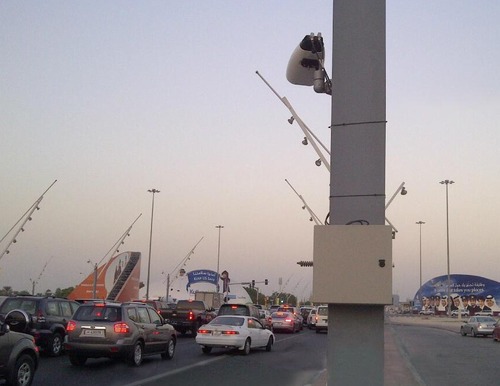
This kind of gives me the shivers. I guess it is supposed to make everyone safer, but it feels so intrusive. It may be a generational thing; my understanding is that people today have lower expectations of privacy . . . I wonder how their upkeep will be; sand and humidity being hard on security cameras, not to mention deliberate interference with their use?

With reporting from Ankita Menon
Qatar’s Ministry of Interior is apparently stepping up enforcement of a law that requires businesses around the country to install closed-circuit camera surveillance on their premises.
Law No. 9 of 2011 mandates that surveillance cameras be installed in residential compounds, hospitals, malls, banks, hotels, warehouses and other locations, and is enforced by the MOI’s Security Systems Department (SSD).
The SSD was not immediately available for comment, but Qatar Tribune reports that the MOI has recently made the widespread installation of these cameras a priority.
Speaking to Doha News, a staffer at Lulu Hypermarket on D-Ring said that the store was previously told to install CCTV in its parking lot, but has now been asked to increase the number of cameras to cover the entire parking area.
Meanwhile, an employee at Lulu Gharafa said they are still in the process of installing some 300 ministry-approved cameras, following an instruction from last year. When asked why the extra surveillance was needed, he said it could help aid police investigations into incidents such as thefts from vehicles.
Additionally, the Peninsula reports the owner of a jewelry shop in the Gold Souq as saying:
“This year when I went for company registration renewal was asked of CCTV cameras are installed. Also inspectors are supposed to come to our shops and inspect if the surveillance cameras are functioning properly.
There are only very few places from which we should buy the CCTV cameras, they are very expensive and it cost me more than QR60,000 to purchase and fix the surveillance system,” he added.
However, City Center mall’s director told Doha News that though the SSD consistently comes to inspect the surveillance system, there have been no new requests for additional cameras in the past few months.
Requirements
A law governing the use of CCTV surveillance was passed in 2011. According to the legislation:
- Businesses must have a control room and operate surveillance 24/7;
- Recordings must be kept for 120 days, and cannot be altered before being handed over to competent government departments upon request;
- Recording is prohibited in bedrooms, patient rooms, toilets and changing rooms for women; and
- Those who violate the law could face up to three years in jail and fines of QR50,000, as well as the suspension or cancellation of their business license.
Last year, the law was brought back into the spotlight when the Supreme Council of Health reminded healthcare facilities to comply with the legislation and install cameras within three months, or face the loss of their business licenses.
April 16, 2014
Posted by intlxpatr |
Doha, ExPat Life, Financial Issues, Law and Order, Privacy, Qatar, Transparency, Travel |
2 Comments
Qatar makes some great laws – like fining those who go through red lights, or who drive near the speed of light. . . but when the violators turn out to be mostly young Qattari men, who pays the fines? Does anyone pay the fines?

From Doha News:
In an effort to tackle bad driving in Qatar, the Ministry of Interior plans to set up speed radars every two to four kilometers on major roads, Traffic Department Director Brig. Mohamed Saad Al Kharji has said.
Additionally, some 120 radars are being installed to catch drivers who overtake others from the right lane, the Qatar Tribune reports Al Kharji as saying.
He added that the software of speed radars that are already installed on the roads would be updated so that they could also catch such violators.
No timeline for when the cameras would be installed was disclosed. But last fall, the MOI announced it would be rolling out radars to catch queue-jumpers.
Using the “slow” right lane to overtake vehicles in the left lane is a traffic violation punishable by a QR500 ticket, but among one of several rules flouted by motorists here.
Enforcement
In Qatar, traffic violators are rarely pulled over by police officers, despite brief campaigns to step up enforcement. In 2012, plainclothes police officers began ticketing drivers who overtook other vehicles on the right.
And at the end of last year, the traffic department began a three-month campaign to ticket those who violate road rules, including drivers who hadn’t fastened their seat belts, used their phones while driving, and rode without a license.
Both initiatives were lauded by many residents who said enforcement is key to improving safety on the roads, but neither seem to have lasted.
March 9, 2014
Posted by intlxpatr |
Bureaucracy, Character, Community, Doha, Education, ExPat Life, Law and Order, Living Conditions, Qatar, Safety |
Leave a comment
DUBAI: Qatar will likely face higher labor costs as a result of publicity about deaths of migrant construction workers building the infrastructure for the 2022 World Cup football tournament, the International Monetary Fund said. The Guardian newspaper reported in September that dozens of Nepali workers had died during the summer in Qatar and that laborers were not given enough food and water.
Qatar, which has denied the Guardian’s findings, has seen an increasing influx of foreigners, now estimated at 1.8 million, with its population rising 10 percent in 2013.
“Working conditions of some construction workers and domestic help have made global headlines and could affect the availability and cost of hiring new workers in the future,” the Fund said after completing annual consultations with Qatar.
“This would hinder growth since the success of Qatar’s current development model depends importantly on the ability to rapidly hire expatriate workers,” it said.
The gas-rich nation has planned to spend some $140 billion in the run-up to the World Cup on new infrastructure projects, including a metro, port and airport.
Such large public investments entail a possibility of overheating in the near term and low return and overcapacity in the medium term, the IMF warned. “In particular, the extent to which public investment will durably boost private sector productivity remains uncertainty,” it said.
Certain big-ticket projects such as the metro, port and airport have been scaled down or divided into phases to reduce the overcapacity risk, and the authorities are preparing a shortlist of critical projects, the IMF said without details.
However, the large-scale nature of the program has led to implementation delays and cost overruns and Qatar will continue facing the risk of cost escalation given its commitment to a compressed timetable ahead of the World Cup, it also said.
Increasing government spending may push the fiscal balance into a deficit over the medium term when combined with flat production of liquefied natural gas, falling crude oil output from mature fields and lower hydrocarbon prices.
“The public debt ratio is expected to fall, but the headline budget balance could … turn into deficit over the medium term, while the current account surplus could drop to 5 percent of GDP,” the IMF said.
The country’s fiscal surplus could shrink to 6.8 percent of GDP this year from an estimated 11.0 percent in 2013, and further to 4.2 percent in 2015, the IMF said, cutting its October forecasts of 8.4 percent and 5.8 percent, respectively.
The government intends to reduce public debt over time from an estimated 33.1 percent of GDP in 2013 by trimming foreign borrowings and domestic loans. It would continue issuing government securities to support bond market development.
The IMF also raised its forecast for economic growth to 5.9 percent this year and 7.1 percent in 2015, from 5.0 percent and 6.6 percent, respectively, in its October regional outlook.
Inflation should remain benign at 3.3 percent this year and 3.5 percent in 2015, the IMF said, less than 4.0 percent forecast for both years in October, as a decline in commodity prices will help reduce pressure from strong economic activity.
A version of this article appeared in the print edition of The Daily Star on March 10, 2014, on page 5.
(The Daily Star :: Lebanon News :: http://www.dailystar.com.lb)
March 9, 2014
Posted by intlxpatr |
Cross Cultural, Doha, ExPat Life, Living Conditions, Qatar, Safety, Social Issues, Work Related Issues | World Cup 2022 |
2 Comments