When Cultures Collide
My house guest and I are sitting at my computer, looking at airfares.
“So what do I do?” he asked me.
“This is your decision to make,” I answered. “Only you know what is most important to you.”
“I am looking for a recommendation,” he tells me.
“If it were me, I would take that early flight. It is cheaper, and by leaving at six a.m. you know it is likely to leave on time and arrive on time. Also, I would have booked it about four months ago. It’s summer. The flights are flying full. There are no cheaper tickets left.”
“Month-es?” he asked incredulously. “Month-es?” he repeated.
We decided to wait and book later, after he had given it some thought. He didn’t like my recommendation; he didn’t like the earliness of the flight I recommended, and I had known he wouldn’t.
I think the idea of booking a flight four months in advance was a double-whammy.
Learn to Linger
One of the most painful criticisms I would hear of Americans as I lived overseas was that we were all happy, friendly people, but we didn’t really care about people. We didn’t maintain relationships. While painful, it was also, as I looked deeper, true. Our lives are fast-paced, and we move from place to place, person to person, job to job and rarely develop the deep relationships that come from building a long, deep friendship. Today’s lesson from Rick Warren talks about how we can do better in our relationships:
“All of you should be of one mind. Sympathize with each other. Love each other as brothers and sisters. Be tenderhearted, and keep a humble attitude.” (1 Peter 3:8 NIV)
You’re never going to live in harmony with your wife, your husband, your friends, or anybody else without empathy. You can’t have a team without being aware of what’s happening in each other’s lives. That’s why when people work together in an office, they may do work together, but they’re not a team unless they know what’s going on in each other’s lives.
Empathy is so important because it meets two of our deepest needs: the fundamental need to be understood and a deep need to have our feelings validated.
If you’re going to build a team of friends or at work or in your small group, you have to build empathy into the structure. So how do you become an empathetic person?
Slow down. Because our culture teaches us to move fast, we end up relationally skimming. That means you’re hitting the high points and missing all kinds of details in the lives of people you care about most. James 1:19 says, “Be quick to listen, slow to speak, and slow to get angry” (NLT, second edition).
Ask questions. Proverbs 20:5 says, “A person’s thoughts are like water in a deep well, but someone with insight can draw them out” (GNT). Most people hold their emotions pretty close, and they don’t automatically share how they’re doing. “I’m fine” is the standard answer, but that doesn’t really tell you how they feel. If you ask, “””How are you doing?” and the other person says, “I’m fine,” here’s how you draw out a more telling response: Learn to ask the question twice. That’s how you develop empathy. Pause and say, “No. How are you really doing?” The other thing you do is learn to linger. That means don’t be afraid of silence. Just be in the moment, ask the question, and don’t be afraid to sit there and wait. Don’t immediately go into your agenda. Just listen and learn.
Show emotions. The Bible says in Romans 12:15, “Rejoice with those who rejoice, and weep with those who weep” (NASB). Empathy is more than saying, “I’m sorry you hurt.” It’s saying, “I hurt with you.” You’re willing to cry with them, and you’re willing to rejoice with them. There’s only one way you’re going to be that empathetic — stay filled up with God. If your tank gets low on God, you’re not going to be empathetic at all. You’ve got to stay filled up with God.
“All of you should be of one mind. Sympathize with each other. Love each other as brothers and sisters. Be tenderhearted, and keep a humble attitude” (1 Peter 3:8 NIV).
“Oh! I Like His Face!”
It’s taken us a long time to get over the loss of our sweet Qatari Cat, sweet Pete. He was so special to us. For one thing, he was pretty. For another, he had some very winning ways. So many reasons to love that sweet cat and to regret his loss.
On our trip, we agreed that we are still not over Pete, and at the same time, it is time to bring another cat into our lives.
I had one in mind.
I have a friend. She has a ministry; she rescues abandoned animals, particularly cats. She tends to their wounds, she has them neutered, she gets them shots. She gives them boundless love, and teaches them to love and trust again.
She had put a photo of a cat on FaceBook. It was before our trip, and I couldn’t see adopting a cat and then putting him into a cat hotel, so I didn’t do anything. But my friend called while I was traveling, and I asked her during our conversation if that orange cat had found a home, and she said no.
So when we got back, we unpacked, we did laundry, we started to get back to our normal lives.
And we adopted Zakat.
Our friend brought him over. He was small, he was scrawny, he had a clipped ear, which I learned means he’s been taken from the streets and neutered, and . . . he had a huge circular scar around his face. He loved my friend, but AdventureMan and I totally freaked him out, and he ran into the cat room and hid (we have a lot of great hiding places.)
A couple days later, our grandson was staying overnight, with his Explorer’s tool (it has a flashlight, compass, magnifying glass, mirror, thermometer and whistle) and asked if he could see the cat. He’s a good boy, and he has three cats at home, so we took him to Zakat’s cupboard, and opened. Zakat didn’t run, and our grandson shone his flashlight and exclaimed softly in delight “Oh, I like his face! He has a sweet face!”
He didn’t even see the scars. All he could see was the sweetness of this cat. And I thought what a blessing grandchildren are, to help us see with the eyes of Jesus, to see sweetness where other see only scars.

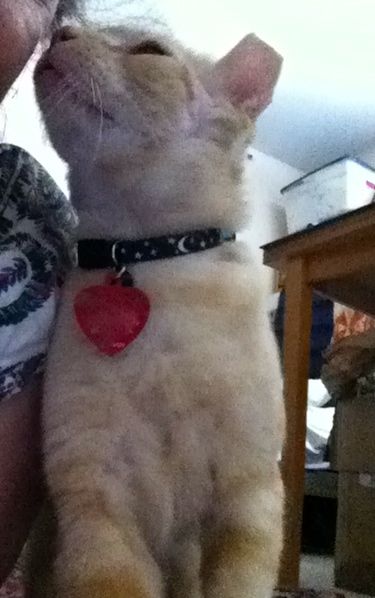

Zakat has now discovered he is safe with us, and follows us around like a little shadow. He loves to sit in AdventureMan’s office with him, he loves to curl up with me while I am reading. He is fresh, and funny, and a sweet hearted little cat.
Zakat means tithe or alms in Arabic, but the truth is, we just love the double entendre, and love saying “Where’s Zakat?” We must be five years old, it takes so little to make us laugh.
Exciting Drive to Denver
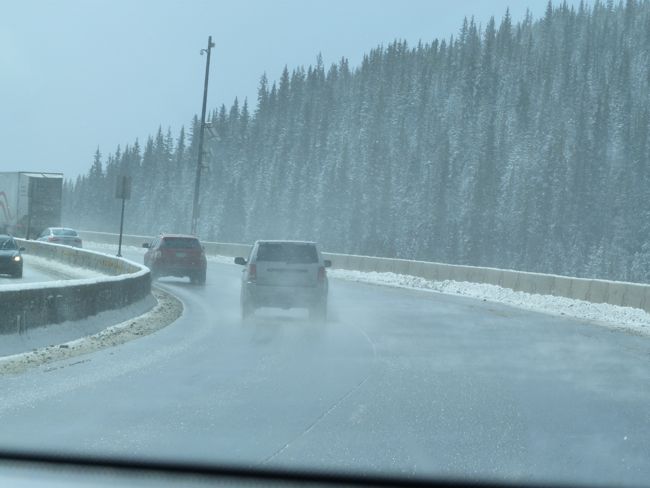
I thought this drive would be routine, and I felt really stupid when I discovered it would not be. How could I have failed to notice there were mountains between Glenwood Springs, CO, and Denver?
It was a glorious day leaving Glenwood Springs, and I assumed a very easy drive.
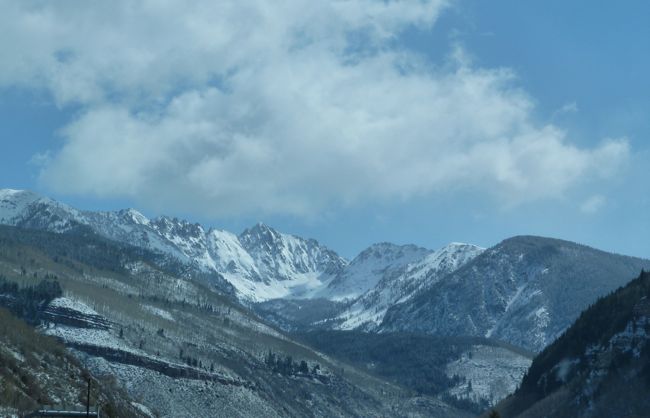
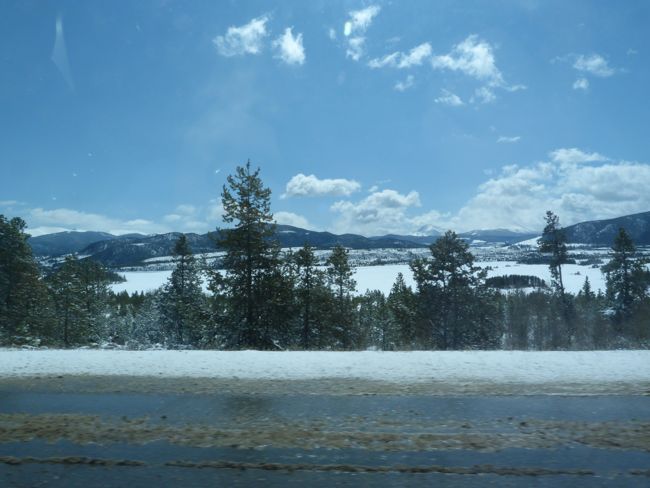
I didn’t expect snow, snowy roads and 19 degree temperatures. Remember, I’ve been living in Florida. It’s Spring! We’ve had little but sunshine every day of our trip, with the one exceptional day between San Antonio and El Paso.
It just kept getting colder and colder. The trucks are all bunched up in the slowest lane, as we drive on slick roads with lots of warning signs. We don’t have chains. We don’t even have snow tires, although before leaving AdventureMan actually checked with our dealership and was told our tires would be adequate for all but a raging snowstorm. We felt a little tense.

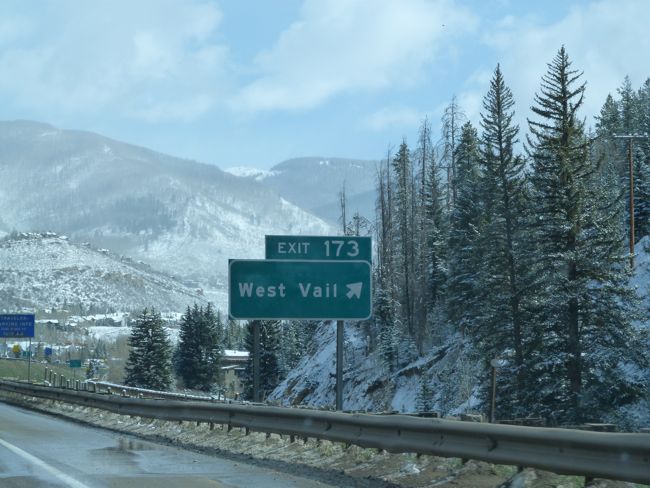
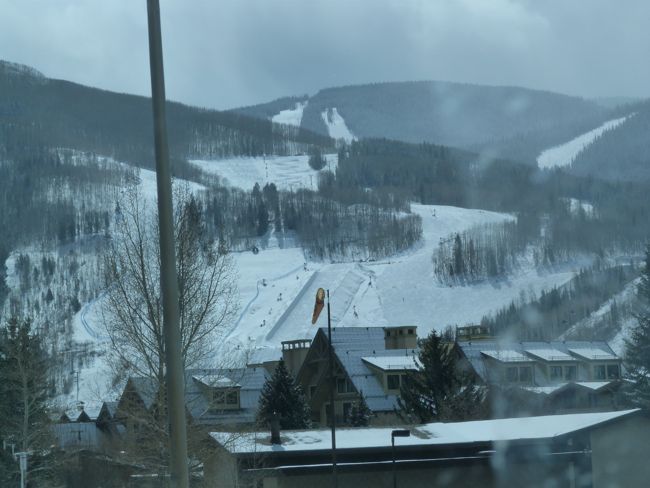
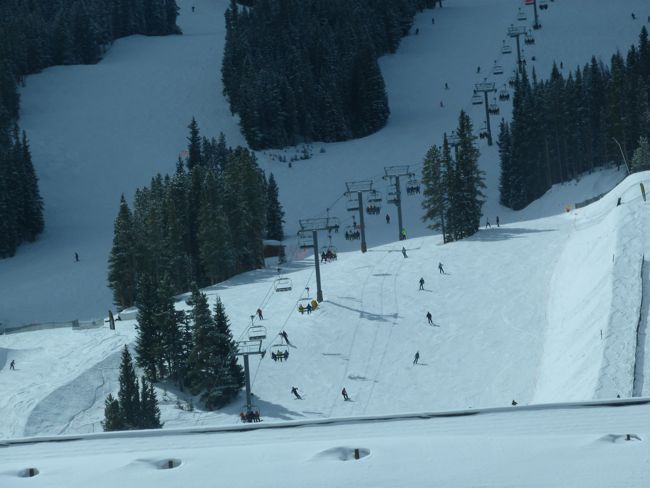
Lots of great spring skiing:






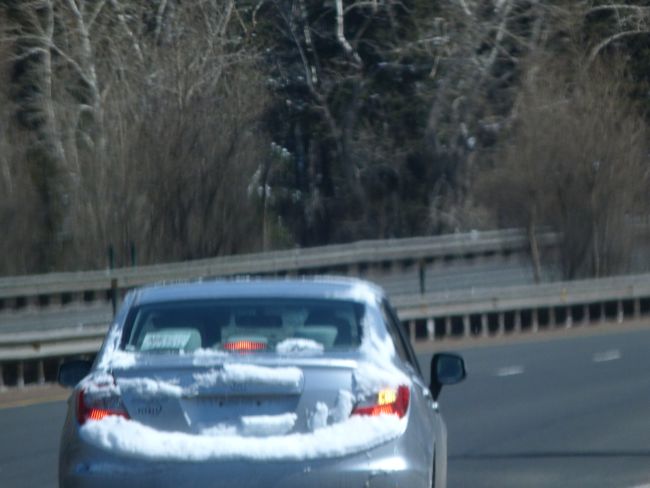
This was a constant annoyance. In Germany, there was a law that you had to sweep the snow off your car, so as you were driving it would not fly off and hit the driver behind you. We assumed this was probably true in the USA, too, but we must have assumed wrongly. We were assailed by flying snow frequently.
Here is the payoff. Denver is beautiful, and no snow is flying. We get to meet these wonderful babies, Little Diamond’s twins, born around a year ago today. They are sweet, playful babies, full of laughs. Of course we brought presents, and one of the happiest moments of all is when they discovered how much fun tissue paper is – how it makes a wonderful noise when you shake it! We all shook tissue paper and laughed that it’s always the wrapping and the boxes that is the biggest hit with babies 🙂
Little Diamond has become a wonderful adult, with a life full of babies and students and the wackiness of the unexpected every day with both. It is a great joy to see all our young in the next generation are loving and kind parents, compassionate to their children, and succeeding in their daily lives. Thanks be to God.


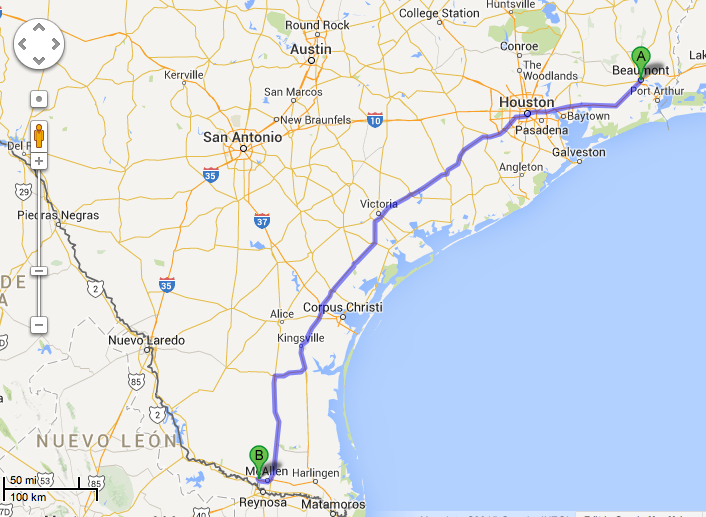
Beaumont and Refugio, TX en route to Mission, TX
This is an exciting day; this is a day we travel new roads, roads we’ve never travelled before. New roads make our blood race.
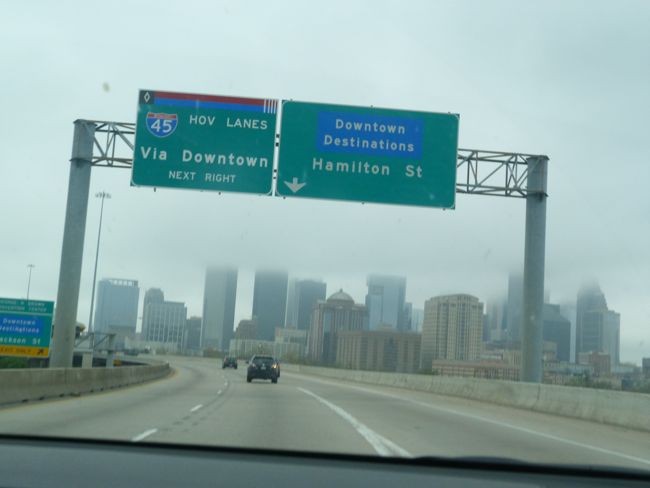
First, we have to get through Houston. It’s early in the morning, so Houston friends, I didn’t call. I know you’ll appreciate it 🙂
One of the best parts of this trip was crossing rivers. We crossed lots of rivers. These are some of the rivers we crossed:
Brazos River
Colorado River (we crossed the Colorado many times on our journey)
Lavaca River
Arenosa River
Garzitas Creek
Guadalupe River
San Antonio River
Aransas River
Texas can be a very dry state, but after this winter and spring, southern Texas is as green as Alaska, and the rivers are flowing. We learned that a swale is the same as an arroyo; we know them better as wadis – places where rivers or creeks may sometimes run, but which may also dry up. In a country like Tunisia, when we lived there, there were not a lot of public facilities available, so a bridge over a wadi always was a welcome sight.
We trust in Google, but sometimes we don’t thoroughly understand the instructions. On this route, when we got to Victoria, they told us to take the Southern business route, so we exited and tried to find it, but discovered (it was only about ten minutes) that the road we had been on was the southern business route around Victoria.
Some of the worst roads we travelled were in Texas. At one point, we gassed up and it was my leg for driving. It wasn’t an interstate, but it was a highway with two lanes going both ways, a 90 degree entrance to the highway, and fast trucks barreling down the road. I am not a person who likes screeching tires, but I had to screech my tires to get on that road, and I still feel resonances of the adrenaline jolt.
Along this long long route 77, we got hungry, and there aren’t a lot of likely stops – it’s a long, lonely road. When we saw the signs for Refugio, our tummies were rumbling and we knew we needed to take a chance.

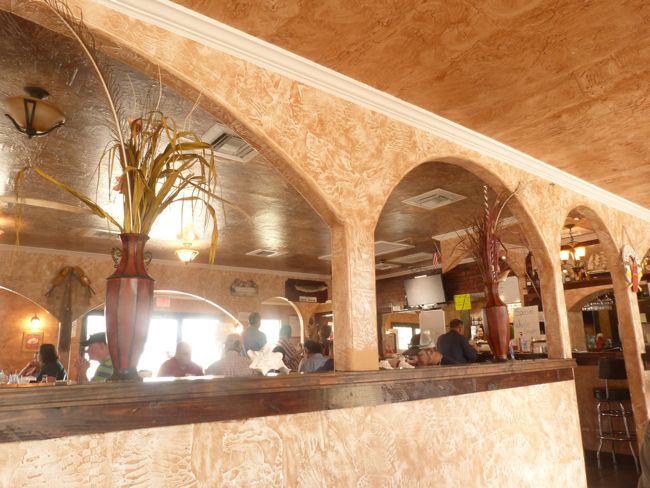
Sometimes, luck is just with you. As Highway 77 went straight through Refugio, we saw, on the left, a place called Gumbo Seafood, and the parking lot was packed with big trucks, farm vehicles, cars; we’re not even sure we can find a place, and just as we start to turn into one, a big huge lawn-service kind of double truck takes it and we are forced to go to the back, where we find a spot. Inside, it is packed with customers, and loud, and food is going to the tables and it looks . . . Mexican!
We are shown to a table in a quieter area, where we order. When my meal comes, I am delighted – grilled shrimp, with sauteed onions and green peppers, a very hot pepper of some kind, and about half an avocado sliced. It was magnificent. In this hopping roadside stop, I had one of the best meals of my trip. AdventureMan’s tacos were stuffed to the brim, so much meat he couldn’t eat half of it, and he said it was not tasty, so he would rate this place lower than I would. Sometimes, it’s all in what you order, and there is no telling what you’re going to get. I loved this meal!


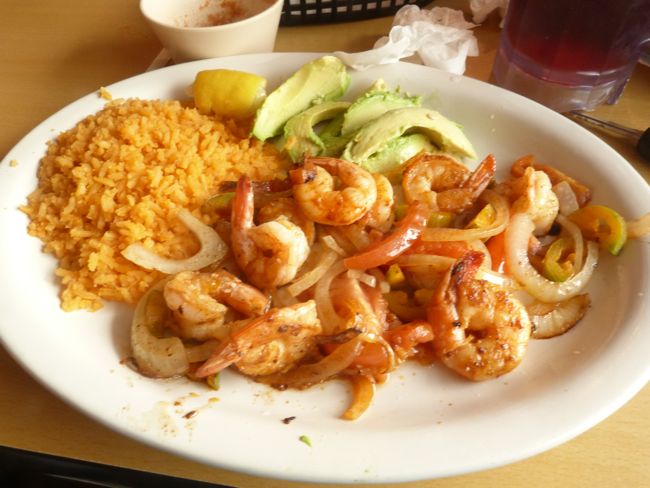
For some reason, we assumed all the seafood was frozen, and wondered how an interior town would specialize in seafood. Once we saw the larger map, however, we saw they weren’t all that far from the Gulf, and we had evidence that at least the oysters were very fresh:

A lot of times, we run across fun places to stop along secondary and back roads, but we didn’t find any fun places this time, like for home made goodies. It was all rural and agrarian, and a lot of it looked like it had seen better days, until we got to Mission, TX.
The Nomadic Life: Our Journey to the American SouthWest
We still get restless. AdventureMan still gets calls asking him to come check something out, even goes back to Doha now and then, and I visit family. But we get so restless. We need the stimulation and challenge of other ways of seeing things, other ways of thinking, new sights, new smells, new adventures. There are so many places I have never seen!
Some people are just wired that way. I can remember, even as a young girl, being at the Juneau Airport, smelling that aviation fuel smell, and wishing I were going somewhere. It’s just the way I’m wired. I still love the smell of aviation fuel.
I am so lucky to be married to a man who indulges me. AdventureMan isn’t wired precisely the same; he is better at growing roots than I am, but he still likes to shake things up a little when it’s all same same same, day after day.
We’ve both had to adjust. I grew up in a family where when we were going, say from Germany to Italy for a vacation, we got up early and went, as AdventureMan so colorfully puts it, “balls to the walls” driving 12, 13 hours until we dropped from exhaustion. We were just intent on getting there. AdventureMan’s family traveled in shorter segments. It’s taken us about 40 years to find a happy medium. He has adjusted to sharing the driving with me. I’m a good driver, and I love driving. He goes to sleep, and I can drive for hours, it’s sort of a zen thing.
So off we went. We put over 6,500 on my two year old car, more than doubling the total mileage. It was a wondrous and joyful journey, full of surprises, full of delights, and with a couple days of truly awful driving.

We packed too much. When you are going someplace every couple days, you really don’t need a lot of clothing. I worked out of a large duffel; I would put what I needed for the next day or couple of days in a smaller bag to carry into the hotels.
At our church, we collect toiletries for the homeless population in Pensacola and the recovery population. I came back with a lot of toiletries 🙂
Our first day was to Beaumont, TX. No particular reason to stop in Beaumont, it was just a good place to stop en route to where we were going, which was The National Butterfly Center and the National Birding Center, both of which happen to be in Mission, TX. Mission is right on the border, on the Rio Grande, and I have never seen the Rio Grande before and wanted to see it.
When lunchtime came, we were just passing Baton Rouge, where one of our very favorite restaurants, Al Basha, serves mouthwatering Arabic food. It’s just off I-10, we can see it from the road and what a great way to start our journey. But as we enter, every table is filled!
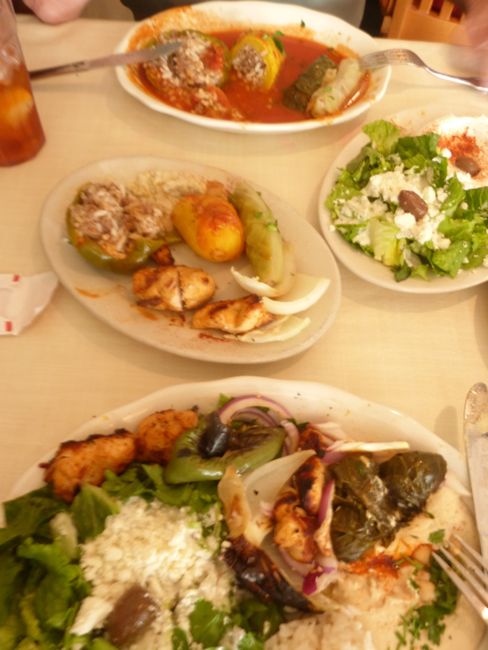
No worries, the waiter hurries over and leads us to a table way in the back, against the wall, which happens to be my favorite place. They have stuffed vegetables on the menu, which AdventureMan orders in a heartbeat, and of course, too much food comes.
We first became acquainted with stuffed vegetables long ago, living in Amman, Jordan, where it was a very common dish, served to family and to guests alike. Later, living in Kuwait, my friends knew how much AdventureMan loved stuffed vegetables and would make extra for him when they were preparing food for family or gatherings. What great memories this lunch brought back!
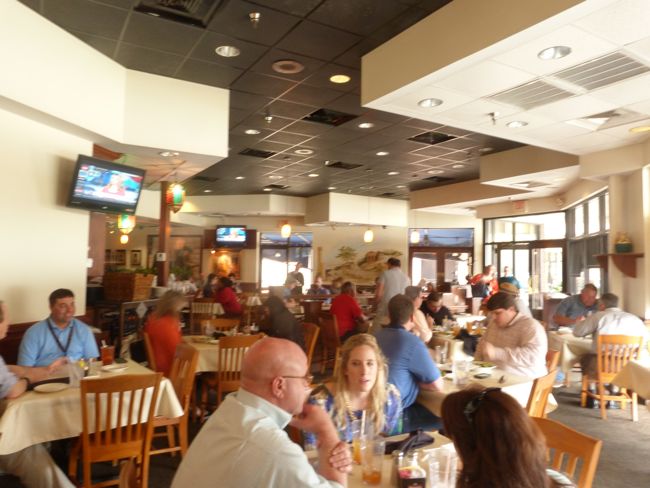
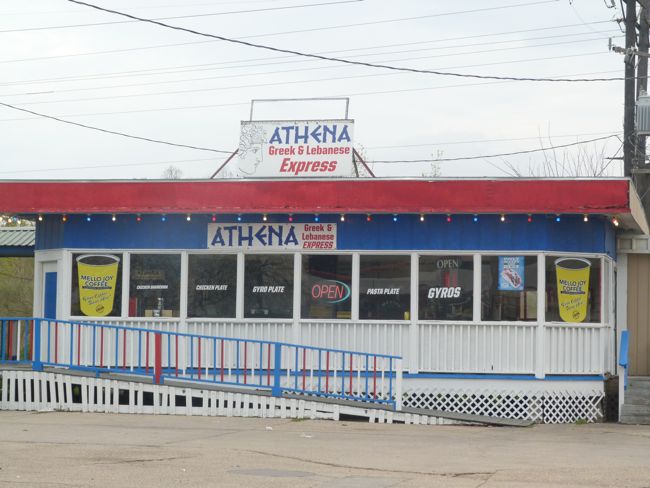
Louisiana is a quirky state, a state we like a lot. At a gas station near Lafayette, we saw three restaurants and an antique shop, including one with Lebanese food.

By the time we got to Beaumont, it was nearly dinner time. Beaumont is an oil refining town, and the hotel was full of men working in the refineries or about to be hired to work in the refineries. It was a very male populated environment. I went to the pool, but there was a large group of men sitting out on the patio by the pool, and I didn’t stay long, I wasn’t comfortable. It reminded me of the Middle East. I don’t like being oogled.
We were still so full from our Al Basha lunch that we found a local supermarket and got salads for dinner. It was a great first day on the road.
Poetry for the Very Married
This was on GoodReads Books today:
what we mean
by Maya Stein
I took out the trash to apologize. You made dinner to thank me for finishing
our taxes. I stayed on the couch for my bad mood. You went to bed early
for yours. The croissant, a peace offering. Two loads of laundry,
repentance. The sidewalk you shoveled while I slept, something resembling
forgiveness. When the words fail, the house still rings with conversation,
its rooms, wide mouths, the unswept floors, a burgeoning embrace. A kiss waits
inside every spent tube of toothpaste. When the milk sours, we fall in love
all over again. So I am saving the garage for the hard argument.
You are keeping the basement
in your back pocket.
The Hunting Ground: Campus Rape Victims Speak Out in New Movie
From AOL News via Sports Illustrated
When I lived in Kuwait and Qatar, I was appalled by the way rapes were treated, it was like this huge wave of abductions and violations, and nothing was done. As it turns out, things are changing a lot slower in my own country than I thought. This new film, The Hunting Ground, is by the same person who documented violence and rape in the US military, spurring then Secretary of Defense Leon Panetta, a truly decent man, to put the fear of God into the military leaders who were covering up the many rapes and blaming the victims. We have the same problem on college campuses.
There is only one cure. We have to raise our sons to respect women. We have to continue raising the bar for equality in our country until women have equal access to jobs, health treatment, legal proceedings, etc. Films like The Hunting Ground are painful, and at the same time, help us to face, and to overcome our societal short comings.
I love it that this film is “giving voice to those who have no voices;” that these courageous women speaking out have bravely named their rapists and described their circumstances. It can’t be comfortable, but it is their right. I am proud that they are not intimidated by fear of the ‘blame the victim’ mentality they have endured on their college campuses. When did colleges and universities begin placing money-making and winning teams before the well-being of their students?
New film gives chilling account of sexual assault on college campuses
Sexual assaults on college campuses have reached alarming levels and the issue has drawn the attention of Congress and even President Obama himself. The latest research indicates that one in five college women will be sexually assaulted and as many as 90% of reported assaults are acquaintance rapes. It is believed that more than 100,000 college students will be sexually assaulted during the current school year. Nowhere is the deck stacked more against sexual assault victims than in college athletics. In just the last few years alone there have been cases at Florida State, Michigan, Oregon, Vanderbilt andMissouri.
All of this is a backdrop to a harrowing new film that premiers in theaters on Friday in New York City and Los Angeles. The Hunting Ground is a jarring exposé that shines a bright light on the epidemic number of sexual assaults taking place on college campuses each year.
The Hunting Ground features a group of survivors who faced harsh retaliation and harassment for reporting that they had been raped. The film focuses on institutional cover-ups and the brutal backlash against survivors at campuses such as Harvard, Yale,Dartmouth, the University of North Carolina at Chapel Hill, USC and the University ofCalifornia-Berkeley, among others.
Some of the most vexing stories featured in the film involve women who were assaulted by athletes. While The Hunting Ground isn’t all about sports, the most dramatic moment in the film occurs two-thirds of the way through when the woman who accused former Florida State quarterback Jameis Winston—who after a strong showing in last week’s Combine is projected by many to be the No. 1 pick in this spring’s NFL draft—appears and tells her story publicly for the first time. The woman, who is named in the film but SI.com has chosen to protect her identity, is shown on camera and gives her life-changing account of what she says happened the night in December 2012 she left a Tallahassee bar with Winston.

A high school honor student who planned to attend medical school, the woman is articulate and attractive. She looks like the girl next door, a person you would trust to babysit your children. It is uncomfortable to watch—yet impossible to look away—when she describes being beneath Winston on his bathroom floor, repeatedly telling him “no” before being physically overpowered.
“We’re grateful it’s the first time people will get to hear [her] story,” said The Hunting Ground director Kirby Dick. “It’s her first-hand testimony. Up to this point it hasn’t been in a public space.”
The woman’s parents also appear in the film. Her father talks about driving to Tallahassee Memorial Hospital with his wife to be with their daughter hours after the incident.
There is nothing easy about retelling these stories for the world to see. But the attorney for the woman who says she was raped by Winston, John Clune, said his client decided to break her silence in the film because she felt it was the right venue to tell her story.
“The film was a once-in-a-lifetime opportunity,” Clune said. “The work by these filmmakers is nothing less than groundbreaking. It took tremendous courage, but our client and all of the incredibly brave women in the film have advanced the cause of rape survivors everywhere.”
The Hunting Ground also examines a sexual assault accusation against a Notre Damefootball player in 2010. Tom Seeberg, whose daughter committed suicide after she says she was sexually assaulted by a Fighting Irish starter, tells a heartbreaking account of school officials thwarting the investigation into his daughter’s complaint. A former Notre Dame police officer reveals that he and his colleagues were not allowed to approach or question an athlete on athletic properties.
The film also mentions rape cases involving football players at Missouri and Vanderbilt, as well as basketball players at Oregon.
The testimonials of rape survivors are wrapped between raw footage that is both gut-wrenching and disturbing. A small mob of unruly fraternity pledges at Yale are captured on film outside a freshman dorm for women, chanting: “No means yes. Yes means anal.” All the while a guy with a bullhorn is shouting: “Louder.”
In another scene we see drunken frat boys spilling out of a house where there is a sign out front that says: “THANKS FOR YOUR DAUGHTERS.” It’s enough to outrage any parent with a daughter heading off to college.
The film is directed by Dick and produced by Amy Ziering, the team behind the Oscar-nominated film The Invisible War, which revealed systemic sexual assaults and cover-ups within the U.S. military. That movie prompted Secretary of Defense Leon Panetta to announce significant policy changes and inspired the passage of the Military Justice Improvement Act.
Dick and Ziering started looking into the situation on college campuses shortly after the release of The Invisible War. “We were astonished that the problem was as serious in higher education as it was in the military,” Dick said.
Full disclosure: I appear in The Hunting Ground as an expert. Two of the cases in the film—Lizzy Seeberg’s alleged assault at Notre Dame and running back Derrick Washington’s sexual assault of a student at the University of Missouri—are featured in my book The System: The Glory and Scandal of Big-Time College Football, which I wrote with 60 Minutes correspondent Armen Keteyian.
Some of my research is also featured in the film, including the statistic that student-athletes are responsible for 19% of the reported sexual assaults on campus, despite the fact that they comprise just 3.3% of the male student population. Those figures arose from a first-of-its-kind study I conducted with researchers at the University of Massachusetts in the mid-90s when we were granted access to judicial affairs records and police reports at colleges across the country.

Over the past 20 years I have researched hundreds of cases of sexual assault involving athletes. During that time I’ve interviewed countless sexual assault victims. The thing I found most telling was what prosecutor Willie Meggs did not say in the film. Meggs was asked if he thought a rape took place in Winston’s apartment. It was a perfect opportunity for the man who chose not to prosecute Winston to say no. Instead, he said something “bad” happened in that apartment that night. He just didn’t have sufficient evidence to prove it.
That’s not unusual. That’s typical. Only about 20% of rapes reported to the police in the U.S. are prosecuted. Yet at least 92% of reported sexual assault claims are found to be true. The problem is that date rape cases are very difficult to prove beyond a reasonable doubt, especially when alcohol is involved and the incident occurs in the perpetrator’s apartment, dorm or hotel room. The doubts raised by those factors are amplified when the accused is a star athlete.
The greatest achievement of The Hunting Ground is that it empowers rape victims to team up with each other and come forward. It’s fair to say that for the first time in many years, women like Jameis Winston’s alleged victim have powerful allies.
By the time the NFL draft takes place in May, the film will be in theaters around the country, the name of Winston’s accuser will be everywhere and more details about the night in question will likely come out. All of this brings to mind the legal maxim caveat emptor, which essentially is a warning that means let the buyer beware.
Jason Licht, the general manager for the Tampa Bay Buccaneers, ultimately has to decide whether to use the first pick on Winston. He’s on record saying: “This is the most important pick, potentially, in the history of the franchise.”
Memo to Licht: Watch The Hunting Ground.
The ramifications in this instance are equally big for the NFL, whose image took a beating over the last year after Ray Rice was caught on tape knocking out his then-fiancé in an elevator. The controversy erupted after Commissioner Roger Goodell imposed a two-game suspension without bothering to obtain and watch the video.
Memo to the Commissioner: Watch The Hunting Ground.
No matter what happens with Winston, the film succeeds in its main goal: to shine a light on sexual assault on college campuses. It’s an important issue that isn’t going away, and if something drastic isn’t done immediately, it will only get worse.
Jeff Benedict is a lawyer and has written five books on athletes and violence against women, including Public Heroes, Private Felons: Athletes and Violence Against Women, and Out of Bounds: Inside the NBA’s Culture of Rape, Violence and Crime.
“You Really Know How to Make a Birthday Last”
. . . says AdventureMan, as he takes me to lunch and to a movie on Valentine’s Day.
It’s a perfect stretch, from my birthday to Valentine’s Day. AdventureMan bought the beautiful white roses at Celebrations, a wonderful shop in Pensacola. What I love the most is that the flowers they use last and last. My flowers, more than a week old now, are just beginning to droop, just a tiny bit. They are still unspotted and unstained, glorious in their pristine whiteness, glowing in our foyer. I still feel the glow. 🙂
My sweet son and daughter-in-law invited us for a shared birthday dinner and we had a wonderful, laughter-filled time, talking books, talking kids, laughing, laughing, and the 1 1/2 year old is starting to really talk and to get the convenience of oral communication. She wants to be a part of everything! The birthday boy and I had a wonderful time, tickling and laughing and sharing jokes. It was a great evening.
Lunch was in Gulf Breeze, at Rotolo’s, where they have great salads and thin crust pizzas, and then we went to see the spellbinding (if you are a nerd and love complex thinking) Imitation Game, which we both enjoyed thoroughly. We are so totally geeks; this was the perfect Valentine’s Day movie for us.
Recent Comments
ExpatAlien on What Country am I Living … intlxpatr on Yellowstone: Old Faithful to C… Michelle on Yellowstone: Old Faithful to C… Cathy on No Grown-Ups in Charge intlxpatr on Waiting for Snow Wikipedia Donate Button

Amazina


Early Voting in Florida


 Here There and Everywhere