How To Be a Southern Lady
You’d think moving back to your own country would be a piece of cake, wouldn’t you? We nomads know better. Young people who travel to other countries to go to school know better. Military people know better. Missionaries know better. Diplomats know better. Anyone who has spent time living abroad know that it works both ways – you have an impact where you are living, and where you are living has an equal impact on you. You may go back, but you are never the same.
With this move, AdventureMan and I have been too busy trying to get settled and to take care of the incredible amount of bureaucratic detail it takes to relocate. Even with AdventureMan ‘retired’, the days are flying by, and we don’t know why we are so busy.
For one thing, I am doing my own housework, and I am finding I am not very good at it. Like I am good at getting laundry done, and even folded, but I haven’t ironed in a long time, and the things that need ironing are stacking up. I have bought a beautiful new ironing board, and a beautiful iron . . . and some starch, the liquid kind I like, not the spray kind. . . but I haven’t set it up, and I haven’t ironed, not a thing. I have discovered that all my packed things looked a lot better after hanging in the closets for a week, most of the wrinkles fell out, lucky me. But . . . the day of reckoning is coming.
The worst part, for me, is cleaning my floors. My floors are supposed to be beautiful; wood and tile floors. They actually ARE beautiful, maybe two days a week, the day I clean them and the next day, but five days a week, they need work. I wish I had asked my cleaning lady in Doha how she got my floors so beautifully clean. I wish I had paid more attention. I keep looking in the store for some miracle, a machine that will clean them in a heartbeat and make them all shiny. . .
The wonderful thing about moving into this culture – and it truly is a different culture from the one in which I was raised – is that we have our wonderful son and his wonderful wife to give us hints on what to do and not to do, and we have his wife’s wonderful family.
Mostly, I try to keep my eyes open. Southern women admire things extravagantly, and after living for so many years in the Middle East and Gulf, learning to admire extravagantly goes against all my instincts.
In the MIddle East, when you admire extravagantly, you can make people nervous. Some people worry about attracting “the evil eye” of jealousy, evil intentions, people who envy you and wish you harm. Some people, if you admire something, will give it to you! It’s true, those stories, it has happened to me. So now I have to un-learn my lessons in retraint and learn to appreciate, if not extravagantly, at least enough to be polite.
One of my wife’s relatives gave us a house-warming gift, an iced-tea maker, with a darling card that states Rule #1 is that every Southern Hostess knows that a pitcher of iced tea is a MUST for all occasions. I like iced tea, but I have never kept it on hand to serve, and I guess I need to start!
Her second rule was one that made me burst out laughing – “A Southern Lady, the most interesting ones anyway, know that rules are made to be broken.”
“Just be prepared for people to leave your home saying “Bless her heart, she must be getting forgetful. There was no iced tea!”
And then rule #3 – “The only correct and acceptable way to criticize anyone is to add ‘bless his/her heart!’ and then, anything goes!”
At a party at her house this weekend, I learned a couple more – the first rule being that when you are invited to a great big family dinner, bring dessert! Thank God, I did take a little guest gift, but now I know – bring dessert! And it had better be sweet!
The next rule is would make any Kuwaiti or Qattari feel right at home – spare nothing in making our guests comfortable. This Southern Hostess had seating areas inside the beautiful air conditioned home, and also seating outside for those who don’t mind a little heat. She had a big basket loaded with all kinds of insect repellents to keep her guests from being bitten. She took time with each guest, and although she was running her little bottom off getting everything organized, she made it all look easy, and as if she was having a good time. I have a sneaking suspicion the truly was enjoying having all the people around and that her great big heart loves taking care of the crowd. She was the essence of gracious hospitality. Did I mention she has also lived in Kuwait?
Dinner was “Perlow” an old Southern tradition, made in a huge old kettle from her husband’s mother, and hung from a tripod over a roaring fire to cook. The actual cooking was the men’s work as they sat outside drinking iced tea:

Home grown peas and beans mix – delicious!
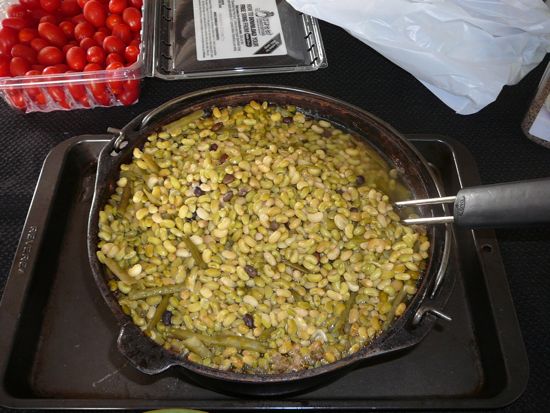
Serving up the perlow:
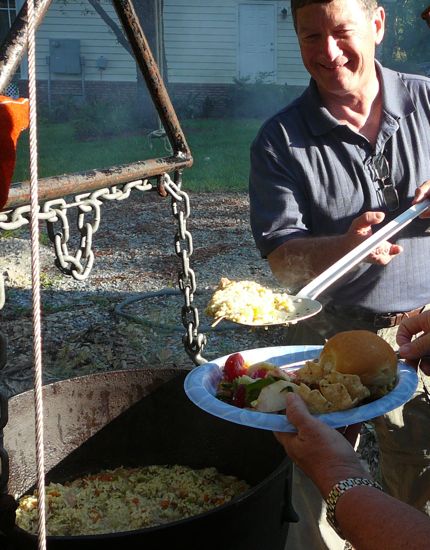
My Middle East / Gulf friends would be comfortable eating this meal – Perlow is a variation of Pilaf, and very similar to Biryani. No alcohol served. No pork. Lots and lots of fabulous sweet desserts.
It’s funny, I used to tell people in Kuwait and Qatar that it was a lot like Alaska; when the weather got too bad, you just stay inside most of the time. When the weather gets good, you go outside as much as you can. When it’s too hot/cold, you run from your air conditioned/heated car to your air conditioned / heated store or movie theater, or restaurant, and then back to your air conditioned / heated car and back to your air conditioned/ heated house.
In the same way, I am beginning to wonder if the South and the Middle East know how much they have in common? In Pensacola, on Saturdays, we have the religious people on the corners shouting at passing cars, not a whole lot different from the volunteer morality police in Saudi Arabia. In the South, as in the Middle East, ‘family’ isn’t just blood, it’s also who you’re married into, and there is a lot of emphasis on family getting together and spending time together. In the South, as in the Middle East, men tend to gather in one area, women in another.
In the South, they drink iced tea; in the Middle East, it’s hot tea. Both have passionate patriots, fundamental believers and a tradition of gracious hospitality. Both have a passion for hunting and fishing. Nobody much likes obeying the rules in either culture. Maybe I’m still in the MIddle East?
AdventureMan Cooks a Florida Bouillabaisse
One of AdventureMan’s retirement dreams was to have time to cook. There have been two times in our lives together when he has had the time – one, when our son was born and he learned Chinese cooking so he could stir-fry while I held the squalling baby (he had colic, and squalled from about four in the afternoon to eleven at night. Do you know how long every single minute is when you are holding an inconsolable baby?)
The second time was when he retired from the military, and spent several months at home, keeping house, taking our son to visit colleges, and serving up some of the most fantastic meals we have ever eaten. (I was working; it was a total role reversal. Kind of fun to shake things up, do things differently in a relationship now and then. 🙂 )
So when he started thumbing through cook books, I started grinning to myself. This man is very talented, and while I am very good at ‘survival cooking’, i.e. getting a meal on the table that will nourish and quell hunger pains, AdventureMan takes cooking to an art form.
First we had to make a trip to the grocery store for some basics. When you set up housekeeping after a (yet another) move, you are missing some of the most basic things – like cayenne pepper, or garlic.
Then – oh heaven! – we visited Maria’s Fresh Seafood Market, heaven on earth for this little old Alaska girl.
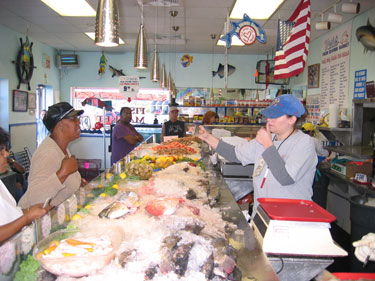
Fresh, fresh seafood, and people who know how to cut it. The prices are good. As we entered, a drama began, a woman buying a lot of (something) picked a fight, first with the man serving her and then with the cashier. We were there about half an hour, and during this time, she complained, loudly and vigorously, to anyone who would listen. I think she wanted her purchase comped.
AdventureMan bought what he needed, got it cut mostly how he needed it, and also got a fish head and tail for making stock – a great big grouper! He said as he cooked it up, the head and mouth were sticking out of the pot like “Help me! Help me!” but I wouldn’t know because I was upstairs minding my own business while he worked his magic on the Florida fish bouillabaisse. 🙂
Soon, tantalizing odors drifted upstairs, rich, complex odors, with a hint of sherry . . . it was divine. I had to pop down to let him know how much I was appreciating his efforts.

“Do you think it’s a little too thick?” he asked.
“I think it’s like a fish stew; I think thick is OK. You can add a little more liquid if it seems to need it,” I added, but actually, he is doing just fine without any input from me.
Finally, it was time to eat. AdventureMan dished the concoction into some shellfish soup bowls I found many years ago at that exotic resource store, TJ Maxx (LOL) and dinner was served.

Total YUMMMMMM. Bravo, AdventureMan, Bravo! I am having a lot of fun with your retirement! 🙂
Golden Age at Fort Pickens
“We need a break” said AdventureMan, and we decided to go exploring, preferably out in some beachy area. We decided to visit Ft. Pickens, waaaaaaaaay out on the end of a very long barrier island protecting Pensacola.
You can see the blue balloon shows where the Fort Pickens defenses were built:

It’s a national park. It costs $6 to drive a car in.
“Are there any annual passes?” AdventureMan asked, because for us, those are a good deal, and once you buy them you can go anywhere!
The answer was yes, but it was expensive, probably still worth it, but the twinkly eyed woman then asked him “Are you a golden ager?”
“What?” AdventueMan asked in confusion.
“Are you 62? If you are 62, you can buy a Golden Age pass that lets you in all the National Parks for $10.”
“No,” AdventureMan stuttered, “no, not yet . . . ”
“But I am!” I hollered, handing him the money to buy a Golden Age pass before she could change her mind. She carded me, yes, she did, but as I am four months older than AdventureMan, I qualified, and now we can go anywhere (as long as he is with me, we get in on my pass.)
Fort Pickens is beautiful. The sand is white and powdery, and the sea is a lot like the Arabian Gulf, all shades of green and turquoise and blues, shading into purples.
Looks like snow, doesn’t it?


AdventureMan loves old forts; here are where gun batteries were once placed to guard the shores:

We spotted Osprey flying on the air currents around the forts, and huge osprey nests:


We hiked along a beautiful bike/walking trail where I saw tiny purple flowers like we used to find in Saudi Arabia:

Sharp eyed AdventureMan pointed out a snapping turtle – can you see him?

Can you see him now?



We needed a day to remind us it’s not all about work. Getting settled as we get retired – isn’t that supposed to be fun?
Long Term Care for The Aged: Hidden In Plain Sight
One of the most amazing things that happened to me while I was living in Doha was a conversation I had with a group of Qatteri and Palestinian women. We were talking about our summer plans, and when it was my turn, I told them I was going back to the US to take care of my Dad while my Mom had a knee replacement. They all looked at me in stunned silence, and I wondered what I had said wrong.
“You do this?” one of them finally asked me, “You take care of your parents?”
“Yes, of course,” I replied, not understanding her puzzlement.
There was a burst of excited chatter I couldn’t follow, and then one of the younger women said to me “but we NEVER see this on TV.”
Things have probably changed by now, with all the cable stations available, with Lifetime and a broader spectrum, but what they think of as America is Dynasty and – well, think of what your favorite programs are, and then imagine an alien culture watching and trying to figure out your culture from what you watch. If you are living with the aliens, they way we portray our own culture on television and in movies is appalling!
Long story short, most adults want to stay independent as long as possible. They never want to be a burden on their sons and daughters and grandchildren. I am willing to bet that this is almost universal. For one thing, from the point of view of the aging, if you live with someone else, you know you will increase their work load, and if you go to a facility, you lose a lot of options to choose. Being able to have someone to come into your own house allows you to remain independent as long as possible. If you live with one of your children, you still get to have home-care, which relieves a lot of the burden on those with whom you are living.
Here is an AOL Health News article on a ‘hidden’ provision of the new health care act which will make it possible to keep our elders at home longer. Believe me, this is a very good thing, if you have ever dealt with a rehab facility, or a residence for the aged.
Health Care Reform Will Impact Long-Term Care
From AOL News: HealthCare
Robert W. Stock
Contributor
(March 26) — As health care reform became the law of the land this week, a huge bloc of Americans with a unique interest in the outcome sat watching on the sidelines.
The 49 million people who care for older family members were hidden in plain sight, as usual, quietly shouldering a burden that so often takes a heavy toll on their finances and their physical and emotional well-being. Many of them — I know a few — are opposed to the new health care law, even though it includes one of the most important steps ever taken to improve caregivers’ lot, especially those of the middle-class persuasion. Of course, hardly any of them are aware of that.
The Community Living Assistance Services and Supports Act, otherwise known as CLASS, provides for a national insurance program to help cover the cost of long-term care — something 70 percent of people over 65 will need at some point along the way. The premiums will be much lower than those for private plans, and you won’t get screened out because you’ve already had some health problems. Once vested after five years, enrollees unable to care for themselves will be able to claim cash benefits for as long as needed.
Joe Raedle, Getty Images
A health aide helps a patient at his home in Miami. The new health care reform law could “transform long-term care” and make it possible for more patients to stay at home, said the chief of the National Council on Aging.
If you’re rich, you don’t require much financial help with long-term care. If you’re poor and can no longer fend for yourself, Medicaid pays the bills, often at a nursing home. For the rest of us, long-term care — at home or in an institution — now requires that we, or our caregivers, choose from among some unpleasant options.
We can spend down our retirement savings until we’re eligible for Medicaid funds. We can protect our savings by taking out expensive long-term care insurance — it costs my wife and me more than $5,000 a year. Or, depending on how dependent we are, we can throw ourselves, or be thrown, on the mercy of our families.
My friend — I’ll call him Frank — was a retired lawyer and in great shape until four years ago. He had just turned 90 when emergency surgery laid him low for months on end. Then his sight and hearing began to go. “I’m one of the lucky ones,” his wife, Helen, told me. “His mind is fine. But he can’t get around on his own — he falls, even with a walker. He can’t make a cup of tea or shower by himself.”
For now, Helen can afford to hire an aide for a few hours a day to help with Frank and allow her to get out of the apartment. “James gives me a life,” she said. The future looks darker.
Surveys show that 90 percent of Americans want to age at home. Frank is no exception, but he never signed up for long-term care insurance. “If I couldn’t keep taking care of him, I don’t what I’d do,” Helen said. “If he went into assisted living, it would use up all our money. It’s very scary.”
CLASS, one of the legacies of the late Ted Kennedy, offers caregivers and care recipients another option. “If it’s successful, if a large enough number of people sign up, it will transform long-term care,” says James Firman, president and CEO of the National Council on Aging. “It will create a market-based economy for keeping aging people at home.”
That’s an important “if,” since the program, by law, must be self-sustaining. Premiums will generally be collected as part of workers’ payroll deductions unless they opt out. The younger the worker, the smaller the premium.
There is a vicious circle built into the current arrangements. Many caregivers must hold down a job and maintain their own separate family household while also watching over an aging parent. That kind of pressure can have consequences.
In recent studies, workers 18 to 39 years of age who were caring for an older relative had significantly higher rates of hypertension, depression and heart disease than non-caregivers of the same age. Overall, caregivers cost their companies an extra 8 percent a year in health care charges and many more unplanned days off.
In other words, the strains of family caregiving can hasten the caregiver’s need to be the recipient of care.
CLASS bids to crack if not break that vicious circle. Its benefits would make it much simpler and less expensive for families to make sure Mom gets the support she needs to be able to spend life’s endgame where she wants — in her own home. Good news for Mom, and good news for the future health of her caregivers.
In the last few days, I’ve conducted a poll of a dozen friends who have been closely following the health care reform debate. I wanted to find out how much they knew about CLASS.
Not one among them had even heard of it. It somehow seemed fitting that this major program, just like the caregivers themselves, was hidden in plain sight.
Places I’ll Remember . . .
I’m not very good at being sad. Today is one of the saddest days of my life. I’ve been weeping all day, and I’m not one of those women whom the camera loves when they weep. My throat gets thick, so clogged with emotion that I can’t talk clearly, and my eyes get all red and swollen. My cheeks get all blotchy. I hate it, my eyes are leaking, and my nose is running. I think I’ve got it all stopped, and it all starts up again.
Most of the house is packed, the kitchen cupboards cleared out and all the goods not going with us distributed. I weep as I pack my bags. I weep as I take out the garbage. I weep as I load one last load of wash into the washer.
“What is it in particular?” AdventureMan asks me, as I weep, yet again, as I start to write this entry.
“It’s the end of an era,” I choke out, and the tears start rolling once again in spite of all my efforts not to succumb.
“We’ve lived our lives as nomads ever since we met,” I continue.
“It isn’t like we want to live in Doha forever, Doha is changing, too, old friends are leaving.”
“It isn’t like I love packing up and starting over in a new place.”
“I shouldn’t have scheduled to leave on a Friday after church,” I philosophized, but it’s too late now. The waterworks started in church and have turned on and off with ever fresh goodbye.
I steeled myself to smile cheerily at my oldest friends, knowing we’ll meet up again – a wedding, a retirement, a gathering of old hands. But small things defeated me. The friends who switched their normal place in church and sat beside us. The communion hymn “Lord of the Dance” sung as a duet. One of our friends provided our very very favorite meal for lunch. The priest blessing my travels and sending me on with the prayers of the people. The difficult ceremony of saying goodbye to the people we love in a place which has nurtured us, spiritually and socially.
And one young woman painted a watercolor for us of our new grandson.

It is a stunning watercolor, I can hardly wait to have it framed. There is something very special in it – I have a friend who knits, but is constantly telling us how badly she knits. She knit a blanket for the grandson, and it was COLD in Pensacola, and that blanket was used over and over again. The blanket is in the lower left corner of the watercolor. 🙂
It’s going to be a long trip to our new life. We are going to a happy place – sunshine, but not so much heat. Humidity and lightning, but also four seasons and seafood. Our son, his wife, our grandson. All these are happy things. Our new house, a new life, closer to our families. All good things.
I couldn’t leave without saying goodbye to my Palestinian friend, like my sister, and she shared all her children with me through these years of friendship. Saying goodbye to her was horrible. We know we may never see one another again. Her daughters assure me they will help us correspond; they will help her use modern technology to stay in touch. 🙂 I don’t know when I will ever see her again . . . and it breaks my heart. I guess I kind of thought she would come visit me. “No,” she said sadly, “no, I will never have the right papers to visit you.” Until that moment, I hadn’t realized how devastating are the restrictions on her life. And I’m just a friend. She hasn’t seen her own father, in Palestine, for years. Sometimes they can meet up in Egypt. . .
I’m not the first expat to leave here. One good friend left Doha last summer, she led the way. We all know that leaving the nomadic life is charting new territory. We’ve had a lot of fun, we’ve loved (most of) the expat experience. We know it’s time. It’s just the inner twenty-five year old is not ready.
AdventureMan’s company keeps saying “when you’ve had a break . . . ” and AdventureMan laughs and says “I’m not taking a break, I am RETIRING!” His company is savvy; they know that three months down the road the domestic life may get a bit old for these high testosterone kind of guys and they will invite him back for a special project or two. He promises me, if it is Doha or Kuwait, I can come with him. Even just a week or two, to see old friends . . . I’ll take it!
Thanks be to God, for creating us, and for giving us this wonderful life we were created to live. Thanks be to God for all these great adventures, for the exotic, the sights and smells and sounds, and for the eyes to see and the ears to hear. Thanks be to God for the generous spirited friends called to his life, who have shared the path with us. And thanks be to God for this outlet, this blog, where I can share the good, the bad and the ugly with friends from all countries who have ever lived as strangers in a strange land (even when that ‘strange’ land is the USA, LOL!) Thank YOU, friends.
Babies Love to Dance!
Now here is a study I love! Scientists studied babies movements to music and discovered – babies love rhythm, and love to move to the rhythm! Get those babies dancing!
If they find rhythm and music more engaging, sing to them!
They Got Rhythm, Study of Babies Finds
Lauren Frayer
Contributor
AOL News
(March 16) — Babies innately respond to rhythm more than speech, according to a new study that found dancing comes naturally to infants.
Researchers in Britain and Finland tested the responses of 120 babies ages 5 months to 2 years and found that infants are much more physically responsive to music than to speech and find it more engaging.
In the experiment, which was recorded on video, babies were perched on their mother’s or father’s lap while psychologists played a recording of music. The babies moved their heads, arms, legs and bodies in time to the beat of various different genres of music.
“Our research suggests that it is the beat rather than other features of the music, such as the melody, that produces the response in infants,” one of the study’s authors, psychologist Marcel Zentner of the University of York in England, said in statement.
In order not to influence the baby’s movements, the parent wore headphones to block out the sound of the music and was asked to stay still during the experiment.
The recordings included classical music, rhythmic beats and also speech. They also hired professional ballet dancers to analyze the babies’ movements and determine how well-coordinated they were with the music. All of the babies responded more to the music than to speech.
The findings suggest humans may be born with a predisposition to move rhythmically in response to music.
“It remains to be understood why humans have developed this particular predisposition,” Zentner said. “One possibility is that it was a target of natural selection for music or that it has evolved for some other function that just happens to be relevant for music processing.”
Zentner and Tuomas Eerola of Finland’s University of Jyvasklya also found that the more the babies’ movements were synchronized to the music, the more they smiled.
The study appears in the March 15 issue of the scientific journal Proceedings of the National Academy of Sciences.
Grabbing a Half Day
While most of my time has been spent joyfully grandmama-ing, I was feeling increasing anxiety about one thing. I am flying back to Doha to pack, and then I am flying back to Pensacola to close on the house, and wait for AdventureMan to join me, and then all our furniture and household goods that have been in storage a lifetime – twelve years – will arrive.
Oh oh. Where do we sleep until our bed arrives? We COULD invade our dear son and his sweet wife once again, but don’t you think enough is enough? Would you want your parents and in-laws living with you, week after week, with all our well-intentioned advice, and stories about our son when he was young?
No? LLOOLLL, me neither!
So yesterday, I took an afternoon to myself.
First, I had learned that the Pensacola Quilter’s Guild was having their bienniel (once every TWO years) show this weekend, Friday and Saturday. There is little that can take this adoring grandmama away from her most adorable brand-new grandson, but I will admit it – a quilt show – that is beyond temptation. I had to go, even just for an hour. I went, joined the guild, hurried through the exhibit, which was GLORIOUS! and then I went furniture shopping.
Furniture shopping is not what it used to be. I have some lovely furniture in storage, but not a huge amount of it. Some of it we sent off with Law and Order Man when he went off to law school and needed some basics. Some of it is just outdated – like televisions from the 90’s! I figured I would just look for the basics – bed, mattress and table and chair. We will have a place to sit when we are not sleeping, and we can buy the TV’s together, later, with our son’s help. We need the help of the high-tech-savvy to get us up to speed on what we will be needing, phones, TV’s, cable connections, phone plans, internet connections, oh, it is as bad as buying a new car!
When we were still in the military, we found a dining room table and chairs, gorgeous, at an auction, for $169. We found marble topped antique oak nightstands, gorgeous, at the flea market in Metz, and paid $60 for the pair. We found a gorgeous buffet/credenza in a used furniture shop in Leavenworth, KS for $50 + $10 for delivery, all these are furniture pieces we still treasure. I am telling you this so you will understand what sticker shock I get when I go to look at new furniture.
I am quick and clear about what I want and need, but the prices require me to summon all the courage I can summon when I go to write the checks. I am good at saving. Letting that money go is so HARD. It took me the entire afternoon to find pieces I knew would work for us.
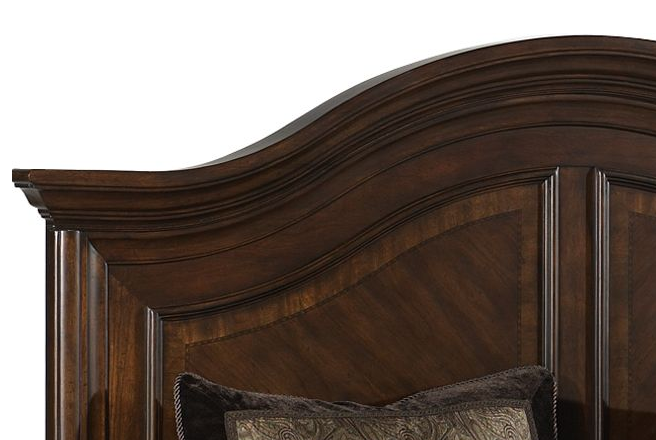
Here is where you will sleep, the guest room bed, when you come to stay with us:

It was on sale. I love it because, with the inlay, it sort of reminds me of the Middle East, of Damascus:
I also bought mattresses. It was difficult, too, because I don’t like these pillow tops. We like a good, firm bed, and I like to sleep cool, I can’t get to sleep if I am too warm, and these pillow tops are too warm. It took me a long time to find a good, firm mattress set for the bed.
Then I went looking for a table and chairs for the family room/ casual dining area. I knew what I wanted. My long-time Chinese friend told me the best table for families is the round table, no one sits at the head, everyone is equal. My sister Big Diamond (Little Diamond’s and Sporty Diamond’s Mom) has a HUGE, gorgeous round table, and I have seen how people love to gather there. So I knew I wanted a round table that would be inviting and comfortable, but not so grand as my sister’s. I have been looking online, checking out a lot of models. When I found one here in Pensacola, at a reasonable price, I was hooked. It is light teak – light in color, heavy in weight. OOps. Then she reminded me I would need chairs. Aaarrgh.
There weren’t any other customers in the shop at the time, so we took our time. As I learned from you, my Middle Eastern friends, we dickered a little, comfortably and amiably – and she gave me a discount, and free delivery.


The chairs are amazing. You would not believe wood could feel so comfortable. The table and chairs together remind me so much of all our times camping and in lodges in Africa, in Zanzibar, in Zambia, in Botswana, where the furniture is both comfortable and well made. But I almost choked, writing the check. Some things are just worth buying new; sturdy, comfortable furniture is one of them.
Here is the guest bathroom:
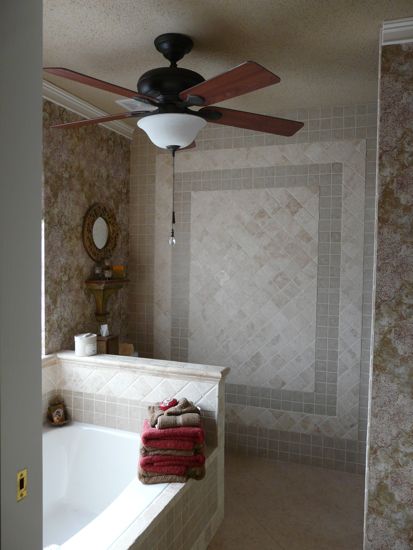
It has a spa tub and a walk in shower. 🙂
Last but not least, I found some farewell gifts for friends I have had in Doha for a long long time, and a bolt of muslin for a friend who knows I am coming back with suitcases almost empty. 🙂 It was a long day, and a fruitful day, and I am resting easier knowing all these little details are coming together.
Today, however, my son and his wife are taking me to the kinds of places I LOVE buying furniture! The Waterfront Mission Store and Loaves and Fishes! Wooo HOOOOO!
Thing Younger, Act Younger, BE Younger
A couple of my friends and I were trying to figure out why we were friends. What goes into making friendships? One thing that surprised us was that we tended to choose people with some risk-taking behaviors – people who look ‘normal’ and conservative on the outside, but are thinking outside-the-box on the inside. They are thinking all the time, observing and analyzing and making choices that set them aside from others. For one thing, here we are, all living in Qatar – and that is a choice. Our lifestyles are a choice.
Most of my friends are a lot of fun – you would like them. And it might take you a while to figure out we are all total nerds, very uncool people. One of the very coolest sent me this. On the inside, this woman is into EVERYTHING! On the outside, she obeys the conventions. On the inside, she is thinking all the time. 🙂
This study, from BBC News Magazine is amazing. But don’t believe me! Listen to the broadcast! See the movie! Imagine yourself 20 years younger (please! not those of you in your 20’s!) and start acting YOUNGER!
In 1979 psychologist Ellen Langer carried out an experiment to find if changing thought patterns could slow ageing. But the full story of the extraordinary experiment has been hidden until now.
How much control do you have over how you will age?
Many people would laugh at the idea that people could influence the state of their health in old age by positive thinking. A way of mitigating ageing is a holy grail for the pharmaceutical and cosmetics industry, but an experiment by Harvard psychologist Ellen Langer three decades ago could hold significant clues.
Prof Langer has spent her entire career investigating the power our mind has over our health. Conventional medicine is frequently accused of treating them as separate entities.
“Everybody knows in some way that our minds affect our physical being, but I don’t think people are aware of just how profound the effect actually is,” she says.
In 1979, Prof Langer conducted a ground-breaking experiment – the results of which are only now being fully revealed.
Prof Langer recruited a group of elderly men all in their late 70s or 80s for what she described as a “week of reminiscence”. They were not told they were taking part in a study into ageing, an experiment that would transport them 20 years back in time.
The psychologist wanted to know if she could put the mind back 20 years would the body show any changes.
The men were split into two groups. They would both be spending a week at a retreat outside of Boston.
Ellen Langer in 1979 and today
But while the first group, the control, really would be reminiscing about life in the 50s, the other half would be in a timewarp. Surrounded by props from the 50s the experimental group would be asked to act as if it was actually 1959.
They watched films, listened to music from the time and had discussions about Castro marching on Havana and the latest Nasa satellite launch – all in the present tense.
Dr Langer believed she could reconnect their minds with their younger and more vigorous selves by placing them in an environment connected with their own past lives.
And she was determined to remove any prompt for them to behave as anything but healthy individuals. The retreat was not equipped with rails or any gadgets that would help older people. Right from the off she was determined to ensure they looked after themselves.
One man discarded his walking stick
When they got off the bus at the retreat, Prof Langer did not help the men carry their suitcases in. “I told them they could move them an inch at a time, they could unpack them right at the bus and take up a shirt at a time.”
The men were entirely immersed in an era when they were 20 years younger.
Understandably, Prof Langer herself had doubts. “You have to understand, when these people came to see if they could be in the study and they were walking down the hall to get to my office, they looked like they were on their last legs, so much so that I said to my students ‘why are we doing this? It’s too risky’.”
But soon the men were making their own meals. They were making their own choices. They weren’t being treated as incompetent or sick.
Pretty soon she could see a difference. Over the days, Prof Langer began to notice that they were walking faster and their confidence had improved. By the final morning one man had even decided he could do without his walking stick.
As they waited for the bus to return them to Boston, Prof Langer asked one of the men if he would like to play a game of catch, within a few minutes it had turned into an impromptu game of “touch” American football.
The experiment took the men back to 1959
Obviously this kind of anecdotal evidence does not count for much in a study.
But Prof Langer took physiological measurements both before and after the week and found the men improved across the board. Their gait, dexterity, arthritis, speed of movement, cognitive abilities and their memory was all measurably improved.
Their blood pressure dropped and, even more surprisingly, their eyesight and hearing got better. Both groups showed improvements, but the experimental group improved the most.
Think younger, feel younger?
Prof Langer believes that by encouraging the men’s minds to think younger their bodies followed and actually became “younger”.
She first published the scientific data in 1981 but she left out many of the more colourful stories. As a young academic, she feared this might taint the experiment and affect the acceptance of the results.
Now after over 30 years of research into the connection between the mind and the body and with the confidence and conviction of a Harvard professor, she feels she has a fuller story to tell.
“My own view of ageing is that one can, not the rare person but the average person, live a very full life, without infirmity, without loss of memory that is debilitating, without many of the things we fear.”
Richard Wiseman, professor of public understanding of psychology at the University of Hertfordshire, thinks the results of Prof Langer’s experiments are fascinating but the big question is what’s causing them. “I think there could be multiple things going on here and the question is which explanations really hold water.
Why some people age faster than others is mysterious
“Part of it could be self perception, for example if you get people to smile they feel happier. The same could be going on here, by getting people to act younger they feel younger.”
Prof Weisman believes another factor could be motivational, the men are simply trying harder by the end of the week, or it could be similar to hypnotism, where people do better on memory tests because they are told they have a better memory.
Whatever the cause he believes there is a place for the type of positive thinking shown in the study.
“If you take something like heart disease positive thinking can have a role, because while it won’t heal your heart on its own, positive thinking will feed into positive actions like healthy eating or exercise which will help.”
In any event there is likely to be more interest in the 1979 experiment. The retelling of the study has been snapped up by Jennifer Aniston’s new production company, with Aniston tipped to play Prof Langer.
(FIND OUT MORE
Horizon: Don’t Grow Old is available via iPlayer and will be repeated at 0250GMT on BBC One on Tuesday 9 February)
Change of Plans
When we were planning this trip, it all sounded so simple . . . greet the grandbaby, buy a house, quick, fly to Seattle, fly back to Pensacola, kiss the grandbaby and fly to Doha to pack.
Not quite the way it turned out. When we got here, the grandbaby was 11 days overdue. We got to be here for the birth. While our son and his wife labored, we went out with the world’s most wonderful real estate lady and actually, we did find a house.
Three years ago, we found a house. When I talked with the mortgage people, I said “We just finished paying off a mortgage with you; isn’t there some kind of short-cut you could do with me?” and they did something called “fast track” with me, and it was so easy I can’t even remember the paperwork; I think I filled it out on my computer – online – and that was it. My son handled the closing. It was so easy.
Things have really changed. This will be our third mortgage with the same company, but you would think we are potential deadbeats. We have high credit scores, an impeccable payment record – I would think they would want to have us as customers! It’s like pulling teeth. Papers don’t get to us. Additional verifications are required. Appraisers actually enter the house and verify square footage.
Between chasing paper and soothing the newborn, my life has been very full. It doesn’t sound very exciting, when I tell you about it, but here is the truth – I know I am exactly where I am supposed to be right now. It’s an amazing feeling.
Today, I spent a lot of time with the baby. At some point, I realized I wasn’t going to make it to Seattle this trip, and it’s OK. I can go to Seattle later. For right now, I have enough on my plate.
I had forgotten, too, how chaotic life with a newborn can be. His needs take precedence, and sometimes we all run around trying to guess what those needs might be, simple as they are . . . clean diaper? swaddling / soothing to sleep? Mother’s milk? Today was a really good day, where he took the diaper changes with grace, dropped right off to sleep after every meal, and was keenly alert for maybe a half hour after feeding before napping. He loves patterns and fabrics. I am having SO MUCH FUN!
A part of our life is ending, the nomadic part. AdventureMan and I have had a lot of fun, once our son got through college and law school, we were on our own again, living in Europe, living in Saudi Arabia, Kuwait and Qatar – we have had a great adventure. We travelled to Botswana, Namibia, Zambia (several times), South Africa, Kenya, Tanzania and spent a wonderful week on Mnemba Island off the coast of Zanzibar. We have wonderful friends, mostly from churches and interest groups. I would think, knowing us, that we would be sad leaving all this, but instead, we are racing toward our new future, being more settled, being near our son and his family, and his wife’s great big family. 🙂
For one thing, the world has changed. With e-mail and VOIP phones and people who jump on a plane at the drop of a hat, we expect to stay in touch with those we love and treasure. We expect they will come see us. It’s kind of fun settling in a place with white sandy beaches that everyone wants to come visit. 🙂 Cooler than Kuwait and Qatar in the summer time, too! Nice warm winters, well, not this winter, brrrrrrrrrrrr!
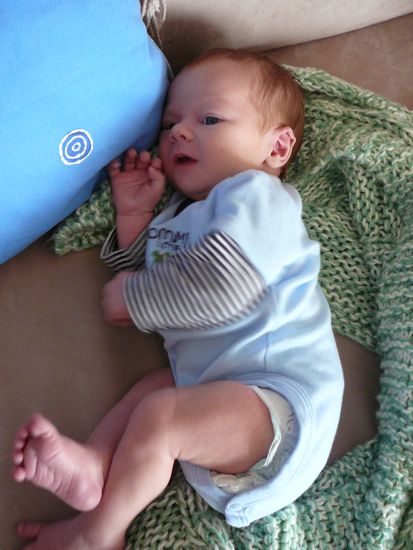
Thought you might want to see a photo of my little darling grandson:
New Cat in Town
“It’s like bringing a new cat into the house,” I tell people when they ask about how I move so often, and how I have learned to survive, “You keep a new cat in a separate room while the other cat(s) get used to their smell, then you allow a little interaction, then a little more and it all works out. One cat may never warm up to a new cat, another cat will welcome it immediately.”
I’ve been that new cat. You walk carefully. You try to figure out how things work. You sort of walk around the edges of things. Occasionally, there will be a cat that doesn’t like me. I try to stay out of her way.
So on my way to church on Sunday, I was thinking about this move, and about how people and communities have rules they don’t even know they have. Like in Kuwait, I learned, when you make a condolence call, you are supposed to dress very simply and wear no make up. You keep your voice low, you stay only a certain amount of time. These rules aren’t written anywhere because, well, everyone who matters pretty much knows what they are . . .
You don’t think about going through cross-cultural experiences in your own country, but every community has its own uniqueness, its own differences.
I think about my home town of Edmonds, WA, where you never NEVER cross the street if the light is red, even if there are no cars visible for miles. It just isn’t done.
Even going to church can be a mine field. You would think that it would be a safe place, all these people of God, people of good will, gathered together. You would think that until you happened to sit by mistake in someone else’s place, a place they have sat every Sunday for forty years. Some people might handle it with grace, another might handle it with spite and malice.
There might be local customs I don’t know, like you don’t wear earrings during Lent (I made that up; it isn’t a rule, it is just an example of the kinds of things that can become custom) or you don’t park in this spot because Old Miss Rickety needs to park there. Every church passes the peace differently; even the liturgy, done in every church, has its quirks from congregation to congregation. Like the new cat, I kind of creep in to church quietly, look for an inconspicuous place, do my worship thing and leave quietly.
They need to get used to my smell, LLLOOLLLL. 🙂
Recent Comments
ExpatAlien on What Country am I Living … intlxpatr on Yellowstone: Old Faithful to C… Michelle on Yellowstone: Old Faithful to C… Cathy on No Grown-Ups in Charge intlxpatr on Waiting for Snow Wikipedia Donate Button

Amazina


Early Voting in Florida


 Here There and Everywhere