Whittier and Chenega Bay on the M/V Kennicott
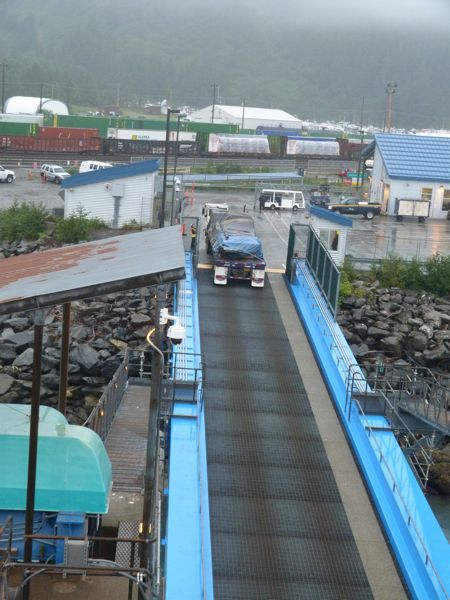
Today we awoke in Whittier, a major shipping hub into the interior of Alaska,
and a connector to Anchorage. Although the town has only a population around
500, it is a very busy little port, acres of shipping containers, miles and
miles of train tracks, and trains coming in and out every few minutes.
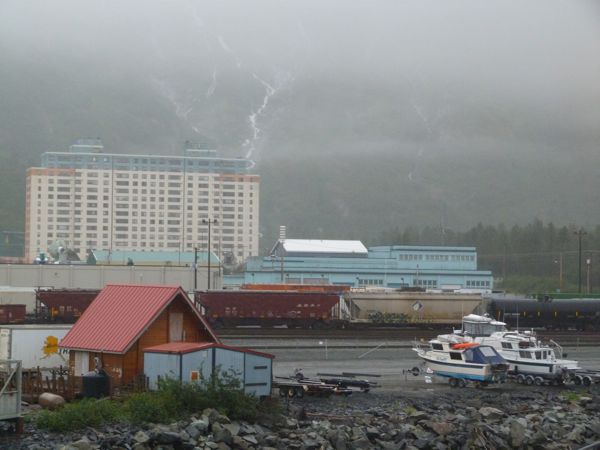


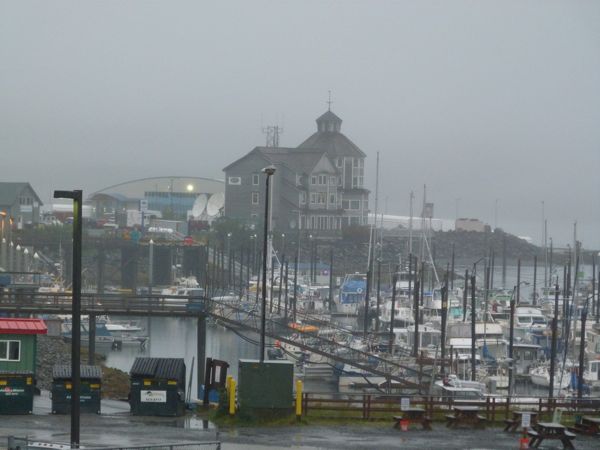
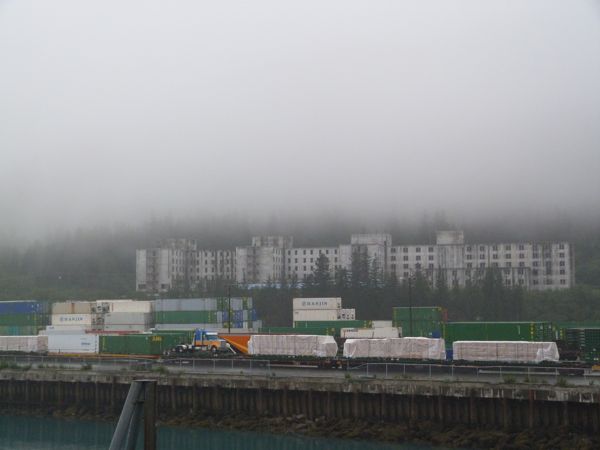
There is an old government building, it looks like something the Soviets built.
It is huge, and was damaged by a bad earthquake several years ago so it has been condemned as unusable, but would be so expensive to destroy that they haven’t torn it down yet. It has become a sort of cult place, a favorite for raves and spontaneous parties, young people camp there. It is rumored to be haunted, which only makes it more alluring. No matter how secure they try to make the building, someone finds a way in.
There is some confusion in my mind about arrivals and departures – they are not
the same as the list I so carefully printed off from the website. If I had known we would be in Whittier until 10:30 we would have debarked, which we are allowed to do if we have tickets and ID to get back on. My little calendar showed a 0800 departure, so we waited, and waited – but the ferries make their own rules, according to weather and tides and what they are porting from one seaside village to another. We watched containers full of goods come on for the more remote locations.
I used to surprise my Kuwait friends, telling them it was a lot like Alaska, and the longer I am back here, the more parallels I see. One is that almost
everything you eat or wear or build with has to come from somewhere else. That
requires shipping, or flying something in. I remember my Mother used to order
our snow suits in August, so they would arrive before the ships stopped coming
in. Like Kuwait, groceries are expensive, especially specialty items that are
imported. Like Kuwait, people are dressed modestly, all the important parts
covered – it’s cold! Most women are covered from their toes to their wrists! If
the weather is bad enough, even their hair is covered, and occasionally their
faces! Men, too! Very modest people, these Alaskans 🙂
AdventureMan wanted to take a shower, but the ferry system asks that we not
shower while in port; they like not to dump waste water in port, so as soon as
we departed, he jumped in the nice warm shower. Once again, almost all we can
see is open water, en route to Chenega Bay, and fog.


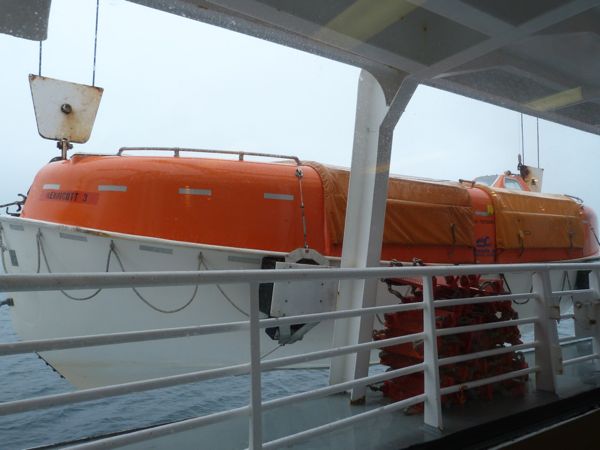
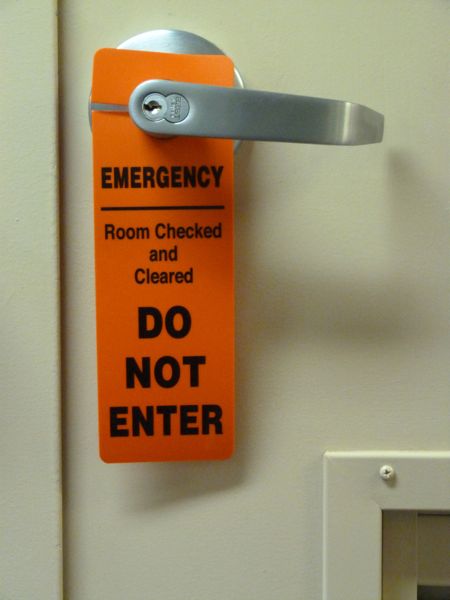
During the trip to Chenega Bay, the big excitement is the once-a-week fire drill, and this time, the fire was near our cabin (pretend fire.) I am guessing some people would rather ignore the fire drills, but think about it – aren’t you glad the crew goes through these exercises in case there is some emergency? Aren’t you glad they know what to do? One of the guys laughed and said “We get a lot of respect and people step aside when they see us carrying these fire extinguishers!” The purser told me that sometimes people STEAL the signs they put on doors – imagine!
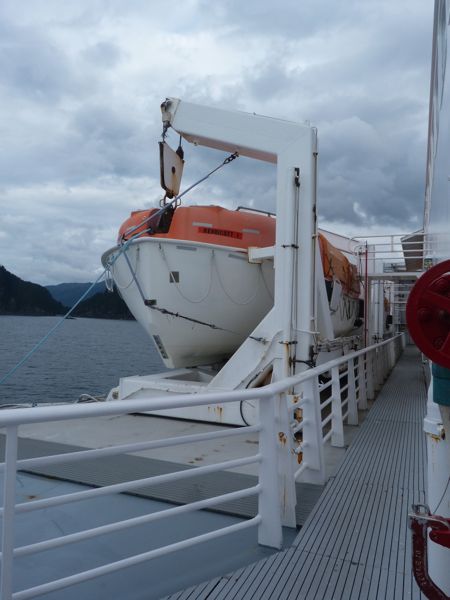
Lifeboat being lowered:
Do Not Enter tag on our door:
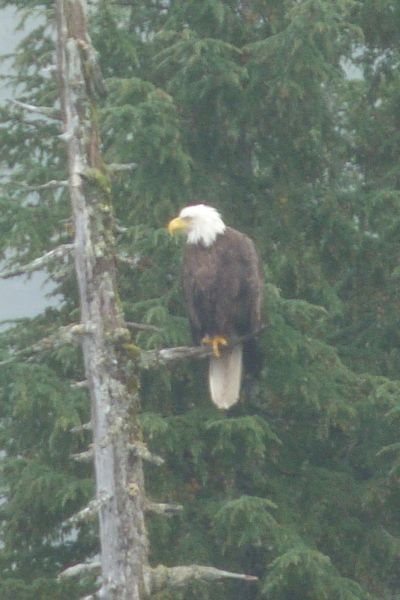
Chenega Bay – We arrive, foggy but no rain, to find an eagle perched in nearby tree, welcoming us.

Very short turn around time shown, so once again, we do not leave the ship, but wish we had when departure time is postponed. The dock is not near anything, but a short walk over the hill takes you to the small village of Chinega Bay and a beautiful Russian Orthodox Church and an Alaska Native arts museum named after fisherman Johnny Totenoff.
What love what happens here – this village of only maybe 50 people are welcomed on board whenever the ferry docks. They are isolated, remote. The men, women and children ride their ATV’s down the hill to the ferry, come aboard, and chow down on hamburgers, fries, and soft ice cream cones. Some of the young girls are dressed in long dresses, sort of odd, maybe a religious group. Others are wearing short short skirts and tank tops in the cool, foggy weather. Before the ferry departs, the Chenega Bay residents all have to debark.
Departing Chenega Bay:

Beginning to see snow peaked mountains en route to Kodiak Island

To Yakutat on the M/V Kennicott
Groan, docked at Yakutat early. Although we slept well, we are not eager to
debark at 0600, so we stay on the boat, which is a really fun decision.
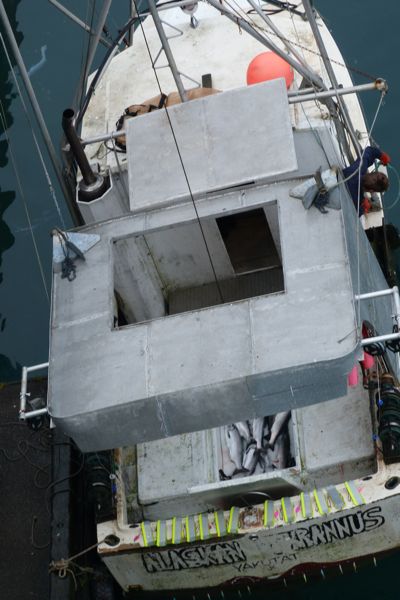
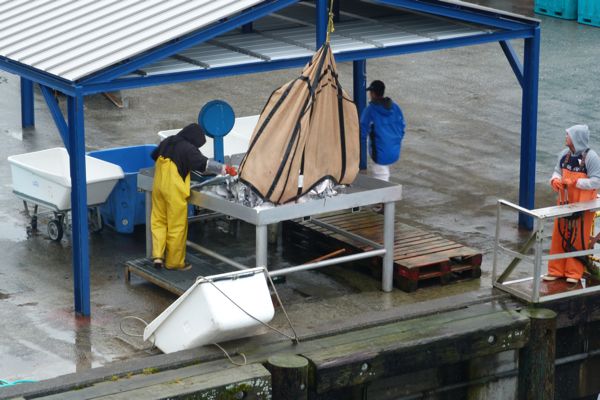
AdventureMan discovers the upper aft viewing deck, inside and outside, and we
watch a fishing boat come in, the fisherman scurry up the slippery ladder, the
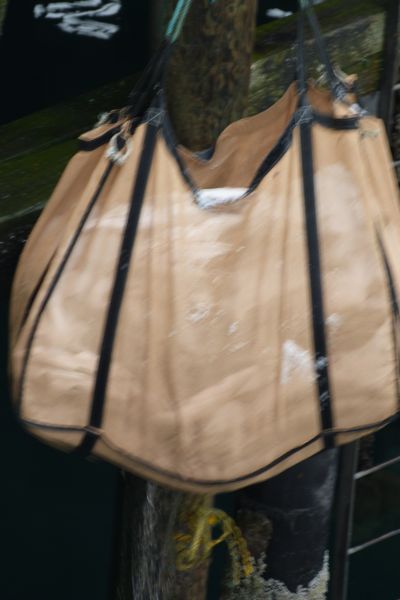
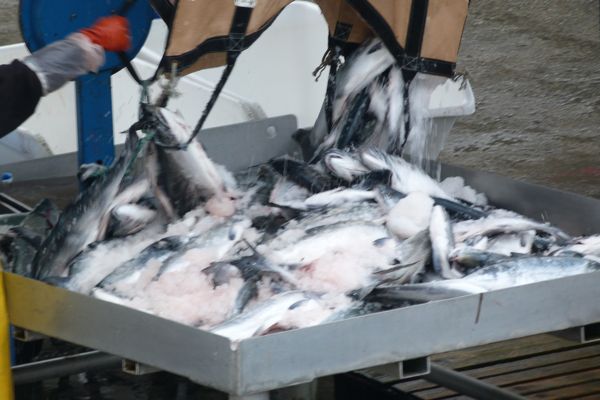
small tractors set up a weighing station and watch the fisherman upload his
morning’s catch, and see it graded, weighed and sorted all in a matter of
minutes. Three huge loads! It’s a hard life, being a fisherman, a lot of heavy
lifting and working in the rain and stormy weather. 






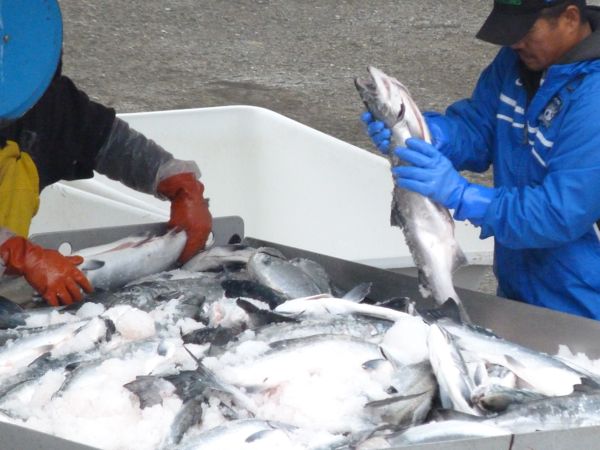
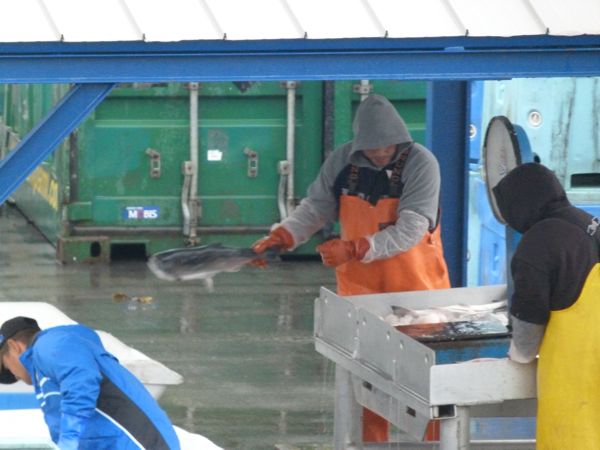
Yakutat is a small town, a fisherman’s town. Departing Yakutat:
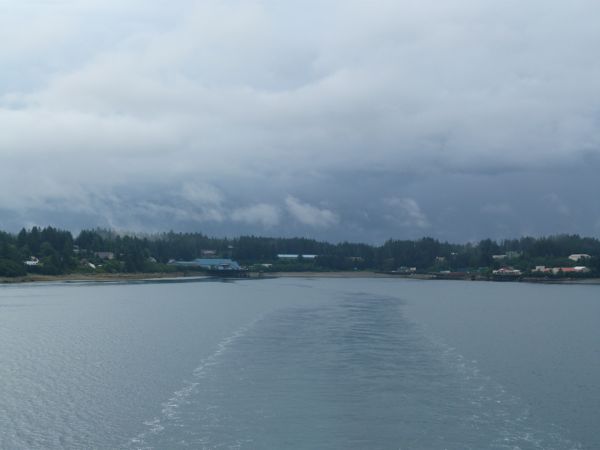
The rest of the day we are out in open water, and it is grey, grey, grey. I have to give the birders a lot of creds; they are manning the observation post in the bow and there are never fewer than three, with their bird spotting scopes.

We spend the afternoon alternately reading and walking all the decks to see if
we are missing anything. We are not. It is a dull day, not unlike many travel
days, the difference being that we have a nice private cabin where we can hang
out, re-charge our camera batteries, our phones, our iPad. It’s a good thing we
have the iPad, I can read, I can play Sudoku. I iPad allows me to
take notes (this was actually a note) because THERE IS NO WI-FI onboard. I am so shocked, I pretend to be cool about it but inside I am sort of freaking out. I just assumed there would be wi-fi everywhere. I was wrong.
AdventureMan, ever the gentleman, volunteered to take the upper bunk, but I
insisted. I am nimble on ladders, and I like being able to perch up here in my
lair and look out our window. I saw more Orcas playing the first day, and can
keep an eye out for when the sky lightens and the sun makes an appearance. Local weather people actually call these “sunbreaks.”

The cabin also has a generous supply of outlets – each bunk lamp in the cabin has an outlet plug, and then there are two other convenient double sockets.
We reserved a 4-bed with bath because we wanted an outside room – and because we like the convenience of having our own bathrooms. The two unused bunks are
stowed, and we have a large lounge chair, a table, and another chair. The toilet and shower are in a cabinet – lots of nice, hot water – and there is a sink outside the cabinet, with a mirror and another outlet, and separate overhead light. Very convenient, and it feels very roomy.
Years ago when I was off to college, the airlines were on strike and I had to
take the military ship Rose from Bremerhaven to the US and then fly Air Canada
to my university town. Just imagine – a military transport ship full of college
students. It was truly a wonderful time. I told AdventureMan this morning that I remember keeping my suitcase up in my bunk, and dressing up there as we only had like 14 inches between left side bunks and right side bunks, and with four
college girls, that wasn’t much. I can’t remember, but I don’t think we had our own toilet and shower, I think we had to use group ones. This cabin is about 8 feet across and 12 feet long, with the shower and toilet cabinet about 2.5 by 6 feet. It is tiny, but it works. We have a rack of hanging 32 hanging hooks, which might sound like a lot, but you use a lot of different outdoor clothing, layers of clothing; long sleeved shirts, hoodies, rain-gear, fleece, sweatshirts – the weather changes, you can be warm – but soaked.
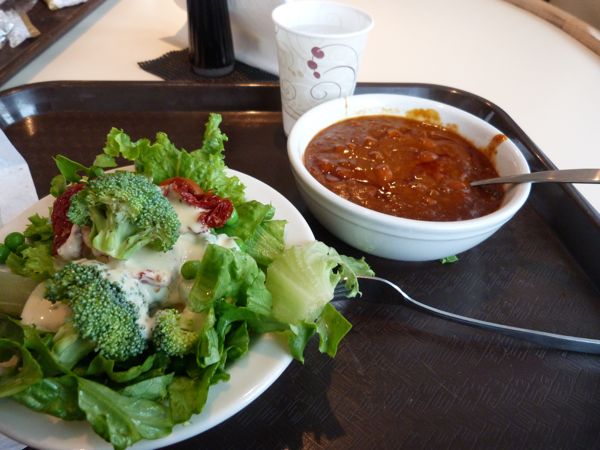
Lunch is warming and healthy:
“You Look Like a Happy Woman” on the M/V Kennicott
One of the birders approached me.
“I’ve been watching you. You always have a smile on your face. You watch the scenery and smile, and you look like a happy woman.”
“I am. I am really happy to be here.”
I do like living in Pensacola, I love being near our son and his wife and our two adorable grandchildren, but oh, this is where I was born. The sea is part of my blood, the piney clean smell of the Alaskan air, the clothes – jeans and something warm – this is how I grew up, this is how I am comfortable. I am. I am a happy woman.
Here are some photos from this first day on board the M/V Kennicott:
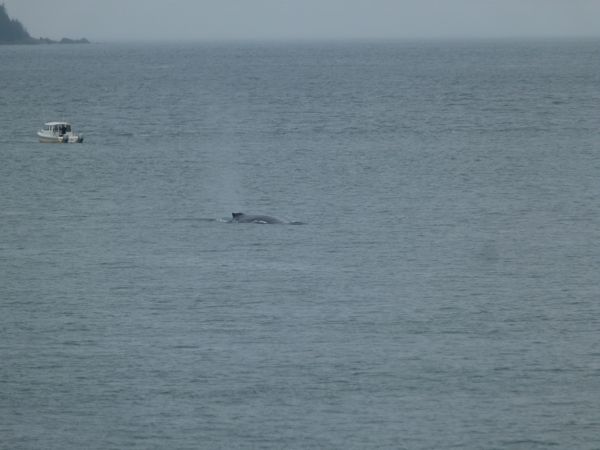
Humpback whales!
View from our cabin

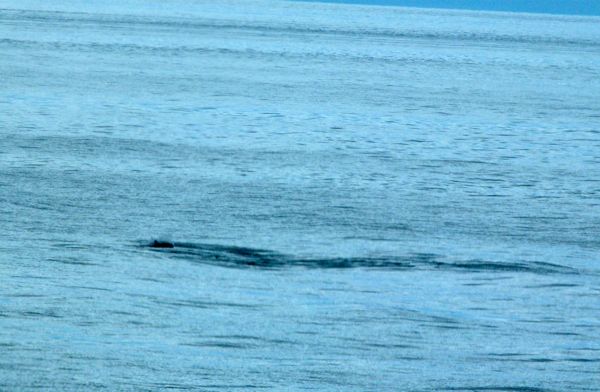
I couldn’t figure out what this is, or if it is one creature, like a whale, or two, like a dolphin. We often saw things and had to try to puzzle out what we were seeing.

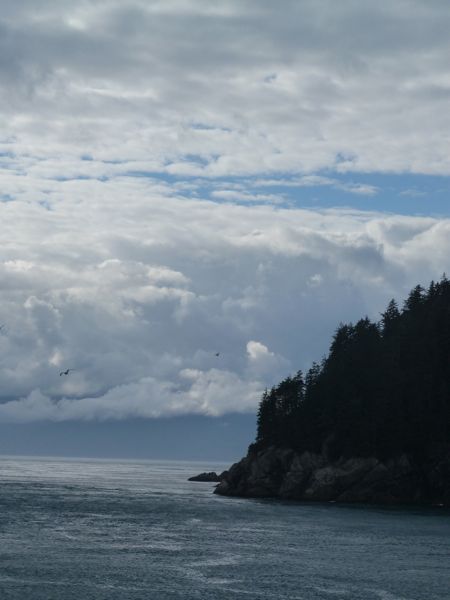


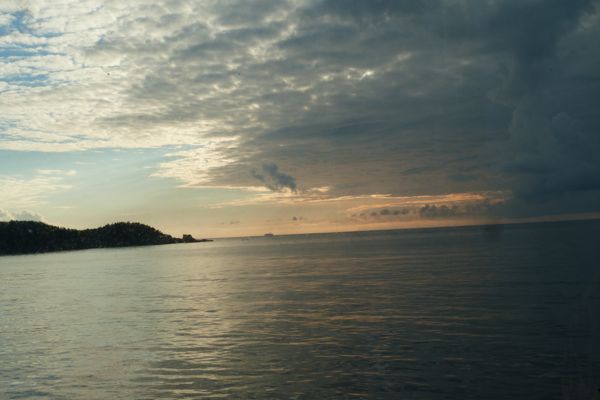
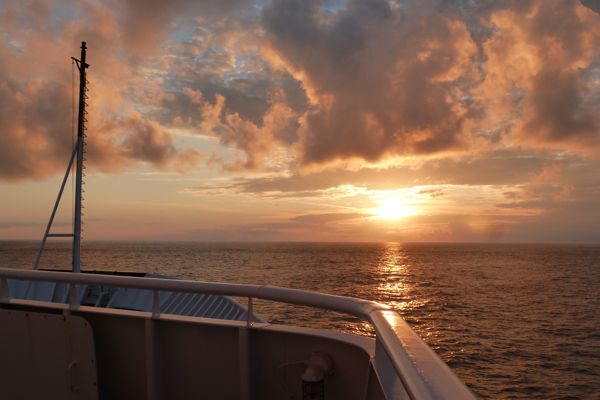
I mentioned before, the shock of discovering that the M/V Kennicott would not be wired for internet. It was equally shocking that it did not have a tower for cell phone coverage, or however that is done. Ferries in Seattle, just little commuter ferries, they’re wired! WiFi is everywhere. Really, I guess I am mad at myself for thinking all Alaska would also be wired; I just projected my own prejudices and got trapped in them.
But my compass on my iPhone worked, and as you know, I am also a map person. As we were to be heading out into the Gulf of Alaska (which would be North) my compass was reading South, and the afternoon sun was also on the wrong side of the boat. “Do you know where we are?” I asked a guy who looked like he would know as we picked up dinner. “We are going backwards!” he almost shouted! “We are ahead of schedule, so the pilot is giving an apprentice from Michigan a lesson in pilotage!”
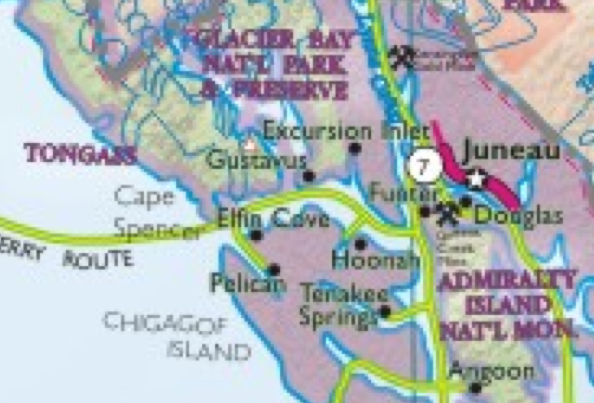
We were headed into an inlet that kept getting narrower, and narrower, and when we came to a village, Pelican, the ferry turned around and headed back where we had been coming from. I had wanted to see the mouth of Glacier Bay, but I never saw anything that looked anything like it, not until the return trip. We had some late day fog, so maybe the entrance and glaciers were shrouded. On the way back, we saw so many glaciers that at some point, I can’t even believe I am saying this, it was like “oh yeh, another glacier.”

The green line is more or less the route we took from Juneau to Yakutat to Whittier to Chenega Bay, to Kodiak Island and to Homer – and then back. The first day out, if you look at Juneau, near the mouth to the Gulf of Alaska you will see off to the left a narrow inlet down Chicagof Island to Pelican. That was the side trip we took on our first evening on the M/V Kennicott.
Welcome Aboard the M/V Kennicott
When most people think of an Alaskan cruise, they think of the ships the size of small cities. We saw many of them in Juneau, docked, three, four, five at a time, inundating the town. In a town of around 30,000 the population can nearly double when five cruise ships are in port at the same time.
Juneau has a lot of services in place to handle the tourist demands. You can sign up for glacier tours, or whale watching tours, or both right at the landing dock. You can have a fine meal, you can buy tanzanite or brown diamonds, or fine sporting gear just across the street, or you can take a cable car up to the top of Mt. Roberts – right from the dock where you landed.
No. We didn’t do that.
We boarded the M/V Kennicott out in Auke Bay, where the Alaska Marine Highway Ferries come in and out shuttling the locals from town to town. There are ferry routes that are regional, like you can take a ferry to Haines, or Skagway, or Ketchikan, or Petersburg, places on the SE panhandle of Alaska, or you can, like us, take a ferry that goes all the way around the Gulf of Alaska from Juneau via Yakutat, Whittier, Chenega Bay, Kodiak Island to Homer. You can even continue on to Seldovia before you head back. Some years, when the ferry hasn’t broken down, you can take a ferry all the way down to Unalaska/Dutch Harbor, all the way down on the very tip of the Aleutian Islands. Wouldn’t that be a grand adventure!?
It’s all part of the Alaska Marine Highway System, a very practical part of the entire Alaska transportation system which is a lot like Africa. You take a big plane or a big ship to get there, then you take a smaller ferry or a small – even tiny – airplane to get to the more remote places. Juneau is not connected to anywhere. All the highways end. Kodiak Island is . . . well, an island. There are many remote places that there is no way to reach without ferry or tiny aircraft service.
We picked up our tickets at the Ferry Terminal a couple days in advance, and were surprised to see that while the ferry was scheduled to leave at 12:00 noon, boarding said 0900 in the morning.
No problem. We were packed and ready to go, grabbed a little breakfast and coffee, and the shuttle took us out to the ferry terminal, about 15 minutes away. The Best Western Country Lane shuttle makes everything so easy; they take you to the airport, they take you to the terminal, they take people to the restaurants they want to go to, they run you downtown – a trip that costs about $35 if you come in to the Ferry Terminal and want to go into downtown Juneau. The shuttle is one reason why we chose this hotel, and we were so glad we did.
So we arrived, on time, at 0900 to board the ferry and the guy at the counter looked surprised and said “You want to board now?” and I said “It says we are supposed to board at 0900. It doesn’t make sense to me, either, but here we are.” He said “OK, you can board if you want.”
It’s not like an airplane. It’s not like you see “Boarding at 0900” and it means you MUST be there at 0900, in this case, it means “you can board if you want to.” LOL, this is my culture, and it’s confusing to me!
Laurie, the boarding purser, checks our I.D. and checks our tickets and waves us to the vehicle entrance with our rolley-bags, saying “just go in here and take the elevator.”
It wasn’t until after the trip that I learned the M/V part of M/V Kennicott means Motor Vessel, i.e. this is a ship that transports motor vehicles. We love learning new ways how things are done, and the boarding and unloading of the vessel was endlessly fascinating to us. Great technology, and it also requires great planning and execution.
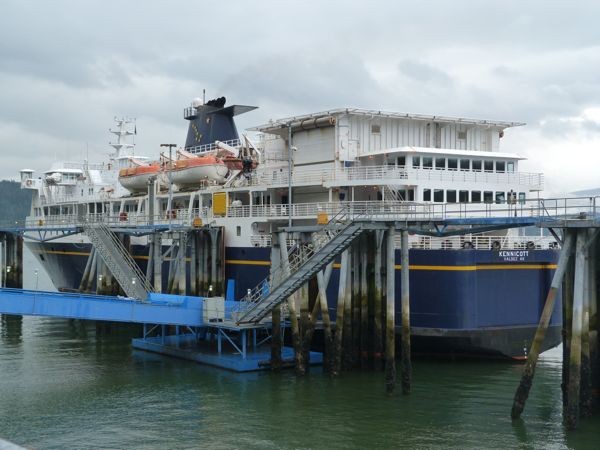
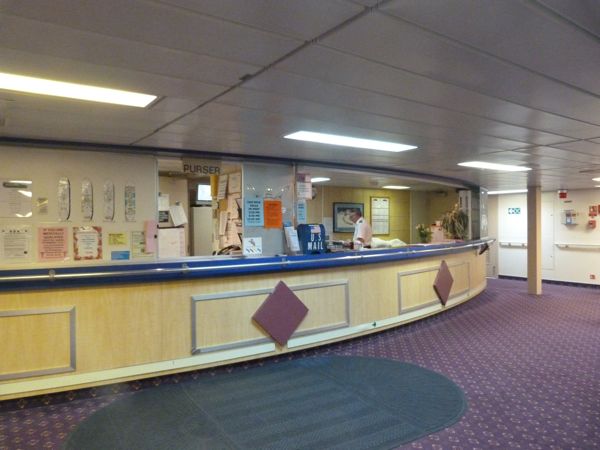
We went to the purser’s office to get our cabin, but the cabins weren’t clean yet. He suggested we go up to the forward lounge, have a cup of coffee, he would call us when the rooms were ready.
The forward lounge was full of Alaskan art objects. This is a shaman’s mask:

This is a Haida clam basket (basket weaving is so fascinating to me, all those patterns. How did people figure out, oh so long ago, how to gather living plant material and weave it in these ways? On our trip, we saw baskets woven so finely that you could boil water in them. Imagine!)

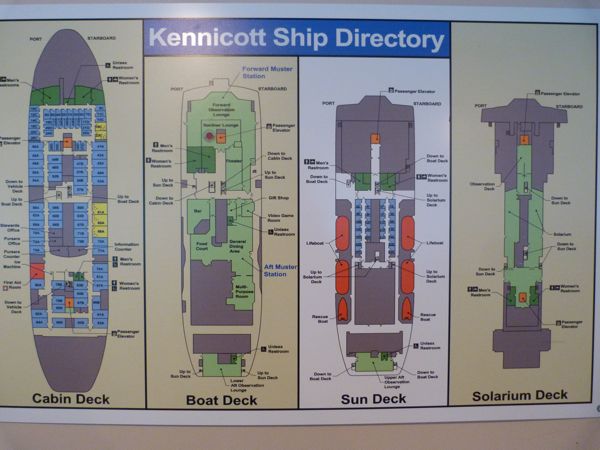
I explored around a little, well, I snooped. While the cabins were being cleaned, I looked in to see the various kinds of cabins. It was so interesting. The majority of the cabins did not have bathrooms.
There were one person little cabins, like a booth, with two seats that would slide down and together, and a table that could be clipped up when a person didn’t want to sit at the table and wanted to sleep on a flat surface. It was a pretty narrow surface, and a room like a coffin, but it locked, and it would be a safe place for one person to sleep and keep their bags safe, too.
There were two person roomettes, they also had a little table and two bunks that attached to the wall unless you wanted to sleep, in which case they came down.
There were four person cabins without baths and four person cabins with baths. If only two people were in the cabin, the unused bunks were attached up to the walls, and you had a couch to sit on during the day. The outside cabins had nice large windows, big square ones.
There was a solarium up on top designated for campers. There are a LOT of campers in Alaskan, not just Alaskans, but also visiting campers from all over the world. The solarium gives them a safe dry place to pitch their tents. There are also big lockers where they can stow their gear.
People are also allowed to camp in the aft lounges, upper and lower, but the signs ask that you only roll out your sleeping gear between 8 at night and 8 in the morning, so that all the passengers can use the lounges during daylight hours.
This isn’t a cruise ship. This is transportation. This is how people get from one place to another, how they take their kids to boarding school when their village is too small to support a school. This is how high school teams might travel to their away games. These are working ships.
When the purser announced that people could come check in to their cabins, I went, but I ended up at the end of a long line. I saw people get assigned and then the purser would hand them a set: one pillow, two sheets, one pillowcase and one blanket. (@) (@) ! No! No! I did not sign up to be making up bunk beds! Enough democracy!
Lucky me, those sets were for the roomettes, and you don’t even have to rent them, you can do without them if you prefer. I think the rental per night for the set is $3.00, but they also have it broken down, so if you just want to rent a pillow and pillow case it might be $1.00 per night, or just a blanket. Our cabin is beautiful and spacious. We have a big window, and dolphins romp by, and beautiful mysteriously foggy islands. We have our own toilet and shower, thanks be to God, and a washstand with plenty of clean towels. This is heaven. 🙂
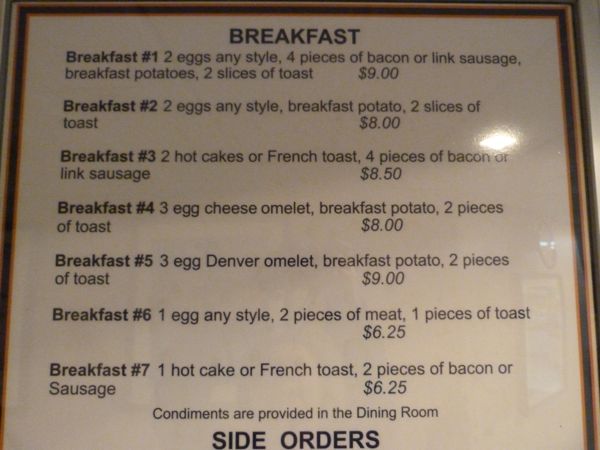
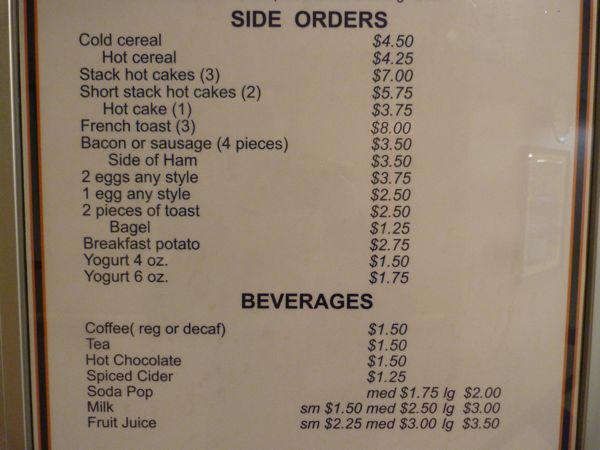
The food is not elegant, but neither is it institutional. It is a giant step above McDonalds, or any of the fast food outlets. These are the menus posted in the hallway leading to the galley (kitchen):


There are a variety of food stations – drinks of all kinds on the left, a salad and soup station on your right. Every day there were three soup choices, a soup like chicken noodle or French onion, a smoked salmon or clam chowder, and a chili. There were four prepared salads, and a big bar with greens and accoutrements; carrots, tiny tomatoes, peas, etc.

There was also a deli sandwich and pizza station, where the lady would make you what you want.
There was another station, the hot station, where you could order several different hot things. There would be three main meal choices at every meal, like beef stew, salmon steak or pork fried rice, for example, and a veg and a starch. They even had brown rice.

After you paid, cafeteria style, you enter the dining hall. It’s a working ship, remember, so it’s not just paid eaters who eat there, but also there is a microwave available for people who bring their own food. I saw one young man who had the BEST food, the first day he had a cucumber with salt and pepper, and bread. At breakfast, he had brought his own granola kind of mix. (Then he was gone, it’s a ferry, and people come and go.)
There are families with children warming up spaghettio’s, and single women with bowls of Ramen. It’s all very democratic, everyone sitting in the same dining hall.
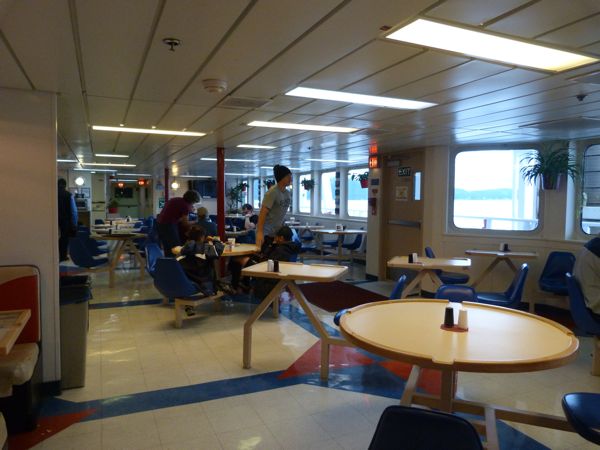
There is always a large display full of desserts; they must have specialized in desserts, very tempting desserts. AdventureMan succumbed one meal to a piece of Coconut Cream Pie, and I yielded to a Blueberry Pie at another meal.
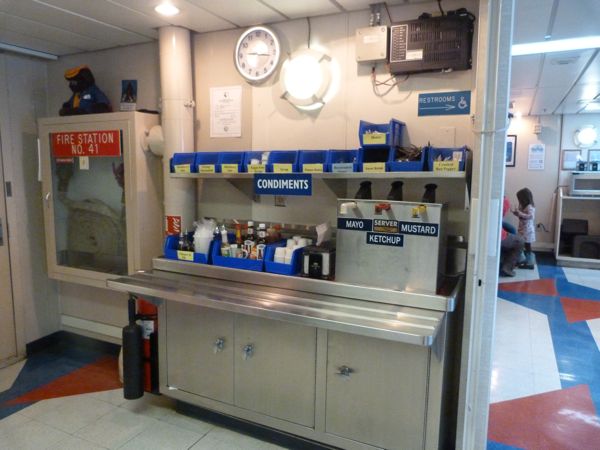
They also had all kinds of condiments, in case you like a little kick with your foods, the more common ones, ketchup, mustard and mayonnaise you pumped into small containers, but there were also things like Thai chili sauce, Tiger Sauce, Tabasco sauce, soy sauce – things different people like.
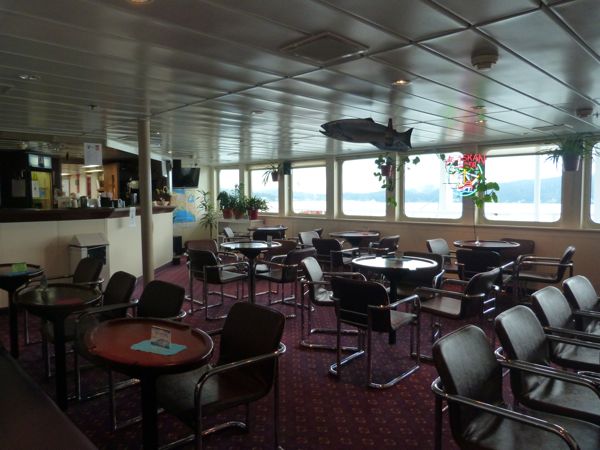
There were several booths with Alaskan wildlife and bird life on them:

Near the dining hall, across from the gift shop was a small room for small children with a rubber floor 🙂

This is the bar, which was closed every day until around 5:00 and it was the only place on board that sold alcohol. You weren’t supposed to take it out of the bar. They had Alaskan beer, which is very tasty.
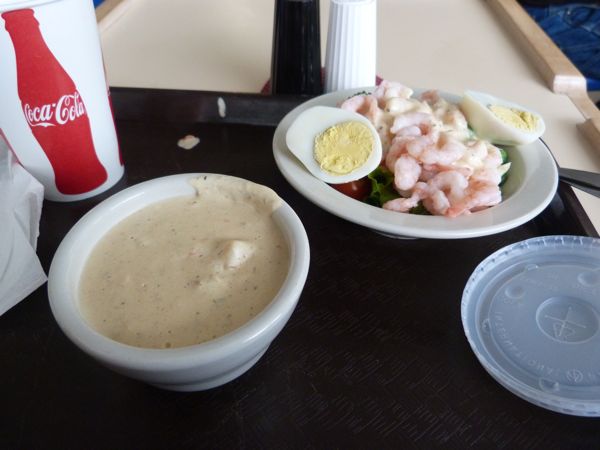
This was lunch our first day on board, Smoked Salmon Chowder and a shrimp salad:
After every meal, we walk the decks, and, in fact, other than climbing in and out of my bunk, most of our exercise was walking, walking, walking, and climbing stair up and down. It didn’t do us any harm 🙂 The scenery is ever changing. Our first day out, we pass the same humpbacks we had seen on the whale watch the day before, spouting, someone always can be counted on to shout “Thar she blows!” The Alaskan waters team with wildlife; sparkling fish jumping, dolphins, seals, sea lions, otter – we saw them all. I would be typing up notes in our cabin, facing out the window, and I would see a couple dolphins just zipping along, so graceful, just doing their dolphin thing.
Grandma’s Feather Bed Restaurant, Juneau, Alaska
We saw people shuttling to Grandma’s from our nearby hotel, the Best Western Country Lane. Country Lane is spacious, near the airport and Alaska Marine Highway Ferry Terminal, and just 8 miles of Juneau city center.

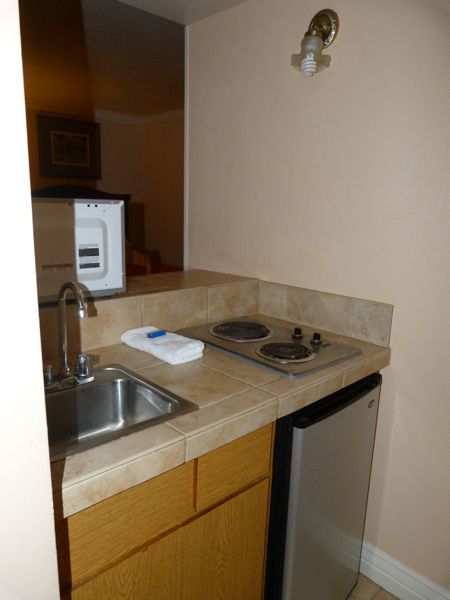

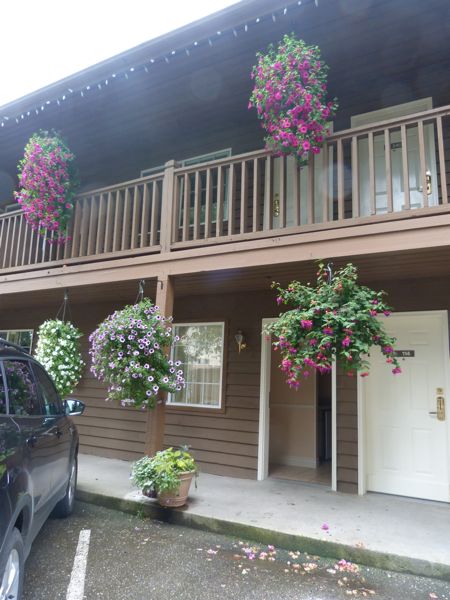
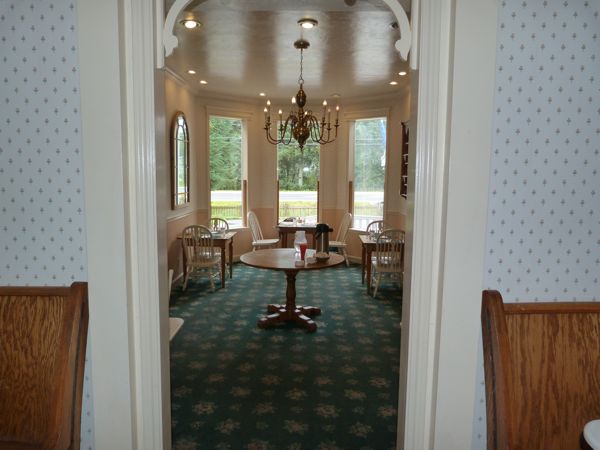
Grandma’s Feather Bed is both another Best Western Hotel and a restaurant, but it has the feeling of a B&B. It is quaint and inviting, without having an old lady feel to it:
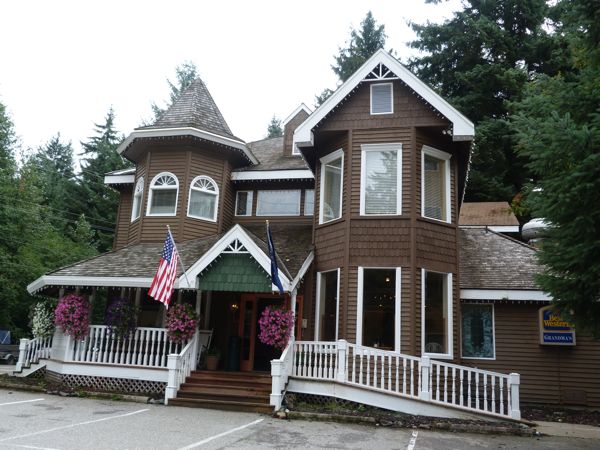
This is where we ate:
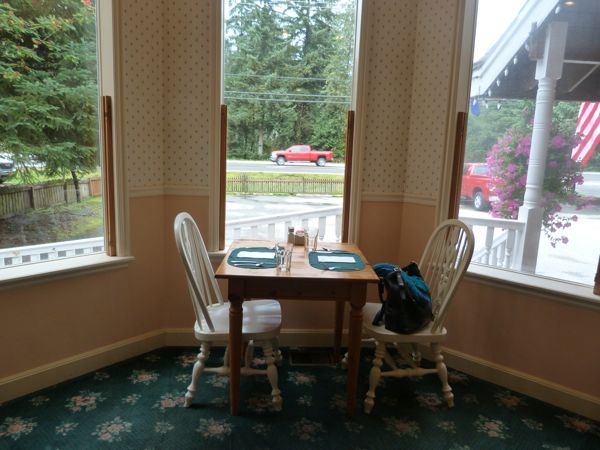
A view of the restaurant
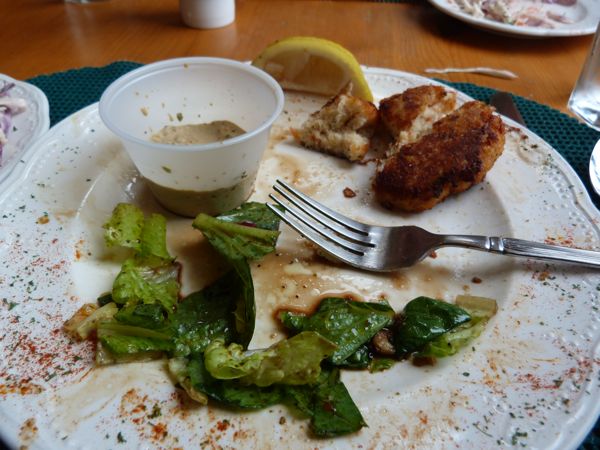
This was one of my best meals of the entire trip, and I am so sorry I forgot to photograph when it was all pretty on my plate. It was two or three halibut cakes on a salad. The salad dressing was exquisite, the halibut cakes were mostly halibut, perfect, and they were served with a sweet red pepper coulis that was to die for, very fresh. You can see a halibut cake remaining on the side of the plate, LOL.
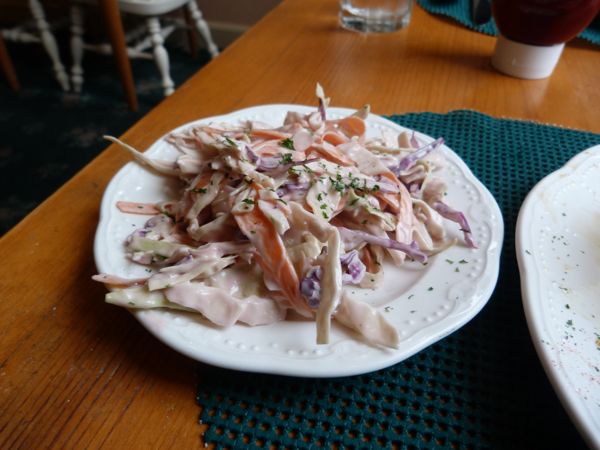
Cole slaw:
AdventureMan had the salmon burger, which he said was also delicious, and also coated with the same delicious coulis.

The Berry Patch Cabin in Eagle River Camp Grounds
As we were hiking through the Eagle River Camp Grounds, we could hear a dog barking, barking as if he were having a lot of fun. We saw a cabin, and one of the park rangers playing with a big brown happy dog. We walked over; he had just finished cleaning out the cabin and it was empty. He asked if we would like to take a look.
I hope you are sitting down. The rental of this beautiful cabin, per night, is $45.
This is the interior. You can see where people can sleep, downstairs and up. Maybe room for 8 – 12 people.


From the table, this is your view:

Sign on front of cabin:

View from your front porch:

You have to bring in your own equipment, including propane to run the heating stove, and your own bedding. There might be running water. You would need all your sleeping gear, food prep, and there are many electrical outlets in the cabin for charging up all the electrical gadgets you probably can’t use. I think we did have phone coverage in the area. 🙂
Although it feels remote, you are not that far from Juneau, and there are major grocery stores even closer. There is a Fred Meyer – where you can pick up just about anything – near the airport.
I dream of bringing our grandson here with us one summer. We’d have to be sure he was old enough to be careful about bears, and any other wildlife. At the same time I dread the logistics. Maybe if I think about it for a couple years, it can become do-able . . .
A Trip “Out the Road” to Eagle River
One of the things AdventureMan and I did in Juneau was to drive every road. It’s not hard. You drive all the way south, and all the way north on Douglas Island, then you drive out to Thane, then on the Juneau roads, up behind in the basin, and then “out the road.” Everyone in Juneau knows where “out the road” is.
When I was a kid, the road got bad just past the airport, on the way to Skater’s Cabin, which I thought was on Auke Lake, but discovered is really on Mendenhall Lake.
You had to go out the road to get to the airport. You still do, but it is only like six minutes, the road is so good, unless you hit a deer (which we saw happen) and have to stop and call Fish and Wildlife Rescue. You can’t leave an injured animal on the highway.
So we have a morning, and it is not raining! The sun is even peeking out now and then! It’s a beautiful day, we dress warmly and head out the road, out driving all the roads. Look closely, and you will even see blue sky in the photos 🙂 We drive the Lena Point road, looking at all the cabins where we used to go picnicing, then to Amalga Bay, with it’s beautiful still lake and reflections.
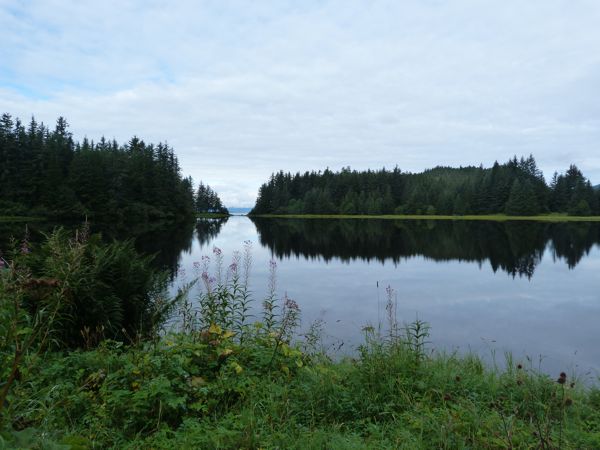
You’re just going to have to bear with me as I show you photos with a lot of green in them. It’s not that Pensacola doesn’t have green, but it doesn’t have Alaska greens. I remember in Germany, a long time ago, years ago, having a discussion with AdventureMan about how many different shades of green there are, and ever since then, he has reminded me of that conversation. This year, on this trip, he said “Now I know why you are so sensitive to greens!” Alaska is full of greens, and mostly they are blue greens, and oh, I love the spectrum of blue-greens. 🙂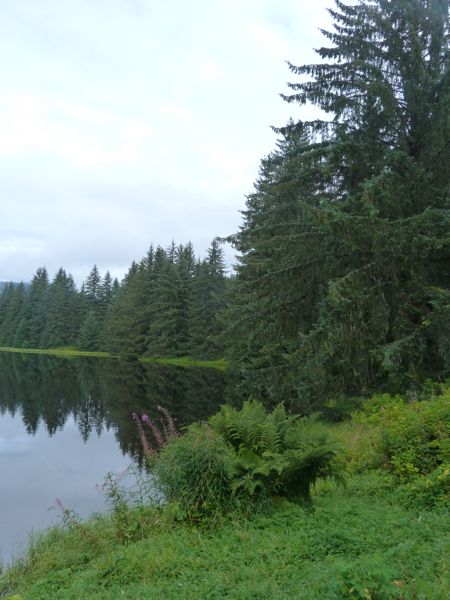
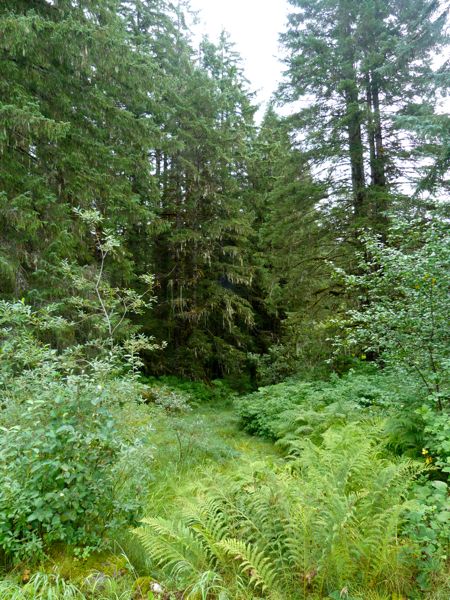
As we approached the end of the road, there was heavy road construction going on. Winter is coming, to quote Game of Thrones, and in Alaska that means a short window for all the road reparations that can happen as a result of brutal, icy, rainy, snowy winters. The construction traffic controllers told us it would be about twenty minutes before the pilot car would be back to lead the next line of cars over the broken, rocky, off-road paths, and we decided, in our little 2 wheel drive rental, that we would forego that pleasure. We headed back for Eagle River Picnic Grounds, which were beautiful and serene:
This is one of the covered picnic cabins, heavy duty timber

You can see one of the ferries departing nearby Auke Bay from the ferry terminal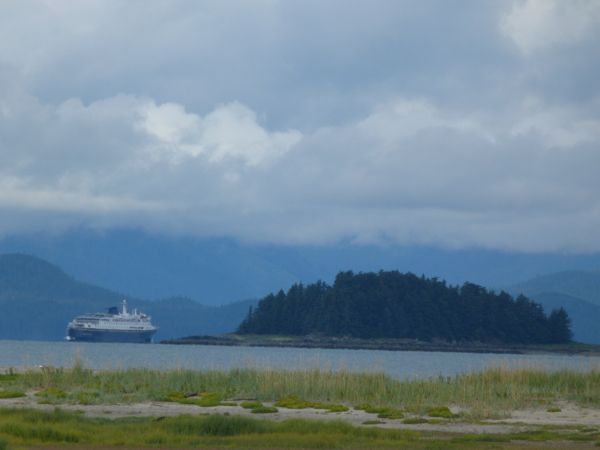

We head on a little further to the Eagle River Camp Grounds. We are in love! This place is beautiful, with hidden campsites with cabins and campsites for RV’s, but all hidden from sight. No indoor plumbing, but the public restrooms are clean and well kept. You can hike around, there are many trails.
Salmon spawning in the stream – the ranger tells us a mother bear and her two cubs were by earlier, but we missed them. You can smell all the rotting salmon on the banks and know that the bear are eating well.
An old dock, long gone, from Eagle River – and look at all those beautiful greens in the background 🙂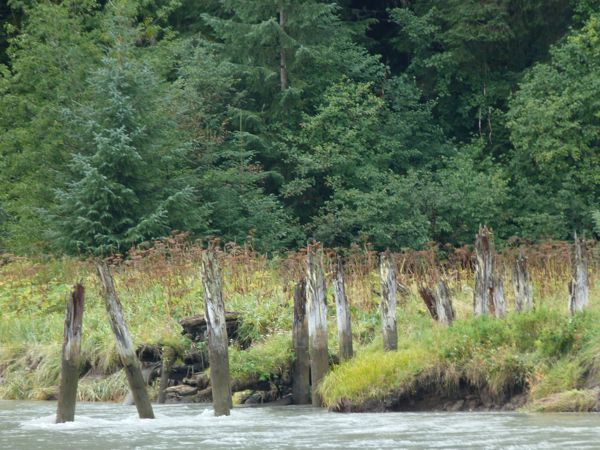
Seagulls feasting on salmon the bears left behind. Bears are not very efficient eaters; they strip parts of the salmon and leave a whole lot:
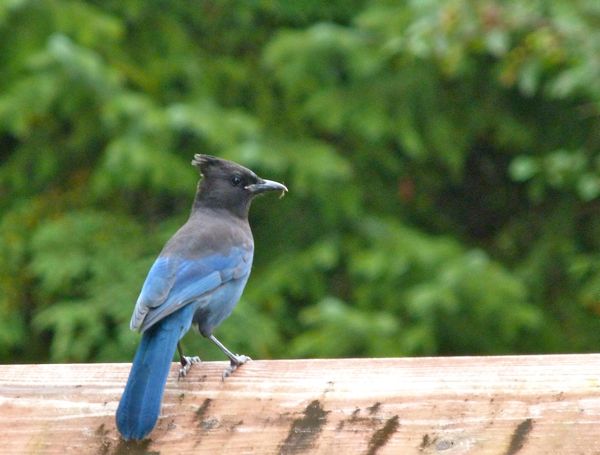
A Stellar’s Jay, the kind I grew up with. The Jays in Pensacola are more white with blue markings and much bigger. But look at the blues on his feathers, so intense, so radiant!
We love Eagle River campsites so much you will see more on our way back out through Juneau 🙂
Here be Bears!
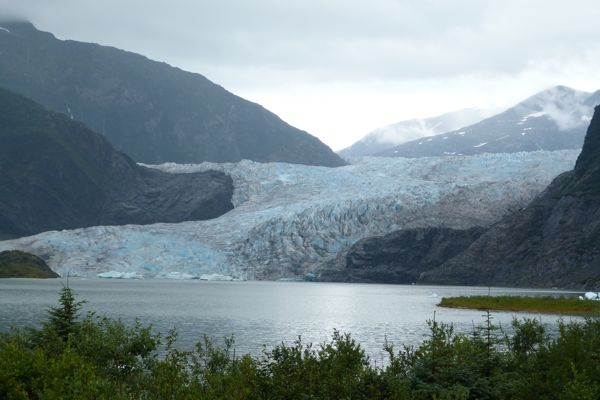
While our first day had been exciting, it was also full of drenching cold rains and while AdventureMan NEVER complained, I could see he was . . . hmmmm . . . . supportive but underwhelmed. Fortunately, our next day dawned with high clouds and not a drop of rain in sight. We went immediately to the Mendenhall Glacier, something everyone sees when they are in Juneau, and, thanks be to God, it was not fogged in nor covered with rain clouds, but there, in all it’s icy blue glory:

There were iceburgs floating away, looking cool and serene:

The glacier is always awe inspiring, but there is also something else. The municipality knows that all these tour boats coming in need things to do and see, so in addition to the glacier, they have built a state-of-the-art walkway along a stream flowing from the glacier, a stream full of salmon. And when there are salmon spawning – as they are in August – and bear who are trying to store up fat for the winter, there is a wonderful confluence of needs. The salmon need to spawn, the bear need to eat and the tourists need to see something exciting. Bear chasing and eating salmon fits the bill.

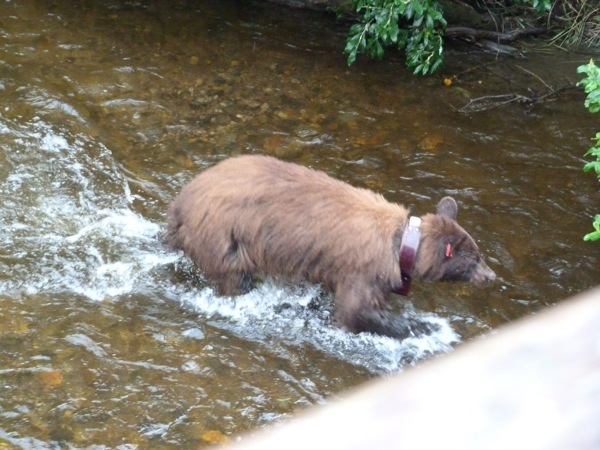


This was a very very good day 🙂
Beach Road 98 on a Torrential Fourth of July Weekend
A two and a half hour drive took us six hours. We also stopped for lunch, and we stopped to pick up the Qatari Cat. The rest of the time, we were stuck in bumper to bumper traffic most of the 100 something miles of the drive home; stuck in one lane even on four lane highways as the drains failed when there was so much rain and runoff that there was no where for it to go.
Leaving Panama City, the surf was high, and full of undertow.
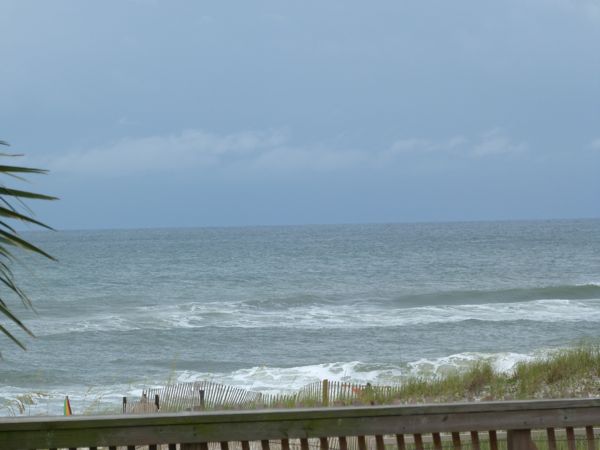
We were able to get through the Watercolors/Seaside area quickly, and then the deluge:
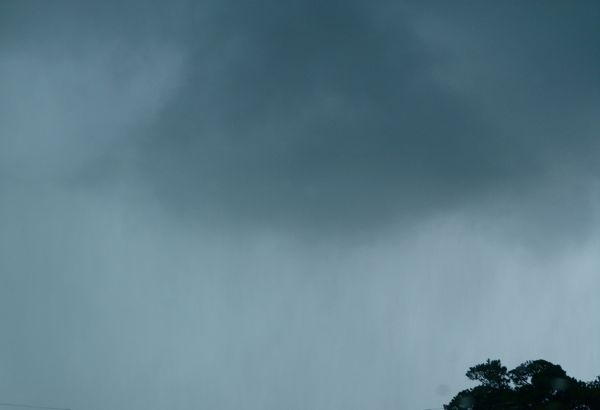
When we had to go single file, most of the time everyone cooperated, letting people in from gas stations and side roads, taking turns, etc. Then, there are always those @$$&*!>$ who think everyone is being too cautious and polite, who break the line, go thundering up through the lake, discover no, no they really can’t make it and barge back into the line. Karma catches up with the arrogant.

The worst part, the very worst, was going past the SanDestin outlet malls; when the skies break forth and there is no possible point to being on the beach, the tourists head for the malls and the restaurants. The malls were booming! Traffic crawled by. Even the poorest restaurant was also full; thank God we were still full from breakfast.
This is the bridge leaving Destin; on the right side of the road in front of that stalled truck is about a huge puddle a foot deep:

Outside Navarre, both rain and traffic began to lighten up. We stopped at a little roadside place I’d always wanted to try for something that might have been our late lunch or our early dinner – TC’s Front Porch, it’s across from the Navarre Butterfly House.

There was a small crowd inside, guys hanging out at the bar, looked like fishermen waiting for it to clear up enough to go back out and catch some fish, some tables with college kids down on the beaches for summer break, maybe lifeguards – swimming not allowed with the heavy surf and heavy rip tides running.
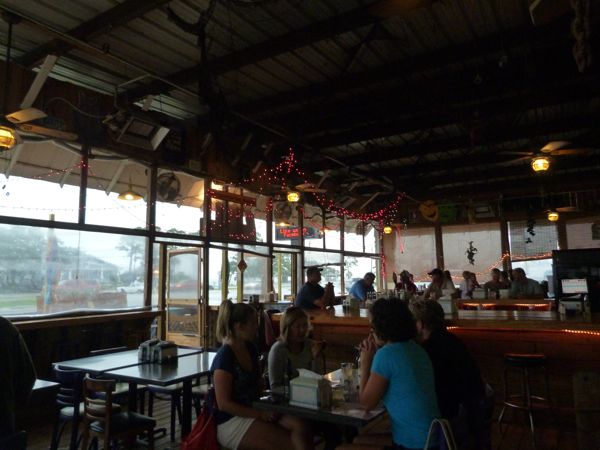
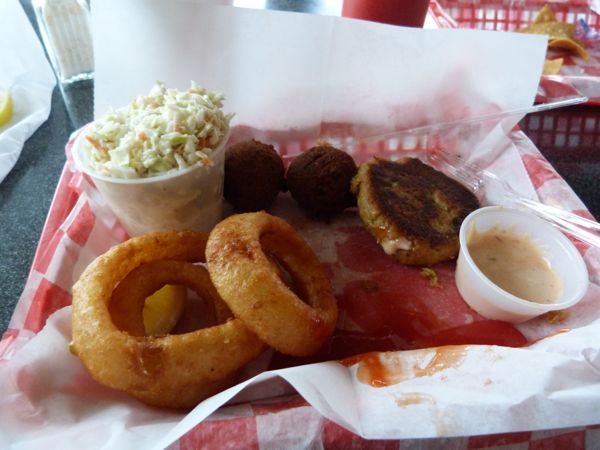
Everyone pretty much just waiting out the storm, tossing back a few brews, just hanging out. I had some pretty good crab cakes and AdventureMan had the chili. It was all OK. Beach food.

The Qatari Cat was delighted to see us, and slept as close as he could to me all night (not such a great thing; I appreciate that he thinks I am special, but he is hot, and I can’t turn over without disturbing him . . . aarrgh) This morning, however, he ran and hid under the bed when he saw us getting ready to go out; we think he was afraid we were taking him back to Wee Tuck’Em Inn, LOL.
Here’s the thing. For us, we were just inconvenienced, and it was just minor inconvenience. We had the time, we knew beach traffic would be heavy, it was a little adventure.
For people who earn a living from tourism, for some of these people, this weekend was probably a disaster. The hotels are packed for the Fourth of July weekend, and lots of fireworks displays are planned, big entertainment – it’s a big money making time of the year. With the four day storm, some people probably cancelled hotel reservations, and when the rain didn’t stop, others left. Many of the July Fourth fireworks displays were cancelled. Local fests were rained out. I am guessing most of the malls and restaurants did OK; not much else to do, but it rained SO much that there is a lot of flooding and a lot of damage. This, for many people, was not a good weekend.
Retrograde 4th of July
Alternate title: Every man needs a Kubota
As we were listening to the news and weather Tuesday night before going to bed, the weather woman was talking about a ‘retrograde’ storm system. She showed us on the map; normally our weather blows from west to east, but this storm was going to blow east to west, and then reverse and go west to east again. Going counter to the normal flow is ‘retrograde.’
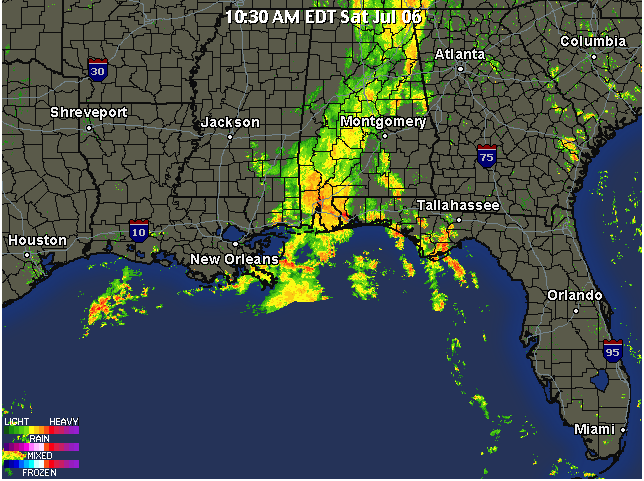
Our entire holiday was retrograde. Which, for people like AdventureMan and I, is not too bad. It’s a good thing we married one another; we are not to good with same-same all the time, if things get too tame, we shake things up a little bit. It’s not good or bad, it’s just the way we are wired.
One of the first differences was that we weren’t leaving early in the morning to drive down Highway 98 along the beach road; we were picking up our adorable grandson, going to his house, and as soon as our daughter-in-law got off work we would hit the interstate.
It all went well; cloudy skies but light traffic, all was well until we left the highway headed south . . . and started hitting the “Roads Under Water” signs. We didn’t see any roads under water until the car in front of us hit what looked like a shiny spot on the road and went almost a foot deep. AdventureMan cooly slowed and drifted steadily through the lake in the road – and we thanked God to be in a vehicle a little higher off the ground than a sedan.
After the lake in the road, it started raining, a little sprinkling, and then a steady rain.
The temperatures dropped.
Here is what we had planned – dinner with family and friends, a day of fun and heading out for sun downers on the boat to watch the fireworks on the 4th. Heavy applications of insect repellant and sunscreen.
Here is what happened – the deluge.
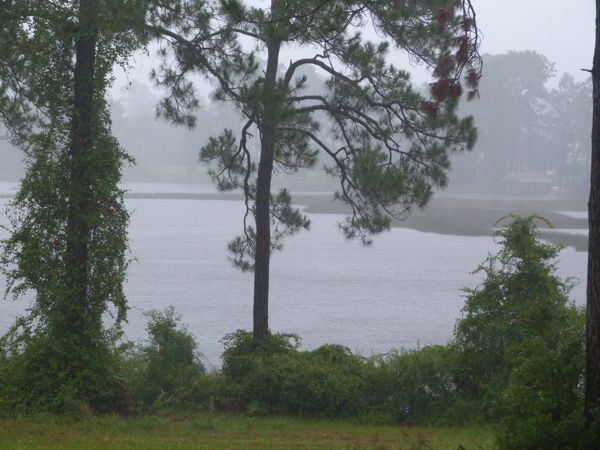
Here is what was cool about the deluge – the temperatures were the coolest, 24 hours around the clock – that we’ve seen in a month. We could sit out on the screened porch looking at the bayou, listening to the rain fall – it was heavenly! No insect repellent needed. No sun screen needed.

Our hostess is a wonderful and creative cook; unafraid to try new recipes. Dinner after our rainy drive in: Red snapper, baked in a crust of crumbs with butter and parsley, so delicious. Green beans and mushrooms; so good I had them for breakfast another day 🙂 Holy smokes, desserts. The best pound cake ever, topped with peaches in their own juice and whipped cream, or chocolate red velvet brownies.
It was a fabulous lazy day. In the afternoon, our friend got an emergency call; friends whose husband was out of town were facing a flooding situation. Loading up his Kubota, he and AdventureMan went over and (manly manly) DUG A DITCH! getting all dirty and wet in the process, coming home with those grins that only activities like a good hunting trip, a successful fishing trip or digging a good ditch can create.
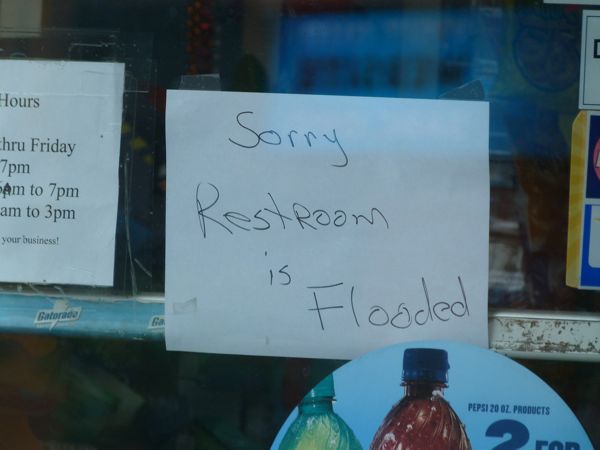
We had great plans that night to visit The Blue Fig (“They have mohammara!” my hostess said, knowing my weakness) but when we got there, it was closed . . . and, oddly every restaurant along that strip seemed to be closed. And side roads were flooded, more big lakes of water in the roads. It had rained so much and for so long that the runoff had no where to go.
Our little grandson fell asleep while we were searching for a restaurant that was open, and slept in my arms through dinner. I know this might be the last time; he is getting to be such a big boy, so I just treasured the time and listened to him breathe.
I know it may not seem like such a great holiday to you, but it was fun. We focused on conversations and laughed a lot. AdventureMan thinks every man might need a Kubota. We listened to the rain fall on the leaves, the roof, the bayou. We listened to the frogs celebrate the 4th of July. We really had a great time.
Recent Comments
intlxpatr on Shampoo Ginger tigerbutterya0c5ff1d… on Shampoo Ginger intlxpatr on British Soldier Kidnapped, Esc… John on British Soldier Kidnapped, Esc… intlxpatr on British Soldier Kidnapped, Esc… Wikipedia Donate Button

Amazina


Early Voting in Florida


