Hope is Not a Strategy
Our leader has said other nations will come to escort ships through the Strait of Hormuz.
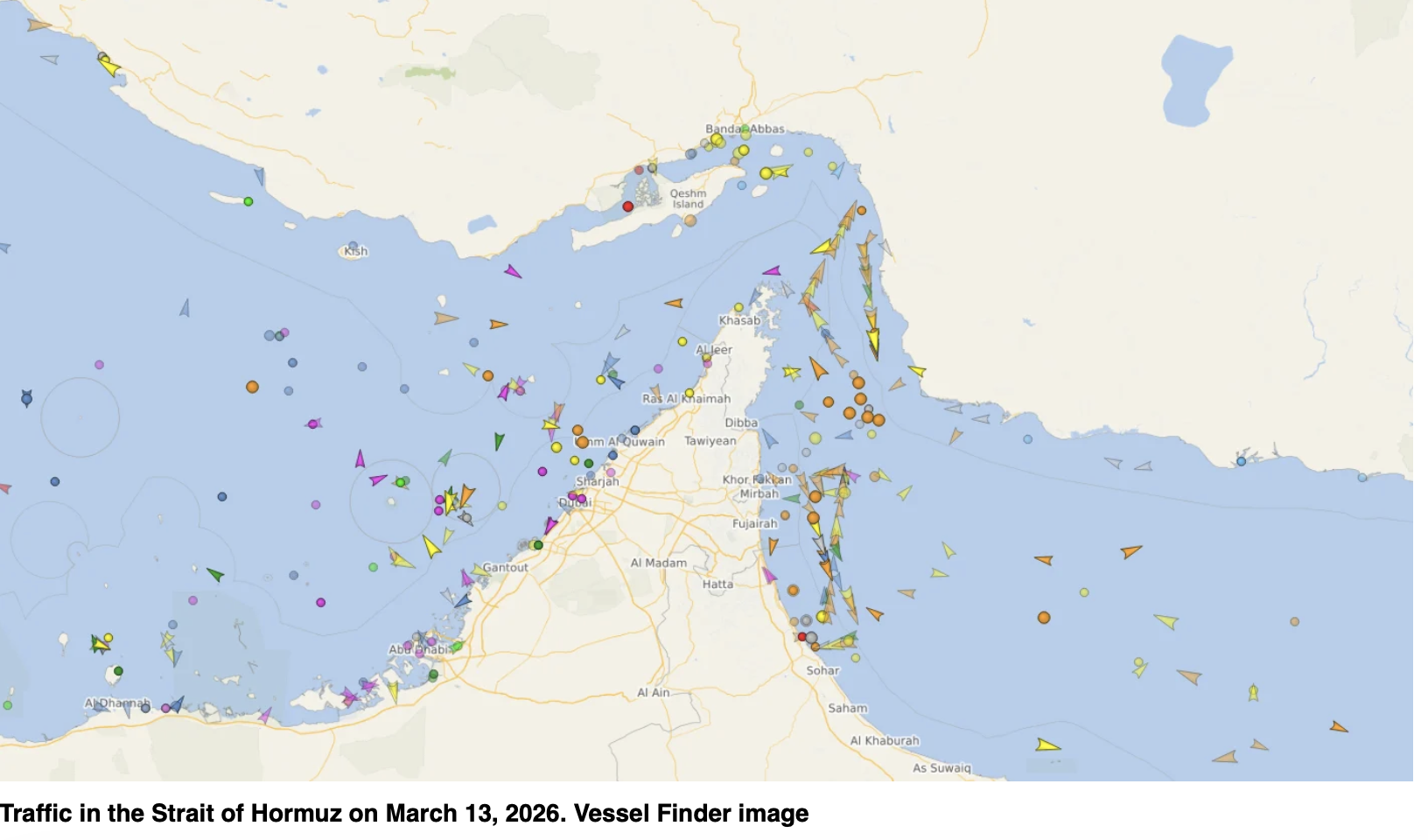
Trump last week first raised the idea of naval escorts for tankers in the strait “if necessary,” but on Monday, he hoped they wouldn’t be needed.
“When the time comes the U.S. Navy and its partners will escort tankers through the strait if needed. I hope it’s not going to be needed, but if it’s needed, we’ll escort them right through,” he said.
But even with Naval escorts, an expensive and time-consuming mission, it’s “not necessarily a guaranteed success,” according to Kirby.
“Drones can fly low and slow, they can fly fast and low, and they can do a lot of damage even to one ship with the Navy not being able to knock it out of the sky,” he said. (From TheHill.com)
And then this, from Associated Press:
“Many Countries, especially those who are affected by Iran’s attempted closure of the Hormuz Strait, will be sending War Ships, in conjunction with the United States of America, to keep the Strait open and safe,” Trump wrote on Saturday, later adding, “this should have always been a team effort.”
It was not clear if that multi-nation push was set to begin or if Trump only hoped it might, however. That’s because he also wrote: “Hopefully China, France, Japan, South Korea, the UK, and others, that are affected” will “send Ships to the area so that the Hormuz Strait will no longer” be threatened by Iran.
The normal route for declaring war is to communicate your intentions to your allies before you attack. It is to prepare and coordinate with your own national institutes before you attack. And, when you are going to seek assistance, it is a really good thing if you have not insulted your allies in numerous ways before asking for their help, especially when it involves great risking expensive ships, aircraft and lives.
“Hope” and “Hopefully” are not good substitutes for steady, consistent diplomatic relations and providing reliable, honorable leadership on the international level. This would-be war eagle has soiled his nest.
Morocco Malta and the Med: Algiers!

We are excited. Algiers is one of the reasons we booked this tour, knowing that things can happen, and that for political reasons, or because of weather, it might not really happen. When you travel, you just have to accept that things are not always going to work out.
(On this trip, by the grace of God, every single thing worked out.)
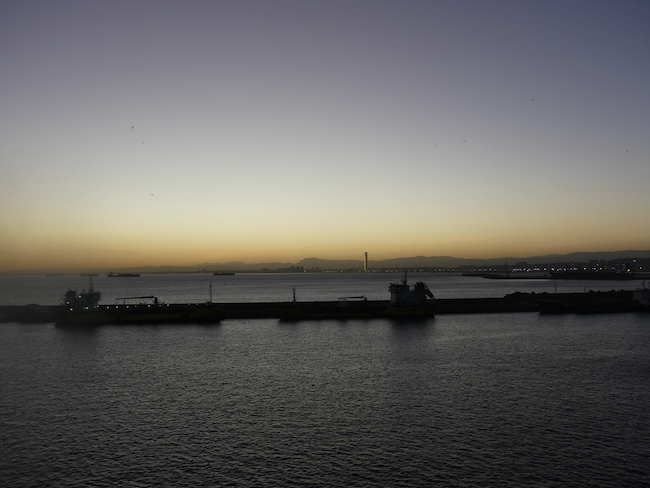
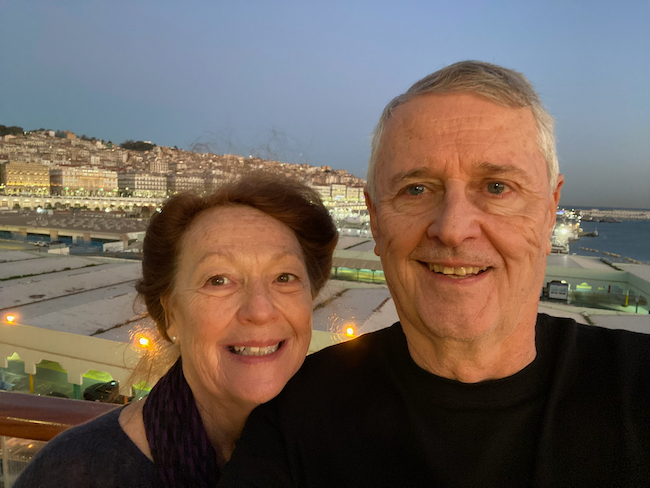
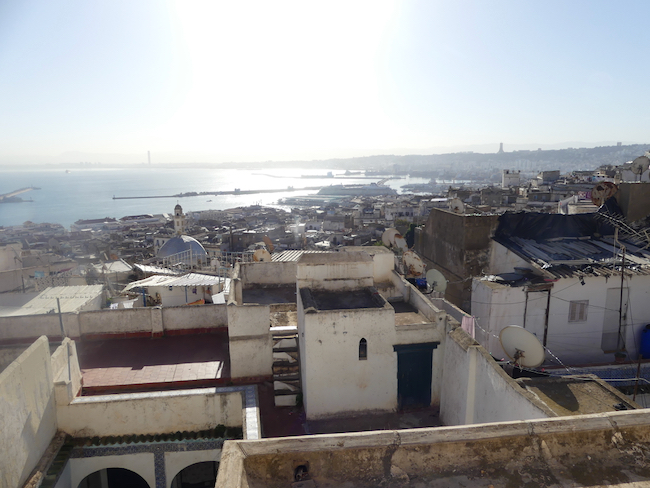
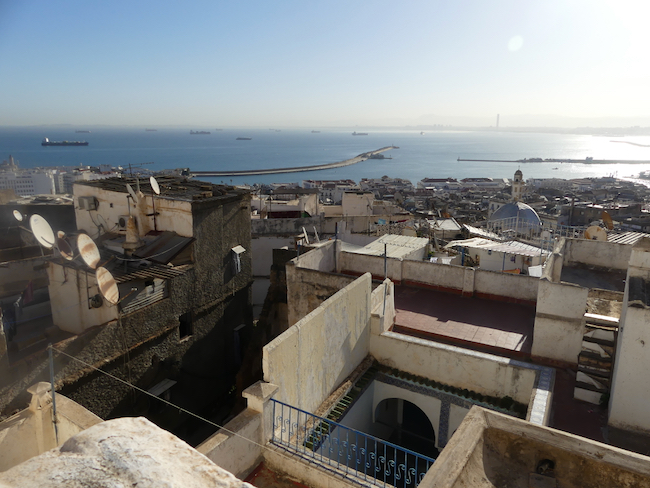
It’s still dark, and we are sailing into the harbor at Algiers. On the hill I see – A Christmas Tree??!! No, as it turns out, this is a memorial to the martys of the war, the Algerian war for freedom from the French.
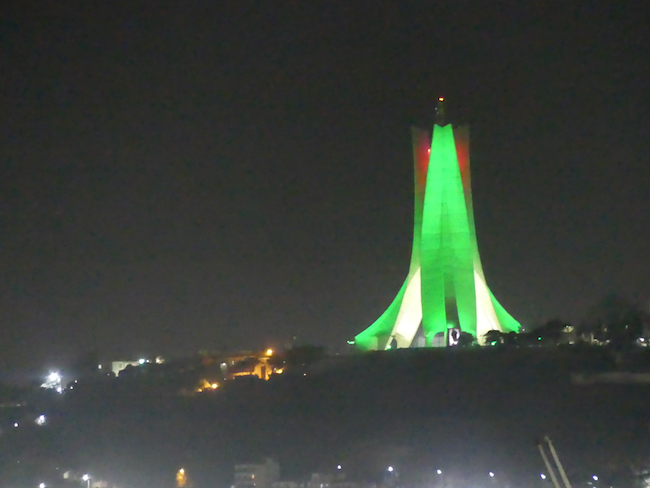
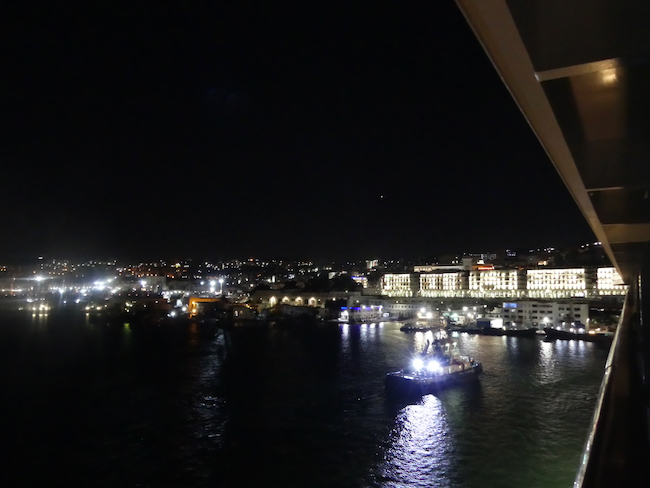

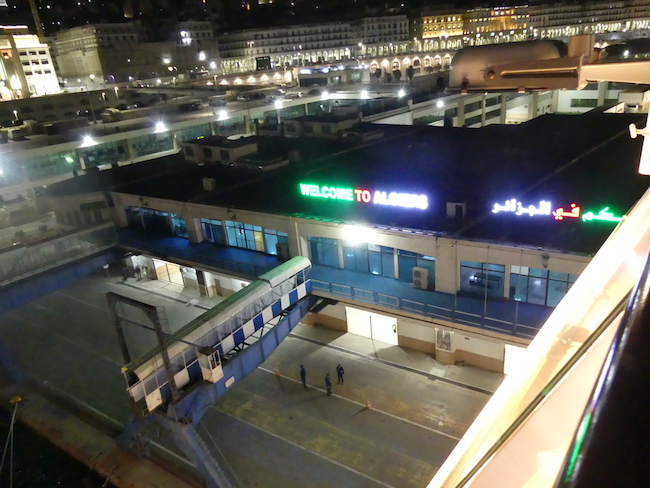
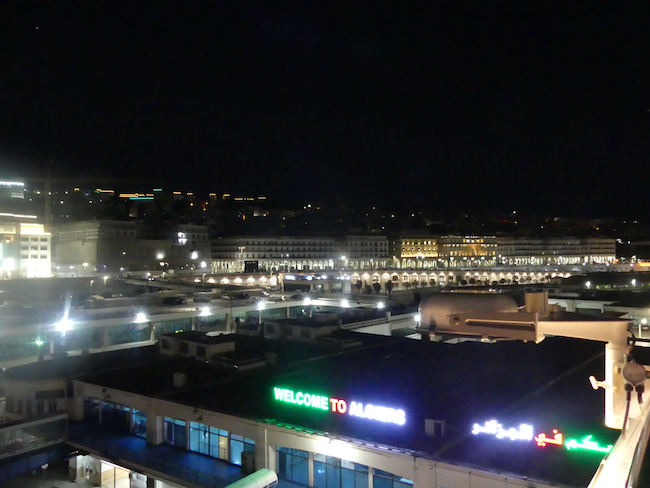
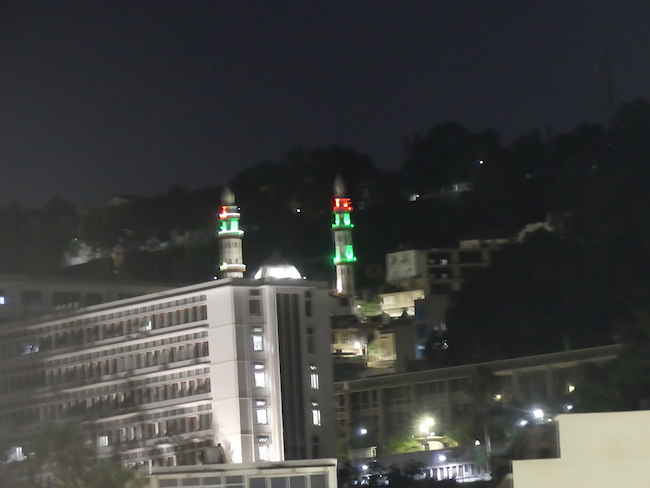
Algiers is the only port in which I heard the call to prayer. It was hauntingly beautiful. The mosques do not all start at the same time, so there is a kind of cacaphonic beauty from a large number of prayers going up at the same time.



The Hall of Honor is where we process through to get to our buses.

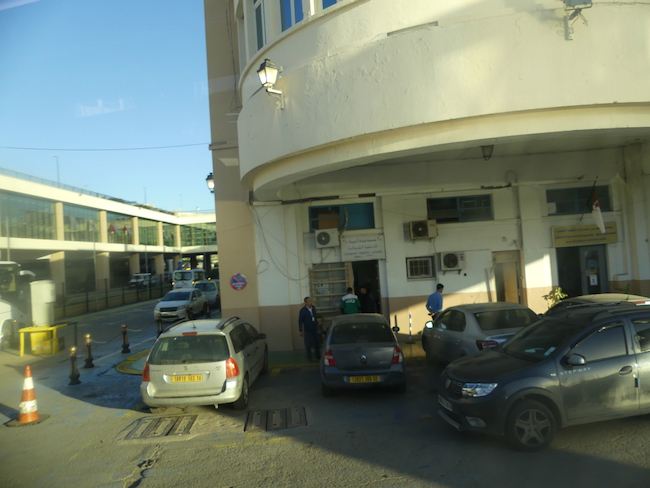
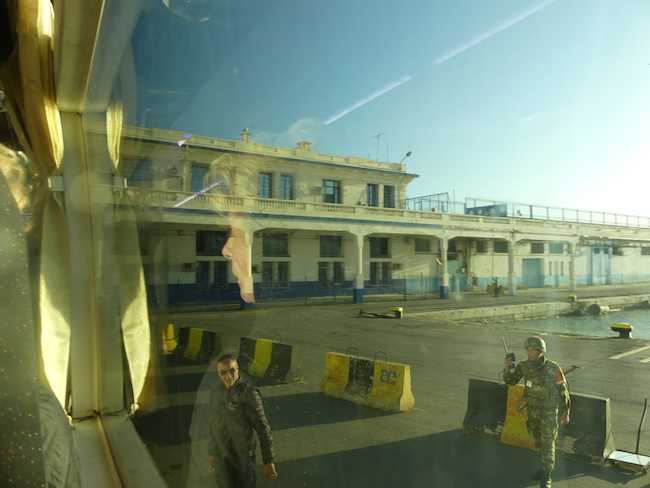


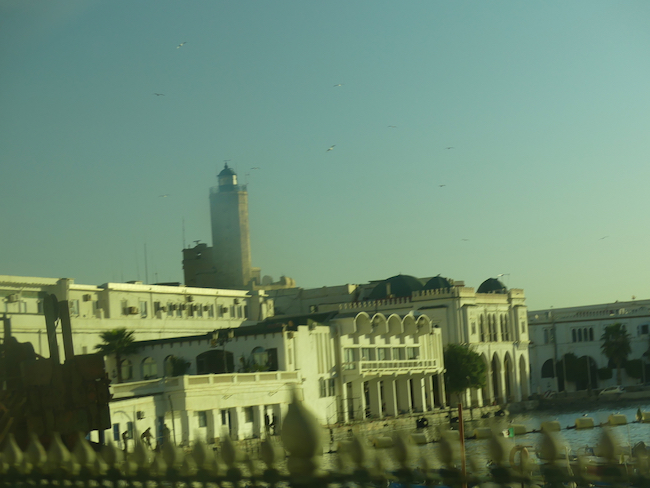
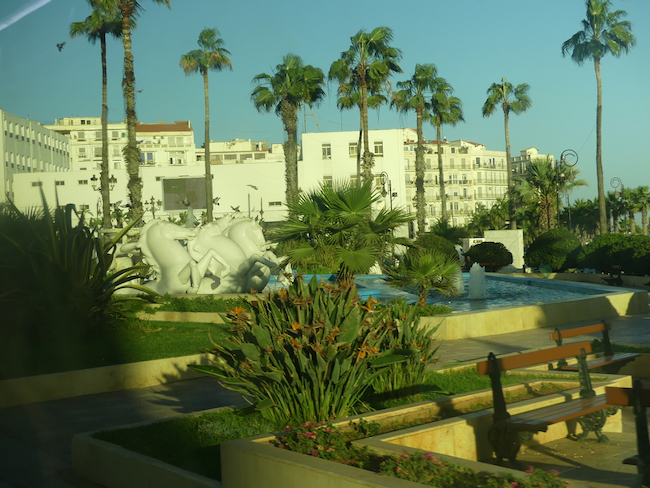
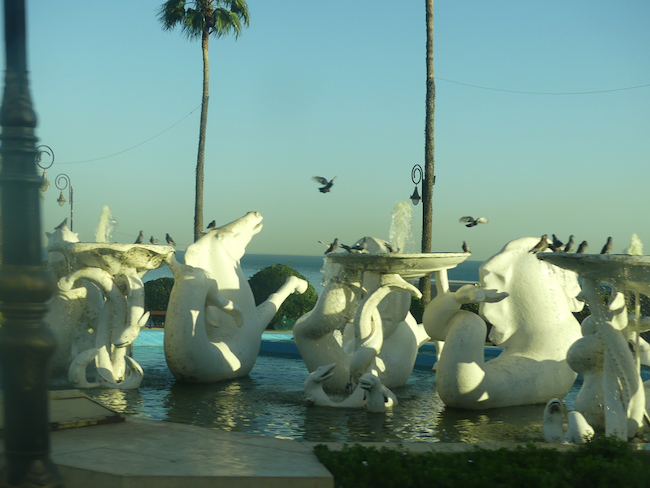
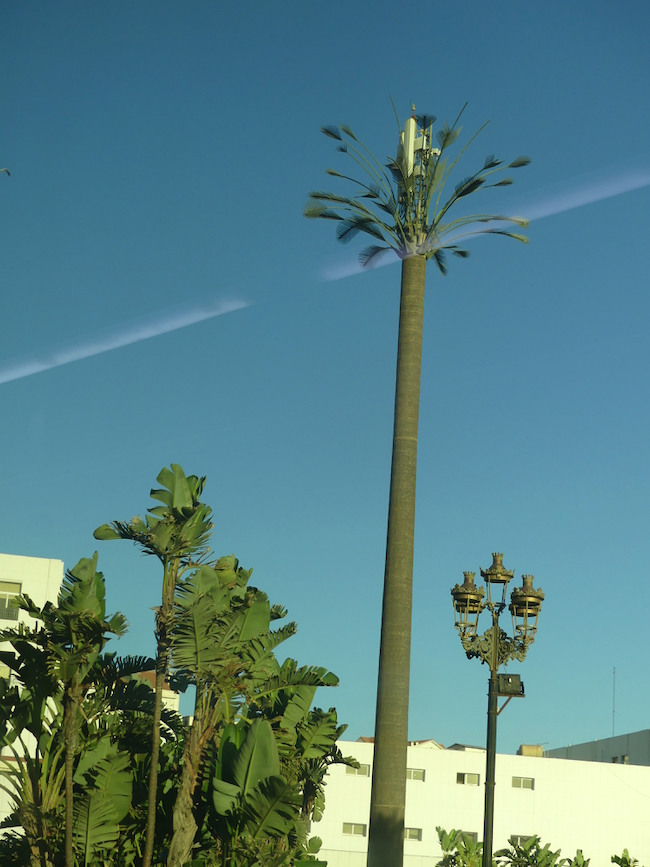
We used to see these “Palm Trees” in Kuwait, really communication towers.
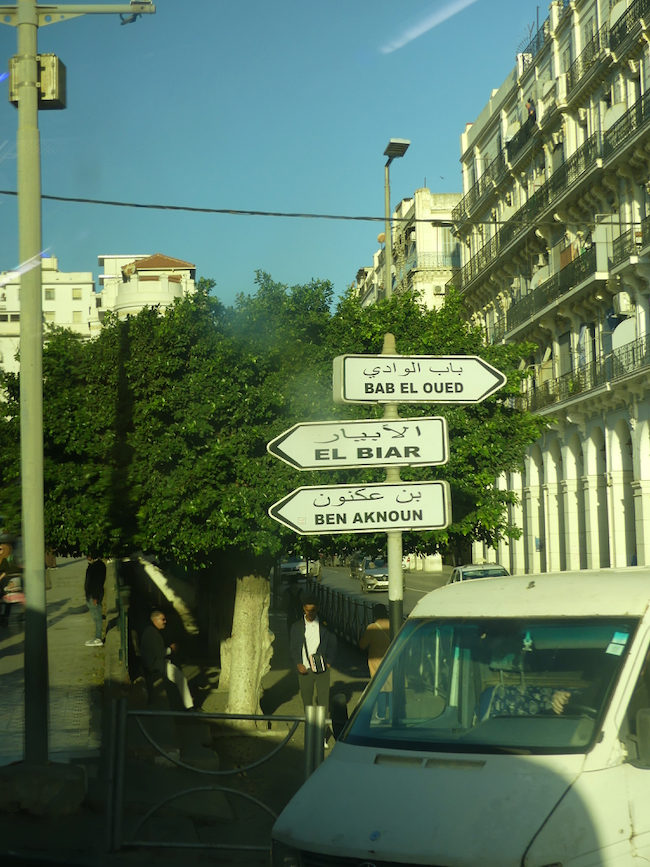
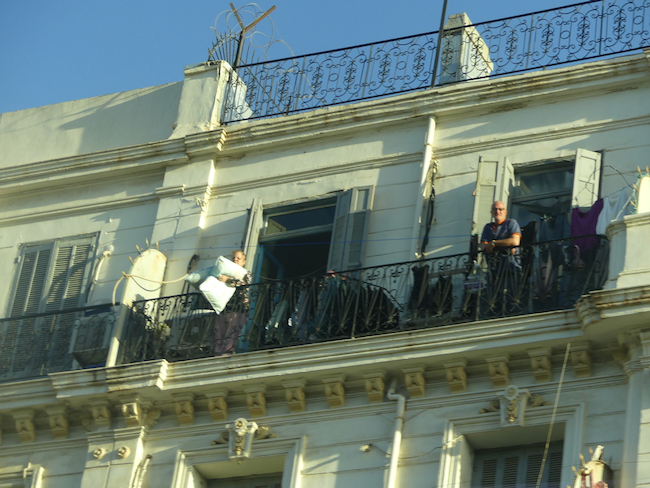


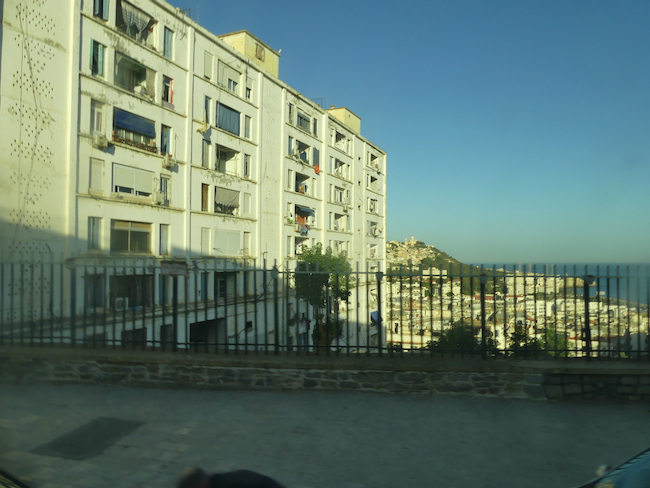
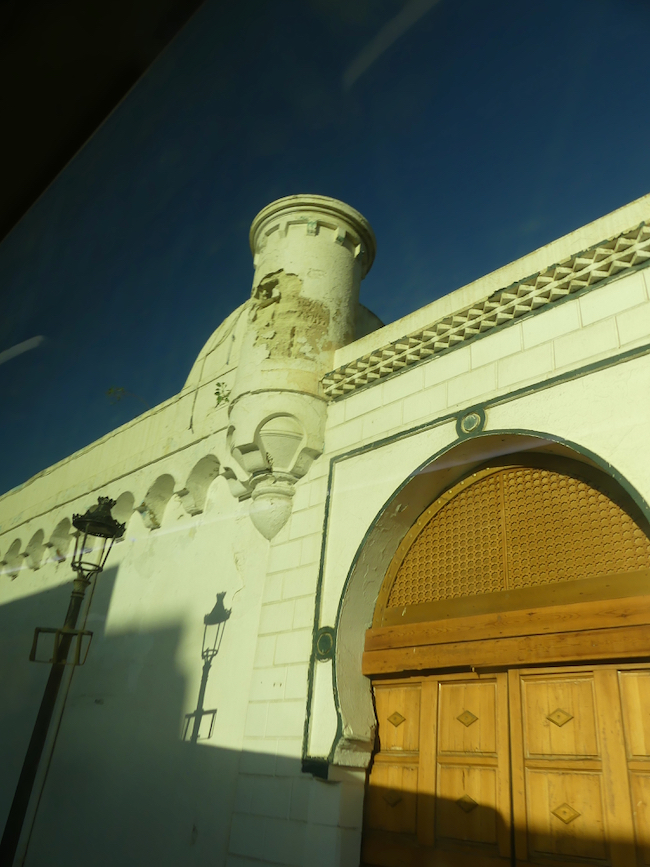


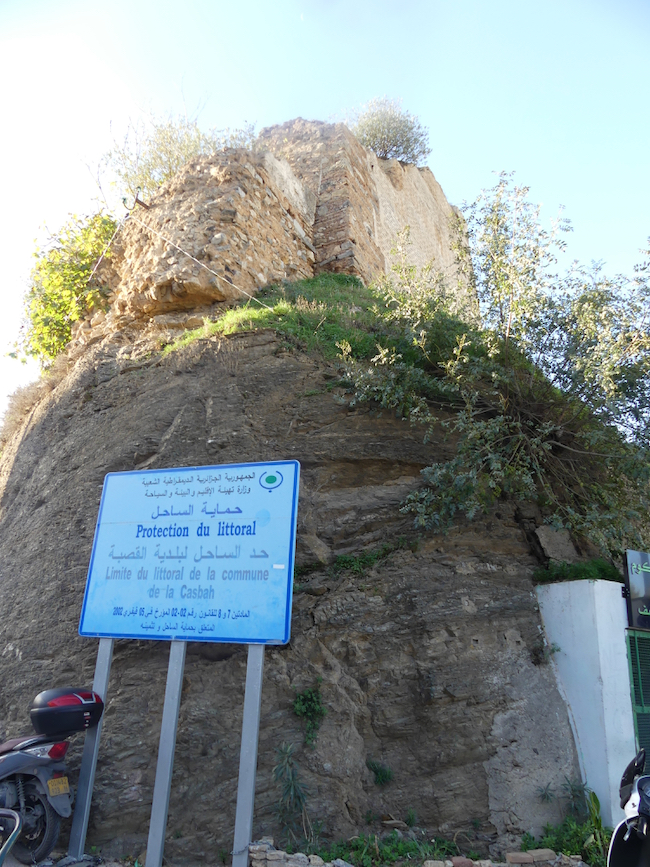


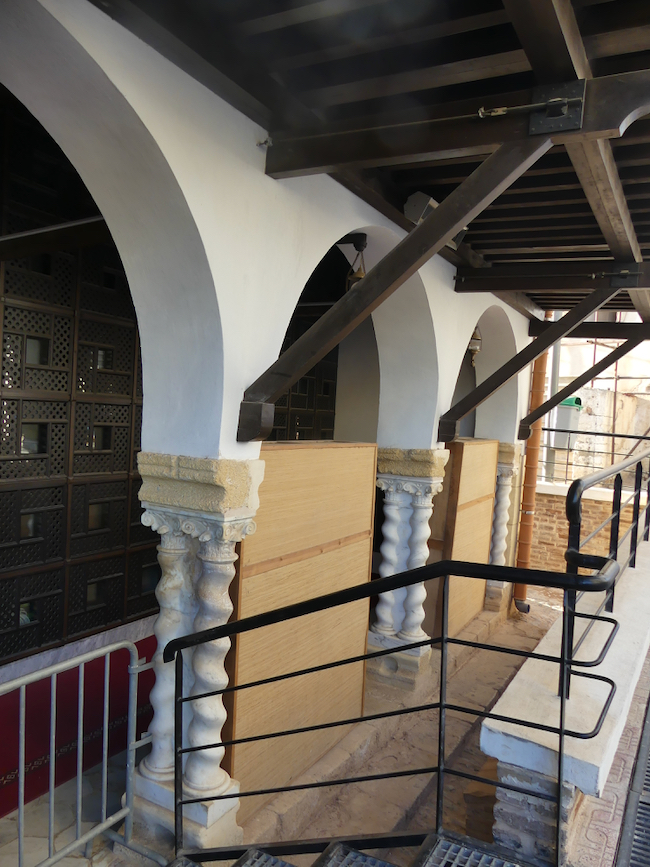
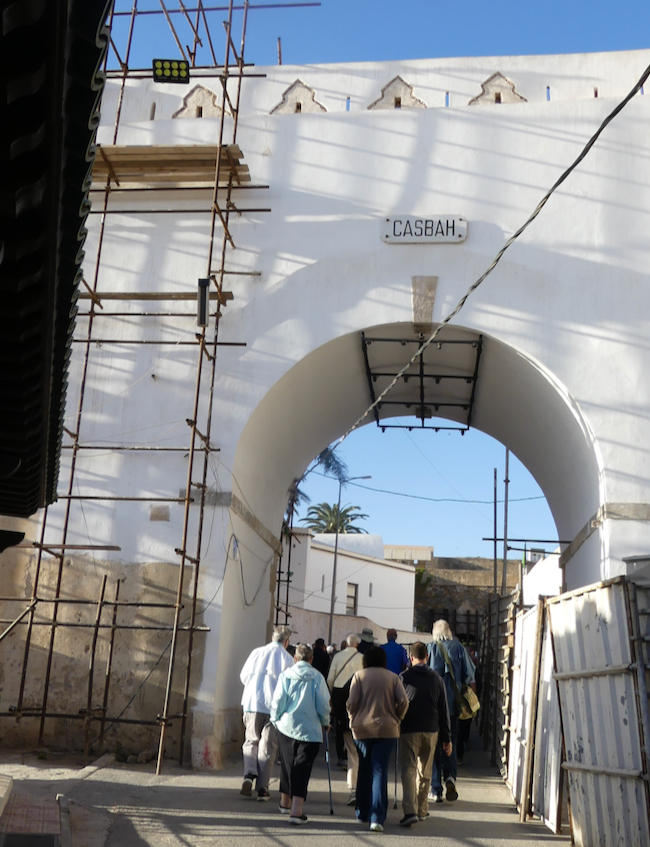
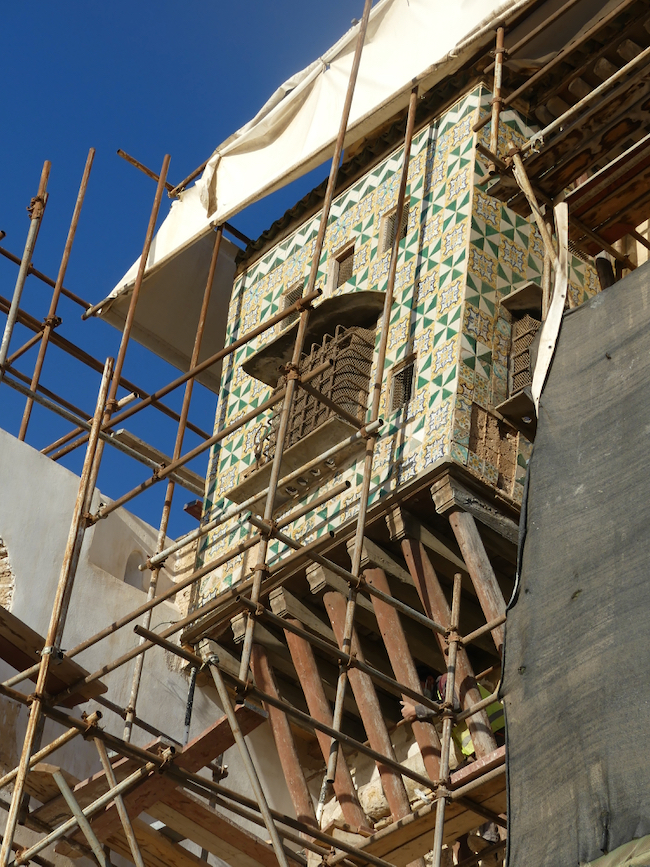



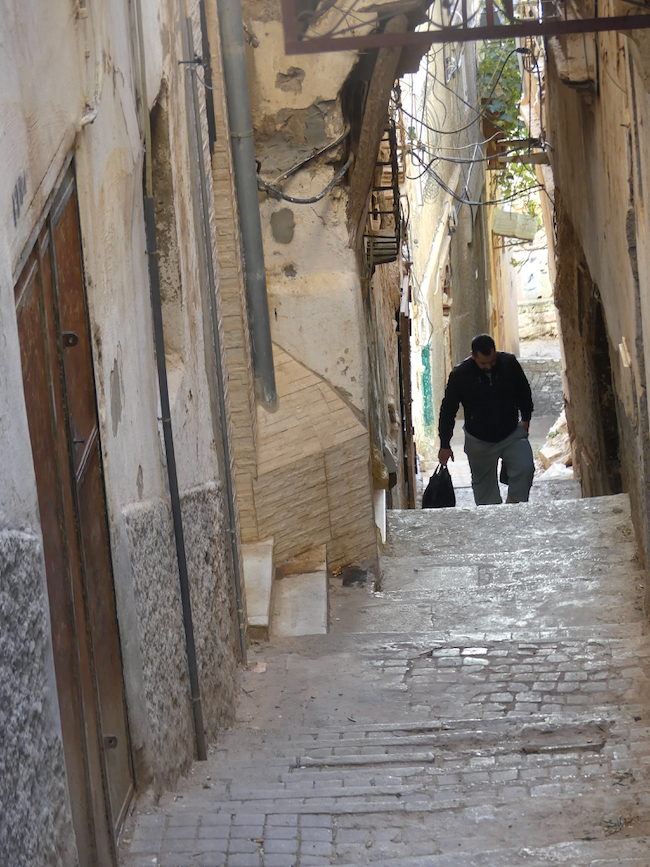
You may be thinking, “Some of the photos here are not the quality we expect!” So, I will explain that I am shooting as fast as I can, surrounded by people I am trying to keep out of my shots, so I can give you an idea of what we are seeing. There is one group after another, all holding up their cameras, getting in one another’s shots. I try to stay ahead or behind, but trust me, the pressure is on. Each group is about twenty-five people, each group with five poorly disguised armed guards, trying to not look like armed guards. They turned out to be really nice guys. Trying to keep American tourists in a line going at a steady pace is a thankless task.




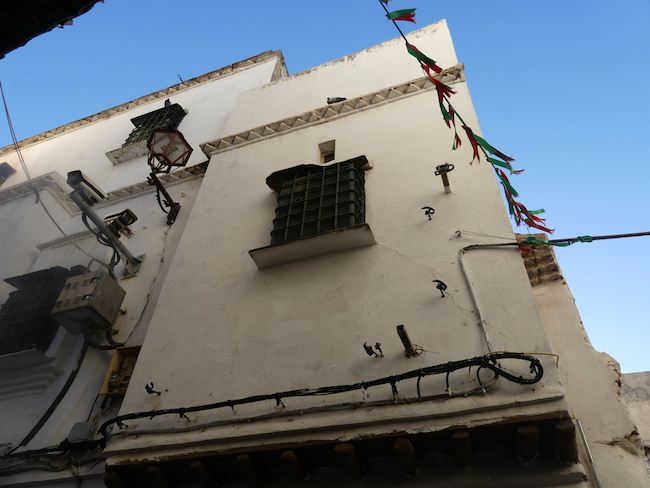
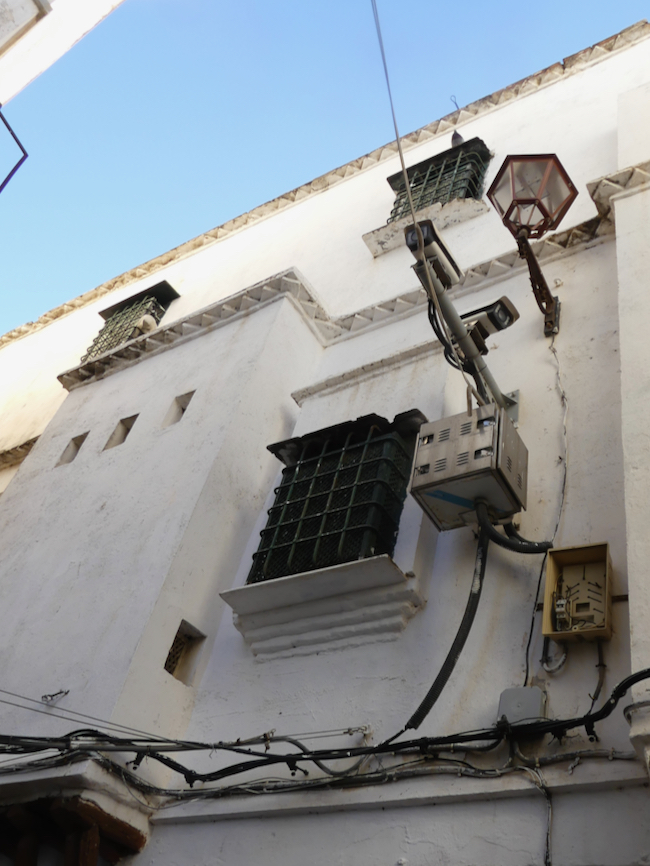

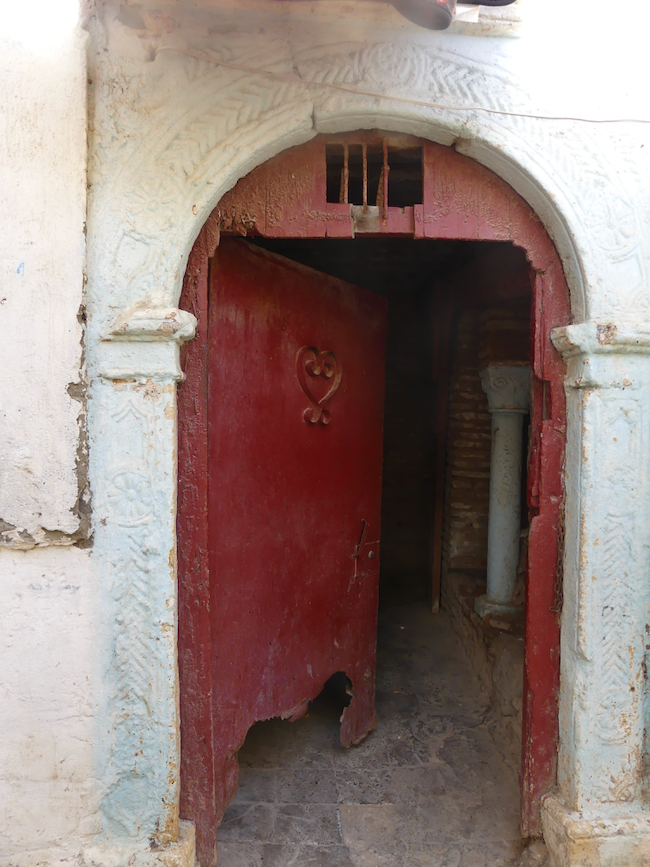


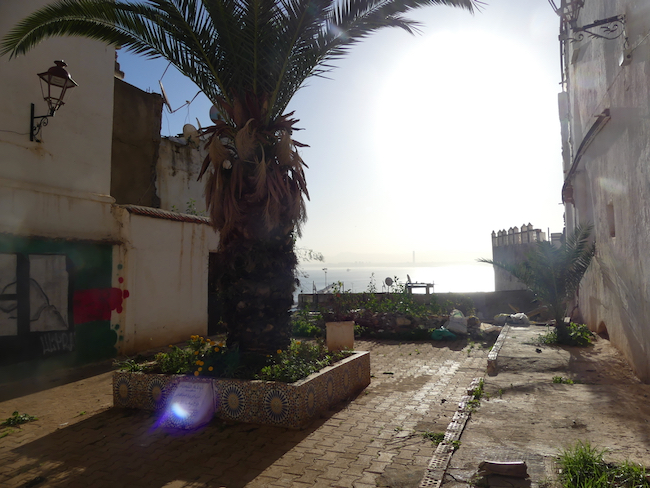
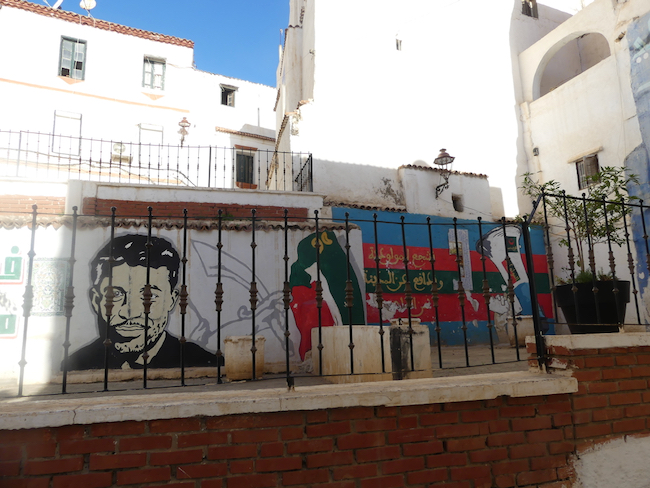

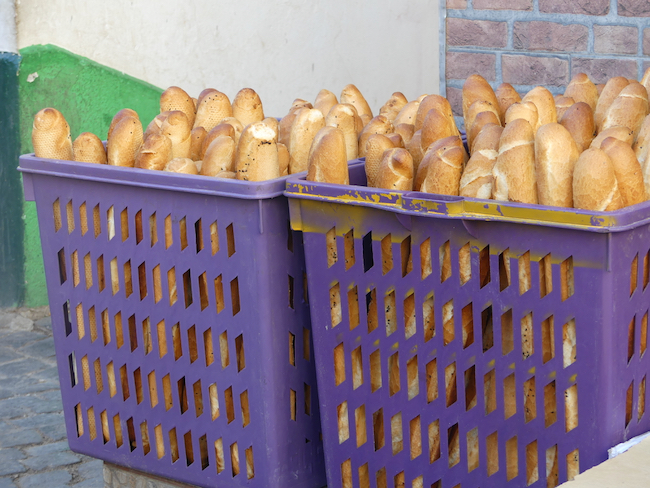
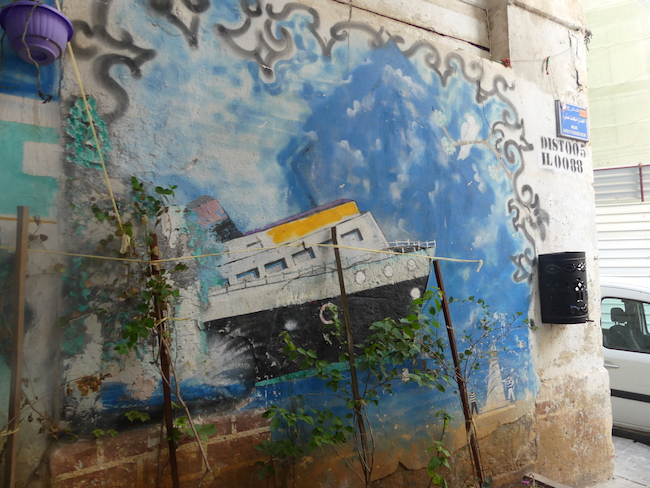
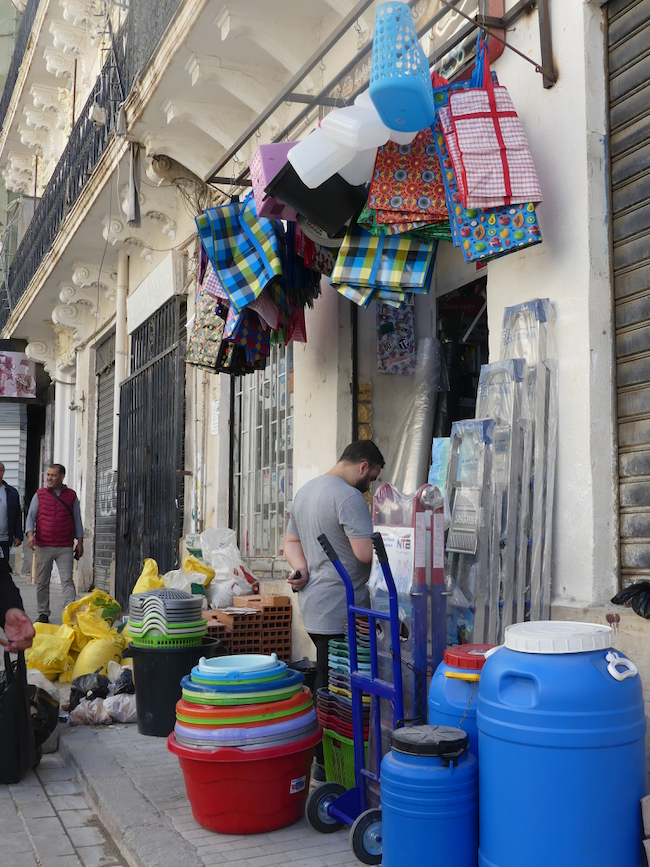
To me it was a little weird that every rectangular plastic basket I saw was purple.
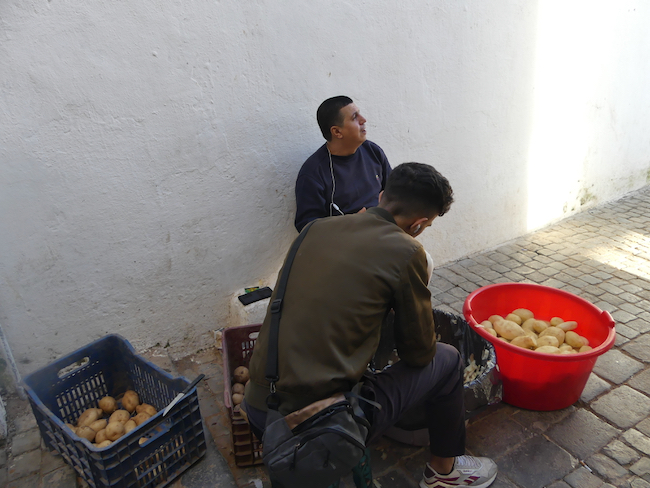
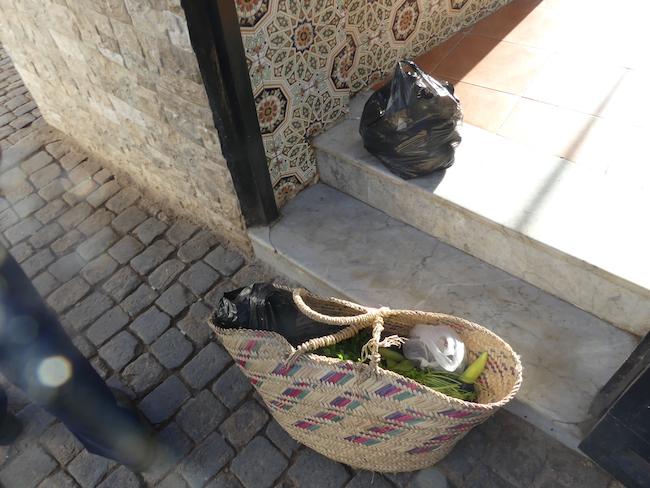
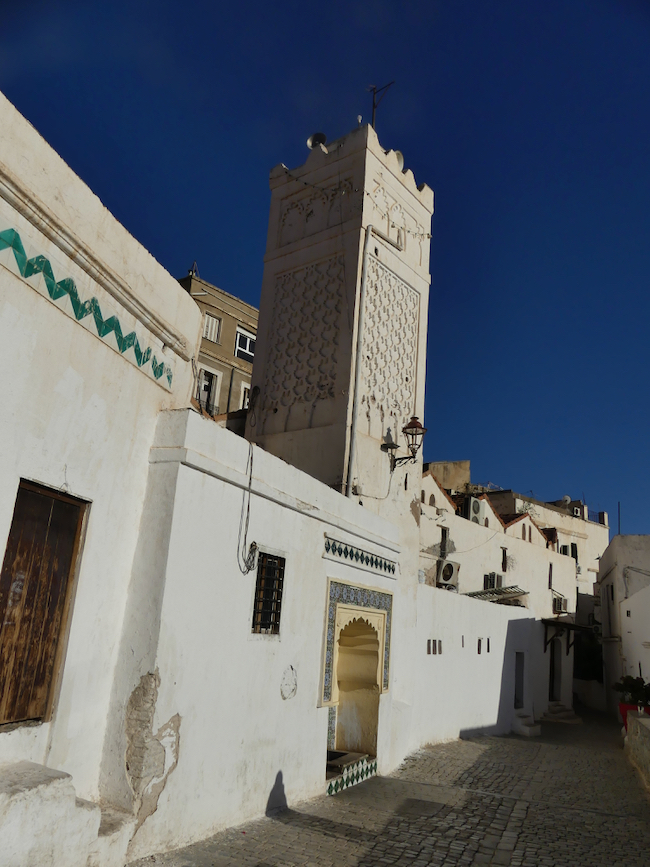

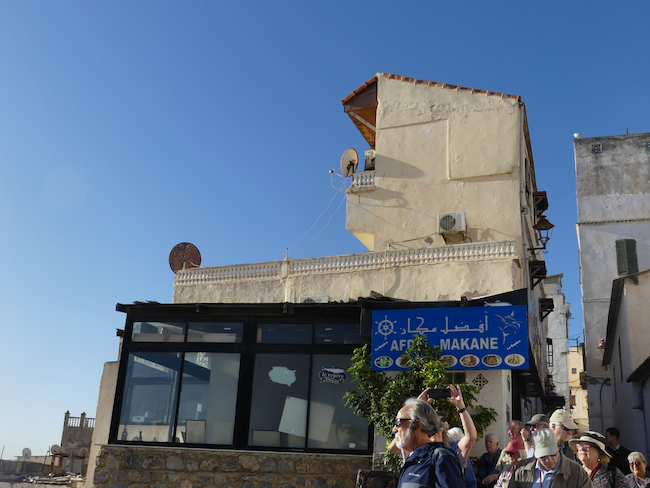
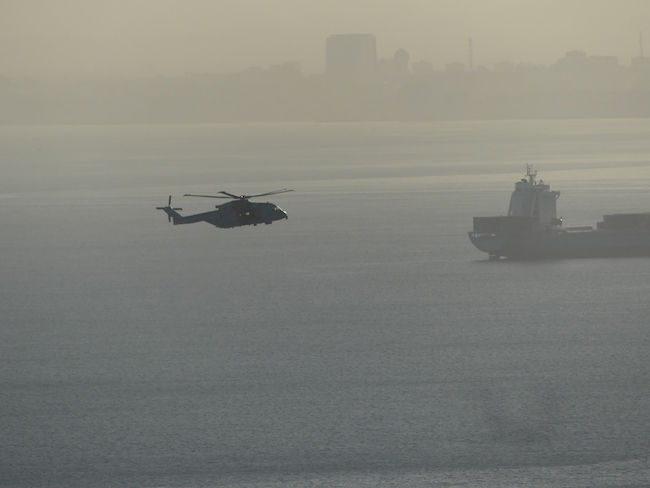
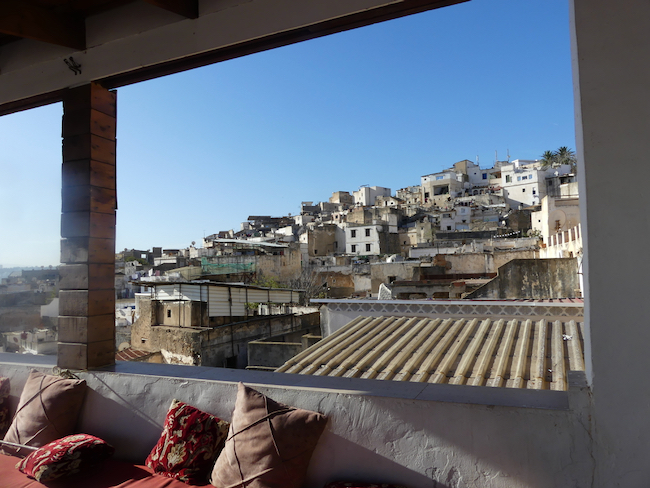
I find some of these construction techniques and electrical wiring workarounds concerning.

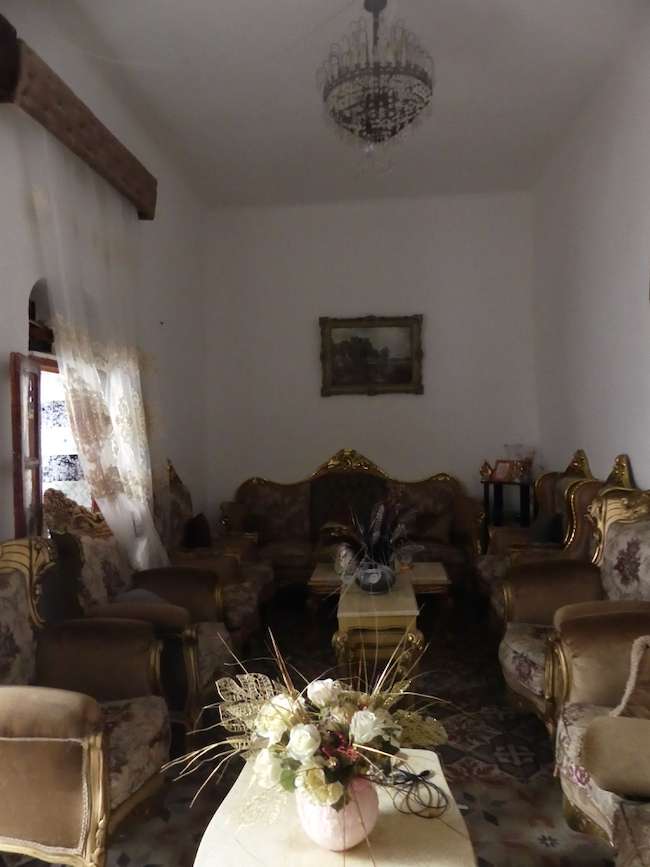
We are taken to a hospitality villa, where they serve fresh dates, mint tea from fresh mint leaves, and fresh baked cookies and pastries.


We think our guide is terrific. First, we love that he showed up in old traditional garb (which we learned he had specially made for this very purpose.) He is full of great information, very patient with his flock, and somehow he manages to get us all going in the same direction and is able to keep us somehow together.

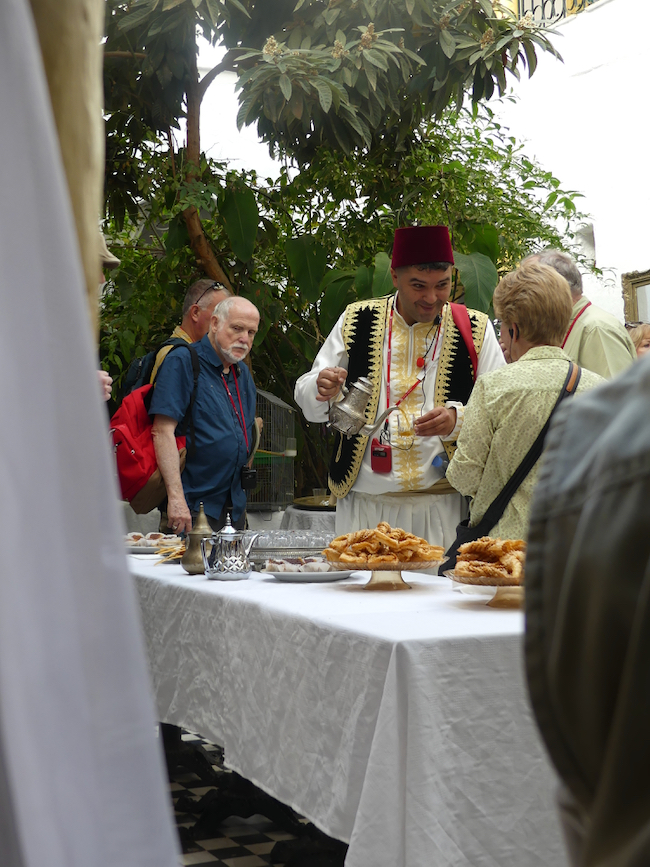

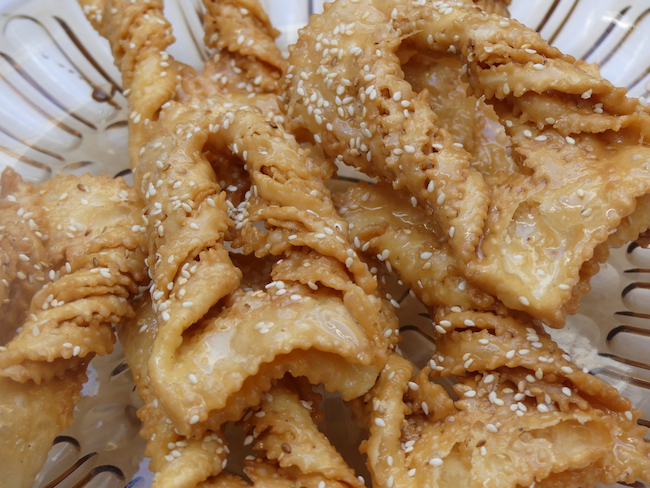
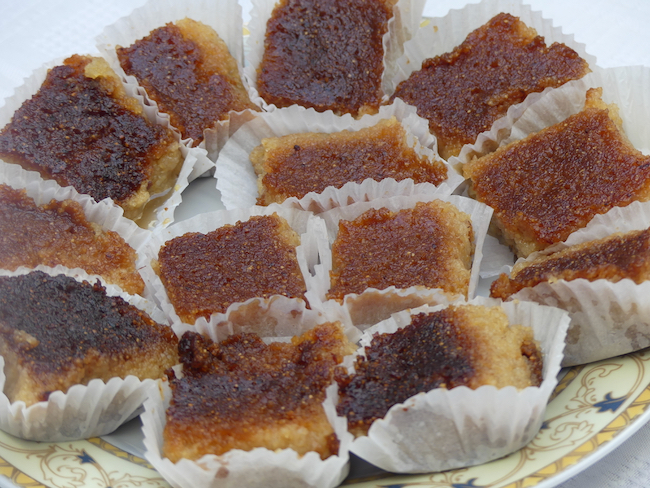


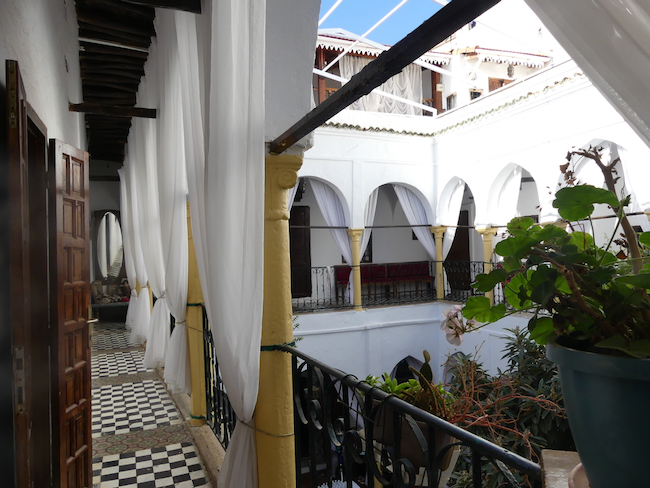




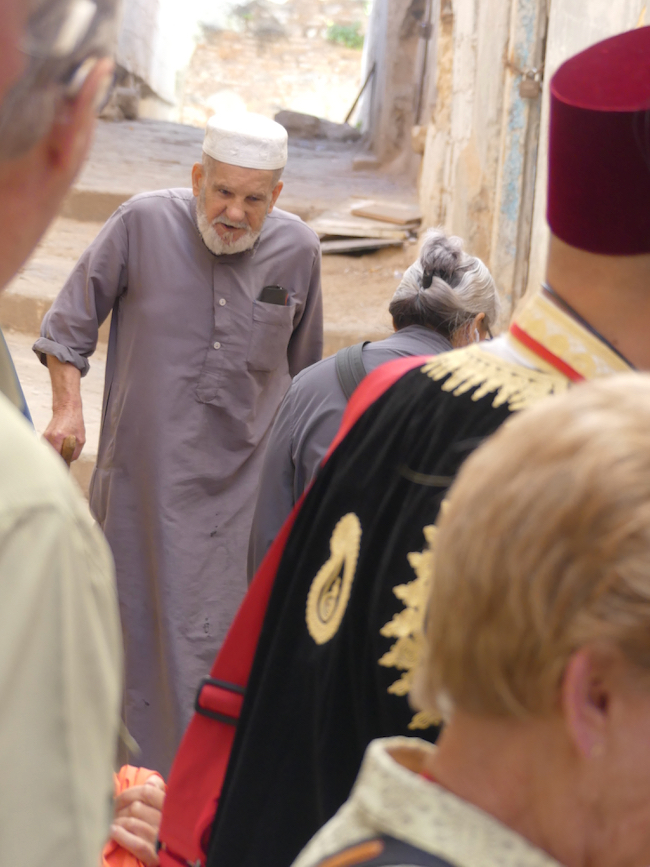
I love this photo. The shopkeeper, trying to keep his street clean and orderly; the donkey, picking up garbage on the street impossible for a garbage truck (and with steps!) and our guide in his traditional garb.


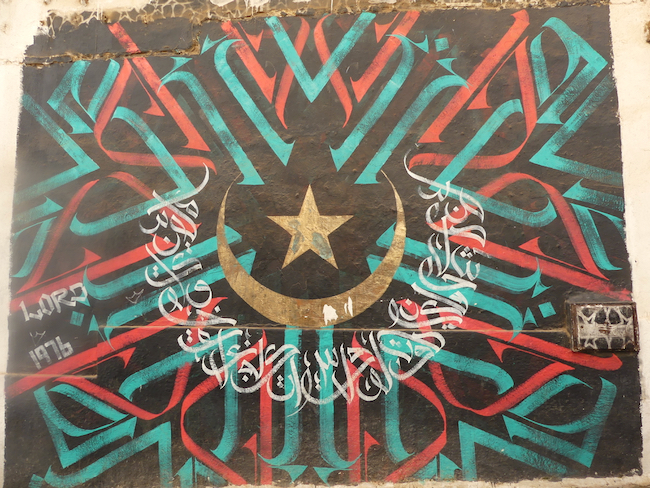

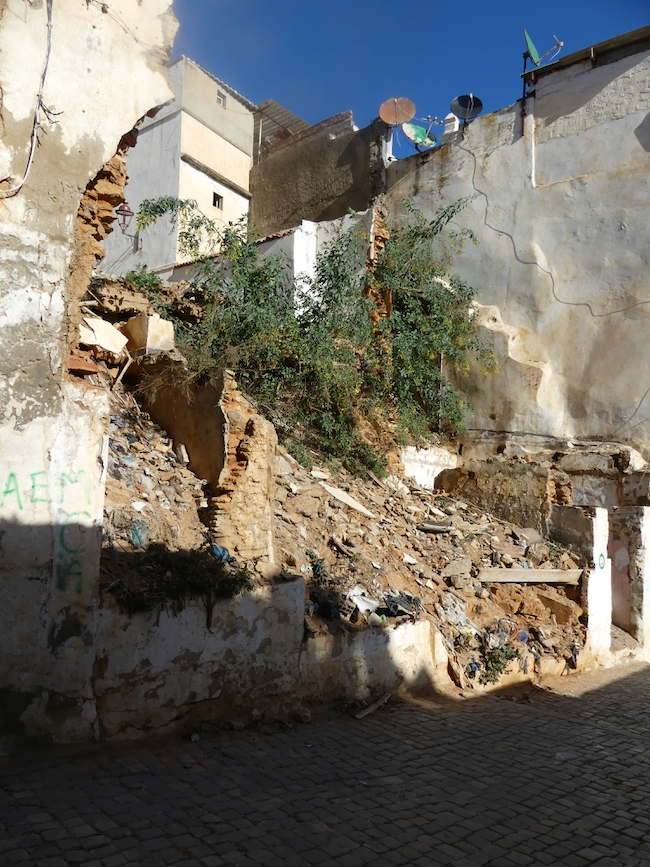
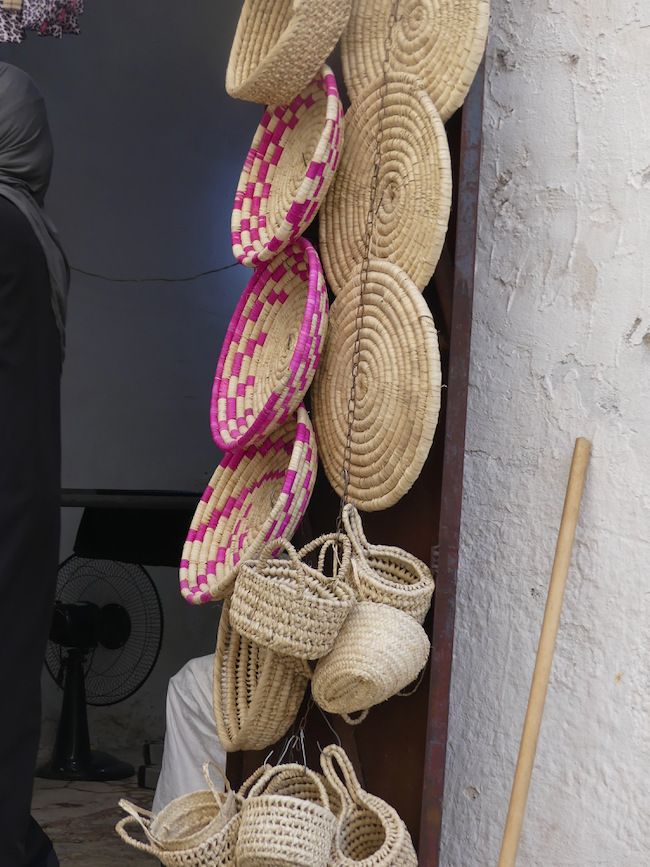


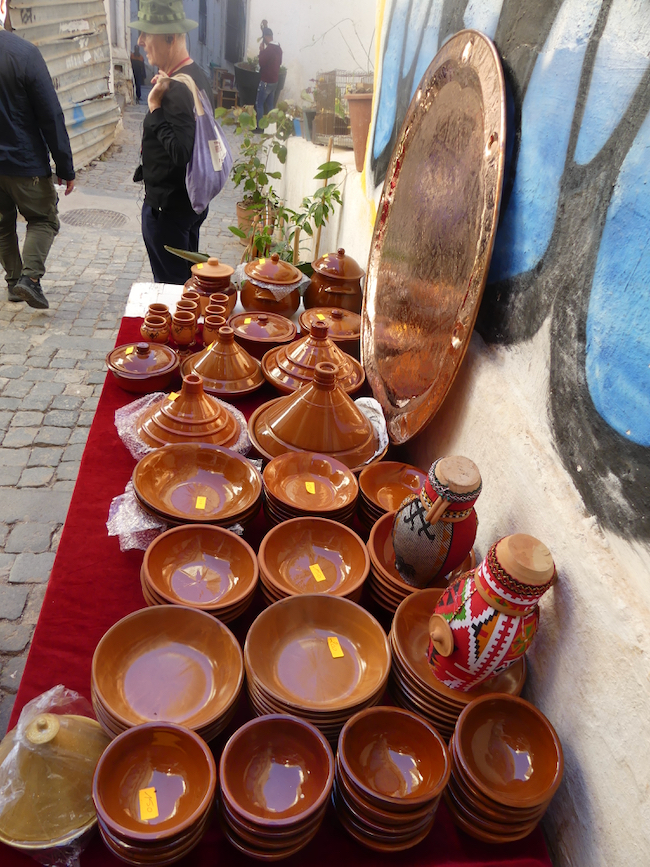
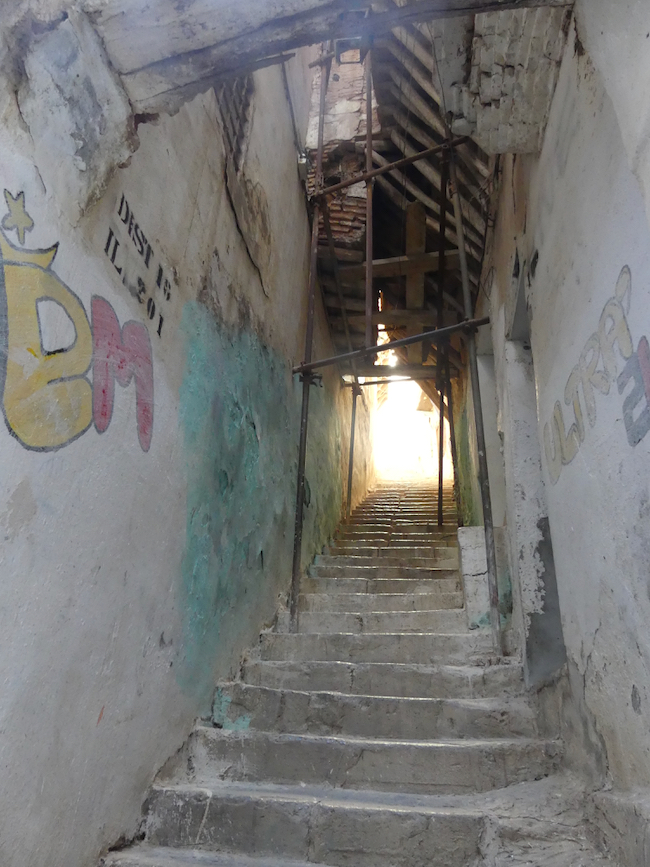
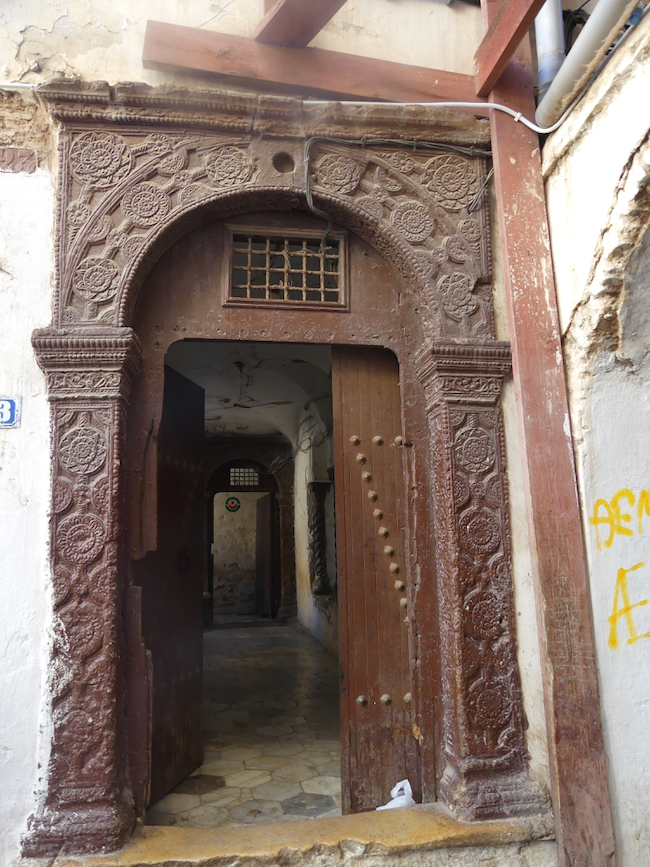

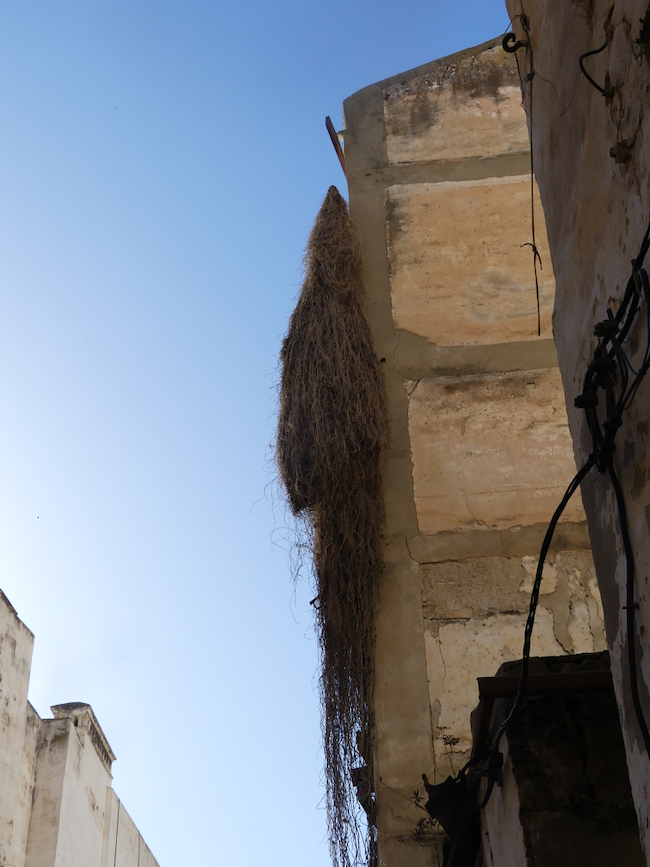


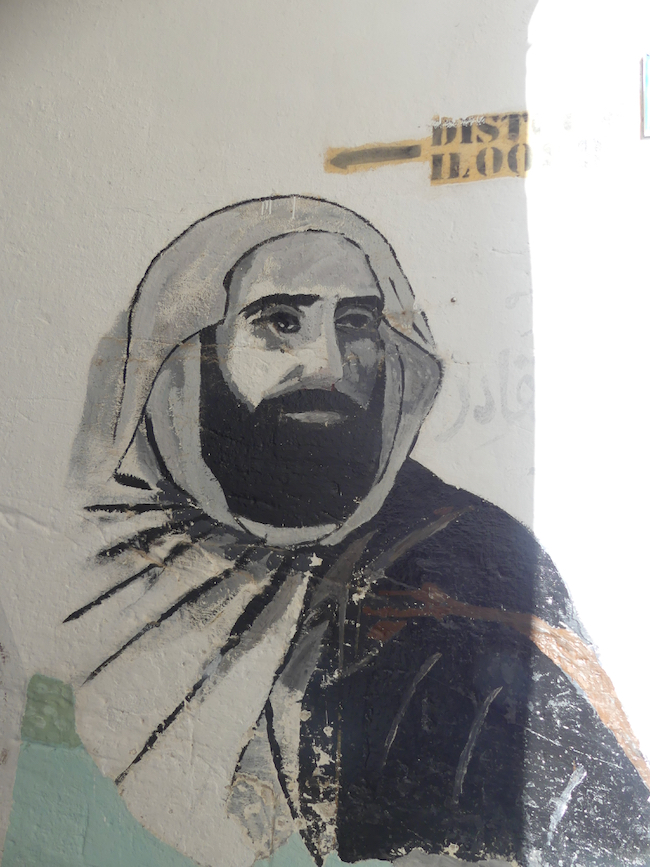
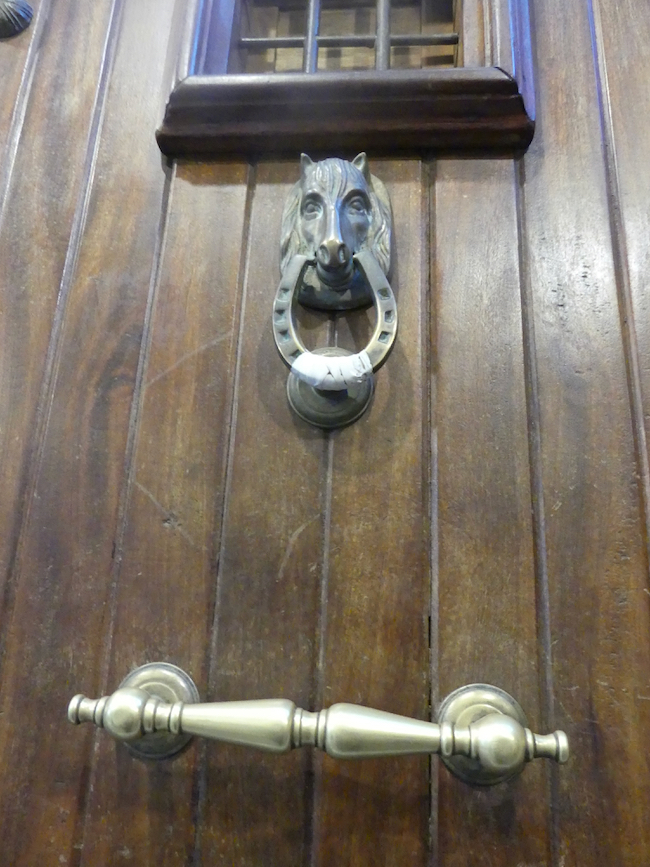

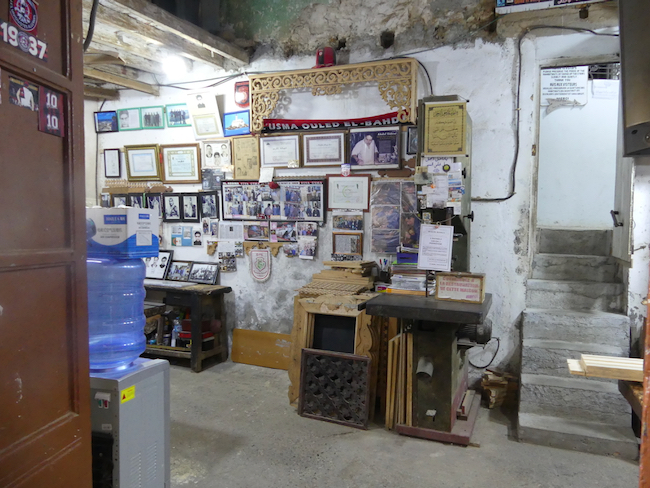
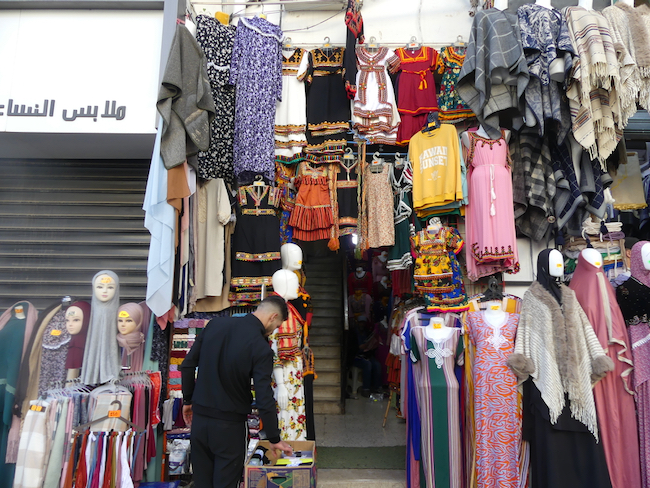
I believe this is the shop that made the traditional outfit for our guide.




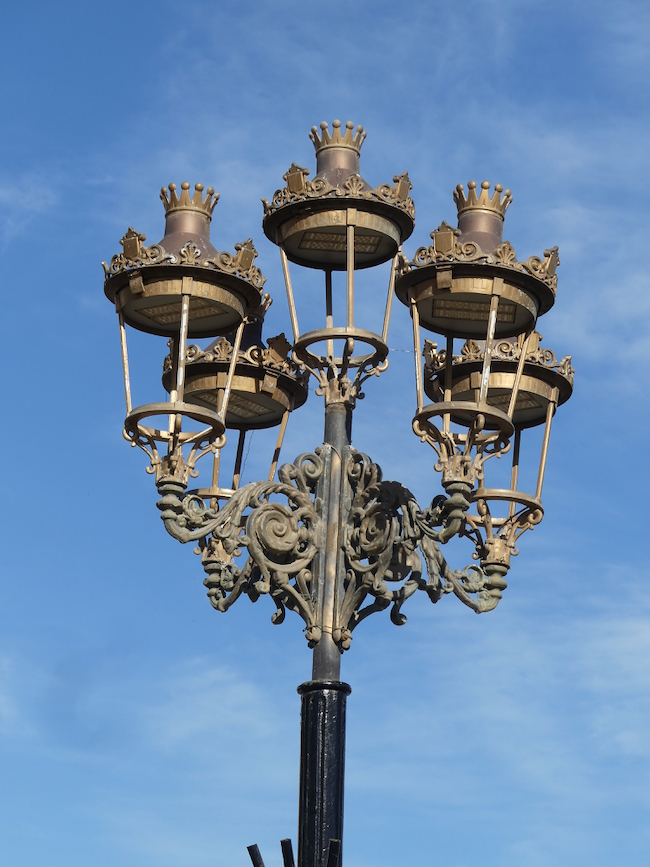
I am betting this is the fish market.
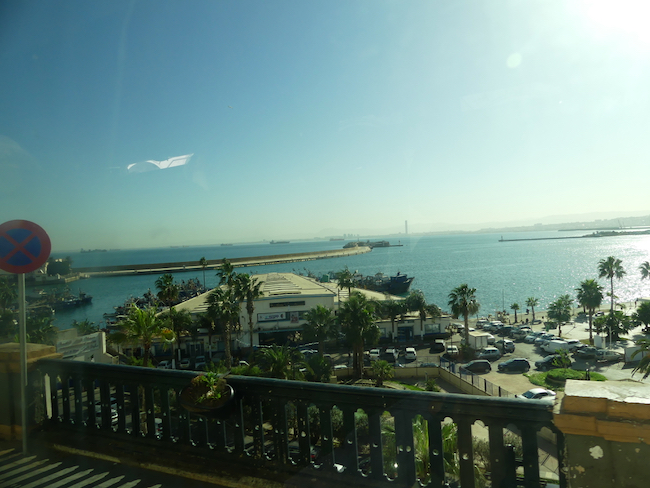
Now I am pretty sure it is the fish market!
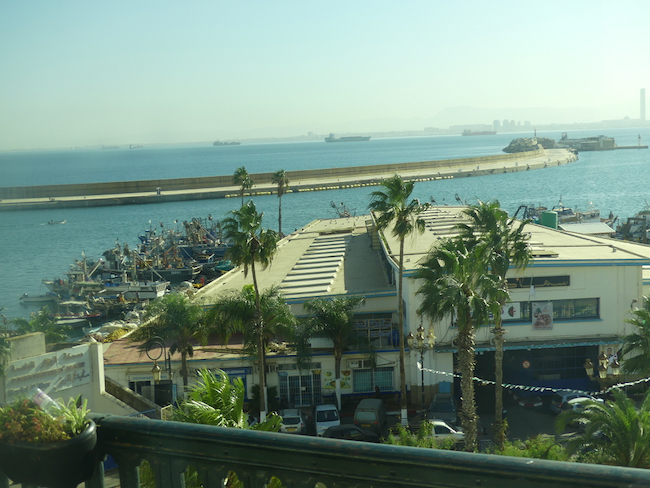
We reboard the ship. We can’t get off again. We are really glad we chose the Casbah walking trip, we feel we got a good feel for that part of town. We never felt hostility, only curiosity, even though a huge crowd of Americans in groups of twenty-five on the narrow, normally quiet pedestrian streets must have been disruptive.
For many of the people who chose this trip, the terrain was challenging. It was stone, sometimes slippery due to sand or moisture. The steps were uneven, the stones rough and irregular. For many, the poverty was distressing, and the dirtiness and disorderlyness made them uncomfortable. I think, too, that it would have been good to let them do a little shopping, good for the tourists and good for the Algerian merchants, but the security concerns were so great that tourists were not given any time to interact with the people or the economy. Too bad. We learned that Algiers will not be included in future Morocco Malta and the Mediterranean trips.
I think, too, maybe it felt familiar to us because the slice of Algiers that we saw was very like Tunisia in the late 1970s, and it was at first a challenge to us, but we learned and adjusted.
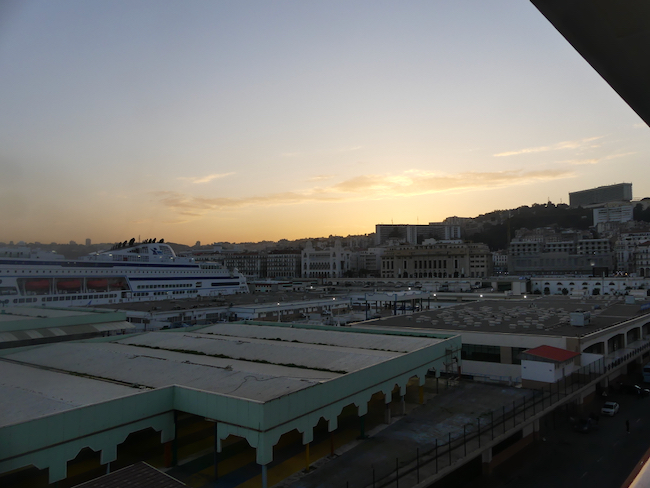


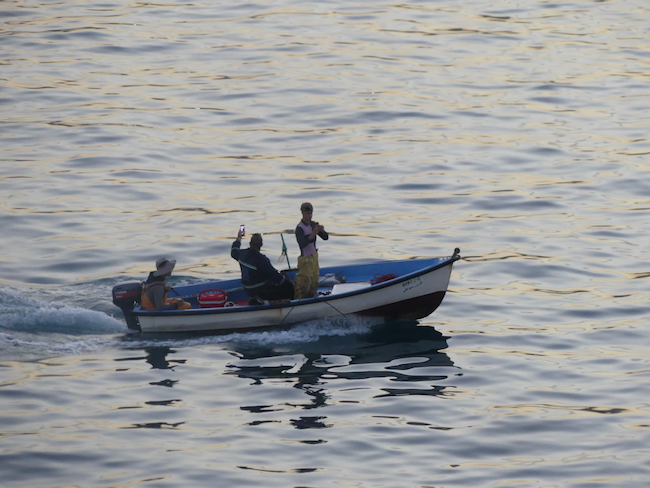

Farewell, Algiers!
Morocco Malta and the Med: Between Tunis and Algiers, A Day at Sea
Awaiting the Sunrise and anticipating a quiet day.
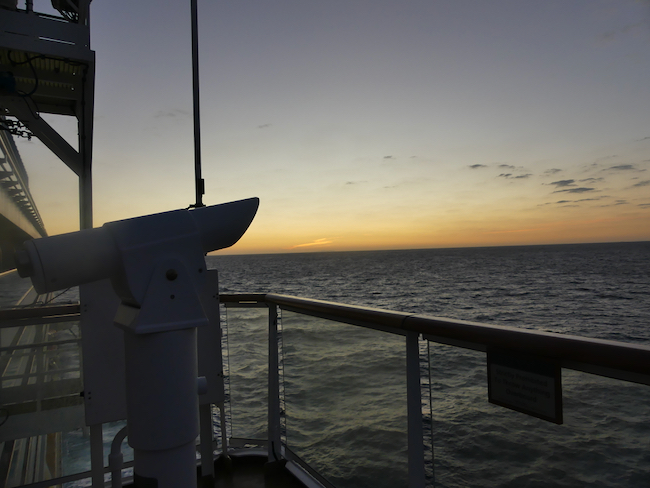
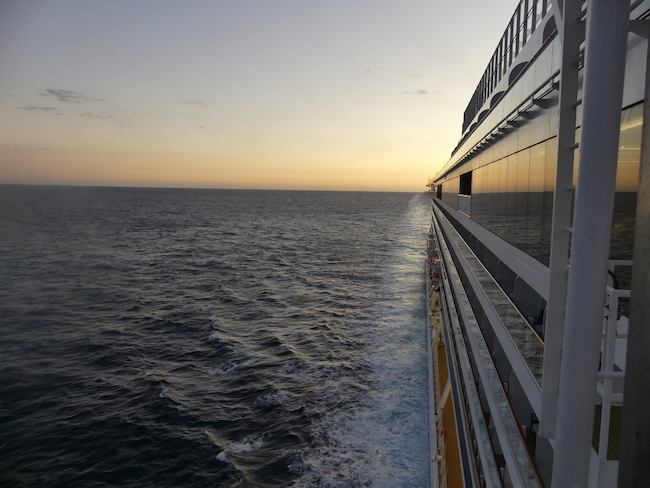

We are mostly of a demographic, the 900 odd passengers on the Viking Saturn, and the pace has us wearing a little around the edges. Today, the washing machines in the laundry started very early, according to the woman whose cabin is across the hall from the laundry room.
We were in the back of a Land Rover heading into Wadi Rum a couple years ago, on a Oceania trip that went from Barcelona with stops en route to Haifa and the entrance to the Suez Canal, through the Canal and down the Red Sea turning east at Yemen to get to Oman, and eventually Abu Dhabi. We hadn’t been on the ship all that long, maybe a week. One of our companions bouncing around in the back of the Land Rover had been on the same ship as the Captain several times, and told us the Captain said that the worst problem cruise ships have to deal with is passengers getting bored.
They are contained. They rush rush rush at each port and then a day at sea seems very long. He was telling us this because we were approaching four concurrent days at sea. I guess they didn’t want to stop in Saudi Arabia, or the Sudan, or Yemen, LOL.
The ship has a lot going on this sea day – several scheduled tours of the Bayeux Tapestry panels, which has proven very popular, and two or three other lectures, trivia games, movies, tea in the Winter garden. My husband and I sleep in, have a lazy breakfast and then we hit the spa. We love the spa. I love trying to swim against the waves and turbulence and hitting the snow room, and then flopping on a lounge and falling into a deep stuporous slumber. Then, when I gather the energy, I head upstairs and hit my book.
I should be taking notes, or something, I am sure, but I am happy just to have a day off.
Many passengers are a-twitter about the announcement that in Algeria, we can only get off the ship in official organized groups, and that those groups will be accompanied by armed guards. Actually, before the ship sailed, we got e-mails explaining the situation, and I think most didn’t pay any attention. We changed our tour from the panoramic tour, after which we intended to take off on our own and explore the Kasbah. Once we learned that wasn’t going to be possible, we booked the walking tour of the Kasbah. We think you see and experience more on the ground.

We think this is going to be interesting. We were never allowed to go to Algeria when we lived in Tunis. It was considered too dangerous.
😁😳😎🥸
More Than 500 Mass Shootings in USA 2023
This week I needed to make a trip to WalMart. For the first time, I asked AdventureMan to go with me. I felt unsafe, going to WalMart. Pensacola is rife with emotionally unregulated people carrying guns. Florida is worse. Do gun “rats” enthusiasts not realize that most gun deaths are people shooting people in their own families or social circles, or shooting themselves? The mass shootings below are just the tip of the iceburg.
This is from Axios:
U.S. surpasses 500 mass shootings in 2023


Share on email (opens in new window)https://datawrapper.dwcdn.net/oLfvX/Data: Gun Violence Archive; Note: Includes incidents where at least four people were shot or killed, excluding the shooter; Chart: Simran Parwani/Axios
There have now been 501 mass shootings in the U.S. this year.
Driving the news: A shooting that wounded four people in Denver, Colorado, on Saturday night marked the country’s 500th mass shooting in 2023, according to the Gun Violence Archive.
- Hours later, that increased to 501 mass shootings after one person died and five others were wounded in El Paso, Texas, early Sunday.
By the numbers: Just five years ago, the country had never experienced 500 mass shootings in one year:
- 2018: 335 mass shootings
- 2019: 414 mass shootings
- 2020: 610 mass shootings
- 2021: 689 mass shootings
- 2022: 645 mass shootings
Flashback: The 500 mass shootings threshold was crossed in September in the past two years, according to the archive.
- In 2020, it occurred in October.
Between the lines: The FBI does not define or quantify what constitutes a mass shooting.
- Gun Violence Archive, an independent research and data collection organization, defines a mass shooting as a shooting in which four or more people were shot or killed, not including the shooter. This makes its numbers higher than some other sources with varying definitions.
Of note: A January shooting on the eve of Lunar New Year in Monterey Park, California, a largely Asian American area, has caused the most deaths so far in 2023. Eleven people were killed and nine others injured in the massacre.
- The most injuries related to gun violence occurred in April at a birthday party shooting in Dadeville, Ala., that left four people dead and 32 others injured.
The big picture: With increasing personal experiences, more Americans view gun violence as a public health concern.
- One in six Americans have personally witnessed someone being shot, according to survey data from earlier this year.
Zoom in: Gun violence has greatly affected children. Firearms are the top killer of kids in the country.
- Gun deaths among children hit a record high in 2021, per data released in August.
- There were 305 school shootings in 2022 and 230 by Sept. 5 in 2023, according to the K-12 School Shooting Database.
Go deeper: Gun deaths among U.S. children hit a new record high
Chasing Petroglyphs: Newspaper Rock, Needles and Canyonland
As AdventureMan reads through these posts, he delights in how much he has already forgotten, and he looks forward to reading about what he called “one of our light days.”
I look at him in astonishment. As occasionally happens, I remember things very differently,
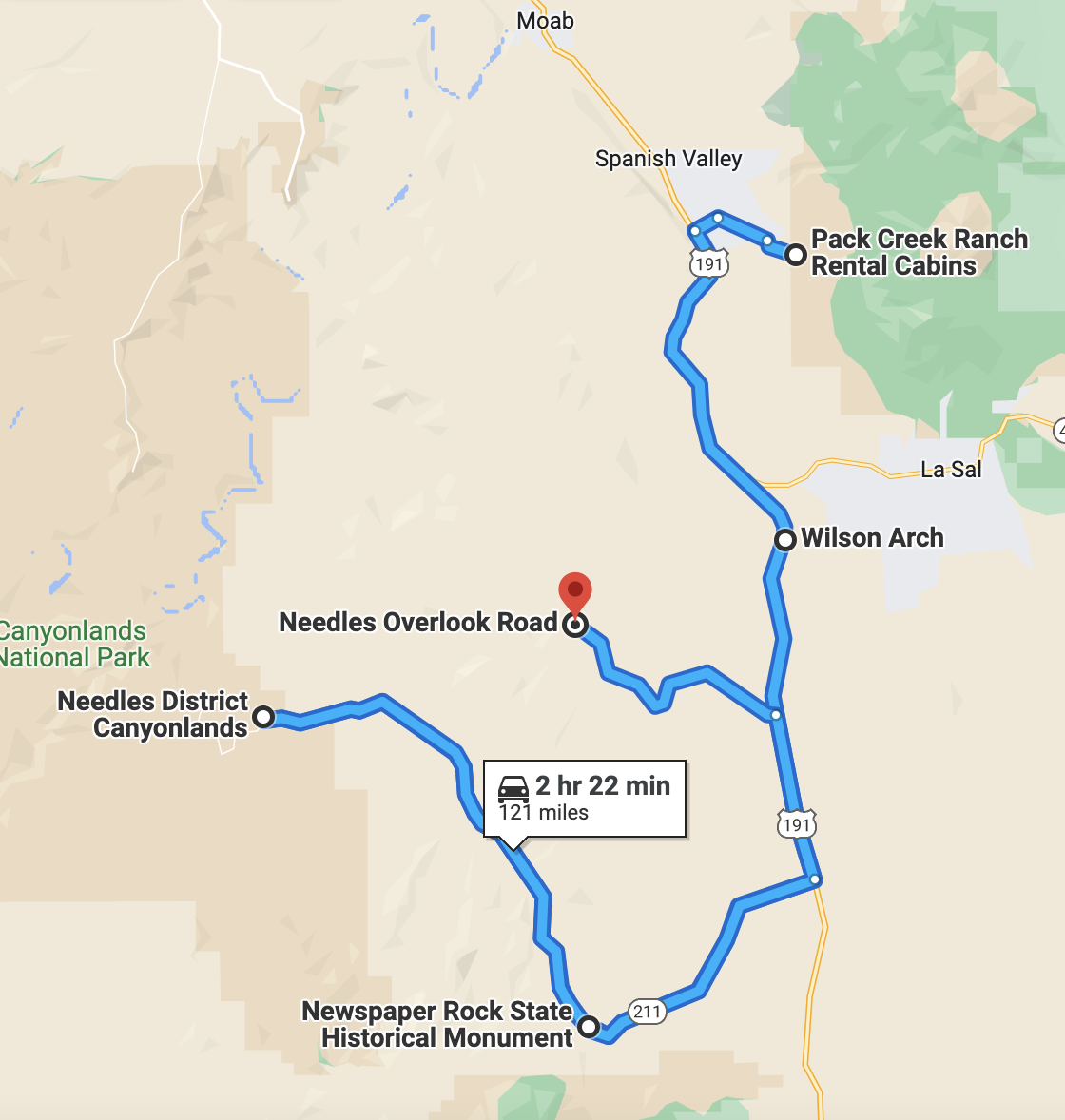
“We got a relaxed start,” I begin, which in our language means we did not hit the road at the crack of dawn, but maybe around 0830, “but we were on the road until about 2:00! And it was some tough driving! No place to stop for lunch, we just had apples and oranges by the side of the road.” And water. Lots and lots of water. It was again in the 90’s, and very dry, and there are signs everywhere warning us to drink water.
We don’t have to start from Moab, we just reach SR 191 and turn south. The first thing we come across is Wilson’s Arch:


And another place called Hole in the Wall, but I can’t tell if it is a famous Hole in the Wall or an adventure outfitting place. There is an ATV perched precariously on the top of the cliff.
We turned off 191 to go to Canyonlands, and soon came to Newspaper Rock.

Early on, I mentioned how fragile and transient petroglyphs can be. We don’t really know who made them. We know that many of the earliest petroglyphs incised were written over, improved, by later early peoples. And then, modern day man, who had done the most damage of all – carving his initials over ancient glyphs, removing glyphs, defacing glyphs, rubbing glyphs (thus eroding their edges and making them more vulnerable to weathering elements), chalking glyphs to make them more visible, even touching glyphs leaves chemicals that damage the quality of the glyphs.
When we got to Newspaper Rock, we parked at the wrong end of the parking lot and ended up on a trail going entirely the wrong way. AdventureMan kept saying he thought we needed to go back, but the further along we got, the more I thought we were on the right track – until the track ended. We walked back, and just at the other end of the parking lot was the Newspaper Rock – near the road and protected by a large grill.
The thing is – I saw others, too, nearby. I am so thankful they protected Newspaper Rock, because through the years many of the incisions have been defaced. I am hoping that the others are being protected by the very lack of trails and signage, by the lack of publicity. It’s a pity we should have to protect the petroglyphs from our own citizens.


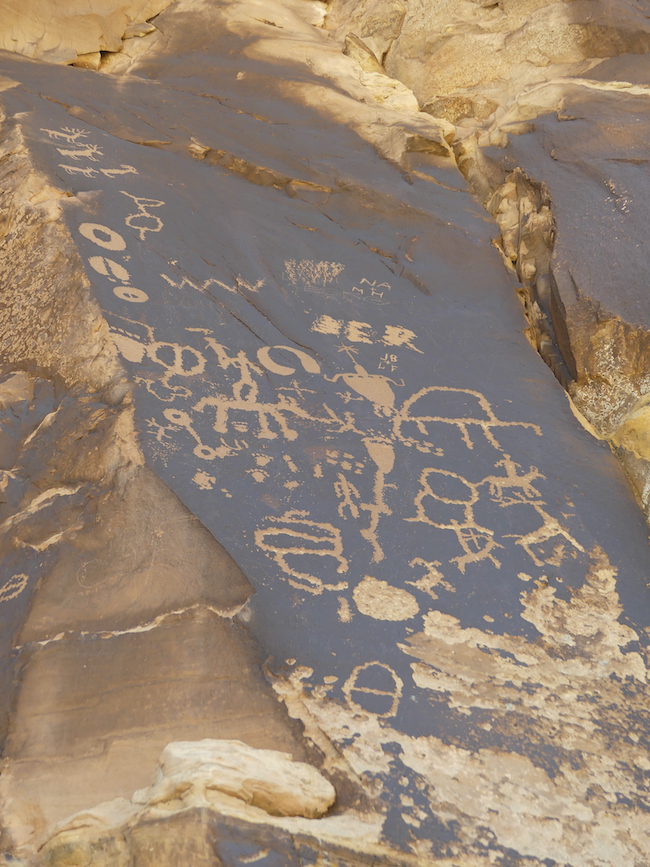
I think of Newspaper Rock as a kind of scratch pad. Even Leonardo da Vinci, the great inventor, engineer and artist, made sketches before he executed a masterpiece. I can see traces of the Fremont peoples, and I can see scraps of petroglyphs we have viewed in Vernal.

AdventureMan found Newspaper Rock a very emotional experience. He felt connected to these early people. When I look at these footprints of all sizes dancing around, I feel their joy. And look at the hand – that is almost modern in it’s representation of a human hand; and I think back to the petroglyphs at White Mountain which may have represented the human hand or may have represented the terror of a bear claw. These feet are so happy, and, interestingly, so similar in form. I wonder how they were formed?
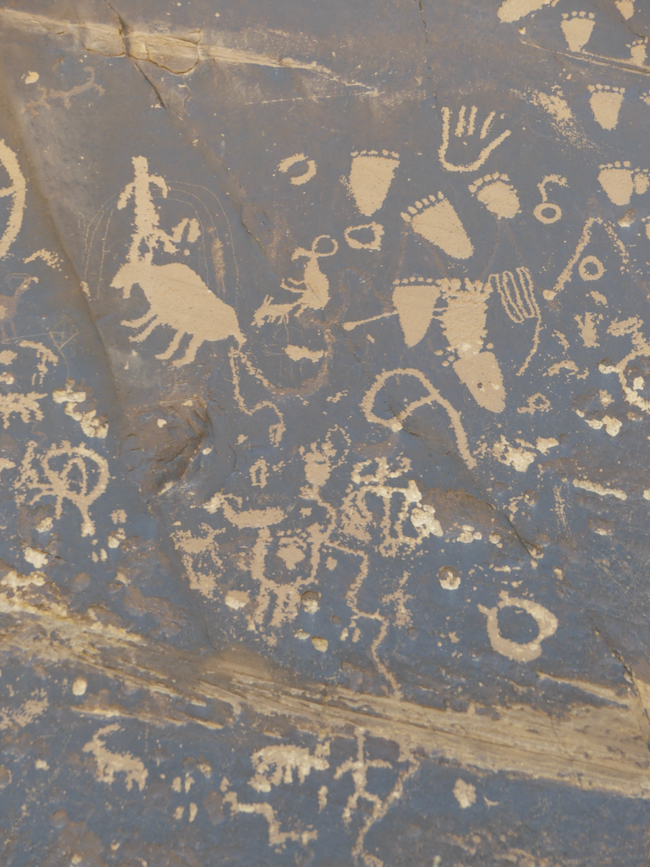
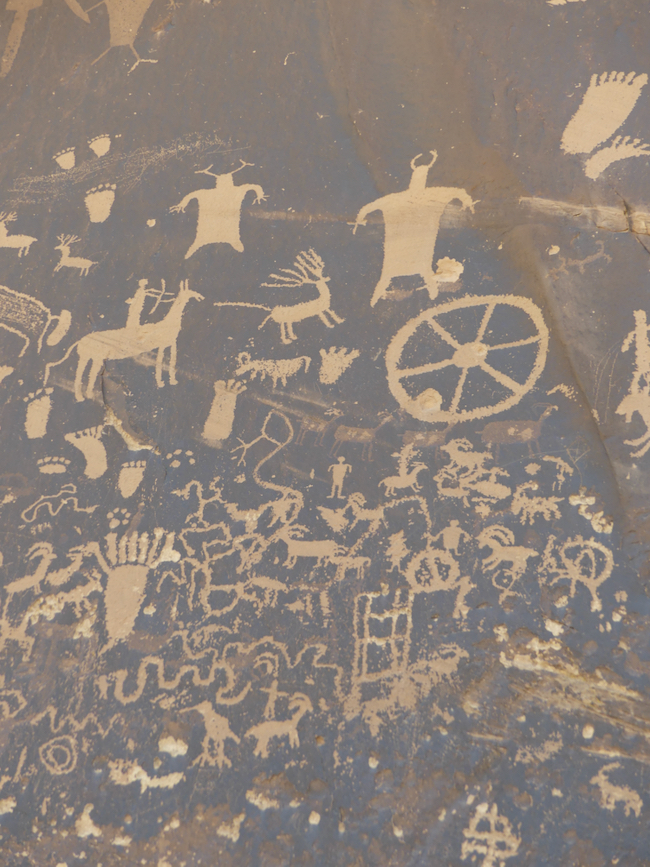

I’ve broken the wall into different panels with photographs; taken in total, it is overwhelming.


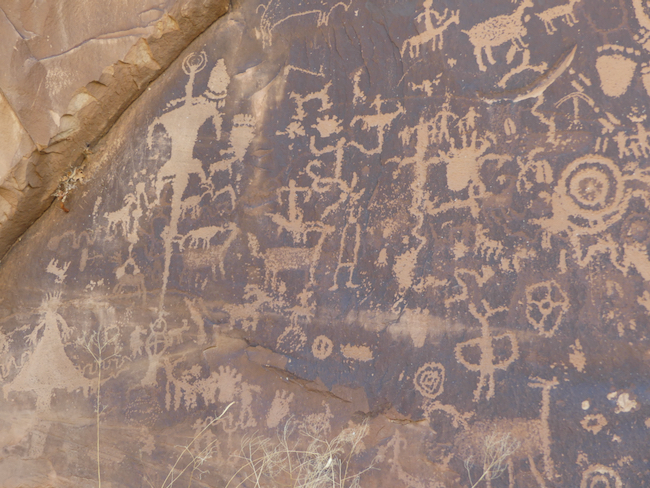
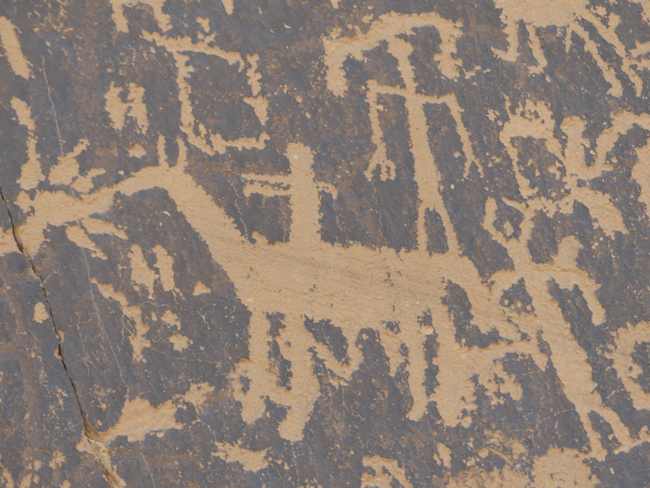
Much more modern era; we see horses introduced

Those lines – snakes? Rivers? Directions? A life?

I would guess this central figure is a shaman, with what coming off his headdress? Some kind of special decoration on his legs? The target symbol, as opposed to the spiral? The smaller horned man? All those animals – prayers for a good hunt? Celebration of a good hunt?

This one intrigues me – a scorpion? It is just weird!

A dancing bison? Look at the feet and . . . um . . . feet; they are very hoof like. An elk with a magnificent rack and maybe a spear in it’s side?

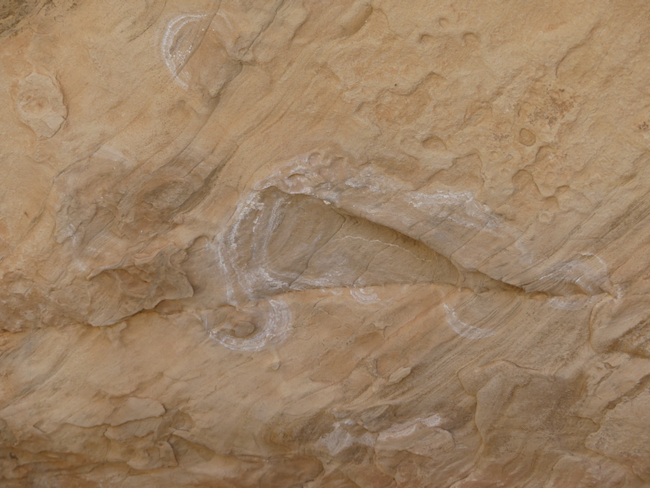
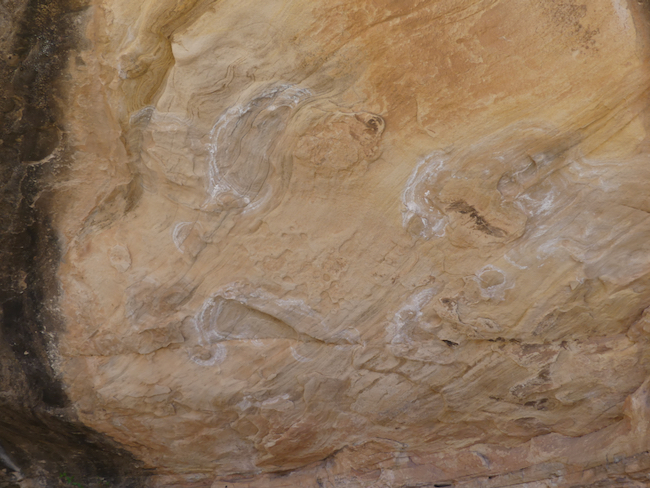
These last two are not with the others. I believe some well-meaning guide has chalked them so that visitors can see the faint traces.

And this is what the Newspaper Rock looks like in total.

We were no longer alone. Visitors from all over the world were coming, looking and photographing.
We drove to the end of the drivable-without-dire-warnings road. The scenery was increasingly arid and bleak, with it’s own terrible beauty. At one point, we were about to hike out to an old dwelling cave, and we looked at each other. It was noon, and signs everywhere were saying “do not hike in the hottest hours” and it was HOT. We drank some water, ate some oranges, got back in the car, reluctant to pass on an adventure, but happy to pass on potential disaster.

There was actually a ranch out here, and this was the last water we saw. It’s still Spring.

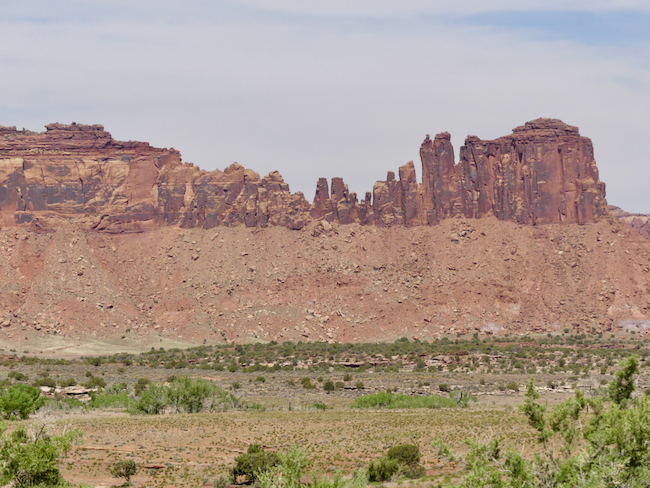


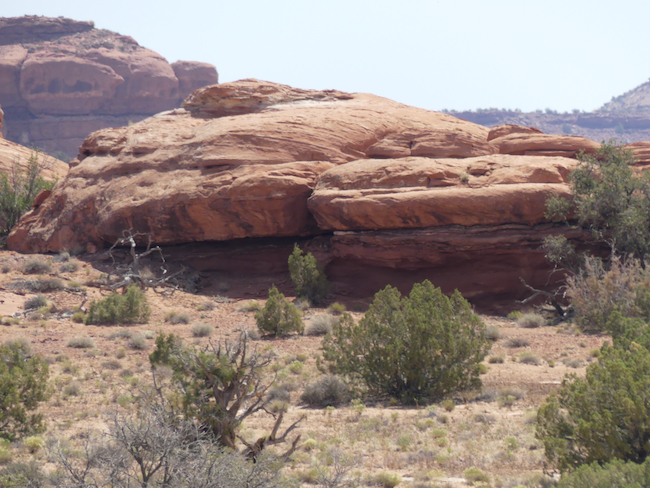
Just a half mile there, and a half mile back . . . we passed.
Chasing Petroglyphs: Arches National Park and Moab
I love that Arches NP has gone to a reservation system during the busy months. Everyone has an equal shot; you can book a time a couple months in advance. We love the morning light, so we have booked a 7:00 a.m. slot and it is a gorgeous day. There is no line at the entrance booth. There are no crowds at the various arches. It is all so relaxed!
The morning is crisp, cool, and magnificent with a bright deep blue sky.
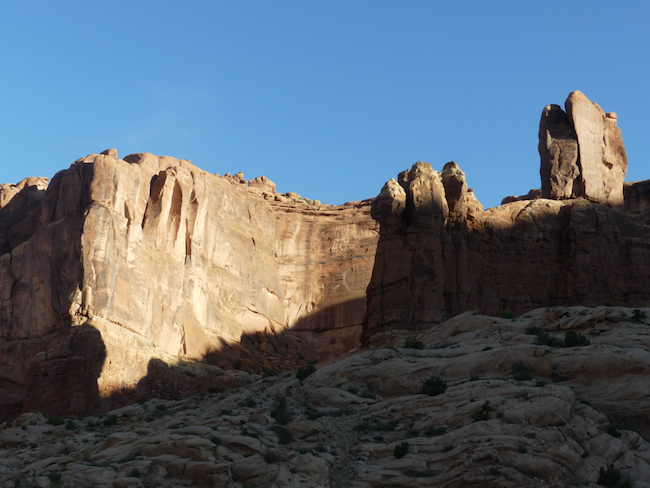
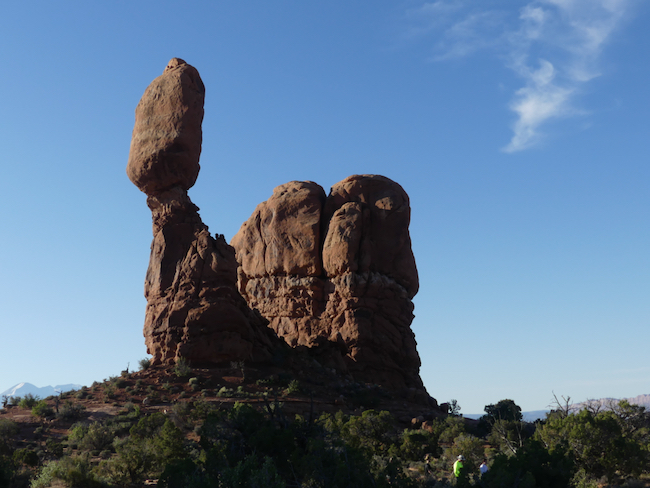
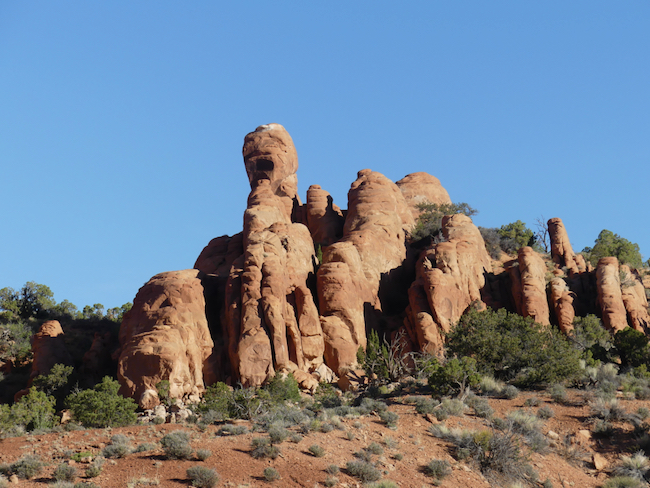

Please forgive me, I am besotted with the textures and colors and the shapes of the rock and I have yet to show you a single arch.

Our preference, at Arches, is to drive to the very end, to Devil’s Garden, and hike while it is still cool, and then stop at the other arches on our way back. But we always have to stop at the one on the way.
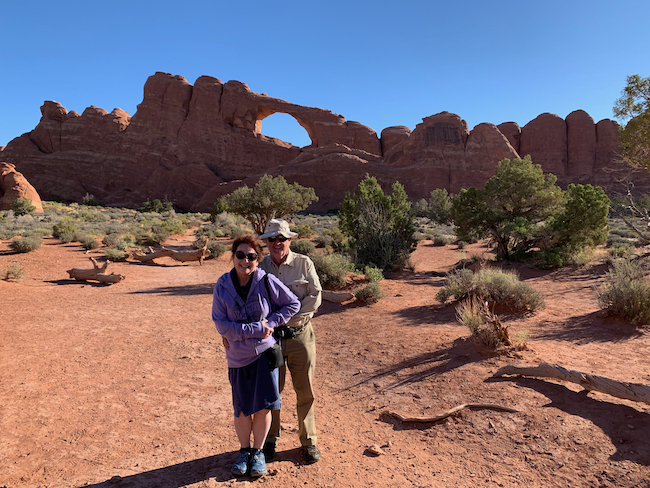

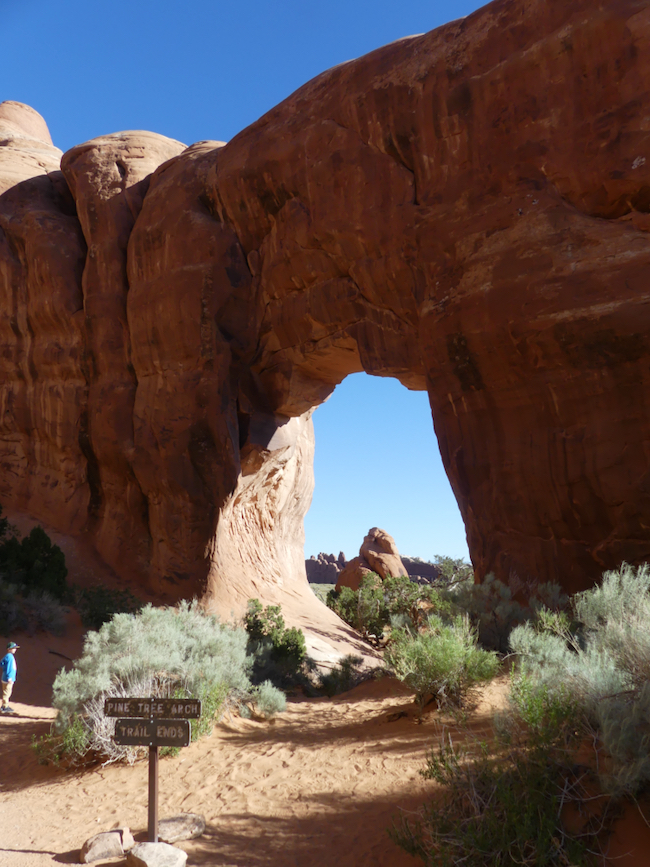

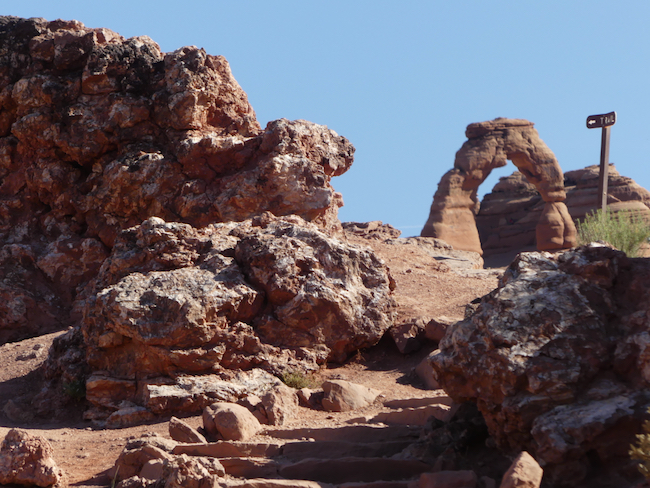

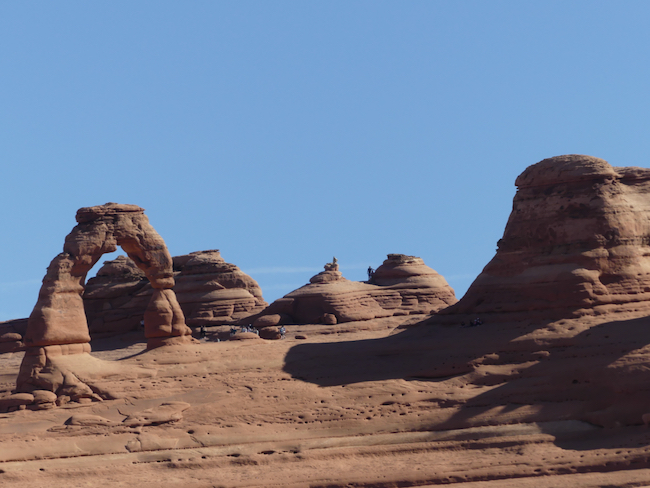
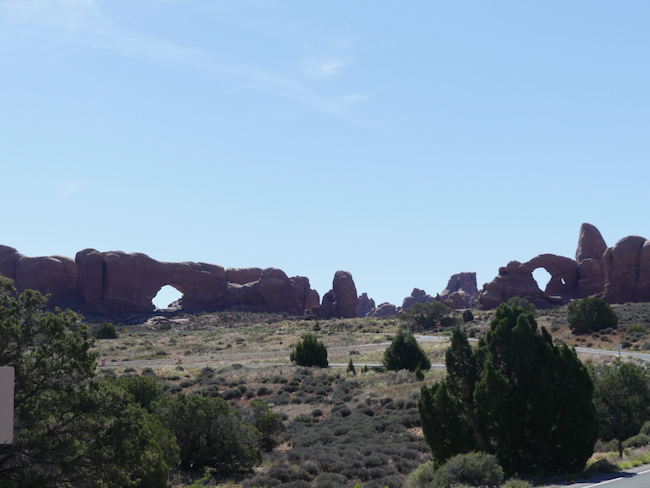
A wealth of arches!


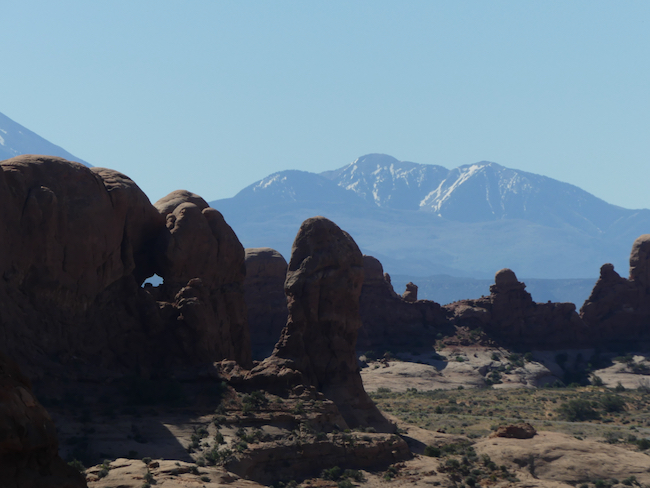
Because I can’t resist a good mountain 🙂
We hit the visitors center at Arches, then headed into Moab for lunch. It was around 11, so we were the first seated at Pasta Jay’s, where AdventureMan had a Caprese salad and Saturnalia pizza and I had a pizza Rustica, which was a garlic pizza base and Caesar salad on top. We split a Tiramisu, delicious.


When we picked up our Thai food last night, we could smell the pizzas from Pasta Jay’s, so we really had no problem choosing where we would go for lunch. Pasta Jays!


The heat in Moab is so dry that it is still cool enough to sit outside to eat. The setting is delightful, but oh! The noise! The Main street of Moab is full of trucks with heavy rumbling loads, squealing breaks and loud engines. There are Vans pulling ATVs, trailers full of kayaks and canoes, a constant, endless flow of noisy traffic.
But the food is delicious.


We are thoroughly satisfied with our lunch, and we are delighted also to head back to the peacefulness of our cabin.
So this is not like FaceBook, this is the real world. In the real world, not everything is perfect. We are really happy to have a beautiful, quiet cabin because with all the driving and hiking, AdventureMan’s back is acting up. It’s been tender a couple days. He insists that the hiking in Arches was actually good for his back, but when I bring up canceling our activity for tomorrow, he only resists for a while.
To me, it made sense to cancel, even though it was something we had really wanted to do, hike the Canyon of the Ancients in search of more petroglyphs. It would have meant a two-and-a-half-hour drive down, four hours of hiking, and a two-and-a-half-hour drive back. To me, that did not make sense with a tender back. Life is short. We can do the hike another year, hopefully find a cabin down in the Four Corner area where we can stay and do a more thorough exploration of several nearby areas. Once we canceled, we both felt relieved.
We also had dinner plans, a totally tourist thing, a Sunset Boat Cruise with Canyonlands, and included Cowboy Dinner. All we had to do was show up. It turned out to be really fun, and the dinner, all kinds of BBQ, was surprisingly good. Canyonlands guide Brandon was entertaining and full of good information, he showed us more petroglyphs and arches, and got us back in time for dinner.


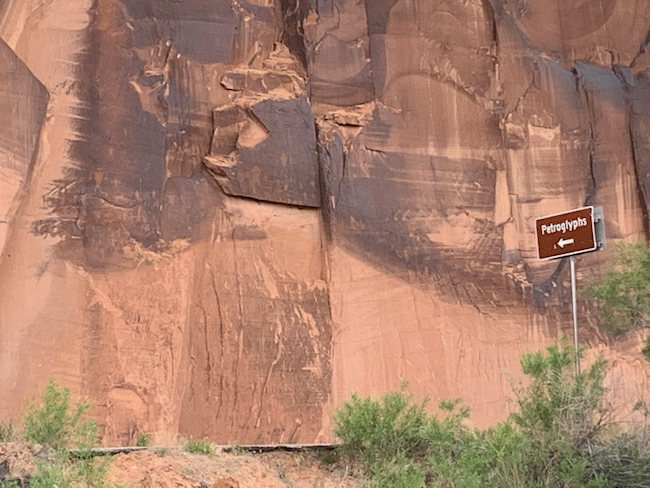


A great ending to a great day.
Chasing Petroglyphs: Joe Pickett Guides Us Through the Red Desert, Wamsutter and the Lincoln Highway to Rock Springs, Wyoming
The sun wakes us early the next morning, streaming in our window. The temperature is 22°F and there is a light frost on the ground. All we brought in are our backpacks, so we grab a quick breakfast from our supplies and head out.


“Why would you want to go to Rock Springs, Wyoming?” asked my new brother-in-law with genuine bewilderment, at the end of our trip as we were spending time with him and my sister.
I didn’t know he had been born there, and still has family there. No, we had chosen this obscure route because of a series by C.J. Box about a game warden named Joe Pickett, a series we have both read from book one to book 22. In Off the Grid, Joe is tracking a crazy bear into the Red Desert when he finds a bunch of terrorists and naive young people putting together a magnetic pulse bomb to create havoc in the civilized western world. (Honestly, I don’t even know how to describe the plot to you, sometimes it doesn’t have to make a lot of sense, you just sort of have to roll with it.)
I had never heard of The Red Desert before, and I had driven that stretch of Highway 80, the old Lincoln Highway, several times. It was always just a place to get through, but this time we would be looking at it with different eyes.
It all started in Qaqortoq, on our Wake of the Vikings trip (just type in Wake of the Vikings in the search window of this blog if you want to more about that trip). In Qaqortoq, AdventureMan asked me what I would do if I lived there and I told him I would learn to spin wool, something I’ve always wanted to do. He said “If I had to live here, I would kill myself or drink myself to death.”
On this trip, we passed through several towns about which he felt the same. We like being remote on trips. He doesn’t like the idea of living remote.
The field irrigators are on, and the spray etches patches of fairy ice onto the grass.
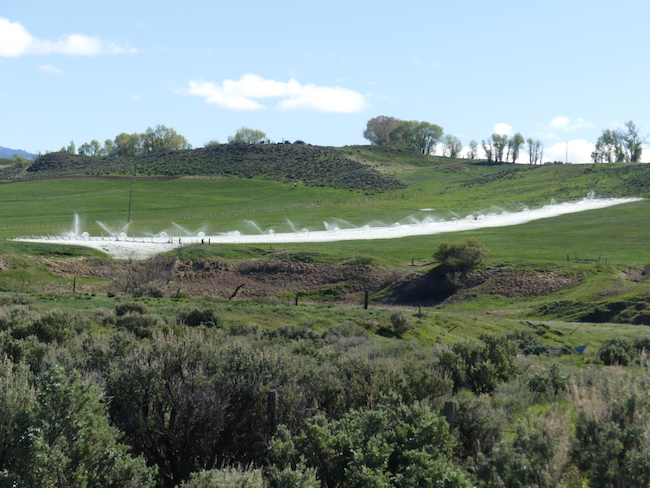
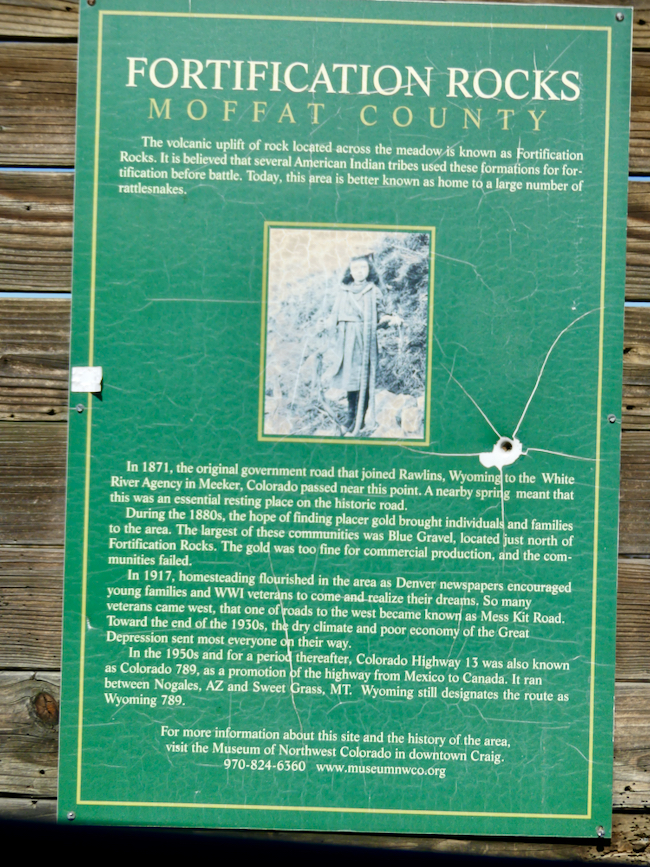
It is a beautiful day, and we stop often, just because we can. It is cold, but it is also beautiful. These rocks, we learn, are called fortification rocks, because in territorial wars people could use them to strategic advantage.


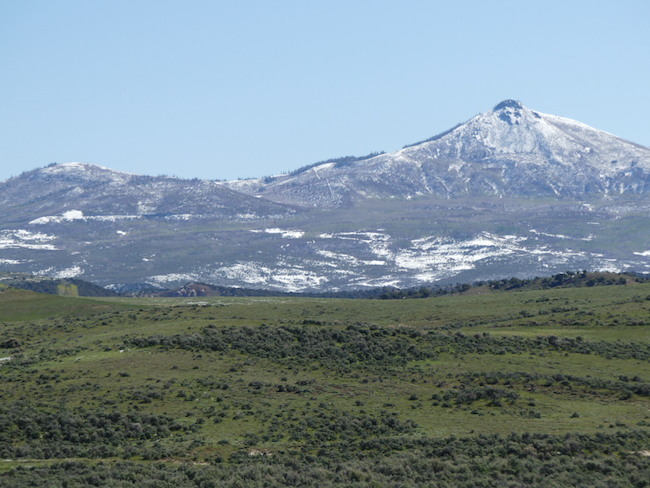
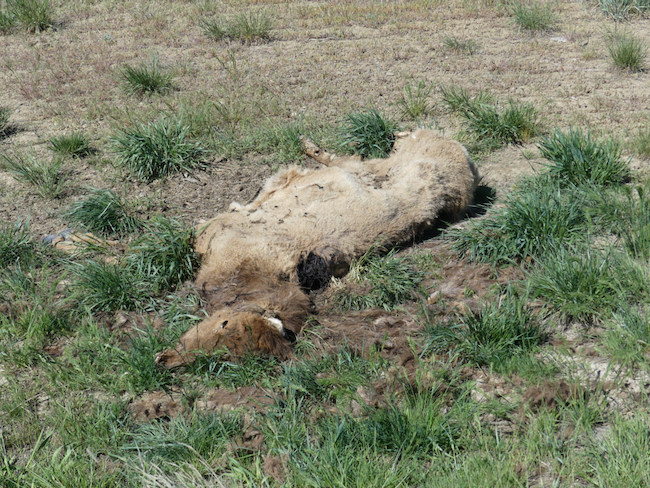
There were mountains in the distance capped with white snow. We began seeing pronghorns, and at one point, when we stopped to take a photo, I almost stepped on a dead elk, probably hit by a car. There was no smell, probably because it was still so cold.

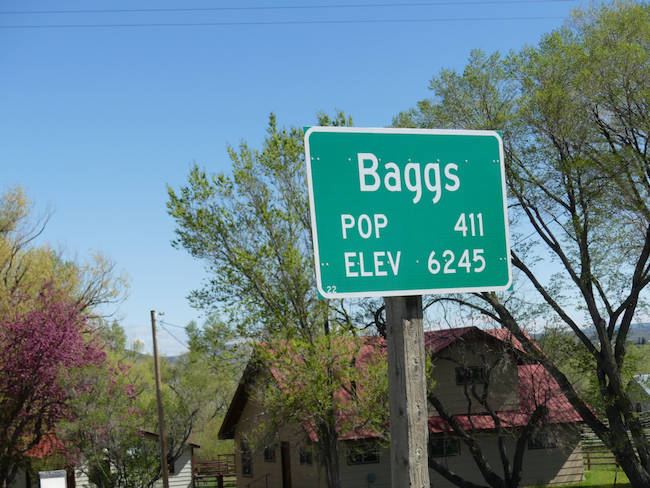
Baggs, Wyoming, is at the border between Colorado and Wyoming and is at the southeastern tip of The Red Desert. Baggs was where AdventureMan said he would kill himself if he had to live in a town with 411 people.

AdventureMan mentions there are routes into the Red Desert coming up, and I counter saying that they are tracks, not routes, and if we were to go in, and get into some trouble, it is very remote and we might be those tragic elderly people who foolishly thought they could survive, but couldn’t. Honestly, I would love to see the Red Desert AND I know we are not the people we once were. I think we could survive a lot, being who we are, and I also know it is not wise, at our age, to tempt the fates. I can’t really tell whether he is disappointed or relieved by my response. My best guess would be – both.
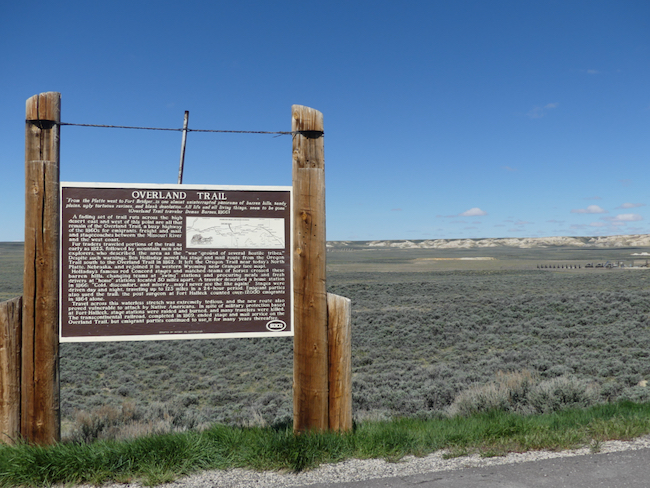

That’s the tip end of The Red Desert in the background. If you look at the Google Map of today’s journey, you will see a big empty space in the middle, a biblical “trackless waste.”

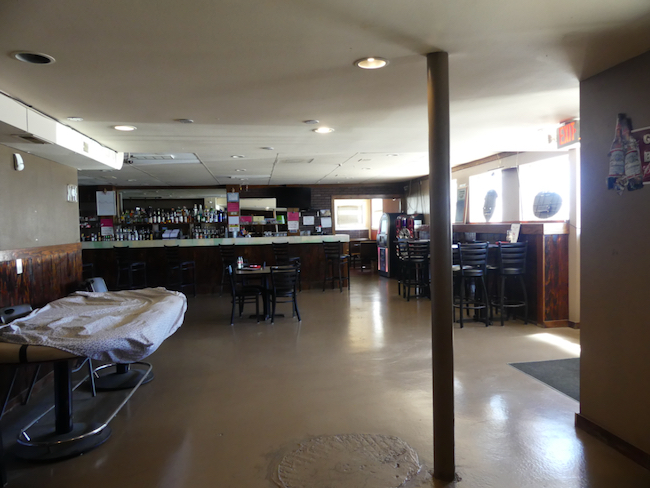
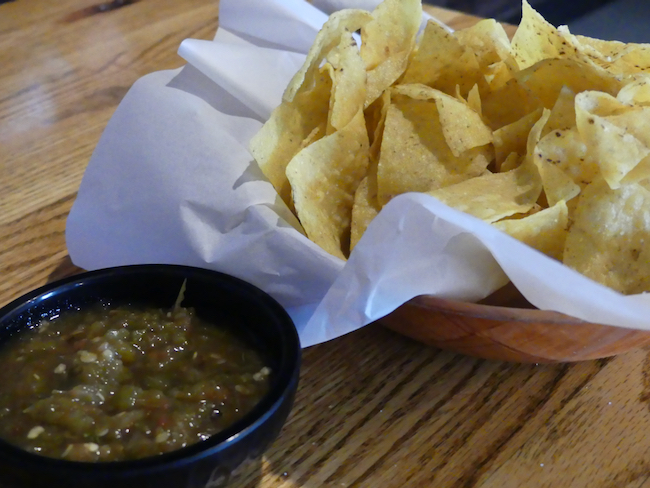
Just around lunchtime, we enter Wamsutter, a boom-and-bust town with several past lives. AdventureMan finds the Hacienda Mendez, where we have our first taste of cactus salad – it is delicious.


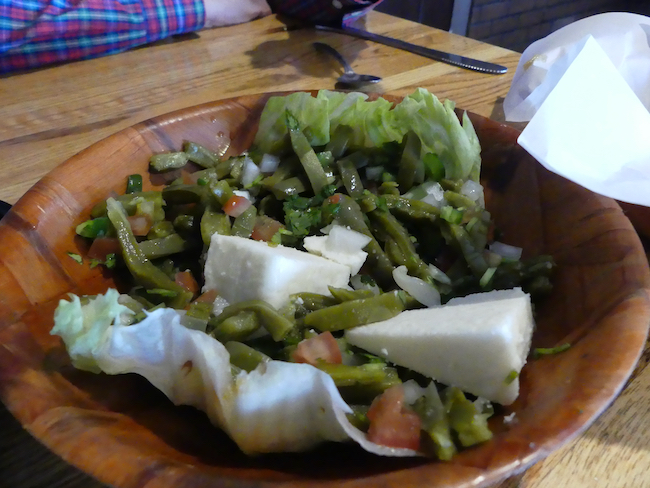


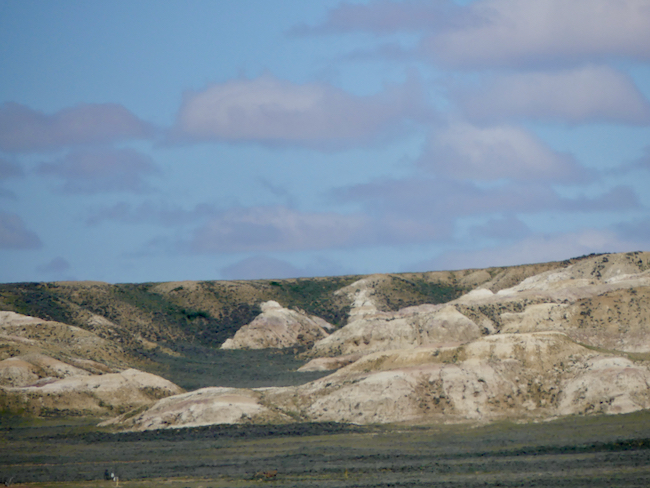
And on we go, down the Lincoln Highway toward Rock Springs, the Red Desert to our left with high tabletop plateaus guarding the tracks leading to the interior, and the Great Divide Basin to our right, along with the Killpecker Sand Dunes (Wikipedia calls them the largest living dune system in the United States. I didn’t know that – did you know that?)
We head into Rock Springs and find our home for the next couple of nights, The Outlaw Inn. I could not resist the name.

They gave us a really great room, with two bathrooms, one with a toilet and shower, one with a toilet and tub. Just pure luck.


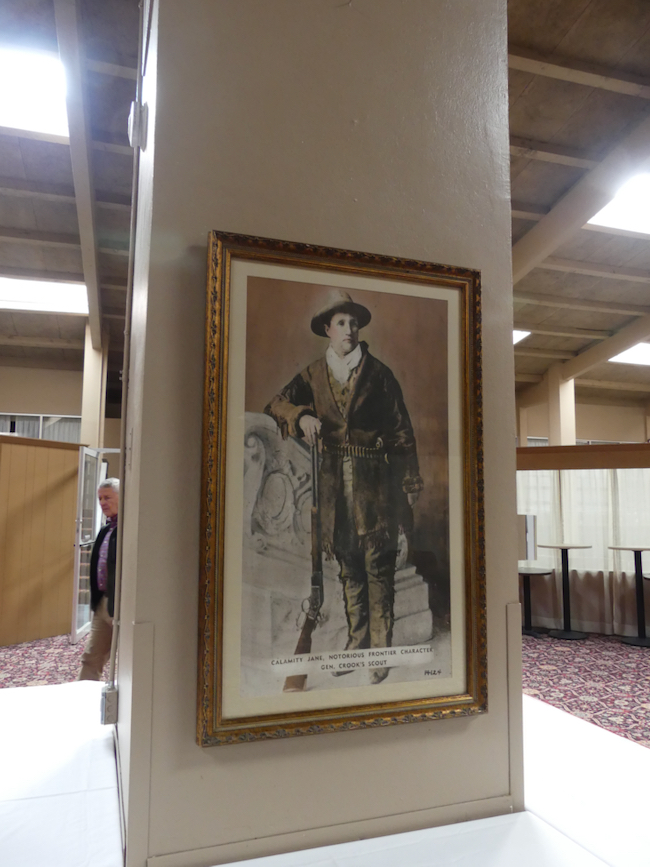
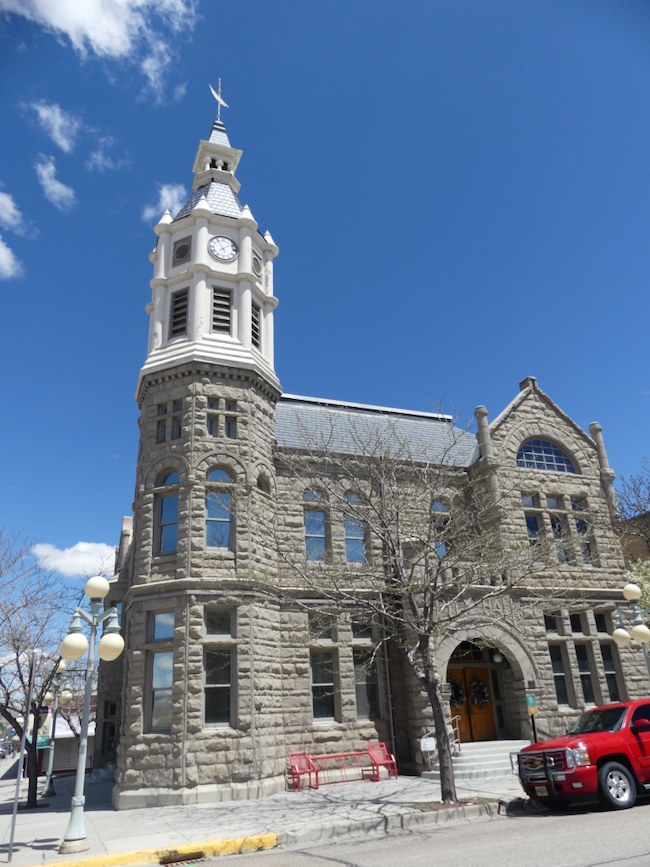
Dropping our gear, we headed out to explore Rock Springs. We wanted to find the college museum, but when we found it, nothing was open. In Joe Pickett’s world, this was where his daughter April went to university, a rodeo college. What we did find was a wonderful museum, the Rock Springs Historical Museum, and a wonderful docent who was willing to answer all our questions. This museum was wonderful. It included a full jail, and a padded cell as well as well-curated exhibits of communications, health care, etc. through the earliest history of the county.


I am eager for tomorrow, when we have a real adventure, searching for the White Mountain Petroglyphs!
Leaving Bozeman, Day 14
AdventureMan hates my phone alarm, which is a tune called “Twinkle.” He always says it reminds him of hotel mornings when we have to get up at what he calls “The Cr#p of Dawn.” This was one of those mornings, we need to be up, get to the airport, turn in the car, check in two hours in advance, etc.

It all goes smoothly. We drop our keys in the drop box, still a little nervous that we never received a contract for the upgraded vehicle. By the time we reached Dallas, I had a confirmation of the car rental return and a copy of the contract. Go figure.
The airline people were not at the airport two hours before the flight. Oh well. We checked in and had time for breakfast at the Copper Horse before boarding for our flight. In Dallas, we found a BBQ take-out and ate in the waiting room.

We arrived safely back in Pensacola, on time, and there were zero taxis and about six sets of people in front of us. We never do this, but we called our son and asked if he would pick us up. He arrived, fully masked, welcomed us back, and drove us home. That night, he texted that he and our grandson both tested positive for COVID and the family would be quarantined, They live just blocks from us, so we were able to see them, to bring groceries or whatever they might need. They were tired and achey, but never got very very sick.
I just took a break; AdventureMan asked me how the trip report was coming and I said I was finishing up and I was astonished at how much COVID had been an influence on this trip. From the start, when Viking cancelled our planned cruise in May, to the end, with hotels and restaurants struggling to find staffing, COVID had played a major role. We need to be paying attention. Things are changing. We are going to need to do things differently. We need to start figuring out those strategies now.
Into The Great Wide Open, Day 8, Roaring Mountain, Norris Geyser Basin and Old Faithful


It’s hard to believe we’ve already been traveling a week, and only have a week to go. We are having so much fun, and time is skimming by.
Today we drive south. We are up early, to avoid the crowds. Too late, there is already a line for coffee. They have delicious biscotti; huckleberry for AdventureMan and Cinnamon for me. It is cold, so cold I put on my levis for the only time on this trip. We are headed to one of my favorite places, the Norris Geyser Basin.

On the way, we stop at Roaring Mountain, another of my favorite spots. It is a cloudy day, but that is OK at Roaring Mountain, a sulpherous, misty site full of fumaroles, holes out of which pour hot steam. In the cold morning air, the steam shoots out, and then billows dramatically around the mountain.
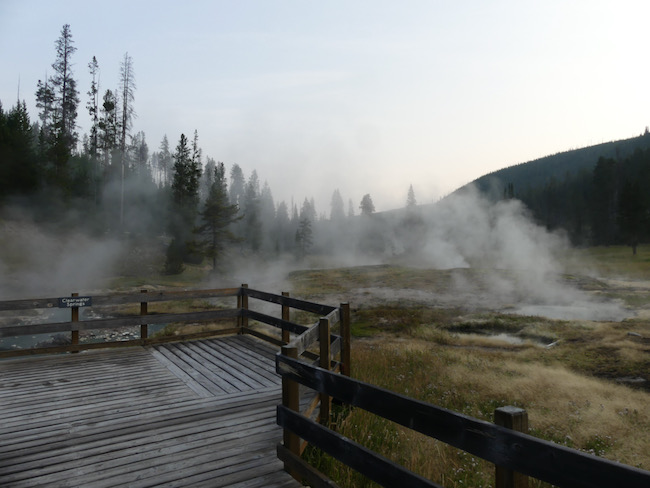

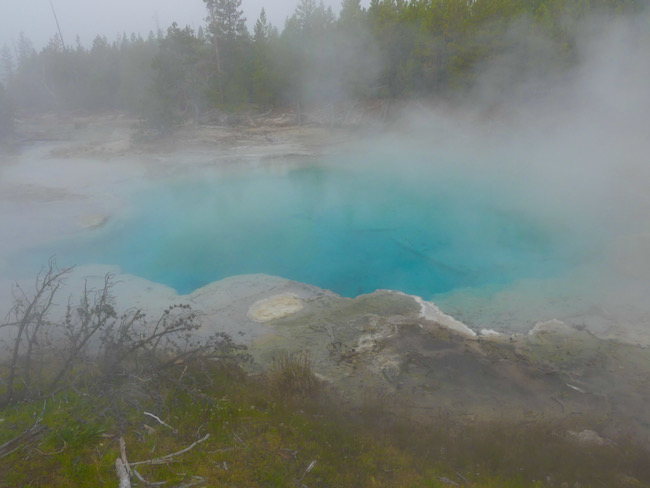
The Norris Geyser Basin had two great hikes, and the parking lot has what we call Rock Star Parking when we get there, very few people.
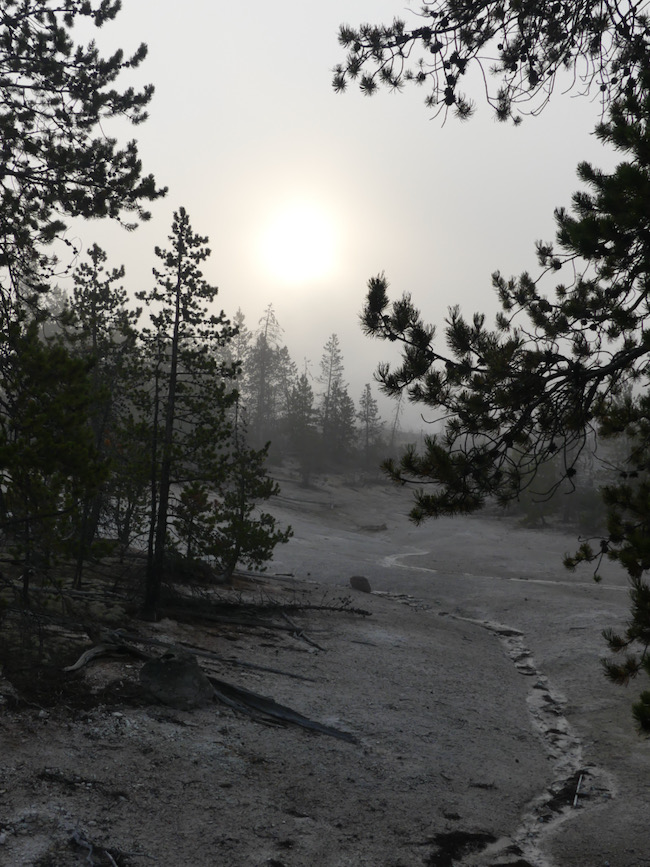
We love this hike. The first attraction is Steamboat Geyser, which is unpredictable but is always looking promising when we see it, burbling up with little bursts of geyser enthusiasm. Along the track are many geysers, but also bubbling pits and brilliantly colored springs of boiling water. All the steaminess is exaggerated in the morning cold. We can’t believe it can be this cold in mid-August.


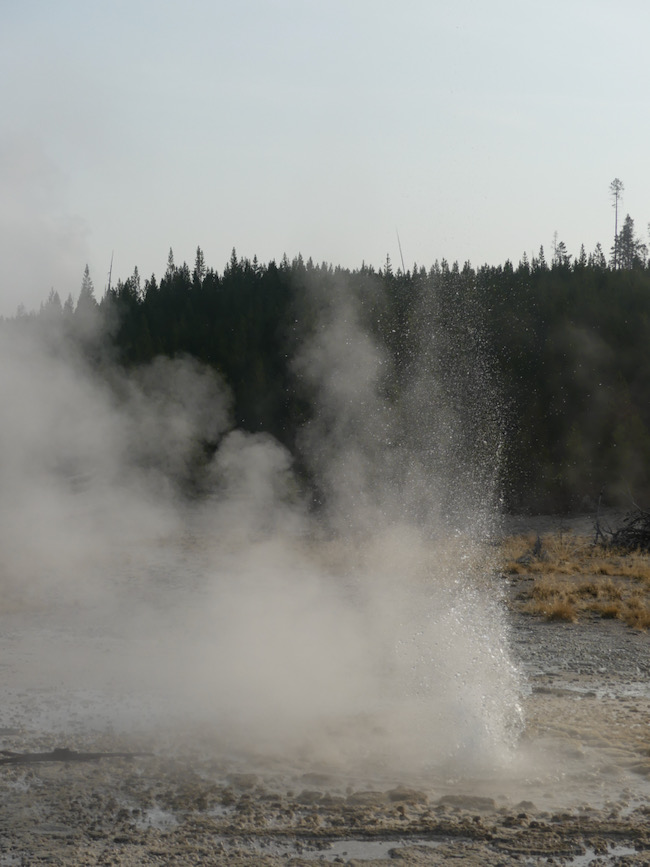
AdventureMan tells me – and this is really true – that a man fell into one of the springs at Norris Basin, and died, and that his body dissolved in the chemical rich pool. He didn’t die on purpose, but, like many tourists, he wanted to take a dip. His sister says he tripped over his own flip-flop, fell in and died a terrible death, boiling to death. Aargh.


We head on to Old Faithful. There is a long boardwalk there I have never walked, and we have little hope it will be uncrowded. We decide to have breakfast first, and discover the dining room is not open, does not seem to be serving meals at all. The grill is open, all grab and go, so we pick up breakfast and for me, coffee, and ask if we can eat on the terrace. They tell us yes, so we head upstairs, and there is a lovely spot with a bench and two tables overlooking Old Faithful, so we set up there and have one of the most unexpectedly lovely breakfasts of our trip.


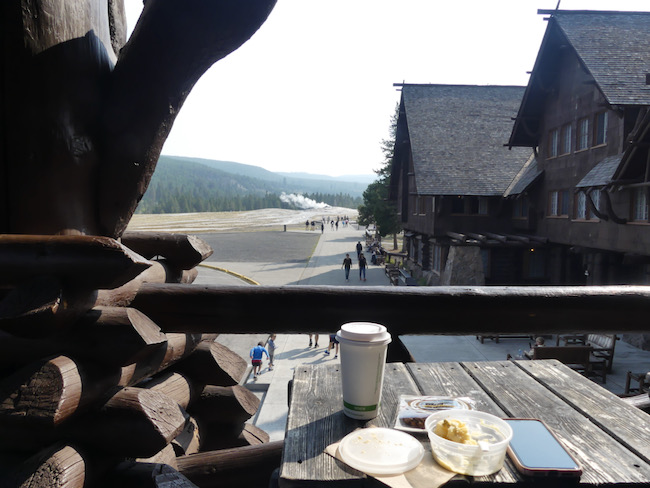

We could watch Old Faithful erupt from our front row seat, but we decide to leave our location for someone else, and to hike out to another vantage spot good for watching the eruption. It is a great walk, we find a good place and just as I am about to walk to the prime location, a family stops there and claims it. We sit nearby, and a bison comes near. The family can’t resist, they decide to follow the bison, so we get the place after all.

We sit, and an EcoTour comes and joins us. We get the advantage of all this knowledgeable young guide’s experience just sitting there and listening. As we are listening, a Park Ranger comes hustling up to try to keep people from getting too near the bison. It seems to be a never-ending battle; people seem to think this is like Disneyland and nobody gets hurt. Wrong. People get hurt all the time. These are WILD animals and they are becoming less and less afraid of human beings. That is a bad thing, and can become disastrous.
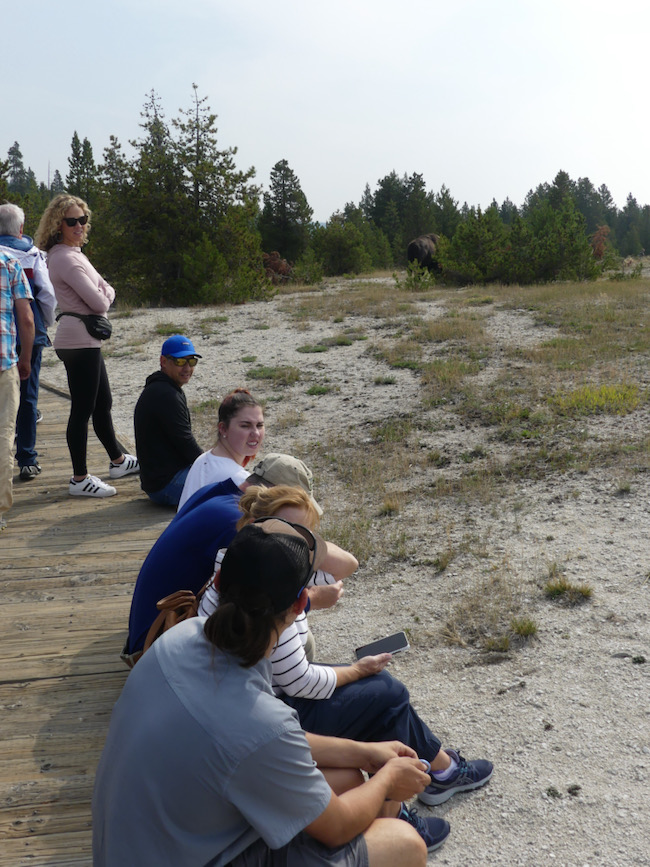
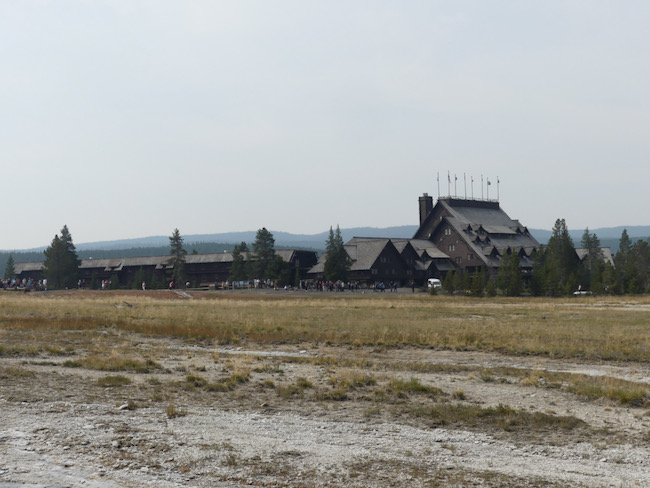


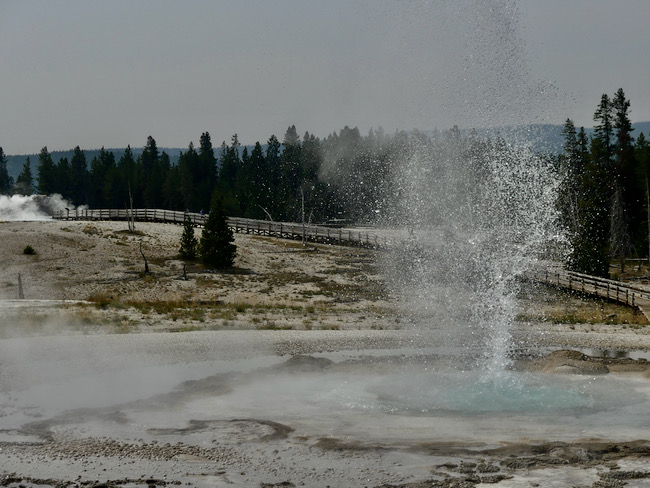

AdventureMan took the guide aside after Old Faithful did its thing and tipped him, told him to have a beer on us because we benefitted from his discussions even though we weren’t a part of his group. We love young people who love their jobs and do them so well.
We learned that early-mid morning is a great time to visit Old Faithful. There were people, but not so many, even in this near peak of summer visitors.
What we noticed is that there were no buses full of Chinese. No buses full of Japanese. No large groups of visiting Indians. No large groups of students. No European youths. We met one French-Canadian biker along the Firehole Falls road; he had started at the Canadian border and said he had 20,000 more miles to go. The bikers in Yellowstone and Glacier earned our unalloyed admiration – they were riding up very long high hills with gear. They had their sleeping bags and small camp stoves and their clothing. I cannot imagine how they persisted, but they almost all looked strong and wiry and like they were loving every minute of their biking experience.
We got in over 12,000 steps today. AdventureMan is happy.
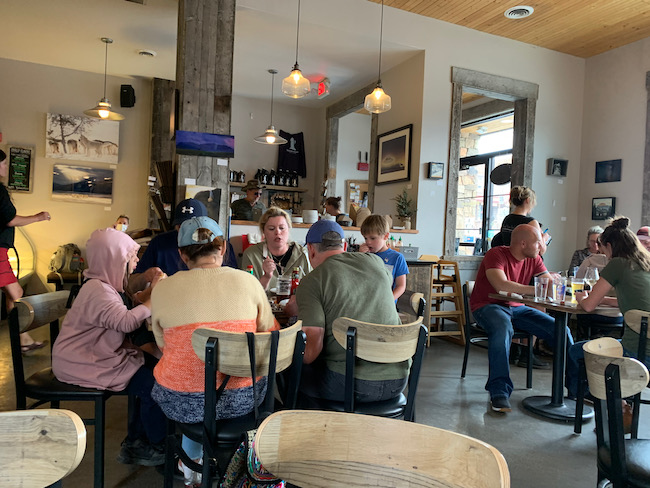
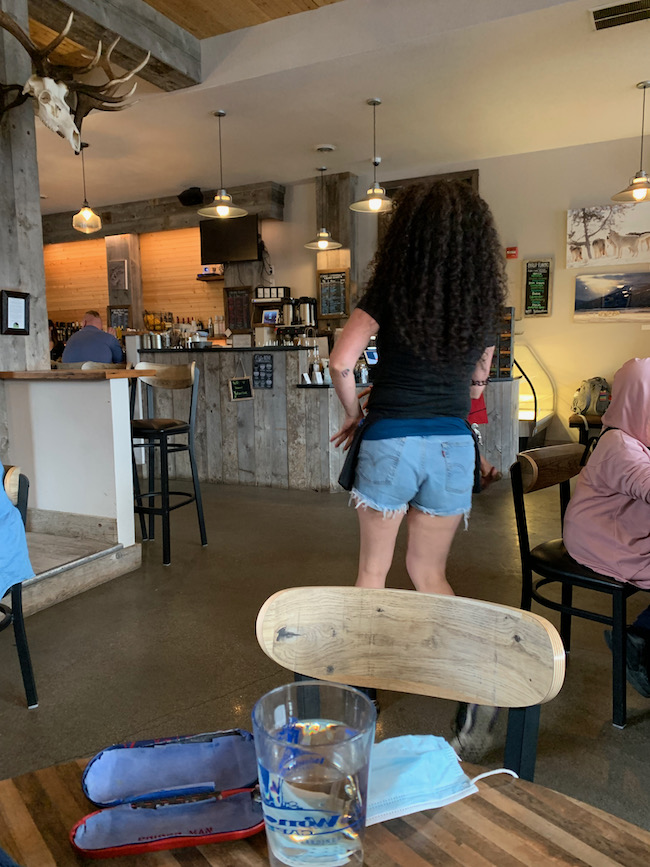
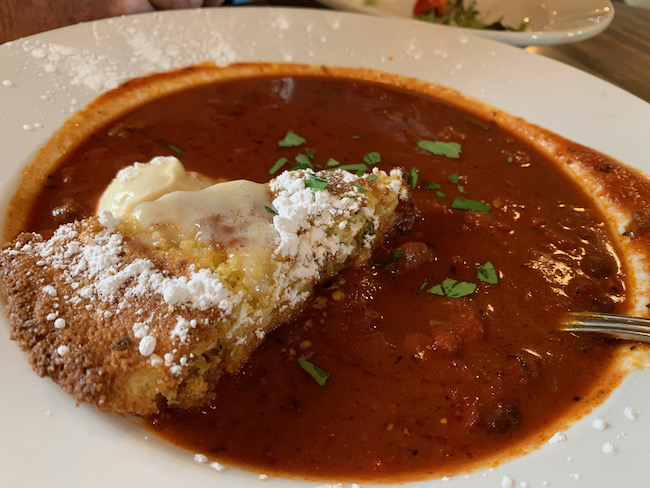
We went into Gardiner for dinner, to the Wonderland, a restaurant we discovered the last time we were in Yellowstone, a couple years ago. We were astonished – we went early. Almost every table was full! They did have a table for us, and we were very grateful. I had trout with aioli sauce, AdventureMan had elk chili (it was sprinkled with powdered sugar, and was sweet!) with their famous jalapeño cornbread. Wonderland was hopping busy; we were so impressed with the way the team all worked together. While the servers were taking orders, others would be taking plates away, filling glasses, bringing food from the kitchens – everyone helping each other. It was awesome to behold.

Back at our cabin, coming back from a post-dinner walk, we looked up the hill behind our cabin and there was a huge bull elk! It had a huge rack of horns, and looked so noble as he sauntered along the hill. Word spread quickly and people grabbed their cameras, mostly cell phones, and ran out to the street to catch a photo of this magnificent animal. He was far enough away that the few people who gathered didn’t bother him, he barely noticed our existence, and we were very quiet and respectful. I didn’t have my camera, only my cell phone. I took pictures anyway. Nothing could capture the full grandeur of this creature, but we all clicked away in sheer astonishment and admiration. There are hundreds of female elk and little elk calfs around, but this is the only bull elk I ever saw in Yellowstone.


Recent Comments
ExpatAlien on What Country am I Living … intlxpatr on Yellowstone: Old Faithful to C… Michelle on Yellowstone: Old Faithful to C… Cathy on No Grown-Ups in Charge intlxpatr on Waiting for Snow Wikipedia Donate Button

Amazina


Early Voting in Florida


 Here There and Everywhere