Police Know Where We Are and Where We Go
This is not good news for people who don’t want other people knowing where they have been. I don’t see how it’s any different from cameras in big cities that are used by the police to see what cars went through at a time of a crime, for example. If you don’t have anything to hide, is this invasive? Where property crimes are increasing, where there is an increase in violent crime or assaults, these re tools to keep the majority of the population safer from the predators – in my opinion. Can you change my mind?

From AOL Auto News:
Police License Plate Scanners Record Driver’s Locations
Unregulated cameras store information indefinitely
Government surveillance isn’t just in our phone records and search engine history, but on our roads as well.
That’s what the Center For Investigative Reporting found when researching the small cameras popping up on police cars across the country known as license plate scanners. License plate scanners allow police officers to quickly scan thousands of license plates a day, looking for runaway criminals or stolen cars. In California there are very few limits on these readers and almost no transparency. These cameras record time and place of your vehicle, and even can store a picture record of your whereabouts.
Michael Katz-Lacabe, a security consultant, requested the records from the San Leandro, Calif., police department of every time his car was scanned. He was amazed at the frightening amount of information police had recorded. His two cars were scanned 112 times since 2009, and average of about twice a week. There was even a picture of him and his two daughters getting out of his Toyota Prius in their driveway.
The Center For Investigative Reporting points out that the use of license plate scanners has been growing quickly and quietly across the country. Read their fascinating story here to learn more.
Arabs wary of expressing their opinions online
Fascinating study results published in Qatar’s Gulf Times:

Northwestern University in Qatar has released new findings from an eight-nation survey indicating many people in the Arab world do not feel safe expressing political opinions online despite sweeping changes in the aftermath of the Arab Spring.
From over 10,000 people surveyed in Lebanon, Tunisia, Egypt, Saudi Arabia, Bahrain, Qatar, Jordan and the UAE, 44% expressed some doubt as to whether people should be free to criticise governments or powerful institutions online.
Over a third of Internet users surveyed said they worry about governments checking what they do online.
According to the report, “The implied concern (of governments checking what they do online) is fairly consistent in almost all countries covered, but more acute in Saudi Arabia, where the majority (53%) of those surveyed expressed this concern.”
The study – titled ‘Media Use in the Middle East – An Eight-Nation Survey’ – was undertaken by researchers at NU-Q to better understand how people in the region use the Internet and other media. It comes as the university moves towards a more formalised research agenda and is the first in what will be a series of reports relating to Internet use.
The survey includes a specific chapter on Qatar, the only country where those surveyed regarded the Internet as a more important source of news than television. “We took an especially close look at media use in the State of Qatar – a country with one of the highest Internet penetration rates in the Arab world—and internationally,” said NU-Q dean and CEO Everette Dennis.
These findings follow a preliminary report NU-Q released last April that showed web users in the Middle East support the freedom to express opinions online, but they also believe the Internet should be more tightly regulated. “While this may seem a puzzling paradox, it has not been uncommon for people the world over to support freedom in the abstract but less so in practice,” Dennis explained.
Among other findings, the research shows: 45% of people think public officials will care more about what they think and 48% believe they can have more influence by using the Internet.
Adults in Lebanon (75%) and Tunisia (63%) are the most pessimistic about the direction of their countries and feel they are on the ‘wrong track.’
Respondents were far more likely to agree (61%) than disagree (14%) that the quality of news reporting in the Arab world has improved in the past two years, however less than half think overall that the news sources in their countries are credible.
Online transactions are rare in the Middle East, with only 35% purchasing items online and only 16% investing online.
The complete set of results from the survey is available online at menamediasurvey.northwestern.edu. The new interactive pages hosting the survey on the website have features that allow users to make comparisons between different countries, as well as between different demographics within each country.
Dennis confirmed that the research report is the first in an annual series of reports produced in collaboration with the World Internet Project; one of the world’s most extensive studies on the Internet, in which NU-Q is a participating institution.
NU-Q and WIP signed an agreement earlier in the year, providing a global platform for the current research.
More on Pensacola Beach Shooting

Written by
Rhema Thompson
- A Pensacola man accused of shooting a man to death early Tuesday at Casino Beach may face a first-degree murder charge in a case that is raising more questions as new details emerge.
Damarcus Rayon Jenkins, 20, made a video appearance before Escambia County Judge Thomas Johnson on Wednesday afternoon in the shooting death of Michael Harris, 34, of Milton.
Jenkins is accused of shooting Harris multiple times after approaching Harris and his girlfriend, who had been arguing on the beach.
He was arrested on a second-degree murder charge and is being held without bond. But prosecutors will ask a grand jury to upgrade the charge to first-degree murder in the next few weeks, Assistant State Attorney John Molchan said.
Questions linger about what triggered the deadly encounter.
There is no indication that Harris and Jenkins knew each other, investigators said.
“That makes us very concerned and that’s what we are continuing to investigate,” Molchan said. “The nature of the shooting still presents a lot of questions.”
Escambia County sheriff’s deputies arrived at Casino Beach at about 3:45 a.m. Tuesday in response to a call of shots fired and found Harris lying in the sand with several gunshot wounds, including one to his sternum, according to a Sheriff’s Office report.
He was pronounced dead at the scene by emergency responders just after 4 a.m.
According to several witnesses, Harris had been out on the beach with a group of friends that night to celebrate a friend’s 30th birthday.
The group separated after Harris, his girlfriend and two other friends got into an argument, according to the report.
After the argument, Harris and another female friend became angry and walked away from the group.
The remaining two friends — a male friend and Harris’ girlfriend — got into a van and drove over the Bob Sikes Bridge before receiving a call from Harris to be picked up, according to the report.
After arriving back at the beach, Harris’ girlfriend got out of the van to meet Harris while Harris’ male friend drove to a different location to pick up his girlfriend, according to the report.
As Harris sat with his girlfriend on the beach, several witnesses said a group of males and females — who appeared in their teens and early 20s — approached the two and multiple gunshots were fired.
The suspected shooter was later identified by several witnesses as Jenkins, Molchan said.
Following the gunshots, the group ran from the beach and into the parking lot where they sped off in black Nissan Altima, a white vehicle and an orange vehicle, according to the report.
Later, officers arrived at a residence in the 4500 block of Landes Drive seeking Jenkins for questioning.
As they talked with a person who answered the door, they noticed Jenkins attempting to flee the home through a side door, the report states.
A deputy caught Jenkins, searched him and found a set of keys to an orange Kia Rio parked in the front yard, which matched one of the vehicles at the scene of the homicide.
Deputies also obtained a search warrant for the residence but found no evidence.
Jenkins was taken into custody and his vehicle was brought to the Sheriff’s Office for processing.
Molchan said there are still others being sought for questioning, but additional charges are not likely.
Jenkins’ next court appearance is scheduled for July 10.
What Are Kuwait Traffic Laws?
You all know me – I am a law and order kind of gal. I like order, I like laws, especially those voted on by the people. I like laws which can be enforced, and are enforced, equally, for all people equally in the country. Oh? I did? I said EQUALLY twice?
We are all equal before the law.
Now here is the tricky part. Have you ever seen a listing of traffic laws in Kuwait? Can you find a listing of laws, violations, and their charges? When we apply for driver’s licenses in almost any country, we get a little booklet to memorize, with the laws written inside it. The laws are clear. Clear laws are enforceable.
I’ve looked at the MOI website. I see something that looks like it might be a traffic code in Arabic. I have looked everywhere; I cannot find one in English. I find no reference to any handbooks for people applying for their driver’s license.
How can you enforce a law if the law is not published? Is there a code somewhere listing violations and fines? I published one many years ago, something that all the expats were sending around as ‘the new Kuwait traffic rules’ but IF it was, there was never anything in the paper about it to confirm its validity.

If you are going to have a major campaign to enforce traffic codes, you might want to publish the laws . . . in all major languages use today in Kuwait.
From the Kuwait Times:
Ali vows to rid traffic ‘disease’
Interior Ministry Assistant Undersecretary Maj Gen Abdulfattah Al-Ali
KUWAIT: Interior Ministry Assistant Undersecretary Maj Gen Abdulfattah Al-Ali stressed that all traffic violation-related deportations are in accordance with the law. Speaking at a press conference at the Kuwait Journalists Association (KJA) headquarters, Ali said that deporting people for traffic violations was also adopted by the US and other countries worldwide. “The problem is that we were very tolerant with violators and this does not mean that law violation is a right for motorists,” he underlined, urging all human rights organizations who have criticized Kuwait’s traffic police to examine human rights in their respective countries before talking about Kuwait.
“We have filed over 70,000 traffic citations including 43,000 serious ones such as running red lights, driving under the influence of alcohol, driving on the wrong side and many others,” he elaborated, pointing out that those already deported did not want to respect the traffic laws they had repeatedly violated. Ali added that the results of studies of traffic problems revealed many and that once one problem was solved, another emerged immediately.
“We have various problems… including the fact that motorists speak many languages and dialects which requires a large number of specialists to develop their traffic awareness,” he explained, noting that the traffic remedy strategy started by diagnosing the “disease” by studying random “specimens” at different times of the day at places with heavy traffic flows such as Jleeb Al-Shuyoukh, Shuwaikh Industrial Area, Amman Street, Bnaid Al-Gar, Khaitan, Farwaniya and Fahaheel.
“The specimens showed some major problems such as domestic drivers using private vehicles as taxis, taxi and large vehicle drivers who do not hold general driver’s licenses and people driving without licenses at all,” he said, adding that this called for strict law enforcement.
“Traffic in Kuwait is like an old sick man who once treated for one aliment develops another,” he noted, adding that 18 traffic inspection teams dressed in civilian clothes had been formed and deployed in various places. “Fortunately, traffic police only file 100 daily citations in Jleeb compared to 1,000-1,500 in the past”, he concluded.
“I Will Wipe out the word WASTA from the Traffic Dictionary”
Wooo HOOOO on You, Major General Abdulfattah Al-Ali!
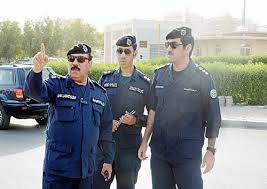
Sometimes, when you are reading a newspaper looking for content, the most significant articles can be little small ones:
Major Al-Ali vows to redraw traffic map
KUWAIT: “I have orders from higher authorities to organize the traffic and the law will be implemented strictly, Assistant Interior Ministry Under Secretary for Traffic Affairs Major General Abdelfattah Al-Ali said. “I will change the traffic map within six months and wipe out the word wasta from the traffic dictionary ,” he added. “I have strict orders from higher authorities to organize traffic and the law will be implemented very strictly,” Major Ali said.
The Kuwait Times got his title wrong; it is Major GENERAL, not Major, LOL, that’s a big difference. It appears he has the clout – and the backing – to make a brave and steadfast stand:
“WIPE OUT THE WORD WASTA FROM THE TRAFFIC DICTIONARY”
I can hardly believe my eyes. This is going to be very painful for young Kuwait men, who have learned – from prior experience – that the rules do not apply to them. IF Major General Abdulfattah Al-Ali can maintain his strong position, there may be more young Kuwait men who live to be grown-up men, there may be fewer heart-wrenching funerals, far fewer trips to the emergency room (did you know that some of the best head-trauma physicians in the world are in the ER’s in Qatar, Kuwait, and the UAE? There’s a reason for that.) The days of seeing babies on their daddy’s laps in traffic may be over. People may actually start wearing seatbelts!
Wooo HOOO on You, Major General Abdulfattah Al-Ali. You are a brave and courageous man, with a vision for a safer future for Kuwait.
Anesthesia Linked to Dementia Risk in Seniors
It may not be dementia. It may be a reaction to a medication in the elderly that LOOKS like dementia.
My father was 87, and doing pretty well for a man 87. He still walked on his own, using a walker when he had to, and very rarely, a wheelchair if we were going a long ways. He went into the hospital for a minor surgery. The tube inserted in his hand for the anesthetic became infected. Dad was acting weird, he was having hallucinations, and my sister rightly identified that Dad had a reaction to the diuretic drug Lasix; when they switched him to an alternative, the raving and hallucinations stopped.
He was transferred to a rehabilitation unit, where for two days, they put him back on Lasix. Poor communication between hospital and the rehab facility, plus standardization of drug regimens – they switched him without telling him, or us. Once again, he went loony tunes, and at the same time, his right hand began to swell until it looked like a lobster claw. He kept saying it hurt, and it was big and red, and the rehab people kept saying it would get better.
Dad was rushed to another hospital, one the rehab clinic worked with, and the doctors told us he had a ‘cascade of problems’ and which were the primary three we wanted them to work with?
Get him off the Lasix, first thing, we all agreed, and find a way to have it annotated on any record that he is never to have Lasix. (It did no good; the next hospitalization, back at the first hospital, they gave him Lasix again, which made him crazy and masked all the other symptoms.)
Long story short, there were a cascade of hospital mistakes – not one hospital, two hospitals and the rehab clinic – where miscommunications, inattentions and shortage of trained personnel resulted in a cascade of issues that led to my father’s death later that year. The other lesson learned is that if you go into a hospital, make sure you have a good support system, someone with you who will bravely ask questions, and remind someone if an inappropriate medication is prescribed. You need a family member with you for protection against inattention, mistakes, miscommunications and personnel shortages.
It’s not like there’s anyone to bring a lawsuit against; they were all doing the best they could, but Dad was old. My bet is that he might have lived another couple years, at the very least, had he not gone in for that first non-essential minor surgery. To me, the moral of the story is if you want to live a long life, stay away from hospitals.

Anesthesia Linked to Increased Dementia Risk in Seniors
Exposure to anesthesia has been linked to a 35 percent increase of dementia in patients over age 65, according to a new study.
By Jeffrey Kopman, Everyday Health Staff Writer
FRIDAY, May 31, 2013 — Caregivers and seniors struggling with the dilemmas of elder care have another risk to weigh against potential rewards — senior patients exposed to general anesthesia face an increased risk of dementia, according to research presented at Euroanaesthesia, the annual congress of the European Society of Anaesthesiology (ESA).
Researchers reviewed the medical information of 9,294 French patients over the age of 65. The patients were interviewed several times over a ten year period to determine their cognitive status.
After two years, 33 percent of participants had been exposed to anesthesia. Most of the exposed patients (19 percent overall) were exposed to general anesthesia — a medically induced coma. The rest were exposed to local/locoregional — any technique to relieve pain in the body — anesthesia.
In total, 632 participants developed dementia eight years after the study began. A majority of these patients, 512, were diagnosed with probable or possible Alzheimer’s disease. The remainder had non-Alzheimer’s dementia.
The gap between dementia related to general anesthesia (22 percent) and non-dementia patients (19 percent) was associated with a 35 percent increased risk of developing dementia. This risk was linked to at least one general anesthesia.
“Elderly patients are at an increased risk for complications following anesthesia and surgery,” said Jeffrey H. Silverstein, MD, MS, and vice chair for research at the Department of Anesthesiology at Mount Sinai in New York City. “[They] are particularly prone to postoperative delirium, which is a loss of orientation and attention. Anesthesiologists have been evaluating higher cognitive functions (for example, memory and executive processing) and found that a substantial number have decreases in one or more of these areas after a surgical procedure.”
Researchers hope this study will lead to more awareness for surgeons.
“Recognition of postoperative cognitive dysfunction (POCD) is essential in the perioperative management of elderly patients,” said study author Dr. Francois Sztark, INSERM and University of Bordeaux, France, in a press release. “A long-term follow-up of these patients should be planned.”
Elderly Care: Risk vs. Reward
Senior citizens and their caregivers might be willing to accept an increased risk of dementia if it means getting necessary anesthesia for an important medical procedure. Dementia is a relatively common occurrence in old age: One in three seniors has Alzheimer’s disease or dementia by the time of their death.
But surgery at old age can also carry more severe, and less common, health risks. In fact, simply surviving surgery can be difficult for elderly patients, especially those over the age of 80.
While the numbers vary depending on procedure, researchers have found that mortality risk tied to elective major surgeries increases with age. The risk more than doubles for patients over 80 compared to patients ages 65 to 69.
But other surgery complications are even more common in seniors.
“The major risk for elderly patients following surgery is pneumonia,” said Dr. Silverstein. “Cardiac complications are next most common.”
However, Dr. Silverstein still feels that if surgery is deemed necessary, patients should not fear the risks.
“In theory, only necessary surgery is done,” he said. “Knowing how [patients] reacted to anesthesia and surgery in the past may give them some idea of their postoperative course.”
Last Updated: 05/31/2013
“Aggressive driving and speeding are common on Doha’s roads now”
From Gulf Times (Qatar); a new proposal to lower speeds on some roads to try to meet the goal of reducing accidents and fatalities rates. It notes they are also putting in more cameras and radars. All that is good. The question will be: How equitably will the law be enforced? When you look at percentages of accidents and fatalities as a proportion of population, are Qataris over represented? How do you encourage the nationals to drive respectfully?
Qatar’s Public Works Authority (Ashghal) is seeking to lower the speed limits set for several roads in Qatar in a new initiative to bring down the number of accidents. This is a sensible move. Aggressive driving and speeding are common on Doha’s roads now. Strict regulations are needed to counter this trend. Qatar already has one of the highest rates of road accidents in the world.
During a presentation at the Qatar Transport Conference in Doha this week, Ashghal official, Yousef Abdulrahman al-Emadi, blamed speeding for most fatalities in road accidents. Speaking on “Road safety in Qatar: improving safety for all road users”, al-Emadi said Ashghal had recommended reduction in the current speed limits to the government.
Ashghal is also calling for the installation of additional radars and cameras at key locations in Doha as part of its initiative.
But rules and regulations alone are not enough to bring about a safety culture on our roads. Programmes to raise safety awareness among motorists should be a regular feature of all initiatives. That is why the “One Second” campaign , launched by the Traffic Department in association with Maersk this week, is important.
A Qatar National Road Safety Strategy (2013-2022), released in January 2013, aims to save 800 lives and prevent 2,000 serious injuries over the next 10 years. This is an achievable target if the government acts on the Ashghal suggestion and organises regular campaigns like “One Second”.
Worst Drivers in the World: Traffic Fatalities by Country
Driving in the Middle East is a whole other world, a world of chaos until you realize that the rules are different, no matter what the published rules are. To drive in Qatar, I started at 0430 on a Friday morning, when there was little or no traffic (things have changed) and would drive until traffic began to thicken. Eventually, I knew the city and gained confidence that I could drive without getting killed. In Kuwait, for months, I would only drive to relatively nearby shopping areas, or drive only on back roads carefully plotted on the map during low traffic hours. After a while, you begin to get a sense of things, and the sensation of imminent death lessens.
Adventures in Qatar: a radiator dropping off a truck in front of me, being hit on purpose by a man who didn’t like women driving, being pushed into a round about by a Hummer, being nearly assaulted by two young Qataris who believed we had insulted them by being in the lane where they wanted to be, watching men drive up the wrong side of the ring roads because they were too important to wait in line, later standing and laughing at their crashed cars – Daddy would buy them another. It sounds crazy, but you get used to it.

Kuwait was a whole different ball game, controlled chaos at high speeds. Adventures in Kuwait: the sleeping elderly man driving in the lane next to me who almost hit me, watching drivers drive through red lights as if they were green, sparks off the fenders of SUVs on Highway 30 as people wove quickly in and out of traffic, the dramatic crashed and burned out cars on the sides of the highways, the car impaled on a palm tree – 10 feet above the road. Kuwait was so surreal that I couldn’t even begin to imagine how some of the accidents happened; I learned to be a very prayerful driver.
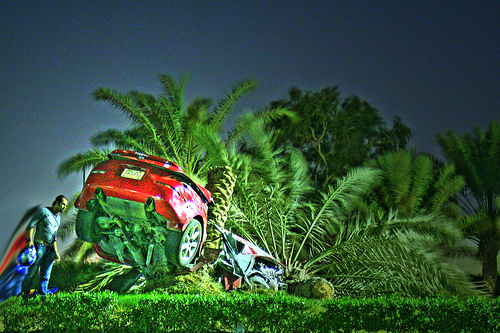
So out of idle curiosity, today I looked up highest rate of traffic fatalities per country, and found this on Wikipedia. So here’s a surprise . . . Kuwait’s fatalities statistic is roughly equal to that of the United States. Qatar’s is significantly higher, and many countries are even double or triple Kuwaits fatality rate. I’m having trouble wrapping my mind around this.
List of countries Fatalities per 100,000 inhabitants
World 20.8
Afghanistan 39.0
Albania 13.9
Angola 37.7
Argentina 13.7
Armenia 13.9
Australia 5.71
Austria 8.2
Azerbaijan 13.0
Bahamas 14.5
Bahrain 12.1
Bangladesh 12.6
Barbados 12.2
Belarus 10.9
Belgium 10.1
Belize 15.6
Benin 31.2 1
Bhutan 14.4
Bolivia 16.7
Bosnia and Herzegovina 10.9
Botswana 33.8
Brazil 19.9
British Virgin Islands 21.7
Brunei Darussalam 13.8
Bulgaria 8.8
Burkina Faso 31.1
Burundi 23.4
Cambodia 12.1
Cameroon 28.1
Canada 9.2
Cape Verde 25.1
Central African Republic 32.2
Chad 34.3
Chile 13.7
China 5.1
Colombia 11.7
Comoros 30.3
Republic of the Congo 28.8
Cook Islands 45.0
Costa Rica 15.4
Croatia 9.1
Cuba 8.6
Cyprus 10.4
Czech Republic 10.4
Denmark 3.1
Dominican Republic 17.3
Ecuador 11.7
Egypt 42.0
El Salvador 12.6
Eritrea 48.4
Estonia 7.5
Ethiopia 35.0
Fiji 7.0
Finland 6.5
France 5.5
The Gambia 36.6
Georgia 16.8
Germany 4.5
Ghana 9.32
Greece 14.4
Guatemala 14.7
Guinea-Bissau 34.4
Guyana 19.9
Honduras 13.5
Hungary 9.9
Iceland 3.8
India 11.1
Indonesia 16.2
Iran 35.8
Iraq 38.1
Republic of Ireland 3.51
Israel 3.7
Italy 8.7
Jamaica 12.3
Japan 3.85
Jordan 34.2
Kazakhstan 30.6
Kenya 34.4
Kiribati 7.4
Republic of Korea 11.3
Kuwait 16.9
Kyrgyzstan 22.8
Laos 18.3
Latvia 8.7
Lebanon 28.5
Lesotho 26.7
Liberia 32.9
Libya 40.5
Lithuania 14.8
Luxembourg 9.0
Madagascar 33.7
Malawi 26.0
Malaysia 24.1
Maldives 18.3
Mali 32.1
Malta 3.4
Marshall Islands 7.4
Mauritania 35.5
Mauritius 11.1
Mexico 20.7
Federated States of Micronesia 14.4
Mongolia 14.5
Montenegro 14.6
Morocco 28.3
Mozambique 7.0
Myanmar 23.4
Namibia 28.6
Nauru 9.9
Nepal 15.1
Netherlands 3.9
New Zealand 8.6
Nicaragua 14.2
Niger 37.7
Nigeria 32.3
Norway 5.4
Oman 21.3
Pakistan 25.3
Palau 14.8
Palestinian territories 5.6
Panama 12.7
Papua New Guinea 14.2
Paraguay 19.7
Peru 21.5
Philippines 20.0
Poland 10.7
Portugal 7.9
Puerto Rico 12.8
Qatar 23.7
Republic of Macedonia 6.9
Republic of Moldova 15.1
Romania 9.4
Russia 19.5
Rwanda 31.6
Saint Lucia 17.6
Saint Vincent and the Grenadines 6.6
Samoa 12.8
San Marino 0
Sao Tome and Principe 33.0
Saudi Arabia 29.0
Senegal 32.5
Serbia 9.8
Seychelles 18.5
Sierra Leone 28.3
Singapore 4.8
Slovakia 7.1
Slovenia 10.4
Solomon Islands 16.9
South Africa 33.2
Spain 6.9
Sri Lanka 13.5
Sudan 34.7
Suriname 15.8
Swaziland 26.3
Sweden 2.9
Switzerland 4.7
Syrian Arab Republic 32.9
Tajikistan 14.1
Thailand 19.6
Timor-Leste 16.1
Togo 28.1
Tonga 7.0
Trinidad and Tobago 15.5
Tunisia 34.5
Turkey 13.4
Turkmenistan 18.6
Tuvalu 9.5
Uganda 24.7
Ukraine 11.2
United Arab Emirates 37.1
United Kingdom 3.59
United Republic of Tanzania 34.3
United States of America 12.3
Uruguay 12.8
Uzbekistan 9.7
Vanuatu 18.6
Venezuela 21.8
Vietnam 16.1
Yemen 29.3
Zambia 25.6
Zimbabwe 27.5
Like all statistics, I think some are honest, and some need to be taken with a grain of salt. I found reading through them fascinating. You can get more information, accidents per thousand cars, total accidents, etc.
Distracted Driving #1 Killer of U.S. Teens
Horrifying article. I would have thought they would be talking about texting, which we can see for ourselves has people, young and old, swerving all over the highway, but no – the culprit is PASSENGERS! The death rate for teens in cars increases with each additional passenger!
The papers are full of heartbreaking obituaries, young people, men and women, who had so much potential, so much life ahead of them, and now they are gone. Heartbroken parents think of the years of joy they will miss.
Fatal Distraction: Teen Drivers And Passengers Are A Deadly Mix
Studies show that one passenger in a teen driver’s car increases fatality risk by 44%, two passengers doubles the risk
Sharon Silke Carty
AOL Auto News
Teen driving safety is one of those problems that is easy to ignore: So often the tragedies are spread out throughout small towns around the country. One lost life here, two lost there. We don’t often piece all those crashes together and realize what’s happening to our children.
Sometimes to get change, you need a tipping point. Maybe this week will be it: Since Sunday, 15 teenagers have died in major car accidents around the U.S. Six died after crashing into a pond in Ohio. Five died when they crashed into a tanker truck in Texas. Four died when they crashed into a creek in Illinois.
And that’s just the crashes that were major and notable enough to make national news. One teen in Colorado died Sunday when the teen driver of a car he was in crashed into the side of a mobile home. Three died in Indiana when the drivers, in two trucks, ran stop signs and collided head-on. A 15-year-old driver in Maryland died when he was fleeing police in a car. And there are others, many which don’t make the news. Crashes that don’t end in fatalities but left serious damage: traumatic brain injuries, crippling spinal cord issues.
“The numbers are so small and spread out geographically,” said Timothy Hollister, a teen driving safety advocate in Connecticut whose book, “Not So Fast: Parenting Teen Drivers Before They Get Behind The Wheel”, comes out in September. “It’s only when you put the numbers together nationally that people even begin to take notice.”
Driving is the No. 1 killer of teens in this country, accounting for about 25 percent of teen deaths each year. About 3,000 to 5,000 teens die annually in car wrecks, enough to fill the halls of a large high school. Or two.
Recently, the Governor’s Highway Safety Association release preliminary figures for 2012 that show a troubling trend: After 10 years of declining, teen driving deaths are on the rise.
Although teen crashes seem random and unpredictable, they actually often follow a predictable pattern: It’s likely a group of teens heading nowhere in particular, probably late at night, and going fast. Often, they’re not wearing seatbelts.
Researchers have identified the dangerous habits of young drivers, who can’t ever be considered safe behind the wheel because they are simply too novice. There’s a common thread for many fatal crashes: More than one passenger in the car, especially if those passengers are male.
The Passenger Effect
A study released last year by AAA said passengers have a huge impact on fatalities: Fatality rates went up 44 percent with one passenger under 21 years old, doubled with two passengers, and quadruples when carrying three or more passengers who are under 21 years old.
Many graduated drivers license (GDL) laws regulate how many passengers teens can have in the car before they are awarded a full license. Parents who are concerned about their teens behind the wheel want to pay close attention to this rule: Make sure your teens are driving alone mostly, with no more than one passenger. Don’t let them carpool to and from school events. Don’t let them head out for the evening with a bunch of other kids teens in one car. Remember that other passengers are a huge distraction that can turn into a fatal distraction.
Laws regarding passengers in vehicles driven by teens are “the single least enforced and most ignored rule,” Hollister said. “It’s the one piece that could make a difference. That’s parents putting convenience ahead of safety, and not understanding the dangers that every passenger in a teen driver’s car adds an additional risk.”
Processed Food vs Real Food Experiment
LOL, this is hilarious, and also frightening when you think what might be in the preserved sandwich.
There are four videos showing food non-deterioration, by Melanie Warner, author of Pandora’s Lunchbox: How Processed Foods Took Over the American Meal
Recent Comments
intlxpatr on Yellowstone: Old Faithful to C… Michelle on Yellowstone: Old Faithful to C… Cathy on No Grown-Ups in Charge intlxpatr on Waiting for Snow intlxpatr on Waiting for Snow Wikipedia Donate Button

Amazina


Early Voting in Florida


 Here There and Everywhere