Saudis Investigate Dancing Nurses
Unfortunately, I can no longer find the video sent me by John Mueller on U-Tube; it has been removed, but you can see it for yourself here:
What the Saudis are investigating – and yes, there were men and women present – is a game of musical chairs, a game even children play at birthday parties.
Hospitals are a high stress environment – and these are sweet young people having a good time. Lord have mercy, and “investigation.”
Saudi health authorities have opened an investigation into three films published on U-Tube showing Asian nurses dancing at a mixed-gender birthday party inside a government hospital.
The three separate films showed several male and female nurses were involved in the concert that included music and dances, which are strictly banned at Saudi hospitals and other public facilities.
The films showed the party was held at King Fahd Hospital in the eastern town of Hofouf and the participants were apparently from the Philippines and Indonesia, according to Saudi newspapers.
One film was titled in Arabic “a scandal at King Fahd Hospital in Hofouf” while the heading of another video read “in the absence of supervision at King Fahd Hospital”. The third read “a dancing party for a nurse’s birthday.”
“We have been instructed to open an investigation into these films to determine whether this party was really held at King Fahd Hospital,” said Ibrahim Al Hajji, information director at the Health Department.
Hajji, who was quoted by Sharq newspaper, did not elaborate on what measures would be taken against those involved in the party.
Saudi Arabia: Women Driving Will Have Sex, Report Says
I am sorry, but if this were a joke, it would be hilarious. It IS hilarious, or it would be, if it didn’t impact so darkly on the lives of so many women.
So my friends in Saudi Arabia, here is the solution. Let the women drive. Tell the men not to have sex with these driving women, not until they are married. Tell the men that no matter how much the women beg, to keep themselves pure, and not to let these women tempt them away from their purity. Teach the men that it is a CHOICE, and that they can behave themselves honorably, and withhold themselves from these driving women who want to have sex with them.
That’ll teach those women 🙂
From the Huffington Post
Saudi Arabia: Women Driving Will Have Sex, Report Says
RIYADH, Saudi Arabia — A report given to a high-level advisory group in Saudi Arabia claims that allowing women in the kingdom to drive could encourage premarital sex, a rights activist said Saturday.
The ultraconservative stance suggests increasing pressure on King Abdullah to retain the kingdom’s male-only driving rules despite international criticism.
Rights activist Waleed Abu Alkhair said the document by a well-known academic was sent to the all-male Shura Council, which advises the monarchy. The report by Kamal Subhi claims that allowing women to drive will threaten the country’s traditions of virgin brides, he said. The suggestion is that driving will allow greater mixing of genders and could promote sex.
Saudi women have staged several protests defying the driving ban. The king has already promised some reforms, including allowing women to vote in municipal elections in 2015.
There was no official criticism or commentary on the scholar’s views, and it was unclear whether they were solicited by the Shura Council or submitted independently. But social media sites were flooded with speculation that Saudi’s traditional-minded clerics and others will fight hard against social changes suggested by the 87-year-old Abdullah.
Saudi’s ruling family, which oversees Islam’s holiest sites, draws its legitimacy from the backing of the kingdom’s religious establishment, which follows a strict brand of Islam known as Wahhabism. While Abdullah has pushed for some changes on women’s rights, he is cautious not to push too hard against the clerics.
In October, Saudi Arabia named a new heir to the throne, Prince Nayef, who is a former interior minister and considered to hold traditionalist views, although he had led crackdowns against suspected Islamic extremists. His selection appeared to embolden the ultraconservative clerics to challenge any sweeping social reforms.
Prince Nayef was picked following the death of Crown Prince Sultan.
My Saudi Shoes
“I love your shoes!” my friend cried. “Where did you find them?”
“It was thirteen years ago, in Saudi Arabia” I told her.
“Thirteen years? They look brand new!”
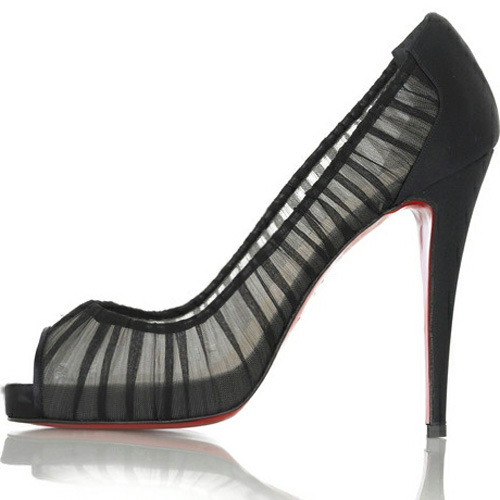
(These are not my shoes. These are shoes Saudi women can buy in Saudi Arabia.)
Ummm, well . . . when you live in super hot countries during those thirteen years, you don’t often wear closed toed shoes. It’s more comfortable to wear sandal style shoes, and more hygienic – when you live in the dry heat, your feet can get hard and cracked, and are vulnerable to feet fungus. Your feet need to breathe. Most of my shoes are open, but we are starting to have occasional chill weather in Pensacola. The flowers of the South have all pulled out their heavy sweaters and are wrapping wool scarves around their necks, even wearing winter coats.
Since the current cold snap features daily highs that are normal for Seattle or Germany in the summer, and since I thrive in the cold and suffer in the heat, I am in long sleeve lightweight t-shirts and sweaters, and – closed toed shoes.
I dread close-toe shoe season. My feet no longer like to be confined in shoes or boots. My toes hurt when I walk too much in them. So I have only a few pair of winter shoes, but really good ones. 🙂
Saudi Arabia was one of the best places for buying shoes I have ever lived, with entire floors of malls devoted entirely to shoe shops. Prices were reasonable; French and Italian shoes were cheaper in Saudi Arabia than they were in France and Italy, maybe because of the taxes imposed by the Eurozone.
Think about it. When you live in a country where women are all covered, wearing abayas, and they are supposed to keep their hair covered (most of us shameless westerners carried a scarf but did not wear it unless ordered to do so by the religious police / Muttawa) and the most modest women even cover their face, what is there to wear that people will notice? And women ARE women . . . Yes! Shoes!
The Saudi women wore fabulous shoes, and they wore delicate black lace gloves, and they wore scent. They bought Berkin bags and Hermes headscarves, and fabulous Chopard watches. When a group of Saudi women would walk by, you would be enveloped by a cloud of the headiest, most seductive scents in the world. And oh, holy smokes, the shoes . . . Saudi women were just beginning to experiment with a little embellishment when I left – a little Swarovski crystal leaf on a scarf, or a sprinkling of crystals on the neckline of an abaya, some embroidery on a hem, a dark green abaya instead of severe black . . . women are women, no matter where we are. We like a little sparkle, and we buy things that make us feel special.

The shoes my friend liked are Italian, navy leather heels with a kind of leather lace around the toe area. They are lovely, and I wear them happily (for a short while) during closed-toe season. They are classic, and I am hoping I can wear them another twenty years or so, which is entirely possible if I only wear them during cold snaps in Pensacola. 🙂
Wooo Hoooo! Saudi Women to Have Right To Vote!
I found this today on Huffpost World; hey four years is not such a long time compared to forever. Getting the vote makes it more and more illogical for them not to be driving . . . think about it. Does choosing national leaders take less brains than driving? Ummm. . . . well . . . (LOL)
RIYADH, Saudi Arabia — Saudi Arabia’s King Abdullah, considered a reformer by the standards of his own ultraconservative kingdom, decreed on Sunday that women will for the first time have the right to vote and run in local elections due in 2015.
It is a “Saudi Spring” of sorts.
For the nation’s women, it is a giant leap forward, though they remain unable to serve as Cabinet ministers, drive or travel abroad without permission from a male guardian.
Saudi women bear the brunt of their nation’s deeply conservative values, often finding themselves the target of the unwanted attention of the kingdom’s intrusive religious police, who enforce a rigid interpretation of Islamic Shariah law on the streets and public places like shopping malls and university campuses.
In itself, Sunday’s decision to give the women the right to vote and run in municipal elections may not be enough to satisfy the growing ambition of the kingdom’s women who, after years of lavish state spending on education and vocational training, significantly improved their standing but could not secure the same place in society as that of their male compatriots.
That women must wait four more years to exercise their newly acquired right to vote adds insult to injury since Sunday’s announcement was already a long time coming – and the next local elections are in fact scheduled for this Thursday.
“Why not tomorrow?” asked prominent Saudi feminist Wajeha al-Hawaidar. “I think the king doesn’t want to shake the country, but we look around us and we think it is a shame … when we are still pondering how to meet simple women’s rights.”
The announcement by King Abdullah came in an annual speech before his advisory assembly, or Shura Council. It was made after he consulted with the nation’s top religious clerics, whose advice carries great weight in the kingdom.
It is an attempt at “Saudi style” reform, moves that avoid antagonizing the powerful clergy and a conservative segment of the population. Additionally, it seems to be part of the king’s drive to insulate his vast, oil-rich country from the upheavals sweeping other Arab nations, with popular uprisings toppling regimes that once looked as secure as his own.
Fearing unrest at home, the king in March announced a staggering $93 billion package of incentives, jobs and services to ease the hardships experienced by some Saudis. In the meantime, he sent troops to neighbor and close ally Bahrain to help the tiny nation’s Sunni ruling family crush an uprising by majority Shiites pressing for equal rights and far-reaching reforms.
In contrast, King Abdullah in August withdrew the Saudi ambassador from Syria to protest President Bashar Assad’s brutal crackdown on a seven-month uprising that calls for his ouster and the establishment of a democratic government.
“We didn’t ask for politics, we asked for our basic rights. We demanded that we be treated as equal citizens and lift the male guardianship over us,” said Saudi activist Maha al-Qahtani, an Education Ministry employee who defied the ban on women driving earlier this year. “We have many problems that need to be addressed immediately.”
The United States, Saudi Arabia’s closest Western ally, praised the king’s move.
In Washington, National Security Council spokesman Tommy Vietor said it recognized the “significant contributions” women have been making in Saudi Arabia. The move, he continued, would give Saudi women more ways to participate “in the decisions that affect their lives and communities.”
The king, in his own remarks, seemed to acknowledge that the Arab world’s season of change and the yearning for greater social freedoms by a large segment of Saudi society demanded decisive action.
“Balanced modernization, which falls within our Islamic values, is an important demand in an era where there is no place for defeatist or hesitant people,” he said.
“Muslim women in our Islamic history have demonstrated positions that expressed correct opinions and advice,” said the king.
Abdullah became the country’s de facto ruler in 1995 because of the illness of King Fahd and formally ascended to the throne upon Fahd’s death in August 2005.
The king on Sunday also announced that women would be appointed to the Shura Council, a currently all-male body established in 1993 to offer counsel on general policies in the kingdom and to debate economic and social development plans and agreements signed between the kingdom with other nations.
The question of women’s rights in Saudi Arabia is a touchy one. In a country where no social or political force is strong enough to affect change in women’s rights, it is up to the king to do it. Even then, the king must find consensus before he takes a step in that direction.
Prominent columnist Jamal Khashoggi said that giving women the right to vote in local elections and their inclusion in the Shura council means they will be part of the legislative and executive branches of the state. Winning the right to drive and travel without permission from male guardians can only be the next move.
“It will be odd that women who enjoy parliamentary immunity as members of the council are unable to drive their cars or travel without permission,” he said. “The climate is more suited for these changes now – the force of history, moral pressure and the changes taking place around us.”
___
Hendawi reported from Cairo. Associated Press writer Maggie Michael contributed to this report from Cairo.
Arabian Gulf Legacy
In today’s Lectionary, Psalm 107, there is the following verse:
41 but he raises up the needy out of distress,
and makes their families like flocks.
My heart goes back to Qatar, and I think of “my” family there, a family who adopted me, slowly but surely. The woman, who taught me Arabic, has twelve children. “Twelve children!” I used to think, was about ten too many, but I learned so much from this woman, and from her family. Every day she and her husband would sit together. They discussed each child. No child in that family was lost or overlooked; they cared for each and every one. I, too, know each child. I was particularly close to the oldest girls, but there was one young son who hit me on my bottom during my very first visit, hard, as I was bending over to put on my shoes. While everyone else looked on in horror, he just grinned up at me, and I couldn’t help but laugh. I pray for each and every one in this family, and they pray for me. Relationships don’t get much more intimate than that, I think, that we pray for one another, and we have some idea what to pray for.
And while they are not wealthy, they have enough, and they are a happy family. When one has a need, the others sacrifice, and I never hear a grumble of a complaint. Each has an assurance that when their turn comes – as it comes to all of us – their family will be there to assist them.

We said goodbye to our Saudi friends this week, on their way back to the desert kingdom to finish Ramadan and celebrate Eid with their family. They have been such a blessing in our lives here, and we wish them well. They left a lot of last minute things for me, a coffee and tea set with coffee cups, trays for serving drinks, spices, bags – the detritus of a life of moving, there are always things which still have use but for which you have no room in your packing crate. I am starting a lending closet with them; as other families arrive, I will offer them up to new arrivals who need the same pieces for their daily life and entertaining. The spices I will share with one of my co-mother-in-laws who makes a chicken biryani they call Chicken Perlow. It is moister than biryani, but has much the same flavor. Oh yummm.
As our Saudi friends depart, we have new friends arriving and we will have them for dinner tomorrow night. We have met them, one is Algerian, the other is Omani; as the Ramadan fast ended, the Algerian was trying to eat a piece of bruschetta with a knife and form. “You are so French!” I laughed, and told him we eat this with our fingers, which greatly relieved him, as he was standing, and to try to cut a piece of French break with a fork while standing is close to impossible. Both are a lot of fun, and while we will miss our departing Saudi friends, we are looking forward to these new friends.
One thing that pleases me greatly. I asked my Saudi friend how she was received when she went out, as she is fully covered, abaya and scarf and niqab (face covering). She said she had been warned before leaving Saudi Arabia that people would be unkind to her, but never once did she run into this, that people were always kind, “in the hospital, in the Wal-Mart, in the shopping, everywhere.” It just made me so proud to be living in Pensacola.
Ramadan for Non-Muslims 2011
Ramadan is coming, coming with a vengence, it is almost here. Ramadan is expected to start with the sighting of the new moon on August 1st. I am feeling happy – a friend has asked me to help her find special Eid dresses for her daughter returning to Saudi Arabia. I know what she is looking for, and I am at a loss as to where they might be found. I will check tomorrow with friends who have lived in Pensacola for a long time and see what they have to suggest.

Meanwhile, as is my annual tradition, I will reprint an article I wrote in September 2007, Ramadan for Non Muslims. Even better, go back to the original Ramadan for Non Muslims and read the comments – I’ve always learned the best information from my commenters. 🙂
Ramadan for the Non Muslim
Ramadan started last night; it means that the very thinnest of crescent moons was sighted by official astronomers, and the lunar month of Ramadan might begin. You might think it odd that people wait, with eager anticipation, for a month of daytime fasting, but the Muslims do – they wait for it eagerly.
A friend explained to me that it is a time of purification, when your prayers and supplications are doubly powerful, and when God takes extra consideration of the good that you do and the intentions of your heart. It is also a time when the devil cannot be present, so if you are tempted, it is coming from your own heart, and you battle against the temptations of your own heart. Forgiveness flows in this month, and blessings, too.
We have similar beliefs – think about it. Our holy people fast when asking a particular boon of God. We try to keep ourselves particularly holy at certain times of the year.
In Muslim countries, the state supports Ramadan, so things are a little different. Schools start later. Offices are open fewer hours. The two most dangerous times of the day are the times when schools dismiss and parents are picking up kids, and just before sunset, as everyone rushes to be home for the breaking of the fast, which occurs as the sun goes down. In olden days, there was a cannon that everyone in the town could hear, that signalled the end of the fast. There may still be a cannon today – in Doha there was, and we could hear it, but if there is a cannon in Kuwait, we are too far away, and can’t hear it.
When the fast is broken, traditionally after the evening prayer, you take two or three dates, and water or special milk drink, a meal which helps restore normal blood sugar levels and takes the edge off the fast. Shortly, you will eat a larger meal, full of special dishes eaten only during Ramadan. Families visit one another, and you will see maids carrying covered dishes to sisters houses and friends houses – everyone makes a lot of food, and shares it with one another. When we lived in Tunisia, we would get a food delivery maybe once a week – it is a holy thing to share, especially with the poor and we always wondered if we were being shared with as neighbors, or shared with as poor people! I always tried to watch what they particularly liked when they would visit me, so I could sent plates to their houses during Ramadan.
Just before the sun comes up, there is another meal, Suhoor, and for that meal, people usually eat something that will stick to your ribs, and drink extra water, because you will not eat again until the sun goes down. People who can, usually go back to bed after the Suhoor meal and morning prayers. People who can, sleep a lot during the day, during Ramadan. Especially as Ramadan moves into the hotter months, the fasting, especially from water, becomes a heavier responsibility.
And because it is a Muslim state, and to avoid burdening our brothers and sisters who are fasting, even non-Muslims refrain from eating, drinking, touching someone of the opposite sex in public, even your own husband (not having sex in the daytime is also a part of fasting), smoking is forbidden, and if you are in a car accident and you might be at fault, the person might say “I am fasting, I am fasting” which means they cannot argue with you because they are trying to maintain a purity of soul. Even chewing gum is an offense. And these offenses are punishable by a heavy fine – nearly $400 – or a stay in the local jail.
Because I am not Muslim, there may be other things of which I am not aware, and my local readers are welcome to help fill in here. As for me, I find it not such a burden; I like that there is a whole month with a focus on God. You get used to NOT drinking or eating in public during the day, it’s not that difficult. The traffic just before (sunset) Ftoor can be deadly, but during Ftoor, traffic lightens dramatically (as all the Muslims are breaking their fast) and you can get places very quickly! Stores have special foods, restaurants have special offerings, and the feeling in the air is a lot like Christmas. People are joyful!
Thelma and Louise in Saudi Arabia
An editorial cartoon from my friend Grammy, in Texas, from today’s paper:

Saudi Women Drive Today
From today’s BBC News:
Saudi Arabia women drive cars in protest at ban
Women in Saudi Arabia have been openly driving cars in defiance of an official ban on female drivers in the ultra-conservative kingdom.
The direct action has been organised on social network sites, where women have been posting images and videos of themselves behind the wheel.
The Women2Drive Facebook page said the direct action would continue until a royal decree reversed the ban.
Last month, a woman was arrested after uploading a video of herself driving.
Manal al-Sherif was accused of “besmirching the kingdom’s reputation abroad and stirring up public opinion”, but was released after 10 days having promised not to drive again.
“All that we need is to run our errands without depending on drivers,” said one woman in the first film posted in the early hours of Friday morning.
The film showed the unnamed woman talking as she drove to a supermarket and parking.
We can’t move around without a male”
Maha al-Qahtani
Female driver
“It is not out of love for driving or traffic or the experience. All this is about is that if I wanted to go to work, I can go. If I needed something I can go and get it.
“I think that society is ready to welcome us.”
Another protester said she drove around the streets of Riyadh for 45 minutes “to make a point”.
“I took it directly to the streets of the capital,” said Maha al-Qahtani, a computer specialist at the Ministry of Education.
Religious fatwa
On Twitter, Mrs Qahtani described the route she had taken around the city with her husband, saying: “I decided that the car for today is mine.”
Her husband said she was carrying her essential belongings with her and was “ready to go to prison without fear”, AFP news agency reported.
One woman who asked not to be named told the BBC driving was often considered to be “something really minor”.
The ban is one of a number of restrictions Saudi women face in daily life
“It’s not one of your major rights. But we tell them that even if you give us all the basic and big rights, that you are claiming are more important than driving, we can’t enjoy practising those rights because the mobility is not there.
“We can’t move around without a male.”
The motoring ban is not enforced by law, but is a religious fatwa imposed by conservative Muslim clerics. It is one of a number of severe restrictions on women in the country.
Supporters of the ban say it protects women and relieves them of the obligation to driver, while also preventing them from leaving home unescorted or travelling with an unrelated male.
But the men and women behind the campaign – emboldened by uprisings across the Middle East and Arab world – say they hope the ban will be lifted and that other reforms will follow.
Amnesty International has said the Saudi authorities “must stop treating women as second-class citizens”, describing the ban as “an immense barrier to their freedom of movement”.
The last mass protest against the ban took place in 1980, when a group of 47 women were arrested for driving and severely punished – many subsequently lost their jobs.
The women were angered that female US soldiers based in the kingdom after the war with Kuwait could drive freely while they could not.
A God of Infinite Mercy
This morning, Father Neal Goldsborough of Christ Church Pensacola gave a sermon that held us all totally spellbound. It had to do with the fundamentalist preacher who – once again – forecast the coming rapture, which he says was scheduled for yesterday. (I wonder what he has to say today? He was wrong once before, in 1994. Or maybe people were raptured yesterday, but all the folk I know are, like me, sinners who didn’t make the cut.)

Father Neal talked about his service in the chaplain corp overseas, and faiths which exclude based on narrow rules, specific rules, churches and religions who say ‘this is the only way and all the rest of you are damned to everlasting fire” whether they use those words or paraphrases. He pointed to Jesus, who broke the rules of his time and flagrantly spent time with sinners, and the unclean, and showed them by his love and by his actions what the infinite love and mercy and forgiveness of Almighty God looks like.
It couldn’t have come at a better time for me.
Soon, I will be meeting up with three women who are particularly dear to me, friends for many years in Qatar, friends who worshipped at the Church of the Epiphany in Doha, Qatar. The new Anglican Church of the Epiphany is being built on land dedicated to church use by His Highness Sheikh Hamad bin Khalifa Al-Thani, the Emir of Qatar, and will be used by many denominations.
My friends and I all returned to the USA within months of one another, and have been sending e-mails with “reply to all” as we struggle with our re-entry into our old church communities. We struggle with the hatreds and prejudices and ignorance about our Moslem brothers and sisters, and we struggle with the narrow strictures imposed by our churches and study groups. I thank God to have these wonderful women among whom we can share our dismay and our hurting hearts, and re-inforce the lessons we learned living in a very exotic, and sometimes alien culture, but which had so many wonderful and mighty lessons to teach us. I often joke that in my life, God kept sending me back to the Middle East (Tunisia, Jordan, Saudi Arabia, Qatar and Kuwait) until he saw that I finally got it. My sisters-in-faith were quicker studies than I was. 🙂
It was a breath of the Holy Spirit I felt this morning, as Father Neal spoke about God’s mercy, his plan to redeem ALL of his creation, God’s desire for our love and our service. I couldn’t help it, it made me weep with relief to know my church is a church that serves God by including, rather than excluding, and which mercifully welcomes sinners like me.
Here is the really cool part. Christ Church Pensacola has recently begun putting the sermons online. If there is one thing Christ Church has, it is great sermons – and if you want to hear Father Neal’s sermon, you can click HERE, in a few days and you can hear his sermon for yourself. 🙂 Look for the May 22 sermon by Father Neal Goldsborough.
Recent Comments
intlxpatr on Shampoo Ginger tigerbutterya0c5ff1d… on Shampoo Ginger intlxpatr on British Soldier Kidnapped, Esc… John on British Soldier Kidnapped, Esc… intlxpatr on British Soldier Kidnapped, Esc… Wikipedia Donate Button

Amazina


Early Voting in Florida


