Girls of Riyadh by Rajaa AlSanea
“Have you read Girls of Riyadh?” my friend asked me on the phone, and when I said I had not, she said she would bring it to me.
“It’s an easy read” she said, “it will take you an afternoon.”
Sometimes life intruded. It took me a little longer. I had expected this to be lightweight, along the lines of the shopaholic books, read ’em and forget ’em. Airport reading, stuff you save to read when you know you will have time to kill.
I was surprised. I guess I had gotten the impression it was lightweight because I had seen it discussed on some of the blogs, and there are some light-hearted moments in the book. The four young women are well drawn, and their experiences are handled with sensitivity. She never reveals which character from the book she is, but I have my suspicions. 🙂
Each girl has her own unique experiences as she reaches young womanhood, and mating. Although the experiences are treated deftly, there is a serious undercurrent that belies the light tone. The underlying circumstances surrounding the mating rituals in a country so tradition-bound as Saudi Arabia turn mating into a dark ritual, full of unseen pits and minefields.
The very worst fear during these years is the wagging tongues of others. I have heard this theme over and over in my own dealings with young women in this part of the world.
“You know, khalto, a woman’s reputation is like glass, it is easily shattered,” explained my young-woman Qatteri friend, solemnly.
(for my Western readers, Khalto means ‘aunt’ literally, and is a term used respectfully for family friends, meaning ‘sister of my mother’)
“I don’t want to get married,” she continued, “They come for you as a bride and they are so nice and they make you feel so in love with them, but then, when you are married, they change. Men are . . . men are . . ”
“Dogs?” I asked.
“Yes! Yes!,” she exclaimed, “Dogs!” (pause)
“How did you know, Khalto?”
LLLLOOOOLLLLLLLLLL! It’s one of those moments when you know we are all more alike than we are different.
Girls of Riyadh is a worthy read. It is thought-provoking, and compassion-provoking. You grow to love these girls, and you hope a happy ending for them.
Digging Up the Saudi Past
By DONNA ABU-NASR
Associated Press Writer
RIYADH, Saudi Arabia —
Much of the world knows Petra, the ancient ruin in modern-day Jordan that is celebrated in poetry as “the rose-red city, ‘half as old as time,'” and which provided the climactic backdrop for “Indiana Jones and the Last Crusade.”
But far fewer know Madain Saleh, a similarly spectacular treasure built by the same civilization, the Nabateans.
That’s because it’s in Saudi Arabia, where conservatives are deeply hostile to pagan, Jewish and Christian sites that predate the founding of Islam in the 7th century.
But now, in a quiet but notable change of course, the kingdom has opened up an archaeology boom by allowing Saudi and foreign archaeologists to explore cities and trade routes long lost in the desert.
The sensitivities run deep. Archaeologists are cautioned not to talk about pre-Islamic finds outside scholarly literature. Few ancient treasures are on display, and no Christian or Jewish relics. A 4th or 5th century church in eastern Saudi Arabia has been fenced off ever since its accidental discovery 20 years ago and its exact whereabouts kept secret.
In the eyes of conservatives, the land where Islam was founded and the Prophet Muhammad was born must remain purely Muslim. Saudi Arabia bans public displays of crosses and churches, and whenever non-Islamic artifacts are excavated, the news must be kept low-key lest hard-liners destroy the finds.
“They should be left in the ground,” said Sheikh Mohammed al-Nujaimi, a well-known cleric, reflecting the views of many religious leaders. “Any ruins belonging to non-Muslims should not be touched. Leave them in place, the way they have been for thousands of years.”
In an interview, he said Christians and Jews might claim discoveries of relics, and that Muslims would be angered if ancient symbols of other religions went on show. “How can crosses be displayed when Islam doesn’t recognize that Christ was crucified?” said al-Nujaimi. “If we display them, it’s as if we recognize the crucifixion.”
In the past, Saudi authorities restricted foreign archaeologists to giving technical help to Saudi teams. Starting in 2000, they began a gradual process of easing up that culminated last year with American, European and Saudi teams launching significant excavations on sites that have long gone lightly explored, if at all.
At the same time, authorities are gradually trying to acquaint the Saudi public with the idea of exploring the past, in part to eventually develop tourism. After years of being closed off, 2,000-year-old Madain Saleh is Saudi Arabia’s first UNESCO World Heritage Site and is open to tourists. State media now occasionally mention discoveries as well as the kingdom’s little known antiquities museums.
“It’s already a big change,” said Christian Robin, a leading French archaeologist and a member of the College de France. He is working in the southwestern region of Najran, mentioned in the Bible by the name Raamah and once a center of Jewish and Christian kingdoms.
No Christian artifacts have been found in Najran, he said.
Spearheading the change is the royal family’s Prince Sultan bin Salman, who was the first Saudi in space when he flew on the U.S. space shuttle Discovery in 1985. He is now secretary general of the governmental Saudi Commission for Tourism and Antiquities.
Dhaifallah Altalhi, head of the commission’s research center at the governmental Saudi Commission for Tourism and Antiquities, said there are 4,000 recorded sites of different periods and types, and most of the excavations are on pre-Islamic sites.
“We treat all our sites equally,” said Altalhi. “This is part of the history and culture of the country and must be protected and developed.” He said archaeologists are free to explore and discuss their findings in academic venues.
Still, archaeologists are cautious. Several declined to comment to The Associated Press on their work in the kingdom.
The Arabian Peninsula is rich, nearly untouched territory for archaeologists. In pre-Islamic times it was dotted with small kingdoms and crisscrossed by caravan routes to the Mediterranean. Ancient Arab peoples – Nabateans, Lihyans, Thamud – interacted with Assyrians and Babylonians, Romans and Greeks.
Much about them is unknown.
Najran, discovered in the 1950s, was invaded nearly a century before Muhammad’s birth by Dhu Nawas, a ruler of the Himyar kingdom in neighboring Yemen. A convert to Judaism, he massacred Christian tribes, leaving triumphant inscriptions carved on boulders.
At nearby Jurash, a previously untouched site in the mountains overlooking the Red Sea, a team led by David Graf of the University of Miami is uncovering a city that dates at least to 500 B.C. The dig could fill out knowledge of the incense routes running through the area and the interactions of the region’s kingdoms over a 1,000-year span.
And a French-Saudi expedition is doing the most extensive excavation in decades at Madain Saleh. The city, also known as al-Hijr, features more than 130 tombs carved into mountainsides. Some 450 miles from Petra, it is thought to mark the southern extent of the Nabatean kingdom.
In a significant 2000 find, Altalhi unearthed a Latin dedication of a restored city wall at Madain Saleh which honored the second century Roman emperor Marcus Aurelius.
So far, there has been no known friction with conservatives over the new excavations, in part because they are in the early stages, are not much discussed in Saudi Arabia, and haven’t produced any announcements of overtly Christian or Jewish finds.
But the call to keep the land purged of other religions runs deep among many Saudis. Even though Madain Saleh site is open for tourism, many Saudis refuse to visit on religious grounds because the Quran says God destroyed it for its sins.
Excavations sometimes meet opposition from local residents who fear their region will become known as “Christian” or “Jewish.” And Islam being an iconoclastic religion, hard-liners have been known to raze even ancient Islamic sites to ensure that they do not become objects of veneration.
Saudi museums display few non-Islamic artifacts.
Riyadh’s National Museum shows small pre-Islamic statues, a golden mask and a large model of a pagan temple. In some display cases, female figurines are listed, but not present – likely a nod to the kingdom’s ban on depictions of the female form.
A tiny exhibition at the King Saud University in Riyadh displays small nude statues of Hercules and Apollo in bronze, a startling sight in a country where nakedness in art is highly taboo.
In 1986, picnickers accidentally discovered an ancient church in the eastern region of Jubeil. Pictures of the simple stone building show crosses in the door frame.
It is fenced off – for its protection, authorities say – and archaeologists are barred from examining it.
Faisal al-Zamil, a Saudi businessman and amateur archaeologist, says he has visited the church several times.
He recalls offering a Saudi newspaper an article about the site and being turned down by an editor.
“He was shocked,” al-Zamil said. “He said he could not publish the piece.”
—
Associated Press Writer Lee Keath contributed from Cairo.
“Let Her Get Fat” in Saudi Arabia
Sometimes, either you laugh, or you’re going to cry. This is from BBC News: Saudi Arabia
Saudis clamp down on women’s gyms
Saudi women are largely constrained to the home and single-sex environments
Many women-only sports clubs and gyms in Saudi Arabia face closure under a government clampdown on unlicensed premises, Saudi media have reported.
Women’s gyms have become popular in the ultra-conservative Muslim country where the sexes are heavily segregated.
But only clubs linked to medical groups can get licenses and others will be closed, the Arab News newspaper said.
Saudi women were reported to have launched an online campaign in protest called Let Her Get Fat.
Government departments are not allowed to issue licenses for commercial gyms and sports clubs for women, unlike facilities for men, the newspaper reported.
It quoted club manager Bader al-Shibani, who tried to open a women’s sports club along with the one he runs for men in Jeddah.
“I ran into a stone wall at every turn. Every department I visited denied that they had the authority to give permission to establish a women’s club,” he said.
Many clubs are registered as beauty salons, and offer fitness facilities and even exercise classes in addition, the newspaper said.
A spokesman for the Ministry of Municipal and Rural Affairs told the newspaper that commercial clubs do not have registration for the provision of sport and health services.
“It’s clear that one department is now taking the decision to put an end to the increasing number of unlicensed clubs,” lawyer and community activist Abdulaziz al-Qasim told Arab News.
A group of women launched an internet campaign in protest against the move, saying facilities linked to medical clinics were too expensive, and their health would suffer as a result of the closures.
Women in Saudi Arabia are banned from driving, must wear a head-to-toe cloak when out in public and must obtain permission from a male relative to work, travel, study or marry.
Underwear Uproar in Saudi Arabia
There is an article today on BBC News (you can read the entire article by clicking here) on the underwear uproar in Saudi Arabia – that to buy underwear, women have to deal with male clerks. And more – there is nowhere to try on a bra to make sure you get the right fit! You have to pay, go to the public restroom, try it on and bring it back if it is not right.
One of the most amazing things to me, besides having only men selling underwear in Saudi Arabia, was the fact that the most amazing lingerie was in the most public windows. My favorite I-would-love-to-take-this-photo moments was watching abayed and niqabed women standing next to some of the tiniest, most sexy underwear you could imagine.
i know you think we are looser in the west, but you would laugh to know how restrained we really are. For the most part, we just don’t discuss underwear.
And have you noticed – in the United States, the mannekins don’t have nipples? I was shocked the first time I saw mannekins in Europe and the Middle East – the females had nipples! I had to look away! We are prudish in funny ways, in ways you can’t begin to imagine, and in ways we don’t even realize until we are confronted with our own what-we-think-is-normal.
I cannot imagine men in the ladies lingerie section. I buy all my underwear back in the US; I am too shy to buy underwear from a man! In Kuwait, they have females selling La Perla, very nice underwear, but most of the really good ready-made clothing in Kuwait is for size 00 – 2 girls – not for grown up women. It’s just easier buying my “unmentionables” discreetly on my trips back home. I carry a list. Most of us do. 😉
Here is the article:
Saudi lingerie trade in a twist
By Stephanie Hancock
BBC News, Jeddah
It would be bizarre in any country to find that its lingerie shops are staffed entirely by men.
But in Saudi Arabia – an ultra-conservative nation where unmarried men and women cannot even be alone in a room together if they are not related – it is strange in the extreme.
Women, forced to negotiate their most intimate of purchases with male strangers, call the situation appalling and are demanding the system be changed.
“The way that underwear is being sold in Saudi Arabia is simply not acceptable to any population living anywhere in the modern world,” says Reem Asaad, a finance lecturer at Dar al-Hikma Women’s College in Jeddah, who is leading a campaign to get women working in lingerie shops rather than men.
“This is a sensitive part of women’s bodies,” adds Ms Asaad. “You need to have some discussions regarding size, colour and attractive choices and you definitely don’t want to get into such a discussion with a stranger, let alone a male stranger. I mean this is something I wouldn’t even talk to my friends about.”
In theory, it should be easy enough to get women to staff lingerie shops, but parts of Saudi society are still very traditional and don’t like the idea of women working – even if it’s just to sell underwear to each other.
Rana Jad is a 20-year-old student at Dar al-Hikma Women’s College, and one of Reem Asaad’s pupils and campaign supporters.
“Girls don’t feel very comfortable when males are selling them lingerie, telling them what size they need, and saying ‘I think this is small on you, I think this is large on you’,” she says.
“He’s totally checking the girls out! It’s just not appropriate, especially here in our culture.”
Saudi Arabia: Valentine’s Day
I just love this photo, from today’s Al Watan

A Saudi man shows how members of the Saudi vice squad (Religious police) crush red roses with their feet as they enforce a law banning Valentine”s Day celebrations in the conservative kingdom at a flower shop in Riyadh. The Western version of Valentine”s Day ـ lovers raining flowers, chocolates and toys, all with a red theme, on each other ـ would be a challenge in Saudi Arabia at any time of the year. Strict Islamic religious rules keep men and women separate until they are married ـ and marriages are usually arranged by their families. There is no taking a girlfriend out to a coffee shop or restaurant: the cafes and restaurants all have separate sections, one for single men and the other for women and families. (AFP)
Last updated on Sunday 15/2/2009
Kuwait Times on Morality Police
Wooo HOOOO on you, Jamie Etheridge; you bring grammar, tone and content to the Kuwait Times
Kuwait’s illegal morality police
Published Date: January 02, 2009
By Jamie Etheridge
Two female students were attacked by two youths this past week in Hawally, reportedly for not wearing the hijab. The girls were standing outside their school when two bearded young men jumped from an SUV, whacked them with a stick and then jumped back into their truck and took off. The incident sparked outrage and triggered discussions across Kuwait about the self-proclaimed morality police encouraged by a radical Islamist cleric Mubarak Al-Bathali.
In late December, Al-Bathali announced that he had established a voluntary committee for the “Promotion of Virtue and the Prevention of Vice” along the lines of the dreaded Saudi mutaween. The mutaween are a sort of religious police that patrol the streets in the villages and cities of Saudi Arabia, ensuring that women are covered from head to toe, that men go to the mosque to pray and that unmarried men and women do not mix in public. They also enforce other important moral strictures, like no mixed dancing or playing rock and roll music.
Al-Bathali said that his ‘vice’ squad will patrol the Sulaibikhat area first and then slowly spread out to other areas. It’s not clear who was behind the attacks in Hawally. Some have argued that it might have been just a couple of youths having fun and playing a trick on the girls by whacking them like the mutaween in Saudi do.
Let’s hope it was a bad joke by bored teens. God help us if random groups of men suddenly start forming ‘morality’ patrols and beating women on the streets of Kuwait. A Kuwaiti mutaween would create a host of problems.
First, the morality police would be trying to enforce a brand of radical Islam and ideology many in Kuwait – both citizens and expats – do not follow. Many Muslim women in this country do not wear hijab and there are no laws that require them to do so – despite the best efforts of the fundamentalists in parliament.
Second, Kuwaitis are highly protective of their female family members and few are likely to accept strange men whacking their mothers, sisters, daughters, wives and aunts in public areas. Following the 1990-1991 Iraqi invasion and occupation, some radical Islamists tried to establish a religious police and had begun even stationing ‘officers’ outside the Co-ops in Jabriya, Surra and elsewhere.
These mullahs carried short sticks and would strike women coming out of the Co-ops who they deemed to be dressed inappropriately. The women, of course, immediately called their male relatives who then rushed to the Co-ops and attacked the mullahs for attacking the women. The resulting chaos led to the banning of the self proclaimed morality cops.
Third, an ad hoc security force running loose around the country poses a real and present danger to the forces of the Interior Minister and by extension, the stability and security of Kuwait as a whole.
Nearly 20 years later, the radicals have reemerged and wider popularity – as evidenced by the fundamentalists victory in parliamentary polls – has encouraged them to reassert their plans for greater social control.
Success for the mullahs will mean failure for Kuwait’s experiment with democracy. Unlike the rest of the Gulf Arab states, Kuwait isn’t just beginning this experiment. For nearly half a century, this diminutive Muslim country has balanced tribal mores and religious identity with the Islamic and democratic ideals of freedom, dignity and self respect. Allowing roving bands of self appointed religious police to patrol the streets of Kuwait will undermine all of the country’s efforts toward balancing tradition
and modernity.
Christmas Ornaments from Here, There and Everywhere
Ten years ago when we put almost our entire life into storage, we had no idea we would be gone this long. We had no idea we would live in four different countries, and that we wouldn’t see our things again for lo, these many years.
Our first contract, I was allowed one thousand pounds. Do you know how little one thousand pounds is? Think clothing, think basic necessities – 1000 lbs. just isn’t very much.
I packed just a very few Christmas ornaments, figuring I could pick things up along the way. Fortunately for us, the next country, after Saudi Arabia, was Germany, the land of Christmas ornaments. Our tree is eclectic. It’s not necessarily a tree with appeal to anyone else; it is a very personal Christmas tree, with lots of memories and stories. Lucky for you, I won’t bore you will all of them. 😉
We are sentimental. When we can, we decorate the tree together, and we remember with each ornament. . . When he was young, our son would get so impatient with us, and our remembering!
Here is the very first ornament our son ever made in school – it is a dreamcatcher; his teacher was very into the American Southwest and American Indian traditions:

We met and married in Heidelberg, so we always have that ornament with us:

My ties to the Pacific Northwest:

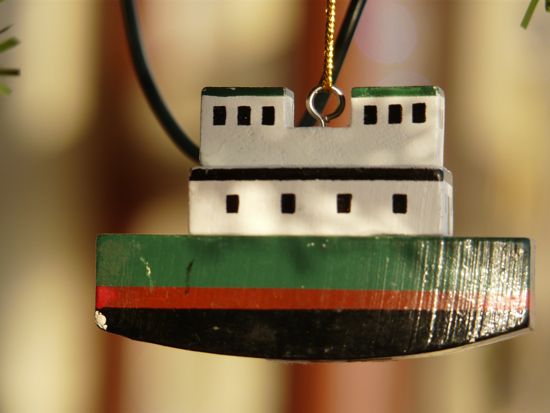
AdventureMan’s love of Africa and the Middle East:


Religious symbols:




Beautiful German antique silver walnuts and pinecones:


And memories of places we’ll remember . . .





Whew! I’m tired, too! Think I will go join the Qatteri Cat in a catnap!
Rosy Rainfall in Kuwait
It’s been a long day, a productive day, and at last I can take a deep breath. My friend tells me it is cold out, but I have had the oven on much of the day, and our place is warm and cozy. I would love some fresh air, so I quietly close the door to the kitchen and step out on the balcony.
It is beyond fresh. It is fresh, and raining, and off in the distance, the sun is setting and the muezzin is calling everyone to prayer and it is purely a beautiful moment.

We didn’t have rain like this last year, or the year before. We had some rain two years ago, in December mostly, but still – not like this. This has been a wonderful, continuous, soaking rain, blessing Kuwait and preparing us for an amazing winter growing season. I would love to be able to see the flowers people tell me are blooming in the desert when it rains.
In Saudi Arabia, we spent a whole day travelling to see the tiny irises that would bloom in Tumayr. Here, there are still places you can’t go, because there are explosives left over from the Gulf War, and now and then a shepherd loses a leg by stepping in the wrong place.
Morality Police Accuse Married Couple of Being Alone Together
This is one weird story. Saw it in today’s Kuwait Times, but it is not on the online version, so I had to copy it from the Arab News website. The woman’s family and the man’s family all verified that this couple are married, but they are continually harassed by the morality police, saying they are not married.
Vice cops accused of attacking married couple in Madinah
Fatima Sidiya I Arab News
JEDDAH: A 22-year-old Saudi woman told Arab News yesterday that she and her husband of four years were stopped on a road by the religious police of Al-Jurf, west of the holy city of Madinah, accused of being an unrelated man and woman in an illegal state of seclusion (khulwa) at about 1 a.m. on Sunday.
“As we were driving home, my husband and I realized we were being followed by three men in a car,” said the woman, who did not want her name published. “They were coming from both sides of the car and (at one point in the chase) were also in front of our car. I was afraid of having an accident. The whole scene looked just like something in a movie.”
She also said that because no police officer was accompanying the three members of the Commission for the Promotion of Virtue and Prevention of Vice, her husband was afraid to stop. Eventually, the commission vehicle got in front of the car they were pursuing and forced the couple to stop, according to the woman.
Abdullah Al-Zahrani, the head of the Madinah branch of the commission, confirmed to Arab News yesterday that the commission was tailing the couple, but he maintains that the three commission members did not abuse the suspects. He also claims that the two are not married.
“The woman is neither his wife nor his cousin,” said Al-Zahrani.
When asked if the police, in response to the woman’s complaint, had questioned the commission members over what happened early Sunday morning, he said the police did not seek any clarification. “The police did not question the commission members, as they (the commission) are a monitoring body, which hands suspects over to the police for further investigation,” he said.
The couple has filed a complaint and the Commission for Investigation and Prosecution is looking into the case.
Relatives have come out in defense of the commission’s denial that the two are married. According to the woman, a commission member told her husband: “If you bring everybody in your family to tell me she is your wife, I will not believe them. You are lying; she is not your wife.”
According to the woman, she and her husband had been visiting her husband’s family and decided to return home late at night.
After the two were pulled over, said the woman, “one of them pulled my arm and was shouting at me, telling me to get into their car. I was shocked. How could a man from the commission touch a woman when he is not her mahram (a woman’s legal male escort or guardian)? He ordered me to get into the commission car and said they would keep everything secret in order to protect my reputation.”
The commission considers unrelated men and women in cars to be committing the moral crime of khulwa.
The woman said that her husband objected to her treatment, and asked the men to take him in custody instead. At that point, the woman said an older man who happened to be passing by intervened and protested against the commission members touching a woman, “but the commission member told him that I had forced him to do so.”
The woman says that two of the commission members got into her husband’s car with her and accused her of being an immoral woman for being out late at night with an unrelated man. The members of the commission also said that the woman had committed a crime and that she therefore deserved to be punished.
“This is the first time I have seen anything like this,” she said. “One of the members was totally unreasonable and was aggressive from the start. He didn’t want to hear anything that contradicted his set ideas and beliefs. He looked to be in his late 20s. Only one of the three was rational and wanted to talk to us away from the public eye. But he then went and got into their car. The members refused to come to the police during the investigation and said that I had insulted them. I did no such thing; I simply told them over and over: ‘I swear to God that I am this man’s wife.’”
The woman said that after hearing what had happened, her brothers went to the commission branch in Al-Jurf, furious and telling the commission members to stay away from their sister.
She said a commission member then hit one of her brothers and broke his nose.
“My brother became unconscious and an ambulance came and took him to the hospital,” she said.
Then, in anger another brother erroneously went to the wrong commission center to retaliate against the attack on his brother. He was then arrested.
But the police reportedly released the two brothers after confirming their identities. The woman claims that the local police view this particular branch of the commission as problematic.
Maj. Muhsin Al-Radadi, a spokesman for the Madinah police, said that the only reports they received about this incident were about the brother who went to the incorrect commission center.
“The commission members (at Al-Azizia commission branch) were attacked in their offices by a young man,” he said, adding that he wouldn’t comment on hearsay regarding the other events.
“We were not doing anything that was remotely immoral or inappropriate,” said the woman. “Even my eyes were covered. The members shamed us in the area where we live and my husband and I cannot now go out of the house.”
She says that the incident has instilled fear in her about venturing out of the house.
“I will not go to a public place or anywhere in a car unless a lot of my family is with me,” she said.
Recent Comments
ExpatAlien on What Country am I Living … intlxpatr on Yellowstone: Old Faithful to C… Michelle on Yellowstone: Old Faithful to C… Cathy on No Grown-Ups in Charge intlxpatr on Waiting for Snow Wikipedia Donate Button

Amazina


Early Voting in Florida


 Here There and Everywhere