“Health Care Could be Fixed Overnight . . .”
Today, AOL ran commentaries on American health care and whether the new proposals will make a difference. The comment of one CEO who runs an enormous health provider, caught my eye. As I read it, I thought “he is talking about the USA, but the exact same thoughts apply to Qatar, to Kuwait, to Germany, where an epidemic of self-inflicted health problems is growing wildly.” And it also occurs to me that he is laying the accountability squarely where it belongs – on our shoulders.
David Feinberg, M.D., M.BA.
CEO, UCLA Hospital System
“The debate they’re having now in Washington is the wrong discussion,” says Feinberg. “They’re not talking about health-care reform. They’re talking about health insurance reform. The bill in Congress has nothing to do with health care.” He explains that health care could be fixed overnight if people would stop using alcohol and drugs, eat right and exercise.
“I have 800 patients in this hospital today, and I bet 50 percent of them have illnesses that could have been completely prevented,” Feinberg says. “That situation is not going to get better with a ‘public option.'”
He points out that even people without health insurance can receive care when they need it in the emergency room, and, while it’s not ideal, they’re not being denied care because they don’t have health insurance. “It’s impossible to give high quality, low cost care to everyone. What we need is to decrease demand for health care.”
According to Feinberg, some 75 percent of illnesses are treated at home, whether that’s a bad cold or a sprained ankle, and he says that health-care reform should be focused on home care. “When you compare us to other countries with similar Gross Domestic Products, they spend half what we do on health care because they have a different lifestyle,” he says. “We either need to change our lifestyle, or it’s going to be very expensive.”
“With all due respect,” he adds, “the surgeon general is obese. I don’t think the President of the United States should be solving this.” Rather, he says, each individual needs to come to terms with the fact that eating right, exercising, and avoiding smoking and alcohol will transform not only their own lives but the ever increasing cost of health care in this country.
You can read all the commentaries on AOL Health News. I know most of us in my age group need more exercise (not you, Big Diamond!) and are beginning to stave off the common age-related problems of high cholesterol, high blood pressure, obesity, diabetes, aches and pains, etc. We all KNOW we could be eating better and exercising more. We are smart educated people – but do we do what we know is best for ourselves? NNoooooooooooo!
I see the same epidemic striking in Germany, in Qatar and in Kuwait, people who have enough to eat are eating too much. Yes. Yes. I’m guilty. And I exercise a lot less than I need to. I was so happy to get back into a house, with stairs, so at least I would get the exercise of going up and down stairs a few times a day.
Japan has instituted a national policy of health, measuring citizens waists and penalizing them for carrying too much weight. I will be interested to see how it works out, if it pays off in health benefits and lowered costs down the road. It’s an inspired mandate.
Places I’ll Remember . . .
I’m not very good at being sad. Today is one of the saddest days of my life. I’ve been weeping all day, and I’m not one of those women whom the camera loves when they weep. My throat gets thick, so clogged with emotion that I can’t talk clearly, and my eyes get all red and swollen. My cheeks get all blotchy. I hate it, my eyes are leaking, and my nose is running. I think I’ve got it all stopped, and it all starts up again.
Most of the house is packed, the kitchen cupboards cleared out and all the goods not going with us distributed. I weep as I pack my bags. I weep as I take out the garbage. I weep as I load one last load of wash into the washer.
“What is it in particular?” AdventureMan asks me, as I weep, yet again, as I start to write this entry.
“It’s the end of an era,” I choke out, and the tears start rolling once again in spite of all my efforts not to succumb.
“We’ve lived our lives as nomads ever since we met,” I continue.
“It isn’t like we want to live in Doha forever, Doha is changing, too, old friends are leaving.”
“It isn’t like I love packing up and starting over in a new place.”
“I shouldn’t have scheduled to leave on a Friday after church,” I philosophized, but it’s too late now. The waterworks started in church and have turned on and off with ever fresh goodbye.
I steeled myself to smile cheerily at my oldest friends, knowing we’ll meet up again – a wedding, a retirement, a gathering of old hands. But small things defeated me. The friends who switched their normal place in church and sat beside us. The communion hymn “Lord of the Dance” sung as a duet. One of our friends provided our very very favorite meal for lunch. The priest blessing my travels and sending me on with the prayers of the people. The difficult ceremony of saying goodbye to the people we love in a place which has nurtured us, spiritually and socially.
And one young woman painted a watercolor for us of our new grandson.
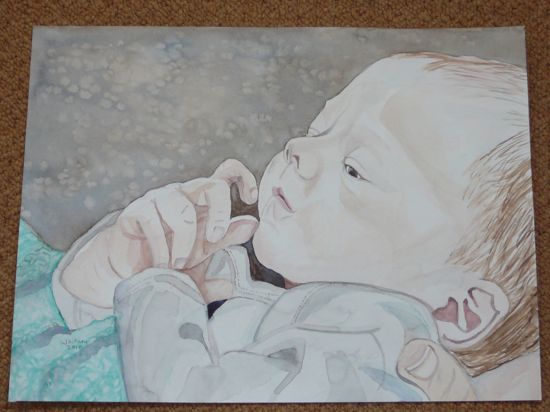
It is a stunning watercolor, I can hardly wait to have it framed. There is something very special in it – I have a friend who knits, but is constantly telling us how badly she knits. She knit a blanket for the grandson, and it was COLD in Pensacola, and that blanket was used over and over again. The blanket is in the lower left corner of the watercolor. 🙂
It’s going to be a long trip to our new life. We are going to a happy place – sunshine, but not so much heat. Humidity and lightning, but also four seasons and seafood. Our son, his wife, our grandson. All these are happy things. Our new house, a new life, closer to our families. All good things.
I couldn’t leave without saying goodbye to my Palestinian friend, like my sister, and she shared all her children with me through these years of friendship. Saying goodbye to her was horrible. We know we may never see one another again. Her daughters assure me they will help us correspond; they will help her use modern technology to stay in touch. 🙂 I don’t know when I will ever see her again . . . and it breaks my heart. I guess I kind of thought she would come visit me. “No,” she said sadly, “no, I will never have the right papers to visit you.” Until that moment, I hadn’t realized how devastating are the restrictions on her life. And I’m just a friend. She hasn’t seen her own father, in Palestine, for years. Sometimes they can meet up in Egypt. . .
I’m not the first expat to leave here. One good friend left Doha last summer, she led the way. We all know that leaving the nomadic life is charting new territory. We’ve had a lot of fun, we’ve loved (most of) the expat experience. We know it’s time. It’s just the inner twenty-five year old is not ready.
AdventureMan’s company keeps saying “when you’ve had a break . . . ” and AdventureMan laughs and says “I’m not taking a break, I am RETIRING!” His company is savvy; they know that three months down the road the domestic life may get a bit old for these high testosterone kind of guys and they will invite him back for a special project or two. He promises me, if it is Doha or Kuwait, I can come with him. Even just a week or two, to see old friends . . . I’ll take it!
Thanks be to God, for creating us, and for giving us this wonderful life we were created to live. Thanks be to God for all these great adventures, for the exotic, the sights and smells and sounds, and for the eyes to see and the ears to hear. Thanks be to God for the generous spirited friends called to his life, who have shared the path with us. And thanks be to God for this outlet, this blog, where I can share the good, the bad and the ugly with friends from all countries who have ever lived as strangers in a strange land (even when that ‘strange’ land is the USA, LOL!) Thank YOU, friends.
Change of Plans
When we were planning this trip, it all sounded so simple . . . greet the grandbaby, buy a house, quick, fly to Seattle, fly back to Pensacola, kiss the grandbaby and fly to Doha to pack.
Not quite the way it turned out. When we got here, the grandbaby was 11 days overdue. We got to be here for the birth. While our son and his wife labored, we went out with the world’s most wonderful real estate lady and actually, we did find a house.
Three years ago, we found a house. When I talked with the mortgage people, I said “We just finished paying off a mortgage with you; isn’t there some kind of short-cut you could do with me?” and they did something called “fast track” with me, and it was so easy I can’t even remember the paperwork; I think I filled it out on my computer – online – and that was it. My son handled the closing. It was so easy.
Things have really changed. This will be our third mortgage with the same company, but you would think we are potential deadbeats. We have high credit scores, an impeccable payment record – I would think they would want to have us as customers! It’s like pulling teeth. Papers don’t get to us. Additional verifications are required. Appraisers actually enter the house and verify square footage.
Between chasing paper and soothing the newborn, my life has been very full. It doesn’t sound very exciting, when I tell you about it, but here is the truth – I know I am exactly where I am supposed to be right now. It’s an amazing feeling.
Today, I spent a lot of time with the baby. At some point, I realized I wasn’t going to make it to Seattle this trip, and it’s OK. I can go to Seattle later. For right now, I have enough on my plate.
I had forgotten, too, how chaotic life with a newborn can be. His needs take precedence, and sometimes we all run around trying to guess what those needs might be, simple as they are . . . clean diaper? swaddling / soothing to sleep? Mother’s milk? Today was a really good day, where he took the diaper changes with grace, dropped right off to sleep after every meal, and was keenly alert for maybe a half hour after feeding before napping. He loves patterns and fabrics. I am having SO MUCH FUN!
A part of our life is ending, the nomadic part. AdventureMan and I have had a lot of fun, once our son got through college and law school, we were on our own again, living in Europe, living in Saudi Arabia, Kuwait and Qatar – we have had a great adventure. We travelled to Botswana, Namibia, Zambia (several times), South Africa, Kenya, Tanzania and spent a wonderful week on Mnemba Island off the coast of Zanzibar. We have wonderful friends, mostly from churches and interest groups. I would think, knowing us, that we would be sad leaving all this, but instead, we are racing toward our new future, being more settled, being near our son and his family, and his wife’s great big family. 🙂
For one thing, the world has changed. With e-mail and VOIP phones and people who jump on a plane at the drop of a hat, we expect to stay in touch with those we love and treasure. We expect they will come see us. It’s kind of fun settling in a place with white sandy beaches that everyone wants to come visit. 🙂 Cooler than Kuwait and Qatar in the summer time, too! Nice warm winters, well, not this winter, brrrrrrrrrrrr!
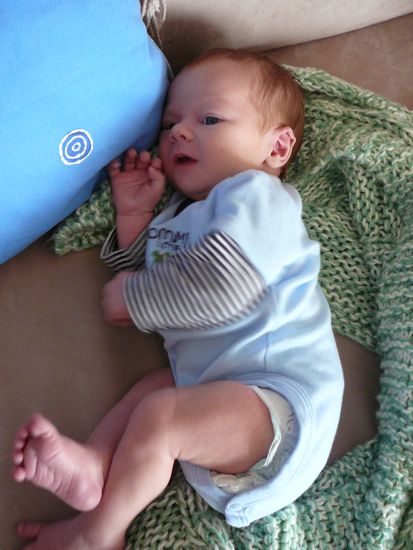
Thought you might want to see a photo of my little darling grandson:
Amazon Kindle Global Wireless – Wooo HOOOO
My book friends have all been wishing for a global wireless Kindle – and here it is!

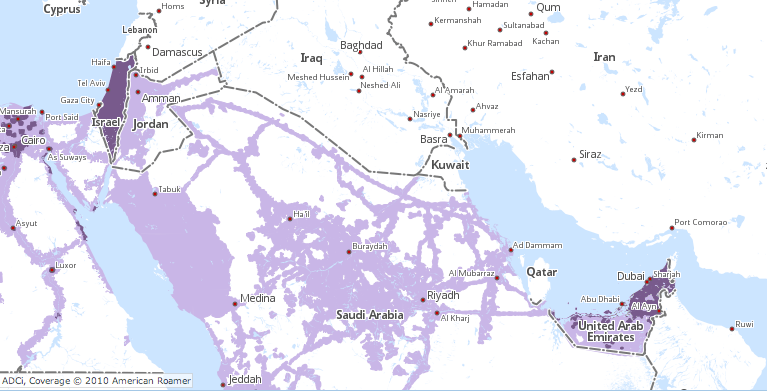
From Amazon, and yes, I own stock in Amazon, but not so much as to make me a rich woman. 🙂 What I wonder . . . is how this will work in the Gulf countries, where books are heavily censored? Will people have free access to any book they choose (gasp!) with a Kindle?
(Update: Here’s the answer – ‘global’ does not mean everywhere. Saudi Arabia is covered, but Kuwait and Qatar are not!)
 )
)
Say Hello to Kindle DX with Global Wireless
Beautiful Large Display: 9.7″ diagonal e-ink screen reads like real paper; boasts 16 shades of gray for clear text and sharp images
Slim: Just over 1/3 of an inch, as thin as most magazines
Books In Under 60 Seconds: Get books delivered wirelessly in less than 60 seconds; no PC required
3G Wireless: 3G wireless lets you download books right from your Kindle DX; no monthly fees, no annual contracts, and no hunting for Wi-Fi hotspots
Global Coverage: Enjoy 3G wireless coverage at home or abroad in over 100 countries. See details. Check wireless coverage map.
Carry Your Library: Holds up to 3,500 books, periodicals, and documents
Longer Battery Life: Now read for up to 1 week on a single charge with wireless on, a significant improvement from the previous battery life of 4 days
Built-In PDF Reader: Native PDF support allows you to carry and read all of your personal and professional documents on the go
Auto-Rotating Screen: Display auto-rotates from portrait to landscape as you turn the device so you can view full-width maps, graphs, tables, and Web pages
Read-to-Me: With the text-to-speech feature, Kindle DX can read newspapers, magazines, blogs, and books out loud to you, unless the book’s rights holder made the feature unavailable
Free Book Samples: Download and read first chapters for free before you decide to buy
Large Selection: Over 400,000 books, including 101 of 112 New York Times® Best Sellers, plus U.S. and international newspapers, magazines, and blogs. For non-U.S. customers, content availability and pricing will vary. Check your country.
Low Book Prices: New York Times Best Sellers and New Releases are $9.99, unless marked otherwise. When traveling abroad, you can download books wirelessly from the Kindle Store or your Archived Items. U.S. customers will be charged a fee of $1.99 for international downloads.
Girls of Riyadh by Rajaa AlSanea
“Have you read Girls of Riyadh?” my friend asked me on the phone, and when I said I had not, she said she would bring it to me.
“It’s an easy read” she said, “it will take you an afternoon.”
Sometimes life intruded. It took me a little longer. I had expected this to be lightweight, along the lines of the shopaholic books, read ’em and forget ’em. Airport reading, stuff you save to read when you know you will have time to kill.
I was surprised. I guess I had gotten the impression it was lightweight because I had seen it discussed on some of the blogs, and there are some light-hearted moments in the book. The four young women are well drawn, and their experiences are handled with sensitivity. She never reveals which character from the book she is, but I have my suspicions. 🙂
Each girl has her own unique experiences as she reaches young womanhood, and mating. Although the experiences are treated deftly, there is a serious undercurrent that belies the light tone. The underlying circumstances surrounding the mating rituals in a country so tradition-bound as Saudi Arabia turn mating into a dark ritual, full of unseen pits and minefields.
The very worst fear during these years is the wagging tongues of others. I have heard this theme over and over in my own dealings with young women in this part of the world.
“You know, khalto, a woman’s reputation is like glass, it is easily shattered,” explained my young-woman Qatteri friend, solemnly.
(for my Western readers, Khalto means ‘aunt’ literally, and is a term used respectfully for family friends, meaning ‘sister of my mother’)
“I don’t want to get married,” she continued, “They come for you as a bride and they are so nice and they make you feel so in love with them, but then, when you are married, they change. Men are . . . men are . . ”
“Dogs?” I asked.
“Yes! Yes!,” she exclaimed, “Dogs!” (pause)
“How did you know, Khalto?”
LLLLOOOOLLLLLLLLLL! It’s one of those moments when you know we are all more alike than we are different.
Girls of Riyadh is a worthy read. It is thought-provoking, and compassion-provoking. You grow to love these girls, and you hope a happy ending for them.
Digging Up the Saudi Past
By DONNA ABU-NASR
Associated Press Writer
RIYADH, Saudi Arabia —
Much of the world knows Petra, the ancient ruin in modern-day Jordan that is celebrated in poetry as “the rose-red city, ‘half as old as time,'” and which provided the climactic backdrop for “Indiana Jones and the Last Crusade.”
But far fewer know Madain Saleh, a similarly spectacular treasure built by the same civilization, the Nabateans.
That’s because it’s in Saudi Arabia, where conservatives are deeply hostile to pagan, Jewish and Christian sites that predate the founding of Islam in the 7th century.
But now, in a quiet but notable change of course, the kingdom has opened up an archaeology boom by allowing Saudi and foreign archaeologists to explore cities and trade routes long lost in the desert.
The sensitivities run deep. Archaeologists are cautioned not to talk about pre-Islamic finds outside scholarly literature. Few ancient treasures are on display, and no Christian or Jewish relics. A 4th or 5th century church in eastern Saudi Arabia has been fenced off ever since its accidental discovery 20 years ago and its exact whereabouts kept secret.
In the eyes of conservatives, the land where Islam was founded and the Prophet Muhammad was born must remain purely Muslim. Saudi Arabia bans public displays of crosses and churches, and whenever non-Islamic artifacts are excavated, the news must be kept low-key lest hard-liners destroy the finds.
“They should be left in the ground,” said Sheikh Mohammed al-Nujaimi, a well-known cleric, reflecting the views of many religious leaders. “Any ruins belonging to non-Muslims should not be touched. Leave them in place, the way they have been for thousands of years.”
In an interview, he said Christians and Jews might claim discoveries of relics, and that Muslims would be angered if ancient symbols of other religions went on show. “How can crosses be displayed when Islam doesn’t recognize that Christ was crucified?” said al-Nujaimi. “If we display them, it’s as if we recognize the crucifixion.”
In the past, Saudi authorities restricted foreign archaeologists to giving technical help to Saudi teams. Starting in 2000, they began a gradual process of easing up that culminated last year with American, European and Saudi teams launching significant excavations on sites that have long gone lightly explored, if at all.
At the same time, authorities are gradually trying to acquaint the Saudi public with the idea of exploring the past, in part to eventually develop tourism. After years of being closed off, 2,000-year-old Madain Saleh is Saudi Arabia’s first UNESCO World Heritage Site and is open to tourists. State media now occasionally mention discoveries as well as the kingdom’s little known antiquities museums.
“It’s already a big change,” said Christian Robin, a leading French archaeologist and a member of the College de France. He is working in the southwestern region of Najran, mentioned in the Bible by the name Raamah and once a center of Jewish and Christian kingdoms.
No Christian artifacts have been found in Najran, he said.
Spearheading the change is the royal family’s Prince Sultan bin Salman, who was the first Saudi in space when he flew on the U.S. space shuttle Discovery in 1985. He is now secretary general of the governmental Saudi Commission for Tourism and Antiquities.
Dhaifallah Altalhi, head of the commission’s research center at the governmental Saudi Commission for Tourism and Antiquities, said there are 4,000 recorded sites of different periods and types, and most of the excavations are on pre-Islamic sites.
“We treat all our sites equally,” said Altalhi. “This is part of the history and culture of the country and must be protected and developed.” He said archaeologists are free to explore and discuss their findings in academic venues.
Still, archaeologists are cautious. Several declined to comment to The Associated Press on their work in the kingdom.
The Arabian Peninsula is rich, nearly untouched territory for archaeologists. In pre-Islamic times it was dotted with small kingdoms and crisscrossed by caravan routes to the Mediterranean. Ancient Arab peoples – Nabateans, Lihyans, Thamud – interacted with Assyrians and Babylonians, Romans and Greeks.
Much about them is unknown.
Najran, discovered in the 1950s, was invaded nearly a century before Muhammad’s birth by Dhu Nawas, a ruler of the Himyar kingdom in neighboring Yemen. A convert to Judaism, he massacred Christian tribes, leaving triumphant inscriptions carved on boulders.
At nearby Jurash, a previously untouched site in the mountains overlooking the Red Sea, a team led by David Graf of the University of Miami is uncovering a city that dates at least to 500 B.C. The dig could fill out knowledge of the incense routes running through the area and the interactions of the region’s kingdoms over a 1,000-year span.
And a French-Saudi expedition is doing the most extensive excavation in decades at Madain Saleh. The city, also known as al-Hijr, features more than 130 tombs carved into mountainsides. Some 450 miles from Petra, it is thought to mark the southern extent of the Nabatean kingdom.
In a significant 2000 find, Altalhi unearthed a Latin dedication of a restored city wall at Madain Saleh which honored the second century Roman emperor Marcus Aurelius.
So far, there has been no known friction with conservatives over the new excavations, in part because they are in the early stages, are not much discussed in Saudi Arabia, and haven’t produced any announcements of overtly Christian or Jewish finds.
But the call to keep the land purged of other religions runs deep among many Saudis. Even though Madain Saleh site is open for tourism, many Saudis refuse to visit on religious grounds because the Quran says God destroyed it for its sins.
Excavations sometimes meet opposition from local residents who fear their region will become known as “Christian” or “Jewish.” And Islam being an iconoclastic religion, hard-liners have been known to raze even ancient Islamic sites to ensure that they do not become objects of veneration.
Saudi museums display few non-Islamic artifacts.
Riyadh’s National Museum shows small pre-Islamic statues, a golden mask and a large model of a pagan temple. In some display cases, female figurines are listed, but not present – likely a nod to the kingdom’s ban on depictions of the female form.
A tiny exhibition at the King Saud University in Riyadh displays small nude statues of Hercules and Apollo in bronze, a startling sight in a country where nakedness in art is highly taboo.
In 1986, picnickers accidentally discovered an ancient church in the eastern region of Jubeil. Pictures of the simple stone building show crosses in the door frame.
It is fenced off – for its protection, authorities say – and archaeologists are barred from examining it.
Faisal al-Zamil, a Saudi businessman and amateur archaeologist, says he has visited the church several times.
He recalls offering a Saudi newspaper an article about the site and being turned down by an editor.
“He was shocked,” al-Zamil said. “He said he could not publish the piece.”
—
Associated Press Writer Lee Keath contributed from Cairo.
“Let Her Get Fat” in Saudi Arabia
Sometimes, either you laugh, or you’re going to cry. This is from BBC News: Saudi Arabia
Saudis clamp down on women’s gyms
Saudi women are largely constrained to the home and single-sex environments
Many women-only sports clubs and gyms in Saudi Arabia face closure under a government clampdown on unlicensed premises, Saudi media have reported.
Women’s gyms have become popular in the ultra-conservative Muslim country where the sexes are heavily segregated.
But only clubs linked to medical groups can get licenses and others will be closed, the Arab News newspaper said.
Saudi women were reported to have launched an online campaign in protest called Let Her Get Fat.
Government departments are not allowed to issue licenses for commercial gyms and sports clubs for women, unlike facilities for men, the newspaper reported.
It quoted club manager Bader al-Shibani, who tried to open a women’s sports club along with the one he runs for men in Jeddah.
“I ran into a stone wall at every turn. Every department I visited denied that they had the authority to give permission to establish a women’s club,” he said.
Many clubs are registered as beauty salons, and offer fitness facilities and even exercise classes in addition, the newspaper said.
A spokesman for the Ministry of Municipal and Rural Affairs told the newspaper that commercial clubs do not have registration for the provision of sport and health services.
“It’s clear that one department is now taking the decision to put an end to the increasing number of unlicensed clubs,” lawyer and community activist Abdulaziz al-Qasim told Arab News.
A group of women launched an internet campaign in protest against the move, saying facilities linked to medical clinics were too expensive, and their health would suffer as a result of the closures.
Women in Saudi Arabia are banned from driving, must wear a head-to-toe cloak when out in public and must obtain permission from a male relative to work, travel, study or marry.
Underwear Uproar in Saudi Arabia
There is an article today on BBC News (you can read the entire article by clicking here) on the underwear uproar in Saudi Arabia – that to buy underwear, women have to deal with male clerks. And more – there is nowhere to try on a bra to make sure you get the right fit! You have to pay, go to the public restroom, try it on and bring it back if it is not right.
One of the most amazing things to me, besides having only men selling underwear in Saudi Arabia, was the fact that the most amazing lingerie was in the most public windows. My favorite I-would-love-to-take-this-photo moments was watching abayed and niqabed women standing next to some of the tiniest, most sexy underwear you could imagine.
i know you think we are looser in the west, but you would laugh to know how restrained we really are. For the most part, we just don’t discuss underwear.
And have you noticed – in the United States, the mannekins don’t have nipples? I was shocked the first time I saw mannekins in Europe and the Middle East – the females had nipples! I had to look away! We are prudish in funny ways, in ways you can’t begin to imagine, and in ways we don’t even realize until we are confronted with our own what-we-think-is-normal.
I cannot imagine men in the ladies lingerie section. I buy all my underwear back in the US; I am too shy to buy underwear from a man! In Kuwait, they have females selling La Perla, very nice underwear, but most of the really good ready-made clothing in Kuwait is for size 00 – 2 girls – not for grown up women. It’s just easier buying my “unmentionables” discreetly on my trips back home. I carry a list. Most of us do. 😉
Here is the article:
Saudi lingerie trade in a twist
By Stephanie Hancock
BBC News, Jeddah
It would be bizarre in any country to find that its lingerie shops are staffed entirely by men.
But in Saudi Arabia – an ultra-conservative nation where unmarried men and women cannot even be alone in a room together if they are not related – it is strange in the extreme.
Women, forced to negotiate their most intimate of purchases with male strangers, call the situation appalling and are demanding the system be changed.
“The way that underwear is being sold in Saudi Arabia is simply not acceptable to any population living anywhere in the modern world,” says Reem Asaad, a finance lecturer at Dar al-Hikma Women’s College in Jeddah, who is leading a campaign to get women working in lingerie shops rather than men.
“This is a sensitive part of women’s bodies,” adds Ms Asaad. “You need to have some discussions regarding size, colour and attractive choices and you definitely don’t want to get into such a discussion with a stranger, let alone a male stranger. I mean this is something I wouldn’t even talk to my friends about.”
In theory, it should be easy enough to get women to staff lingerie shops, but parts of Saudi society are still very traditional and don’t like the idea of women working – even if it’s just to sell underwear to each other.
Rana Jad is a 20-year-old student at Dar al-Hikma Women’s College, and one of Reem Asaad’s pupils and campaign supporters.
“Girls don’t feel very comfortable when males are selling them lingerie, telling them what size they need, and saying ‘I think this is small on you, I think this is large on you’,” she says.
“He’s totally checking the girls out! It’s just not appropriate, especially here in our culture.”
Recent Comments
intlxpatr on Shampoo Ginger tigerbutterya0c5ff1d… on Shampoo Ginger intlxpatr on British Soldier Kidnapped, Esc… John on British Soldier Kidnapped, Esc… intlxpatr on British Soldier Kidnapped, Esc… Wikipedia Donate Button

Amazina


Early Voting in Florida


