Saudi Women Working in Shops
This weeks New Yorker, with a delightful cartoon of Pope Francis on the cover, making snow angels (Isn’t it great to see a powerful man having so much fun doing his job?)

. . . there is also a truly wonderful article, sympathetic and well written, about Saudi women being allowed to work in select shops. New Yorker only allows me to print an few lines from the article, but I loved how it captured the delight these women take in having a little bit of life outside the home to call their own. It also covers the dilemma of dealing with the religious police, the Muttawa, who are in a fit because now women will be in contact with MEN and who knows what might happen?
I had not read anything in the papers – our papers rarely cover smaller details of life in the Middle East. We were there when men were in every shop, selling underwear, selling abayas, and not a woman to be seen. This is a major change, done so so quietly, and women who need more space to breathe are finding a little bit of that space.
Not every woman wants to work outside the home, but many are bored and restless. When they talk about working, they talk about the friendships they form with other women, the pride they take in having a purpose to their daily life, and the increased respect with which they are treated by family members – all good things. The article is sensitively and sympathetically written.
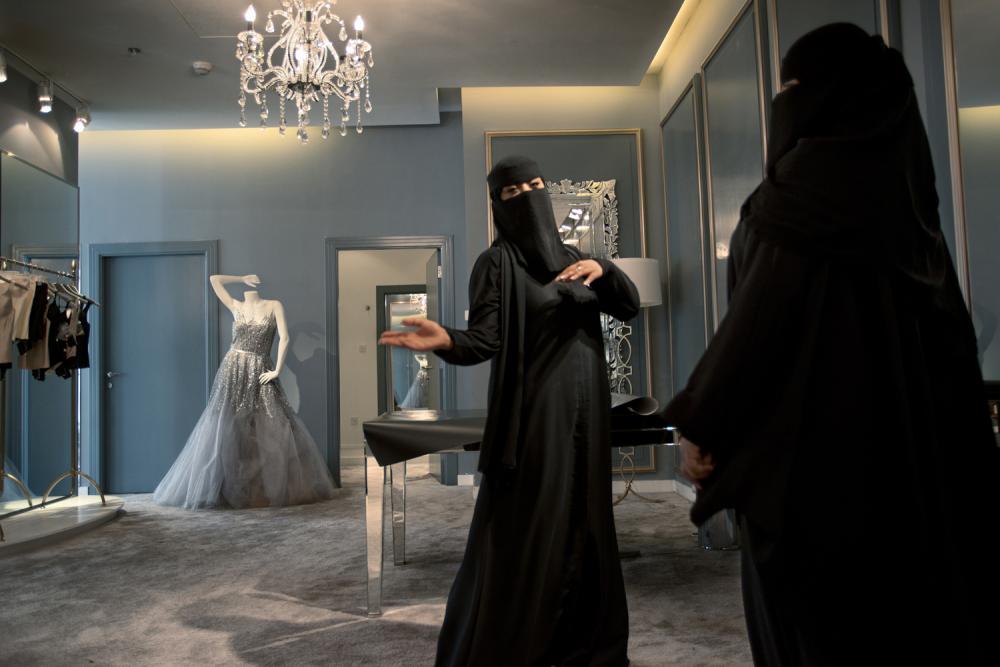
LETTER FROM RIYADH SHOPGIRLS: The art of selling lingerie.
BY KATHERINE ZOEPF
DECEMBER 23, 2013
A women’s revolution has begun in Saudi Arabia, although it may not be immediately evident. This fall, only a few dozen women got behind the wheel to demand the right to drive. Every female Saudi still has a male guardian—usually a father or husband—and few openly question the need for one. Adult women must have their guardians’ permission to study, to travel, and to marry, which effectively renders them legal minors. It took a decree from King Abdullah to put tens of thousands of them into the workforce. For the first time, they are interacting daily with men who are not family members, as cashiers in supermarkets and as salesclerks selling abayas and cosmetics and underwear.
One afternoon in late October, at the Sahara Mall, in central Riyadh, the Asr prayer was just ending. The lights were still dimmed in the mall’s marble corridor, but the Nayomi lingerie store had been unlocked. The rattle of steel and aluminum could be heard as security grilles were raised over nearby storefronts. Twenty-seven-year-old Nermin adjusted a box of perfume on a tiered display near the entrance, then turned to greet six saleswomen as they filed out of a storeroom, preparing to resume their shift. Nermin started working at Nayomi eighteen months ago, as a salesclerk herself. She was warm and engaging with customers, and was recently promoted to a position in which she oversees hiring and staff training for Nayomi stores across four Saudi provinces. All the employees wore long black abayas and niqabs, which revealed nothing but their eyes. They positioned themselves among the racks of bras, underpants, nightgowns, and foundation garments—black-cloaked figures moving against a backdrop of purples, reds, and innumerable shades of pink.
Nermin is one of the Nayomi chain’s longest-serving female employees. She was hired nearly a year after King Abdullah issued a decree, in June of 2011, that women were to replace all men working in lingerie shops. Early in 2012, on a visit to the Nayomi store in a mall near her house with her younger sister, Ruby, Nermin noticed a poster advertising positions for saleswomen. The sisters had never considered working, since there were virtually no jobs for women without a college degree or special skills. Nermin and Ruby mostly spent their days watching television, exercising, and surfing the Internet. In a blisteringly hot city with few parks, the mall was one of the only places to go for a walk. They filled out applications on the spot, and their family encouraged the idea. “I was surprised to find that I like to work,” Nermin said. Ruby, who got a job at the same store, is now the manager there. She wore its key on a yellow lanyard around her neck; pink-trimmed platform sneakers were visible beneath the hem of her abaya. After graduating from high school, she had spent four years feeling increasingly trapped at home, she said. “Nayomi gave me the chance to go on with life.” . . .
WalMart: A Sea of Bicycles
We stopped by a different WalMart in Pensacola a few days ago, and I was blown away – they had thousands – I am not kidding – thousands of bikes. It was like Santa’s workshop on steroids:

Christmas Mercies
By the grace of God, we got through the first week of December. By the grace of God, we managed to enjoy our first week in December!
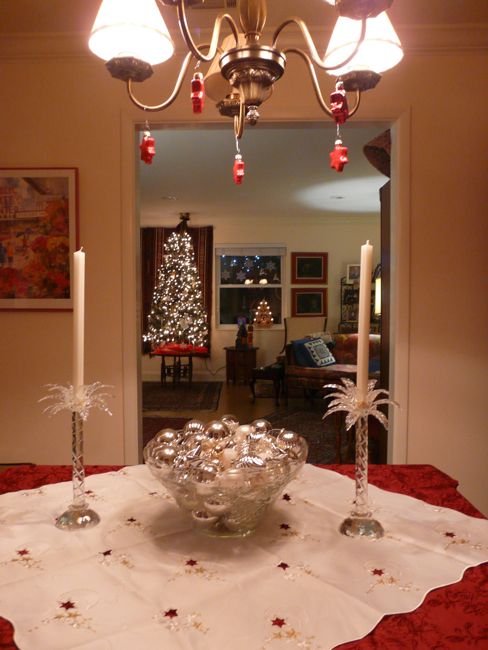
The first week in December this year followed directly after Thanksgiving. Often, there is a weekend between Thanksgiving and December, but this year, December started on Sunday, and there goes one weekend before Christmas. You might wonder why this is even important, but for some reason, there are so many things scheduled the first week of December, on top of the normal things scheduled for the first week of every month – you know, small things like bill paying and making sure your finances are in order 🙂
So we had our normal first week of the month – Book Club, babysitting, exercise classes, bible study – AND. And we had a house guest, a very old friend, a friend from all the way back in Tunis, when we were all studying languages, our guest and my husband learning Arabic and me learning French. Our guest and I sang in the community choir together, and he was very much a part of our small expat family. Having him in our home was so easy, we came and went, fortunately at different times. On top of all this, we also had a couple of annual Christmas related events, social events, we had to attend. By the grace of God, it all went smoothly, and – this is the mercy – enjoyably. We weren’t stressed.
I was stressed a little yesterday. The last two days have been horrible for me, in terms of climate. You know, I like NO air conditioning, I like temperatures in the 60s and 70s (F) but the temperatures were almost 80 and HUMID. Bad enough I had to turn on our A/C last night so I could sleep, and feeling so grumpy. I really need to get the Christmas decorations up this weekend so I can get on with my December, enjoy the Christmas ambiance and not have to stress about getting things done. But how do you get Christmas decorations up when you are hot and sweaty, it just isn’t right.
Major mercy – when I woke up this morning, I was wrapped warmly in my quilts and . . . I wasn’t feeling hot or sweaty. As as matter of fact, overnight the temperatures had fallen into the 40’s! Woooo HOOOO, out came all the Christmas boxes and tubs; AdventureMan got busy putting up the lights, I pulled out the other things and we got busy. Around lunch time we had a wonderful lunch, and then went searching for more light; I hadn’t bought enough to cover the length of our porch. After four fruitless stops (the lights had to match or it was all for nothing) we came home empty handed and I checked online for where this brand was sold. It was Home Depot, the one store we hadn’t stopped at because I was so sure I hadn’t bought them there. Wooo HOOOO, one quick trip and we have all the lights we need and AdventureMan got them all up.
AdventureMan is more scrupulous than I am about some things. He . . . . read the instructions on the lights. Have you ever done that? Like where it talks about amps and resistance and fire warnings? LOL, I love a lot of lights, and will string lights on lights on lights. Somewhere in the dim recesses of my mind I sort of knew it might be dangerous, but AdventureMan takes those things seriously. The good thing is that we are still married, and much more safely wired than when I was doing it.
I can hear my son scoffing when I say that today was God’s mercy on me, but to him I say God makes it to rain on the righteous and the unrighteous, and as undeserving as I am, today he gave me exactly what I needed – a chilly, Christmas-decorating kind of day. Thanks be to God.
The Most Expensive Soap in the World Made in Qatar
There is nothing so lovely not so luxurious as a really good soap. My niece introduced me to my very favorite, an Iris scented soap from Santa Maria Novella in Florence which she brought me as a house gift when she visited in Germany.

This (below) is not the Florentine soap made by nuns. This soap is not for sale; it’s for promotion and for royals only – From Qatar’s Gulf Times:

Al-Sherif shows off the soap as Dr Hassoun (second right) and other guests look on at the unveiling yesterday. PICTURS: Jayaram
The “most expensive soap in the world,” made of pure gold dust, olive oil and virgin honey and embedded with diamonds, was unveiled by Khan Al-Saboun Bader Hassoun and Sons at the Qatar Pool and Spa 2013 at the Doha Exhibition Centre yesterday.
Weighing around 100gm and with a price tag of $3,800, the soap dubbed ‘Qatar Royal Soap’ with the word ‘Qatar’ in Arabic inscribed on it, is being dedicated to Qatar and its great achievements in many fields, especially in winning the bid to host the FIFA 2022 World Cup.
Khan Al-Saboun Bader Hassoun and Sons chairman Dr Bader Hassoun explained that the soap was specially made for royalty aside being beneficial for the skin due to its natural and organic contents.
“Our company, based in Lebanon, has been known for specialising in natural and organic beauty products for years and we have very committed patrons due to this specialisation,” said Dr Hassoun, whose family has been in the soap making business for over eight centuries.
He said that the soap, though highly valued, has not been produced for commercial purposes, though it was earlier reported that it will be available for sale in Al-Saboun City Center – one of the company’s six branches in Qatar.
“We have made only this one piece in order to showcase our capabilities for inventions in soap making and just to express our respects for royalty. So, the soap will not be for sale,” he maintained. Lebanese singer Reem al-Sherif was present at the launch.
The Meat You Eat Can Make You Sick
A fascinating – if long – article on how our meat is farmed and the high cost of ‘cheap’ meat:
‘Healthy’ Cows, Sick Consumers: CDC Warns of a High Cost in Cheap Meat
by Bruce Watson Sep 25th 2013 6:00AM
On the surface, it’s hard to question the cost-effectiveness of factory-farmed meat. After all, the math is pretty simple: You start with inexpensive animals, raise them at relatively minimal cost, butcher them in the cheapest way possible, and sell them for low, low prices.
But the math gets a little more complicated when you look at the long-term health impact of all that cheap meat. Of course, there are the obvious things that everyone’s already worried about — issues like cholesterol and high blood pressure and gout and whatnot — but the biggest downside comes from something that you probably haven’t considered: antibiotic-resistant bacteria.
In a recent report, the Centers for Disease Control estimated that 2 million Americans are hit with antibiotic-resistant infections every year — and 23,000 people die from them.
Doctor Feelgood
So what causes all these outbreaks? In part, it’s our overreliance on antibiotics. Every time your doctor prescribes antibiotics to you, the bacteria in your body grow more able to tolerate them. Those antibiotic-resistant germs can then get passed on to other people, leading to the spread of harder-to-kill infections, which leads to more doctor visits, and so on, in a vicious cycle.
So, obviously, the first solution to our antibiotic-resistant bug problem is to stop overprescribing antibiotics. We should, many health experts argue, save the antibiotics for the times when we really need them.
This Little Piggie Had Penicillin …
But our overuse of erythromycin and amoxicillin is just a small part of the problem. Even if you never fill your antibiotic prescriptions — even if your doctor never writes them — chances are that you’re still consuming a huge amount of antibiotics in your food. More specifically, in your meat.
When factory farms look for ways to cut costs, space is one of the first things to go: Factory owners often crowd animals together in cramped pens. But when cows, pigs and chickens live in such cramped conditions, often with open wounds and amid ever-growing piles of feces, the barns become a breeding ground for bacterial infections. One way to cut back on this is to give the animals more space. Another way is to pump them full of antibiotics.
Not surprisingly, most factory farm operations go for the latter. In fact, the meat industry currently uses 80 percent of all antibiotics that are consumed in the US. All those drugs keep the animals relatively disease-free — and help keep meat cheap. But it’s not exactly an impressive price cut for the customer: According to one estimate, the use of antibiotics on farms saves the average meat-eating consumer $5 to $10 a year.
And those minor savings may come at a huge cost. Sloppy slaughtering methods often contaminate meat with antibiotic-resistant bacteria from the animals’ colons and stomachs. And, even if factory-farmed meat makes it to your grocery store without becoming contaminated, there are other ways animal waste enters the food cycle: Water and manure that are left over from factory animals often get used on crops, further spreading antibiotic-resistant bacteria.
So What Can You Do?
As I’ve pointed out in the past, there are a few ways to protect yourself. To begin with, you can ensure that your meat is cooked to an internal temperature of 160 degrees F — both at your home, and in any restaurants that you visit. Unfortunately, while this will kill any bacteria hiding inside your burger, it will also transform it into a well-done hockey puck.
Maybe you should just stick to the brisket.
You can also try looking for organic meat. While a little more expensive, it is produced without antibiotics, which lowers your chance of encountering antibiotic-resistant bacteria. For that matter, you may want to think about using organic vegetables — or, at least, carefully washing your fresh produce.
Another option is to get involved. Last week, I wrote about new USDA procedures would cut inspections on chicken and pork, and would allow Chinese poultry to be sold in American markets. Since these plans also reduce the number of USDA inspectors — among the few barriers between you and food poisoning — they could directly affect your health. If you get a chance, you may want to tell your congressman or senator that you’ve got some problems with this.
Given the huge lobbying efforts behind the USDA’s inspector cuts and opening the U.S. to Chinese chicken imports, chances are that both policy changes will happen. Even if they don’t, however, it never hurts to be safer with your food.
Bruce Watson is DailyFinance’s Savings Editor. You can reach him by e-mail at bruce.watson@teamaol.com, or follow him on Twitter at @bruce1971.
My Travel Must-Have
I don’t like large handbags. I am small; a large bag is disproportionate. At the same time, I wanted a bag big enough to stick my computer in without looking like a briefcase. I wanted to be able to take my computer to Alaska with me.
I looked and looked, searching for the right bag. I looked in Pensacola, I looked online, I looked in Seattle. It had to be the right size, a nice heavy leather, a sturdy leather carry strap, and a neutral color as I was only taking one bag. Finally, at the very last minute I found this wonderful bag, and the computer fit beautifully, leaving room for my camera and wallet – what more do I need, right?

Then, me being me, the night before leaving for Alaska I decided I really did not need to carry a full sized computer, that the iPad had enough capacity and besides, it had books and Sudoku on it. But I still liked the purse; I stuck a nightshirt inside in case my luggage got lost, it has a side zip pocket for tickets, car rental brochures and car keys, and with everything inside, it was still roomy and not too heavy. It is wonderful boarding airplanes with just a purse!
By the end of the trip, I was in love. It is a great bag, goes everywhere, can be filled or used with little, it is versatile. I love this bag!
World’s Most Expensive Cities for Expats
By Mark Johanson
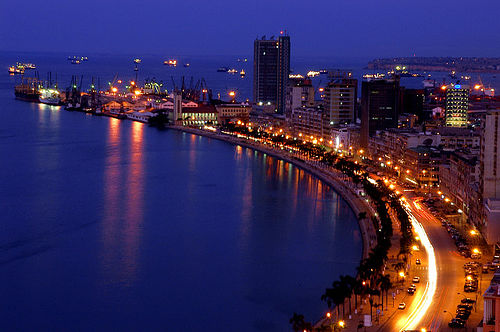
Where is the world’s most-expensive city for expatriates? It’s not notoriously pricey Tokyo. It’s not wallet-shrinking Sydney, Moscow or Oslo. And it’s definitely not surprisingly cheap New York City. Rather, it’s an African seaport you’ve probably never heard of: Luanda, Angola.
This finding from U.S. consulting firm Mercer underscores its annual survey’s purpose: to assess the cost of living around the world so that multinational companies and governments can determine appropriate compensation allowances for their expatriate employees. After all, more than half of oil-rich Luanda’s 5 million residents live below the poverty line.
“Despite being one of Africa’s major oil producers, Angola is a relatively poor country, yet expensive for expatriates since imported goods can be costly,” Barb Marder, senior partner and Mercer’s global mobility practice leader, said. “In addition, finding secure living accommodations that meet the standards of expatriates can be challenging and quite costly.”
Mercer noted in the survey that the difference in cost of various everyday items could be dramatic from country to country. The average cup of coffee, for example, costs about $1.54 in Managua, Nicaragua, while it costs $8.29 in Moscow. A fast-food hamburger meal in Kolkata, India, costs $3.62, compared to $13.49 in Caracas, Venezuela. A ticket to the cinema, meanwhile, can run between $5.91 in Johannesburg and up to $20.10 in London.
Cost of accommodation was another major factor Mercer looked at, and a one-month unfurnished luxury rental in Hong Kong topped the world at about $7,092 — more than 20 times as much as in Karachi, Pakistan. Yet, it was Moscow that crept in just below Luanda as the second-most expensive city for expats, followed by Tokyo, Chad’s capital city of N’djamena, and Singapore.
“Recent world events, including economic and political upheavals, which resulted in currency fluctuations, cost inflation for goods and services, and volatility in accommodation prices have impacted these cities making them expensive,” Marder explained.
Mercer assessed a total of 214 cities across five continents for its 2013 survey, analyzing data from March 2012 to March 2013. Cities were then ranked by the price of housing, transport, food, entertainment and clothing, and ordered on the joint cost of 200 items compared to the benchmark, New York City.
“Given the increasing numbers of business travelers, global ‘commuters’ and longer-term expatriates, companies are keeping a close eye on the cost of living for international assignees in different cities around the world,” Marder said, explaining the purpose of the study. “Organizations need to evaluate the impact of currency fluctuations, inflation, and political instability when sending employees on overseas assignments while ensuring they can facilitate the moves they need to drive the business results by offering fair and competitive compensation packages.”
Nathalie Constantin-Métral, principal at Mercer with responsibility for compiling the survey ranking, said that, overall, cost of living went up across parts of Europe, while it went down in much of Asia. Japan dropped significantly from last year due to a weakening of the yen against the U.S. dollar.
In the Americas, meanwhile, South American cities were the most expensive for expatriates, while Canadian cities moved down in rankings due to a slight decrease of the Canadian dollar against the U.S. dollar. New York remained the most-expensive urban center in the U.S.
“Overall, U.S. cities either remained stable in the ranking or have slightly decreased due to the movement of the U.S. dollar against the majority of currencies worldwide,” Constantin-Métral said. “Yet several cities, including New York, moved up in the ranking due to a rise in the rental accommodation market.”
Qatari Amir Buying up Greece
Ah . . . It’s great to be an Amir. And how wonderful, to buy your own wonderland, and help the locals while you are at it, LOL. No plans for development, just use by his wives and children . . . (Thank you again, John Mueller!)
http://www.guardian.co.uk/world/2013/mar/04/qatar-emir-buys-six-greek-islands
Qatari emir buys six Greek islands for a song
Helena Smith in Athens
The Guardian, Monday 4 March 2013 20.23 GMT
The Greek island of Oxia, was the Qatari emir’s first purchase, which cost €5m.
The suitor is one of the world’s wealthiest men; the location happens to be the eurozone’s poorest country. But in an unlikely coming together of economic circumstances, the emir of Qatar, Hamad bin Khalifa Al Thani, has opted to splash out €8.5m (£7.35m) on six idyllic isles in the Ionian sea.
Closure of the deal – the latest in a global shopping spree that has seen the sheikh’s property portfolio spread from London to Beijing – has been met with glee in Greece, the west’s most bankrupt state, and Doha, where the royal household experienced 18 months of excruciating drama to take possession of the outcrops.
“Greece is that kind of place,” said Ioannis Kassianos, Ithaca’s straight-talking Greek-American mayor. “Even when you buy an island, even if you are the emir of Qatar, it takes a year and a half for all the paperwork to go through.”
The isles, known as the Echinades, caught the oil-rich monarch’s fancy when he moored his super-yacht in the turquoise waters off Ithaca, took in the view and liked what he saw. That was four summers ago.
Qatar’s Emir and his wife. Photograph: Yves Herman/Reuters
When the royal eventually got off the yacht, he inquired about the pine-covered chain as he strolled about Ithaca in sandals and shorts. “They have a fund with a couple of hundred million in it,” enthused Kassianos, a former US economics professor who assumed the mayorship of Homer’s fabled isle three years ago. “And as far as I know they want to buy all 18 of the islands, the whole lot.”
The purchase, the biggest private investment in Greece, appears to have been a windfall for the emir, who drove a hard bargain in a market where investors are few and far between. The first island, Oxia, initially came with a price tag of €7m before its Greek-Australian owners agreed to let it go for just under €5m. Last week, Denis Grivas, whose family has owned the title deeds to the other five almost since the foundation of modern Greece, also settled on a price.
“The islands have been in my family for over 150 years but we are not rich enough to be able to keep such valuable properties any longer,” he said, ruing the soaring taxes the crisis-hit Greek state has slapped on real estate. “We are very, very happy to see them go. They have been on the market for nearly 40 years.”
With their pristine beaches, ancient olive orchards and natural coves, the uninhabited isles are “an ideal opportunity for a solid business investment with unlimited possibilities”, says the high-end “private island online” site, describing the properties as Mediterranean pearls. “The potential for development is very big … from developing tourist-style Club Meds or hotel facilities, to villas to sell or rent.”
But the Gulf royal does not appear in any mood to create tourist resorts on the retreats. Instead, said Kassianos, his aim is to build palaces for the exclusive pleasure of his 24 children and three wives. The architects have already moved in, drawing up plans to create a private idyll, although he has run into trouble with Greek law.
“There is a stupid law because in Greece we do everything upside down,” lamented Kassianos. “That law says that whatever the size of your land, your home can be no bigger than 250 sq m. The emir has reacted to this saying his WC is 250 sq m and his kitchen alone has to be 1,000 sq m, because otherwise how is he going to feed all his guests?”
To appease the locals, the Qatari, who is also being heavily courted by the government to invest in Greece, has promised to come bearing gifts. “His people said ‘what present can we give you?’ and I said the island needs water desperately,” said Kassianos. “A study to lay a pipeline from the mainland is already under way. That’s not bad when we’ve been trying to get a new port here for the past 40 years.”
The emir plans to moor his yacht off his new property this summer. Locals on Ithaca are getting ready. An honorary citizenship beckons along with a feast fit for a very modern Homeric hero.
“The next time he comes we hope to get him and his family off his yacht and into our restaurants,” said Ithaca’s mayor.
Emir’s Grecian passion
This is not the first time the 56-year-old emir of Qatar has shown interest in Greece. Three years ago, when the country’s economic crisis erupted, the Gulf kingdom pledged to invest as much as €5bn in real estate, tourism, transport and infrastructure, including habours and airports. But perennial delays and the perils of Greece’s Byzantine bureaucracy were such that Qatar pulled out of the projects.
Last month, following a visit to Doha by the Greek prime minister, Antonis Samaras, interest was rekindled when Qatar signed up to take part in an international tender to develop Athens’ former international airport at Elliniko, one of the most sought after slices of real estate in Europe. The Gulf state has also shown interest in purchasing the famous beachfront Astir Palace hotel, once a stomping ground for celebrities outside the capital.
The emir may be rich but he is business savvy. He had wanted to buy the Ionian isle of Skorpios, where Jackie Kennedy married Aris Onassis. The deal fell through when the late shipowner’s granddaughter, Athina Onassis, refused to come down in price. She is selling for €200m.
• This article was amended on 5 March 2013. The original referred to one of the most sort after, rather than sought after, slices of real estate in Europe. This has been corrected.
Thought While Not Moving
We’ve been in Pensacola three years this month, or anyway, I have. AdventureMan retired, but went back twice to help out and to start things up on a major contract. He was retired, but useful.
The longest we’ve ever stayed in any one place was 6 years. The second longest was 4.5 years. There were some 6 month places, 10 month places, and three years was a long posting. I feel the internal clock ticking; I am cleaning out closets and drawers. No, I am not packing. No, I am not moving, but the habits are still there and don’t go away. Go through everything. Weed and cull. Pass along. Give away. Evaluate.
AdventureMan is fully engaged in a very different life from before, and it requires some adjustment – for both of us. You’d think my life wouldn’t be that different, I still do aqua aerobics, I spend time doing volunteer work, serving the church, meeting up with other quilters, etc., same life, different location, right? No No Noooooooooooooooooooo!
Take the spice drawers. AdventureMan still tells the story of when we first got married and I did my first big grocery shopping, setting up household. As he lugged bags and bags into the house, he jokingly asked if I had everything (his bachelor refrigerator kept beer cold; there was nothing else in it!) and I said no, that I had groceries, but I would have to go back for spices.
When I got back with two bags full of herbs and spices and cooking things like baking powder and baking soda, he was wide-eyed. He was thinking “salt . .. pepper . . . what else is there?” He still laughs about it, lo, these forty years later.
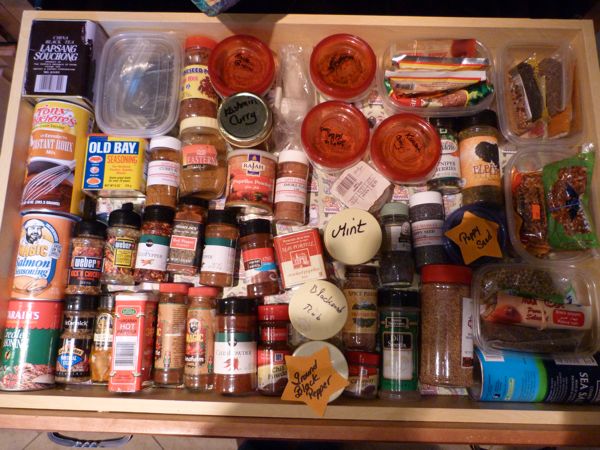
Three years in Pensacola has given me time to think about the spice drawers. They frustrated AdventureMan, and he offered to re-arrange them more logically, which almost started a nuclear war in our family dynamics. Logically, he is now doing more cooking and he should have more input, but it is really, really hard for me to give up territory in the kitchen, and, well, AdventureMan can be a little bit aggressive in amassing his territory.
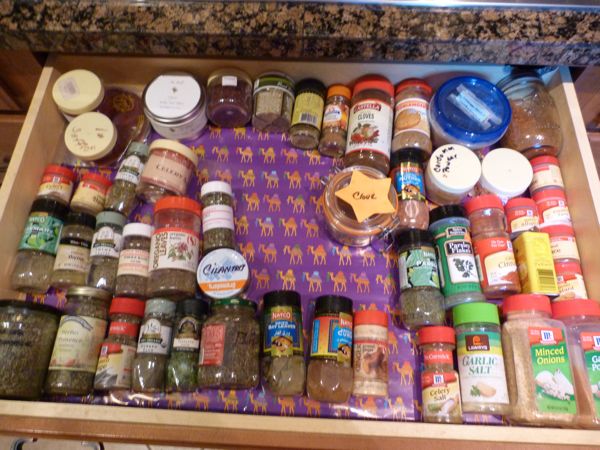
But, after three years, I agree, the spice drawers are not working, and one reason is I got this state-of-the-art rubberized drawer liner, but it crept back and made the spices rise up and then the drawers got stuck open or closed and it really was frustrating.
Yesterday, I had the house to myself and because I hadn’t planned it, it wasn’t something I dreaded, I just started fiddling with the spice drawers, just editing, getting rid of some really old stuff, combining duplicates and . . . well, because I hadn’t put it on the “To Do List” it was fun. So much fun I decided to go all the way, take out the annoying rubberized liner and have some fun.
I’ve always loved great drawer liners. Good thing, huh? I’ve lined a LOT of drawers. There are some wonderful liners out there, but I love to use wrapping paper. Every now and then I’ll see a design I love, or something that thrills my heart. Because I moved so often, I knew it wasn’t a lifetime commitment, so I just had fun with it. And that is what I did yesterday.
I have some great wrapping paper I brought back that I went to a lot of trouble to get, flying down from Kuwait to Doha to go to the American Women’s Bazaar in November, where I knew there would be the vendor from Saudi Arabia who makes and sells these quirky, whimsical Arabic-themed wrapping papers that I loved to use for all the Christmas gifts and house-guest gifts I would take back three or four times a year. I hand carried several rolls of this paper back to Kuwait, then shipped it back to Doha when we moved back there, then shipped it again, carefully protected, to Pensacola when we retired.
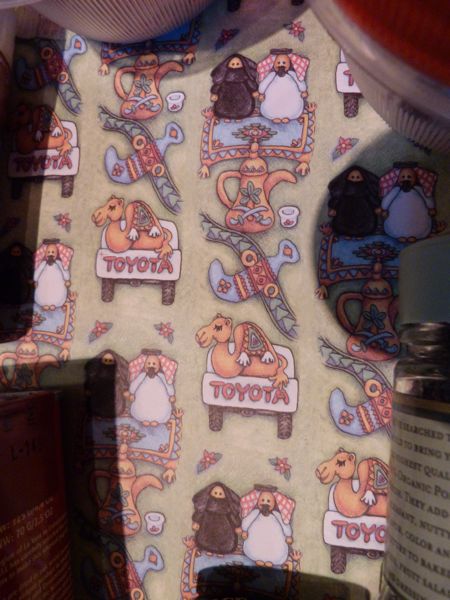
Here in Pensacola, however, it seems less and less relevant. I don’t use it to wrap my Christmas gifts like I used to because the gifts are no longer exotic surprises from the Middle East. And I still have a lot of this paper, paper which delights me, but for which I have no real purpose . . .
So I decided I would use it to line my spice drawers. I can see it every day and smile. It is making itself useful, and two or three years down the road when it is worn and needs replacing, I can find something else that delights my heart.
When AdventureMan comes in, I am just finishing up. I warn him, because he, like me, likes to know where things are.
“What’s the logic?” he asks, and I think “this is one of the reasons I married him; he knows to ask the most pertinent question.”
“Here are whole spices, seeds, peppers,” I tell him as I indicate a section, “and here are exotics, spices from the Gulf and Jordan and Tunisia. This section is grill mixtures and all kinds of chili powders and Creole mixes. Over here you have aromatics and baking spices, and here are the Italian and French herbs. The last section is onion and garlic powders and salts, flavored salts of all kinds, and frequently used multi-use herbs.”
He totally got it. 🙂
Processed Food vs Real Food Experiment
LOL, this is hilarious, and also frightening when you think what might be in the preserved sandwich.
There are four videos showing food non-deterioration, by Melanie Warner, author of Pandora’s Lunchbox: How Processed Foods Took Over the American Meal
Recent Comments
ExpatAlien on What Country am I Living … intlxpatr on Yellowstone: Old Faithful to C… Michelle on Yellowstone: Old Faithful to C… Cathy on No Grown-Ups in Charge intlxpatr on Waiting for Snow Wikipedia Donate Button

Amazina


Early Voting in Florida


 Here There and Everywhere