Very Strange Weather in Qatar and Kuwait
As I was writing a post, I noticed – Holy Cow! It’s 113°F / 45°C in Doha. Checking Kuwait, Holy Moly, it’s 115°F / 46°C. That is Holy Smokes Hot, that is hot hot hot, right?

Thirty seconds later, I look – and my little weatherunderground sticker says it’s “only” 106.9 °F / 41°C in Doha, and “only” 106.9°F / 41°C in Kuwait.
How amazing is that – the temperatures dropping so fast, in BOTH Kuwait and Doha, within seconds?
Peninsula Editor Responds to Qatar’s Advisory Council
From today’s Peninsula:
Advisory Council’s opinion surprising
Web posted at: 6/11/2009 6:45:39
Source ::: THE PENINSULA/ BY Khalid Abdul Rahim Al Sayed
Khalid Abdul Rahim Al Sayed
The Emir, His Highness, Sheikh Hamad bin Khalifa Al Thani, declared the media free in the country in 1995 and with the launch of Al Jazeera, we have shown the world that Qatar is a country which allows different opinions to be heard.
We were, therefore, quite surprised by the outcome of a debate in the Advisory Council on Monday, which called for stringent punishment to be given to Qatar-based journalists who write against the ruler, national security, religion and the Constitution.
First of all, all the above subjects are already protected by the Qatari Law. Second, we must remember that there is a provision in the Qatari Constitution which allows its revision at a future date by the next generation. We have a saying in Arabic which roughly translates into English as ‘one generation cannot control another’. By raising this debate, the Advisory Council has made a generalised conclusion without addressing the issue directly.
We find it strange that the Advisory Council, made up of Qatari nationals, has this kind of opinion when His Highness The Emir has given us the freedom to voice our opinion on issues freely and in a fair manner.
We are concerned as a Qatari newspaper that if these restrictions are imposed on Qatari journalists, they will be afraid to report news and events as they see them. Needless to say, the impact on foreign scribes here would be too deterring.
I am an avid reader of local newspapers. None of them has ever written anything objectionable against the four subjects referred to in the Advisory Council debate. The Advisory Council, I am afraid, has failed to address the issue of irresponsible journalism. Other nations will find it strange that a country which advocates media freedom through the establishment of Al Jazeera will condone such practice. If there is any misuse, it shouldn’t be generalised. Doing this would soil Qatar’s image in the world.
Given this backdrop, we urge the authorities concerned in Qatar to come up with a new Media Law that would protect the freedom of our journalists, especially as the old press legislation was enforced years ago, in 1979.
Khalid Abdul Rahim Al Sayed is the Editor-in-Chief of The Peninsula
Kuwait Paper Dump Badge
I admit it. When I saw Ansam on her new blog had a Kuwait Paper Dump certificate, I was green with envy! I knew I didn’t deserve one – I have only contributed once, and even my contribution wasn’t truly acceptable because I don’t have a fax, so I took photos and sent them to Abaid.
Yesterday, when I opened my e-mail, I almost cried. He sent me a badge for my support and positive mentions. Honestly, it is the best badge I have ever sported on Here, There and Everywhere.
I’m from Seattle, remember, where recycle cans are issued, and sorting and recycling is mandatory. I’m also from the hippie generation, the back-to-the-earth movement that springs up every now and then, you know, make your own paper, make your own soap, grow your own tomatoes and basil. That my son, his wife, my sisters and my nieces and nephews and this new generation of Kuwaitis are all into saving the environment – it is just icing on my cake. And the candle on my cake is the new badge. You can see it here, and you can see it for the rest of the life of the blog under Kuwait Paper Dump in the Blogroll.

For those of you not familiar with the website, 3baid gathers up paper from around Kuwait from restaurants, service providers, Kuwait resources, events, etc. and publishes them all in one place, eliminating our need to keep track of all those papers. When you want to know what the possibilities are from a particular restaurant, you will find the menu there. When you want to know who has mushroom pizzas, you can click on “mushroom pizzas” and find out which places have them. It is an amazing public service they provide at Paper Dump, and they do it entirely as volunteers, serving the community.
I am so totally honored. Thank you for the badge. Thank you, too, for your quiet, persistent leadership in the Kuwait environmental/Green movement.
The Richest Man in Town
This is from AOL’s WalletPop, their how to manage money series.
As I read through this very American tale of building wealth, I wonder . . . how does this apply cross-culturally? Do you think the richest men in the Gulf follow these guidelines? The richest in the EU? The richest Asians? Indians?
Review: The Richest Man In Town by W. Randall Jones
Tom Barlow
May 20th 2009 at 7:30PM
Filed under: Wealth
Some people dream of getting rich. Instead of dreaming, W. Randall Jones, author of The Richest Man In Town, set out to talk to the richest person in each of the 100 U.S. towns he visited for his study to see what commonalities he could find. From these interviews he found 12 attributes that ran rich within these mostly self-made magnates. Apparently, while God could get by with 10 commandments, the rich need a dozen; thus the subtitle, The Twelve Commandments of Wealth.
Let’s get those 12 on the table first (I paraphrase)-
Don’t seek money for money’s sake
Find your perfect niche
Be your own boss
Get addicted to ambition
Be early
Execute or get executed
Fail so you can succeed
Location doesn’t matter
Don’t compromise your morals
Embrace selling
Learn from the best and the worst
Never retire
I have the last one nailed.
Book after book about wealth and entrepenuership seem to boil down to these same points, usually derived from the same inductive reasoning that seems to underlie this book; watch what rich people do, then figure out the principles behind their success. What is missing, imho is the study of failed businesspeople. I often wonder if, for every multimillionaire that followed these commandments, there might not be a hundred who followed them yet failed. Everyone talks to the winners, but until you study the losers, it’s hard to know which commandments are the important ones.
Although the “secrets of the millionaires” genre is well mined, Jones does a particularly deft job of weaving the stories of a hundred people within the commandments structure. His many years of experience as a writer and founder of Wealth magazine are evident in the book’s engaging storytelling and brisk pacing. Many writers of similar books have taken the easier person-by-person approach,
which gives the reader more of the personality of the people interviewed but obscures the insights that the readers seek. Kudos to Jones for taking the hard road.
He also manages to land some very colorful subjects to interview, such as Hartley Peavey of Meridian, Miss. who told him “I believe that life is a test to see how much BS you can take.” Ron Rice of Daytona Beach was fired from six teaching jobs in eight years. Phil Ruffin of Wichita wants his tombstone to read, “This is his last real estate deal.”
For readers who are curious about how the richest man (Jones is apologetic about the use of the word man, but sadly, the richest person in most towns is one) in town came by his fortune, this book may well be best in class. And these commandments leave you free to covet all you want.
Joy in Kuwait

You might think it is the inner feminist in me that is rejoicing, and you would be only half right. The Kuwait elections brought me a lot of joy, for many reasons. First, as an equal opportunity woman, you need to know that I believe women are every bit as capable of veniality and stupidity as men, and that not being in power has only meant not having equal opportunity to abuse that power. And then – you take a look at the women who were elected – smart women. Capable women! Not-your-shy-shrinking-violet kind of women! Women who know how to organize, how to delegate, and how to discuss and resolve differences.
FOUR women! Four highly educated women, who inspired droves of supporters not only to vote – but also to campaign.
Across the board, it struck me as a very sober election. It was as if people thought this might be their last chance, and they took their vote very very seriously. In the fifth district, voters crossed tribal lines, broke with rigid alliances.
Here are three conversations that caused me to rejoice.
On election day, my good Kuwaiti friend, a guy about the same age as AdventureMan and I, leaned over and said “My dear, today I voted for a Shiite woman! This is Kuwait! This is the REAL Kuwait, where no-one ever cared, Shiite or Sunni, no-one ever asked, we all worked together. I voted for her because I thought she was the best candidate.”
He’s been educating me on Kuwait ever since we got here. He grew up about a block from the big food court down at Mubarakiyya. I was just glad to know he had voted – he had seemed so dejected, so hopeless after the last election, I wasn’t sure he would even give it one more try. Something inspired him. Something gave him the courage to hope just one more time.
I talked with a young friend who was active in the campaign of a winning candidate. Well, really mostly SHE talked, and I just listened with a big grin on my face. It doesn’t even matter who she campaigned for, this woman was PUMPED! She had committed, she had engaged, she was on the phones and on the campaign lines and her candidate won! I could hear the transformation in her voice – this is the Kuwait of tomorrow.
At an earlier time, she had told me that the decisions were all made by “elderly” people (meaning people over 40, I think, people like me!) and that young people were getting discouraged, waiting for their turn. All that was gone, as I listened to her voice. She knows she can make a difference NOW in Kuwait. I could not stop grinning. I think she is one of the leaders of tomorrow. 🙂
My third Kuwaiti friend said to me “so many of the winners were from good families, but not the big, rich families! This is the first time!” and she said it with sheer amazement. She said “I think we may be on our way to a true democracy!” I was shocked. I never thought I would hear those words, not after the cynicism and discouragement apparent during the last legislature, when many Kuwaits awoke with a shock to the fact that their legislature had been hijacked, their voices stolen. “This is not the real Kuwait” they kept assuring me after the last election, as they watched in shock and horror as the newly elected MP’s postured and promised and promised “grillings” but did nothing for the population who had elected them in terms of basics – housing, roads, electricity/energy, or groundwork for future development.
My joy is in the renewal of their spirit. It’s not my election. But oh, I dance with joy for your joy, Kuwait, and I celebrate your commitment to the future.
PS For our non-Kuwaiti readers – early in the election campaigns, one party announced a religious fatwa (edict) saying that it was forbidden to vote for women. I think it outraged people badly enough to create a huge backlash.
Sorry Jesus, I’m Packing Boxes
Our priest in the Anglican congregation is a truly inspired preacher. He knows how to get your attention, and then he tells you something really important.
Yesterday (Yes! I was listening!) he was talking about the importance in our spiritual life of community. While, in Christianity, we have a tradition of worshiping privately and in solitude, one of the things Jesus said over and over was to take care of one another, “feed my sheep”, that we are to be known to the outside world by the way we love one another, and the practice of that kind of brotherly love must be done in community. He gave one example, marriage, as an opportunity to show God how much you love him by loving and taking good care of your spouse, that we are to serve him by loving one another.
Pastor Andy gave the example of the Alcoholics Anonymous community, where they have buddies who can be called any time, night or day, when a crisis comes up and there is temptation to drink. He was saying we all need someone we know we can count on, and encouraged us to find spiritual buddies.
On the way out the door, I heard him ask the guy in front of me if he had plans for lunch. When we shook hands, he asked me the same question, and I laughed and said “Yes, I am packing boxes.”
As I was on my way home, it was like that old light bulb went on in my head and I thought “Oh no! That was a test!” Andy was just telling us we need to be part of a fellowship, we need to visit with one another in relaxed conditions, we need to know one another so we know who we can count on! It was as if Jesus invited me to lunch, and I said ‘Sorry, I have to pack boxes!’
I FLUNKED!
So I started beating myself up (in my mind) about flunking. The good thing is, as you pack boxes, it’s kind of like exercise, once you have two or three done, good endorphins kick in and you feel better about things. Eating lunch helps, too.
Andy Thompson, at the Anglican Church – St. Paul’s Kuwait – is smart, committed and hard working, and also a lot of fun. This post is for you, Andy, to show you that your sermons really do make a difference, even if you don’t see it, and that we take what you say home with us, and mull it over, and, hopefully, like a tiny seed planted, if we nurture it, it will bear fruit. 🙂
Eliot Pattison: Prayer of the Dragon
As you can see, I am into some serious reading. Not heavy reading, but books like carrots – I am the donkey, plodding way, packing my boxes, sorting, weeding, throwing out – it is time consuming, and it is pitiless work. I need the promise of a great excape at the end of my day to keep me going.
Prayer of the Dragon was a GREAT carrot. I like all of Eliot Pattison’s Inspector Shan Tao Yun series, set in Tibet. In his very first book, we meet Shan as he is still in the Tibetan prison camp, imprisoned for exposing corrupt officials in China. He learns a huge appreciation, in prison, for a different way of thinking, and his treasured companions become the Bhuddist monks with whom he is imprisoned. If you want to read this series, you can read any book as a stand-alone, but it helps to read them in order, starting with The Skull Mantra. The Chinese eventually free Shan; they find him useful – as long as he is not exposing corruption in the Chinese bureaucracy. He is free on parole; he lives with the sword over his head. At any time, if he crosses an important person, he can be sent back to the merciless gulag.

In The Prayer of the Dragon Inspector Shan finds himself involved in a series of murders on the mountainside, in a small mining village. The village headman has a great scam going, skimming the miners take, charging passage on the mountain trails, and keeping his village hidden from the Chinese bureaucracy.
Here is what I learned that surprised me. There appears to be a connection between the American Navaho nation and the native Tibetans. They share some body-prototype similarities, and they share many symbols and earliest legends. An first-nation Navaho and his niece are exploring similarities, and commonalities, when two members of their party are murdered while sleeping. The Navaho is charged, by the headman, with the death, because he survived although he is covered in blood. It doesn’t make sense, but it doesn’t have to. The headman needs a scapegoat, and he chooses the Navaho.
It is a fascinating read. Here is an excerpt from a conversation Inspector Shan has with the local director of Public Security:
“I know your type so well, Shan, ” Bing said. “God, how well I know you. I was responsible for ten barracks of prisoners, like you – pathetic, morose creatures with no vision, only bitterness about the past. They would sit in reeducation classes and copy out slogans from the little red books like robots, praising the Chairman, reading aloud apologies printed in other books, using someone else’s words. Never a one among them with the balls to stand up and say Fuck the Chairman, screw the Party secretaries, and screw the limo drivers who brought them to town.”
“I tried at first,” Shan replied in a weary voice. “They sent me to a special hospital for the criminally insane.”
“Unfortunately,” Bing said soberly, “you are the sanest person I have ever met.”
AdventureMan knows I love these books. “Do you want to go to Tibet?” he asks me, and I say “No, if I went I would want to hang around with Inspector Shan and his gang of monks, not do tourist things allowed by the Chinese.” These are great reads, Pattison is doing a great job of bringing the plight of the Tibetans to the conscience of his readers, depicting, in graphic, horrorific detail how the Chinese are systematically crushing and obliterating every shred of Tibetan culture, while claiming they are not. I think one of the very worst things they have done is taking over the Tibetan monastery system and corrupting it into something it was never meant to be, a cruel, ugly deformity.
I can hardly wait for the next book to come out. I am on the waiting list for The Lord of Death, yet another book about Chinese bureaucratic corruption and the adventures Inspector Shan has in Tibet confronting and evading all its manifestations.
Breakfast in Schwetzingen
German breakfasts are anything but light. There wasn’t a piece of fruit to be found! We were lucky to be guests at the hotel, because most of the tables were reserved, and people were turned away, even at nine in the morning, the breakfasts at the hotel Cafe Journal are so good.
You could have smoked ham, cold cuts and cheese, too, but we chose not.
Breakfast bread basket:

Yummy condiments:

Fresh orange juice:

Herb and cheese omelettes:

We were astonished – in Germany and in France – that there is absolutely NO SMOKING in any of the restaurants. If you are sitting outside, you can smoke, but we could not believe how well enforced this law is. We had heard about it, but frankly – the French not smoke in restaurants? We would not have believed it possible! Germans are very law-obeying peoples, but the French??? Never, not once, did we see a person smoking in a restaurant. It was amazing.
Somali Pirate Code of Conduct
Ever since I was a kid, I found pirates interesting and exotic and adventurous. The truth is probably that those olden day pirates had bad teeth, scurvey – they had lived hard and fast and they probably aged quickly.
Of course, today we have Johnie Depp and the Pirates of the Caribbean series, which makes pirating look mostly like a lot of fun.
So a year or so ago, I wrote a post on the Somali pirates, and got an interesting response. It got me started looking more deeply into what is going on with the pirates there.
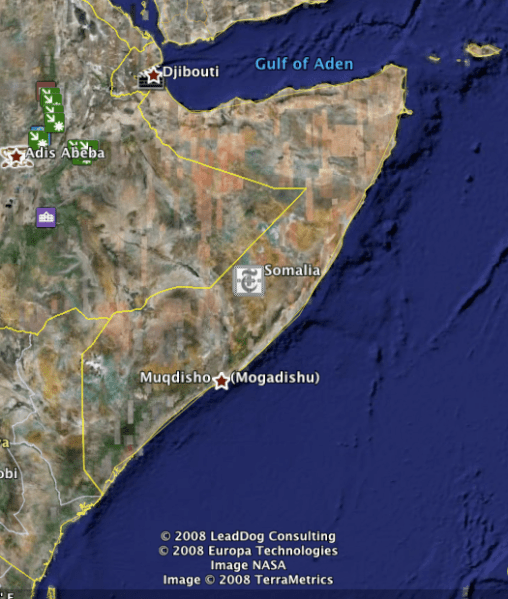
Yesterday, in the paper was an article about the Somali pirate code of conduct – with fines and punishments for infractions. I found a complete article in Newsweek, April 27.
What is bothering me now is that the one pirate captured by the US when it retook the captured US freighter (in the report filed by one BBC reporter) said he was just a frail teenager, a kid, and that the pirates had already agreed to surrender when they were blown out of the water. You could hear her attempting to control her rage.
I know it is a thorn in the side for all shippers and freighters and passenger ships who travel through waters anywhere near to Somalia. And yet . . . I kind of ask myself what the options are? Somalia is a for sure failed-nation. They haven’t been able to cobble together a government for over twenty years. Deadly, long lasting poisons have been dumped along their shoreline – and major industrial nations paid Somalis a pittance to dump their wastes there. Their coastline has been overfished. Families are starving, live is – or was – dismal.
I think it is pretty cool that they developed an enforceable – and enforced – code of conduct.
Here is the article from Newsweek:
It was a hit with the U.S. public, but president Obama’s decision to authorize the Pentagon to kill three Somali pirates who took an American sea captain hostage sent shudders through the world’s shipping and insurance industries. Because the pirates are motivated chiefly by money, maritime experts say, they have—at least until now—taken good care of the crews they hold captive. A document retrieved from a ship hijacked last year contained a “list of written rules” of conduct pirates had to follow, according to a maritime security expert who requested anonymity when discussing sensitive material. The document included a series of “punishments” to be imposed on any hijacker who struck a hostage.
Shipping companies and insurers are far more likely to fork over large ransoms if they have confidence that their personnel and cargo will be released unharmed, and while the scourge of piracy has been disruptive, so far there have been virtually no casualties among innocent people. According to estimates, there were 111 pirate attacks off the Somali coast in 2008; 42 were successful, resulting in the capture of 815 seamen. As of last week, according to one estimate, all but 37 had been released, and two had died—one reportedly of illness. Experts say the rate of attacks has increased sharply this year, and “the more [authorities] shoot, the more the pirates will shoot back,” says Tom Wilson, a Somalia analyst for the British consulting firm Control Risks.
Protecting the 23,000 merchant vessels sailing annually near the Horn of Africa would require a naval fleet of at least 60 ships, according to U.S. government and private experts; the existing international antipiracy task force has about 20. And attacking the Somali coastal villages where the pirates are based could potentially radicalize generations of Somalis. “That would be a 19th-century solution,” says Neil Roberts, a marine insurance expert with Lloyd’s Market Association in London. Industry experts say the only solution to piracy is the creation of a viable Somali government back on dry land.
According to industry officials, ransom demands have ranged as high as $25 million—but in most cases they are negotiated down to about $2 million to $3 million, and insurers then pay out claims to the shipping companies. As hijackings have increased in frequency, pirates have become fussier about how their money gets delivered. Initially, said a shipping-industry source who also asked for anonymity, ransoms were often handed off to shady Somali expats in places like Kenya. After Kenyan authorities cracked down, the pirates began insisting on airdrops via parachute into the ocean near Somali coastal villages, where they have cash-counting machines ready. Until the U.S. opened fire, one of the pirates’ biggest headaches had been dealing with the sheer volume of money they’ve collected. Last year, according to an insurance-industry official, one pirate’s boat capsized because he had overloaded it with cash.
I found this on National Post dated April 30, 2009; it is a copy of what I had read in the newspaper:
MOGADISHU — A mobile tribunal, a system of fines and a code of conduct: the success of Somali pirates’ seajacking business relies on a structure that makes them one of the country’s best-organised armed forces.
A far cry from the image conveyed in films and novels of pirates as unruly swashbucklers, Somalia’s modern-day buccaneers form a paramilitary brotherhood in which a strict and complex system of rules and punishments is enforced.
They are organized in a multitude of small cells dotting the Indian Ocean and Gulf of Aden coastline. The two main land bases are the towns of Eyl, in the breakaway state of Puntland, and Harardhere, further south in Somalia.
“There are hundreds of small cells, linked to each other,” Hasan Shukri, a pirate based in Haradhere, told AFP in a phone interview.
“We talk every morning, exchange information on what is happening at sea and if there has been a hijacking, we make onshore preparations to send out reinforcement and escort the captured ship closer to the coast,” he explained.
Somali piracy started off two decades ago with a more noble goal of deterring illegal fishing, protecting the people’s resources and the nation’s sovereignty at a time when the state was collapsing.
While today’s pirates have morphed into a sophisticated criminal ring with international ramifications, they have been careful to retain as much popular prestige as possible and refrain from the violent methods of the warlords who made Somalia a by-word for lawlessness in the 1990s.
“I have never seen gangs that have rules like these. They avoid many of the things that are all too common with other militias,” said Mohamed Sheikh Issa, an elder in the Eyl region.
“They don’t rape, and they don’t rob the hostages and they don’t kill them. They just wait for the ransom and always try to do it peacefully,” he said.
Somalia’s complex system of clan justice is often rendered obsolete by the armed chaos that has prevailed in the country for two decades, but the pirates have adapted it effectively.
Abdi Garad, an Eyl-based commander who was involved in recent attacks on U.S. ships, explained that the pirates have a mountain hide-out where leaders can confer and where internal differences can be solved.
“We have an impregnable stronghold and when there is a disagreement among us, all the pirate bosses gather there,” he told AFP.
The secretive pirate retreat is a place called Bedey, a few miles from Eyl.
“We have a kind of mobile court that is based in Bedey. Any pirate who commits a crime is charged and punished quickly because we have no jails to detain them,” Mr. Garad said.
Some groups representing different clans farther south in the villages of Hobyo and Haradhere would disagree with Mr. Garad’s claim that Somalia’s pirates all answer to a single authority.
But while differences remain among various groups, the pirates’ first set of rules is precisely aimed at neutralizing rivalries, Mohamed Hidig Dhegey, a pirate from Puntland, explained.
“If any one of us shoots and kills another, he will automatically be executed and his body thrown to the sharks,” he said from the town of Garowe.
“If a pirate injures another, he is immediately discharged and the network is instructed to isolate him. If one aims a gun at another, he loses 5% of his share of the ransom,” Mr. Dhegey said.
Perhaps the most striking disciplinary feature of Somali “piratehood” is the alleged code of conduct pertaining to the treatment of captured crews.
“Anybody who is caught engaging in robbery on the ship will be punished and banished for weeks. Anyone shooting a hostage will immediately be shot,” said Ahmed Ilkacase.
“I was once caught taking a wallet from a hostage. I had to give it back and then 25,000 dollars were removed from my share of the ransom,” he said.
Following the release of the French yacht Le Ponant in April 2008, investigators found a copy of a “good conduct guide” on the deck which forbade sexual assault on women hostages.
As Ilkacase found out for himself, pirates breaking internal rules are punished. Conversely, those displaying the most bravery are rewarded with a bigger share of the ransom, called “saami sare” in Somali.
“The first pirate to board a hijacked ship is entitled to a luxurious car, or a house or a wife. He can also decide to take his bonus share in cash,” he explained.
Foreign military commanders leading the growing fleet of anti-piracy naval missions plying the region in a bid to protect one of the world’s busiest trade routes acknowledge that pirates are very organised.
“They are very well organized, have good communication systems and rules of engagement,” said Vice Admiral Gerard Valin, commander of the French joint forces in the Indian Ocean.
So far, nothing suggests that pirates are motivated by anything other than money and it is unclear whether the only hostage to have died during a hijacking was killed by pirates or the French commandos who freed his ship.
Some acts of mistreatment have been reported during the more than 60 hijackings recorded since the start of 2008, but pirates have generally spared their hostages to focus on speedy ransom negotiations.
With the Robin Hood element of piracy already largely obsolete, observers say the “gentleman kidnapper” spirit could also fast taper off as pirates start to prioritize riskier, high-value targets and face increasingly robust action from navies with enhanced legal elbow room.
They have warned that the much-bandied heroics of a U.S. crew who wrested back control of their ship and had their captain rescued by navy snipers who picked off three pirates could go down as the day pirates decided to leave their manners at home.
I used to read science fiction novels about a diplomat named Retief, I think they were by Keith Laumer. He would find himself in an alien environment with a horrible unsolvable problem and he would find a great solution, where everyone walked away OK. I wish there were a Retief who could negotiate a win/win out of this situation.
Rola Dashti Tackles Sensitive Issues
“Why are you looking so sad?” AdventureMan asked me as we sat down to dinner.
(Sigh) “There are people in Kuwait who don’t believe change is possible, and there is a movement afoot to WITHHOLD their votes as a protest.”
“Why do you care? It’s not your country?”
We call it “falling on your sword,” when a person does something fatal to self, to career, to family or to country, choosing an issue and staking everything on it. Rarely does it pay. The world moves on, life goes on and you are left behind bleeding on your sword.
Withholding your vote gives more power to those who are good at stirring up the rabble with irrational and selfish issues. Those who get the votes are those who make grandiose – and general – promises, those who refuse to be held accountable.
If you are a person who cares deeply about Kuwait – Please, do not withhold your vote. Do the hard work of listening to the candidates, and exploring their reputations for truthfulness and accountability. Think beyond your own needs, think of the greater good of Kuwait.
This is from today’s Al Watan; a candidate tackling some very sensitive issues, bringing them out in the open.
Ghenwah Jabouri
Staff Writer Al Watan
KUWAIT: In pursuit of winning enough ballots to secure a seat in the National Assembly, Dr. Rola Dashti, who is believed to be a potential woman candidate, delivered an emotive speech Monday evening to announce her parliamentary agenda if elected.
Dashti touched on sensitive and delicate issues which aroused the emotions of the audience, resulting in heated engagements later on in the evening.
Dashti mainly focused on family related issues, germane to women issues.
In an attempt to recoup the cynicism manifested by citizens toward parliament, Dashti urged the audience to not ponder on who is wrong or right.
“We need to move on; seeking to blame parliament, government, MPs, etc., is not going to serve us justice. We need to focus on developing Kuwait, rather then pointing our fingers at the wrongdoers, ” Dashti said.
She stressed that whether it was the parliament, the government, or the citizenship who committed the mistakes is not important; “what is important is that we learn from such mistakes.
“Individuals who have the cultural habituate of blaming, attacking and are cynical, do not want to move toward the future; rather, they want to travel back in time. Allow me to give you an example: last year, thirty percent of citizens in my constituency did not cast their ballot. These people are like you and me: their heart is burning for Kuwait, and they observed nothing positive, and they are in immense suffering.
“They gave up on hope and decided to ultimately not vote. Had half of them voted (nine thousand), ten people who would have succeeded in the Third Constituency elections would have determined a better fate for those that abstained from voting.” She further lamented that society should consider first and foremost Kuwait, and that the children, the youth and coming generations “deserve this.”
Dashti, further illustrating her point, noted: “For example, if soـandـsoـperson does not vote, who is going to protect their rights and so forth?”
Dashti stressed that Kuwait is experiencing “tumultuous times” and that the country is on the verge of a major collapse.
“Kuwait cannot afford political arguments and political confrontations and commotions. It is in our hands to save Kuwait. If we take responsibility, vote and call on those who did not vote to cast their ballot, change might have a chance of survival.
“Hundreds of people did not cast their votes because they lost their confidence in parliament. However, many families are suffering, and so, it is pivotal to acquire each and every vote; we need to give back what Kuwait bestowed us with.
“We need to give a little back to those who lost their lives to protect Kuwait during the Iraqi invasion in 1990; many people lost their lives during the invasion who fought for our liberty. Women were raped and families were torn apart. We need to give back a little, we need to continue to believe, and fight for our children and future generations,” Dashti added.
“Does Kuwait not deserve for us to stand in the cue for fifteen minutes to cast our votes?”
Talking more about women”s issues, Dashti noted that there are many things that need to be considered where women’s issues are concerned.
“Women have many burdens that they shoulder; the divorced, the widowed, the one who is married to an expatriate, and housing for women, all are issues the Kuwaiti woman suffers from.”
She pointed out that not every family is living happily, “although this is something I would love to achieve.
“Today, the Kuwaiti family has to wait fifteen years for (government) housing. Where will the divorced woman go during this lengthy period?
“This woman could be my sister, my mother, or our daughter; where does she go?”
Dashti noted that the law stipulates that a woman who is over forty years of age and both of whose father and mother are deceased and is unassisted by a guardian “is entitled to receive a housing allowance.”
“However,” Dashti said challenging the law, “what about other women in a somewhat parallel situation where the father is deceased but is not receiving allowance from her guardian ـ what can she do? Shall the woman take her guardian to court to sue him?
“Why does the law in pursuit of helping women insist on punishing them, even insulting her?
“This law is one of many that are flawed and need to be amended,” Dashti stressed.
She further said that “neither Kuwait or the people of Kuwait can tolerate empty words and useless slogans. Today we need to put many things on the table and take action in tackling them.
“Let”s now have a look at the children of some Kuwaiti women who are married to expatriates: we need to look at their educational, health, and employment and social needs and treat them with justice, like other children are treated who have Kuwaiti fathers.
“This is their country, why are we abusing them? These are our cousins, our brothers and sisters, and have to be treated with equality when their mother is a citizen of the country.”
She further added that citizens have been “fooled” enough; “vote for someone who knows what they can do, someone who can save us from the financial burden.” Touching on an issue that has become central in campaigns, Dashti noted, “We should not allow people who do not understand finance to tamper with the budget.
“Nor should we allow individuals who are responsible in dealing with the financial budget to use the financial budget for personal gains.”
“Why should we follow those who damage our financial budget, and steal the money of the public? There is another option: choose someone who will protect the public financial budget and enhance the budget!”
Dashti further stated that there is an “internal bleeding” in the country and that she is not going to offer an “aspirin to silence your pain to only kill you” as a member of parliament.
“I will opt for a long term alternative and choose to cure you.”
During the question and answer session following her address, particularly passionate but enraged voices emerged, where some expressed their frustration with the old faces of parliament.
One woman said she was “fed up with the old faces and that it is about time new faces took over.”
She further said, “We have been deceived, fooled and cheated by the old MPs,” and stressed, “We are suffering and are in desperate need of MPs who will promote social and financial justice.
“Kuwait has hit a plateau and something”s got to give,” she noted.
Another woman made a remark about Dashti”s strong foreign accent.
She noted: “Society often criticizes you (Dashti) for speaking in a Lebanese accent.
“I don”t understand why you come under scrutiny for such a reason. After all, people have television at home and typically watch the satellite channels, all of which speak in foreign accents.”
The woman”s comment was understood to be a positive comment, where she welcomed Dashti”s candidacy and believes that the candidate will be a forceful vehicle towards righteous deeds toward society.
Another frustrated woman spoke about property and about people whose houses was taken from them by the banks. She said that she read an article in Al Watan newspaper that there are many withdrawn properties and houses for sale.
“The inheritors are crying blood and are traumatic, because their houses are being taken from them. Other citizens are staying in small apartments after they used to occupy villas,” she said.
Another woman who was virtually in tears pled to the people “to opt for change and choose new faces, even if the new members of parliament will do nothing.
“The former parliament has tormented and killed me; please, give your votes to new faces, in the name of God, please, vote for change.”
Recent Comments
intlxpatr on Shampoo Ginger tigerbutterya0c5ff1d… on Shampoo Ginger intlxpatr on British Soldier Kidnapped, Esc… John on British Soldier Kidnapped, Esc… intlxpatr on British Soldier Kidnapped, Esc… Wikipedia Donate Button

Amazina


Early Voting in Florida


