Be Thin, Cut Cancer Risk
Be thin to cut cancer, study says
This is from today’s BBC Health News
Even those who are not overweight should slim down if they want to cut their risk of cancer, a major international study has claimed.
The World Cancer Research Fund carried out the largest ever inquiry into lifestyle and cancer, and issued several stark recommendations.
They include not gaining weight as an adult, avoiding sugary drinks and alcohol, and not eating bacon or ham.
Everyone must also aim to be as thin as possible without becoming underweight.
People with a Body Mass Index (BMI), a calculation which takes into account height and weight, of between 18.5 and 25, are deemed to be within a “healthy” weight range.
But the study says their risk increases as they head towards the 25 mark, and that everyone should try to be as close to the lower end as possible.
Recommendations include:
Limit red meat
Limit alcohol
Avoid bacon, ham, and other processed meats
No sugary drinks
No weight gain after 21
Exercise every day
Breastfeed children
Do not take dietary supplements to cut cancer
Comment: This is not a new study, but a compilation based on the committee looking at hundreds of studies done on correlations of weight, diet and cancer risk. The troublesome issue to me is that these are things we have been told, things that we KNOW, and things we aren’t doing anything about.
Hey! The weather is great! Let’s go for a walk!
(You can read the rest of the BBC article here.
NY Cover Giggle
I can’t help it, this just gave me such a giggle.

From The New Yorker
The cartoon refers both to an American senator, Larry Craig, caught playing footsie with the cop in the next stall in the Minneapolis airport and Ahmadinajad playing footsie with nuclear power.
YouTubers had a field day with Craig’s guilty plea, and then reversal. Here is one:
Kuwait Protection
Kuwait is the only country I’ve lived in where people caught taking bribes or embezzling public funds get to keep their jobs. I understand in one ministry, a man is still in a job where he was convicted of embezzlement, and no one knows how much he has to pay back because they are still discovering all that he embezzled. He gets to keep his job?
This is from the Arab Times.
KUWAIT CITY: The Kandari tribe elders are planning to meet the Prime Minister to discuss the ‘sacking’ of the director of the Mubarak Al-Kabeer Security Department, reports Al-Watan daily.
The elders considered the ‘discharge from duty’ as exaggerated punishment particularly since the ministry had earlier praised his efforts and promoted him to a higher rank just a few months ago.
Earlier it was reported two directors of security departments in the Mubarak Al-Kabir and Capital governorates were being investigated for their illegal activities. The daily also added some senior police officials, whose identities were not given, were involved in alcohol trafficking and gambling.
The daily went on to say one of the directors from the Mubarak Al-Kabeer governorate was getting commission from an Asian man to run a gambling den and other illegal activities.
Interrogations revealed the director dispatched a police officer to a bank to change quarter dinar banknotes for KD 10 notes and a counter clerk at the bank branch said it was not the first time he had changed the quarter dinar notes for the officer. The quarter dinar notes were reportedly given to the officer as commission by the Asian.
In another incident a policeman was caught selling booze using police vehicle and when the uniformed man was arrested and reported to the director, the director is said to have overlooked the incident and refused to take action.
Moreover, it was also reported pressure had been applied on the arresting officer to withdraw his case.
It was also reported an Asian was caught selling alcohol and during interrogation he admitted to working for the director of the Capital governorate.
The man was reportedly deported from the country immediately which aroused suspicion. Sources say the man was deported because he was a key witness in the case.
Now this one is from The Kuwait Times
KUWAIT: MP Dr Faisal Al-Muslem recently urged the First Deputy Premier, Minister of Defense cum Minister of Interior Sheikh Jaber Al-Mubarak Al-Hamad Al-Sabah to order the formation of a special committee to investigate recent press stories concerning a Mangaf house that had been allegedly turned into a ‘night club’ for Americans where they had liquor and various illegal stuff. Informed sources noted that special body guards had been placed in the house’s surroundings to prevent any of the neighbors from approaching it.
This is a social disaster that needs immediate attention,” stressed Al-Muslem noting that such an act was a clear violation of Kuwait’s sovereignty, religious beliefs, and constitutional rights to have a peaceful and secure residence.
In view of the fact that no security forces had been able to interfere and stop such violations, Al-Muslem wondered about the identity of the apparently high-ranking security official who had been protecting the owners of the night club. Al-Muslem also urged the Minister of State for Housing Affairs Abdul Wahed Al-Awadhi to form a specialized team to check on whether the owner of the night club had any right to violate the rules of the Housing Public Authority.
Furthermore, Al-Muslem suggested providing all expatriates (both newcomers and those renewing residency visas) with special brochures clarifying Kuwaiti social and religious concepts and asking them to show full respect and observation to them.
it gave me a smile thinking special brochures are going to change behavior. Somehow, this “nightclub” is getting protection. And people caught delivering alcohol in their cars are receiving protection. As long as these practices, contrary to Kuwaiti social and religious concepts are protected, what is a special brochure going to change? Some of them will drink and (ahem) do other illegal activities because they can! Because someone is providing protection for these activities.
Fighting Men in Dresses
One of those strange items from The Arab Times.
Police have referred seven women who were involved in a fight on Al-Istiqlal Street to a police station, reports Al-Anba daily.
However, when the women were taken to a police station it was discovered four of them were men dressed in women’s clothes.
The daily did not give more details.
“The first rule of the fight club is don’t talk about the fight club.” He he he he he he he.
WoooooHooooooo CO-OP!
It’s hot. It’s humid. I drive to the co-op for a few small things and holy smokes! I see a spot to park, and it’s near the door! I start to park, and I see the handicapped sign, so I go around again, and find another spot about a million miles away. It’s ok, the walk is good for me.
But as I pass the handicapped spots, a car drives in and out pops a perfectly non-handicapped young woman and her two non-handicapped, fully capable daughters!
If looks could kill!
I don’t want to waste a lot of my time on resentment, so I move on.
This week, here is what I see at the co-op:

Wooooo Hoooooooo! Handicapped spots RESERVED for those who have special needs! Blocked off, so as not to tempt the rest of us! Wooooo HOOOOOOOOO, way to go, Co-op!
Accident Aftermath
This time the crunch was different. This time, the initial BLAM crunch was followed by a heart-sickening series of crunches. I was on the phone dialing 777 even before I got to the window.
They have lovely women working for emergency services now, women who can stay calm and switch languages easily. Just hearing her voice calms me down as I report the accident, tell them to send an ambulance. The upside down car door is flipping open, and people are running to help the victim out. It’s a woman, and she is beautiful. She is also bleeding, and once they get her out, she is very still, too still.
The traffic police call me back and I tell them where the accident is, but thank God the woman is still on the phone and when he doesn’t understand, she fills in efficiently and accurately.
It takes them 21 minutes to arrive. The traffic police send one car, and on a busy street, they all gather around the woman and stare. The MOI also send a car. Not one of these police set up any kind of traffic control, cars on both sides of the road are stopping, people come running, just to look.
The ambulances take 22 minutes. When they leave, there are no sirens. I don’t think she survived. The medics appeared knowledgeable and efficient.
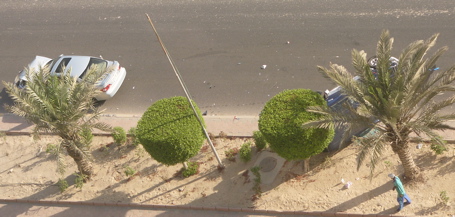
It’s the aftermath that bothers me now. On the ground, they left all the medical waste.

The last thing the medic did as he got into the ambulance was to throw his bloodied gloves on the ground:

And then . . .the traffic cops left! There are two wrecks on one of the busiest thoroughfares in town, and no protection from the next speeding car! The wrecks are in the fast lane!
Don’t get me wrong. You know how I feel – police, ambulance medics, firemen – they are all heroes in my book. They risk their lives every day for the common good. The save lives, and they take pride in what they do.
They need a little training in accident management. When there is an accident, there needs to be a priority on getting there fast, and controlling the crowd, and routing traffic by efficiently. The medics need to pick up their waste.
There needs to be after-accident care, ensuring that someone stays until the wreckage is removed.
I had a house guest once who sat in my window and said “Oh my God. Oh my God! Oh! Oh! Oh!”
There are three separate u-turns we can see. Each one is another accident just waiting to happen. When the turn lanes back up, sometimes some people start honking, putting pressure on the lead person to make an unsafe turn. Please – resist the pressure. Take your time. Wait for a safe, truly safe interval.
Please, my friends, do one thing for me. Please, buckle your seat belts. And please, buckle up your children, put them in car-seats made to protect them, teach them from an early age to buckle-up, help it become so automatic they don’t even think about it.
“Can You Help Me Get to Bangladesh?”
I have a dilemma. I don’t know how to handle it.
I carry small bills with me, because I am often asked for money. I keep it so I always have money to give to the people who help me get groceries to my car, the people who deliver propane, people who give good service – I don’t mind. Part of the blessing of having work is the obligation to pass that blessing along to others. We know that God Almighty knows where there is real need, and he moves us to give where giving is needed; he gives us a little shove in our hearts.
Yesterday, a well dressed man with a steady job told me he wants to go home to Bangladesh to see his parents. Could I help him?
I understand about aging parents. I’ve made a few trips myself. I totally understand what it is like to be far away when crises strike. We have always had funds set aside for emergency trips, and, by the grace of God, we haven’t had to dip into those funds often.
“How can I help you?” I asked.
“I need money,” he responded.
Money for a ticket to Bangladesh – that’s not small change. Along with that thought is the thought that were I to “help” this man, word would get around, and I would have many people knocking on my door for serious help with funds.
I don’t think he wants the kind of help I could easily give – showing how to set up an account and contribute to it faithfully, letting the money accumulate until you reach your goal. I don’t think he wants to do what my parents did with me, and what we did with our son – matching funds. (You save up half and we will match your savings dollar for dollar.) He wants an outright big gift.
In our church, we sing a song that says “Freely, freely, you have received, Freely, freely give.” I’ve always believed that with all my heart, it is like a magnified spiritual Locard Exchange Principal especially for blessings; what you have received you give, and it comes back to you doubled, tripled, magnified.
We tend to give larger charitable donations to organizations that make the money work hard – Medicins Sans Frontiers, African schools, our church fund. I consider a ticket to Bangladesh a relatively large charitable donation, large especially for one individual, one individual who is well employed.
So I ask for your prayers for clear guidance. I am not feeling that shove in my heart.
Christmas for Expats
By the time October hits, it is almost too late for many expats to be thinking about Christmas. Packages have to be in the mail in time for a December 25th delivery, and that can mean different things in different countries.
Even travel and delivering the gifts yourself has become more challenging; one of the changes 9/11 made in all our lives is that we can no longer travel with wrapped gifts; baggage inspectors must be able to look at everything we pack, which means a mad scramble on the arriving end to get everything wrapped and labled before delivery.
We all face that universal problem – what to get for the people who already have everything?
So I sent to Find Me a Gift.
Here were some of their suggestions:
Become a Lord or a Lady – Buy Yourself a Title
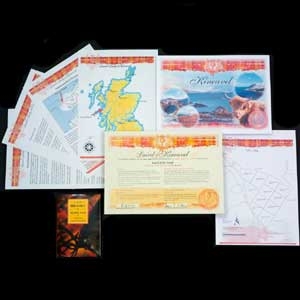
Name a Star

Neiman Marcus always has outrageous and imaginative gifts for the people who have everything, and this year one of the catalog items is a Top Stars Orchestra concert for only $1,590,000.00
(Their 100 year anniversary catalog is a must-see, even if just for the giggles)
And, of course, here in Kuwait you can make a donation of time, goods or money to Operation Hope – Kuwait to help Sheryll Mairza with her 2007 goal of feeding and providing winter clothing for 7,000 poor laborers here who are unprepared for the cold winter to come.
Community
Jeremiah is one of the great prophets of our Old Testament. The Wikipedia article on Jeremiah tells me that his name in Arabic is Eremiya. The problem with being a prophet is that not everyone wants to hear what God tells you to say. Jeremiah spent time in jail for telling people what they didn’t want to hear.
God told Jeremiah, “You will go to them; but for their part, they will not listen to you”.
Today’s reading in the Lectionary has this verse from Jeremiah. My blogging friend Kaos asked me why I care about Kuwait when I am only an expat, passing through. When I saw this verse in the reading for today, as the Jews are being sent into exile in Babylonia, I knew for myself the answer:
From Jeremiah 29 7But seek the welfare of the city where I have sent you into exile, and pray to the Lord on its behalf, for in its welfare you will find your welfare.
Wherever we find ourselves – it’s up to us to make the best of our lives. There are reasons for every expat to care about Kuwait and what happens to Kuwait. Kuwait belongs to the Kuwaitis, and 67% of the population is “expat” or “visitor” or “laboror”(whatever lable you choose.) As long as we live and work side by side, we are a community, diverse and conglomerate, but all wanting to live in peace as best we can. Kuwait belongs to Kuwaitis, and the lives we lead as individuals make up a community that belongs to us all.
Visitors, Not Residents?
From yesterday’s Arab Times:
The General Immigration Department of the Ministry of Interior is studying a proposal to replace the term ‘resident’ — the status given to expatriates working in Kuwait, reports Al-Watan daily. The daily added this has been done to ‘fight’ attempts by international organizations asking Kuwait to grant citizenship to expatriates who have been working in the country for a long time. Meanwhile, a reliable source said ‘visitor’ will replace the term ‘resident’. The source also said the General Immigration Department has stopped receiving applications for self sponsorship after noticing an increasing number in applications over the past few months. According to knowledgeable sources the Assistant Undersecretary for Citizenship Affairs Major-General Sheikh Ahmad Al-Nawaf has issued instructions to take into account the demographic structure of the country while issuing work permits because Kuwaitis account for only 33 percent of the population compared to 67 percent expatriates.
Calling all us guest-workers “visitors” is just a dumb idea. Call us guest-workers, call us workers, but if you call us “visitors” then you run into problems with folks who are just coming in for a VISIT, i.e. visitors.
I have always preferred being a resident. When I come into Qatar or Kuwait and all the lines are long except the GCC lines, I can always take a chance that the guards will think I am married to one of you when I step into the GCC line. If the person at the desk says I am in the wrong line, I can always look confused and say “I am a resident!” It has worked – well, most of the time. 😉
This issue is hand-in-hand with the school issue. Times are changing, old traditions are not being observed, and the blame is falling on foreign influences. It’s kind of like that train has left the station – if you want to go back to old ways, you’ll have to get rid of automobiles, computers, mobiles, supermarkets, and most of all, that demon of all forces of modernization – television.
The Taliban managed to reinstate old traditions, and in doing so, to take Afghanistan right back to the stone age. It was not just the women who suffered – men who didn’t want to wear beards, men whose hair was too long, men who wanted to listen to music, men who wanted to discuss politics – all were punished, some were killed.
The real challenge here is how Kuwait, as a modern nations state with a lot of money, is going to move with the modern world, not against it.
Recent Comments
intlxpatr on Shampoo Ginger tigerbutterya0c5ff1d… on Shampoo Ginger intlxpatr on British Soldier Kidnapped, Esc… John on British Soldier Kidnapped, Esc… intlxpatr on British Soldier Kidnapped, Esc… Wikipedia Donate Button

Amazina


Early Voting in Florida


