“But We Have Final Exams!”
Kuwait Times, June 9, 2007
Three Teens Held for Rape Attempt
A source revealed that three 18 year old boys were walking on a pedestrian path in Mishref and they saw a 22 year old girl walking on the same path. The teens then tried to rape the girl, but she started crying and she tried to call police. Then the youths assaulted her. She recorded the plate number of the gang’s two cars then the teens got afraid and tried to fabricate a story and called police before her. When the police came, and saw the girl and the boys, she started crying and told police that they sexually assaulted her. First, they denied but following an intensive investigation they confessed and started BEGGING THE POLICEMEN TO RELEASE THEM BECAUSE THEY HAD EXAMS. (emphasis added by blogger) The police filed a case and referred the boys to the authorities.
My comment: You do the crime, you do the time. You have exams? What do you think you have done to this young 22 year old gal’s life??? You terrorized her!
And bravo to the judge in California who put that little ferret Paris Hilton back in jail, too.
Light a Candle Against Child Abuse
A good friend sent me this link: Light a Million Candles.com which is against child abuse. The don’t ask your address or for any donations – just that you light a candle and support their cause.
Kuwait Machine Gun?
From yesterday’s Kuwait Times.
Three Shot at by Teenagers
Two Kuwaiti citizens and a bedoon man were transferred to Jahra hospital after three teenagers shot them using a machine gun and ran away. The victims stressed they did not know why the assailants, who were travelling in a Japanese car, shot at them. The case is under investigation.
My comment: My husband, when I told him about this story, says that most people don’t know the difference between a machine gun and an automatic weapon, which can fire a series of shots in rapid succession. Somehow, the distinction fails to reassure me. Teenagers – children – with automatic weapons?? Where are these weapons coming from? How did they get their hands on them?
There has been a big to-do over Muna Al-Fuzai’s tongue-in-cheek article about Kuwait and subsequent defense of what she said.
Guys: Stop talking and listen for a change. Yes, Kuwait is a wonderful place, she is not saying differently. She is Kuwaiti and she loves Kuwait. She has a right to say what she sees and hears, and she has taken a courageous and controversial stand. You don’t have to agree with her, and she still has a right to her opinion. Did you notice? Her column is OPINION.
You are also entitled to your opinion.
First – Take a deep breath. Ask your mother, your wife, your sister, your maid – how safe she feels taking a taxi alone at night – if that is even an option. Ask her if she is careful where she walks. Ask her about her experiences with the police. Ask her if she will go to any ATM, or only “safe” ones.
As I see it, Kuwait has a huge bachelor population, and few options for these bachelors. Women here know to travel in groups, to be watchful, and to be wary. There is a problem.
And it’s not women, it is also children. It’s unthinkable.
Couple this with weak regard for the law and weak enforcement of the law, and you will see that there is a problem.
And where did these kids get automatic weapons? ? ? These problems are all connected to weak law enforcement, lack of respect for the law and a sense of entitlement. Entitled to take an automatic and shoot people? ? Entitled to TAKE sex from someone smaller and weaker than you? ?
It’s not just lack of respect for the law, it’s the law of the jungle.
Emergency Lane Rant
It’s not your arrogance that drives me totally crazy, as much as the fact that your arrogance puts us all at risk.
First, you are driving too fast, and weaving between cars. Yep, it looks like fun, but you’re cutting it a little close, brother. And if you are young and have all your wits about you, you might do OK, but if you are tired, if you are drinking, if you are on drugs, your reactions are impaired and so is your judgement.
We can’t help but bear witness to your carnage along the sides of the road. It’s not like they sit there for weeks. The tow trucks haul them away, and they are replaced overnight with new, bloodier, twisted wreckage. The highways are littered with your crumpled bumpers, and shards of your shattered windshields.
Worse, as traffic piles up, and ambulances arrive to try to save those who survive the impact, no-one moves aside! When time is critical, when seconds can literally mean life or death, the ambulances are stuck trying to get past cars which won’t move out of the way.
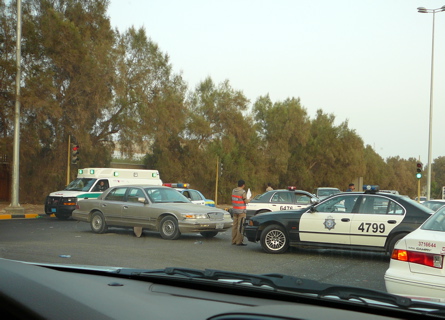
As for the rest of us, stacked up along the highways, waiting for the wreckage to be cleared, it doesn’t help to have these drivers zipping by in the EMERGENCY lanes. Hello???? What part of EMERGENCY is so hard for you to understand?
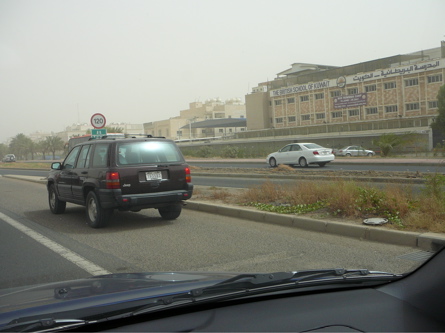

You’re not special. We all have places we need to be. And – you are in the emergency lane. You endanger us all.
Google Street View Peeping?
I found this article on AOL, but it is from the New York Times originally.
Google Zooms In Too Close for Some
By MIGUEL HELFT, The New York Times
The New York Times
OAKLAND, Calif. (June 2) – For Mary Kalin-Casey, it was never about her cat.
Google said it takes privacy seriously and considered the implications of its service before it was introduced. “Street View only features imagery taken on public property,” it said.
Ms. Kalin-Casey, who manages an apartment building here with her husband, John Casey, was a bit shaken when she tried a new feature in Google’s map service called Street View. She typed in her address and the screen showed a street-level view of her building. As she zoomed in, she could see Monty, her cat, sitting on a perch in the living room window of her second-floor apartment.
“The issue that I have ultimately is about where you draw the line between taking public photos and zooming in on people’s lives,” Ms. Kalin-Casey said in an interview Thursday on the front steps of the building. “The next step might be seeing books on my shelf. If the government was doing this, people would be outraged.”
Her husband quickly added, “It’s like peeping.”
Ms. Kalin-Casey first shared her concerns about the service in an e-mail message to the blog Boing Boing on Wednesday. Since then, the Web has been buzzing about the privacy implications of Street View — with varying degrees of seriousness. Several sites have been asking users to submit interesting images captured by the Google service, which offers panoramic views of miles of streets around San Francisco, New York, Las Vegas, Miami and Denver.
On a Wired magazine blog, for instance, readers can vote on the “Best Urban Images” that others find in Street View. On Thursday afternoon, a picture of two young women sunbathing in their bikinis on the Stanford campus in Palo Alto, Calif., ranked near the top. Another showed a man scaling the front gate of an apartment building in San Francisco. The caption read, “Is he breaking in or has he just locked himself out?”
Google said in a statement that it takes privacy seriously and considered the privacy implications of its service before it was introduced on Tuesday. “Street View only features imagery taken on public property,” the company said. “This imagery is no different from what any person can readily capture or see walking down the street.”
You can read the rest of the article on AOL MOney News by clicking here.
My comment: I am a huge fan of transparency, so you might think this new ability wouldn’t bother me. But the transparency I favor is transparency of business and government transactions, not people taking in my behavior in my own house! I am also a huge fan of personal privacy, and while a street view that just shows my cat in the window wouldn’t be alarming, it tells me that photos shot at night, which would show the interior of my residence, are also possible, and that thought troubles me very much.
Our homes are our castles! If my husband wants to walk around in his underwear (or less 😉 ) and I want to wear my nightgown all day when I am working on a special project, honestly, it is not YOUR business, nor anyone else on the internet! Do you want photos published, taken of you unaware in your own house? This capability is terrifying!
Competitive Family Values
Even within national cultures, there are family cultures. You don’t really think about it when you are a kid, you think all families are like your family. It isn’t until you get older that you understand just how unique – even quirky – your own family is.
In our family, we were bred to be competitive. We started early, with simple card games and board games. We swam on swimming teams, we competed for grades. Doing well, doing our best was expected of us.
And then, we turned around and did it to our own children!
We used to have big family reunions in a small town along the Oregon beach. We stayed in an old complex, where there were two large units that shared a deck, and then several small cabins. The very social parts of the family shared the two large units – my mom and dad, and her brother and his wife – and the rest of us had the cabins, one to each family, althought the kids roamed from cabin to cabin – our children have always had the freedom of belonging to one great tribe!
Daytimes would be full of adventures – not everyone doing the same thing, but smaller groups having dodge-boat competitions, groups going on shopping expeditions to nearby towns, hiking in the parks, having some beach time – jumping the amazingly high waves in the amazingly cold Pacific ocean.
Around 5, people would start to gather on the big deck in preparation for dinner. Dinner might come out of the kitchens, or we might order food in, but once dinner was out of the way, the BIG competitions would begin.
Every year there was a huge hearts tournament, and a Liar’s Dice tournement. The family took these very seriously, from oldest to youngest, everyone entered, everyone competed. We took it so seriously that we had trophies that would be engraved with the winner’s names and passed along from year to year. We took it so seriously that sometimes there would be injured feelings when someone lost. Everyone wanted to be the winner, and in a family full of people used to winning, feelings ran high.
Giving up needing to win all the time has been seriously hard. There are still times when I am in a situation where I feel the adrenelin start pumping and I have to stop myself and say “Do you want to win this battle or do you want to win the war?” i.e., like chess, sometimes you have to sacrifice a pawn to achieve a greater victory down the road. Do I need to win every arguement at the cost of losing a friend? Do I need to win at the cost of my community?
I also think needing to win takes its toll in one’s health – when I allow myself NOT to need to win all the time, I feel calmer, more serene, and happier. I can’t help but think that being calm, serene and happy are probably good things to be in terms of health. Competition gets your heart beating faster, pumping through the veins, but can also take it’s toll in bad eating, bad sleeping and bad exercise habits.
My parents did a good thing encouraging us to be our best, to seek personal excellence and to strive for personal achievements; I honor them for that. When it comes to winning, however, I want to stop and count the cost before I proceed full steam ahead.
What does your family value? What attributes did they encourage you to develop?
Rare Case of Lying
In today’s Kuwait Times is an article I found utterly hilarious – WHAT WAS HE THINKING????
Exam Fraud Discovered
Kuwait: The director of a secondary school in Khaitan discovered a first of a kind cheating case wehre an unidentified young man sat for a Quran exam instead of one of the school students, reported Alam Alyawm, noting that being unable to identify the young man and suspecting him, the director requested an ID to verify his true identity.
Sources said that the examined young man confusingly showed a driving license belonging to the student he had substituted. Realizing his fraud had been discovered, the young man fled the school leaving his exam paper and driving license behind.
Upon contacting the real student, he told the police that his driving license had been missing and that he had lodged a report with the police in this regard. Further investigations are in progress.
Uh . . . yeh, I bet they are. 🙂
I am sorry, this just gives me such a giggle. Cheating on a Quran exam? ? ?
Before I wrote the above, I had to do a lot of thinking . . . like the bible, our book, does not say “thou shalt not lie” as one of the 10 commandments, neither is it one of the two great commandments in our New Testament (love the one true God before all others, love your neighbor as yourself), so what does the bible say about lying? Fortuntately for us, there is Google, and the internet, and you can click on What the Bible has to say about lying if you want the specifics. It reminded me that Satan is called “The Father of All Lies.” *shiver* That’s good enough for me.
There are several places in the bible, however, when even good people lie, like because they are scared or because they don’t want to face the wrath of God. One is Sarah, when the messengers tell her she is going to have a baby and she is something like 80 or 100 years old and she laughs, she can’t help it, Sarah laughs. And God says “Sarah! Are you laughing at me! I can do anything!” and Sarah lies and says “oh no, Lord, I wasn’t laughing.”
Since the Bible and the Quran spring from the same spiritual source, I am willing to bet the Quran also has a few things to say about lying and dishonesty, and fraud, and how you can’t fool Allah or cheat him.
Anyone out there willing to step up and educate us?
Al Qaeda Fed Up With Ground Zero Construction Delays
If I knew how to embed video replays in my blog, I wouldn’t have to make you click on Al Qaeda Fed Up with Ground Zero Construction Delay to watch a video interview with two critics of the Ground Zero construction so far, saying almost identical things, but with a twist, oh what a twist.
The video interview is hysterically funny. Give yourself a grin for the day. It’s from one of my favorite websites: The Onion.
Cat Meat Rumors Refuted (Ho ho ho ho ho)
Front page of todays Kuwait Times is this article:
KUWAIT: A ministry of Commerce official denied rumors that a local restaurant has been closed for selling cat meat. According to Ali Baghli, assistant undersecretary for commercial supervision affairs at the Ministry of Commerce, no violation has been registered against the Arabic restaurant in the Jahra governate as of yet. . . .
My comment – So here is what we know for sure:
A ministry official says the restaurant has not been closed for selling cat meat.
He says no violations has been registered AS YET.
He does not say the restaurant was not selling cat meat; he is saying the restaurant was not closed for selling cat meat.
What was interesting, is that both the Kuwait Times and Arab Times, when they reported this cat meat restaurant closing, said that because of connections in the government, this restaurant was unlikely to stay closed.
It is not unlike Make This Case Go Away where two youths are caught with a maid they have abducted and raped, they fight the arresting officer and bite him on the hand, they confess to what they have done . . . and no violation is registered, because the police officer is pressured by his superiors to drop the case.
It’s not like your next schwarma is guaranteed not to contain fresh cat meat. It’s only guaranteed not prosecuted.
If I sound angry, I am. Police and law enforcement officials are supposed to protect the public – that’s you and me. When the system is broken so badly that laws are not enforced against the transgressors, and worse, when courageous policement are punished for doing their job, it is a very very sorry state of affairs.
And I am convinced that God has a very special place in hell for those who abuse the trust the public places in them.
I sure wouldn’t eat any schwarma in Jahra.
Recent Comments
intlxpatr on Shampoo Ginger tigerbutterya0c5ff1d… on Shampoo Ginger intlxpatr on British Soldier Kidnapped, Esc… John on British Soldier Kidnapped, Esc… intlxpatr on British Soldier Kidnapped, Esc… Wikipedia Donate Button

Amazina


Early Voting in Florida


