Ultrametabolism and Kuwait Diet
I used to be thin. Really thin. Actually, I have been really thin several times in my life, but, *sigh* no longer.
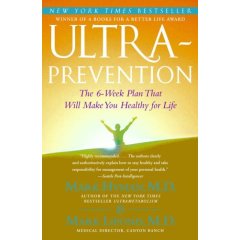
This morning as I was picking up my e-mail, this review on AOL caught my eye. Dr. Mark Hymon is one of the AOL Wellness Coaches, and he has written two books, one called Ultrametabolism, about using your built in genetic strengths to lose weight and maintain the weight loss naturally, and one called Ultraprevention about foods to eat (and not to eat) to contribute to overall wellness and good health.

If you’ve been reading me for a while, you will know that I can be a little cynical.
What I like about Dr. Hymon’s approach is that it makes sense.
Diets that totally eliminate foods you love just aren’t going to work. Give up pasta for the rest of your life? I don’t think so. But what Dr. Hymon asks us to do is to eat mostly non-processed, or minimally processed foods. He says that the processed foods have components that the body doesn’t even recognize as food, and that’s why after eating things like Twinkies, Mars bars, packaged crackers, etc. we still feel hungry – our bodies don’t recognize what we have eaten as food.
Here is what Dr. Hymon suggests (this is from the AOL Health and Fitness section):
How to use what you eat to tell your DNA how to slim you down and live a healthier life.
Day 1. Clean out your cabinets, refrigerator and freezer. Get rid of packaged items filled with processed fats and sugars. Check the lable – if it says “hydrogenated oil” or “high fructose corn syrum” get rid of it.
Day 2. Go shopping for whole foods. Find a farmer’s market in your area for fresh produce and schedule visits in your calendar weekly or biweekly over the next few months. At the grocery, choose items from the “perishable perimeter” of the store, instead of items in the center aisles where processed foods lurk.
Day 3. Change your oil! Throw out old oils, which can become rancid quickly. Replace vegetable oils like safflower and canola with extra-virgin olive oil and make it your primary oil for cooking and salad dressings.
Day 4. Visit a health food sotre. Leave there with 10 new items you’ve never tried before. Bulk-purchase whole grains, legumes and nuts. Look for new whole grain cereals, breads and snacks without processed additives, fats, sugars or preservatives. And remember: just because it’s in a health food store, doesn’t mean it’s good for you. Read the labels of any packaged foods you buy.
Day 5. Choose Eggs! Choose organic eggs farmed with omega-3 fats. Make yourself a spinach omelet for breakfast. Eggs are a good source of protein. You can enjoy as many as eight a week.
Day 6. Become wild about fish. Find a local fishmonger or educate yourself by talking to your local grocer. Or learn more about which fish are best to eat by visiting www. ultrametabolism.com. Print out a primer to bring with you when you shop.
Day 7. Prepare some healthy snacks for when you’re on-the-go. Pack a small zipper bag with a few servings of almonds or walnuts. One handful equals a serving.
Day 8. Don’t go thirsty. By now, you’ve tossed the sodas. Bring out the blender and learn to make high protein, no sugar smoothies. Experiment with crushed ice and fresh fruits. You can even make frozen nut cubes by soaking nuts overnight, blending them and then freezing them with a bit of water or milk in ice cube trays. Your smoothie will be creamy and full of good fats and proteins.
As I did his online mini-seminar, I found myself thinking “everything this Dr. Hymon is recommending is the way Kuwaitis USED TO eat.” And I also found myself thinking what a wealth of opportunity we are living amidst, here in Kuwait, where we can go to any market and buy FRESH fish, really fresh, right off the boats, in the local fish markets. We can buy fresh meats, and fresh vegetables, lots of them grown right here in Kuwait. We can buy fresh eggs. even fresh chicken when not under threat of Avian Flu. Kuwait is a paradise for exactly this kind of diet.
Not only do we have access to fresh, locally grown foods, but the cost is so much less than processed foods on the shelves. He is talking about lentils and grains commonly available here in those big sacks, down in the Souk Mubarakiyya, as well as in the co-ops and the Sultan Centers.
This isn’t anything new, eating low on the food chain, eating fresh, but it does strike me as a diet that particularly works in Kuwait, and a kind of diet that you can live with for the rest of your life, because it doesn’t make changes in your life that you can’t live with. Like he does tell us to give up soda, one of the main contributors to obesity in the world today. As you get older, carbonated beverages aren’t that hard to give up because they also give you heartburn, so just another reason to steer clear of all those unwanted calories the body can’t identify as food.
He didn’t say anything about chocolate . . . but I have ordered both books from Amazon.com hoping that the dark, semi-sweet, barely processed chocolate that I love will also be “just what the doctor ordered.” Meanwhile . . . I hear a spinach omelet calling my name!
Djinns and Jewish Grandmothers
Two small nuggets from today’s Kuwait Times.
Black ‘Jinn’ Terrorizes Bayan Neighborhood
Kuwait: Terrified Bayan residents were unable to sleep last night from fears of being victims of an unknown creature, which attacked many of them.
Police said that they received several reports from residents of the creature, which they dubbed as ‘jinn.’ One complaintant said that the ‘jinn’ attacked his wife while she was praying; another said that his daughter had been attacked and strangled, while a third said that someone kept consistently knocking on his bedroom window but none claimed to have actually seen the ‘jinn.’
(Police captured a “ferocious black ape”.)
I love this second article:
Jewish Grandmothers Patrol Checkpoints in West Bank
Jerusalem: Hanna Barag remembers the day an Israeli soldier called her a Palestinian whore. She was 67 and she had just joined Machsomwatch, an all-women group set up to curb human rights abuses at military checkpoints in the West Bank. “It was at the Qalandia checkpoint between Jerusalem and Ramallah,” Barag said, “and the remark at first struck me speechless. But then I asked him two questions: ‘Do you really think a woman my age has a chance at that profession? And would you say what you said to me to YOUR grandmother?'”
The soldier said nothing, but was embarrassed, and when Barag, who was born in Israel and describes herself as a Zionist, returned for another “shift” of watchdog duty a week later, the soldier was there – and apologized.
That was in the early days of Machsomwatch, set up in 2001 by three Israeli women who were alarmed by a spate of reports of beatings and abuse of Palestinians at the hands of Israeli soldiers manning checkpoints. . .
You can read the rest of the story here.

Little old ladies in tennis shoes, volunteering to guard the guards one night a week. . . changing their world.
Even After All this Time – Latifi
A good book can make your blood race faster. A good book may even require underlines, turned page corners to mark the places you liked the best. A good book may compell you to tell others about it. Above all, a good book is a book you think about long after you have turned the last page.
Some of my best “good books” come to me through Little Diamond, my neice who lives in Beirut. We share a family culture, but even better, we share a wacky sense of humor. There are times we can’t even let our eyes meet in family gatherings, because we are thinking the same thing and can’t afford to laugh out loud.
She recommended this book to me more than three years ago, and I bought it immediately. And then it sat in my “read me soon” pile(s), languishing, unread, until early this year.
Oh, what a treat this book is! Once I picked it up, I could hardly put it down!

The book is autobiographical, and begins in pre-revolutionary Iran, where Afchineh Latifi’s father is a soldier. You see the early years of her life with her sweet, struggling parents, and you feel like you lived in their home with them, the images are so vivid.
As a military officer, though, her father is suspect once the revolutionaries come into power, and her family’s fortunes fail. Her father is arrested. As Latifi’s mother bravely goes from jail to jail, trying to find her husband, her daughters are often with her. Once she finds him, she brings him comfort items – shaving kit, washcloth, etc. so he can maintain a small amount of dignity while he is being beaten and imprisoned. Latifi’s mother was young when this book opens, maybe in her thirties, with two daughters and two sons, and I am totally blown away by the courage it took to persist as her husband was transferred from prison to prison, increasingly brutalized, and then, immediately after the last visit – shot. So immediately that the family heard the shots.
And then the real nightmare begine. The young mother and her family have no income, and her (now dead) husband’s mother claims her house, even though they bought her a house of her own while her husband was alive. Latifi’s Mom never gives up. She gets her daughters visitor’s visas to Austria and puts them in a convent school, and then gets them to America – again on visitor’s visas – where they are forced to camp – for years – with a relative. Literally, years. Their brave mother eventually manages to get herself and her sons out of Iran, and join them in the US.
Their mother is a pistol. She is brave in the face of obstacles that would deter most of us. She never gives up. I am in total awe of her commitment to the survival – and thriving – of her family.
I love this book for two reasons – the first being the strength and courage of this family, and the second being that they immigrated to America. You will hear a lot of Americans who say terrible things about immigrants, and how they take up scarce resources better meant for “real” Americans. Who are they kidding? We are ALL immigrants, in America, except for the Native Americans! This family, their will to succeed, is the story of us all, and what makes the country great. It is still a country where you can work hard, and succeed, and thrive. It’s an every day story in our country, but a story I never get tired of hearing.
Here are some excerpts from the book:
She looked at me as if I were an alien, which in fact I was. “Yes,” she said, “You get a library card and you can borrow as many books as you want.”
“And it doesn’t cost a thing?” I asked.
“Not a penny,” the woman said. “Unless you bring the books back late. Then we charge you a late fee.”
This was news to me. There were libraries in Tehran to be sure, but we had never frequented them. Mom would come home every two or three weeks with armsful of new books, and we would devour them hungrily. We were much too spoiled to share books with anyone.
The librarian processed my card on the spot. I couldn’t believe it. It felt like the biggest gift of my life. . . . . By the end of the summer I discovered a whole new world. Books. Words. Stories. I got in touch with my inner geek. Reading was not only exciting, it offered escape. When I was reading, my other life didn’t exist. There were days when I didn’t even think of Mom.
Her Mother was still in Iran at this time, and she and her sister are living with relatives who have loud arguments wondering how much longer they will be burdened with these girls. Finally, the two sisters find jobs, as well as going to school, and save every penny, and get an apartment where they live while putting themselves through university. And, one day, their mother and brothers arrive. Life changes. They all live together again.
“It’s almost Norouz,” she said. “Or have you forgotten?”
I had indeed forgotten. She was referring to the Persian New Year, which on the Gregorian calendar falls in late March. About two weeks before the start of Norouz, many Persians take part in something called ‘khane tekani,’ which literally means ‘shaking your house.’ You will see people painting their homes, washing their carpets, sweeping out their attics, cleaning their yards. One could say that it is a form of spring cleaning, but that is only a very small part of it. In Persian ‘no’ means new, and ‘rouz’ means day. The last Wednesday of the year is known as ‘chahar shanbeh suri.’ At dusk, with the cleaning over, people light small bonfires and sing traditional songs, and those who can manage it are urged to jump over flames. Fire, too, is seen as a cleansing, purifying agent: it burns away all the negative things in one’s life – the bad habits, the misfortune, the sorrows. It’s all about cleanliness: clean house, clean soul, new beginnings.
On the “new day” itself, people focus on family and friends, and for the next two weeks there will be much visiting back and forth. In each house, one finds a ‘sofreh eid,’ . . . Laid out on this garment, one will find the ‘Haft Seen’ (Seven S’s) comprised of seven items that begin with the letter S. These are ‘sabzeh’ or sprouts (representing rebirth); samanu, a pudding (for sweetness in life); ‘senjed,’ the sweet, dry fruit of the lotus tree (representing love); ‘serkeh’ or vinegar (for patience); ‘seer’ or garlic (for its medicinal qualities); ‘somaq’ or sumak berries (for the color of sunrise); and ‘seeb’ or red apples (symbols of health and beauty. In addition there are candles laid out on the ‘sofreh eid” one for each member of the household. The lit candles represent the goodness and warmth that enter life with the coming of spring.
(For the first time, this year we are invited to a new year’s celebration, and I thank God that I read this book just at the right time, so I will know even just a little of what this is all about. I am excited to see the ‘haft seen.’ )
Something else happened that November that I will never forget: Our family celebrated Thanksgiving for the first time. We loved the whole idea behind the celebration. It wasn’t about religion, and it wasn’t about gifts; it was about people sitting down to enjoy a meal together and acknowledging everything that they had to be thankful for. And we had a lot to be thankful for.
By the end of the book, all four children have graduated from university with professional degrees. This isn’t a spoiler. The book is about the sacrifice, the hard work and the commitment it took to get them there. Even After All This Time is an inspirational book, a book you won’t soon forget, and a book you will want to share with your friends.
Amazon offers it used from $4.67 and in hardcover around $25.
And Happy New Year to my Persian friends.
Internet Phone Blockage
So far, my internet phone is still working. But I can no longer pick up messages; I had a work-around and the work-around is now blocked, too. I still have the connection, but I can’t connect with my internet phone service provider. Hmmmmm.
In Qatar, the problem was solved in less than a week, when ambassadors went to the Emir and protested that the ban on internet phones hurt the entire population. Does the government here understand that Kuwaitis have kids at school in the UK, the US, and are relying on these phone services, too?
My sense is that with the government currently in chaos, no one has the time to focus on this “small” problem. Nor the problem of increasing population and buildings vs. limited infrastructure – roads. water. electricity.
My Kuwaiti friends say that even 20 short years ago, Kuwait was paradise. I believe it, there is so much beauty here, so much natural richness. They say Kuwait was more free twenty years ago.
I know my focus on the internet phone service is selfish; there are bigger problems to be solved. Right now – it’s the one that affects ME!
Record foreclosures hit mortgage lenders
This story is from USA Today and is related to an earlier blog entry on spiraling mortgage foreclosures. The reason it caught my eye is that no-where in the article does it mention that the top two states where foreclosures occurred are Mississippi and Louisiana, the two states most recently hit – and hit hard – by hurricanes. And the reason people are failing to continue mortgage payments are that in some cases, the houses no longer exist and either they had no insurance, or the insurance company found a way NOT to pay up.
This is a big story – the record foreclosures – and evidence how in every society, when borrowing money becomes too easy, people get hurt.
It is an equally big story when the insurance companies don’t pay up. I have been told by the company insuring my Florida house that they will probably not continue insuring me. It is hard to find a company who will insure your house against hurricane damage in Florida.
By Noelle Knox, USA TODAY
The reason many mortgage lenders are in trouble became alarmingly clear Tuesday. The Mortgage Bankers Association said more than 2.1 million Americans with a home loan missed at least one payment at the end of last year — and the rate of new foreclosures hit a record.
The problem is most severe for borrowers with scuffed credit and adjustable-rate mortgages. More than 14% of them were behind on their payments. And the worst is yet to come, the MBA said. At least $300 billion in subprime ARMs will reset this year to higher interest rates. Those borrowers face higher payments and a harder time refinancing.
Blindsided by the number of loans that have already gone bad, more than two dozen lenders have gone out of business or been purchased. New Century Financial, the nation’s second-largest subprime lender, has quit making loans and is edging toward bankruptcy protection.
“There’s been a stunning erosion of mortgage quality,” said Mark Zandi, chief economist at Moody’s Economy.com. “It’s primarily in the subprime market, but the entire market is weakening … and that adds to problems in the housing market, and by extension the broader economy.” Retailers are already feeling the effect, he said, because homeowners tend to spend less when they fear their homes are worth less.
To stem their losses, lenders are ending 100% financing plans, requiring better credit scores and demanding more proof of a borrower’s income. The stricter rules are squeezing first-time buyers, as well as homeowners who want to refinance.
To read the rest of the story, and to see a state-by-state list of mortgage foreclosures, Click USA Today, here.
Kiss the Kuwaiti Police
In the middle of the night last night, I was wide awake. The Qatteri Cat and I watched a police stop outside our window for about an hour.
I am guessing it was a combination traffic stop and training session. There was one guy who would gather the rest together when there were no cars and give additional techniques to the less-experienced traffic policemen. I am guessing, because there is no way on earth I would go out and ask!
Policeing in Kuwait is SO different. These young men are very professional. They were looking for people without driver’s licenses and / or without registrations. They had very cleverly positioned themselves so once the car was on the road, there was no way out but to go through them. Very strategic, very professional.
“So what is so different?” you might wonder, if you live in France, or Germany, or China or the US. “Isn’t that what police do?”
Yes. And no. One of the last people caught in the web was an old man traditionally dressed in thobe and gutra and egal, and he tried to get through by pretending he didn’t see the police. He didn’t have the right papers.
In my country, just trying to get through would get him into trouble.
He had to park, and get out of the car. Then, he went to each policeman and reached out with his right hand to take the policeman’s left arm, then he kissed them, on the nose or on the right cheek, and greeted them, still holding their arm or hand.
And the police treated the old man with deference, and kindness – and firmness. He still didn’t have the right papers. At one point, he pushed a policeman lightly, and the policeman didn’t go ballistic, but he gently pushed the old man back, out of his face. Finally, it was time to move the traffic stop, and they let him go, but I am guessing that, as the Kuwait Times always says “a case will be filed.” It did not look like he was getting off scot-free; the old man looked very unhappy.
I went back to bed happily, thinking how shocked our police would be, how they would react to someone holding their hand and kissing their nose, and drifted back to sleep with a big grin on my face.
Risk Taking Men Found Less Attractive
Risk-taking men ‘not attractive’ from BBC Health News.
Women are not attracted to dare-devil men, US researchers believe.
Men thought the opposite sex would be attracted by risky stunts such as bungee jumping and fast driving, a study of 48 men and 52 women found.
But in contrast, women said it was a turn-off, claiming they preferred more cautious people for partners.
However, the team from the University of Maine in Orono said those who took risks for the thrill were likely to be respected by fellow men.
Lead researcher Dr William Farthing said: “Men thought women would be impressed by pointless gambles, but women in fact preferred cautious men.”
However, Dr Farthing said women were attracted to men with a high-status, so if the risk-taking meant a man was respected by his friends they could then become attractive.
During the research, reported in New Scientist magazine, the young people were all given a series of scenarios to choose from, including saving someone’s life and fast driving.
The participants were asked to decide which they found more attractive.
The majority of women choose an altruistic action, rather than a thrill-seeking scenario.
Dr David Lewis, a member of the British Psychological Society, said in many ways the findings were not surprising.
“Previous studies have show that women are attracted to someone who acts in an altruistic way. Saving someone’s life shows a degree of empathy and sensitivity, and this is an attractive trait in men.
“On the other hand men see risk-taking as a particularly macho characteristic.
“Social norms are important and our society attaches weight to men expressing their macho qualities.
“But I think what you would find is that as men get older, they become less prepared to take risks.
“When you decide to do something you attach a cost-benefit to it, and when men are older the priorities they place on things change.”
Something in the Way She Moves . . .
From BBC Health News.
Attraction ‘determined by walk’
There really is something in the way she moves, according to researchers.
An hourglass figure has long been perceived to be the ideal figure for a woman to have.
But New York University researchers have found that to be found attractive, a woman had to move in a feminine way – swaying her hips.
Men, the Proceedings of the National Academy of Sciences paper found, were more attractive if they moved with a “shoulder swagger”.
The waist-hip ratio has long been thought to be key to Western perceptions of attractiveness, with a small waist and bigger hips the ideal combination.
Marilyn Monroe, and now Beyonce and Jennifer Lopez are famous examples of women with that figure.
Its popularity may be down to media images, or because Western women do not need to have strong and muscular bodies in order to carry out manual labour, unlike women in developing countries.
But the US research suggests they would never have achieved their sex symbol status if they did not move in the right way.
Not just measurements
The team carried out a series of studies involving over 700 participants who were shown a variety of animations and videos of people moving.
Some showed shadow figures, where it was not possible to see if it was a man or a woman, while others obviously showed a man or a woman.
No matter which format was being used, the participants rated women or “female” figures as more attractive if their hips swayed as they walked, while men were more attractive if they had the characteristic shoulder movement.
The research also confirmed the waist-hip ratio assumption, with women’s attractiveness being rated higher if their waist-hip ratio was small and men’s being higher if their’s was large.
But Kerri Johnson and Louis Tassinary who led the research, say their work shows attractiveness is not as simple as the difference between two measurements.
Writing in PNAS, the researchers said: “The body’s shape and motion provoke basic social perceptions, biological sex and gender – ie masculinity or femininity respectively.
“The compatibility of these basic precepts predicts perceived attractiveness.”
The team say their findings only apply to Western cultures, and other societies will judge attractiveness depending on their most prized feminine and masculine traits.
Dr George Fieldman, principal lecturer in psychology at Buckinghamshire Chilterns University College said: “This is quite plausible.
“It’s the movement which attracts, and not just the waist-hip ratio per se.”
He added: “It would be interesting to see what the ideal combination of measurements and wiggle is.”
The Wire
A couple years ago our son started talking to us about The Wire. He always puts us on to really interesting series. The Wire is an HBO series, like Rome
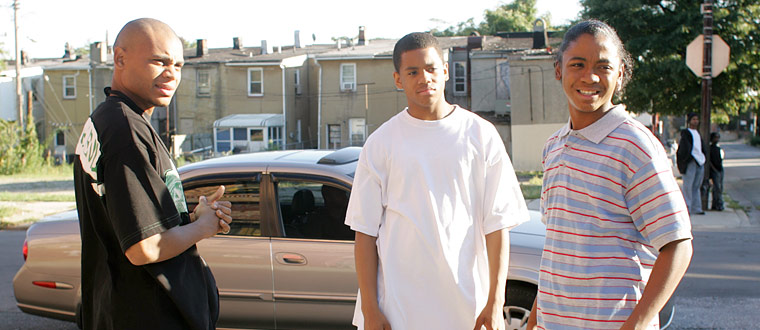
Season 1 starts with a new unit being set up to interdict the drug trade in Baltimore. Season 2 re-unites the team to combat illegal imports and illegal importation of sex slaves out of Eastern Europe and Asia. Season 3, my favorite season of all, is back to the drug trade, but with a difference.
In Season 3, one police district changes the rules. They clean up their neighborhood and send all the drug traders and sex trade workers to one area. The area doesn’t legalize crime – not exactly – but the police leave that area alone. As they explain it to the primary drug dealers, it’s a little like Amsterdam. The homies don’t understand; they call it “Hamsterdam”. I laugh everytime I hear it.
The series doesn’t focus strictly on the police – we get to go inside to watch how the drug dealers organize and divide up the city. We learn how drug lords use big business management modules to streamline their supply and demand, and to stay ahead of the police technology. And they are masters at manipulating the judicial system.
There is brutality. There is sex. There is love and there is betrayal. Sometimes, it isn’t easy to tell who the “good” guys are. There are bad guys who show decent values and there are police and politicians on the take. You get the impression it is probably pretty real stuff. In one season 3 episode, a policeman is shot in the line of duty, and they hold a wake in an Irish pub. They are all very very drunk, and vomiting out in the streets. It isn’t pretty.
And all the same, when each season ends, we can hardly wait for the next one. It is gripping drama, vintage HBO cutting edge production. It keeps you on the edge of your chair. You can read more about The Wire at it’s HBO site, where I just learned that The San Francisco Chronicle calls The Wire “the best television show of the year.”
Internet Phones Giggle
From a teeny-tiny article on page 2 of today’s Kuwait Times:
‘Phone’ Teams Honored
Kuwait: It is important to reduce charges of international calls to prevent illegal activities, Communication Minister Dr. Maasouma Al-Mubarak stressed yesterday.
In a press conference held on the occasion of honoring the team of the ministry’s telephone control department, Al-Mubarak said the department succeeded in cooperation with the Interior Ministry in locating and stopping illegal international calls dealers praising their efforts that continued despite the dangers they faced.
My comment: I’m sorry. I truly mean no disrespect. And at the same time I am having a very hard time trying to maintain a straight face. Oh, these dangerous telephone callers out there!
• Raiding brothels.
• Chasing drug dealers.
• Dealing with arrogant/immature/drunk/drugged drivers.
• Family disputes involving knives and guns.
• Protecting the borders, land and sea.
All of the above can involve serious dangers. One of the axioms in policing is that your most dangerous call is getting between a fighting husband and wife. But the bravery of raiding telephone call centers? Please. Spare me.
You can’t turn back the clock. Technology has given us a whole new way of making international calls. The MOC can spend its resources fighting a numerous enemy – people who want to make reasonably priced phone calls – or they can become a part of the solution, regulating and encouraging growths of new technologies to the greater good of all.

Recent Comments
ExpatAlien on What Country am I Living … intlxpatr on Yellowstone: Old Faithful to C… Michelle on Yellowstone: Old Faithful to C… Cathy on No Grown-Ups in Charge intlxpatr on Waiting for Snow Wikipedia Donate Button

Amazina


Early Voting in Florida


 Here There and Everywhere