Zambia: “What is it like where you live?”
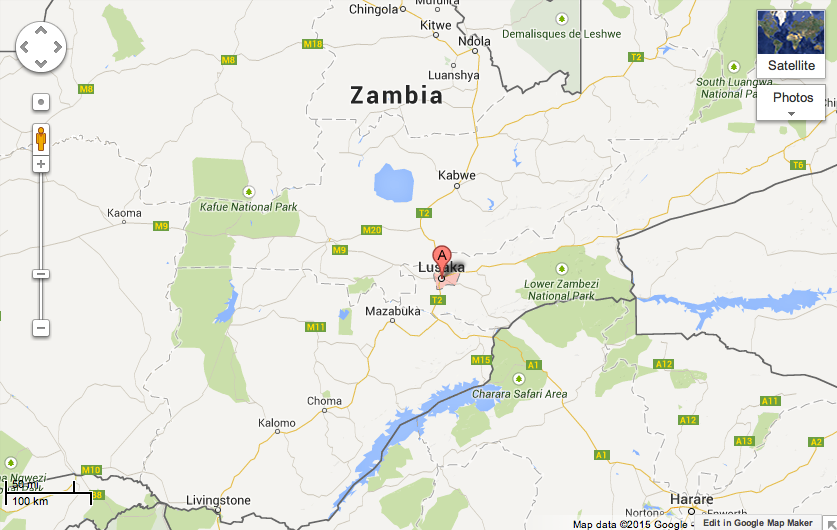
Today the church prays for the diocese of Lusaka, and I smile as I pray for my Zambian friends. We have stayed in Lusaka several times, and visited schools and clinics in remote parts of Zambia. Zambia is an amazing country – something like 70 different peoples and languages, and training in all the schools to help them learn how to live together.
One young Zambian told us that when they come into contact, it is normal to feel strange; the “other” doesn’t speak the same dialect, may be a traditional enemy, is just different, uncomfortable. They are trained to ask “What is it like where you live?” and to listen to the response.
I have used that phrase so many times; it is so useful. When you listen to an “other” talk about his or her life, you connect. You find similarities, and differences, and you learn the joys and challenges of this different life. It is a wonderful question. I used it the first time in Zambia, at a dinner with a lot of people we didn’t know. The woman next to me seemed stuffy, but sometimes that can be shy, so I asked “What is it like where you are from?” and she looked at me with concern and said, very sharply, “What do you mean?” I said “what is your life like, tell me about what you do in a day?” and she said “That is a very odd question!” but she went on to tell me about her life, her country house and her passion for riding. By the end, we were having a great conversation.
May God bless you richly, Zambia. May your peoples live together in God’s peace!
Wanted: Qatari Lady
This morning I found two comments on an old post about high temperatures in Qatar (now deleted). I was offended, but now I offer up this commenter to my Qatari friends. He has included his phone number. I suggest you call him and correct his mistaken ideas about Qatari women.

Note: My site is not a hooking-up site.
219 Girls Remain Missing; Nigerian Villages Beset by Boko Haram
Today, on AOL News, a report on the ravaging of two villages in Nigeria by Boko Haram, with satellite images showing the carnage and destruction as survivors tally more than 2,000 dead. The craven Nigerian Army claims the losses are more like 200.

Meanwhile, of the almost 300 girls kidnapped a year ago by Boko Haram, 219 are still missing. Those who returned, returned by escaping. No one rescued them. The remainder are likely “married” to their captors, slaves to the household and many of them are probably pregnant. To be pregnant by a Boko Haram soldier creates a severe social problem if they are ever freed or rescued – the family cannot marry off an impure daughter. The children of these unions face a desolate future, wherever they are.
The world watches when terrorists wreak havoc in Paris, thousands crush the cretins who kill in the name of God, but no-one lifts a finger to help these small villages in Northeast Nigeria, beset by destructive vermin.
JOHANNESBURG (AP) — Large areas of Nigerian towns attacked by Islamic extremists were razed to the ground in a widespread campaign of destruction, according to satellite images released Thursday by Amnesty International.
Amnesty International said the detailed images of Baga and Doron Baga, taken before and after the attack earlier this month, show that more than 3,700 structures were damaged or completely destroyed.
The images were taken Jan. 2 and Jan. 7, Amnesty International said. Boko Haram fighters seized a military base in Baga on Jan. 3 and, according to witnesses, killed hundreds of civilians in the ensuing days.
Daniel Eyre, Nigeria researcher for the human rights group, said in a statement that the assault on the two towns was the largest and most destructive of all the Boko Haram assaults analyzed by Amnesty International.
The group said interviews with witnesses as well as local government officials and human rights activists suggest hundreds of civilians were shot; last week, the human rights group noted reports of as many as 2,000 dead. The Nigerian military has cited a figure of 150 dead, including slain militants.
Nigeria’s home-grown Boko Haram group drew international condemnation when its fighters kidnapped 276 schoolgirls from a boarding school in northeast Chibok town last year. Dozens escaped but 219 remain missing.

You can find much more information in this article on BBC News/Africa.
Saudi Blogger Flogged 50 Times For Criticizing Muttawa
This man, a father of three, had the nerve to criticize the arbitrary morality police in Saudi Arabia. He wasn’t criticizing Islam; he was criticizing the ignorance and irregular actions of the muttawa. When flogged, he did not make a peep. Another blow to freedom of speech.
Witness: Convicted Saudi blogger flogged in public 50 times
AYA BATRAWYJan 9th 2015 2:08PM
DUBAI, United Arab Emirates (AP) – A Saudi blogger convicted of insulting Islam was brought after Friday prayers to a public square in the port city of Jiddah and flogged 50 times before hundreds of spectators, a witness to the lashing said.
The witness said Raif Badawi’s feet and hands were shackled during the flogging but his face was visible. He remained silent and did not cry out, said the witness, who spoke to The Associated Press on condition of anonymity fearing government reprisal.
Badawi was sentenced last May to 10 years in prison and 1,000 lashes. He had criticized Saudi Arabia’s powerful clerics on a liberal blog he founded. The blog has since been shut down. He was also ordered to pay a fine of 1 million riyals or about $266,600.
Rights activists say Saudi authorities are using Badawi’s case as a warning to others who think to criticize the kingdom’s powerful religious establishment from which the ruling family partly derives its authority.
London-based Amnesty International said he would receive 50 lashes once a week for 20 weeks. Saudi Arabia’s close ally, the United States, had called on authorities to cancel the punishment.
Despite international pleas for his release, Badawi, a father of three, was brought from prison by bus to the public square on Friday and flogged on the back in front of a crowd that had just finished midday prayers at a nearby mosque. His face was visible and, throughout the flogging, he clenched his eyes and remained silent, said the witness.
The witness, who also has close knowledge of the case, said the lashing lasted about 15 minutes.
Badawi has been held since mid-2012 after he founded the Free Saudi Liberals blog. He used the blog to criticize the kingdom’s influential clerics who follow a strict and ultraconservative interpretation of Islam known as Wahhabism, which originated in Saudi Arabia.
He was originally sentenced in 2013 to seven years in prison and 600 lashes in relation to the charges, but after an appeal, the judge stiffened the punishment. Following his arrest, his wife and children left the kingdom for Canada.
Rights groups argue that the case against Badawi is part of a wider crackdown on freedom of speech and dissent in Saudi Arabia since the 2011 Arab Spring uprisings. Criticism of clerics is seen as a red line because of their prestige in the kingdom, as well as their influential role in supporting government policies.
According to Amnesty, the charges against Badawi mention his failure to remove articles by other people on his website. He was also accused in court of ridiculing Saudi Arabia’s morality police.
In a statement after the flogging, Amnesty called the flogging a “vicious act of cruelty” and said that Badawi’s “only ‘crime’ was to exercise his right to freedom of expression by setting up a website for public discussion.”
State Department spokeswoman Jen Psaki has called the punishment an “inhumane” response to someone exercising his right to freedom of expression and religion.
In New York, Farhan Haq, deputy spokesman for the U.N. secretary-general, told reporters on Friday that the U.N. human rights office was “very concerned about the flogging” and that it has previously raised concerns about harsh sentences in Saudi Arabia for human rights defenders.
___
Associated Press writer Cara Anna contributed to this report from the United Nations.
Freedom of Speech: Je Suis Charlie
In our country, in the West, open discussion is a part of life. Your point of view may be ignorant, or repugnant to me, but I will defend to the death your right to express your opinion. One of the great weapons of freedom of speech is humor. It’s hard to maintain a dignified moral high-ground when one of the cartoonists piques with a cartoon showing the emperor has no clothes. Or at least the emperor has flaws, as do we all.
Pensacola is blessed with such an editorial cartoonist, Andy Marlette. Andy Marlette is controversial, and in a state with lax gun laws and pistol-packin-mamas, he risks his life daily, skewering the pomposity of us all. Occasionally, he is outrageous. Occasionally, he is offensive. That’s OK. If an editorial cartoonist isn’t skewering someone, or all of us at once, he isn’t doing his job. His job is to elicit discussion.

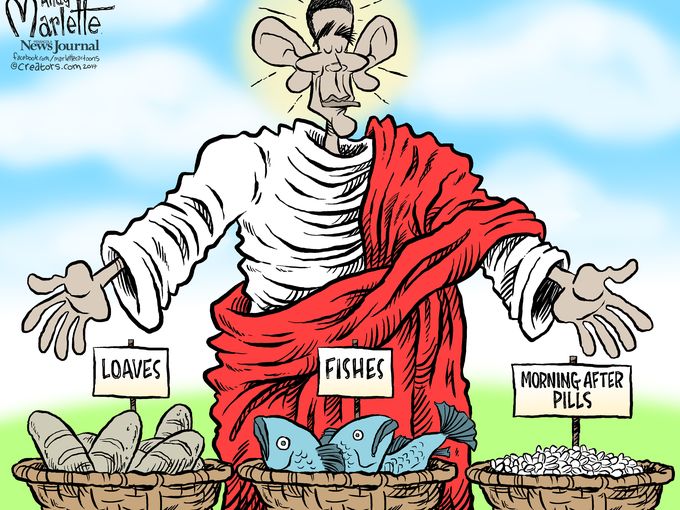



I have lived for so long in Moslem world that I take a risk now, offending my Moslem friends, by printing the cartoon of Mohammed weeping. It’s the cartoon that touched me to the bone. I have listened and learned in the Moslem world, and I have never met with hatred. The Mohammed I have read about in the Qu’ran and in hadith, and heard about in legend and stories from my Moslem friends portrayed a prophet who, like Jesus, was all about loving and serving the one true God. He would weep at what has been done in his name, as Jesus weeps for us, when we kill others in his service.

Where is Lafia, Nigeria?
Today the church prays for Lafia, Nigeria, which is near Abuja, in the part of Nigeria where Boko Haram runs rampant, and where over 250 girls were kidnapped from their school in 2014. Some few escaped, most were married off to poor young Boko Haram soldiers into hardship and near-slavery. Boko Haram does not believe in educating women. The Nigerian government at one point announced that Boko Haram had agreed to return the girls, but nothing happened. The Nigerian military and police do nothing to get them back.

The Season of Isaiah
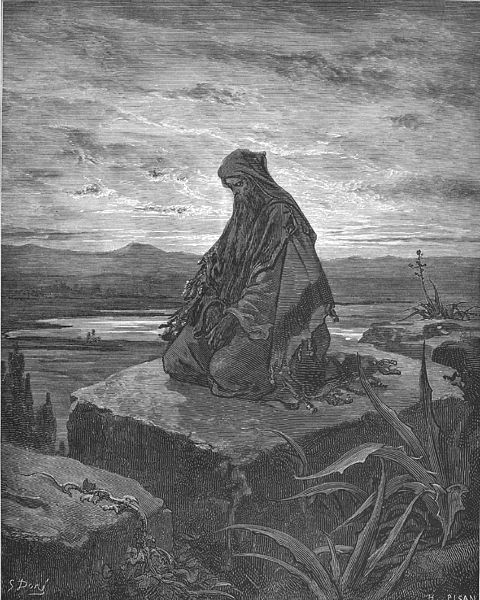
Advent started yesterday, and our readings in The Lectionary begin with Isaiah, that prophet of sorrow for our sinfulness, and hope for a future redeemer:
Isaiah 1:10-20
10 Hear the word of the Lord,
you rulers of Sodom!
Listen to the teaching of our God,
you people of Gomorrah!
11 What to me is the multitude of your sacrifices?
says the Lord;
I have had enough of burnt-offerings of rams
and the fat of fed beasts;
I do not delight in the blood of bulls,
or of lambs, or of goats.
12 When you come to appear before me,*
who asked this from your hand?
Trample my courts no more;
13 bringing offerings is futile;
incense is an abomination to me.
New moon and sabbath and calling of convocation—
I cannot endure solemn assemblies with iniquity.
14 Your new moons and your appointed festivals
my soul hates;
they have become a burden to me,
I am weary of bearing them.
15 When you stretch out your hands,
I will hide my eyes from you;
even though you make many prayers,
I will not listen;
your hands are full of blood.
16 Wash yourselves; make yourselves clean;
remove the evil of your doings
from before my eyes;
cease to do evil,
17 learn to do good;
seek justice,
rescue the oppressed,
defend the orphan,
plead for the widow.
18 Come now, let us argue it out,
says the Lord:
though your sins are like scarlet,
they shall be like snow;
though they are red like crimson,
they shall become like wool.
19 If you are willing and obedient,
you shall eat the good of the land;
20 but if you refuse and rebel,
you shall be devoured by the sword;
for the mouth of the Lord has spoken.
Confuse, Confound, Devastate and Dissipate ISIS
When I was a kid, I did not like reading the Old Testament, all those old-timey people, and it all seemed very confusing to me. As I grew older, I find I like the Old Testament part of our readings very much, the people come alive in all their faults and bad decisions, and God’s mercy shines through as we continue to rebel against him and follow too much our own devices and desires of our hearts.
I love Genesis 11, where mankind, in all our pride, decides to build a tower, and it must have been pretty good because it got God’s attention and he didn’t like it. He didn’t like it so much that he created confusion among all the languages spoken, but I bet it was also confusion and dissension among the decision makers, too, to scatter the mighty population.
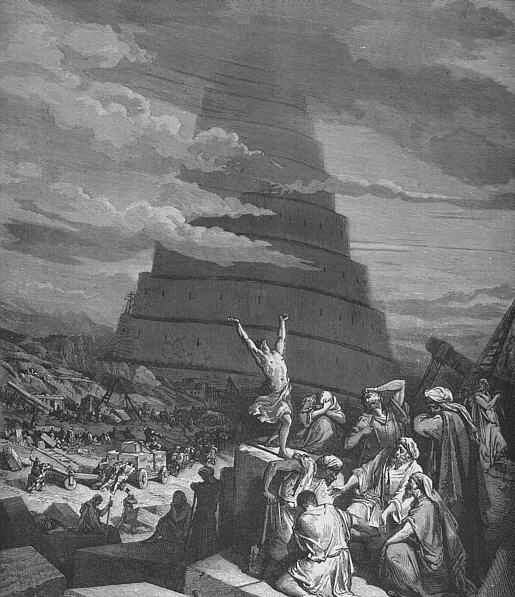
As the wandering descendants of Abraham began to settle, they often went up against armies and peoples much larger than they were, and God always told them not to worry, he would confuse the armies. He put fear in their hearts, in the confusion, mighty armies collapsed and scattered.
And why am I bringing this up, you might wonder?
This ISIS Army, it seems to me, is already cobbled together. I hear people people talking, people who know, they say ISIS is smart, fights smart. I believe they have some smart leaders, but I am willing to bet that they have some fatal flaws, also. They have overstretched. They are trying to enforce their will by violence and killing off the opposition, which might encourage the appearance of cooperation, but in reality breeds legions of those who will turn on them in a heartbeat.
Yes, we mistakenly dropped weapons which they were able to access. Mistakes happen in war zones all the time, with modern communication we just hear about it a lot sooner, not like 40 years from now when it is declassified and someone writes a book about it. Frankly, it’s not that big a deal.
What I believe is a big deal is their lack of cohesion. Lacking any strategic direct line to important decision makers, I am praying, and what I am praying is this, words from Psalms:
Confuse, O Lord, confound their speech
Disintegrate ISIS from the inside.
Create, Great and Merciful Father, miscommunications, misunderstandings, competing agendas and internal strife among the ISIS force.
All Mighty, All Powerful God, create a massive collapse, let their foot-soldiers drift away, drift home to their mothers and fathers and their families, and leave the Iraqi villages and the Syrian villages in peace.
Dry up the wealth of the Gulf, funneled through corrupt money changers in Kuwait, let it be mishandled, go missing, be stolen, be diverted and find its way to true charitable organizations providing a means of survival to those thousands of refugees who have been displaced.
Oh God! Collapse this abomination, the Islamic State of the Levant and Syria, collapse it utterly from within, strip it of all its power, devastate it like a virulent plague from within!
Oh God, bring good out of this downfall. Teach the remnants who return to their homes to live together in peace, to form peaceful and stable communities and then nations whose lives honor you!
All this is possible for the God who can do all things. Confound their speech, Lord, confuse them utterly, devastate and collapse them utterly from within. You are the one true God, there is no other God.
We are not without resources. We have the mighty fist of prayer.
Inequality: No Respect For Our First Nation Citizens (Blog Action Day)
I grew up in a small town, Juneau, Alaska, and not even in the main town, but on Douglas Island, across the Gastineau Channel from Juneau. My neighbors were fishermen, hunters, pilots, entrepreneurs and hard-working people struggling to make a living.
It was an upside down world. In most places, those who live there the longest are the leaders of society. In Southeast Alaska, those who lived there the longest were at the bottom of the heap, the Native Americans, the Tlingit, Haida and Tsimshian. I went to school with them. Yes, the boys carried knives. No, they were not dirty, and none of my little friends in elementary school were drunks. We were kids, we played together, we were all in the same classes all through elementary school – it was a small school.
Many of them did have family problems. There were problems of alcoholism, unemployment, domestic violence and hunger. They weren’t the only ones. The big problem was no respect. Although there were a few pieces of Native Art in the city museum, Native culture and Native craft were given little value. The Native way of life, living off the land, hunting and fishing, had greatly diminished as lands were apportioned off and hunting and fishing activities regulated.
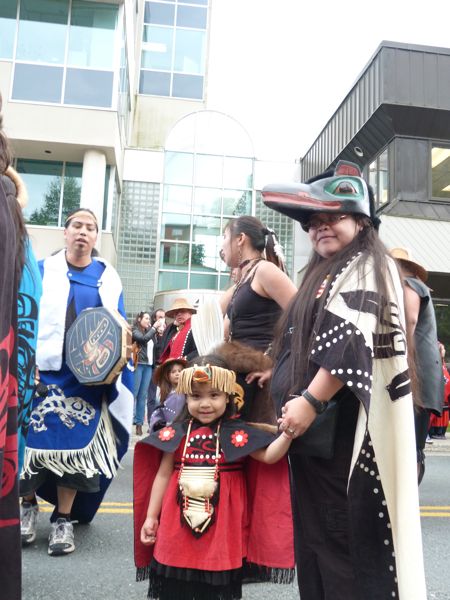
In 1971 a huge lawsuit was settled and the Alaska Native Claims Settlement Act provided some restoration for the damaged peoples. Alaska Natives now have regional corporations to administer and grow funds to support the culture, to provide education for the children, to provide health clinics and hospitals. SEALASKA began to organize a biennial Celebration, a gathering of all the Alaska natives to share their stories, to celebrate their culture, to dance and to transmit culture to their children. It’s a great opportunity for people you might see every day in their western life to remember where they come from and to be proud of who they are. This Celebration is held every two years and includes Alaska Natives from all over Alaska who want to participate. It is a very inclusive Celebration. The next Celebration will be June 8 – 11, in 2016. You can read a little more about Celebration 2014 here.
They learn the legends of their clans – the Eagles, The Ravens, the Beavers, the Bears and a number of other clans. They spend the time between celebrations stitching together elaborate costumes for their parade and dance exhibitions, hollowing out canoes from trees, making elaborate hats and masks.
We first learned of the Celebration gathering in 2012, when we already had tickets to go back to Zambia at the exact time the Celebration was taking place, but my sweet husband promised we could go back for the 2014 Celebration. As we researched, we discovered just how much of Alaska we wanted to see, and did a reconnaissance trip in 2013. We loved our time there, and we were delighted to be able to return this last year for Celebration 2014.
It was one of the most thrilling moments of my life, to see the gathering, to see the old women cry as canoes came into sight full of young Alaskan natives, and say “I never thought I would see this again in my life”, to watch the exhilaration of the dancers, to feel the energy of the parade and especially – to see the children. To see the pride in marching, in dancing, to see the joy in being able to express who they are and to share that with others. I was moved beyond my ability to express in words; it was a feeling that in one small way, a train of events that had gone very off track had moved incrementally back in the right direction.
Here are some photos from the joyous Celebration of 2014:


Recent Comments
intlxpatr on Yellowstone: Old Faithful to C… Michelle on Yellowstone: Old Faithful to C… Cathy on No Grown-Ups in Charge intlxpatr on Waiting for Snow intlxpatr on Waiting for Snow Wikipedia Donate Button

Amazina


Early Voting in Florida


 Here There and Everywhere