“Boys, It’s a Great Day for the Confederacy”
This is an interlude post, not a trip post. This is a social issues post, and a very personal post. Just skip over this; like I’ve said, it’s personal.
This is what we say we believe. This is what believers believe:
Matthew 25:35-40New International Version (NIV)
35 For I was hungry and you gave me something to eat, I was thirsty and you gave me something to drink, I was a stranger and you invited me in, 36 I needed clothes and you clothed me, I was sick and you looked after me, I was in prison and you came to visit me.’
37 “Then the righteous will answer him, ‘Lord, when did we see you hungry and feed you, or thirsty and give you something to drink? 38 When did we see you a stranger and invite you in, or needing clothes and clothe you? 39 When did we see you sick or in prison and go to visit you?’
40 “The King will reply, ‘Truly I tell you, whatever you did for one of the least of these brothers and sisters of mine, you did for me.’
This is what we believe. We are told that belief/faith is nothing without actions.
We are horrified. We are stunned, of course, by another election where a candidate wins the popular vote and loses the electoral college. We are stunned by the divisions in our country. We are stunned at all the hatefulness coming out of hiding, people proudly exposing racist and sexist beliefs in superiority and joy. Good Christian people so full of hate for the Other.
What shocks me is not only that the most vicious and vulgar candidate won, but also that the winners are so jubilant and so nasty.
AdventureMan had just listened to a National Public Radio article about Francis Ford Coppola and his famous movie “The Godfather;” he was in the mood for Italian food. We headed to our favorite place, and were seated before we realized we were sitting next to a table of true Southern Good Old Boys, and they didn’t care who heard what they had to say. We hadn’t been there long, when another entered and came to their table to be welcomed with “Boy, this is a great day for the Confederacy!” They found the safety pin movement hilarious. They had a lot to say about liberal thinking, about race, and about women. They talked about the spread of red on the map, the pockets of blue and the heavy blue of the cities and coastlines, implying it was racial.
What we should have done is ask to have our table changed. As it was, we listened to opinions that made us feel tarnished and dirty. We had the rest of our lunch packed up and got out as soon as we could.
I had my own moment of joy yesterday as I learned that Planned Parenthood is getting record-setting donations, and that many people are donating in the name of Mike Pence, notorious for his anti-women positions on reproductive rights. For each donation, he gets a thank-you note. That just tickles my heart.
Those of us who stand with The Other, we have our work cut out for us. Who will protect the food we eat? Who will insure we don’t have another housing meltdown, thanks to unregulated banks and loan associations? Who will protect the health of the poor? Who will measure pollution in our rivers and seas, and regulate emissions from factories and sewage plants? Who will protect us from chemicals in the air, and make sure our railways are safe?
Who will work to bring female salaries into full parity with men? Who will enforce laws in a way that every United States citizen is equal before the law, and that they are not differentiated by skin color or religion? Who will protect us from greedy pharmaceutical companies marketing their drugs to people who don’t need them, or using harmful components?
Who will give the poor and middle class the opportunities they need to climb the economic ladder?
Those of us who can, are identifying the NGO’s that are holding the line against corruption and the exploitation of the weakest members of our society, and budgeting so we can continue to fight the good fight. When you have a government of thugs, that is no easy task.
The saddest prayer of all “Lord, who is my neighbor?”
Peaceful Transfer of Power: It’s What We Do
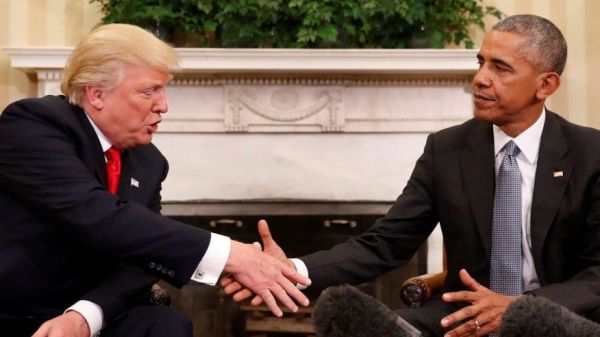
President Obama acted with his customary graciousness, quick to invite the new President-Elect to the White House to discuss the transition. Once the election is over, we do the right thing. It doesn’t matter what your feelings are, or the words spoken in the heat of the election, the vote has been taken, and the winner becomes President. We pride ourselves in an orderly transition.
It is not, however, a mandate, no matter how many times the Republicans say it. In most states where Trump won, it was by one tenth of one percent – or less. He lost the popular vote; Hillary Clinton won that by about 200,000 votes. So while more people voted for Hillary overall (this has happened before, with the George Bush v Al Gore election), Trump won the electoral college. No one expected this, not even Trump supporters. A mandate requires a substantial victory. This was a squeaky victory.
But a victory. On. On. Those of us who did not support Trump have a lot of work to do in the following months, shoring up agencies who support immigrants, reproductive rights, gender issues, regulations of air quality, water quality, food quality and restraint of corrupt financial practices by banks and lending organizations. We will need to truly be Stronger Together to combat the onslaught against the common citizen.
Abortion Online
First, I need to tell you that I believe abortion is wrong. I believe the death penalty is wrong. Because I am a believer, I believe our lives are in God’s hands.
And.
And I also believe that every woman who faces an unwanted pregnancy has to make that decision for herself. It is not for me to decide how YOU live your life. There are circumstances when even a believer has to make a difficult decision, like a soldier facing killing on the battlefield, or a president with his finger on the nuclear trigger. People have to make unhappy decisions.
Here is an organization that gives women those options:
Abortion Without Borders
When RA1 found out she was pregnant, she had two options: Have a baby she did not want or risk her life and face prison.
RA, who was born and raised in Dubai, lives with her husband and two children in Egypt, where abortion is illegal, except to save a woman’s life. Women who voluntarily induce abortions face criminal charges and up to three years in prison.
“I already had a girl and a boy, so the best of both worlds,” says RA. “It’s not easy raising kids in Egypt — financially, culturally and psychologically — and I didn’t want another baby.”
RA found doctors who could help, but they either advised against abortion, insisted on surgery or were illegal “under the staircase” doctors — notorious for abusing their power over women.
Instead, she scoured the internet for alternatives and found articles discussing the use of methotrexate, normally used to abort pregnancies that occur outside of the womb, a complication known as an ectopic pregnancy.
RA’s pregnancy was healthy, but out of desperation, she took the methotrexate.
“It was a huge risk, but I felt so helpless, like I couldn’t even control my own body,” she says. “I cried for days. I hated the situation I was in.”
The methotrexate failed. RA went back to the internet in search of help. Eventually, she came across Women on Web, an online-only abortion service that conducts free web-based medical consultations and mails eligible women pills for medical abortions. It saved her life.
Since it was founded by Dutch physician Rebecca Gomperts in 2005, more than 200,000 women from 140 countries have completed Women on Web’s online consultation, and approximately 50,000 women have performed medical abortions at home. Women on Web’s helpdesk answers 10,000 emails daily in 17 languages, and the website attracts almost one million unique monthly visitors.
But before Women on Web became a safe harbor, it was a rogue vessel on the open ocean.
(This is a long informative article. You can read the whole article HERE.)
Cross Culture at the Y: “Don’t Ever Say That to an African American”
I had just finished chatting with Leilani and was getting ready for class to start when my class friend who in in front of me came up to me and put her arm around me. We are always joking around, so I was laughing, and she said “I have something to tell you.”
I pulled back a little because I could see she was serious, and I wanted to see her face.
She said “Last week in the pool you said you were gonna kick my butt. Don’t ever say that to an African-American.”
She is black.
She could see I was confused. I did say it. We joke around, and sometimes there isn’t a lot of space. Her behind was right in front of me, a tempting target. I did say it.
“We never say that in the black community,” she continued. “Our Mama’s never allow that kind of statement. Remember, we were slaves. We’d be on the ground, and people would put their feet on us. People would kick us. To say that to a black person is one of the worst things you could say.”
“I am so sorry. I didn’t know.”
“I know you didn’t. That’s why I’m telling you.” She still had her arm around me. “We hear you people saying that to each other like it’s nothing. It’s something to us.”
I was so thankful she told me, and so embarrassed.
“I was oblivious,” I said. “I had no idea. I am so sorry.”
Later, as we usually do, we talked during class.
“Do you really just say that to each other?” she asked me.
“We do! It’s the kind of thing we say to friends; I would say that to my sister, it’s sort of mock-rivalry sort of talk,” I responded, thinking to myself ‘but I will never never never ever say that again to anyone!’
Later, I thanked her for telling me, and she said she knew I had no idea how offensive it was; it was a cultural thing. I am grateful she trusted that enough to clue me in.
As uncomfortable as that conversation was, I admire her for initiating it, and correcting me in a loving way, for telling me how it feels, and why. I am grateful that she trusts who I am, a person who would never choose to offend, but a person who had, nonetheless, offended, and who would want to know. I feel like it was a genuinely friendly thing to do, and she did it with good will in her heart.
So even in my own country, there are cultural crevasses I can fall into in oblivious unawareness.
And all of that in one morning at the YMCA.
Cross Culture at the Y
It’s a day I like in Pensacola; it may be summer and still hot and humid, but a little cooler today, with a cloud cover. I woke up refreshed, relaxed, having slept well, and actually, I sort of hoped for thunder so I could skip going to the YMCA for Water Aerobics, and stay home and finish up some quilting.
No such luck – no thunder. The skies were threatening, and leaky, but without the drama of thunder and lightning. No matter. The truth is, I don’t just go because I want to stay fit and strong, I also go because I feel better and more energetic after I’m done.
In retrospect, I would have missed a lot if I had missed today. In the fifteen or twenty minutes before the class, I heard some powerful messages, and I knew I was meant to be there. So my next three posts are about my cross-generational, cross-cultural experiences at my water aerobics class this morning.
“You Shall Love the Alien as Yourself”
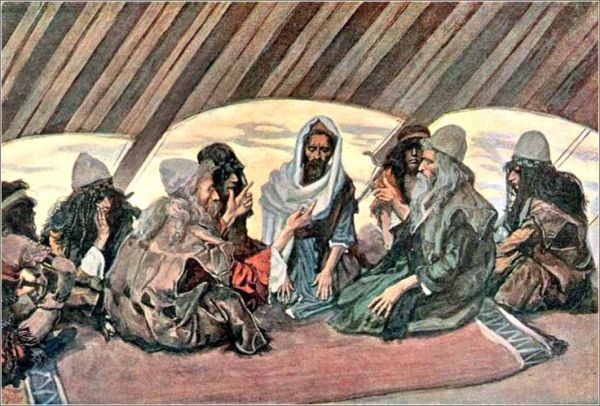
One of the disciplines available to those of the Episcopal faith is the reading of the Lectionary. Every day of the year are short readings from the Psalms, Old Testament, New Testament and Gospels. Every three year the cycle repeats itself. There are also additional readings on the “Saints” or remarkable people who have served God and his church.
Leviticus is not my favorite chapter, but today, I love Leviticus. As if the words were freshly spoken, I read Leviticus 19: 33-34:
33 When an alien resides with you in your land, you shall not oppress the alien. 34The alien who resides with you shall be to you as the citizen among you; you shall love the alien as yourself, for you were aliens in the land of Egypt: I am the Lord your God.
There are many references to the alien in the Bible, one of the earliest being Father Abraham, who is told to leave (what is now the current Iraq) and head for Canaan. When he arrives, peacefully, the local tribes are kind to him. They are good neighbors. Later, when Moses kills an Egyptian and flees to the desert tribes, he describes himself as “a stranger in a strange land.”
It’s who we are. It’s what our book tells us. We are to welcome the stranger. We are to leave wheat in the edges of our fields (yesterday’s reading) that he might not starve. We are not to oppress the alien, nor put up walls to fence them out. We are all aliens on this earth; waiting for the glory of the heavenly kingdom where we belong.
Beryl Markham and the EPIC Book Club
When the EPIC Book Club met this month, we were discussing Paula McLain’s Circling the Sun. Several of us had enjoyed her book about Ernest Hemingway, The Paris Wife, and had thought this one, about the famous early aviator, would be another great book. I was so impressed with The Paris Wife that I immediately read Hemingway’s The Movable Feast, his novel about the same period of time, and loved the way the books “danced together”. I think good historical fiction needs to stick to known facts.
It was a lively discussion; Beryl Markham was an unusual woman in an unusual culture in a time of transition. She grew up in Kenya as the British were beginning to colonize just after the first world war. Her mother abandoned the family, taking her frailer younger brother and leaving her, with no explanation. Some other woman moved in with her father; Beryl greatly raised herself with the indigenous people. Her father loved her, but was distant. He was first and foremost a horse breeder, and Beryl worked closely with him in breeding and training the horses.
She made a disastrous first marriage, leaving it to pursue a certificate – the first ever for a woman – as a horse trainer. She was spectacularly good at it, and worse (when it comes to the opinion of other women) she looked terrific in riding breeches. Men liked her. She liked men. She was not particular about boundaries, like marriage to other people or being the consort of her good friend, Karen Blixen. Later, she set records as one of the earliest female aviators.
It was also a time when women had few options, and most of the options required a man to take care of her. Beryl Markham had skills, and had more options.
So as we are discussing her behavior, which could be self-defeating and self-destructive, we discussed it in the context of Kenyan colonial society. Then one of the EPIC members mentioned that the same behaviors in the very church where we meet have been the spice of Pensacola gossip for more than a couple centuries; that people don’t change much. We were laughing, and another member mentioned being forbidden to read Peyton Place, many years ago when it was a banned book, and his wrestling coach told him “All the world is Peyton Place.”
I think of all the places I’ve lived and I am inclined to agree.
Drunk Drivers on the Road
Looks pretty dark blue from Pensacola across to Austin, all the way on I-10. Hmmm, used to be one of my favorite roads . . .


Drunk driving is always dangerous and a problem across the country and the world, but certain places have a knack for attracting drunk drivers. In the US, those places tend to be rural western states.
Avvo, a legal services company, crunched the National Highway Traffic Safety Administration’s road fatalities stats for an in-depth look at drunk driving across the country. The company sifted through the data and found that between 2004 and 2013 there were a total of 94,550 drunk driving deaths in the US. A deeper dive revealed which roads are the most dangerous for drivers.
The findings indicated that the most dangerous roads for drunk driving crashes tend to be in mountainous states out west. These roads cut through vast stretches of nearly empty territory to connect a few smaller towns and cities. There’s no one clear reason for the increase in drunk driving deaths in these states, but the study does offer some possibilities. The roads in question have high speed limits with few side streets, and in areas with little to no public transportation, increasing the likelihood of partiers driving home after a few too many. The study also says that the variable terrain and drivers unfamiliar with the winding roads and sudden weather shifts might contribute to the high rate of crashes.
Montana, Wyoming, New Mexico and South Dakota all top the list. Interstate 90 in Montana is the most dangerous road in America, with 6.4 drunk driving deaths per 100,000 people. However, Wyoming appears three times in the top ten, making it the most dangerous state. New Mexico and South Dakota also appear twice in the top ten. The only area in the top ten that isn’t a rural Western state is Washington DC, which often finds its way on to any list of worst car accidents, congestion and road deaths. To see more information about the deadliest roads in America check out the full study here.
American Heroes: “With Your Bare Hands”
I started this Monday with a great big smile. American Heroes! Our three young men, off to explore Amsterdam and Paris, and without giving it a second thought they tackle an armed man who has already shot and injured one passenger and intends to kill as many more as he can? They disarm him, and they tie him up, and deliver him, relatively unharmed, to the authorities.
They don’t behead him. They don’t beat him once they have him subdued. They don’t treat him with gratuitous cruelty. No. They turn him over to the authorities. One hero seeks out the Frenchman who has been shot and plugs his throat wounds with his own fingers to staunch the flow of blood until he can be treated by medical professionals.
And I love what French President says to these khaki and polo-shirt clad All-Americans (from The Guardian):
“Awarding them the Légion d’honneur, Hollande said: ‘The whole world admires your sangfroid. With your bare hands, unarmed, you were able to overcome a heavily armed individual, resolved to do anything.’
Hollande praised the soldiers, saying: “In France you behaved as soldiers but also as responsible men. You put your life in danger to defend the idea of freedom.”
Referring to the bravery of Sadler and Norman, he said they did not have military training and had “doubtless never seen a Kalashnikov in their life”. He added: “They stood up and fought, they refused to give in to fear or terrorism.”
Leaving the ceremony, Norman told TV crews: “I just did what I had to do.”
That’s exactly what true heroes say 🙂
I smile, too, seeing these young men being presented their medals with everyone else in dress uniforms and suits, and they are in their polos and Khakis; polos provided, I am guessing, by the US Embassy, with French and US flags intertwined.
I imagine they are going to have a wild time in France, and I can imagine they won’t be able to buy their own wine or meals. It all makes me smile.
Recent Comments
intlxpatr on Shampoo Ginger tigerbutterya0c5ff1d… on Shampoo Ginger intlxpatr on British Soldier Kidnapped, Esc… John on British Soldier Kidnapped, Esc… intlxpatr on British Soldier Kidnapped, Esc… Wikipedia Donate Button

Amazina


Early Voting in Florida


