Trek and Date Time Stamp
It was me but it wasn’t me. I’ve been gone, out on a short trek, the kind of trek where a computer would be laughable, in terms of time, in terms of connection. And it forced me to try something new . . .
Word Press has a Date Time Stamp feature. Instead of pressing “publish” when you finish an entry, you go down to “post timestamp” and you click in the Edit Timestamp box, then you choose the date and time you want the article published.
It’s not that I don’t trust technology, but I don’t always trust my grasp of how it works, so I tested it before I left and to my astonishment, it worked like a charm. It’s hard to believe something so cool could also be so easy, so straight forward.
So I have tagged it, in addition to other tags, with “lies” because it kinda IS a lie – it implies I am somewhere when I am really somewhere else. And the good news is – it really works!
FEMA Calls Rebuilding Complete As New Orleans Restored To Former Squalor
This is from The Onion. Remember friends, The Onion is SATIRE. Please note the last line, and weep.
NEW ORLEANS—After an unprecedented 18-month cleanup and repair effort supervised by the Federal Emergency Management Agency and several state and local government bureaus, Undersecretary for Federal Emergency Management R. David Paulison announced Monday that the city of New Orleans has been successfully returned to its pre–Hurricane Katrina state of decay and deterioration.
“Our job here is done,” said Paulison, who was joined by Louisiana Gov. Kathleen Blanco in a ceremony along the banks of the Industrial Canal. “Our beloved Big Easy has its soul back. The downtown shops are open and in full violation of code, the nightlife is alive with the sound of violence, and the streets are once again safe for poverty and vice.”
The $41 billion restoration of the city’s hallmark abandoned buildings, shacks, vacant lots, and standing trash piles was among the most complex and painstaking ever undertaken. Starting just four weeks after the August 2005 hurricane, workers recovered millions of pieces of flood-damaged debris, cleaned them of sediments and chemicals, and then replaced them where they were originally found.
The work, however, did not proceed without controversy, often grinding to a halt as preservationists quarreled in court over which sections of rot, toxic chemical compounds, PCBs, bacteria, and pathogens predated Katrina.
Despite the bitter disputes, Blanco declared the restoration project an “unqualified success,” and invited the estimated 200,000 New Orleanians who still reside outside the city to return.
“We’ve done our best to ensure the city is as well off as it was before Katrina hit,” Blanco said. “It’s all back—the same abandoned cars, the broken bottles, the spent shotgun shells, the rat colonies, even the used diapers on the front lawns. People of New Orleans, welcome home.”
The most impressive progress was made in the Ninth Ward, the lowest-lying and most devastated section of New Orleans. Due to severe water and mold damage, the difficult decision was made to gut or tear down a majority of the neighborhood’s houses, then laboriously reconstruct them to their previous dilapidated condition seven feet below sea level. Many returning residents, including custodial worker and father of four Stanley Gibson, 41, expressed shock at the success of the rebuilding efforts, saying he “never dreamed in a million years [he] would be going back to that place.”
“Before the storm, I lived paycheck to paycheck in a run-down two-bedroom house,” Gibson said. “I never thought I’d see that house again, but here it is—same sagging roof, compromised foundation and everything. Someone even found my car and put a quarter of a tank of gas back in it.”
As part of the citywide restoration efforts, downtown medical facilities that flooded during Katrina, such as Charity Hospital, were drained, repaired, and meticulously under-funded based on past financial records and other historical evidence. Hospital officials said the facility could be ill-prepared for overcrowding by uninsured and indigent patients as early as next week.
Public schools were fully reopened last Monday after being stocked with outdated textbooks and refurbished chairs for every student to share.
Even New Orleans’ world-famous French Quarter was given a much-needed boost, with the flood-related detritus covering Bourbon Street cleared and replaced with discarded plastic beads, vomit, and used condoms.
“It’s like nothing has changed,” said Covenant House director Michelle Beauchamp, whose organization received FEMA funds to rebuild and reopen a homeless shelter. “The workers rebuilt all 25 rooms exactly as small as they used to be, and soon we’ll be ready to serve New Orleans’ 10,000 homeless men, women, and children again.”
Residents noted that the same attention to detail could be seen in the levees and floodwalls, which were restored by the Army Corps of Engineers to their “classic” pre-Katrina condition.
Despite FEMA’s official declaration of completion, not all facets of New Orleans squalor have been restored. City officials say the return of New Orleans citizens is essential to the survival of the city’s crumbling economy and renowned 25 percent poverty rate. And in a sharp and historically inaccurate contrast, federal aid continues to flow into the city, preservationists say.
After several years of bureaucratic restructuring and appointee shuffling, FEMA assured New Orleans residents that it, too, has regained its former level of quality.
“If another hurricane hits New Orleans, we will be just as prepared to help as we were before Katrina,” Paulison said.
Report: Humans ‘very likely’ cause global warming
This morning, CNN reports that humans are very likely the cause of global warming. No kidding.
This week, an unexpected storm killed 19 in Central Florida. Global warming is said to be creating stronger, more dangerous hurricanes in the Atlantic. This has had a personal impact on us – we bought a house in Florida this year, only to receive word shortly after buying it that hurricane insurance would be almost impossible to get in the future.
We are planning to make the house as hurricane-survivable as we can, but very little can survive the direct impact of a max force hurricane. It is a terrifying event, and makes a believer out of the non-spiritually oriented.
We really have no idea how far along the process of global warming is, or if it will accellerate beyond our ability to undo the damage we may have done. Or . . . is this just another in a long series of cycles of weather change?
Story Highlights
• Scientists release a 21-page report strongly linking humans to climate change
• Report scientist: Evidence of warming on the planet is unequivocal
• Scientists predict global temperature increases of 3.2-7.1 degrees F by 2100
• Sea levels could rise between 7 and 23 inches by the end of the century
(CNN) — Global warming is here and humans are “very likely” the blame, an international group of scientists meeting in Paris, France, announced Friday.
“The evidence for warming having happened on the planet is unequivocal,” said U.S. government scientist Susan Solomon, who also is a member of the Intergovernmental Panel on Climate Change.
“We can see that in rising air temperatures, we can see it in changes in snow cover in the Northern Hemisphere. We can see it in global sea rise. It’s unequivocal,” she said. (Watch scientist Susan Solomon deliver the grim news on global warming )
In a 21-page report for policymakers, the group of climate experts unanimously linked — with “90 percent” certainty — the increase of average global temperatures since the mid-20th century to the increase of manmade greenhouse gases in the atmosphere.
Fossil fuels like methane and carbon dioxide trap heat near the surface, a process known as the greenhouse effect. The greenhouse effect is a natural phenomenon, but human activities, like the burning of fossil fuels, can pour enormous volumes of these gases into the atmosphere, raising the planet’s temperature and destabilizing the climate. (Watch what happens to our planet when manmade emissions get trapped in the atmosphere )
The report found it was “likely” — “more likely than not” in some cases — that manmade greenhouse gases have contributed to hotter days and nights, and more of them, more killer heat waves than before, heavier rainfall more often, major droughts in more regions, stronger and more frequent cyclones and “increased incidence” of extremely high sea levels.
The report noted that 11 of the last 12 years have ranked among the 12 warmest years on record with the oceans absorbing more than 80 percent of the heat added to the climate system. Add in the melt-off of glaciers and sea ice and sea levels are rising.
The IPCC predicted global temperature increases of 1.8 to 4 degrees Celsius (3.2 to 7.1 degrees Fahrenheit) by 2100 and sea levels to rise between 7 and 23 inches (18 and 58 centimeters) by the end of the century. (Watch how rising sea levels could affect San Francisco )
“An additional 3.9-7.8 inches (10-20 centimeters) are possible if recent, surprising melting of polar ice sheets continues,” the report stated.
The group will meet again in April to discuss the socioeconomic impact of climate change.
Defining ‘likely’
The IPCC was established in 1988 to study climate change information. The group doesn’t do independent research but instead reviews scientific literature from around the world.
The United Nations-sanctioned group was formed by the World Meteorological Organization and U.N. Environment Program.
The group’s goal is to produce “a balanced reporting of existing viewpoints” on the causes of global warming, according to its Web site.
The panel’s reports are influential references for policymakers, scientists and other climate change experts.
Friday’s release is the beginning of the panel’s first major report since 2001. The rest of the report is due out later this year.
The 2001 report found that the 1990s were “very likely” the warmest decade on record. It also said that most of the observed warming over the last 50 years was “likely due to increases in greenhouse gas concentrations due to human activities.”
The authors defined “likely” as between 66 percent to 90 percent probable, and “very likely” as a 90 to 99 percent.
Renewed concern in U.S.
Friday’s report comes amid renewed debate in the United States. (Full story)
In his State of the Union address, President Bush called for the use of more environmentally friendly technologies to “confront the serious challenge of global climate change.”
It was the first time he has discussed the issue in a State of the Union address.
The White House has said Bush’s proposals would stop the growth of carbon dioxide emissions from cars, light trucks and sport utility vehicles within 10 years.
Leaders in the Democratic-controlled House of Representatives and Senate held hearings on climate change this week. (Full story)
CNN’s Peggy Mihelich and David E. Williams contributed to this report.
Visit to Skyscraper City
As I was preparing to move to Kuwait, and searching the blogs and internet for any information I would find on living conditions, I came across this quirky website called Skyscraper City which has forums on buildings and developments going up all over the world.
My favorite area, of course, is the forum devoted to the Middle East and Africa within which I love to visit Kuwait and Qatar.
Here you find all the latest news, information and GOSSIP about what’s going up, who has applied for permits, and why projects have stalled. It is one of those gems of the internet.
If you want to post, or reply, you have to join the City. There is a Sky Diwaniyya in the Kuwait section that is always entertaining reading.
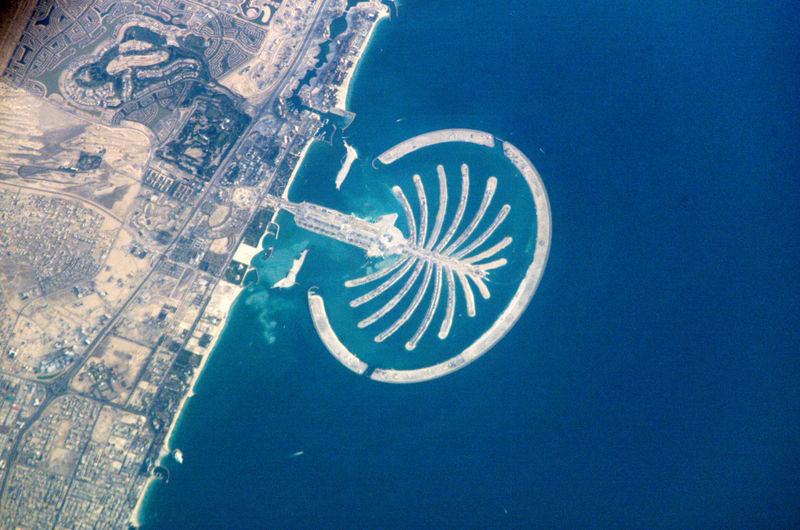
Palm Island Resort, UAE from Skyscraper City Forum
“I’m A Third Culture Kid, Are You?”
Most of those who read my blog are not Kuwaiti, and it is for you that I am writing this post. So many of you who read me are also “Third Culture Kids.” My blogging friend Amer just wrote a post by the above title, and whoa! The responses will blow you away! Please go to I am a Third Culture Kid, Are You? and check in with your story – where you came from and where you are today.
And how being a third culture kid has affected your life. This is one of the best blog entries I have read.
The book from which the term Third Culture Kids comes from is mentioned in an earlier blog entry of mine, Chicken Nuggets and Big Macs and is by David C. Pollock and Ruth E. Van Reken. You can find it at Amazon.com. If you are a third culture kid, you might want to buy two or three – you will keep giving them away. The book is that good.
The Pearl in Doha
We’ve been watching the creation of a whole new living area in Doha, the Pearl. Like the palm tree in Bahrain, and similar creations in the UAE, the islands are being created with materials from destroyed buildings, and landfill.
In Qatar, it will be one of two areas where non-Qatteris can buy property, the other being the West Bay Lagoon, near where The Pearl is also being created by the Al Fardan Group.

Sorry for the poor photo quality, but it’s taken through the airplane window. Aargh. It’s interesting seeing where the channels are being dredged for the private boat docks.
Germany’s culture of shopping slowly changing
Little Diamond forwarded this to me from the Chicago Tribune. The battle to extend shopping hours in Germany has been going on for years. As the hours increase, the annual birthday celebrations described in the preceding blog entry will pass into “olden day traditions.”
By Tom Hundley
BERLIN – Unlike America, Germany has not yet adopted the shop-till-you-drop lifestyle, but things are starting to change.
Even in bustling cities like Berlin and Frankfurt, retailers used to roll up the sidewalks at 6:30 p.m. On weekends, Germans had to scramble to get their shopping done by 2 p.m. on Saturday. Sunday shopping was strictly verboten.
But a long battle over longer store hours is slowly being won by retailers who believe that more hours mean more money in the cash register. They are opposed by Germany’s powerful trade unions whose leaders say workers’ rights must be protected.
The gradual loosening of strict rules governing store hours also reflects a larger battle to loosen up a German economy that suffers from sluggish growth and 9.6 percent unemployment. Chancellor Angela Merkel’s government says it is eager for reform, but it has decided to leave the issue of store hours to local governments.
These days, the Galeria Kaufhof, a newly renovated department store in the heart of the former East Berlin’s shopping district, is crowded with customers until 10 p.m.
“Seven years ago we started a small revolution here in Berlin when we said we are opening on Sundays,” said Detlef Steffens, the store manager.
“We discovered a loophole: according to the law, you could open on Sunday if you were selling souvenirs, so we put stickers that said `souvenirs’ on all the merchandise,” he said.
“We were sued by other store owners. But that started an avalanche.”
Steffens’ store took its case to Germany’s federal constitutional court. The court rejected its arguments but said the particulars of Sunday shopping hours should be regulated by local authorities.
The Berlin city government decided to allow stores to open on six Sundays a year. Last year, it extended the number to 10, plus three extra Sundays during the World Cup soccer tournament.
Last November, Berlin threw caution to the wind and adopted a modified version of America’s 24/7 consumer ethos. Call it 24/6 – non-stop shopping for six days of the week and 10 Sundays.
The Galeria has opted to stay open until 8 p.m. Monday through Wednesday and until 10 p.m. Thursday through Saturday. The extra hours have increased revenue and enabled the store to hire 50 more employees, for a total of 1,080.
Steffens says his employees have generally been supportive of the longer hours.
“It’s an East-West thing,” he said, referring to the lingering psychological divide that still separates Germans who grew up in prosperous West Germany from those who experienced communist East Germany.
Almost all of Steffens’ employees are from the East. Those from the West, he said, are more likely to resist changes proposed by management.
“The trade unions are not so different from East to West, but worker councils in the East are more realistic. Here there’s more of a collective mentality: We are one team; it means our jobs,” he said.
Cornelia Hass, a spokeswoman for Ver.di, a large trade union that represents service employees, says the union’s position is that “everyone should have the liberty to work (non-traditional hours), but nobody has to work these hours.”
Hass disputes the argument that more hours mean more revenue and more jobs.
“People don’t buy more just because they can do it 24 hours a day. You can only spend the euro in your pocket once,” she said.
While acknowledging that store hours have to reflect people’s changing lifestyles, she said Germany already has “more square meters of shopping opportunity per consumer than Europe or the United States” and that fierce competition among retailers was forcing them to trim personnel.
There’s also a quality-of-life issue.
“I really believe that Sunday is the day when everyone who doesn’t need to work, shouldn’t work,” Hass said. “Society needs to lay back for one day, to find time for friends and family.” She also noted that of the 3 million retail workers represented by Ver.di, 80 percent were women, and most had families.
“They need their Sundays,” she said.
The union is supporting three retail workers who have filed a lawsuit challenging Berlin’s new Sunday opening hours.
But most of Germany’s 16 federal states appear to be following Berlin’s example and extending store hours.
Some small merchants are worried, fearing that extended hours by large retailers will force them to attempt the same.
“It’s a problem for us,” said Michael Turberg, who owns a Berlin toy store famous for model trains.
“We are rather specialized and we need staff of high quality. When you are open longer, you need more staff of high quality. It’s not easy to find staff, and it’s not easy to pay them.”
That’s not a problem for Mohamed Wehbe and his family. Immigrants from Lebanon, they run a small shop that sells snacks, groceries, cigarettes and newspapers. It’s open 365 days a year.
When they started their business a few years ago, and kept it open until midnight, they got a polite letter from Berlin authorities advising them to observe the legal opening hours.
“We didn’t know about such laws,” said Wehbe.
Under the new law, the shop is open from 6 a.m. until midnight.
For Wehbe and many other immigrant entrepreneurs, there are scarcely enough hours in a day for earning money.
“This summer,” he said, “we’re going 24/7.”
A Tale of Two Cities: Kuwait and Doha
Departing Kuwait was chaos. The gates down which you walk straight into the plane seem to be non-operational, and the teeming hoardes are shipped out to the planes in buses. At gates 22-23, security was clearing people for flights to Dubai, Muskat, China and Doha, all at the same time.
People would crowd toward to gate, only to be told “Not Now! Not Now! Now is Muskat!” “Now is Doha!” “over there is China!” but as some people spoke neither English nor Arabic, there was mass confusion. Planes, unable to depart on time because passengers had not been boarded, were only steps from the airport, but still, passengers were boarded onto buses and taken out. Sheer chaos.
Arrival in Doha was smooth, if quirky. In Doha, if your baggage is marked Priority or Business, it comes off the plane last. Not just this time, but the entire time I lived in Doha, this uniqueness was the rule rather than the exception.
Doha has the Miss America entrance just like Kuwait, and fortunately my friends were there to greet me and whisk me away. But in Doha, unlike Kuwait, the exit is chaos. Private cars are waiting for arrivals, taxis, limos, and a thousand laborors stand dazed at the exit, waiting to be told what to do. Threading our way through the chaos, we race for the car and exit, making our way into the city where we meet our husbands for dinner.
It was a very short trip, but I have a few more Doha photos to share with you. The Doha skyline is changing dramatically. Here is the new Museum of Islamic Art, due to open shortly – notice anything?
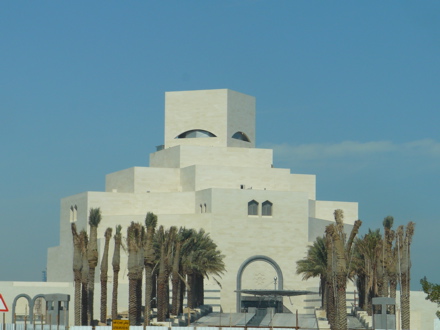
This is the new Qatar Center for the Presentation of Islam building – it includes a mosque, library, coffee shop and meeting rooms (the one on the left):

This is the first we have seen of dhows being built in the old way in Doha:

Last, the continually changing Corniche skyline:

In the Headlights: Added to the Blogroll
I don’t remember how I came across this blog, at some time in December, but I remember laughing my head off. After two months, I find that she still delights me every time I visit. Today at In the Headlights (a reference to a common English phrase “deer in the headlights” meaning that wild-eyed-I -don’t-know-what-to-do-next-so-I’ll-just-stand-here-frozen look) Riannan shares an e-mail from a friend with curmudgeonly rules for 2007, and earlier on the page, shares a site where you can have mittens, etc. knit out of your pet’s lost hair! Dying laughing.
(And no, she is not a relative of mine. I don’t know her! I just like her blog!)
This woman comes across some of the most amazing things. She, like me, is all over the map – salsa dancing, books, great recipes (the latest was Oven Baked Sesame Scallops, oh yum!), stories about friends, some of the funniest signs I have ever seen, and screwball ideas. She can give your day a lift.
Check Every Comment
One of the things I like best about WordPress is the scum and filth they keep from ever appearing on my blog. But the scammers out there get better and better.
Check every comment. Check where it is coming from. Check closely – some at first appear to be blogs, but they are really all about marketing / selling. They are getting clever – the comment appears to be pertinent, or flattering (example: great blog and great content!) but if their blog is really just a sales tool, you can (in WordPress) go into EDIT on the comment, and eliminate the url entry, and then you have this sweet comment but there is NO connection with this person’s so-called blog.
Here’s what to look for. A blog may look like a medical information blog, for example, but just underneath the entry (which is copied from someone else’s blog!) you will find a list of 10+ url sites that have little or nothing to do with medical information. Like “click here for a bargain on leather luggage” and more irrelevant entries.
Be aware!
Recent Comments
ExpatAlien on What Country am I Living … intlxpatr on Yellowstone: Old Faithful to C… Michelle on Yellowstone: Old Faithful to C… Cathy on No Grown-Ups in Charge intlxpatr on Waiting for Snow Wikipedia Donate Button

Amazina


Early Voting in Florida


 Here There and Everywhere